
Scotland's wellbeing economy monitor: July 2025
The Wellbeing Economy Monitor (WEM) tracks progress towards creation of a wellbeing economy using a broad range of indicators with a particular emphasis where the economy and economic policy play a significant role in contributing to wellbeing outcomes.
11.3 Household waste
Source: Household Waste Data
Why is it important to a wellbeing economy
Effective waste management, including reducing the demand for raw materials in products, encouraging reuse and repair, and recycling waste and energy is important if we are to tackle the climate and nature crises[33].
What this indicator measures
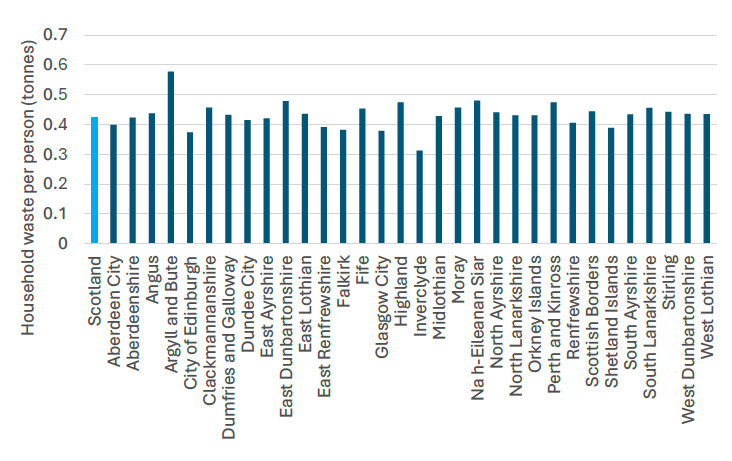
This indicator measures household waste per person generated (in tonnes) in 2022. This is the average waste generated per person that is collected by local authorities at the door (“kerbside collection”), waste from sites such as recycling collection bins at supermarkets (“bring” sites), and waste collected from households at local authority drop-off points (“civic amenity” sites).
Status of indicator
The average household waste per person across Scotland was 0.424 tonnes. The local authority with the lowest household waste per person was Inverclyde (0.313 tonnes) and the highest was Argyll and Bute (0.578 tonnes).
Contact
Email: james.miller@gov.scot