
National Missing Persons Framework for Scotland 2025
The National Missing Persons Framework for Scotland (2025) provides updated roles and responsibilities of respective agencies, standardising key practice from a wealth of good practice across Scotland, that aims to help and safeguard those who go missing through multi-agency working.
Introduction
The National Missing Persons Framework for Scotland was published in 2017, through the Framework Implementation Project tailored support has been provided to multi-agency partners in all of Scotland’s local authorities since then. The work that has been taken forward has helped enhance the response to the issue of people going missing and provided examples of good practice and improvement that has informed this updated Framework.
Multi-agency groups have been formed between partners within local authority areas, the use of the joint definition of missing and risk assessment levels outlined in the Framework have been adopted, and where a multi-agency group has focussed on the specific issue of missing people in their area, clear reductions of missing episodes have been recorded.
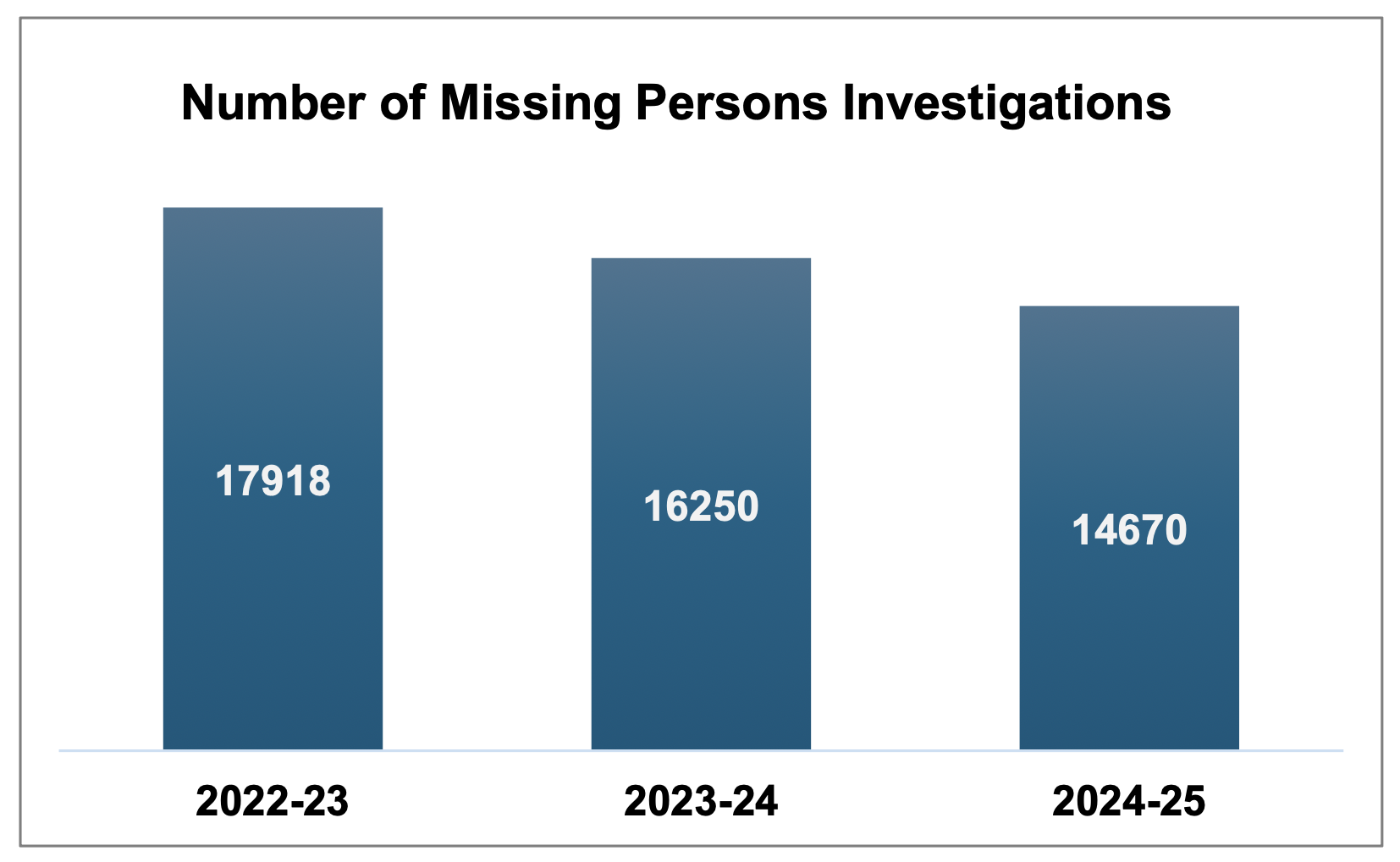
However, the number of people who go missing in Scotland remains a significant social issue and cause for concern. From 1st April 2024 to 31st March 2025, 14,670 missing person investigations were launched by Police Scotland – around 40 per day. This has reduced from 16,259 and 45 investigations per day in 2023-24.1
Most people are in crisis when they go missing – this could be due to a wide range of issues including mental health problems, relationship breakdown, personal safety and exploitation.2 When people are missing, they are at higher risk of coming to harm – with research showing that up to 75% of adults can come to harm while missing, and over 3 in 10 are a victim of a sexual or physical assault. Furthermore, 4 in 10 missing adults made an attempt to take their own life while missing.3 All individuals who go missing are at risk of harm. However, for some individuals, this harm can be exacerbated by their circumstances:
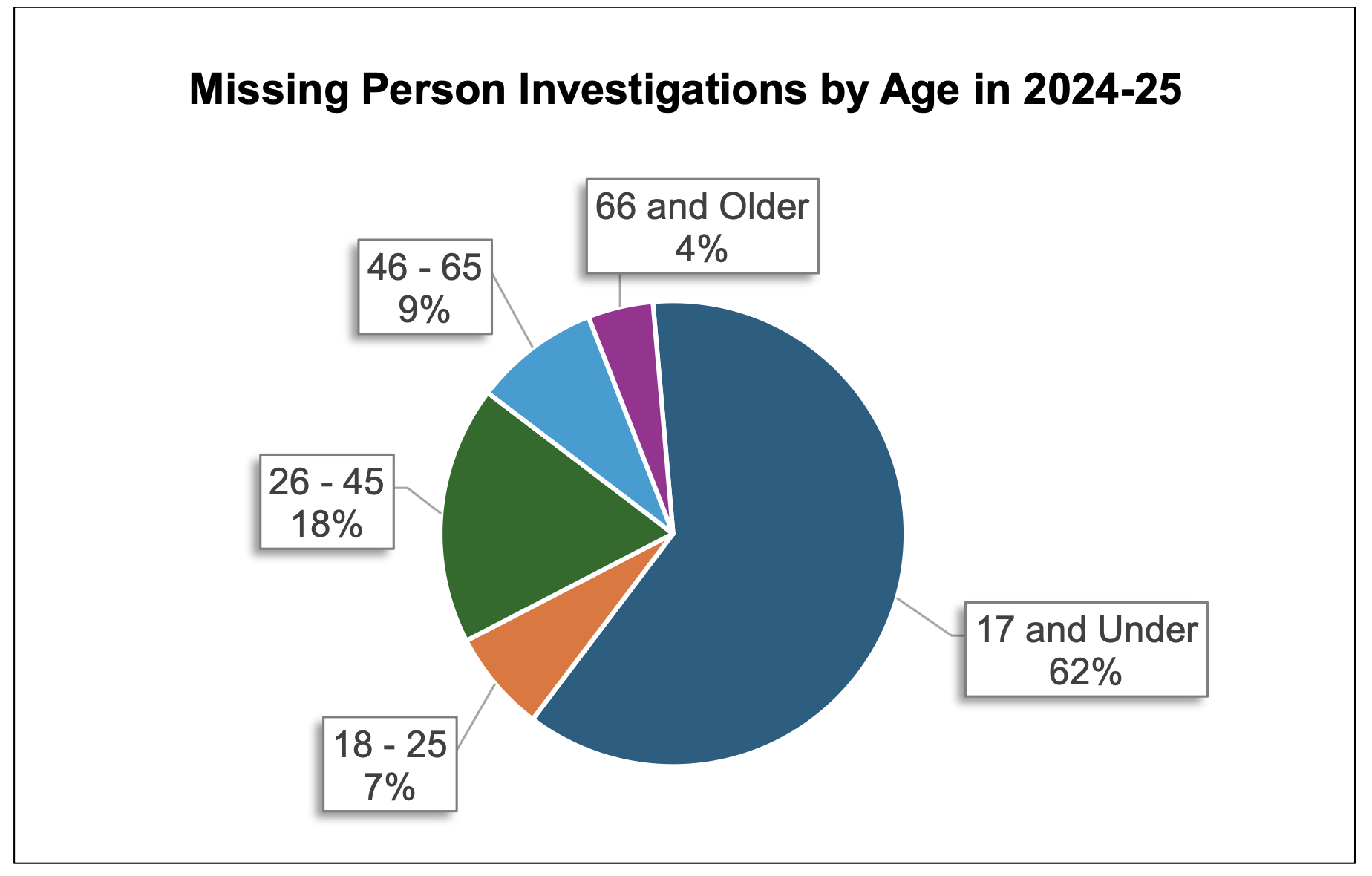
- In Scotland, 62% of missing persons investigations involve children, with just under a third (33%) of those investigations relating to care experienced children, who are at a higher risk of going missing more than once.
- People living with dementia, although only making up around 4% of the people who are reported missing, remain one of the groups who are most at risk of serious harm when missing.
- 31% of police recorded missing persons investigations have a mental health flag. However, the proportion of missing adults who self-report mental health issues as a factor in going missing is as much as 80%.
Concerningly, the number of people dying following a missing report increased to 145 people in 2021-22 but has been falling since, to 137 in 2022-23, 125 in 2023-24 and 97 in 2024-25.4 A person being found deceased is the worst possible outcome in a missing person investigation, and it is clear that being able to support individuals and prevent a missing episode is the key to avoiding such a devastating outcome.
One in three people reported missing in Scotland have gone missing before – this has reduced from one in two in 2017.5 Evidence shows that if people have an opportunity to discuss the issues surrounding them going missing, with a trained professional after being missing (known as a ‘return discussion’), there is the opportunity to identify risks they face and address any support needs they have.6 If a return discussion is followed by referrals to tailored support to help the person address the cause of their missing episode and deal with any trauma experienced while missing, they will be less likely to go missing again, and the risk of harm can be reduced.7
Although the number of missing persons episodes remains high, it has reduced significantly since the Framework was published in 2017. Importantly, the vast majority (99%) of people reported missing in Scotland are found or return, with 94% within 48 hours. This is a significant achievement for Police Scotland and all other safeguarding and support agencies. However, it remains important that we strive to prevent people from going missing, even if a person is only missing for a few hours, they are at increased risk of experiencing trauma or coming to harm.
Up to 20 people on average are not located within a year and there are around 700 people classed as long term missing. Many of these people are believed to have died but have not yet been found and therefore the police investigations are not closed and remain open.
The National Missing Persons Framework for Scotland (2017) outlined how agencies should work together to prevent people from going missing and to reduce the harm linked to people who are missing. This provided the first attempts to standardise good practice and offered guidance to professionals on how to align priorities and build processes for multi-agency working to achieve positive outcomes.9
Following the Framework’s publication, work to prevent, locate and safeguard missing people has continued to be developed across the country by many agencies and local partnerships. The National Working Group on Missing Persons has overseen the work of the Framework Implementation Project, led by Missing People, to embed the Frameworks guidance across Scotland.
The Framework Implementation Project has worked with agencies across all 32 local authority areas and been instrumental in the development and support of effective multi-agency working in line with the Framework’s aims and objectives and has:
- Developed an online good practice toolkit and host good practice conference annually.
- Provided training for multi-agency professionals on support for people returning from having been missing.
- Introduced a resource to educate young people on staying safe.
The Framework Implementation Project, working closely with partners across local authorities to establish and enhance effective multi-agency working to prevent people from going missing, as well as the national roll out of the Not at Home protocol by Police Scotland, are likely to have played a significant role in the reduction of people going missing.
This revised and updated Framework builds on the original Framework by highlighting where progress has been made since 2017, as well as identifying current priorities, challenges and next steps. In doing this we aim to ensure that the Framework is up-to-date and reflects the good work that has been delivered by all agencies over the past eight years. The Scottish Government, through the Framework Implementation Project, will continue to work with agencies in local authority areas to embed good practice across Scotland as part of our ambition to improve support and services for missing people and their families and keep people safe in their communities.
Contact
Email: contactus@gov.scot