
Good Food Nation plan: initial monitoring framework
The first monitoring framework for the national Good Food Nation Plan establishes a baseline for evaluating Scotland’s food system. It sets out 51 high-level indicators used to monitor progress towards the six overarching outcomes outlined in the national Good Food Nation Plan.
4. Outcome 2: A sustainable food system
Outcome 2: Scotland’s food system is sustainable and contributes to a flourishing natural environment on our land and in our waters. It supports our net zero and climate adaptation ambitions and plays an important role in protecting and improving animal health and welfare and in restoring and regenerating biodiversity.
Summary of Outcome 2 Indicators
Outcome 2 of the Good Food Nation Plan reflects that there is a need to adjust how food is produced, processed, distributed, and disposed of (food waste) in Scotland to contribute towards addressing the twin challenges of climate change and biodiversity loss. The impacts of climate change also pose an increasing risk to agricultural production, distribution networks and food safety in Scotland’s food and drink industry.
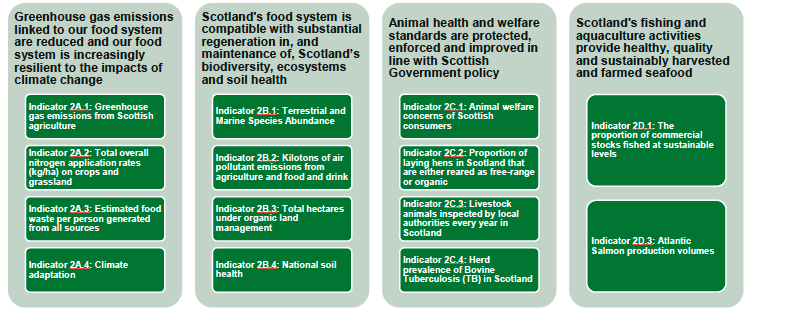
Greenhouse gas emissions linked to our food system are reduced and our food system is increasingly resilient to the impacts of climate change
- Indicator 2A.1: Greenhouse gas emissions from Scottish agriculture
- Indicator 2A.2: Total overall nitrogen application rates (kg/ha) on crops and grassland
- Indicator 2A.3: Estimated food waste per person generated from all sources
- Indicator 2A.4: Climate adaptation
Scotland's food system is compatible with substantial regeneration in, and maintenance of, Scotland’s biodiversity, ecosystems and soil health
- Indicator 2B.1: Terrestrial and Marine Species Abundance
- Indicator 2B.2: Kilotons of air pollutant emissions from agriculture and food and drink
- Indicator 2B.3: Total hectares under organic land management
- Indicator 2B.4: National soil health
Animal health and welfare standards are protected, enforced and improved in line with Scottish Government policy
- Indicator 2C.1: Animal welfare concerns of Scottish consumers
- Indicator 2C.2: Proportion of laying hens in Scotland that are either reared as free-range or organic
- Indicator 2C.3: Livestock animals inspected by local authorities every year in Scotland
- Indicator 2C.4: Herd prevalence of Bovine Tuberculosis (TB) in Scotland
Scotland's fishing and aquaculture activities provide healthy, quality and sustainably harvested and farmed seafood
- Indicator 2D.1: The proportion of commercial stocks fished at sustainable levels
- Indicator 2D.3: Atlantic Salmon production volumes
Sub-Outcome 2A: Greenhouse gas emissions linked to our food system are reduced and our food system is increasingly resilient to the impacts of climate change
Activities at each stage of Scotland’s food system contribute to greenhouse gas emissions (GHG emissions). Emissions activities in the food system include (but are not limited to); the production of synthetic fertilisers, energy use during processing, packaging, and cold storage; and the disposal of food and food packaging waste. The most comprehensive analysis of GHG emissions associated with food consumed in the UK, conducted by the Waste and Resources Action Programme (WRAP), found that 31% of food system emissions were linked to agricultural activities.[57],[58] The second largest source of emissions were linked to imported food (although these estimates were subject to significant uncertainty).[59] It should be noted that WRAP applies a consumption-based accounting approach to their food system emissions estimates rather than a production-based approach. This means that emissions within this framework do not need to occur within the UK. The Scottish Government supports work being undertaken in the Food Data Transparency Partnership (FDTP) program, which aims to enhance the quality and accessibility of environmental data across the food system in the UK to enable informed decision-making and drive measurable reductions in emissions.[60]
Research funded by the Scottish Government found that there is significant uncertainty currently around the magnitude of emissions associated with food consumed in Scotland.[61] Notwithstanding this uncertainty, GHG emissions associated with food consumption have declined over the past 30 years due to several factors, including reductions in consumption of red meat and de-carbonisation of electricity. The research also found that red and processed meat (including processed pork and other processed meat) is consistently the largest food group contributing to consumption-based emissions.
There is no regularly updated estimate of the total GHG emissions from the food system in Scotland. As a proxy indicator of the contribution of our food system to GHG emissions, for the purposes of monitoring the Good Food Nation Plan, Scottish agriculture greenhouse gas emissions are used as a proxy indicator for total food system emissions under this sub-outcome. This recognises the fact that agricultural emissions make up the largest proportion of Scottish GHG emissions linked to food.[62]
Indicators for sub-outcome 2A also include a measure of nitrogen application on Scottish crop and grassland, recognizing that nitrous oxide emissions linked to food production can have wider harmful effects on our environment and human health. This sub-outcome also includes indicators relating to food waste generated in Scotland and recognises the need to adjust food production systems to account for our changing climate through climate adaptation measures, although we do not identify a quantitative data indicator for this in the Plan.
Indicator 2A.1: Greenhouse gas emissions from Scottish agriculture
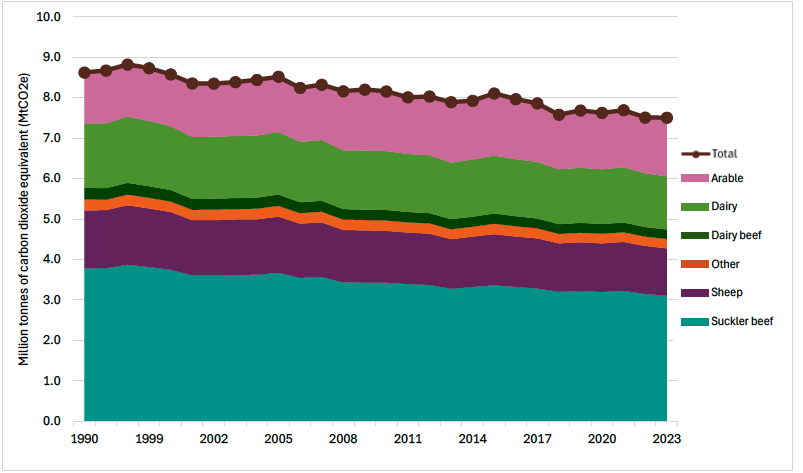
Headline 2A.1: Around a third of emissions from our food system were linked to agricultural activity. Total agriculture emissions have been in a long-term decline. In 2023, GHG emissions were at their lowest levels since the baseline period (1990).
Source: Scottish Government, Scottish agriculture greenhouse gas emissions and nitrogen use: 2023-24
Baseline 2A.1: The latest data for indicator 2A.1 shows that total emissions from agriculture in 2023 were 7.5 million tonnes of carbon dioxide equivalent (MtCO2e). This is a decrease of 2% (0.2 MtCO2e) compared with 2021. A baseline for indicator 2A.1 will be set when 2025 data is available.
Greenhouse gas emissions from Scottish agriculture have fallen steadily to around 7.5 million tonnes of carbon dioxide equivalent (MtCO2e) in 2023[63], a 13% reduction since 1990, marking the lowest level on record. This decline has been driven largely by reductions in livestock numbers - cattle down roughly 20% and sheep by a third - resulting in lower emissions from enteric fermentation and manure management.
The suckler beef subsector is the largest contributor to total agriculture emissions. In 2023 suckler beef emissions contributed 41% of total agriculture emissions. Suckler beef emissions fell by 0.7 MtCO2e (18%) between 1990 and 2023.
Total GHG emissions are allocated to agricultural subsectors[64] using a methodology developed by SRUC.[65]
Indicator 2A.2: Total overall nitrogen application rates (kg/ha) on crops and grassland
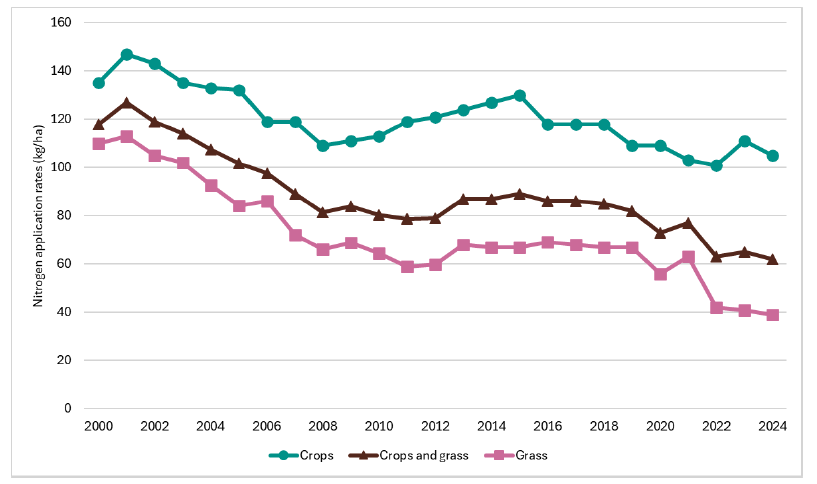
Headline 2A.2: The agricultural sector is dependent on inputs of Nitrogen (N), from both organic and inorganic sources. From 2000, the overall application rates of nitrogen fertilisers have decreased, with some fluctuation.
Source: Department for Environment, Food and Rural Affairs, British survey of fertiliser practice
Baseline 2A.2: Overall nitrogen application rates (kilograms per hectare, or kg/ha) on crops and grassland in 2024 was 62 kg/ha. A baseline for indicator 2A.2 will be set when 2025 data is available.
Nitrogen is an essential nutrient for plant growth. Nitrogen supplied by fertiliser, soil and other sources are consumed in harvested crops and animal products produced in our food system. However, excess nitrogen can also be lost to the wider environment and can be a potent greenhouse gas in the form of nitrous oxide. Losses of nitrogen to the wider environment can have harmful effects on, for example, climate change, biodiversity, air quality and water quality.
The agricultural sector is dependent on inputs of nitrogen, from both organic and inorganic sources. The inefficient use of these inputs creates nitrogen wastage. The Draft Climate Change Plan 2026-2040[66] recognises that whilst fertilisers are important for maintaining our agricultural productivity, there are many opportunities to improve their efficiency and reduce how much fertiliser is used whilst continuing to produce high-quality food.
For the Good Food Nation Plan, we use total application rates of nitrogen fertilisers on crops and grassland (kg/ha) in Scotland as an indicator. Alternative measures of nitrogen use include the ‘nitrogen balance’ and ‘nitrogen use efficiency’ (NUE). A recent report commissioned by the Scottish Government concluded that developing an NUE target for agriculture through the Scottish Nitrogen Balance Sheet (SNBS)[67] is not currently the most appropriate option for Scotland.[68] More broadly, the SNBS provides an important framework for assessing nitrogen flows across sectors and identifying opportunities to improve nitrogen use and reduce losses to the environment.
Indicator 2A.3: Estimated food waste generated per person from all sources
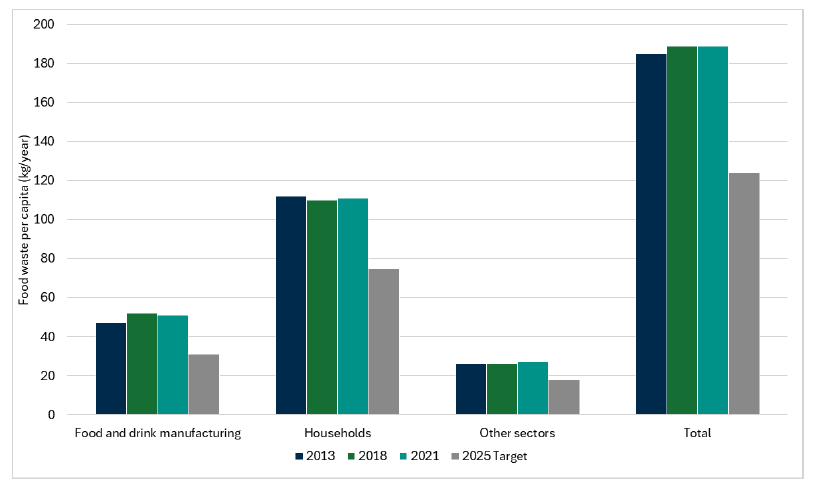
Headline 2A.3: In 2021, the per capita food waste was estimated to be 189 kg per person per year. This represents a 2% increase since 2013.
Source: Zero Waste Scotland, 2021 Scottish Food Waste Estimate (2024)
Baseline 2A.3: The baseline for indicator 2A.3 is an estimated 189 kg of food waste generated per person per year (2021). The methodology applied to arrive at this estimate is complex due to a variety of factors and will continue to be reviewed.
The Scottish Government has committed to embedding food loss and waste considerations across relevant policies and strategies, including the Good Food Nation Plan. Food waste is a global problem, with an estimated 1.05 billion tonnes of food waste generated by households, food service and retail sectors in 2022 - a global average of around 132 kg of waste generated per person, per year.[69]
As set out in the Circular Economy and Waste Route map to 2030, in partnership with Zero Waste Scotland, the Scottish Government will continue driving research into food waste reduction action and behaviour change.[70] Strengthening data and evidence will significantly help to address the challenges and opportunities for food waste reduction across Scotland, and specifically within households.
For the Good Food Nation Plan, estimates produced by Zero Waste Scotland in 2024 (for the year 2021) are used to provide a baseline position for food waste generated across Scotland’s food system.[71] The methodology applied to arrive at this estimate is complex due to a variety of factors and consideration will be given to update methodologies to align with reporting requirements of UN Sustainable Development Goal 12.3 for 2030. The timeline for an update to this measure is therefore noted to be uncertain.
In addition to reducing food waste at various stages of the supply chain and in homes, it is also important to recognise the value of diverting food waste from landfill and using by-products from manufacturing processes - both have potential uses in renewable energy production or as an organic fertiliser which can be fed back into food production. Action should also be prioritised higher up the waste hierarchy and focus on food waste prevention measures before recycling or sending it to disposal.
In 2025, Zero Waste Scotland published a report on the types and volumes of food and drink wasted in Scottish households for the period 2021/22. The report noted 73% of wasted food was edible and it was commonly wasted due to not being used in time - fresh vegetables and salads, especially potatoes, were the most wasted food in households that year. Wasted food and drink in households cost Scottish householders £1.3 billion that year, which roughly equates to £240 per person or £480 per household.[72] The 2021 Scottish Food Waste Estimated suggested household food waste that year generated approximately 2.3 million tonnes of CO2 equivalent.
As set out in the Scotland’s Circular Economy and Waste Route Map to 2030, actions to reduce food waste in Scotland have not yielded results partly as a consequence of changed consumer behaviour since COVID-19. The latest Scottish food waste data estimate for 2021 suggests that over 1 million tonnes of food were wasted in Scotland during 2021, accounting for around 6% of Scotland's total carbon footprint that year. It also suggests that the scale of the problem has increased in Scotland over the past decade.
Scotland is not alone in facing this challenge. Globally, no country has successfully demonstrated how to reduce food waste at a sufficient scale; a comparable increase in food waste has been seen across the UK during the same period between 2018 and 2021.[73]
Indicator 2A.4: Climate adaptation
Headline 2A.4: Climate change is associated with a range of impacts across food processing, distribution, retailing, consumption and the disposal of food waste. The Scottish National Adaptation Plan sets out a range of actions being undertaken to build Scotland’s resilience to climate change - including the resilience of our food system.
As well as recognising the importance of reducing greenhouse gas emissions from Scotland’s food system, Outcome 2 also recognises that the food system must also adapt to climate change. Climate change means that Scotland will be wetter in winters, drier in summers, sea level rise will continue, and our weather will become more variable and unpredictable.
Research commissioned by the FSA found that there were four climate drivers which would have an impact across the food system: temperature changes (+ and -), precipitation changes (+ and -), extreme weather events and sea-level rises/surges.[74] There could be a range of impacts across food processing, distribution, retailing, consumption and disposal of food waste.
The Scottish National Adaptation Plan sets out a range of actions being undertaken to build Scotland’s resilience to climate change - including the resilience of our food system.[75] One of the five Outcome of SNAP is that ‘economies and industries are adapting and realising opportunities in Scotland’s Just Transition’. Industries include farming, fishing, aquaculture and other businesses within the food supply chain.
As climate adaptation is a multi-faceted issue, for the purposes of the indicator framework, we have not identified a data indicator that would be practicable to monitor the overall resilience of Scotland’s food system to climate change risks.
Sub-Outcome 2B: Scotland's food system is compatible with substantial regeneration in, and maintenance of, Scotland’s biodiversity, ecosystems and soil health
As set out in the Biodiversity Strategy, globally biodiversity is declining faster than at any other time in human history.[76] Agriculture and primary food production on the land and in our seas is a key pressure on biodiversity.
Around 70% of Scotland is solely or partially managed for agriculture and rapid changes to agricultural practice in the past have been linked to declines in wildlife. Scotland’s seas are highly dynamic, supporting a diverse range of habitats and species. If managed sustainably, Scotland’s seas can continue to provide a range of ecosystem services, including food (through fishing and aquaculture).
Under this sub-outcome, biodiversity is captured through the marine and terrestrial species indicator, which comprises three separate metrics: marine species abundance, terrestrial species abundance and terrestrial occupancy. These reflect changes in the abundance and distribution of a wide range of seabirds and land and freshwater species of plants, insects, birds and other animals.
Air pollution from activities in the food and drink sector and agriculture can also cause harm to the environment generally, in particular to sensitive habitats and the wildlife depending on these. Major air pollutants from food and drink and agricultural activity form another indicator under this Outcome. Finally, indicators are also used that capture the amount of land under organic cultivation in Scotland - as a proxy for a type of farming which has positive outcomes for ecosystems. We also note the possibility of including future indicators on soil health.
Finally, it is recognised that overuse or incorrect use of pesticides can contribute to biodiversity loss. The 2025 UK Pesticides National Action Plan[77] sets out the ambitions of the four governments across the UK for managing pesticide use and minimising risk. It introduces a domestic reduction target for pesticides in the UK, to reduce the potential harm caused by pesticides to the environment by at least 10% by 2030. The actions in the UK Pesticides National Action Plan set out how we will deliver against this aim, while supporting food production.
Indicator 2B.1: Terrestrial and Marine Species Abundance
Headline 2B.1: The activities in Scotland’s food system and supply chain will continue to have an influence on biodiversity - particularly in relation to agricultural production and use of marine resources. There are a range of other drivers of biodiversity loss including climate change, pollution and the impact of invasive species.
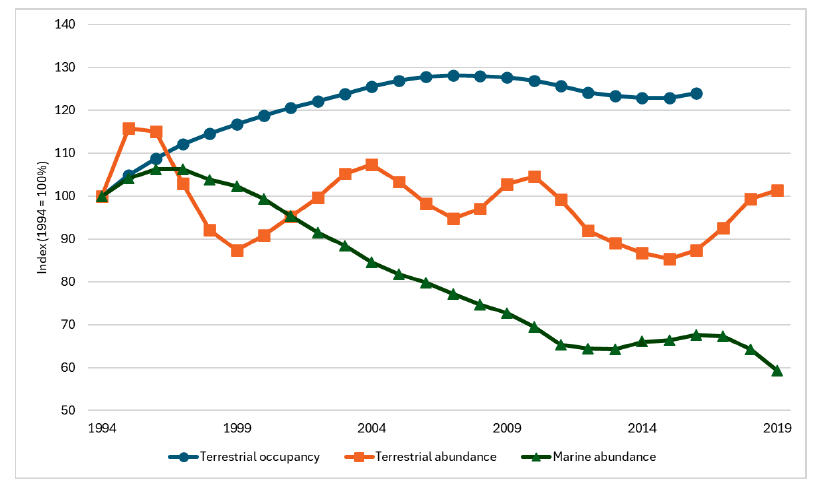
Source: Official Statistics - Marine and Terrestrial Species Indicators: Experimental Statistic | NatureScot[78]
Baseline 2B.1: The latest data for indicator 2B.1 shows the Marine Abundance Index was 59.4 in 2019, and a Terrestrial Abundance Index of 101.3 in 2019. A baseline for indicator 2B.1 will be set when 2025 data is available.
The Marine and Terrestrial Species Indicator (MTTS) is a composite indicator of many species. Therefore, changes in average abundance and occupancy of terrestrial species and in abundance of marine species will be driven by a complex set of drivers acting on species’ populations and the environments they live in. Whilst future developments in Scotland’s food system and supply chain will have an influence on this indicator (particularly in relation to agricultural production and use of marine resources), there are a range of other factors which affect this indicator going forward which are not directly linked to the food system, for example: climate change, pollution from a range of industrial sources and the impact of invasive species.
The Marine and Terrestrial Species Indicator reveals a sustained decline in marine abundance since the baseline year (1994). It shows an increase in terrestrial occupancy, reflecting changes in species’ distribution, which may, in part, be due to the northward colonisation of southerly species due to climate change. Terrestrial abundance has fluctuated over this period but the overall trends is relatively flat.
Specific data collected by NatureScot on Scottish Terrestrial Breeding birds on farmland (which is a component part of the MTTS) could be more strongly linked to impacts of agricultural production.[79] The farmland bird indicator includes 27 species of bird and overall has shown there has been a long-term increase (from 1993 to 2023) of 7% among the species trends (long-term trend: 15 increased, 9 decreased, 3 stable). Species in pastoral farmland have improved most over the long-term, with no long-term trend in the three other types of farmland - pastoral, wet and wooded.
Indicator 2B.2: Kilotons of air pollutant emissions from agriculture and food and drink
Headline 2B.2: Air pollutants associated with primary food production, such as ammonia, PM10 and PM2.5 are at lower or at similar levels to those recorded in 2005. However, Volatile Organic Compounds (VOCs) have increased significantly, with Scotch whisky maturation being a large contributor.
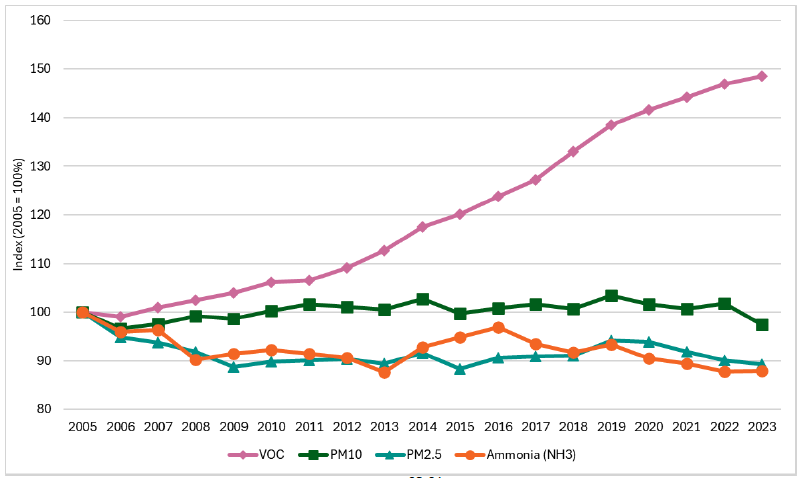
Source: National Atmospheric Emission Inventory[80] [81]
Baseline 2B.2: Since 2005, total pollutants from agriculture and food and drink for ammonia (NH3), PM10 and PM2.5 have fallen to 12.1%, 2.6% and 10.8% in 2023 respectively. VOC however has increased by 48.6% since 2005, with 77% of the total VOC recorded from agriculture and food and drink coming from Scotch whisky maturation.
A range of pollutant gases, and especially nitrogen compounds, are emitted to the atmosphere from agricultural activities (food production).
The source, the Air Pollutant Inventory for Scotland notes that there are 4 pollutants (of 11 air pollutants monitored in total) which are emitted by the agricultural sector in Scotland in significant quantities: Nitrogen Oxides (NO), Non-methane volatile organic compound (NMVOCs) and particular matter PM10 and PM2.5.[82]
Volatile Organic Compounds (VOCs) are also an air pollutant that is heavily linked to the production of distilled spirits in the food and drink sector. Further information can be found on the NAEI website, which includes an overview of the health impacts of these pollutants. Different pollutants will potentially have different health and environmental impacts. For instance, a recent review of the human health and environmental impacts of non-methane volatile organic compound emissions from malt whisky maturation facilities prepared for Scottish Government found impacts were minor but that further investigation and research is necessary to fully understand, assess and mitigate against those impacts.[83]
Agricultural emissions related to air quality are dominated by ammonia (NH3) and agriculture accounts for over 90% of total ammonia emissions in Scotland.[84] Unlike emissions of the other main air pollutants, which have declined significantly over the last 30 years, ammonia levels from all sources have decreased by only around 13% since 2005.
Indicator 2B.3: Total hectares under organic land management
Headline 2B.3: The total area of land under organic land management has increased in recent years from a record low in 2018. However, total area remains lower compared to pre 2014-levels.
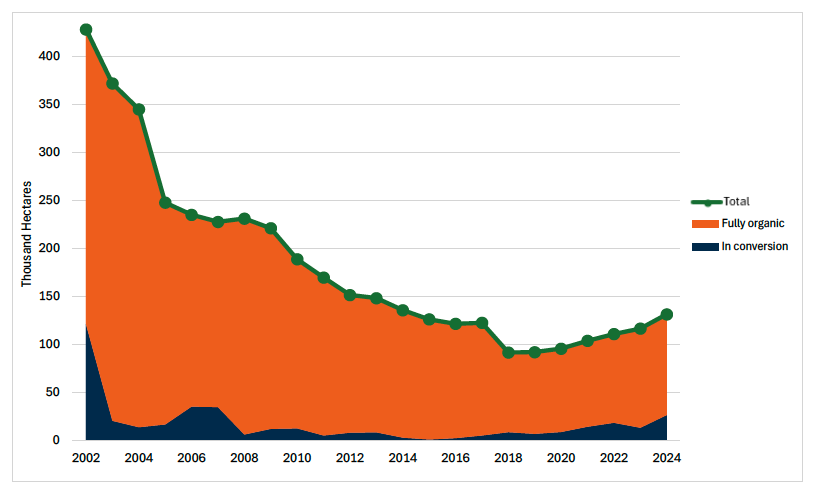
Source: Organic Farming in Scotland: 2024 - gov.scot
Baseline 2B.3: The latest data for indicator 2B.3 reports that the fully organic land area was 105.0 thousand hectares in 2024 and total hectares including in-conversion was 131.5. A baseline for indicator 2B.3 will be set when 2025 data is available.
Organic agriculture is a production system that sustains the health of soils, ecosystems and people. It relies on ecological processes, biodiversity and cycles adapted to local conditions, rather than the use of inputs with adverse effects. Organic agriculture combines tradition, innovation and science to benefit the shared environment and promote fair relationships and a good quality of life for all involved.[85]
Research assessed in a ClimateXChange literature review[86] found that:
- Organic farming practices offer benefits to biodiversity, greenhouse gas emissions, soil carbon, and how organic farming practices might help farmers adapt to a changing climate in Scotland over the next two decades to 2045.
- The inclusion of specific measures such as leys and cover crops, organic bulky materials and crop residue management in organic systems tends to increase the soil carbon.
- Organic systems are typically more diverse than conventional systems.
The Good Food Nation Plan affirms the commitment to increase organically managed land, as such the area of land under organic management is an indicator for the Plan.
The latest data shows that the total land area that was under full organic cultivation or in-conversion was 131.5 thousand hectares in 2024. Whilst this represents a 44% increase since 2018, over the long-run the total organic land area remains lower than it has been historically in Scotland. Permanent pasture - including rough grazing land - remains the dominant land use type (82% of the organic land area), with less than 5% dedicated to cereals. Around 2% of cattle, sheep and poultry were farmed organically.
Whilst the land area under organic cultivation has increased since 2018, the number of organic operators registered in Scotland has fallen (down 6.9% since 2018).
Indicator 2B.4: National soil health
Headline 2B.4: Healthy soils and sustainable management of existing soil resources enable Scotland’s food system to produce high-quality food a nd drink products. Monitoring of soil health in a changing climate is a priority for the Scottish Government.
While Scotland has a significant knowledge base on soils, there is no single indicator that could be applied to all soils, climatic conditions or land uses and therefore be used as a quantitative data indicator for the Good Food Nation Plan.[87]
Scotland has a considerable amount of good quality soil data due, in part, to a long history of soil mapping, characterisation and quantification of soil properties supported primarily from public money. However, for most purposes, these soil maps can be considered as representing a near-steady state as soils develop slowly over a long time.[88] There is currently no systematic nationwide monitoring scheme for soils in Scotland.
There are many risks threatening Scottish soils across different soil types and land covers. However, unlike air and water, there is no single overarching soil policy providing security and governance for Scottish soils.
The Strategic Research Programme - the ‘Healthy Soils’ project (2022 to 2027)
will deliver evidence to maintain soil health and support the protection of soil from loss and degradation.[89] The research, funded under the Scottish Government’s Environment Natural Resources and Agriculture Strategic Research Programme and led by the James Hutton Institute, is focusing on identifying new ways of managing soils under threat from changes in climate, land use and land management. Work underway includes the design and testing of indicators and metrics to support the monitoring of Scotland's soil health. Once completed, this work should support and inform the development of mitigation and adaptation interventions.
Sub-Outcome 2C: Animal health and welfare standards are protected, enforced and improved in line with Scottish Government policy.
Improving and protecting animal health and welfare is an essential part of sustainable food production. Animal health legislation is in place to ensure the protection of both human and animal health, whilst protecting them from the threat of diseases which impact productivity, our ability to trade and our reputation for high-quality food internationally.
There is limited data available to assess animal welfare holistically at a national level - although there is some data available for specific practices relevant to some species. The Animal Protection Index was developed by World Animal Protection and is a methodology that attempts to rank 50 countries according to the robustness of their animal welfare policy and legislation.[90] The index gives each country an overall score based on a seven-point lettered and colour-coded scale, where A represents the highest results and G identifies countries with the most room for improvement. The UK has ranked highly (B) under this index (note that no country met the criteria to be awarded an A under this index); recognising high standards relative to a range of other countries. A Scotland specific ranking was not available.
As set out in the Good Food Nation Plan, the Scottish Animal Welfare Commission (SAWC) has been tasked to explore the feasibility of developing further indicators of animal welfare for farmed animals. This is intended to provide a more robust basis for developing indicators to support future Good Food Nation plans. Lack of meaningful quantitative indicators is a common challenge across many countries. For example, we are cognisant of on-going work within the European Commission to work towards developing meaningful animal welfare indicators.[91]
Animal Health and Welfare Plans have now been introduced as a requirement for some farms from 2025 as a prerequisite to qualify for Basic Payments. There have also been proposals in a recent Defra consultation to look at the feasibility of introducing a mandatory five-tier labelling system for pork, chicken, and eggs, indicating whether products fall below, meet, or exceed UK baseline animal welfare standards.[92] Both of these developments could lead to more meaningful indicators in future.
Improvements in animal welfare will also be driven by food businesses in our supply chain. There are positive indicators from the independent Business Benchmark on Farm Animal Welfare (BBFAW) which monitors 150 global food firms on their farm animal welfare policies, practices and performance within the supply chain.[93] Their 2024 report suggests that companies are continuing to focus on farm animal welfare management and disclosure and are beginning to respond to the new expectations on farm animal welfare. It was also noted in this analysis that UK-based firms consistently rank highest of all other regions globally.
Animal disease outbreaks are a significant threat to Scotland’s food system, as well as to human health, rural communities, animal keepers and to the wider economy. There is broad consensus among experts that factors such as climate change, antimicrobial resistance and changing trading patterns are likely to increase the rates of endemic diseases, and the frequency and variety of exotic disease outbreaks. As such, there are numerous potential threats to livestock health in Scotland.[94]
The initial indicators set out in the Plan focus on animal health and welfare issues within a domestic food production context. Food that is imported from other countries may have been produced with lower animal health and welfare standards. An FSA report found that data availability on current global practices for animal welfare in imported food standards is generally lacking.[95]
The initial indicators for this sub-outcome draw upon a range of data sources that relate to specific animal health and welfare issues: the importance of animal welfare as a food concern to Scottish consumers; the proportion of laying hens in Scotland that are either free-range or organic;[96] the number of livestock animals inspected each year and the prevalence of Bovine TB in Scotland.
Indicator 2C.1: Animal welfare concerns of Scottish consumers
Headline 2C.1: Animal welfare standards are an important food concern for Scottish consumers. Three-quarters of Scottish consumers reported being highly or somewhat concerned about animal welfare. Going forward, data will capture how often consumers check for information on animal welfare when purchasing food.
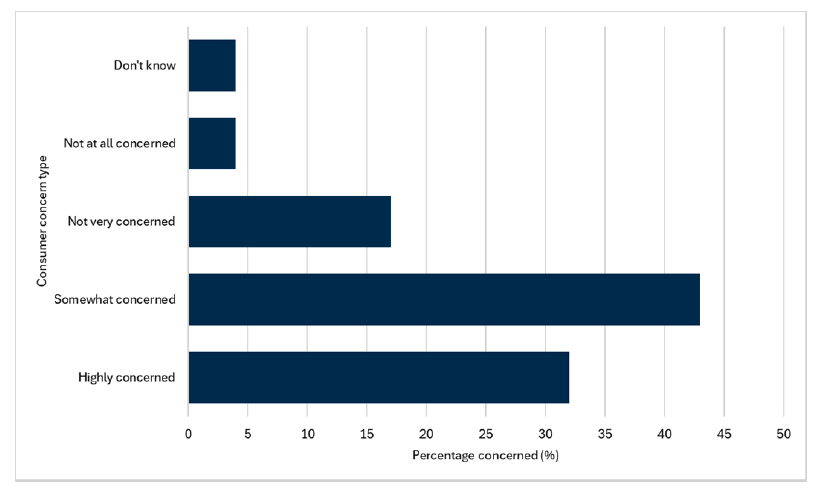
Source: Food Standards Agency and Food Standards Scotland, Food and You 2 Survey: Scotland (Wave 8)
Baseline 2C.1: The latest data for indicator 2C.1 from 2023-2024 suggests that 75% of Scottish consumers were reportedly concerned about animal welfare. The question on level of concern about animal welfare is changing in future waves. From wave 11, a question on whether consumers check for information about animal welfare will be asked. A baseline for indicator 2C.1 will be set when this data is available in Spring 2026.
A report commissioned by the Food Standards’ Agency noted that animal welfare standards within a given national context are driven by various factors including culture, public recognition of animal sentience, and perceived importance of animal welfare. Therefore, an indicator for the Good Food Nation Plan against this sub-outcome was to track attitudes of Scottish consumers to animal welfare issues. Whilst it is clear that Scottish consumers reportedly are concerned about animal welfare, it should be recognised that there is a ‘value-action gap’ and that consumer food choices in practice may not align with their stated intentions.[97] This finding was also supported by research by the RSPCA, which found a gap between consumers stated attitudes and their real actions in purchasing decisions.[98]
Animal welfare standards are an important food concern for Scottish consumers and it may motivate consumers to buy higher welfare products as a result. Three-quarters (75%) of Scottish consumers reported being highly (32%) or somewhat (43%) concerned about animal welfare.
From wave 11, a question on whether consumers check for information about animal welfare when purchasing food will be asked instead of a question on levels of ‘concern’ in food production process.
Indicator 2C.2: Proportion of laying hens in Scotland that are either reared as free-range or organic
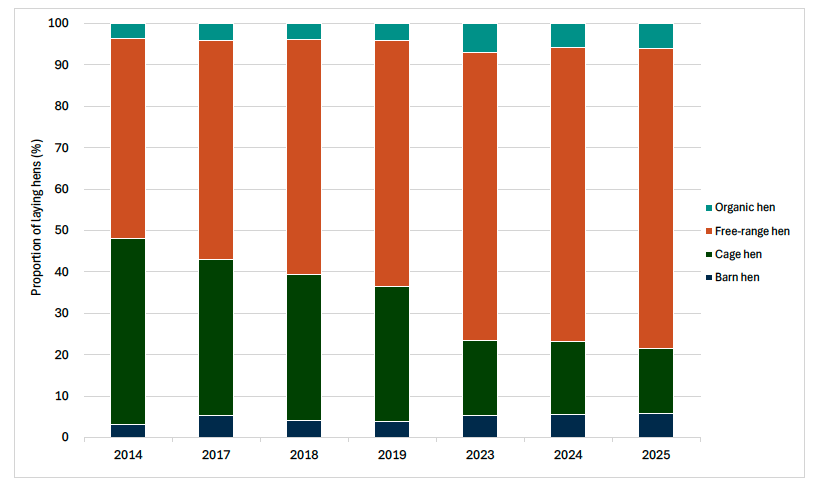
Headline 2C.2: More than three-quarters of laying hens in Scotland are either free-range or organic in 2025. This has increased from just over half of laying hen s in 2014.
Source: Scottish Government Avian Registration Hub
Baseline 2C.2: The baseline for indicator 2C.2 is that the proportion of laying hens reared as free-range or organic was 78% in April 2025.
The Scottish Government has consulted on phasing out the use of cages for laying hens and gamebirds[99] and will report on the findings in due course. It is recognised that this is a specific animal welfare policy goal and aligns within intentions set out by the EU to phase out caged hens. In 2016 the major supermarkets also pledged that they would stop selling shell eggs from hens kept in enriched cages by 2025 and some have already done so.
As set out above, we have not put forward other specific indicators for other species at this time due to lack of available data. Previous research has looked at possibility of looking at other issues including castration and tail docking in lambs.[100]
More than three quarters (78%) of laying hens in Scotland are either free-range or organic in 2025. This has increased from just over half (52%) of laying hens in 2014. Within this, 48% were free-range hens whilst 4% were organic hens in 2014. Although organic hens has increased to 6% in 2025, it is free-range hens that has increased significantly to 72%.
Compassion in World Farming have monitored the implementation of cage-free egg commitments of many food companies (including in the UK).[101] It identifies which companies are ‘Leading’ the industry (already 100% cage-free), which are ‘In Progress’ (on track to reach 100% by 2025), which are ‘At Risk’ (of missing the 2025 deadline), and which are ‘Laggards’ (have a commitment but not reporting). As of 2024, just over half of UK companies reporting were classed as ‘leaders’ - which compared favourably compared to comparator nations (France, Italy, Spain and Poland).
Indicator 2C.3: Livestock animals inspected by local authorities every year in Scotland
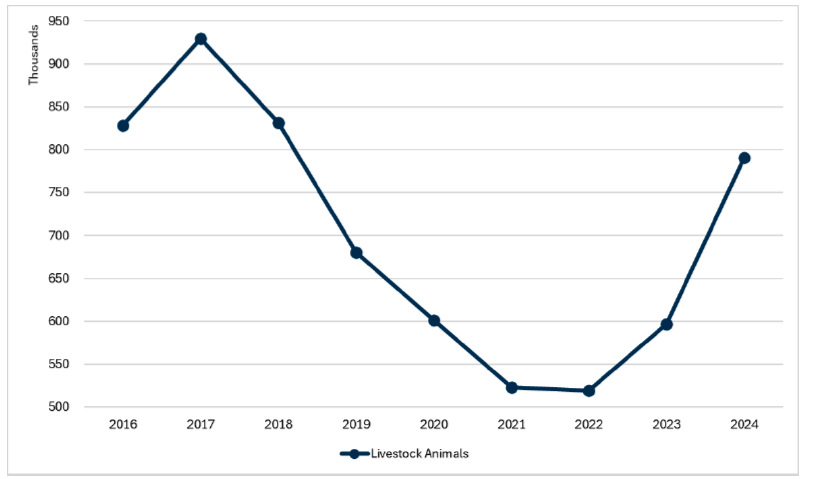
Headline 2C.3: The number of livestock animals inspected by local authorities has increased in recent years and is more in line with num bers recorded before the Covid-19 pandemic.
Source: Scottish Government, Animal Health Act 1981: Expenditure and Prosecutions - 2024
Baseline 2C.3: The latest data for indicator 2C.3 reports that 790,634 livestock animals were inspected or assessed in markets and other premises or holdings by local authorities in 2024. A baseline for indicator 2C.3 will be set when 2025 data is available.
The Good Food Nation Plan sets out that protecting existing animal welfare standards is as important as making improvements. Standards can only be managed through a system of enforcement. The enforcement options available to deal with breaches of animal health, biosecurity, and welfare regulations are varied with options ranging from: advice and guidance, warning letters or statutory notices, regulatory actions, and prosecution.
Returns made under section 80 of the Animal Health Act 1981 includes a record of the total number of animals that were inspected or assessed in markets and other premises or holdings related to enforcement activity each year. This includes animals inspected for fitness, identification or health at markets and does not require that an examination takes place. It should be noted that the annual return is compiled from information supplied to the Scottish Government and while every effort is made to ensure its accuracy, this cannot be guaranteed.
Indicator 2C.4: Herd prevalence of Bovine Tuberculosis (TB) in Scotland
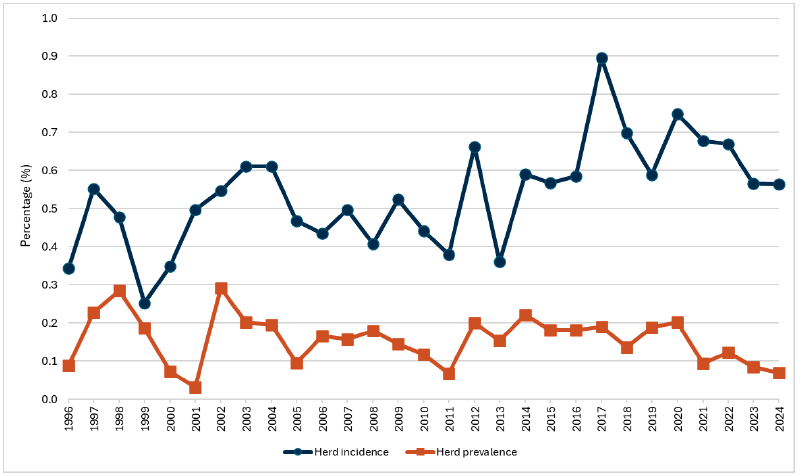
Headline 2C.4: Scotland is recognised as being officially TB free with consistently low and stable prevalence of bovine tuberculosis (TB) in Scottish cattle herds.
Source: Department for Environment, Food and Rural Affairs, Bovine Tuberculosis statistics
Baseline 2C.4: The latest data on herd prevalence of TB in Scottish Cattle herds was 0.1% in 2024. A baseline for indicator 2C.4 will be set when 2025 data is available.
Bovine tuberculosis (TB) is a devastating disease of cattle and a major challenge facing large parts of the UK cattle farming industry.[102] Scotland was recognised as being officially TB free (OTF) by the European Commission in September 2009. Maintaining OTF status is crucial to the continuing success of the Scottish cattle industry and remains a key animal health risk. It is a zoonotic disease, though transmission to humans is mainly avoided through the pasteurisation of milk and the risk in Scotland of this being passed to humans is very low.
To date, it is estimated that the exempt herds policy has saved Scottish Government and stakeholders over £10 million and over 16,000 herd tests. This has saved immense amounts of time and costs for both farmers and APHA.
OTF status provided significant economic benefits for the Scottish cattle industry when the UK was a member of the European Union, because once OTF status was achieved, EU rules allowed the implementation of a risk based herd testing surveillance policy, rather than having to test all herds four yearly. Research commissioned at Glasgow University informed a new risk based herd testing policy in 2011.[103] All Scottish herds are now assessed for risk each year by the Animal and Plant Health Agency.
It is important that Scottish Government carefully manage TB cases and act swiftly to stamp out disease where it arises. Losing OTF status would impact on Scotland’s international reputation as having healthy cattle which are free from infection, and could affect trade. It would also result in a loss of the targeted risk-based TB test approach, an increase in the frequency of routine test at significant impact industry, APHA veterinary and laboratory resource, and cost to Scottish Government.
As part of Scottish Government’s efforts to maintain OTF status, the government promote responsible buying and encourage keeper’s to look at the general health and health history of the herds they are purchasing from. As well as this, consistent messaging is shared around improving general biosecurity on premises, which has a knock on effect in protecting against other diseases.
Sub-Outcome 2D: Scotland's fishing and aquaculture activities provide healthy, quality and sustainably harvested and farmed seafood.
Scotland's world-renowned seafood sector, from catching and production to consumption, is an important pillar of the blue economy. The indicators in this sub-outcome are sourced from two data sources relating to the sustainability of commercial fishing and sustainable Salmon production (Scotland’s single biggest food export).
Indicator 2D.1: The proportion of commercial stocks fished at sustainable levels
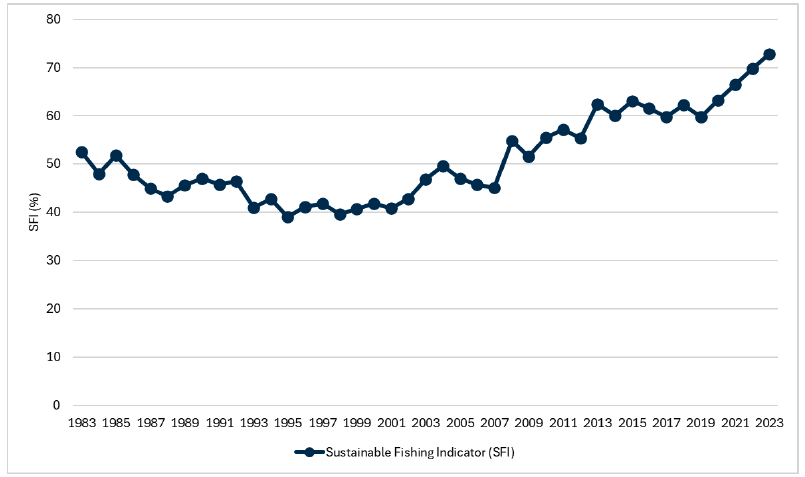
Headline 2D.1: The sustainability status of stocks in Scottish waters has increased through time.
Source: The Scottish Sustainable Fishing Indicator (SFI)
Baseline 2D.1: The sustainability status of stocks in Scottish waters has increased through time to a high of 73% in 2023. A baseline for indicator 2D.1 will be set when 2025 data for the Scottish Sustainable Fishing Indicator is available.
There is a strong suite of measures in place to manage sea fisheries and safeguard fish stocks, such as the Scottish Sustainable Fishing Indicator (SFI). The SFI was originally developed under the remit of the Scottish National Performance Framework.[104] The aim of the Scottish Sustainable Fishing Indicator is to provide a single measure per year to indicate the assessed confidence that the relevant commercial fish and shellfish stocks in Scottish waters are being fished sustainably.
The SFI illustrates that the sustainability status of stocks in Scottish waters has increased through time to 73% in 2023. Data are currently included in the SFI estimation from 1983 to 2023 and cover 38 stocks, although not all stocks have assessment estimates in some of the earlier years. The lowest estimate of SFI of 39% occurred in 1995, while the highest estimate of 73% occurred in the most recent year (2023). Following a shallow decline during the early years of the time series, the overall trend in SFI has been positive since 1995.
The positive trends are reflective of improved fisheries management and more responsible fishing practices and is particularly notable during a period when warming in Scottish waters might be expected to be reducing the health of stocks.
Indicator 2D.2: Atlantic Salmon production volumes
Headline 2D.2: Atlantic Salmon production has grown from very low levels to be a high value food product that is the UK’s biggest single food export. The total production of Atlantic salmon during 2024 was 192,000 tonnes, an increase of 41,051 tonnes (27%) on the 2023 total.
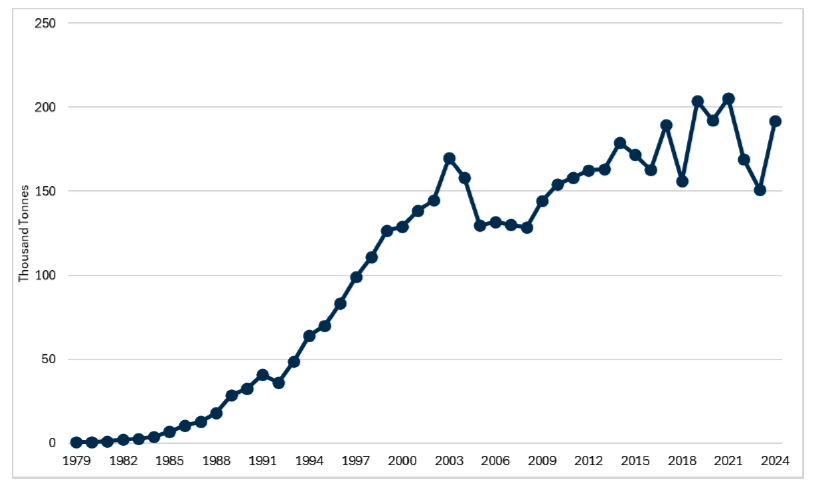
Source: Scottish Government, Scottish fish farm production surveys
Baseline 2D.2: The total production of Atlantic salmon during 2024 was 192,000 tonnes, an increase of 41,051 tonnes (27%) on the 2023 total. A baseline for indicator 2D.2 will be set when 2025 data is available. Total production for 2025 is estimated to be 195,182 tonnes, this value is a sector estimate based on stocks currently being on-grown.
Atlantic Salmon is a high value food product produced from Scotland’s aquaculture sector and is the UK’s biggest single food export, worth £844 million in 2024.[105] The Scottish Fish Farm Production Survey collects information from companies actively involved in Atlantic salmon production and represents the entire sector operating in Scotland. The total production indicator captures the volume of Salmon ultimately made available to consumers and available for export.
Economic growth of marine industries - including Salmon production - must happen in a context of suitable environmental protection and monitoring of environmental risks associated with aquacultural production. A range of data sets are made available through the Scotland’s Aquaculture website[106], which brings together various information in one easily accessible location and helps provide a joined-up view of aquaculture in Scotland. The data covers a variety of environmental issues including fish farm emission reports, antimicrobial use and anti-sea lice therapeutants use, and data on sea lice[107] and fish escapes.
Scotland has a robust legislative and regulatory framework[108] in place which provides the right balance between developing the fish farming sector and protecting the environment on which the sector depends. All farms must meet strict guidelines to ensure that the environmental effects are assessed and managed safely.
The Scottish Government’s Vision for Sustainable Aquaculture[109] sets out our long-term aspirations for the aquaculture sectors in Scotland and the supply chains which support them.
Contact
Email: resasfoodresearch@gov.scot