
Making the Case for Nature: insights from Scotland's Natural Capital analyses
This report is an analytical review consolidating Scotland's Natural Capital evidence base. Synthesises over a decade of analyses to distil key insights to help inform better decision-making across government, business, and society.
Theme 1: Natural capital's economic contribution is significant
1.1. Nature and our economy
Scotland’s natural environment is central to our identity as a nation. It is fundamental to our health, our quality of life, and our economy.
‘The Dasgupta Review’ [7], highlights how the economy is embedded within the environment and is not external to it. The use of natural resources is not infinite, and the depletion of natural resources has a direct impact on the global economy.
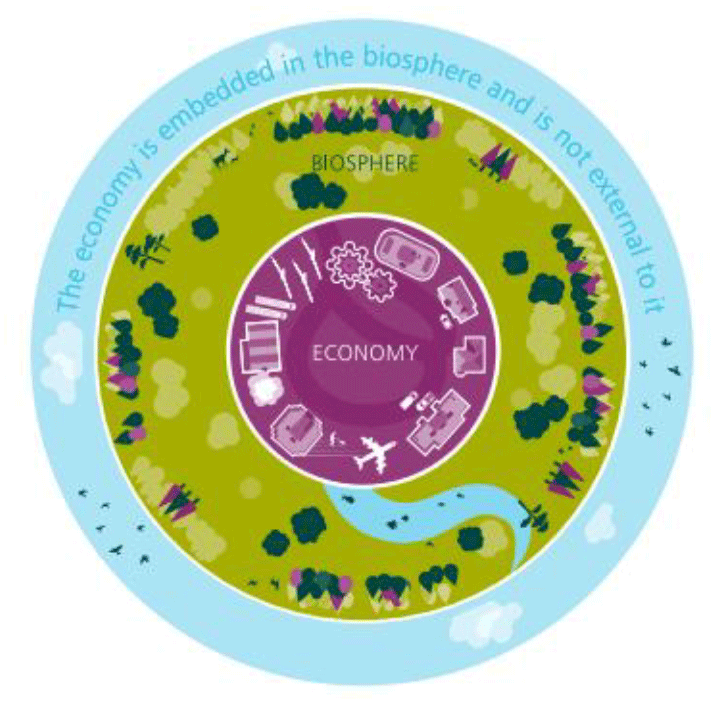
Nature provides services that often do not have a market value, meaning they are easily excluded from and undervalued in economic analyses and decision-making approaches. The challenge is to make the value of nature more visible to enable its inclusion decision-making and in turn lead to more sustainable and overall better decisions being made.
‘The Dasgupta Review’ [7] highlights that whilst human and produced capital have been increasing over time, this has often been at the expense of natural capital. Globally produced capital per head has doubled and human capital per head increased by about 13% since 1992. Meanwhile, the value of the stock of natural capital per head declined by nearly 40% in the same time period. This is shown in Figure 6.
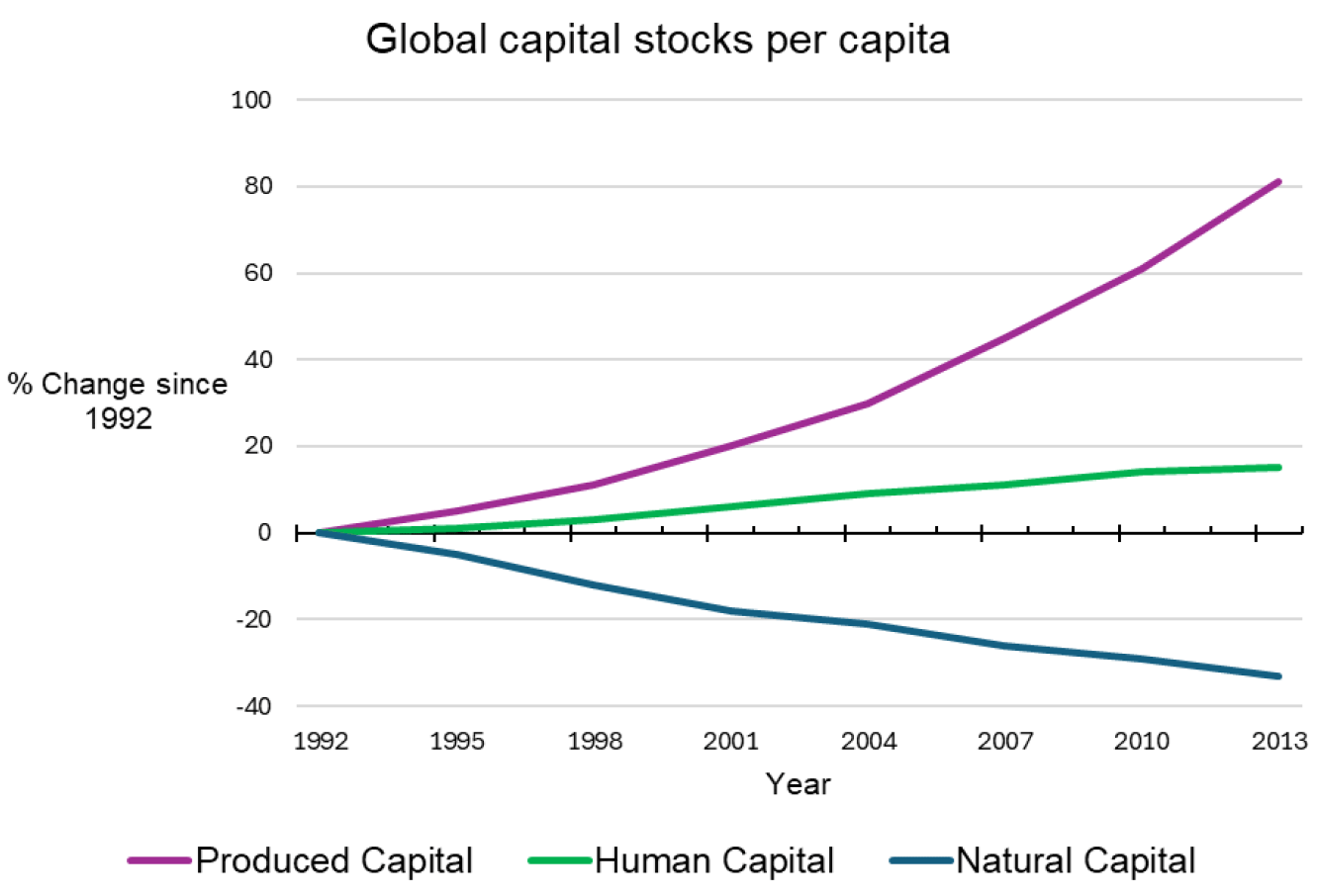
A central theme of ‘The Dasgupta Review’ [7] is the importance of measuring wealth that accounts for all assets, including natural assets. This inclusive measure of wealth is argued to be a better overall measure of economic progress than GDP. While GDP reflects the market value of the goods and services an economy produces, it does not provide information on how the stock of wealth is changing. In contrast, inclusive wealth provides a measure that links coherently to the wellbeing of current and future generations. Introducing natural capital into national accounting frameworks is seen as an important step in that direction.
The Office for National Statistics (ONS) publish ‘UK Natural Capital Accounts’ [6] which estimate the financial and societal value of natural assets. These are produced annually for the UK and Scotland. They also publish ‘Inclusive Wealth and Income Accounts’ [9] that capture a broader range of activities than GDP, including the value of ecosystem services and natural capital.
In keeping with Inclusive Wealth concepts, the Scottish Government and other public bodies are committed to taking a Natural Capital and Wellbeing Economy approach. To assess progress towards the development of a wellbeing economy, the ‘Wellbeing Economy Monitor’ [10] has been developed to look beyond GDP and measure how the Scottish economy contributes to health, equality, fair work and environmental sustainability. The monitor includes natural capital metrics such as greenhouse gas emissions and biodiversity.
1.2. Natural Capital Accounts
The ‘UK Natural Capital Accounts’ (NCA) aim to value in monetary terms the benefits that different ecosystem services bring to society and the economy.
The ‘UK Natural Capital Accounts’ [6] include a specific Scotland Natural Capital Account that provides an annual value of ecosystem services and an overall natural capital asset value for Scotland. The annual value is the monetary estimation of the benefits derived from ecosystem services each year. The asset value is based on the net present value of the flow of services over time. It measures the stock of ecosystem services and takes into consideration their future expected supply. A further explanation of these components of the Accounts can be found in Technical Appendix A.1.
Currently, the Accounts are seen as official statistics in development, as the methodologies are continually reviewed and revised to include more services and become more accurate.
The NCA should be interpreted as the minimum value of the services provided by the natural environment. This is because not all ecosystem services have been monetised within the NCA, due to the complexities of measurement for some services such as water quality regulation or flood regulation.
1.2.1. NCA headline results
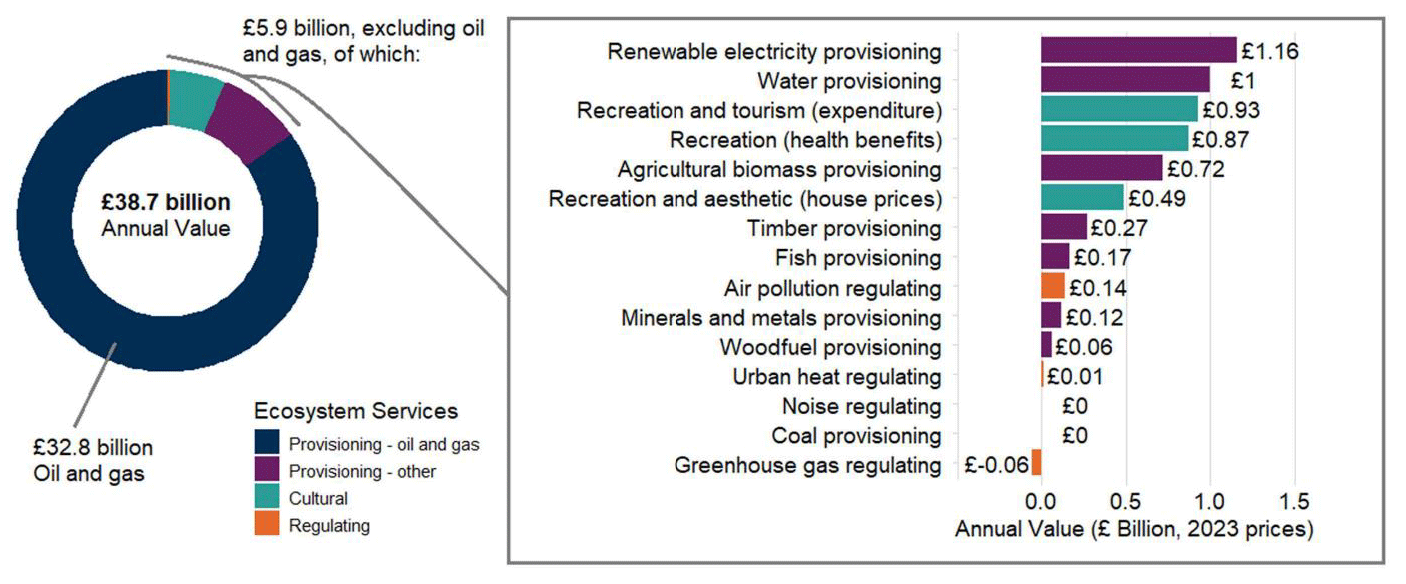
The most recent NCA [11], published in 2024, show the natural capital value in 2022, as shown in Figure 7. The methodology is updated regularly, and the results are backdated to use the same methodology and provide a consistent time series.
Graphic text below:
The annual value of ecosystem services is estimated at £38.7 billion, with oil and gas provisioning accounting for £32.8 billion of that total. Excluding oil and gas, the remaining £5.9 billion is distributed across various services: renewable electricity provisioning (£1.16 billion), water provisioning (£1 billion), recreation and tourism expenditure (£0.93 billion), recreation health benefits (£0.87 billion), agricultural biomass provisioning (£0.72 billion), recreation and aesthetic contributions to house prices (£0.49 billion), timber provisioning (£0.27 billion), fish provisioning (£0.17 billion), air pollution regulation (£0.14 billion), minerals and metals provisioning (£0.12 billion), wood fuel provisioning (£0.06 billion), and urban heat regulation (£0.01 billion). Noise regulation, coal provisioning, and greenhouse gas regulation have an annual value of £0, with greenhouse gas regulation showing a negative value of -£0.06 million. These services are categorized into provisioning (oil and gas and other), cultural, and regulating services.
Key findings include:
- In 2022, the total annual value of natural capital in Scotland was estimated at £38.7 billion, or £5.9 billion when oil and gas is excluded.
- Scotland contributes 44% of the total UK annual value when oil and gas is included and 12% when oil and gas is excluded.
- Most of Scotland’s annual value is from provisioning services including oil and gas (£32.8 billion), renewable energy (£1.2 billion) and water supply (£1.0 billion).
- Cultural ecosystem services had an annual value of £2.3 billion in 2022 which is composed of health benefits from recreation (£0.9 billion), outdoor recreation and tourism (£0.9 billion) and recreation and aesthetic (house prices) (£0.5 billion).
- Regulating ecosystem services – of those that could be monetised – had a net annual value of £0.1 billion in 2022. Air pollution removal had the highest annual value of the regulating services, worth £0.1 billion in avoided health impacts.
- The natural capital asset value for Scotland as of 2022 was an estimated £254.7 billion including oil and gas, or £142.2 billion when oil and gas is excluded.
The ONS published ‘Marine Natural Capital Accounts’ [12] in 2021, which estimated the value of UK marine natural capital assets at £211 billion. The accounts are still in development, and it is not possible to break down the results by country or region. Marine recreation and carbon sequestration were found to be the most significant benefits. Marine carbon sequestration was estimated at between one-third and more than double the carbon removed by terrestrial habitats but requires more research to fully understand.
1.2.2. Renewable energy generation increasing as use of fossil fuels decreases
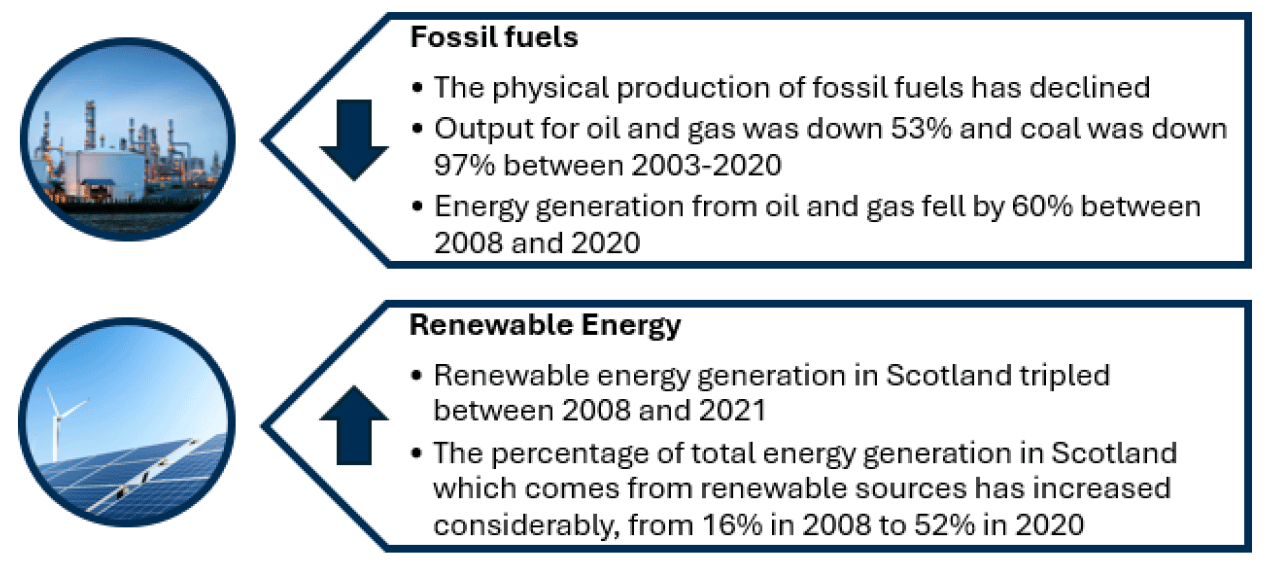
Based on the ‘UK Natural Capital Accounts’, oil and gas made up 45% of the total UK annual flow value in 2022. However, when projecting long term, oil and gas is 7% of the overall UK asset value, whilst the asset value of renewable energy is around 2.7%. Figure 8 presents key trends in fossil fuel and renewable energy in the UK and Scotland.
Graphic text below:
Fossil Fuels
- The physical production of fossil fuels has declined.
- Output for oil and gas was down 53% and coal was down 97% between 2003-2020
- Energy generation from oil and gas fell by 60% between 2008 and 2020.
Renewable Energy
- Renewable energy generation in Scotland tripled between 2008 and 2021.
- The percentage of total energy generation in Scotland which comes from renewable sources has increased considerably, from 16% in 2008 to 52% in 2020.
Overall, non-renewable resources represent a declining share of natural capital, whilst renewable resources are increasing in relative terms.
1.2.3. Fluctuations in natural capital due to oil and gas prices
It is important to note that the annual value of Scotland’s natural capital is very sensitive to oil and gas price changes. While oil and gas are priced commodities, they are also non-renewable provisioning ecosystem services that are derived from natural assets and provide economic value. More details on how provisioning services sit within both the National Accounts and the Natural Capital Account is provided in Technical Appendix A.2.
The value of oil and gas within the natural capital accounts represents the value of oil and gas arising directly from the natural asset whereas other economic data measures the Gross Value Added (GVA) of the resource, which is the economic contribution to the economy and value added by labour and capital. The economic data on oil and gas will differ from the value presented in the natural capital accounts for this reason.
Whilst the physical flow of oil and gas has been decreasing, high oil and gas prices have meant that the natural capital annual value increased substantially in 2022, as shown in Figure 9.
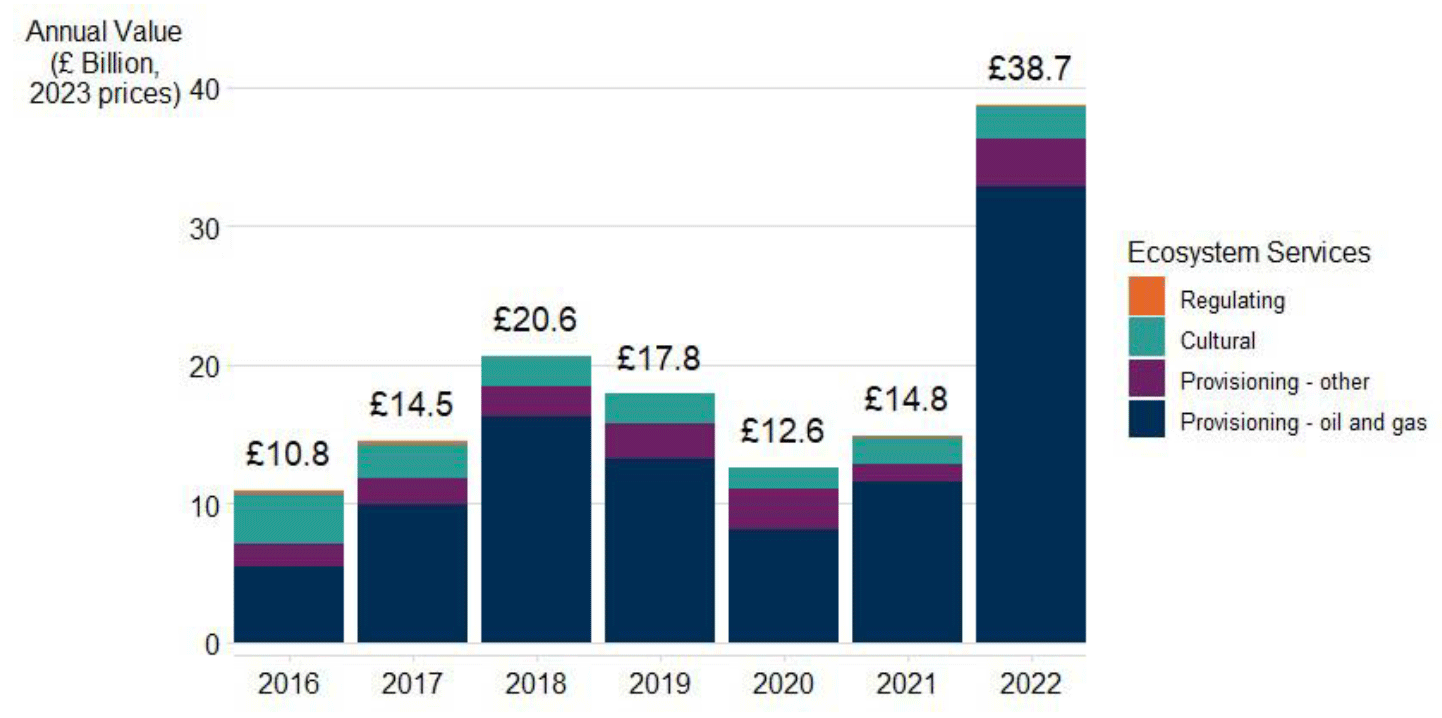
The data presented in the Natural Capital Accounts provides the headline estimates for the value of nature to the economy and society and highlights the reliance on nature. In the following section, the economy’s reliance on natural capital is presented. This links to the System of National Accounts (SNA) and expenditure data to capture industry reliance on natural resources and ecosystem services to generate values for each sector’s reliance on natural capital.
1.3. The economy’s reliance on natural capital
The Scottish economy relies on natural capital through extraction of natural resources, provision of business-critical ecosystem services, and support to workforce and wider population health – see Figure 10.
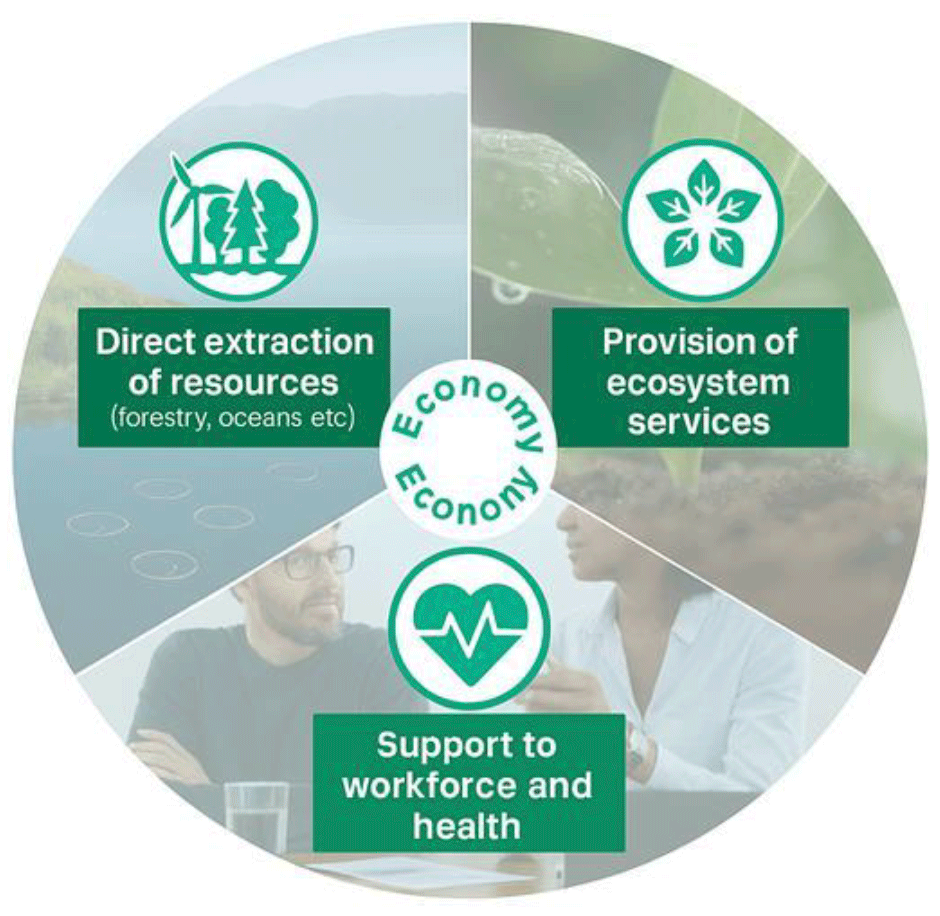
Graphic text below:
The economy relies on natural capital through the provision of ecosystem services, the support to workplace and health and the direct extraction of resources such as forestry and oceans.
Natural capital reliance is where an economic activity is dependent on ecosystem services in its value chain, such as receiving material inputs, moderation of wastes and operating conditions, and affected by customer motivations [8].
‘The Importance of Natural Capital to the Scottish Economy’ [8] research shows that industries reliant on natural capital accounted for a significant proportion of Scotland’s economic output and jobs. This is shown in Figure 11.
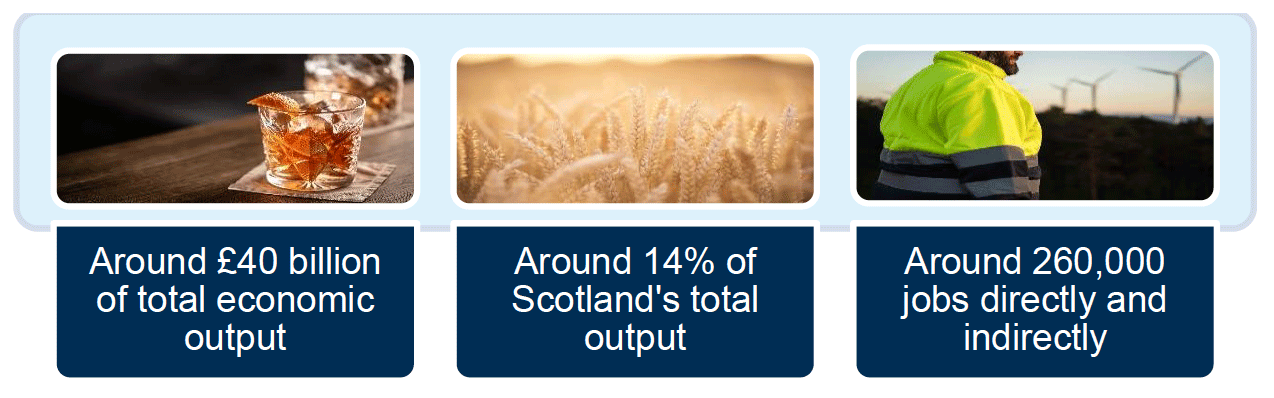
Graphic text below:
Scotland’s economic output and jobs are supported by natural capital. Around £40billion of total economic output is supported, around 14% of Scotland’s total output and around 260,000 jobs directly and indirectly.
The estimates presented here take a broad definition that includes direct provisioning ecosystem services such as timber and spend on provisioning services from key industries reliant on natural capital. It also captures industry reliance on a wider range of (non-provisioning) ecosystem services such as flood regulation. The contributions to economic output and employment from provisioning services and wider ecosystem services is presented in Figure 12. More on the methodology can be found in Technical Appendix A.3.
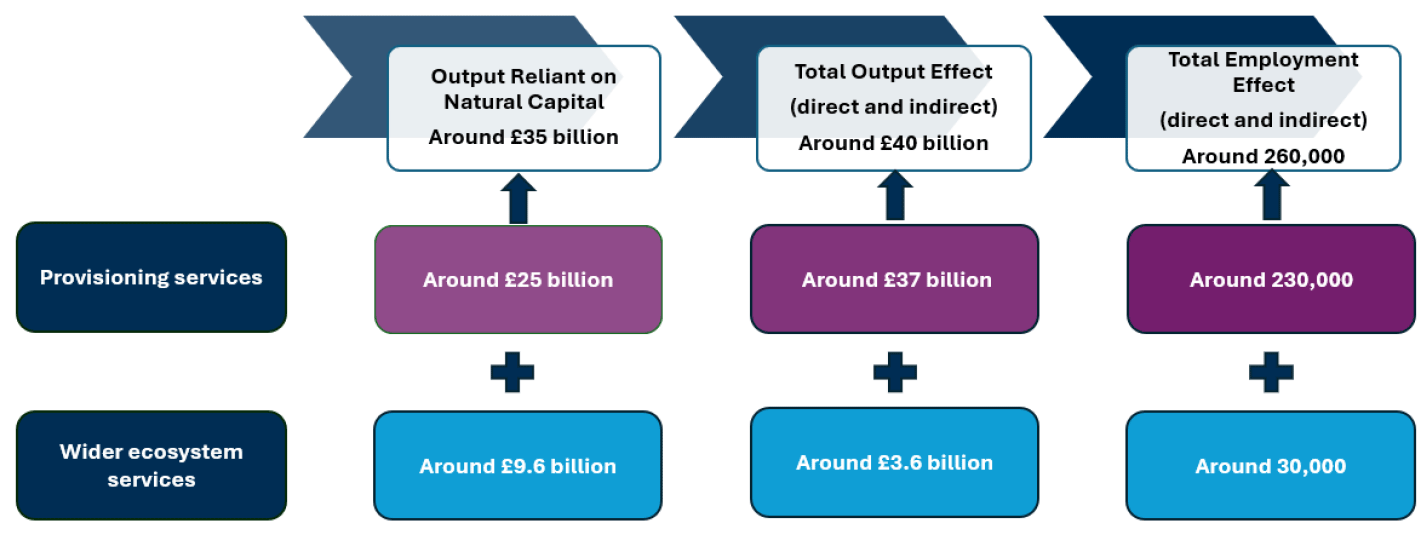
Graphic text below:
Around £35 billion of output is reliant on natural capital, around £25 billion comes from provisioning ecosystem services and around £9.6 billion is from wider ecosystem services. The total output effect (direct and indirect) is around £40 billion with around £37 billion from provisioning services and around £3.6 billion from wider ecosystem services. The total employment effect (direct and indirect) is around 260,000, 230,000 from provisioning services and around 30,000 from wider ecosystem services.
Even taking this broader definition, the values should still be seen as the lower limit for Scotland’s reliance on natural capital.
Of this value, £2.6 billion cannot be substituted by man-made interventions, so if natural capital is damaged this value will be lost. Therefore, action to recognise these dependencies and maintain natural capital in good condition is essential to ensure sustainable economic growth.
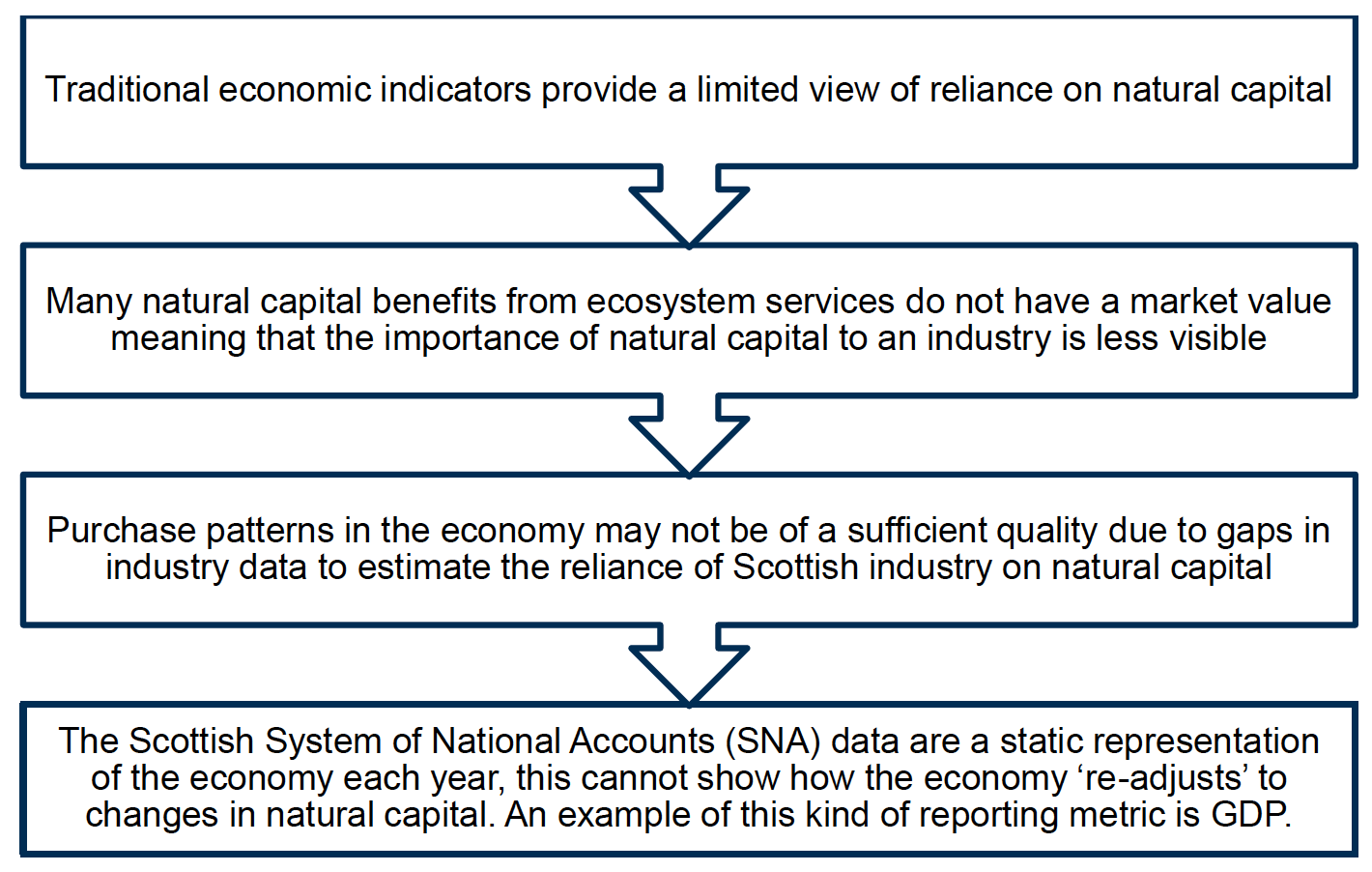
The report [8] outlines why it is challenging to capture the value of natural capital in traditional economic frameworks, see Figure 13.
Graphic text below:
Traditional economic indicators provide a limited view of reliance on natural capital. Many natural capital benefits from ecosystem services do not have a market value meaning that the importance of natural capital to an industry is less viable. Purchase patterns in the economy may not be of a sufficient quality due to gaps in industry data to estimate the reliance of Scottish industry on natural capital. The Scottish System of National Accounts (SNA) data are a static representation of the economy each year, this cannot show how the economy ‘re adjusts’ to changes in natural capital. An example of this kind of reporting metric is GDP.
To overcome these challenges, the research [8] provided an assessment of ecosystem services dependence for each sector to estimate the industry expenditure that is reliant on Scotland’s natural capital beyond just provisioning services. These wider ecosystem services include climate regulation, protection from floods and pollination services. This analysis provided a novel approach to better understand the overall reliance of the economy on natural capital.
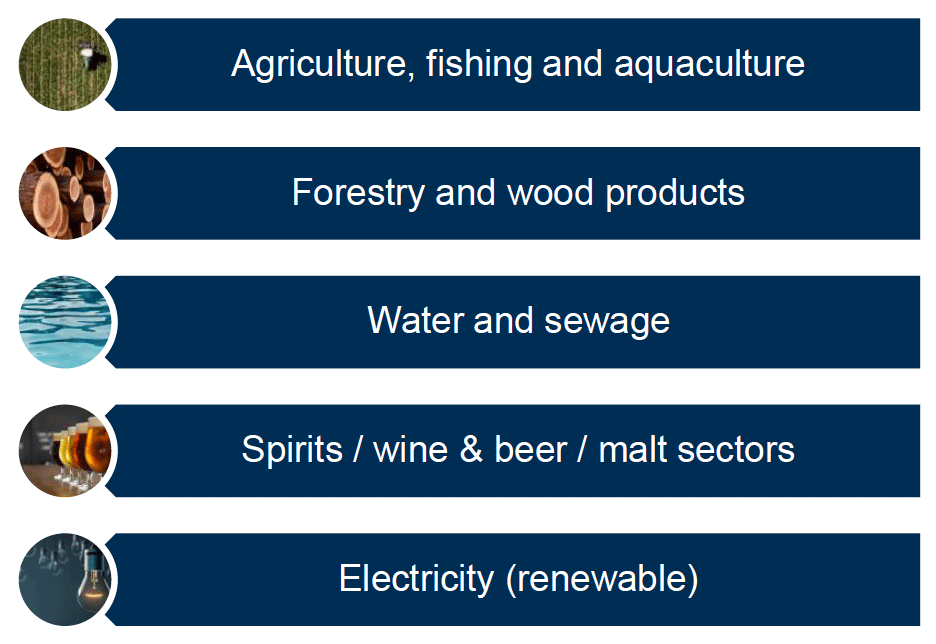
The level of dependency was measured by the number of ecosystem services and the importance of reliance of these ecosystem services on production. The results of the industries that are most dependent on natural capital are shown in Figure 14.
Graphic text below:
Scottish industry reliance on natural capital varies. 88% of agriculture, fishing and aquaculture is dependent on natural capital as well as 59% of forestry and wood products, 40% of water and sewage, 30% of the spirits/ wine and beer/ malt sectors and 30% of the electricity industry.
The industries most dependent on natural capital are among the most important sectors for the Scottish economy. This means that risks to natural capital can translate into risks to these industries and the country’s economic performance.
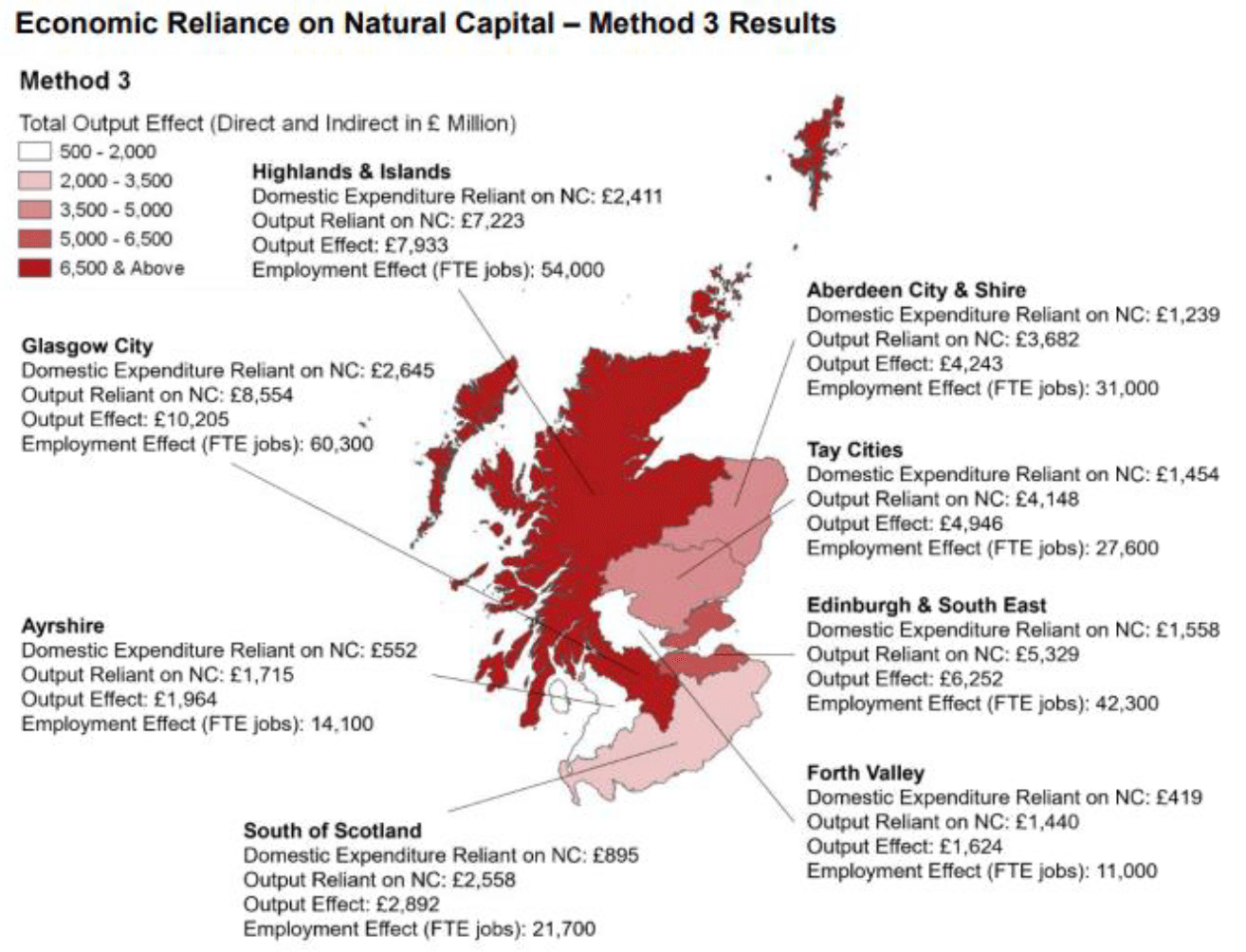
The research [8] sets out the natural capital contribution to economic output and employment. Figure 15 provides a mapped regional breakdown of these results.
Graphic text below:
Regional Data
Highlands & Islands
- Domestic Expenditure Reliant on NC: £2,411
- Output Reliant on NC: £7,223
- Output Effect: £7,933
- Employment Effect (FTE jobs): 54,000
Glasgow City
- Domestic Expenditure Reliant on NC: £2,645
- Output Reliant on NC: £8,554
- Output Effect: £10,205
- Employment Effect (FTE jobs): 60,300
Ayrshire
- Domestic Expenditure Reliant on NC: £552
- Output Reliant on NC: £1,715
- Output Effect: £1,964
- Employment Effect (FTE jobs): 14,100
South of Scotland
- Domestic Expenditure Reliant on NC: £895
- Output Reliant on NC: £2,558
- Output Effect: £2,892
- Employment Effect (FTE jobs): 21,700
Aberdeen City & Shire
- Domestic Expenditure Reliant on NC: £1,239
- Output Reliant on NC: £3,682
- Output Effect: £4,243
- Employment Effect (FTE jobs): 31,000
Tay Cities
- Domestic Expenditure Reliant on NC: £1,454
- Output Reliant on NC: £4,148
- Output Effect: £4,946
- Employment Effect (FTE jobs): 27,600
Edinburgh & South East
- Domestic Expenditure Reliant on NC: £1,558
- Output Reliant on NC: £5,329
- Output Effect: £6,252
- Employment Effect (FTE jobs): 42,300
Forth Valley
- Domestic Expenditure Reliant on NC: £419
- Output Reliant on NC: £1,440
- Output Effect: £1,624
- Employment Effect (FTE jobs): 11,000
The largest regional shares of output and employment that are reliant on natural capital were estimated to be in Glasgow City and the Highlands and Islands regions. These areas are both reliant on the agriculture and electricity industries but note that for Glasgow City this is an indirect reliance. Some regions, such as Glasgow, may have higher output or jobs for industries highly reliant on nature if the head office is located there rather than the location of the nature-based economic activity. Examples of this are electricity and water and sewerage. The Highlands and Islands economy is reliant on agriculture, forestry planting and harvesting, fishing and aquaculture industries; all of these industries are heavily dependent on ecosystem services.
The areas of Scotland with the highest share of key habitats providing ecosystem services contributing to economic output and employment at a national scale are the Highlands and Islands, the Tay Cities, and the South of Scotland, which are estimated to support £2.1 billion of the Scottish economy (2019). In these regions, nature-dependent output was also driven by a large presence of the top 5 industries reliant on key ecosystem services such as surface water, flood and storm protection and water flow maintenance.
1.4. Examples of reliance on natural capital
Complementing the aggregate picture, this section provides examples of sectors with reliance on natural capital and specific ecosystem services that impact the economy. The multiple natural capital contributions to the economy from Scotland’s forestry sector are highlighted in Box 1.
Box 1: Natural Capital and Forestry [14]
Scotland’s forestry sector employs an estimated 34,140 people.
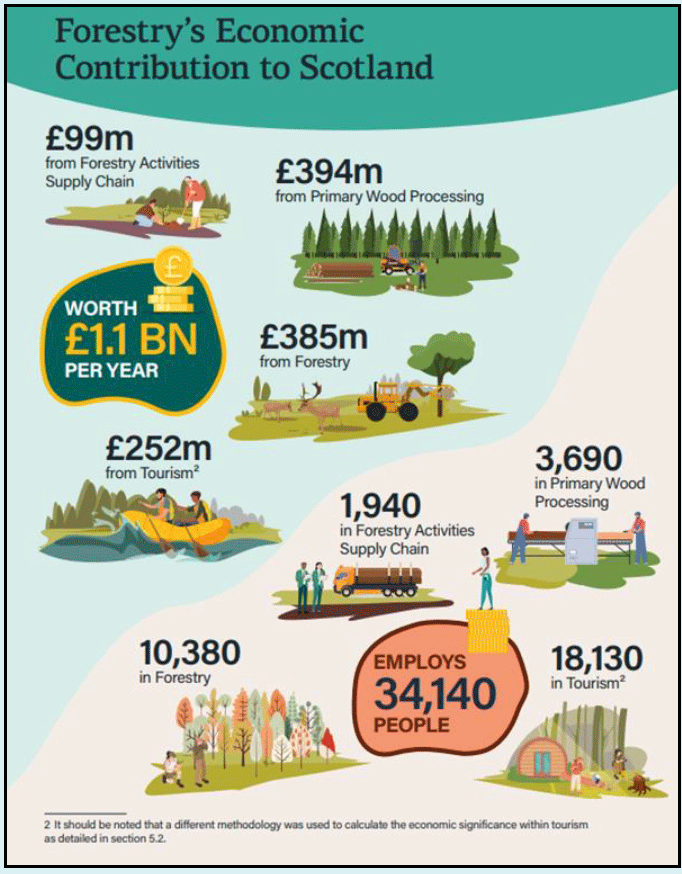
It is estimated to contribute more than £1.1 billion per year to the Scottish economy.
Forestry activities from supply chain are supported by rural communities and contribute an estimated GVA of around £100 million.
Forestry has an important role in tourism and supports £252 million GVA from tourism and 18,000 jobs.
Forestry provides other important, non-monetisable benefits such as biodiversity, education and community engagement.
Preserving forests can have positive impacts on local communities, deliver tourism opportunities, provide health and wellbeing benefits to users, sequester carbon and provide local income and employment opportunities for future generations.
Some examples of the hidden value of ecosystem services to the economy are presented in Box 2.
These include the economic value of pollination to the Scottish economy, estimated at around £43 million per year. This was calculated based on the value of oilseed rape, strawberry, raspberry, blackcurrant, orchard fruit, and protected crops multiplied by the crop’s dependence on pollinators to give an annual value of pollination [15]. Other diverse examples presented are the economic contribution from tourism at bathing water sites and the costs of soil degradation to the economy.
Box 2: Hidden ecosystem service contributions to the economy
In Scotland, the economic value of pollinators is in the order of £43 million per year for agricultural and horticultural crops, and honey. The value of pollinators goes beyond their economic benefits. Insect-pollinated crops offer us variety, in our diet providing us with crucial nutrients, minerals and vitamins that keep us healthy. Scotland’s Pollinator Strategy [15]
Water quality has an important influence on both local and national economies – it supports jobs, local businesses and enhances visitor experience. The value of visits to bathing waters alone in Scotland is £19.4 million in local business turnover and 263 full time jobs [16].
Soils are a current area of study in the Strategic Research Programme “Understanding the value of Scotland’s agricultural soil natural capital”. A recent report published by CREW estimated annual costs of soil degradation in Scotland from soil sealing and compaction range between £25 million and £75 million due to reduced crop yield and increased fuel use [17].
A recent study to understand the value of Scotland’s agriculture soil natural capital found that there is strong public support for improving soil ecosystem services such as increased soil carbon storage and biodiversity [18].
The marine sector is an important contributor to the Scottish economy. The value of the marine economy is presented in Box 3.
The marine economy generated £4.9 billion in GVA (3% of the overall Scottish economy) in 2022. This does not include the offshore wind sector, which had an estimated turnover of £4.2 billion in 2022.
Box 3: Scotland’s Marine Economy [19]In 2022, the marine economy generated £4.9 billion in approximate Gross Value Added (aGVA*), 3% of the overall Scottish economy.
In 2022, the marine economy employed 71,000 people (headcount), 2.7% of the total Scottish employment.
Between 2021 and 2022, the marine economy’s approximate GVA (aGVA) increased by 7%.
The longer-term trend shows that between 2013 and 2022 the marine economy aGVA fell by 14%. While oil and gas support services decreased, marine and coastal tourism increased.
Marine Sector performance
Marine and coastal tourism aGVA increased by 22% from 2021 to 2022.
The Scottish offshore wind sector, which is not included in the overall marine economy numbers, had an estimated turnover of £4.2 billion in 2022.
*Referred to as aGVA as it is an approximation of GVA based on survey data.
1.5. Summary of key points – Natural capital’s economic contribution is significant
Nature provides services that contribute significantly to the Scottish economy. It is estimated that over £40 billion of Scotland’s annual total economic output is supported by natural capital [8]. This estimate is still seen as the lower limit for Scotland’s reliance on natural capital. The industries most dependent on natural capital are among the most important sectors for the Scottish economy such as whisky and renewable energy. Risks to natural capital can translate into risks to these industries and Scotland’s economy.
Nature provides services that are easily overlooked and undervalued in decision-making. The challenge is to make nature’s values visible so these can be accounted for and lead to more sustainable and robust decisions.
The UK Natural Capital Accounts in 2022 reports that the total annual value of natural capital in Scotland is estimated at £38.7 billion, £5.9 billion when oil and gas is excluded. This should be interpreted as the minimum value of the services provided by the natural environment in Scotland as many ecosystem services are not able to be monetised yet.
While oil and gas made up 45% of the total UK annual flow value in 2022, it represents only 7% of the UK asset value, reflecting the expected declining use of fossil fuels. Overall, non-renewable resources represent a declining share of natural wealth whilst renewable resources are increasing in relative terms.
Cultural services in Scotland had an annual value of £2.3 billion in 2022, highlighting the importance of recreation, amenity, and health benefits of nature.
The value of UK marine natural capital assets was estimated to be £211 billion in 2021, although no specific breakdown for Scotland is provided. Marine recreation and carbon sequestration were found to offer the most significant benefits.
Overall, the clear message is that nature is essential and, in many cases, irreplaceable in supporting economic prosperity and key Scottish industries.
Additional sources
Outlined below are several Scottish Government research sources that provide additional context.
Understanding the local economic impacts of natural capital investment [20]
This report provides economic analysis that quantifies the typical contributions to local economies, measured as output and jobs created, from four key natural capital investments such as peatland restoration and woodland creation. The ‘Importance of Natural Capital to the Scottish Economy’ followed this analysis.
Natural Capital economics benefit assessment [21]
This report outlines economic analysis that quantifies the economic impacts, measured as output and jobs created from hypothetical cross-sector regional and national programmes of natural capital assessment in Scotland. This report supersedes the Local Economic Impacts report analysis.
Contact
Email: Georgia-Lee.Smith@gov.scot