
Making the Case for Nature: insights from Scotland's Natural Capital analyses
This report is an analytical review consolidating Scotland's Natural Capital evidence base. Synthesises over a decade of analyses to distil key insights to help inform better decision-making across government, business, and society.
Theme 5: Making the case for investment in natural capital
5.1. Benefits of early action to address nature risks
Solutions to address nature risks include restoring ecosystems, reducing the drivers of change such as pollution, and making natural capital central to decision making in the public and private sector.
‘The Dasgupta Review’ [7] makes a strong case that the benefits of early action to tackle biodiversity loss and the twin crises of climate change far outweigh the costs of not acting.

‘We Need to Act Now to Save Nature’ [44] analysis modelled the economic costs associated with pathways to protect and restore nature while providing food for a growing human population. Figure 33 shows the cumulative social cost of stabilising biodiversity intactness by 2050. By acting now, the cost is US$7 trillion (around £5 trillion), which is around 8% of global GDP (2019). This cost more than doubles if action is delayed by 10 years to US$15 trillion (around £11 trillion) or 17% of global GDP (2019).
The difference in costs between acting now and later is equivalent to 9% of global GDP (in 2019) – almost 40% of the GDP of the US in 2019. The findings were recognized in ‘The Dasgupta Review’ [7] and showed that action to protect nature now is far cheaper and avoids higher and wider economic costs than a delayed response.
5.2. Embedding natural capital in decision making
Economic appraisal focuses on getting the best value for money from policy and projects by looking to ensure all the key impacts are incorporated into the cost benefit analysis. To make the case for investment in natural capital, it must be integrated into decision making. However, it can be challenging to value all natural capital impacts and ecosystem services to integrate in decision making processes.
The Natural Capital Framework outlined in the HM Treasury Green Book is shown in Figure 34. It recommends natural capital as a framework for improved appraisal of a range of environmental effects alongside potentially harmful externalities, such as air pollution and greenhouse gases. ‘Defra’s Enabling a Natural Capital Approach’ (ENCA) [45] provides detailed supplementary Green Book guidance on the environment, providing practical guidance to value ecosystem services in appraisal.
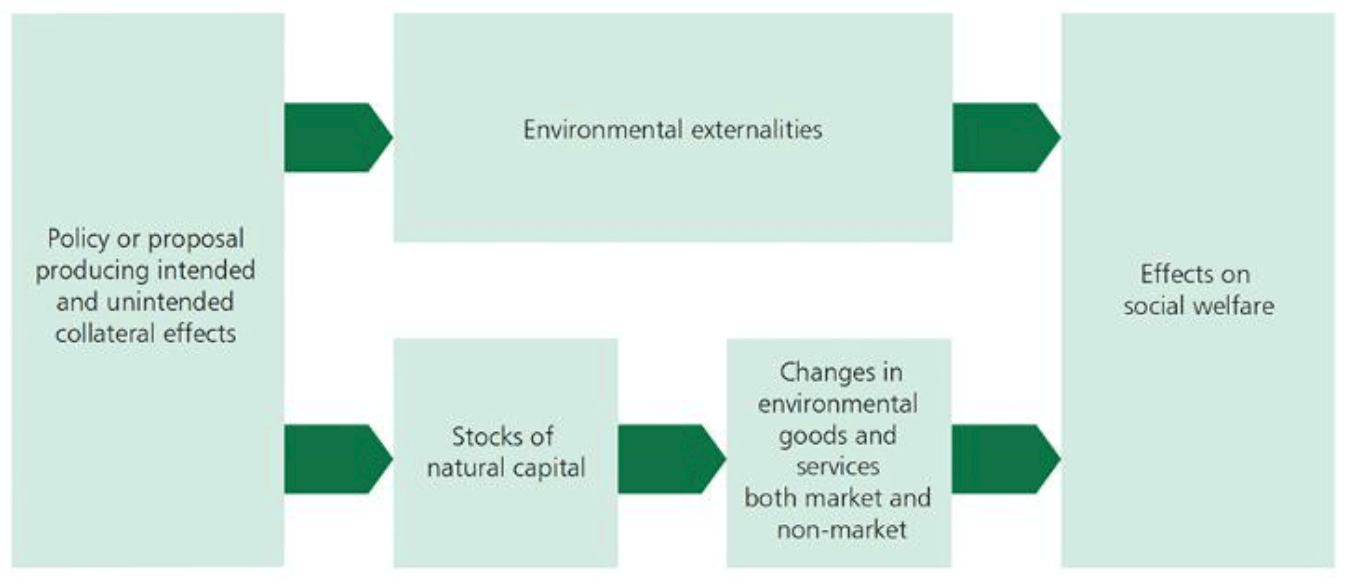
Graphic text below:
Policy or proposal producing intended and unintended collateral effects
Environmental externalities
Stocks of natural capital
Changes in environmental goods and services
Both market and non-market
Effects on social welfare
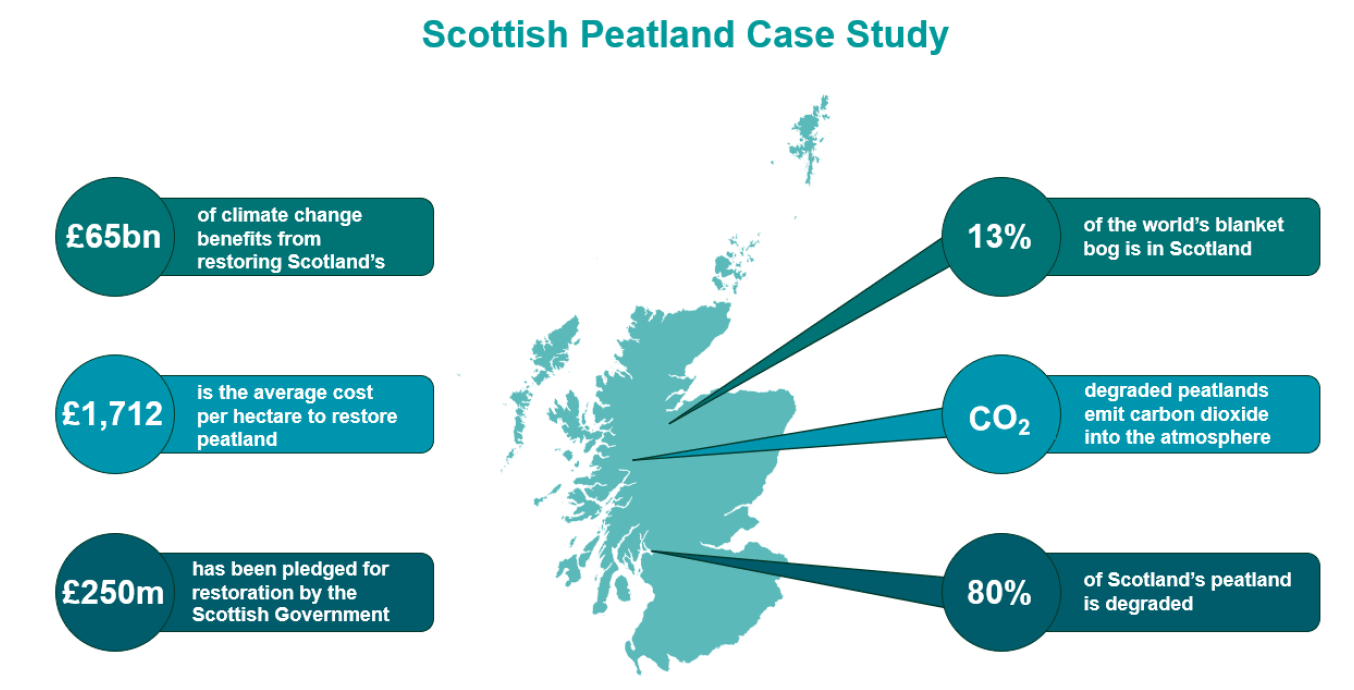
An example of use of this framework to make the case for investment in natural assets is provided in the peatland case study in Box 7. It provides an estimation of the costs and benefits for peatland restoration in Scotland and demonstrates the significant value for money of potential investment.
Box 7: Peatland Case Study
Peatlands are an essential part of the Scottish and global ecosystem.
13% of the world’s blanket bog is located in Scotland.
80% of Scotland’s peatland is degraded and contributes to climate change and carbon emissions [47].
Restoring peatland is resource intensive; the Scottish Government has pledged £250 million over the 10 years to support restoration efforts as part of its Peatland Programme (2020-2030).
Peatlands provide important benefits such as global climate regulation, wildfire prevention, water quality improvements, enhancing biodiversity, and flood regulation.
It is estimated to cost £1,712 per hectare (2024) to restore degraded peatland[3]. However, these costs may be minimal in comparison with the costs associated with further degradation [48].
If degraded peatlands are left to degrade further, this will require more effort in reducing greenhouse gases in the future, which will be more expensive.
And if peatlands are not restored, degradation may result in damage that is irreversible.
The cost of restoring all of Scotland’s peatland to a near-natural condition is estimated at around £5 billion. However, the total climate change benefits associated with restoration are estimated at £65 billion [48].
A Peatland Action case study is also presented in Box 8, providing evidence of the benefits of peatland restoration at an estate in Scotland and the potential for new funding opportunities.
Box 8: Peatland Restoration at Megget Estate Peatland Action Case Study [49]
Megget Estate is a site within the Scottish Borders where Peatland Action has funded peatland restoration activities. It is part of the Weymss and March Estates, which covers over 8,000 ha of land in the Borders. The land is managed for sheep and grouse. The Estate has around 5,000 ha of peatland with a significant proportion of this being in good condition. The Estate has ambitions to have all peatland in good condition after witnessing the benefits from peatland restoration projects. The work started with a trial project on just 42 ha of peatland in 2017.
Over 516 ha of peatland has been restored on-site by reprofiling and revegetating eroded peat haggs and gullies, and by blocking hill drains.
Since the project began in 2017, biodiversity has improved, as the higher water table has improved peatland vegetation condition. This has led to an increase in the presence of invertebrates, resulting in better food sources for the local birdlife.
The site is in the catchment for the Yarrow River where water quality and water flow regulation have been priorities for the Estate. The restoration work at Megget should help reduce incidences of flooding downstream, holding water back and reducing the speed of run-off as, well as reducing the amount of peat erosion. This should increase the resilience of the fish populations in the Tweed catchment.
Finally, the estate is looking to gain carbon credits through the Peatland Code (PC) from the restoration scheme, which will support the restoration efforts with longer term finance.
‘Galvanising Change via Natural Capital’ [50] explores if and how the concept of ‘Natural Capital’ can influence Scottish decision-making in support of sustainability and a Just Transition.
‘Synthesis of natural capital and valuation outcomes’ (2025) [51] provides a collation and summary of emerging knowledge on natural capital from wider research, identifying valuation approaches to apply in decision-making.
5.3. Scotland’s Natural Capital Innovation Zone (NCIZ)
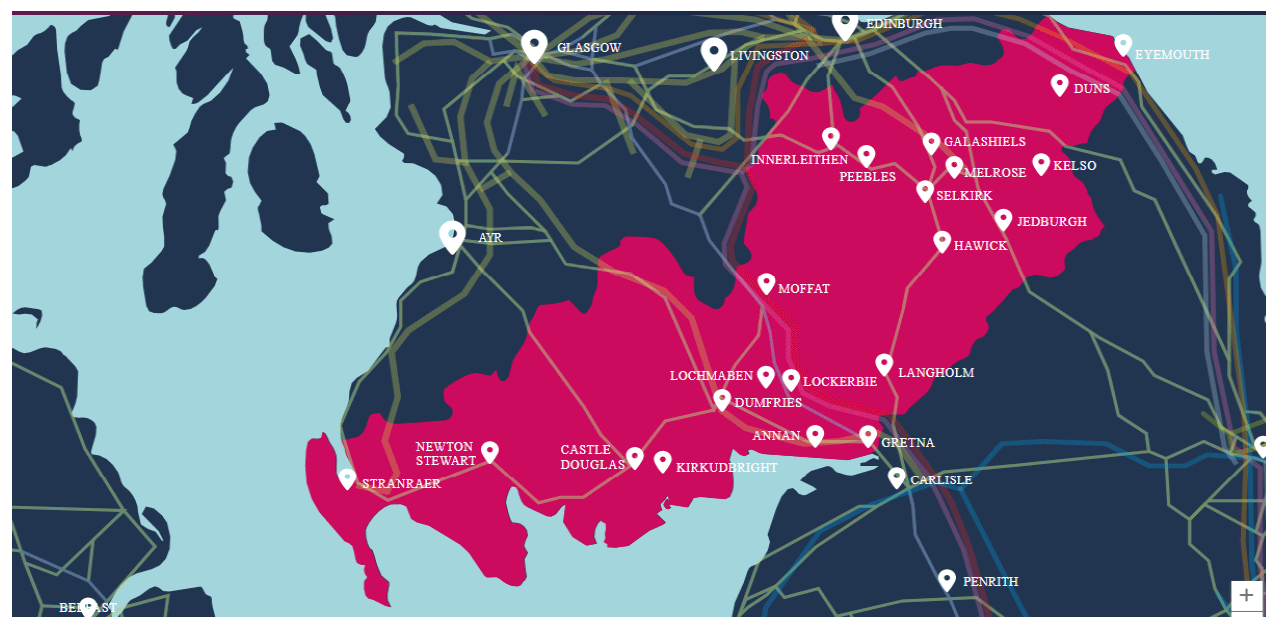
The Scottish Government have designated the South of Scotland, including the Borders and Dumfries & Galloway, as Scotland’s first NCIZ. The designation comes from work led by the South of Scotland Regional Economic Partnership (REP), which set out the vision for a nature positive future for the South of Scotland. South of Scotland were the first region in Scotland to publish a Regional Land Use Strategy, which uses a natural capital approach to identify and agree land use changes across the region to support the delivery of the Scottish Government’s environmental objectives and targets. This initiative is also backed by “Invest in South of Scotland”.
Identifying opportunities spatially enables a wide range of public and private organisations and investors to decide where they can support delivery of projects, which can optimise benefits and achieve strong financial returns.
NatureScot is leading on the development of an innovative new tool ‘The Natural Capital Tool’ [52] that will facilitate decision makers to take a natural capital approach for managing land at the landscape scale in Scotland.
5.4. Development of nature markets
While current data indicates more than 66% of UK investment in nature restoration is from public funding [54], there is increasing recognition that investing in nature is both a public and private responsibility. Improved understanding of natural capital impacts and dependencies are increasing the diversity of stakeholders interested in investing in developing nature markets. By building pipelines of projects for investment and improving the institutions and market governance, nature markets can be made more transparent and appealing to private investors.
5.4.1. Commitment to securing responsible investment
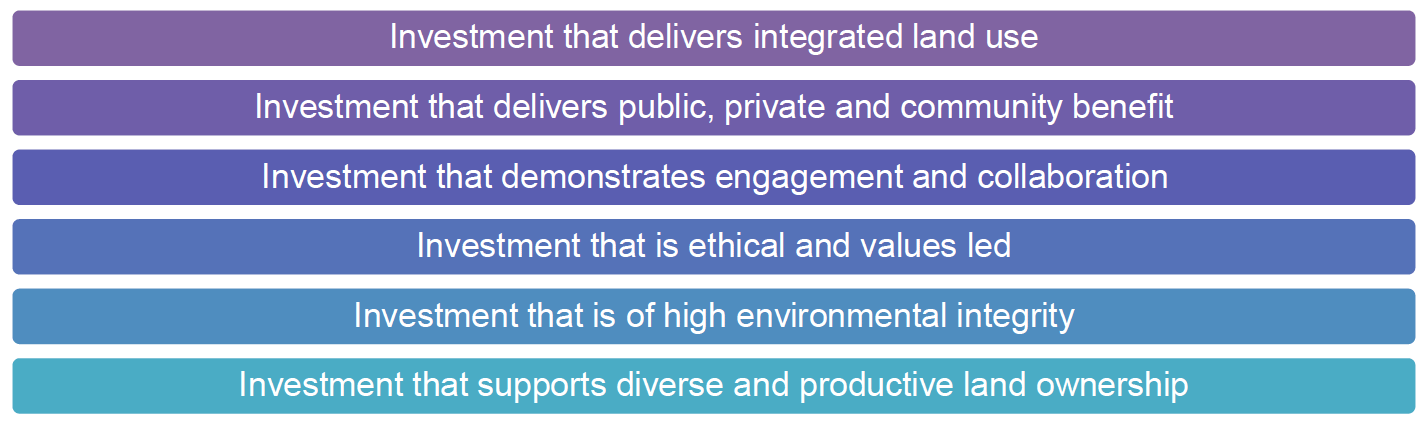
The ‘Natural Capital Market Framework’ [55] highlights key actions to strengthen Scotland’s position as a leader in high-integrity natural capital markets. The Framework sets out the Government’s ambitions for natural capital in Scotland and the development of nature markets. The Government have committed to backing project development and delivery, and to incentivise developers to expand their contributions to natural capital beyond addressing the impacts of their projects towards leaving natural assets in a better state after the development than it was before. The Framework is supported by the Scottish Government’s Principles for Responsible Investment guidance, see Figure 37.
Graphic text below:
The Principles for responsible investment in natural capital are:
- Investment that delivers integrated land use
- Investment that delivers public, private and community benefit
- Investment that demonstrates engagement and collaboration
- Investment that is ethical and values led
- Investment that is of high environmental integrity
- Investment that supports diverse and productive land ownership
5.4.2. Public funding to grow private finance
The Scottish Government, in collaboration with NatureScot and the National Lottery Heritage Fund, has provided funding via the ‘Facility for Investment Ready Nature in Scotland’ (FIRNS) funding programme to support projects that shape and grow the use of private investment and market-based mechanisms to finance the restoration of Scotland’s nature. The most recent round of funding is offering grants of up to £240,000 to help develop investment ready projects and creation of viable business case and models to attract investment.
Since 2023, FIRNS has created almost £4.8 million of support for nature-based investment in Scotland [56]. Example projects include: Soil Association – Governance mechanisms for whole-farm and farm cluster natural capital project implementation and Fisheries Management Scotland – Developing a portfolio of river restoration investment packages and delivery support measures for a Source to Sea Fund.
A further project example funded under FIRNS is outlined in Box 9.
Box 9: Community Benefits Certification Mark
One ongoing FIRNS project is the development of an Outline Business Case for a Community Inclusion Standard. The project is led by Deciding Matters on behalf of the Nature Finance Certification Alliance.
This standard would be a ‘plug-in’ certification and would complement ecosystem focused nature investment standards. This enables project developers to sell credits, which reflect the additional value placed into local communities and businesses from a project. This means that buyers of ecosystem service credits would have assurances that the approach would generate place-based community benefits.
The Community Benefits Certification Mark will enable UK natural capital land-based projects to demonstrate their high integrity approach to deriving community benefits, through a self-verified or 3rd party verified certification process. The certification process will be refined through deep-dive testing with six live projects, and certification will include the necessary training and community capacity building. Certification will enable projects to be verifiably compliant to a future BSI Community Benefit Thematic Standard, which is being explored as part of the UK Nature Investment Standards programme.
One of the barriers to natural capital investment is investor uncertainty and the financial case to mobilise private funding and finance. To tackle this, the National Wealth Fund [57] (formerly UK Infrastructure Bank) plans to tackle investor uncertainty by committing to funding projects which typically face higher development costs and longer payback periods, such as peatland restoration projects. These projects are typically less attractive to investors as they have high initial development costs and take longer to see returns. Similarly, the Scottish National Infrastructure Bank (SNIB) is exploring how it can invest in and support natural capital markets, focusing on responsible investment practices. By leading by example, the aim is to encourage investors on the viability of nature markets for investment.
The SNIB views natural capital as a form of infrastructure, similar to engineered solutions for climate change or flood risk, which is worth investing in.
‘Investing in Scotland’s Natural Capital’ [58] report sets out a new way of securing finance for investment, allowing small and medium enterprises to invest in smaller projects rather than fund a whole solution. This approach can benefit community-funded projects by enabling communities to spread the cost of investment using lease agreements, rather than requiring upfront funding to buy land. Overall, it offers opportunities to a wider range of investors.
Other public funds are utilised in conjuction with Nature Markets. The Forestry Grant Scheme (FGS), managed by Scottish Forestry, provides financial support for the creation of new woodland and the sustainable management of existing woodland [59]. Peatland Action is a Scottish Government fund for the restoration peatland restoration activities [60].
5.4.3. Nature markets in Scotland
Currently, private investment in Scotland’s nature and biodiversity markets is focused on carbon market investment in woodland creation and peatland restoration. This is mainly via the ‘Woodland Carbon Code’ (WCC) and the ‘Peatland Code’ (PC). These Codes are Government backed land-based codes in the UK, providing the market structure for investment in nature restoration.
Carbon credits generated by the WCC and PC have an important role in the UK’s voluntary carbon market. High-integrity and independently verified carbon units are generated from peatland restoration and woodland creation. These units can be used to support companies net zero claims on their UK based carbon emissions.
Engagement with PC and WCC markets has increased substantially since their establishment in 2015 and 2011 respectively. The WCC has exceeded its Climate Change Plan target of expanding the woodland carbon market by 50% by 2025. Figure 38 highlights that most of the land covered by these projects is in Scotland. The average area of PC projects is around 3.6 times greater than WCC projects and tends to cover up to 200 hectares.
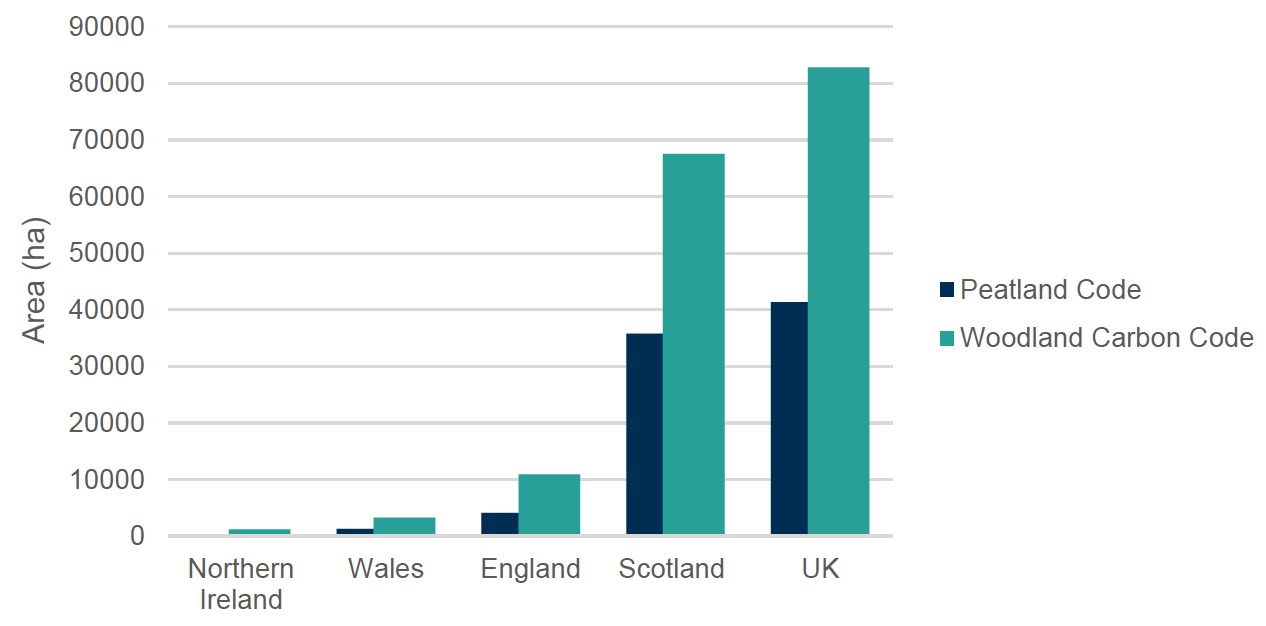
In the UK, 81% of hectares included in the UK Woodland Carbon Code (WCC) and 87% of Peatland Code (PC) hectares are in Scotland. PC projects in Scotland are predicted to prevent over 8 million tonnes of CO2e emissions over project lifetimes and WCC projects are projected to sequester 21 million tonnes of CO2e [61].
‘The Natural Capital Market Framework’ [55] outlines that over the period 2022 to 2023, the average price of a WCC PIU (Pending Issuance Unit) and PC PIU were approximately £23-25. This is significantly higher than average global prices for carbon credits, but it is not yet high enough to be the single source of revenue for most projects. As a result, projects are often built around diversified revenue streams (i.e. nature credits, timber, agriculture, and public grants).
Currently, 88% of validated PC projects in Scotland have received some level of public funding (usually via Peatland Action), with public funding amounting to approximately 70%. This links to the Scottish Government commitment to provide £250 million of public funding in peatland restoration by 2030.
WCC projects are also usually supported by public funding, via the forestry grant scheme. It is estimated that around a third of woodland creation schemes are currently supported through the WCC. The financial value of the WCC is also increasingly evident, as a result providing new options for blending public and private funding.
Since the focus of these markets is woodland and peatland, there are limited market mechanisms for many other habitats in Scotland, albeit new carbon codes are in development. To improve this, an Ecosystem Restoration Code was announced in the ‘Nature Market Framework’ [55], which aims to act as a new high-integrity market mechanism that could attract responsible private investment into nature restoration and biodiversity projects in Scotland.
5.5. Summary of key points – The case for investment in natural capital
Solutions to address nature-related risks and opportunities are increasingly becoming mainstream in Scotland. These include restoring ecosystems, making natural capital central to decision making, and enabling new opportunities in nature markets.
To make the case for investment in natural capital, it needs to be embedded in decision making. ‘HM Treasury Green Book’ and Defra’s ENCA [45] provides guidance to take nature into account to inform public sector decisions. Many businesses reliant on natural capital are including nature-related impacts and dependencies to make more sustainable decisions.
Analysis of the benefits of peatland restoration in Scotland help to make the case for investment. It demonstrates the significant value for money, and also demonstrates it is more cost effective to act early.
Both public funding and private finance will be essential to ensure sufficient investment to meet nature restoration goals. Scotland is playing a leading role in the development of high integrity natural capital markets with the 2024 ‘Natural Capital Market Framework’.
The ‘Facility for Investment Ready Nature in Scotland’ (FIRNS) provides funding to grow the use of private investment and market-based mechanisms for the restoration of Scotland’s nature. Since 2023, FIRNS has created almost £4.8 million of support for nature-based investment in Scotland.
Other innovations include the Scottish Government’s designation of the first Natural Capital Investment Zone (NCIZ) for the South of Scotland, providing a means for strategic targeting of natural capital investments.
Investment in Scotland’s nature and biodiversity markets is currently focused on investment in woodland creation and peatland restoration. 81% of the hectares in UK ‘Woodland Carbon Code’ and 87% of ‘Peatland Code’ hectares are in Scotland. Other opportunities are emerging, including an Ecosystem Restoration Code to act as a new high-integrity market mechanism.
The Scottish National Infrastructure Bank (SNIB) is exploring how it can invest in and support natural capital markets, focusing on responsible investment practices. The SNIB views natural capital as a form of infrastructure, similar to engineered solutions for climate change or flood risk.
Contact
Email: Georgia-Lee.Smith@gov.scot