
Child poverty in the UK and Scotland
This report provides an evidence-based baseline to better understand child poverty rates across the UK nations and the respective contributions of Scottish and UK Government policies to tackling child poverty since 2010 in Scotland.
Reducing the cost of living
Key findings
- Persistently high living costs, relative to household incomes, have had a significant negative impact on many low income families, requiring substantial government intervention to mitigate rising living costs.
- Lower housing costs and a larger social housing sector have continued to protect low‑income households in Scotland, resulting in consistently lower poverty rates after housing costs compared with the UK overall.
- The UK Government’s energy bill support package from 2022-2024 provided short-term protection against fuel insecurity. This cushioning protected households, including those in Scotland, from the worst impacts of rising energy prices. In Scotland, additional devolved measures have been introduced to further mitigate against fuel insecurity, although their impact is not yet clear. Ongoing global instability means fuel affordability remains a significant risk to child poverty outcomes.
- Transport policy is devolved in Scotland, and there is evidence of positive impacts from Scottish Government interventions, most notably free bus travel for under 22s. Evidence on the contribution of UK-wide policies is not available.
- Trends in food insecurity suggest that policy action in Scotland is helping to limit further increases, particularly among families with children, compared with wider UK trends.
- Scottish Government action has prioritised strengthening householdfinancial resilience . UK Government reform, including the Fair Repayment Rate, has reduced the level of public debt deductions and delivered financial gains, particularly for families with children.
This chapter considers first the socio-economic landscape that families have experienced over the past 10 years, as it will have had a direct impact on their disposable income and their ability to meet the cost of living. This is followed by a short section considering broad support in the form of cost of living payments to address increased costs of living at the height of the crisis. It then goes into each of the main areas of a family’s cost of living, including: housing, fuel, transport, food and financial resilience. All of these policy areas are devolved to the Scottish Government, and as such there is a limit by which UK Government policies will have had an influence in Scotland. This section of the report aims to provide a brief overview of such key policies and, where appropriate, we consider these alongside the cost of living indicators from the Child Poverty Measurement Framework.
To note, the cost of childcare is another key household cost and can reflect a high proportion of household income. Childcare can also reflect a barrier to increasing income through paid employment and acts as a key support for child development and wellbeing. For the purposes of this report, discussion of the childcare indicators has been included as part of the chapter on supporting children and families to thrive.
The socio-economic landscape
When examining the cost of living as a driver of child poverty, it is necessary to look at key economic indicators that have a direct impact of a family’s budget.
Inflation represents the increases recorded in general prices in an economy, and how quickly these changes happen. Low, stable inflation is considered positively as it allows households to manage their budgets and plan ahead while fostering economic growth. Low income households are more vulnerable to economic shocks as they spend a greater proportion of their income on essentials.
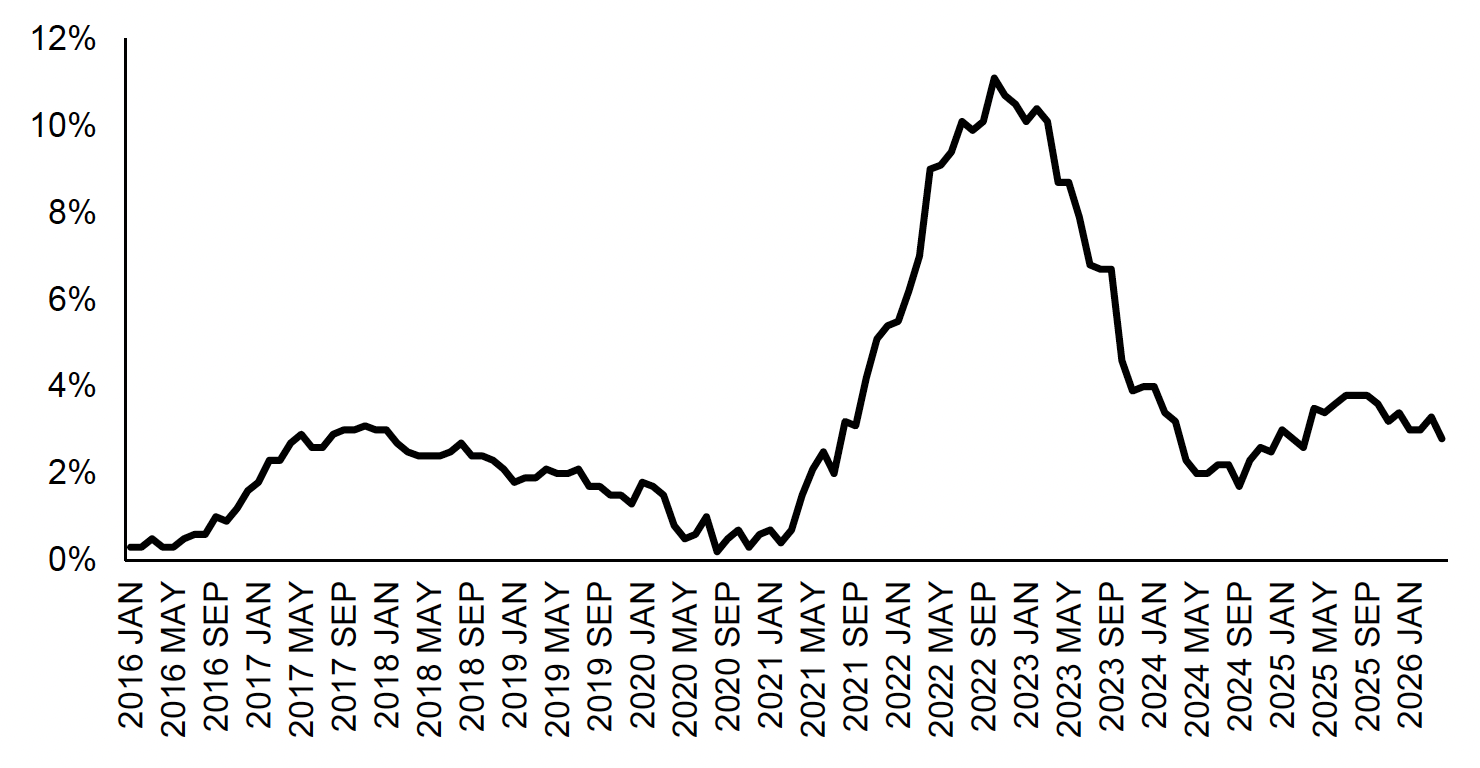
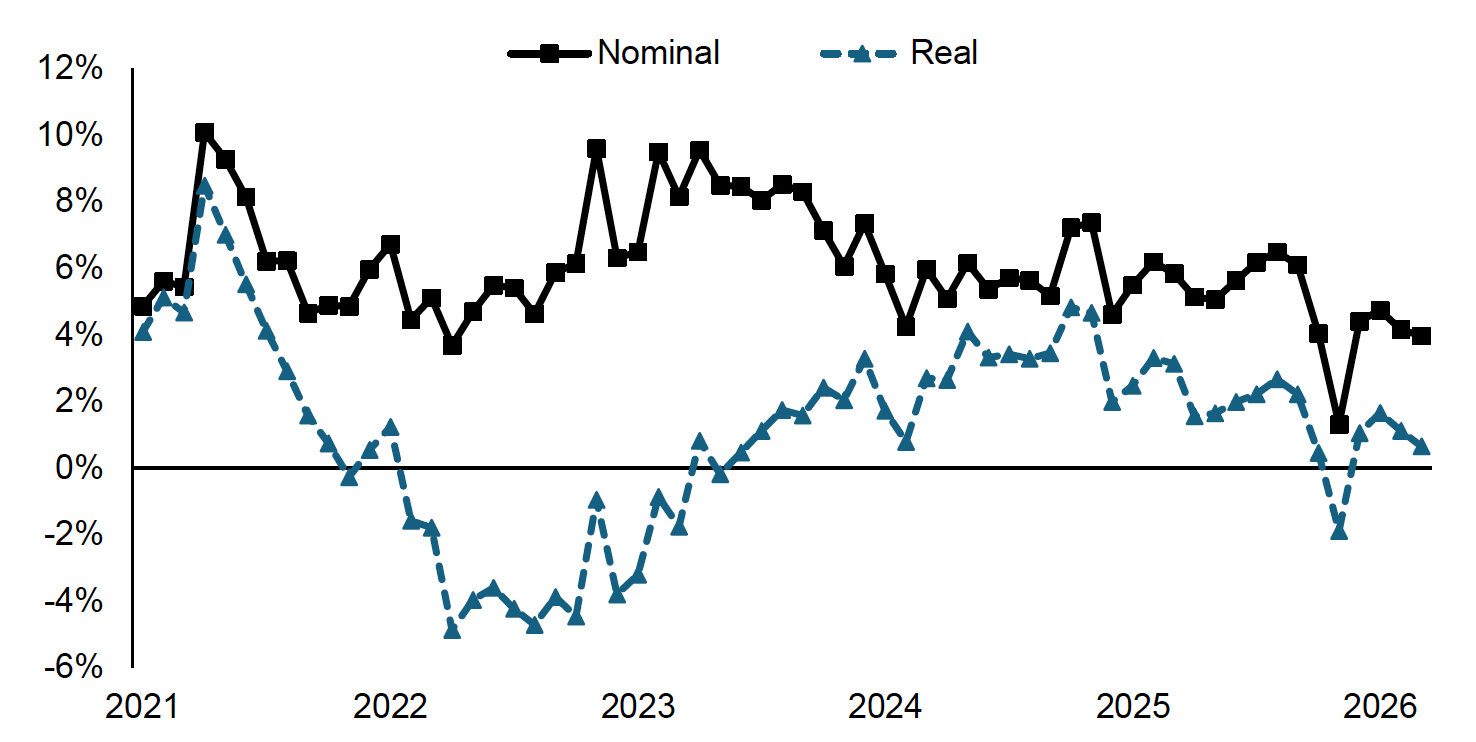
At the time of the Child Poverty (Scotland) Act being implemented, inflation (Figure 16) had been slowly increasing from below a 1% during 2016 to around 3% in the last months of 2017. That was followed by a period of gradual decreases up until the end of 2019. The pandemic had a sharp effect on inflation, causing a rapid and sustained increase in inflation over 2021 and 2022. At its peak, the rate of inflation reached 11.1%, the highest rate of the last four decades. In addition, prices rose at a higher rate than benefits were uprated and higher than earnings (Figure 17) meaning that household costs were increasing at a higher rate than average household incomes.[64] Overall, this meant that the price of goods increased at a faster pace than household incomes.
While inflation has since fallen, the cumulative effect of rising prices has meant that households now face a much higher cost of living relative to household incomes.[65] We know that the cost of living crisis has had the greatest impact for those already living in low income households and experiencing socio-economic disadvantage. Low income households went into the crisis in more vulnerable and precarious financial positions and were subject to higher rates of inflation as a result of spending a higher proportion of their income on food, transport and energy costs. [66]
Cost of living payments
The UK Government introduced a series of cost of living payments between 2022 and 2024 in response to rising inflation and increasing energy and food prices, with the primary aim of alleviating financial pressure on vulnerable households. These payments were UK wide, with families in Scotland also benefitting. These included:
- Payments to households in receipt of means tested benefits including Universal Credit and the legacy benefits it was replacing (excluding housing benefit), and pension credit. These included £650 in 2022 paid in two instalments and £900 in 2023 to 2024 paid in three instalments.
- £150 Disability Cost of Living Payments for recipients of certain non-means tested benefits including Personal Independence Payment (PIP) and Attendance Allowance, in Scotland these payments were also made to those in receipt of Adult Disability Payment which is the equivalent of PIP.
- £300 Pensioner Cost of Living Payments paid in addition to the Winter Fuel Payment in 2022/23 and 2023/24.
The Cost of Living Payments evaluation[67] found that the payments supported recipients’ ability to meet essential costs, particularly energy bills and food, with over 60% reporting positive impacts in these areas. However, the flat rate design meant that the payments were not sufficiently targeted for households with higher costs (such as households with three or more children). The payments were most effective for those feeling some financial pressure as a result of the cost of living but not in serious financial difficulty. Groups more likely to experience limited impact included households with children, those with additional health‑related costs, and private renters. The evaluation also covered Scotland, with no specific differences in impact identified. However, Scottish Government analysis highlights the short-lived nature of cost of living payments and the lack of longer-term measures to support families.66
Alongside the cost of living payments, the UK Government provided discretionary payments in England through the Household Support Fund. Barnett consequentials funding was then passed on to the Scottish Government to provide similar cost of living support in Scotland. The Scottish Government did not directly replicate the Household Support Fund but instead used the funding to support a range of measures to protect people against the impacts of the cost of living. These included a £150 Cost of Living Award for households in Council Tax bands A to D and those in receipt of Council Tax Reduction, as well as additional policies discussed elsewhere in this report such as the Scottish Child Payment, funded Early Learning and Childcare, free bus travel for those under 22, and free school meals. In addition, support during the fuel crisis (see section on fuel insecurity), has been provided by the Scottish Government through the Fuel Insecurity Fund, the Scottish Welfare Fund and the Warmer Homes Scotland scheme. It is not possible to separately assess the impact of the consequential funding in Scotland, as resources were shared across different funding streams to boost support for families.
Housing
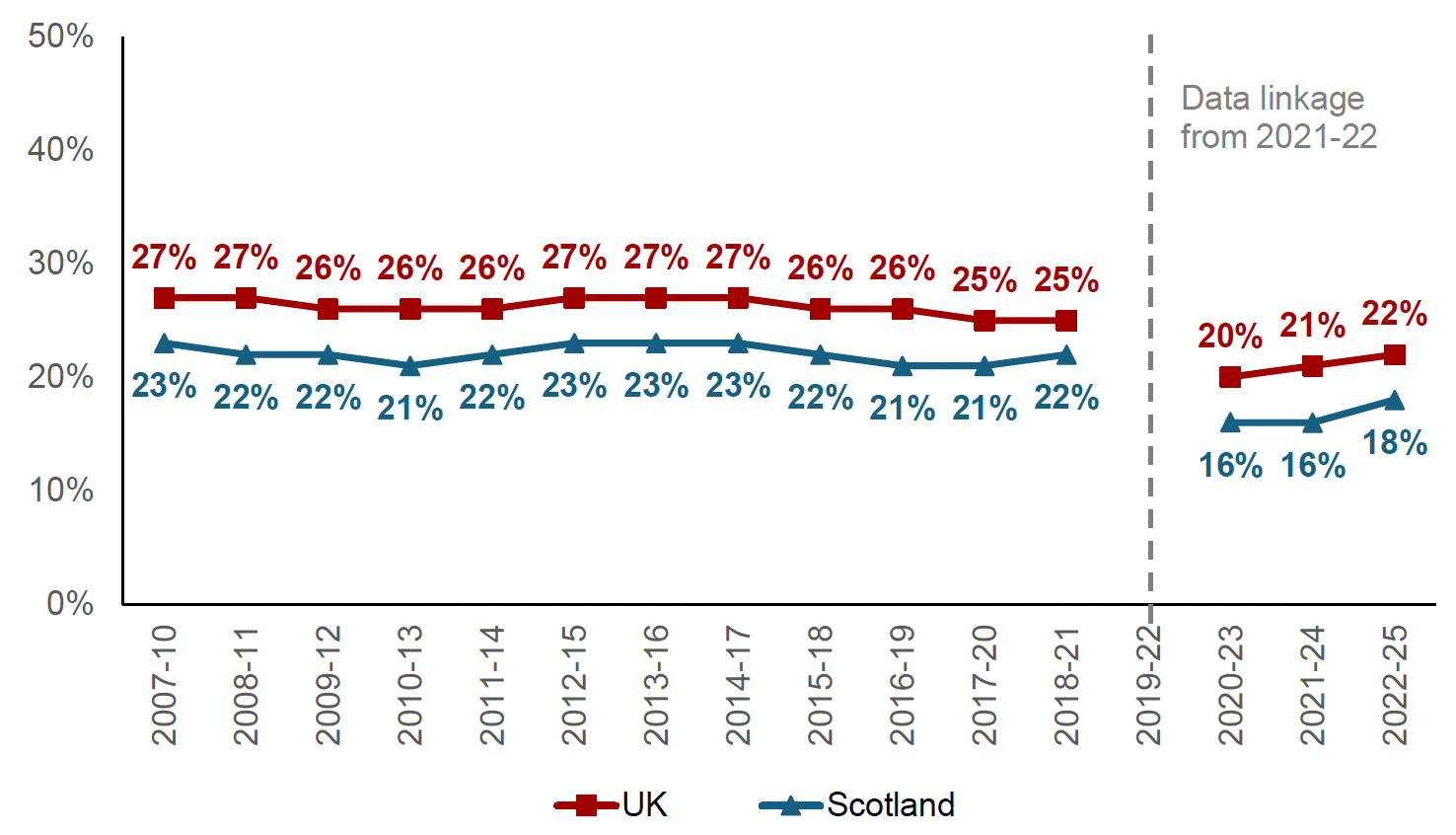
The lower poverty rate after housing costs in Scotland when compared to the rest of the UK has been largely attributed to lower housing costs and a larger social housing sector in Scotland compared to England. Figure 18 shows how the proportion of income spend on housing shows a similar pattern across the UK and Scotland.
Housing policies vary between England and Scotland, reflecting its devolved status. For example, as a result of the COVID-19 pandemic, both the UK and Scottish Governments introduced a range of measures to protect those living in rented housing. Policies vary slightly across the nations, with no current evidence of cross-over impacts. However, there has been a strong legacy of legal protections. For example, the Scottish Government introduced further protections for tenants through the Cost of Living (Tenant Protection) (Scotland) Act 2022 and later through the Housing (Scotland) Act 2025.
The UK Government have also put in place a range of measures that affect the housing market. This report includes key areas with particular impacts in Scotland, and the response seen in the Scottish context.
- The bedroom tax. Since 2013 the UK Government has limited housing benefit and the housing element of Universal Credit for council or housing association tenants if they are considered to be under-occupying their homes. Known as the ‘bedroom tax’ this policy reduces the amount of rent tenants can claim in their housing benefit by 14% for one additional bedroom and 25% for two or more additional bedrooms. As a result of this, the Scottish Government committed to mitigating the bedroom tax through Discretionary Housing Payments with a total value of awards over 2025/26 of £93.3 million, at an average award value of £626.[68] There is no specific evaluation disentangling impacts of Discretionary Housing Payments in Scotland.
- Help with private rents. In 2024, the UK Government reset the local housing allowance rates (LHA) to the 30th percentile of market rent – increasing for the first time since 2020. However, the UK rates have been frozen since. In the most recent Tackling Child Poverty Delivery Plan the Scottish Government committed £8.7 million in 2026/27 to continue to mitigate the LHA freeze for households with children. This is forecast to benefit up to 15,000 families with 26,000 children by the end of 2026/27. Scottish Government analysis has shown that when LHA rates do not keep pace with market rents, as is the case with the current rate freeze, households face increasing shortfalls between housing support and actual rents.23 The resulting divergence between LHA and market rents also varies significantly across Scotland depending on rental growth, Broad Rental Market Area and by bedroom entitlement. Scottish Government analysis suggests large families with high bedroom entitlements can face very high shortfalls. For households with children, the median shortfall is around £650 per year. These shortfalls put pressure on household finances placing low income families at risk of rent arrears and housing instability. As these rent increases vary by area, families in some parts of Scotland face much greater financial pressure simply due to where they live.
- Help with mortgage repayments. UK Government support for mortgage costs has seen a shift away from grant support towards repayable loans and support from mortgage lenders. Prior to 2018 homeowners on low incomes could receive Support for Mortgage Interest, alongside temporary provisions such as Mortgage Interest Run‑On, as non‑repayable benefits. However, since April 2018, Support for Mortgage Interest has been delivered as an interest-bearing loan secured against the property. Take-up of this support has declined significantly since this change, and the reform has reduced the support available to mortgage holders compared with renters.[69] More recent measures, such as the Mortgage Charter (which the UK Government and lenders agreed in June 2023) focus on agreements with mortgage lenders to manage payment difficulties. The lenders who signed up to the Charter represent around 90% of the mortgage market. Financial Conduct Authority data shows around 3.7% of borrowers have reduced monthly payments by switching temporarily to interest only payments or extending loan terms since mid-2023, with volumes remaining stable into early 2026. Disaggregated data is not available for Scotland and while it may be presumed that a portion of the uptake of these options will reflect households in Scotland it is difficult to determine the full impact of this policy for Scottish households.
- Additional flexibility in Universal Credit. Scottish Choices for individuals receiving Universal Credit was rolled out from 2017. It enables eligible Universal Credit claimants, living in Scotland, the option of receiving payments twice monthly, rather than once a month, and/or to have the housing cost element of their award paid directly to their landlord in both the private and social rented sectors. The evaluation showed positive impacts for tenants having their rent paid directly to their landlord, including: simplifying money management, easing rent payment worries, and reducing household financial concerns. However, the evaluation also found some unexpected negative impacts for claimants, such as ‘technical arrears’ causing significant emotional and financial stress.[70]
The Housing Emergency
Despite the above measures to reduce housing costs in Scotland, the Scottish Government declared a national housing emergency in 2024. The crisis is understood to result from demand for social housing exceeding supply, increased private rents, a shortage of rental properties in some areas, and the failure of wages to keep pace with increasing housing costs. While the UK Government has not declared a housing emergency either in England or across the UK, they do recognise that housing has reached a crisis point. Research by the UK Government provides a similar picture with many households in England struggling with their housing costs because of substantial rises in rent and mortgage payments.[71]
The housing emergency is further reflected in the increases seen in the number of children in temporary accommodation in Scotland. Year on year increases have been recorded since the mid 2010s.[72] While measures of homelessness differ across the UK, data shows increases in the number of families with children in temporary accommodation in England over time.[73] The Scottish Government published a Housing Emergency Action Plan (HEAP) in September 2025 with a key objective to end children living in unsuitable accommodation. Similarly, the UK Government published a National Plan to End Homelessness in 2025, however this plan relates specifically to action in England so will not have impact for Scotland. The implementation of both the HEAP and the UK Government Plan are in the early stages, and it is too soon to assess impact and draw learnings from these.
UK Government policy support has consistently contracted with measures such as the bedroom tax, local housing allowance freeze, and replacing grant support with loans and mortgage provider support for homeowners. Despite Scottish Government mitigations and support, there remains a housing emergency in Scotland with associated pressures on child poverty outcomes.
Fuel insecurity
In Scotland, fuel poverty remains high at 25% of all households with children in 2024 (see Indicator 15 in the Child Poverty Measurement Framework). It is not possible to compare fuel poverty measures directly with the rest of the UK. This is because the definitions of fuel poverty vary and are not comparable.[74]
The policy landscape supporting reductions in fuel poverty combine both UK Government and Scottish Government action, but impacts of each stream of work are difficult to disentangle from each other. As such, this section of the report looks at UK government contributions in this space, and then adds action from the Scottish Government.
In response to increasing energy prices the UK Government introduced a package of energy bill support for both households and businesses in 2022 and 2023 for which Scotland also benefitted from. Policies included:
- the Energy Price Guarantee (EPG): a temporary discount on electricity and gas prices for all households (from October 2022 to March 2024) and the Energy Bill Support Scheme (EBSS) which paid £400 to eligible households over the winter 2022/23.
- Alternative Fuel Payments which paid £200 to households who were not on the mains gas grid and used alternative fuel (such as heating oil) and the Energy Bill Relief Scheme and the Non-Domestic Alternative Fuel Payment which supported non-domestic energy users who are not connected to the gas grid and use alternative fuels for heating.
- In addition, pass-through requirements were put in place to ensure that third party intermediaries passed on benefits of these policies to end users.
- Cost of Living Payments outlined above to support those on means-tested benefits (Universal Credit and legacy benefits), those in receipt of Disability Benefits, and Pensioners.
The evaluation[75] of the energy bill support schemes found several positive impacts. The findings summarised apply to the UK wide scheme, with impacts also anticipated in Scotland. The Scheme helped to reduce immediate financial pressure for many households, reducing concern about energy bills and their impact on household finances. There was also evidence that the schemes enabled households to maintain heating at safe and comfortable levels, mitigating the need to reduce energy use. This also meant that these households did not need to cut back on essentials or borrow money to cover their bills. The evaluation found uneven impacts for some groups, specifically: those with a pre-payment meter, people with disabilities, those with limited digital access and households in temporary accommodation.
In Scotland, the strategic approach to tacking fuel poverty combines a wider range of actions under the four drivers of fuel poverty: low household income; high household fuel prices; homes having low levels of energy efficiency; and inefficient use of fuel in homes. The monitoring of fuel poverty rates does not disaggregate specific contributions of the various streams, with progress reported in Tackling Fuel Poverty in Scotland: periodic report 2021-2024.
Overall, fuel poverty trends remain high (relative to the targets of no more than 5% of households being in fuel poverty, no more than 1% of households in fuel poverty and the median fuel poverty gap being no more than £250 in 2025 prices before inflation), with rates largely increasing and decreasing in line with the fuel price index. While the energy support schemes and winter heating payments helped to buffer households against rising fuel costs, many did still experience increased costs that impacted on household finances and some families were pushed into (increased) fuel insecurity as a result. While fuel insecurity has reduced in both Scotland and England in the most recent year, it is clear that some families continue to struggle to afford their energy costs.
Fuel insecurity continues to be a live issue with the war in the Middle East leading to disruption in energy supplies and higher gas and electricity prices. The full impact of this is yet to be seen.[76]
Fuel poverty has increased since 2021 due to rising energy costs. The energy bill support package introduced by the UK Government provided cushioning from the worst impacts for many households, including those in Scotland. But further support is required for lower-income households. In Scotland, statutory targets and devolved financial support have been put in place to mitigate fuel poverty, though evidence on their long-term impact is still emerging.
Transport
Transport is both a key household cost and enabler for families in accessing employment and education opportunities. In Scotland, we find that in recent years there has been a reduction in the percentage of low-income families with children finding it difficult to pay for transport (20% in 2024 compared to 34% in 2022). Evaluation evidence shows that policies like the free bus travel for all under 22s have contributed to this drop.[77]
Data on transport costs is available at a UK level[78], but this is not directly comparable with the indicator used in Scotland. The UK data is based on costs as a proportion of household weekly expenditure rather than household income and the Scottish indicator does not include all car costs that are included in the UK measure. However, the UK data does demonstrate that transport was the second biggest proportional expense for UK households at 14% and spending on transport was up by £9.20 per week (12%) in 2024 compared to 2023.
Examining the contribution of wider UK Government policies is much harder. In Scotland responsibility for public transport policy is devolved, local authorities have responsibility for bus infrastructure, but the majority of bus services are operated by private companies. In 2022, ScotRail was brought back into public ownership through its operator Scottish Rail Holdings. In England responsibilities for transport are split across the Department for Transport, local authorities and mayoral authorities. As public transport (including the Scottish road network, bus policy, concessionary fares, and railways) is wholly devolved to the Scottish Government the contribution of the UK Government in this area has been limited. However, some transport-related powers remain reserved to the UK Government, including fuel excise duty and driver and vehicle registration, while responsibility for aviation policy is shared across reserved and devolved governments.[79]
There are some areas where UK Government would exert influence in the transport element on the cost of living. Most notably:
- The Fuel Duty Cut. This policy was introduced in March 2022 placing a temporary 5p cut to fuel duty with the aim to support motorists by freezing the fuel duty rates. This cut is due to expire in August 2026 but has now been extended to 31st December 2026.[80] The policy is being monitored through tax receipts and fuel duty returns, but no information was found on the contribution to Scottish households in particular.
- Rural Fuel Duty Relief. Introduced in 2011 this scheme was widened in 2015 to include 13 areas in Scotland across the Highlands and Argyll and Bute. The scheme provides a 5 pence per litre reduction to fuel retailers in specified rural areas on the standard UK rate of excise duty for unleaded petrol and diesel. Retailers who are registered for the scheme are required by law to pass on the full relief they claim to their customers.[81]
- Implementing a rail fare freeze. While this policy relates to services in England, the freeze also applied to some cross-border services between England and Scotland.
Transport is a devolved area for the Scottish Government. Evidence shows positive contributions of Scottish Government policies for low income families with children, specifically the free bus travel for under 22s. Evidence on contribution of UK wide policies is not available.
Food Insecurity
Food insecurity encompasses the full range of experiences, from worries about the affordability of food, through to compromising on quality and quantity of food and experiencing hunger. First we look at food insecurity and then at food affordability.
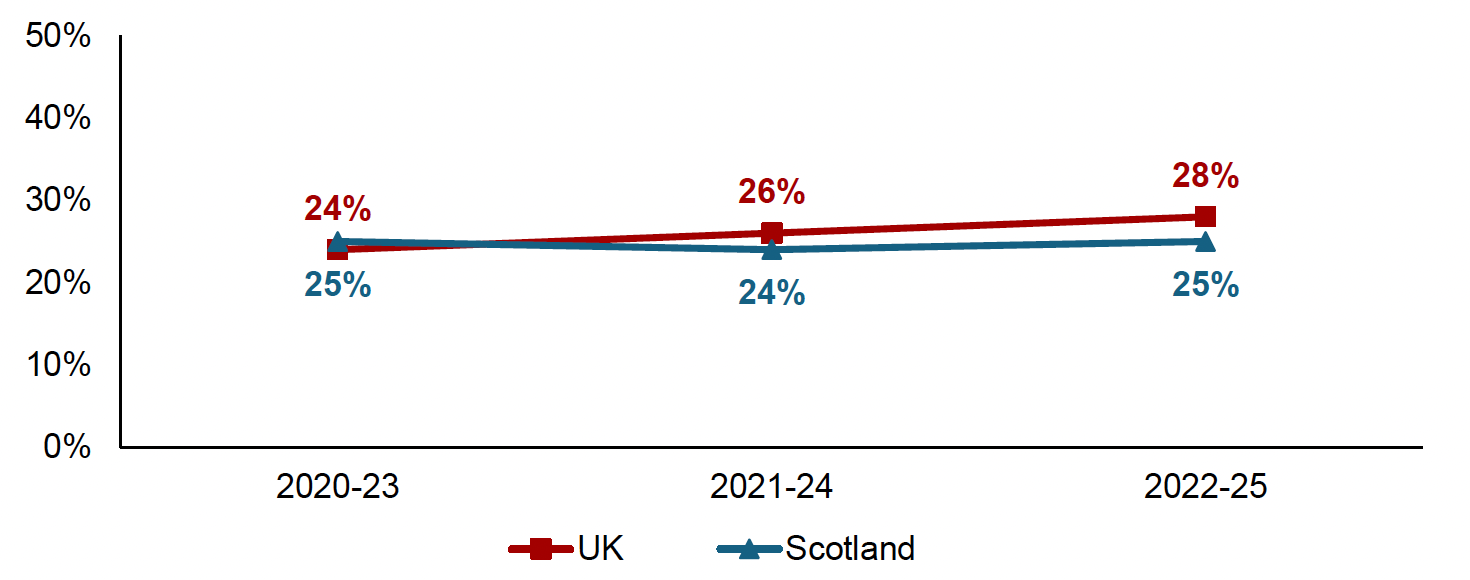
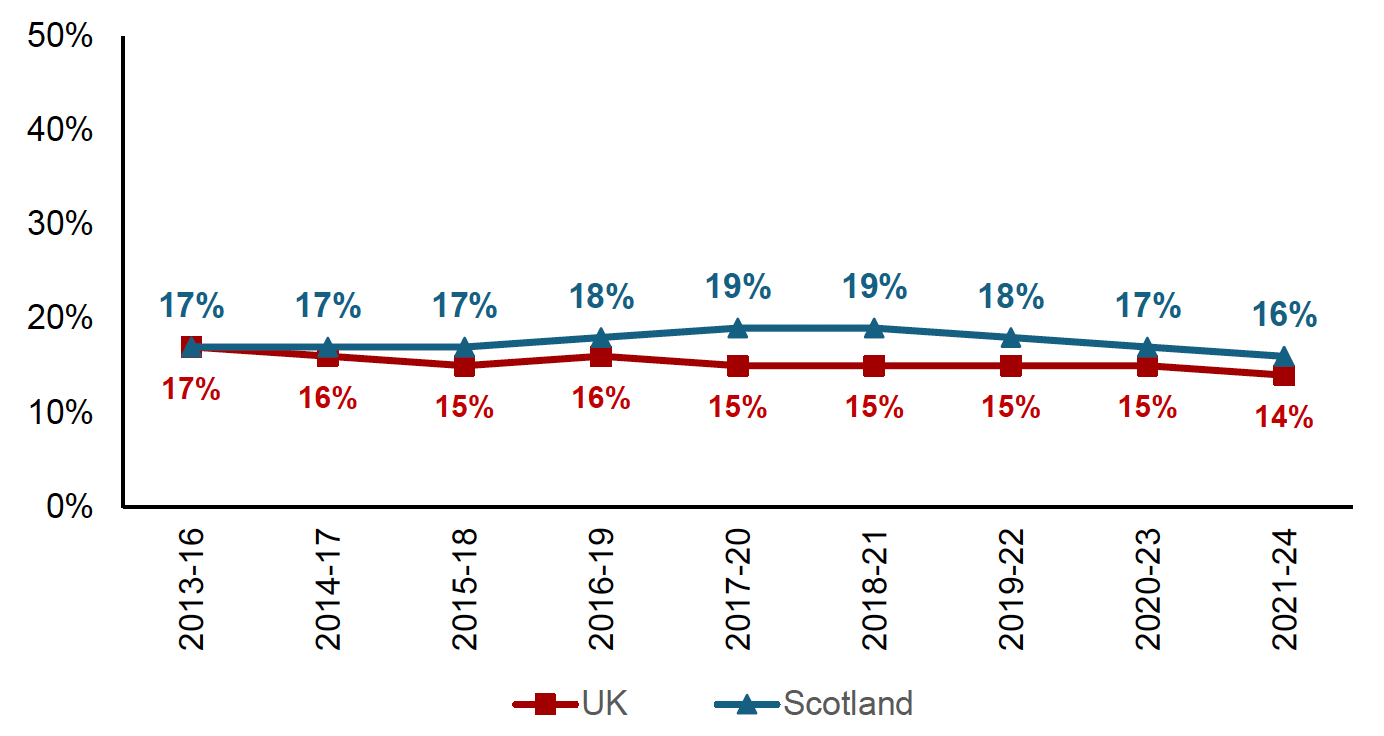
Foodsecurity has stayed relatively stable in Scotland since 2020, with a slow increase recorded across the UK (Figure 19).
In terms of food affordability, the proportion of income spent on food has stayed relatively stable in Scotland with a slight increase during the pandemic years. In the UK, there has been a slow downward trend in the proportion of income spent on food (Figure 20).
There are some policy differences between the Scottish and UK Governments.
The Scottish Government have put in place a range of policy actions to address food insecurity underpinned by the Good Food Nation (Scotland) Act 2022. In 2023 the Scottish Government put in place the “Cash-First: Towards ending the need for food banks in Scotland” plan which set out nine actions over three years to improve the response to crisis, using a Cash-First approach so that fewer people need to turn to food parcels. As noted above in the chapter on policies increasing income from social security, the Five Family Payments evaluation shows that support provided by Scottish social security benefits are also helping more families to avoid the use of food banks and to have healthy meals, while reducing food insecurity.47
Scottish Government action on childhood hunger also includes the provision of Free School Meals. Free School Meals were universally rolled out to all primary 1 to 3 children in January 2015 and then extended further to include all primary school children up to primary 5 in 2022. Data shows that the uptake rate for free school meals was 67.7% in 2023/24, an increase from 64.3% in 2022/23 and 62.1% in 2021/22.[82] Children in Scotland who are eligible for Free School Meals can also access support during the school holidays, usually in the form of direct cash payments or food vouchers.
While the UK Government does provide Free School Meals support for some families, this has typically been more restricted than in Scotland. In England there is universal provision of Free School Meals for children in reception, year 1 and year 2 (the equivalent age group of up to primary 3 in Scotland). Support beyond this is provided for children whose parents receive low-income benefits. The UK Government have announced changes broadening access to free school meals with entitlement for all children in households receiving Universal Credit coming into effect from the 2026 school year. However, prior to this, entitlement was restricted with only households receiving Universal Credit with net annual earnings under £7,400.
The narrower eligibility criteria for UK Government support may go some way to explaining the increase in children living in households experiencing food insecurity at a UK level while Scottish Government policy in this area appears to be keeping a stable trend.
Changes in food insecurity rates between Scotland and the UK suggests Scotland’s wider package of poverty-related support may be contributing, in part, to moderating increases in food insecurity amongst children. Any such relationship is likely to be influenced by a range of interacting factors, and cannot be directly attributed to specific interventions.
The Welsh Government’s policy approach to tackling food insecurity provides another example of devolved policymaking in this area and this is outlined further in the focus box below.
Focus Box: Tackling Food Insecurity in Wales
Context
As with other areas in the UK, there is ongoing concern about hunger and food insecurity in Wales.[83] In Wales this is framed as an issue of wellbeing and inequality. Measures to tackle food insecurity are underpinned by the the Child Poverty Strategy for Wales 2024, Well-being of Future Generations (Wales) Act 2015 (which promotes long-term joined up policymaking to improve the social, economic, environmental and cultural well-being of Wales), A Healthier Wales (which is a strategy focusing on reducing health inequalities across the life course), and Healthy Weight Healthy Wales Delivery Plan 2025-27 (which places a strong emphasis on access to healthy, nutritious and affordable food for all people).
Policy actions
The Welsh Government has funded a range of interventions to tackle food insecurity, improve health and wellbeing and reduce inequalities. These include funding towards Local Food Partnerships in each local authority area in Wales – building resilience through the coordination of on the ground, food-related activity, helping to tackle the root-causes of food poverty; Nutrition Skills for Life, which trains community and school staff to deliver evidence‑based nutrition and food skills education; and all primary school children in Wales being able to access Universal Primary Free School Meals (UPFSM), helping to support Welsh families with the cost of living.
Distinctiveness
Action to tackle food insecurity is integrated into wider programmes, particularly within health and education. These interventions embed food and nutrition skills development into broader activities, encouraging engagement through summer holiday programmes, delivery through the Flying Start programme, and by placing emphasis on sustainability and wellbeing rather than framing support solely in terms of food insecurity.
Contribution and evidence
Food Insecurity has reduced in Wales from 11% in 2023/24 to 9% in 2024/25 according to the most recent FRS data.[84] Evaluations of these programmes show positive outcomes for families and children. Participants in Nutrition Skills for Life reported increased confidence in preparing healthy food and meaningful changes to family diets.[85] An evaluation of the UPFSM policy found that financial pressures had eased for many families, particularly those previously just above the free school meals threshold, who no longer need to budget for school meals or packed lunches.[86]
Key learnings
- Integrating support for tackling food insecurity. Delivering support through education and school initiatives can help reduce stigma and encourage participation among both children and parents/carers.
- Focusing on broader outcomes beyond the drivers of poverty. Emphasising sustainability, health and enjoyment – alongside food provision – can help programmes reach a broader range of families who need support.
Financial Resilience
Financial resilience refers to a household’s capacity to withstand and adapt to unexpected financial shocks. These could be due to experiences such as job loss or ill health as well as broader economic shocks that we have seen in recent years as a result of the pandemic and the cost of living crisis.
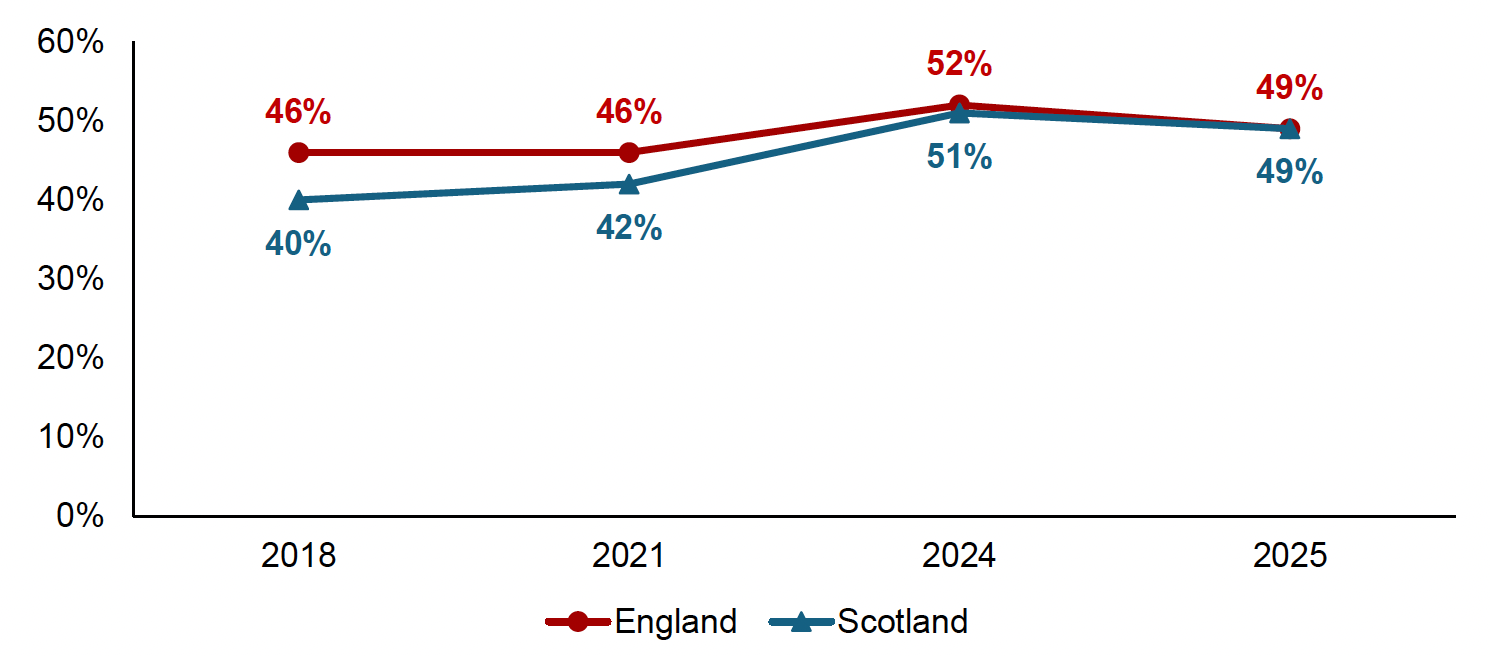
The Money and Pensions Service has undertaken research across the UK allowing us to compare financial wellbeing across countries (Figure 21).[87] The data does not offer a breakdown for households with children but does provide a broad picture of comparisons between the UK nations. Financial struggles became more prevalent among families in Scotland between 2018 and 2024, narrowing the gap with England. By 2025, the proportion reporting financial difficulties was the same in both countries (49%).
This section of the report focuses only on advice services and public debt relief rather than on wider policy to support economic growth or reduce inflationary pressures on households.
Looking first at policies introduced by Scottish Government to support households with the cost of living and with their financial resilience:
- The Scottish Government invested £16.9 million in free to access advice services in 2025/26. This investment supports a range of services including Citizens Advice Scotland and their network, StepChange Debt Charity, Advice Direct Scotland, Advice UK through the delivery of the Advice in Accessible Settings Fund, One Parent Families Scotland and others. It is estimated that in 2025/26 advice services supported over 100,000 people.
- Citizens Advice Scotland Council Tax Debt project has supported over 15,000 households since 2023 including 4,000 with council tax arrears. This has included households seeing debt written off as well as supporting households to access Council Tax Reduction worth £2.69 million.
- The School Meal Debt Fund, was used to clear debt accrued by families on school meals. Reporting shows however that school meal debt is rising again despite efforts by local authorities to support families.[88]
- The Scottish Government, through the Money Talk Team, supported over 64,000 people in 2025/26 with over 13,000 clients from priority family groups by giving access to free debt, income maximisation and welfare advice.
Money advice and support is also provided across the UK, including Scotland, through the Money and Pensions Service’s MoneyHelper programme.
Scottish Government policy action includes addressing council tax debt as outlined above, which is the biggest public debt issue facing families in Scotland.[89] However, other public debts relate to reserved benefits such as Universal Credit. Public debt is where those who receive money from the public purse in the form of social security payments may have to pay a portion of this back in the form of ‘debts’ accrued. This can be done through Universal Credit advances, Department for Work and Pension loans, rent and council tax arrears, or arrears to the local authority for children’s school meals.
In recognition of the impact of public debt on household finances the UK Government introduced the Fair Repayment Rate in April 2025. The Fair Repayment Rate has reduced the overall Universal Credit deductions cap from 25% to 15% of a claimant’s standard allowance. The UK Government estimated that this will support 1.2 million households including 700,000 families with children by on average £420 per year.[90]
The Fair Repayment Rate has already had a significant impact on public debt deductions in Scotland. Research has shown that the total amount deducted from Universal Credit across Scotland had dropped from £18.4 million in May 2025 to £14.9 million in August 2025 and the annual deduction had dropped from £221 million to £179 million (a 19% reduction). [91] It should be noted that this policy only reduces the amount that can be taken from Universal Credit as a percentage of Universal Credit payments but it does not reduce the overall level of the debt.
These changes are likely to impact families that are at higher risk of poverty in Scotland. Families with children owe the most across all categories of public debt, with the exception of social housing debt. Female lone parents are particularly affected, being 68% more likely to have public debt than the wider population. Women living in families that include a disabled person are 43% more likely to have public debt, while men in families that include a disabled person are 32% more likely to have public debt. Evidence relating specifically to Universal Credit specifically highlights that male and female carers have the highest likelihood of holding Universal Credit advance debt. Further, female lone parents are 27% more likely to have this type of debt, while male lone parents 12% more likely.91 This suggests that reforms to the repayment rate are likely to have a greater impact for these groups, easing the burden of reductions to their benefit entitlements.
Scottish Government action has focused on strengthening household financial resilience. UK Government reform through the Fair Repayment Rate has complemented this by reducing public debt deductions, with financial gains particularly for families with children.
Contact
Email: TCPU@gov.scot