
Child poverty in the UK and Scotland
This report provides an evidence-based baseline to better understand child poverty rates across the UK nations and the respective contributions of Scottish and UK Government policies to tackling child poverty since 2010 in Scotland.
Increasing income from employment
Key findings
- Insufficient household income remains the primary driver of child poverty. Evidence consistently identifies employment as the most effective route out of poverty, particularly when work is secure and fairly paid.
- Devolution constrains the Scottish Government’s ability to influence income from employment. Levers such as wage regulation and much of the tax system remain reserved to the UK. This means that UK wide policies have a significant impact in Scotland, with labour market trends (such as pay per hour or in-work poverty rates) in Scotland tending to follow a similar pattern to UK-wide trends.
- Welfare reform has had mixed effects on poverty in Scotland. UK Government reforms increasingly emphasised employment as the primary route out of poverty. While some measures improved the financial returns from work, reforms that reduced benefit generosity had negative impacts on household incomes.
- Increases in the National Minimum Wage and National Living Wage have improved pay. These policies, reserved to the UK Government, have supported low-paid workers. While the Scottish Government promotes the real Living Wage campaign as a benchmark aligned with the cost of living, the absence of regulatory powers means progress depends largely on voluntary employer adoption.
- Gender neutral parental leave and pay policies play an important role in supporting parental employment. Reserved to the UK Government, shared parental leave and pay take-up has remained low and eligibility criteria limits access for lower income families.
- UK Government intervention was critical in mitigating the worst economic impacts of the COVID-19 pandemic. Where support was insufficient, or where gaps emerged, devolution enabled the Scottish Government to supplement and target resources towards families most at risk of financial hardship.
This chapter examines the contribution of UK policy efforts to tackle child poverty in Scotland through increasing income from employment. Firstly, it looks at key indicators relevant to increasing income from employment based on the child poverty measurement framework. It then explores specific impacts of UK Government policies in Scotland.
Labour market indicators
Overall, data shows very similar values and patterns across Scotland and the UK on key labour market indicators. This suggests that UK wide policies have a significant impact in Scotland. Potential levers for change in Scotland, such as wage regulation and much of the tax system, remain reserved to the UK.
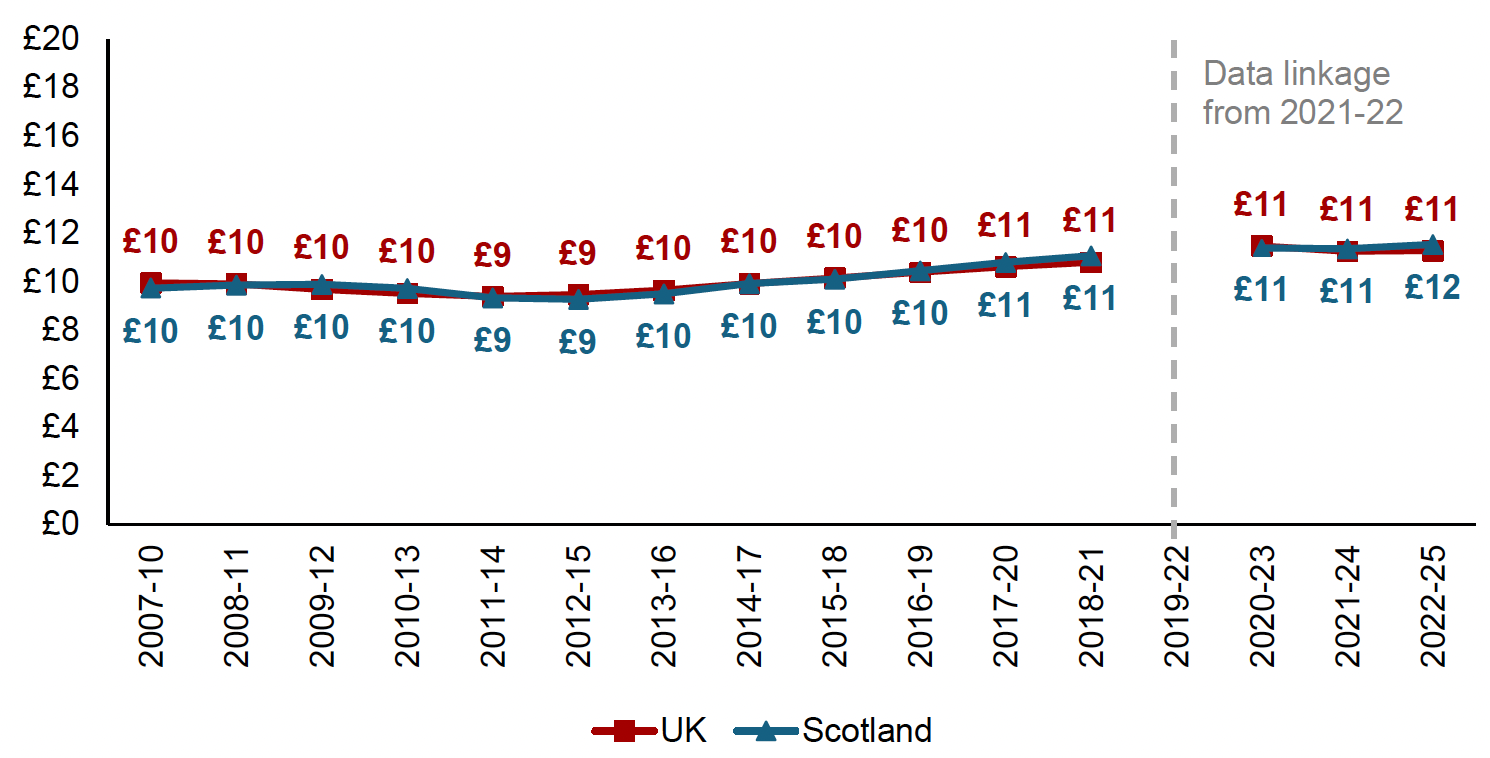
Average hourly pay (in 2024/25 prices) amongst low income households with children is very similar in Scotland and the UK and as such follows the same stable trend (Figure 9). There has been no significant change in the average hourly pay over the last 20 years.
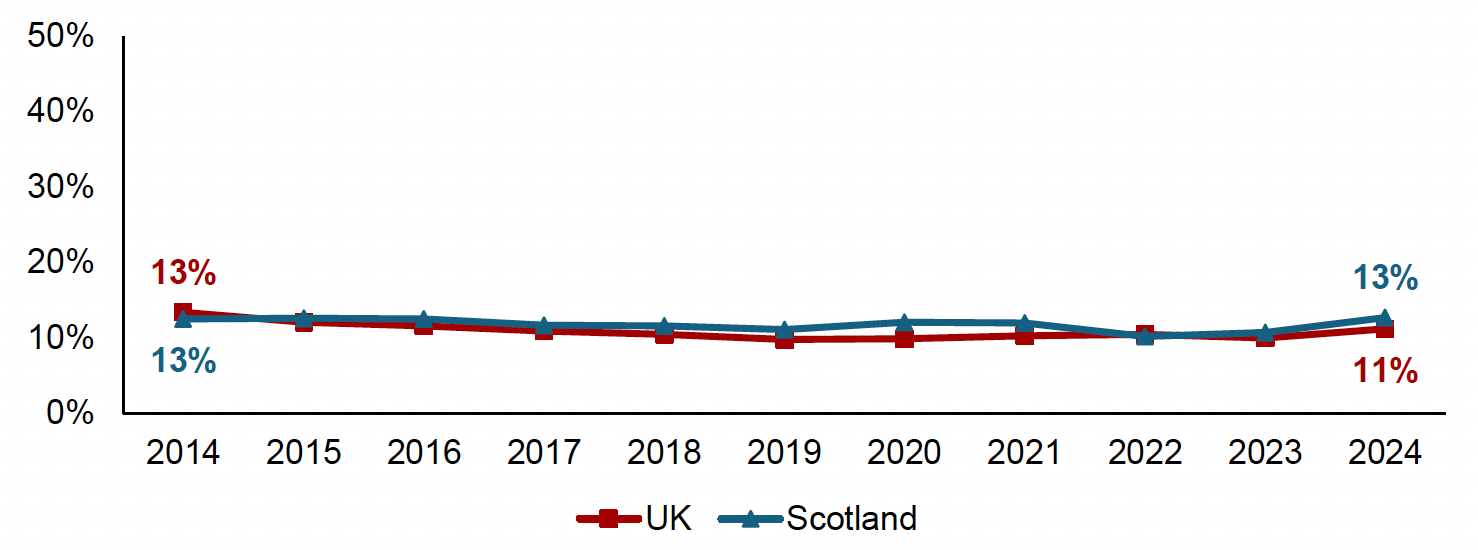
Most children live in households where at least one adult is in paid work (Figure 10). As with previous measures, the proportions have relatively stable over time and are broadly similar in Scotland and the UK as a whole.
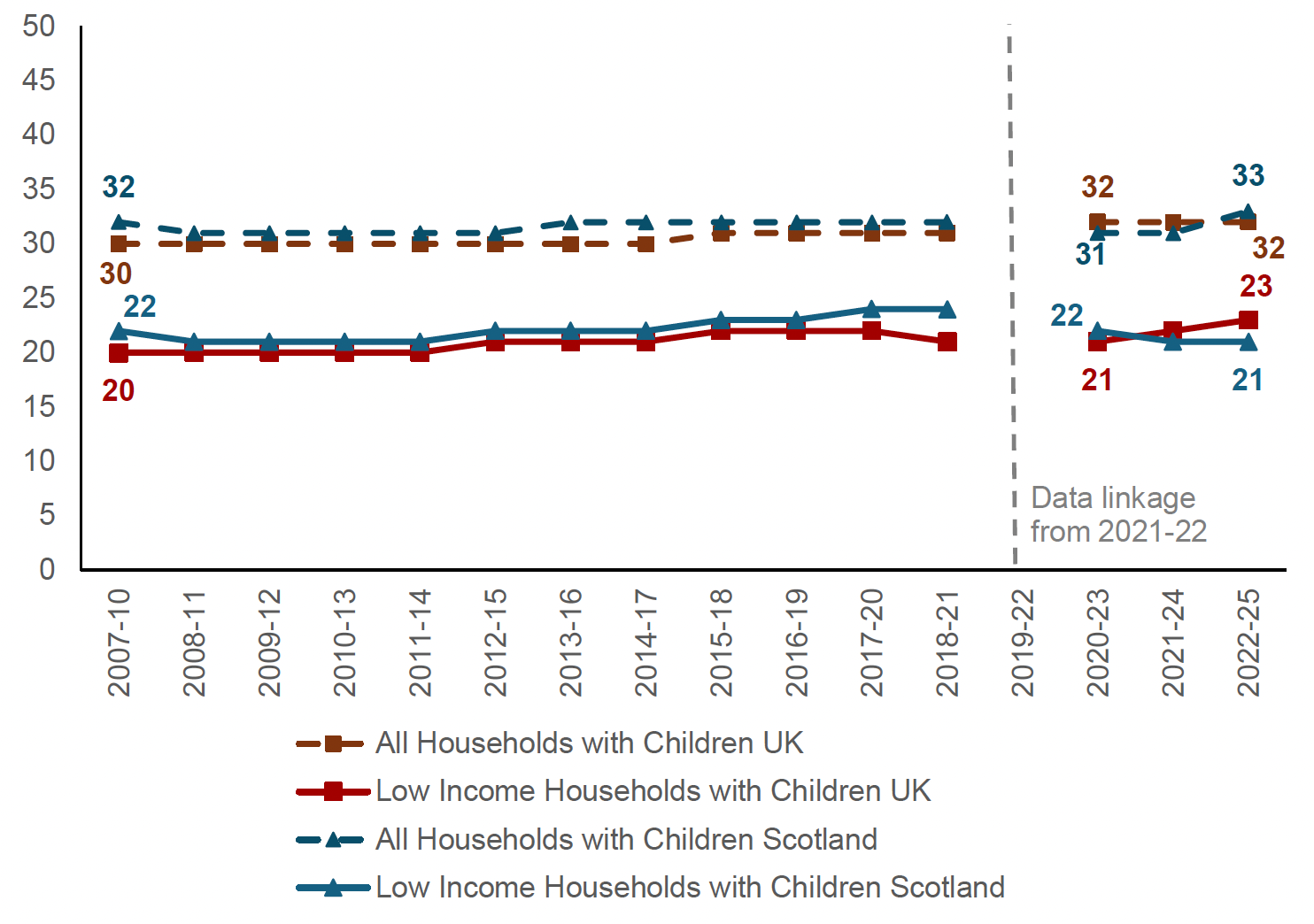
Overall, amongst those in employment, the number of hours worked show some slight variations between Scotland and the UK as a whole (Figure 11). Since 2020, there has been an increase in the number of hours worked amongst households with children in Scotland (from 31 hours in 2020-23 to 33 hours in 2022-25). In the UK, the level has remained constant at 32 hours. Looking specifically at low income households with children, work intensity data shows an increase in the UK (from 21 hours to 23 hours) and a slight drop in Scotland (from 22 hours to 21 hours).
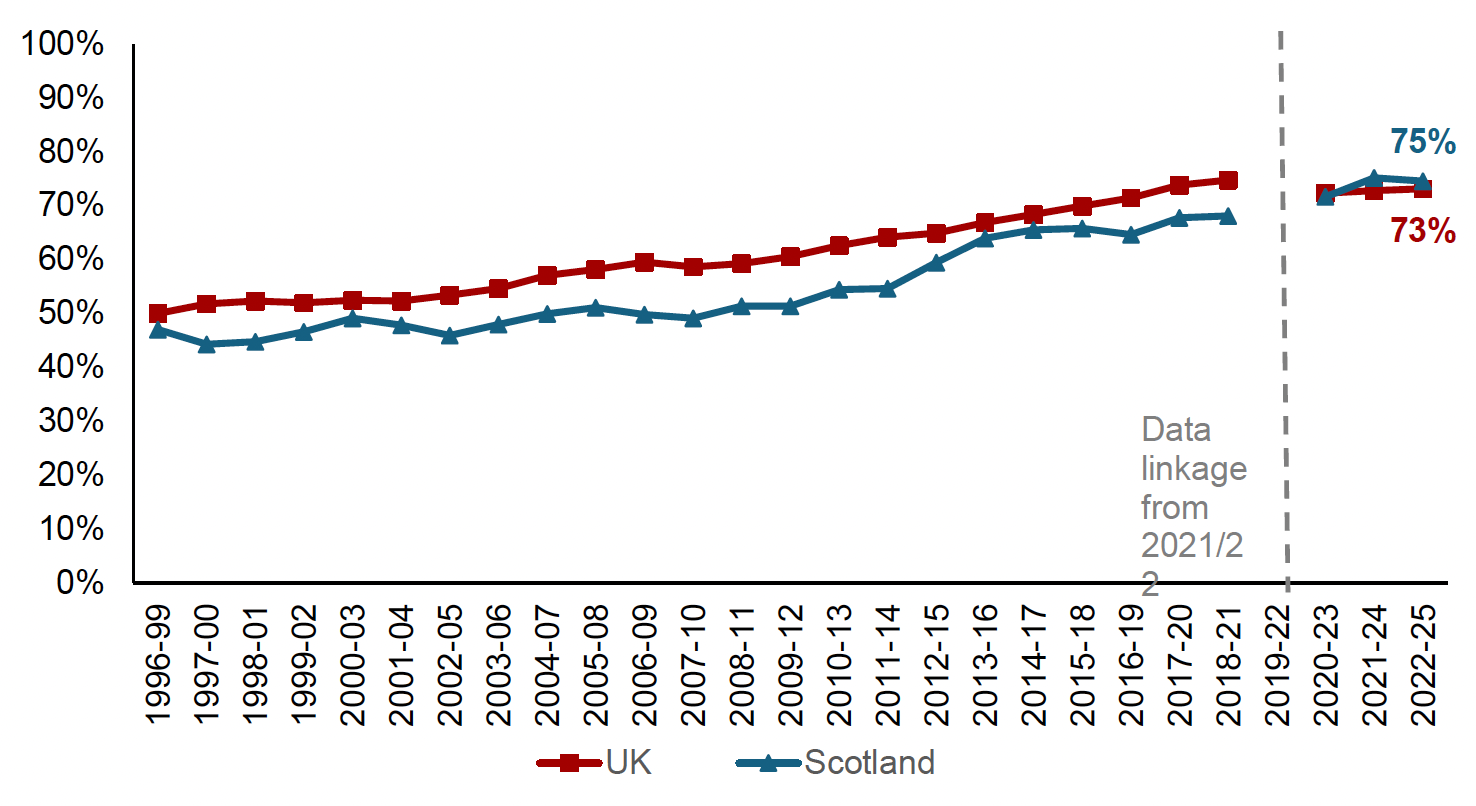
There has been a marked increase in the proportion of children in poverty (after housing costs) who live in a household where someone is working (in-work poverty) (Figure 12). This has followed a similar trend in both Scotland and the UK, with Scottish levels initially lower. In the 2022-2025 period, levels of in-work poverty sit at 75% in Scotland and 73% in the UK. The increase in in-work poverty occurred despite rising employment rates, with the UK employment rate rising from around 70% to 75% over the same time period. This highlights a growing disconnect between employment and protection against poverty from work, indicating that having paid work has become less of an effective safeguard against poverty. This reflects the growing prevalence of low pay, insecure and part-time employment and insufficient hours, paired with rising housing and living costs.[20]
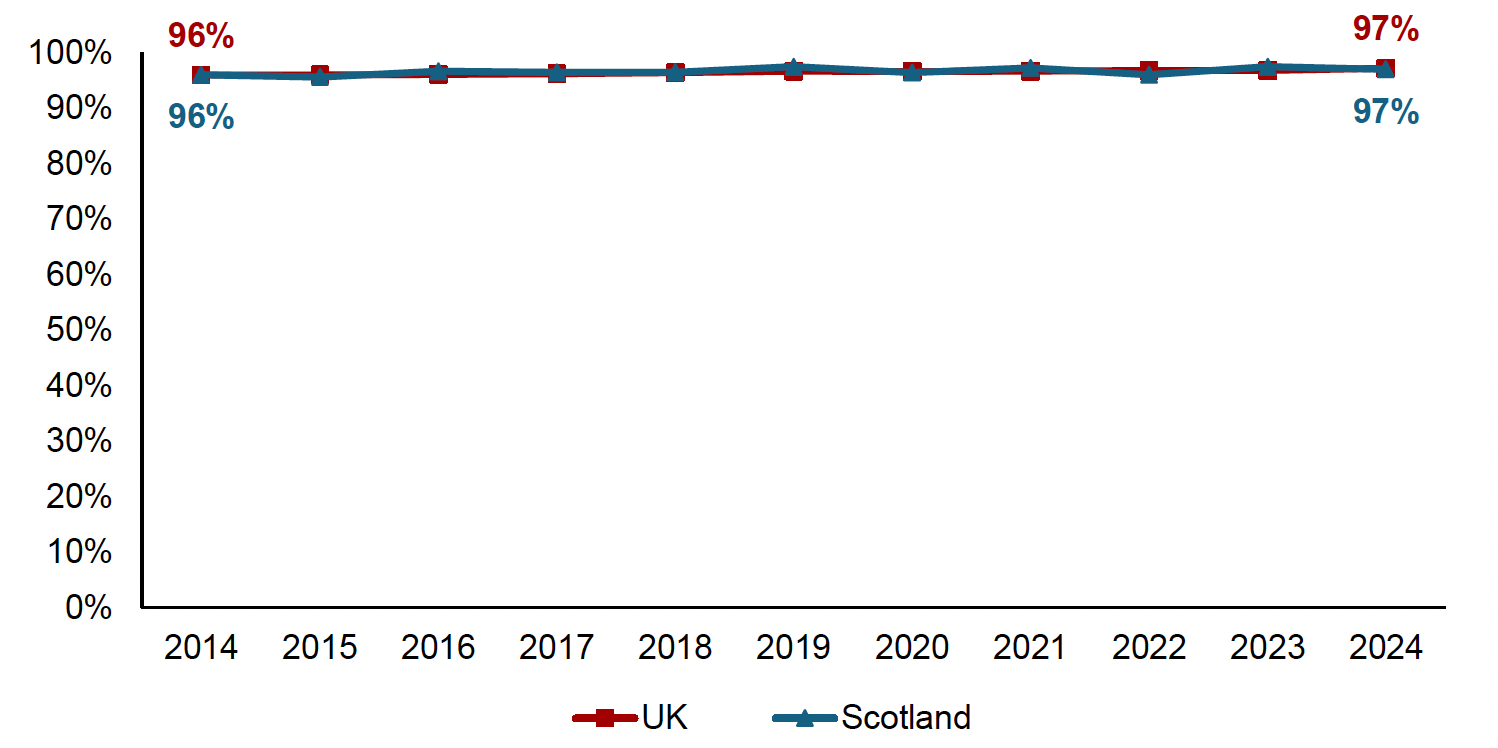
Secure work can support stability of a family’s household income. The percentage of parents (in employment) with permanent contracts has been consistently high and at a parity between Scotland and the whole of the UK (see Figure 13).
Underemployment levels, that is the proportion of parents who are in work but who would prefer to work more hours in their current job, in an additional job, or in a new job with longer hours to replace their current job, shows similar levels between Scotland and the UK (Figure 14). In recent years, there has been a slight decrease with levels currently sitting at 5% in the UK and 4% in Scotland.
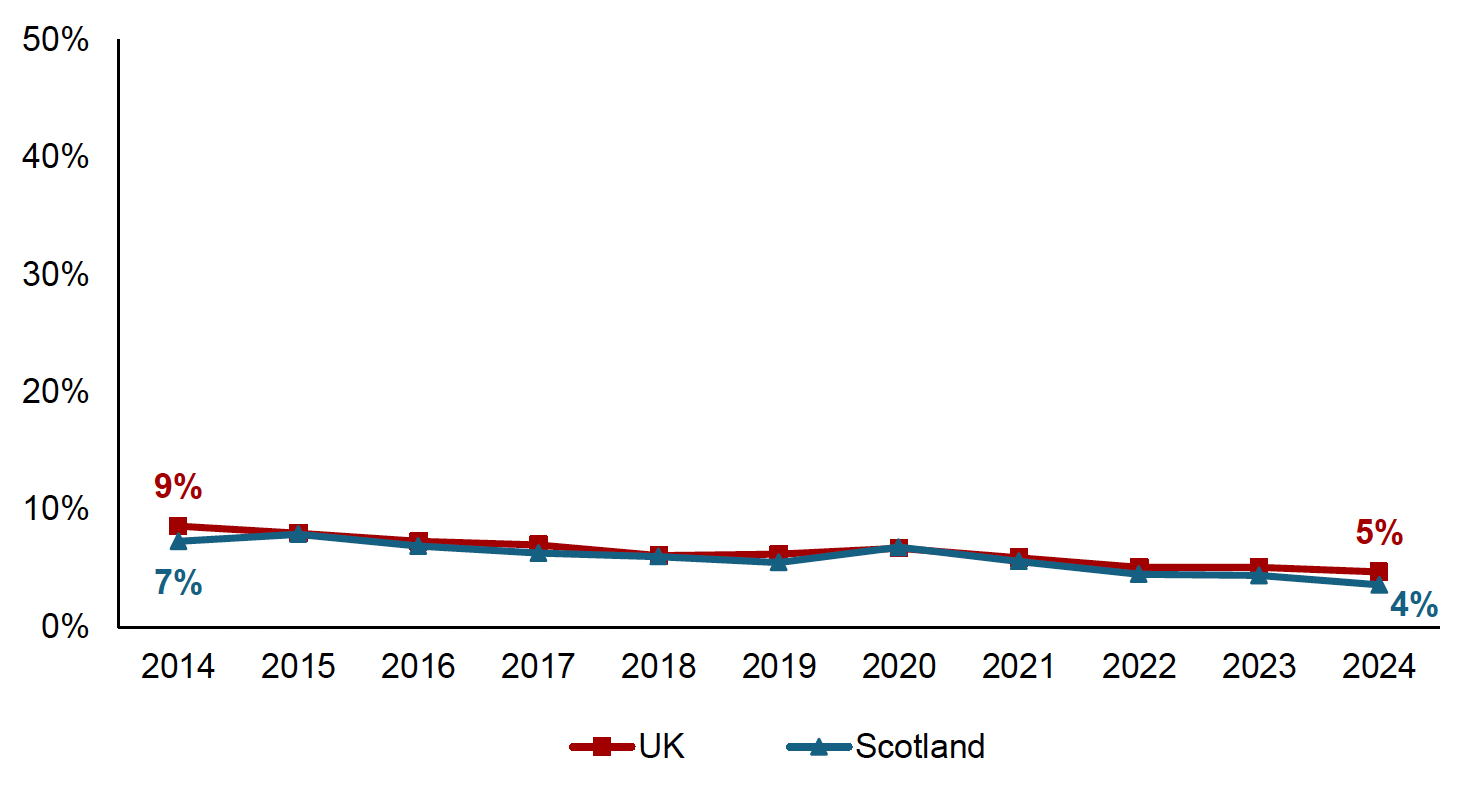
Overall, labour market indicators in Scotland are broadly similar to those for the UK as a whole, highlighting the impact of reserved labour market policies
Policy landscape – Scotland and UK wide
Welfare policy remains largely reserved to the UK Government, although some aspects of welfare-to-work support, particularly employment support services, are devolved or delivered locally. The main working-age benefit linked to employment is Universal Credit which was introduced from 2013. It is largely reserved, meaning that the Scottish Government has no control over its design, eligibility rules and conditionality requirements (see section on Universal Credit).
While Scotland has devolved powers over a range of social security benefits, these are primarily designed to supplement income rather than replace Universal Credit as the main in-work and out-of-work income support. As a result, the financial incentives to enter or increase paid work, and the rate at which benefits are withdrawn as earnings rise, operate broadly similarly in Scotland and across the rest of the UK.
This helps explain why labour‑market‑related indicators in Scotland show patterns that are broadly comparable to those observed across the UK, despite differences in devolved policy areas.
The following section of the report considers the wider policy context linking welfare and employment. The analysis aims to identify, where possible, the contributions of UK wide policies to child poverty trends and outcomes in Scotland.
The key areas examined are:
- welfare reform and the labour market
- increasing pay – national living wage and real living wage
- supporting parents to balance paid work with childcare
- supporting the labour market in periods of uncertainty – an example of COVID-19 pandemic employment support
Welfare reforms and the labour market
UK welfare reforms refer to the programme of changes introduced from 2010 onwards. The reforms were driven largely by a desire to reduce public spending following the 2008 financial crisis, with total government spending having risen from £449 billion in 1996/97 to £725 billion in 2009/10.4 Many of these changes were implemented through the Welfare Reform Act (2012). The reforms were presented both as an economic response to rising public expenditure and as a social policy intervention, with an increased emphasis on strengthening work incentives and positioning employment as the primary mechanism for tackling child poverty.[21]
The Welfare Reform (Further Provision) (Scotland) Act 2012 placed a legal requirement on Scottish Government to produce an annual report on the impacts of UK Government welfare reform in Scotland. Analysis by the Scottish Government [22] highlighted that changes to Universal Credit work allowances and the earnings taper rate were a cost-effective way to lift working households out of poverty. It estimated that reversing these changes would result in around 10,000 additional people in Scotland being pushed into poverty.
However, welfare reform also included a range of other measures that reduced benefit generosity. These included the removal of the £20 uplift to Universal Credit, the benefit freeze and imposing a two-child limit on the ‘child element’ of Universal Credit and Child Tax Credit. In 2022, it was estimated thatreversing key UK Government welfare reforms would bring 70,000 people out of poverty in Scotland, including 30,000 children in 2023/24 .22 More recently, it is estimated [23] that the removal of the two-child limit alone will keep 20,000 children out of relative poverty in 2026/27. Further detail on this is explored in the social security chapter.
Welfare reforms reflected an increasing policy emphasis on employment as the primary route out of poverty. Some measures improved the financial returns from work, but reforms that reduced benefit generosity had negative impacts on household incomes. Consequently, the overall effect on poverty in Scotland has been mixed.
Increasing pay – national living wage and real living wage
A range of factors are associated with increases in in-work poverty, including rising housing costs,[24] but also labour market characteristics, such as: the type of employment available; the prevalence of insecure work; limited access to family-friendly policies (i.e. affordable childcare); and, constrained opportunities for career progression.[25] This section focuses specifically on the role of pay.
The National Minimum Wage is controlled by UK legislation through the National Minimum Wage Act 1998. This sets out the legal minimum pay that workers are to receive per hour. In order to minimise the levels of in-work poverty, the National Living Wage was introduced by the UK Government in 2016. It was set to ensure ‘that work pays’ with the aim of reducing the need for social security payments to top-up household income through the benefits system amongst those who work.
The Real Living Wage is an alternative UK-wide voluntary wage rate that has been estimated to meet the costs of living. As of April 2026, the real Living Wage is £13.45 per hour (£14.80 in London). In contrast, the National Living Wage, as of April 2026, is £12.71.
Across the UK, the National Living Wage had a modest impact on households in the lower and middle parts of the income distribution (0.5% of net income gain).[26] Measures to raise earnings cannot be considered in isolation from the design of the benefits system, as benefit withdrawal can offset gains from higher pay. [27]
With the publication of the Child Poverty Strategy for Scotland, in 2011, the Scottish Government began to support the aspirations of a real Living Wage campaign, building to full support by the publication of the next Strategy in 2014, including becoming a Living Wage employer. By 2025, 11.3% of employee jobs in Scotland were paid below the real Living Wage, compared with 14.6% across the UK as a whole. This percentage has been consistently low in Scotland, but Scotland has also made faster progress in reducing it over the last decade, comparatively to the other nations in the UK.[28]
The overall impact on child poverty of policy efforts by both the UK and Scottish Governments to improve pay remains unclear.[29] Pay interacts with a range of other factors, including hours worked, job security and stability, which together shape household income. Further, we know from our evidence on international approaches to tackling child poverty that minimum wage policies, paired with collective bargaining, are critical in helping to drive up wages.
Pay is one of several factors shaping household income, with outcomes also influenced by hours worked, job security and stability. While the Scottish Government supports the real Living Wage campaign to meet the true cost of living, the lack of regulatory powers means its impact relies on voluntary employer adoption.
Supporting parents to balance paid work with childcare
Parental leave and pay policies sit at the intersection of labour market and welfare policies. These are important because data shows that having a baby can be a trigger to fall into (or deeper into) poverty.[30] In addition, an evidence review on what works has shown that gender-neutral parental leave policies are key to supporting parents to take leave and facilitating that mothers, in particular, can return to work after the birth of a child. International examples also highlight the importance of promoting a fairer distribution of unpaid care through parental leave policies.[31] This is because women’s caring roles are a key barrier to their participation in the labour market making women’s poverty and child poverty intrinsically linked.[32]
As Employment law is not a devolved matter, parental leave and pay policies are reserved to the UK Government. Currently, this includes Statutory Maternity Leave and Pay, Maternity Allowance, Paternity Leave and Pay, and Shared Parental Leave and Pay. Overall, the UK’s parental leave provision favours mothers to be babies’ main carers: mothers are entitled to 52 weeks of maternity leave, compared to two weeks paternity leave for fathers.
Although shared parental leave is available in the UK, it has not yet delivered a fully equitable parental leave system. Take-up figures suggest that less than 4% of fathers have taken this up.[33] Further, the evaluation indicates that the shared parental leave policy does not reach those families most at risk of experiencing poverty. Financial considerations were cited as a key barrier to uptake of the policy, with one in four mothers (25%) and almost one in three fathers (30%) stating that negative financial impact was the main reason they did not take up shared leave. In addition, criticisms of the policy centre on the complexity of the eligibility criteria with requirements around employment status, earnings and time in service that may exclude those on lower incomes.[34]
Gender neutral parental leave and pay policies can play an important role in supporting parents and facilitating mothers to return to work following the birth of a child. Reserved to the UK Government, provision has expanded through the introduction of Shared Parental Leave and Pay. However, take-up has remained low and eligibility criteria can limit access for lower income families. As a result, the policy has had limited impacts across the UK, including Scotland.
Supporting the labour market in periods of uncertainty
While periods of crisis can affect all households, some are more vulnerable than others to the increased volatility that such periods create. In particular, low income households are often less able to absorb financial shocks and are therefore disproportionately affected. It is therefore important to examine the forms of employment support that can help mitigate these impacts during periods of economic uncertainty.
Research on the impact of the COVID-19 pandemic on low-income households in Scotland identified the Coronavirus Job Retention Scheme (CJRS) as highly valued source of financial support. [35]
Commonly known as furlough, the scheme was launched in mid-March 2020 by the UK Government and enabled employers to claim a grant from HMRC covering 80% of the wages of ‘furloughed workers’ (up to £2,500 per month).[36] Scottish Government analysis acknowledged the key role of the CJRS, and other measures taken by the UK Government, in mitigating large-scale unemployment during the pandemic.[37] The scheme was considered to be particularly effective in reducing redundancies during the pandemic – a pattern observed across the UK. For example, in April 2020, the Office for Budget Responsibility forecast that UK unemployment would peak at 10% in 2020, but it ultimately peaked at a much lower rate of 5.2%.[38]
Some workers were unable to access furlough support because they were self-employed. The Self Employment Income Support Scheme (SEISS) was introduced in May 2020 to address this gap. The scheme provided financial support based on self-assessment tax records. However, the scheme was criticised on the grounds of eligibility, complexity and entitlement.[39] In response, the Scottish Government set up an emergency, discretionary fund, the Newly Self-Employed Hardship Fund with a total of 14,342 awards at a value of £45.9 million – with this noted as vital support for those recently self-employed.[40]
Additionally, further support was offered by the Scottish Government, particularly targeted at low-income households and families, to provide financial assistance during the pandemic. This included: Free School Meal alternate provision; Coronavirus Carer’s Allowance Supplement Payment; Covid Winter Hardship Payment; and, Scottish Child Payment Bridging Payment. The package of support offered to low-income families were found to reduce financial difficulty and eased worries about managing financially through the pandemic.35
UK Government support was critical in mitigating negative impacts of the pandemic. However, where gaps emerged in support, devolution enabled the Scottish Government to supplement and target resources to those families most in need.
Contact
Email: TCPU@gov.scot