
Scottish economic insights: September 2026
Provides a summary of latest key economic statistics, forecasts and analysis on the Scottish economy.
Recent economic developments
Global context
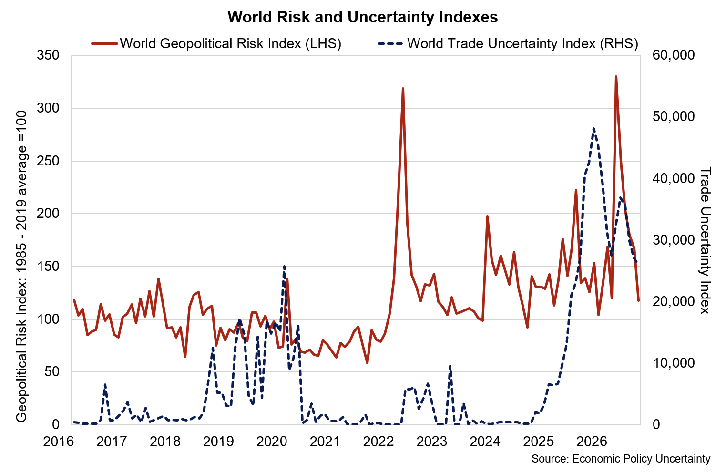
Over the last six months the global context has been dominated by the conflict in the Middle East, which has seen significant disruption to oil and gas supplies from the region. Supply through the Strait of Hormuz remains below normal levels, with continued uncertainty on the duration of the conflict. Although uncertainty indices have come down from their peaks earlier in the conflict, they still remain elevated.
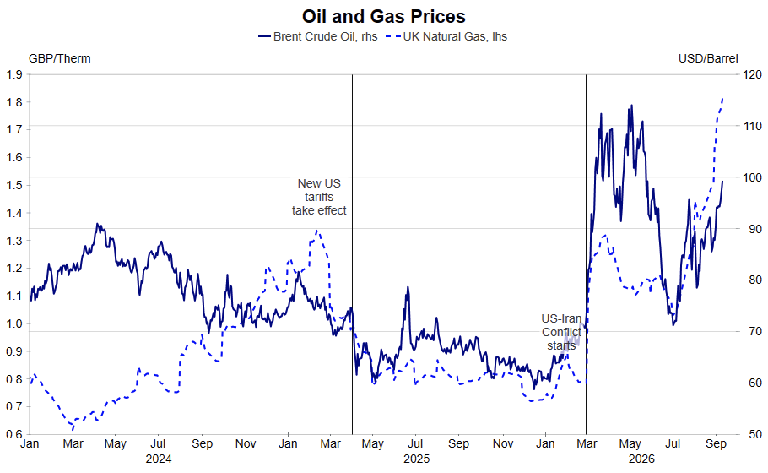
After moderating in June and July global Brent Crude oil prices having increased again in recent months, to again pass $100 a barrel, around 50% above pre-conflict levels, although they are currently below their conflict peak of $119 per barrel. However, UK natural gas prices have been rising since the end of June, surpassing the initial spike in March and reaching levels similar to those seen at the end of 2022 during the tail end of the spike caused by the Russian invasion of Ukraine. As of the 11th of September the UK natural gas price was around 200p/therm amid long-term supply concerns and as Europe had delayed stockpiling earlier in the summer until now due to the conflict, causing the prices now spike.
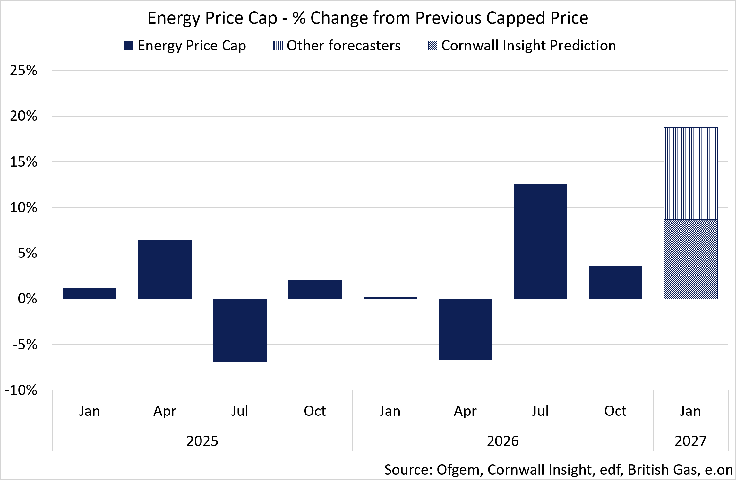
The increased wholesale oil and gas prices have fed directly into domestic inflationary pressures through higher household energy prices and increased motor fuel costs, with petrol prices now at their highest level since November 2022. In terms of household electricity and gas prices, the Energy Price Cap increased 12.6% in July and is set to rise again by 3.6% in October. The Cap is then predicted to rise further in Q1 2027. Cornwall Insight in August predicted an expected 8.7% increase, but many energy companies are now predicting a larger increase closer to 20%, which would take the Energy Price Cap back above £2,000, for the first time since the first half of 2023.[1] This is after accounting for the UK Government cutting VAT to 0% on household electricity bills as part of a package of cost-of-living measures, which was expected to save an average household in the UK £45 per year from the 1st of October.[2]
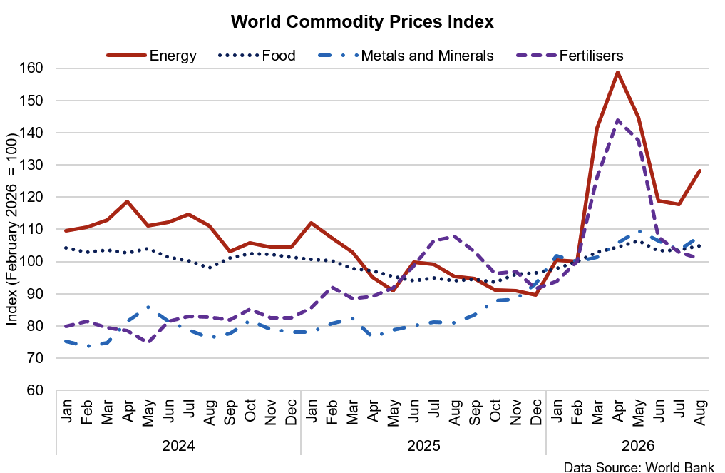
In addition to a rise in energy prices, the conflict saw an increase in other global commodity prices. After declining through the end of 2025, fertiliser prices rose sharply in March following the disruptions in the energy markets, reflecting their close link to energy markets. Fertiliser prices remain higher than pre-conflict although have eased since. By contrast, food and metals prices have increased more gradually, showing less volatility than fertiliser and energy markets. However, despite food price inflation moderating in the months to July, increased fertiliser and commodity prices are still expected to lead to an increase in food price inflation down the line. To read more on this, see Box 2.
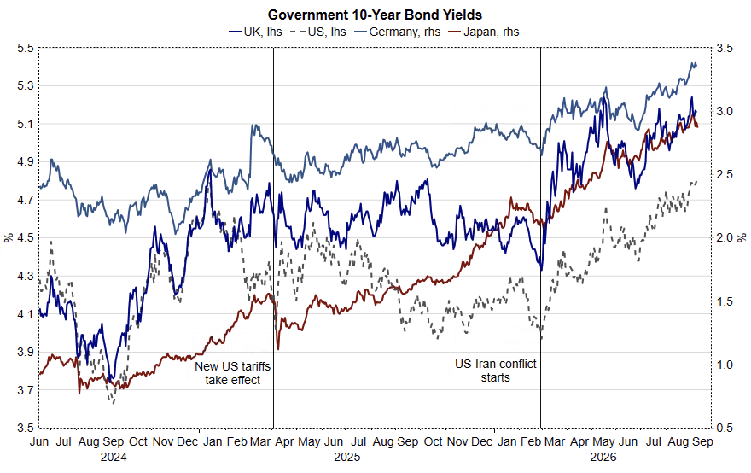
Globally government bond yields have risen across major economies following the closure of the Strait of Hormuz and the subsequent oil and gas price shock. The increase reflects higher inflation expectations and growing expectations that interest rates will remain elevated for longer than previously expected. In the UK, rising natural gas prices across Europe are contributing to increased inflation expectations. As a result, investors expect higher returns to hold UK government debt, reflecting both the risk that inflation will erode the real value of future bond payments and the growing expectation that monetary policy will remain restrictive for longer. Broader fiscal and market developments have also contributed to upward pressure on yields, increasing government borrowing costs.
The table below presents the current risk profile to the Scottish economy across a range of economic outturn indicators from the last 6 months, based on their position related to historical trends.
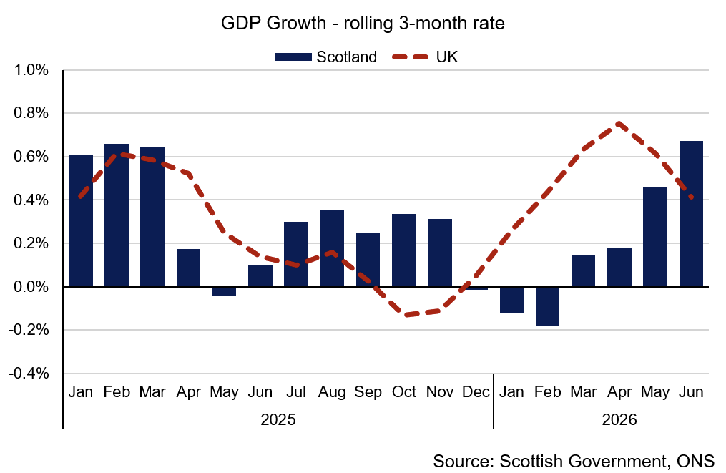
Conditions have weakened over the last 6 months, and the conflict has the potential to further exacerbate the existing most notable downside (red) risks to the Scottish economy that have persisted over the past year, in part through global geopolitical and trade uncertainty channels, demand in the economy and through public finances and costs to businesses. It also risks compounding risks which have worsened over the past year in consumer sentiment and policy uncertainty.
There are a number of risks that remain fragile (amber) in the Scottish economy at this point, mainly around the relatively subdued, albeit positive, growth in GDP and labour market indicators. Above target headline inflation remains fragile, with risks building from increased international food prices. In terms of stable indicators (green), earnings growth and exchange rates are positive relative to historic standards and are expected to remain stable.
Overall the risk profile in the economy is currently skewed to red and amber, with the conflict in the Middle East increasing uncertainty and weighing on the economic outlook.[3]
Contact
Email: economic.statistics@gov.scot