
Publication - Research and analysis
Scottish economic bulletin: December 2025
Provides a summary of latest key economic statistics, forecasts and analysis on the Scottish economy.
Inflation
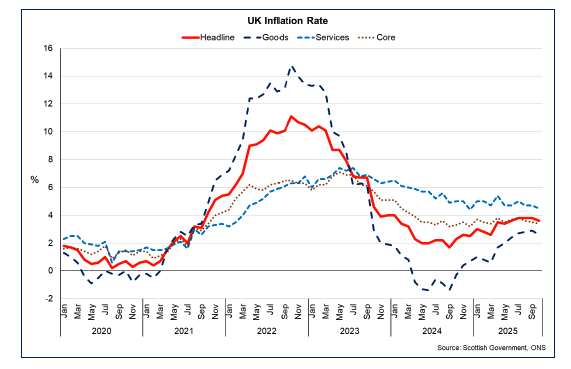
The inflation rate fell to 3.6% in October, its lowest rate in 4 months.
- Inflation fell in October for the first time in five months, with the rate falling from 3.8% to 3.6%.[4] There was a notable fall in the annual inflation rate of housing, water, electricity, gas and other fuels (5.2%, down from 7.3%), as the energy price cap is now at levels broadly similar to this time last year. This was partially offset by an increase in the inflation rates of food and non-alcoholic beverages (4.9%, up from 4.5%), and education (7.6%, up from 7.2%).
- More broadly, the inflation rate of services prices (4.5%) remains higher than the rate of goods prices (2.6%) although both rates fell over the month (from 4.7% and 2.9% respectively). Furthermore service prices inflation fell to its lowest rate since December 2024.
- Core inflation (excluding energy, food, alcohol and tobacco) fell to 3.4% October, down from 3.5% in September.
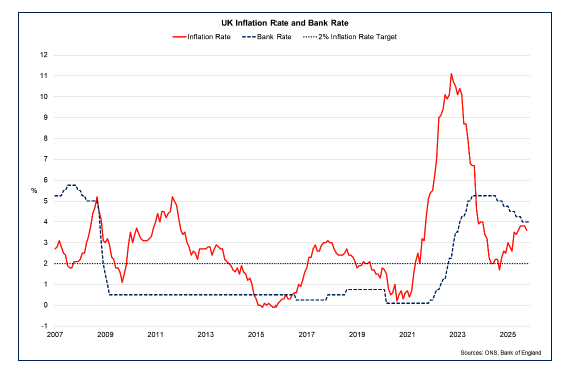
- Inflation remains above the Bank of England’s 2% target rate, although the Bank now expect inflation to be on a downward trajectory and in November, forecast inflation to fall to 3.5% across Q4 2025 and back to target in Q2 2027.[5]
- In November, the Bank’s Monetary Policy Committee (MPC) maintained the Bank Rate at 4%, judging that risks to the inflation outlook have become more balanced. Strong wage growth and higher household inflation expectations continue to risk putting upward pressure on inflation however continued subdued household consumption and an elevated savings ratio could weigh on the inflation rate.[6]
Contact
Email: economic.statistics@gov.scot