
Cardiovascular risk reduction - quality prescribing guidance 2026-2029: consultation
Cardiovascular disease (CVD) is largely preventable, and many modifiable risk factors increase the likelihood of developing CVD. This guide highlights how to support people in modifying risk factors such as diet, healthy weight, alcohol, physical activity, stress and tobacco smoking.
Open
32 days to respond
Respond online
12. Type 2 Diabetes (T2D)
T2D occurs when the body has developed resistance to insulin or less commonly no longer produces enough insulin to regulate blood glucose levels.
In 2023 there were over 350,000 people with a recorded diagnosis of any type of diabetes in Scotland. The majority (88.0%) of individuals have T2D.[96]
T2D is more common in adulthood and in those living with a higher body weight, particularly with higher levels of visceral fat around the abdomen. T2D can be preventable and can be managed or move into remission (in some cases) with medicine dietary and activity changes. Sometimes T2D is also treated with insulin.
12.1 Why is Type 2 diabetes important in CVD risk reduction?
People with diabetes have up to a fourfold increased risk of stroke[97] and are twice as likely to die after myocardial infarction than people without diabetes. [98] Both type 1 and type 2 diabetes have been shown to significantly reduce life expectancy and much of this premature mortality is due to cardiovascular disease.98
It has been shown that in T2D a 1% (11mmol/mol) reduction in HbA1c results in a 21% reduction in diabetes-related deaths, a 14% reduction in all-cause mortality, and a 14% reduction in combined fatal and nonfatal myocardial infarction.[99]
Prediabetes has also been shown to be associated with an increased risk of overall and CVD related mortality as well as CVD related morbidity such as ischaemic heart disease, stroke and heart failure.[100]
It is important that individuals are diagnosed with T2D early and are supported to manage or potentially reverse this condition. It is also important to assess and optimise all five cardiovascular risk factors in those diagnosed with diabetes.
12.2 How do we assess T2D risk and when you should check HbA1c?
Caution - an individual with suspected type 1 diabetes is at risk of life-threatening diabetic ketoacidosis.
If you suspect type 1 diabetes:
- immediately investigate with a finger prick blood glucose test
- make a same-day telephone referral to the specialist diabetes team if appropriate, even if the individual is ketone negative
- Do not carry out/request a fasting glucose, OGTT or HbA1c if you suspect type 1 diabetes
- Individuals should have their T2D risk score checked using a recognised tool such as Diabetes UK – Know Your Risk of Type 2 diabetes
- If deemed high risk, they should have their HbA1c checked
- The suggested interventions and management are shown in the flow chart below. This aligns to the recent SIGN guideline Prevention and remission of type 2 diabetes
- The national cardiovascular disease (CVD) prevention and risk factors toolkit has a glycaemia pathway to support reviews of individuals
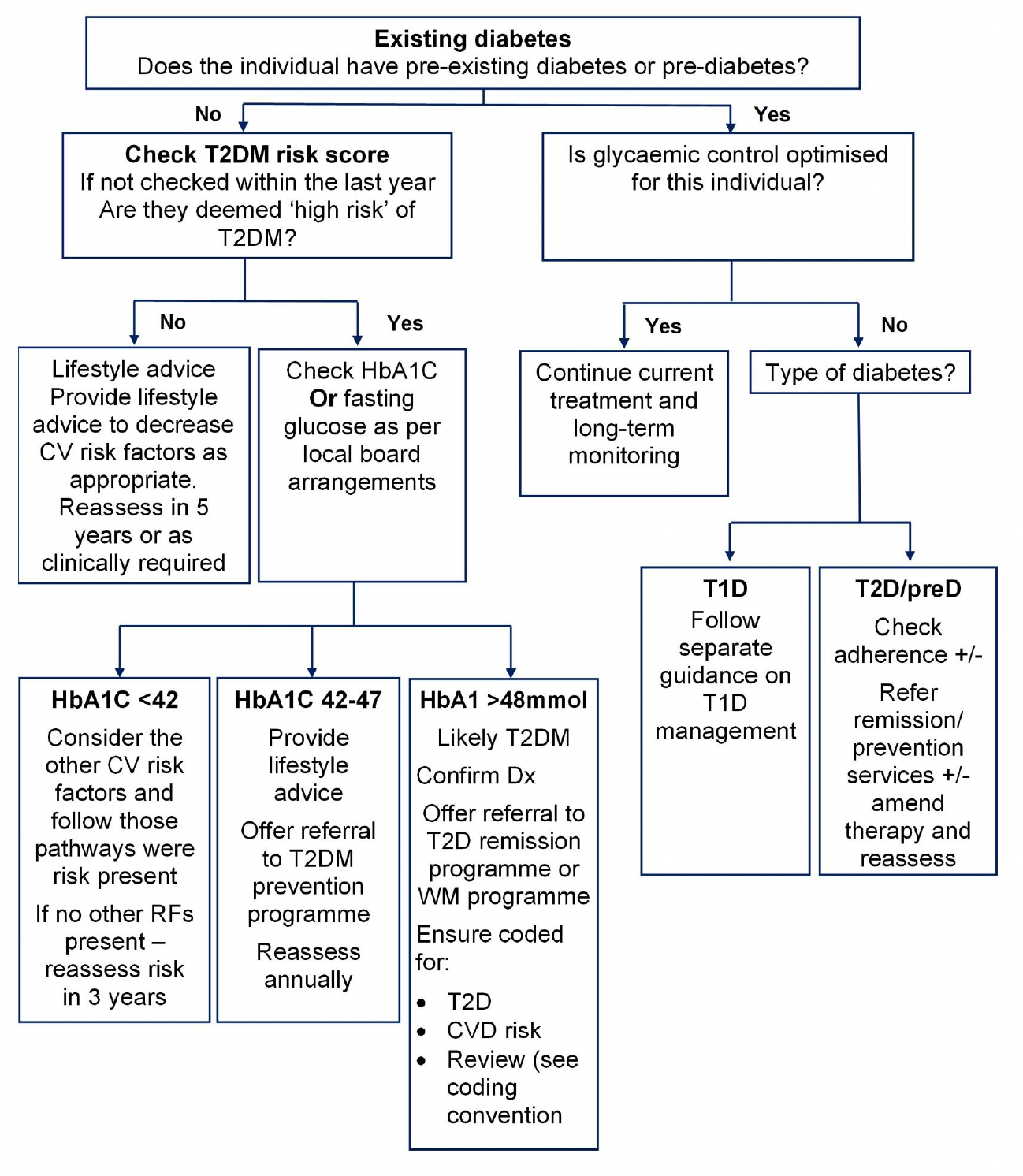
For people with possible T2D (fasting plasma glucose of 7.0mmol/l or above, or HbA1c of 48mmol/mol 6.5% or above, but no symptoms of type 2 diabetes):
- carry out a second blood test within three months of the original test
- if T2D is not confirmed, offer a referral to a local, quality assured, intensive lifestyle-change programme for prediabetes
12.3 Frequency of monitoring
It is important to consider referral to appropriate T2D remission or prevention programmes for all potentially eligible individuals.
For those with known diabetes or prediabetes their HbA1c should be assessed regularly and their individualised management plan, which includes lifestyle advice and medication, reviewed to optimise glycaemic control and support weight loss in patients with clinical obesity.
SIGN guidelines recommend - offer a reassessment based on the level of risk.
- Reassess people with a high-risk score, but with an HbA1c less than 42mmol/mol (6.0%) or a fasting plasma glucose less than 6.1mmol/L, every three years
- Reassess people with a low or intermediate risk score every five years using a validated risk-assessment tool
- Use clinical judgement to determine when someone might need to be reassessed more frequently, based on their combination of risk factors
12.4 Lifestyle interventions
Lifestyle management (see section 8) is a fundamental aspect of diabetes care and includes: [101]
- diabetes self-management education and support
- weight management intervention and support
- nutritional advice
- promoting physical activity
- smoking cessation advice
- psychosocial care
Clinicians should help individuals understand the impact excess body weight can have on T2D and medications prescribed. They should discuss prioritising diet and lifestyle interventions at diagnosis and each subsequent review. Individuals may require referral to structured education programmes, diet and lifestyle support and weight management services.
12.4.1 Remission
Early in the course of T2D, it is possible for some people to achieve remission from the condition through weight loss. Remission is defined as HbA1c remaining below 48mmol/mol or 6.5% for at least three months, without diabetes medication. Achieving remission reduces complications from T2D and allows people to experience a greater quality of life.
Low-calorie (~800 to 850kcal/day) diets with meal replacement products for three to five months aimed at achieving >15kg body weight loss, followed by structured food reintroduction and increased physical activity for weight-loss maintenance, and with behavioural support, should be considered for T2D remission in non-pregnant adults. The combination of weight loss and optimisation of lifestyle interventions is the primary intervention. Low-calorie diet, which has been well researched, is only one method of weight loss; other methods may be more appropriate.
More information is available in SIGN Guideline 172 Prevention and remission of type 2 diabetes.
12.5 Principles of prescribing
12.5.1 Prevention and remission Of Type 2 Diabetes
We now know that T2D can be prevented and put into remission with clinically effective programmes, most notably, weight loss. See SIGN Guideline 172 Prevention and remission of type 2 diabetes. Recent developments in obesity pharmacotherapy create new possibilities for using these medications as an adjunct to diet and physical activity for the prevention of type 2 diabetes.
Please see also section on incretin-based therapies
12.5.2 Metformin
Metformin is a glucose-lowering drug which has been shown to prevent progression from prediabetes to T2D. It is not indicated for weight management.
SIGN Guideline 172 Prevention and remission of type 2 diabetes supports the prescribing of metformin:
- use clinical judgement on whether (and when) to offer metformin to support lifestyle change for people whose HbA1c or fasting plasma glucose blood test results have deteriorated if:
- this has happened despite their participation in intensive lifestyle change programmes or
- they are unable to participate in an intensive lifestyle-change programme particularly if they have a BMI greater than 35
- start with a low dose (for example, 500mg once daily) and then increase gradually as tolerated, to 1,500 to 2,000mg daily. If the person is intolerant of standard metformin consider using modified-release metformin
- check the person’s renal function before starting treatment with metformin, and then annually (more often if they are older or if deterioration is suspected)
- long-term use of metformin may be associated with a vitamin B12 deficiency; consider annual review of vitamin B12 levels in metformin treated individuals, especially in those with anaemia or peripheral neuropathy
- individuals should be advised to withhold metformin if they have nausea, vomiting or dehydration (using Medication Sick Day guidance)
12.6 Management of T2D
12.6.1 Choice of medication
The individual should be at the centre of every consultation, to ensure a holistic approach to care. The person-centred 7-Steps review process starts by matching therapeutic objectives to current life priorities with the individual. This initial discussion guides decision-making in subsequent steps that consider medication need, effectiveness, and safety before a therapeutic plan and follow-up strategy are agreed upon.
Applying the 7-Steps as part of a holistic medication review has the potential to address all six dimensions of quality in health care: efficacy, safety, efficiency, timeliness, equity, and acceptability.4 Although the 7-Steps approach was primarily designed to be applied at the point of medication review to correct inappropriate prescribing, its principles may equally be applied when initiating new medicines, to prevent inappropriate prescribing, or when a patient moves across transitions of care. This may result in reducing the dose or stopping a medication completely, although this should not be the primary objective of a medication review. Addressing unmet needs may include starting new medications.
The decision cycle for person-centred glycaemic management in type 2 diabetes is summarised in Figure 5. This is based on a full version produced by the American Diabetes Association and European Association for the Study of Diabetes.
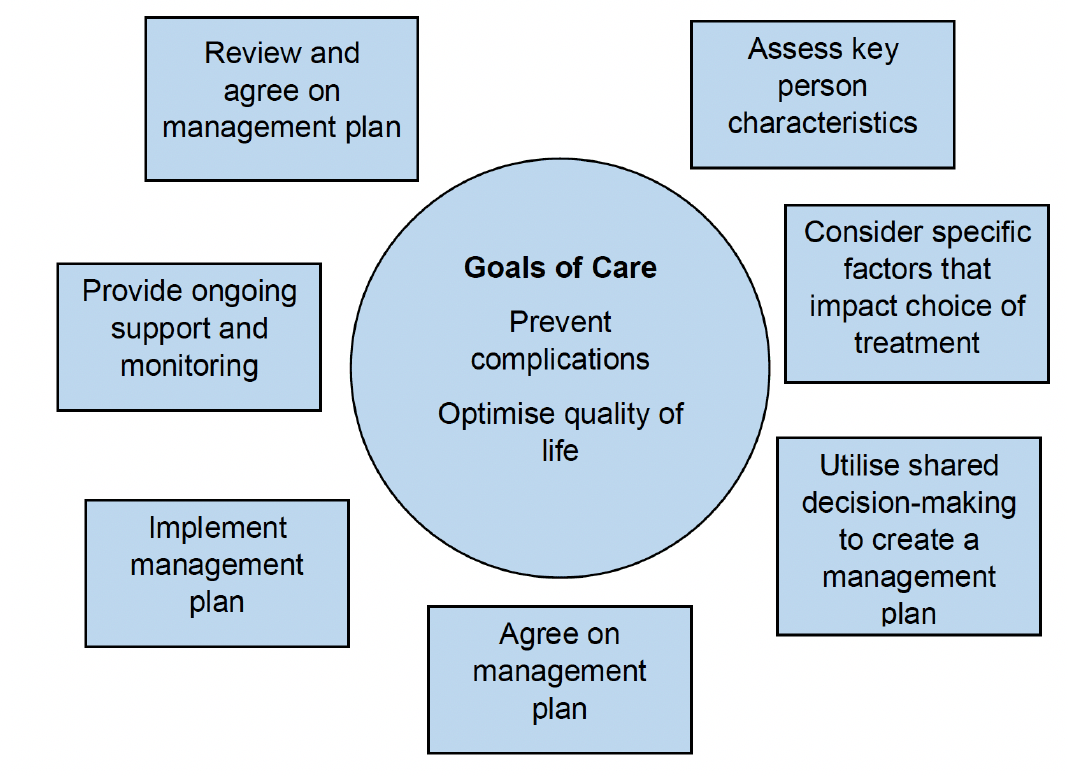
Each section should be viewed with the person at the centre of decision-making. Focusing on the whole person alongside their medication during the review will ensure the person remains central in the decision-making process and is not a passive recipient of care. This in turn encourages self-care and an understanding of how their condition/s impacts on their life.
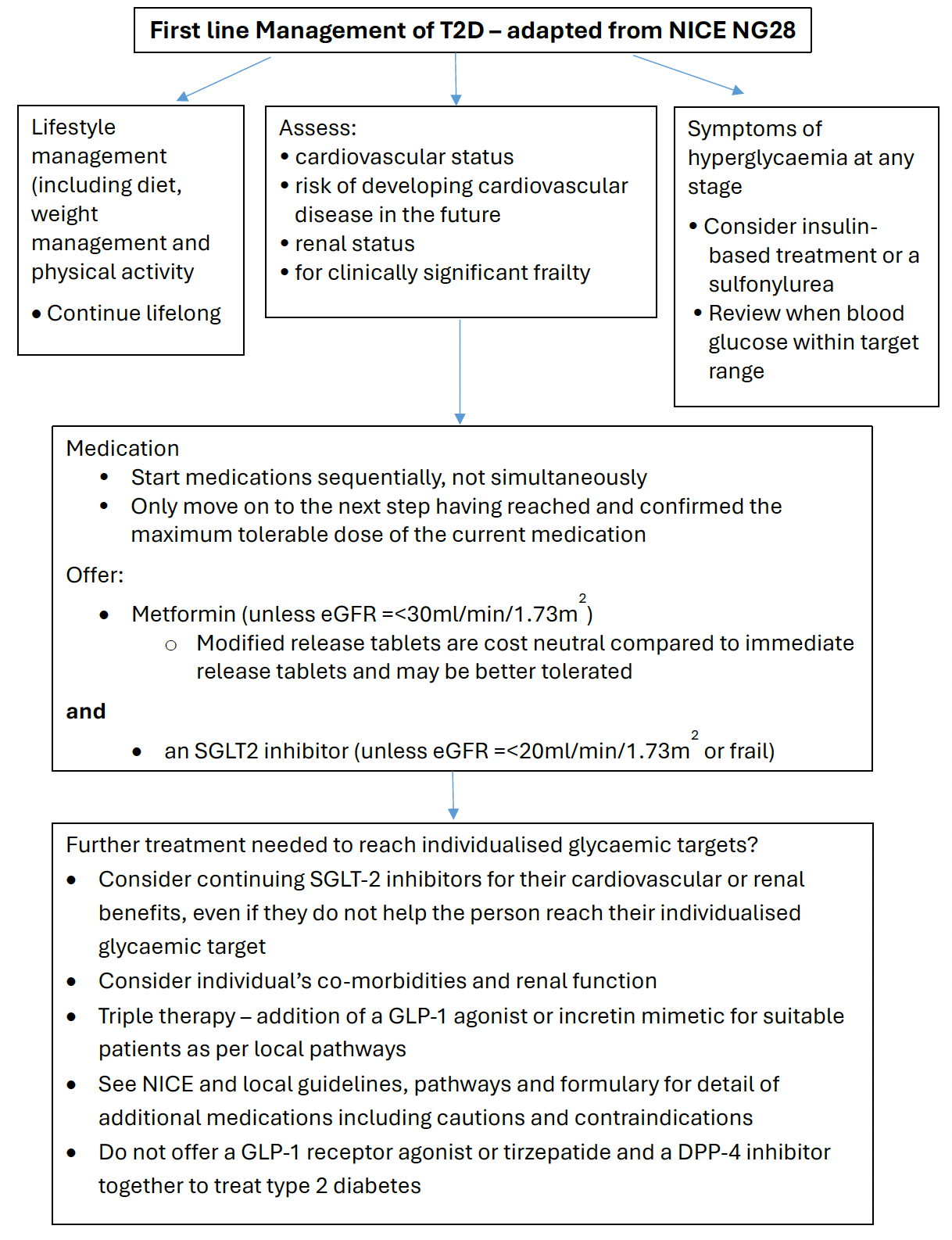
The flow chart in Figure 6 considers first-line management of T2D with diet and healthy living an important consideration at every step and is based on NICE Guidance 28: Type 2 diabetes in adults: management. The person-centred 7-Steps medication review process can be used at initiation and review of medication to support shared decision-making throughout the process. NICE have a printable patient decision aid Type 2 diabetes: agreeing my blood glucose (HbA1c) target to support these conversations.
Metformin
Metformin should be considered as the first-line oral treatment option for people with T2D and an eGFR above 30ml/min/1.732.[102]
Metformin is effective, safe, inexpensive and may reduce risk of cardiovascular events and death.[103]
Compared with sulfonylureas, metformin as first-line therapy has beneficial effects on HbA1c, weight and cardiovascular mortality and has reduced risk of hypoglycaemia. [104]
Many of the recent cardiovascular outcome trials compared new therapies added to metformin and not as first line options.98
12.6.2 SGLT-2 inhibitors
SGLT-2 inhibitors are recommended by NICE to be offered first line with metformin in individuals with:
- no relevant comorbidities
- living with obesity
- chronic kidney disease and an eGFR above 20ml/min/1.732 (either dapagliflozin or empagliflozin)
- early-onset (before age 40) T2D
- heart failure with any ejection fraction
- atherosclerotic cardiovascular disease
SGLT-2 inhibitors can be used as monotherapy for suitable individuals in whom metformin is contraindicated or not tolerated.
Type 2 diabetes management now includes consideration of holistic health improvements (in particular, cardiovascular and renal protection), rather than just HbA1c targets. SGLT-2 inhibitors in combination with metformin have been found to be more clinically effective at reducing HbA1c, weight and cardiovascular events compared to metformin alone or any other therapy combining metformin with one other medicine.
Before starting an SGLT-2 inhibitor, check whether the person may be at increased risk of diabetic ketoacidosis (DKA), for example if they:
- have had a previous episode of DKA
- are unwell with intercurrent illness
- are at risk of dehydration or volume depletion
- are following a very low carbohydrate or ketogenic diet
Address modifiable risks of DKA before starting an SGLT-2 inhibitor. For example, people who are following a very low carbohydrate or ketogenic diet may need to delay treatment until they have changed their diet.
Advise adults with type 2 diabetes who are taking an SGLT-2 inhibitor that a very low carbohydrate or ketogenic diet would increase their risk of DKA and so:
- they should speak with their healthcare professional before starting such a diet, and
- their SGLT-2 inhibitor treatment may need to be suspended for the duration of the diet
- counsel patients or their carers to seek urgent medical attention if signs and symptoms of NAION, including rapidly worsening eyesight in one or both eyes, occur
- consider continuing SGLT-2 inhibitors for their cardiovascular or renal benefits, even if they do not help the person reach their individualised glycaemic target
- See NICE NG28 and local guidelines and pathways for further information
12.6.3 GLP-1 receptor antagonists/Tirzepatide
For adults with Type 2 diabetes and atherosclerotic cardiovascular disease, NICE recommends offering metformin, an SGLT-2 inhibitor and subcutaneous semaglutide (Ozempic), up to 1mg once a week, for its cardiovascular, renal and glycaemic benefits. NICE state that evidence showed that subcutaneous semaglutide (Ozempic) was the most cost-effective GLP-1 receptor agonist.
GLP-1 receptor antagonists or tirzepatide should also be considered in those with early onset (before age 40) type 2 diabetes. In those living with obesity and type 2 diabetes GLP-1 receptor antagonists or tirzepatide can be added as a second line therapy to help reach their individualised glycaemic targets.
GLP-1 agonists are approved for use in combination with other antidiabetic medicines. They are not approved for use as monotherapy in T2D.
Due to the different licences for SGLT-2i and GLP-1RA, prescribers should familiarise themselves with the indications and contra-indications as well as interactions listed in the BNF and/or the Electronic Medicines Compendium before initiating therapies. Where there is no difference between drugs within a class, the most cost-effective drug should be chosen; prescribers should follow their local treatment pathways.
Safe Prescribing
Acute pancreatitis, including necrotising and fatal cases87
Following rare reports of necrotising and fatal pancreatitis associated with glucagon-like peptide-1 (GLP-1) and dual GLP-1/glucose-dependent insulinotropic polypeptide (GIP) receptor agonists, healthcare professionals are advised to:
- remain vigilant to the risk, and signs and symptoms of acute pancreatitis
- use these drugs with caution in patients with a history of pancreatitis
- enquire about privately prescribed GLP-1 or dual GLP-1/GIP receptor agonists if a patient presents with suspected symptoms, as such use may not appear in their medical history
- discontinue treatment immediately if pancreatitis is suspected, and not to restart treatment if confirmed
- counsel patients or their carers to seek urgent medical attention if they develop persistent severe abdominal pain that may radiate to the back, and may be accompanied by nausea and vomiting
Semaglutide (Wegovy®, Ozempic®, and Rybelsus®): risk of non-arteritic anterior ischaemic optic neuropathy (NAION)
Semaglutide therapy has been associated with very rare reports of non-arteritic anterior ischaemic optic neuropathy (NAION),87 a condition that can cause sudden, painless vision loss, typically in one eye, often described as a blurring or cloudiness of vision.
Healthcare professionals are advised to:
- enquire about privately prescribed semaglutide if a patient presents with suspected symptoms, as such use may not appear in their medical history
- urgently refer patients with suspected symptoms for an ophthalmological examination
- discontinue treatment immediately if NAION is confirmed
Further information can be found in Section 11 - Obesity.
12.6.4 Other medications – further treatment
If HbA1c remains above the agreed treatment target for the individual, the following should be considered:95
- optimising the dose of the current medication
- consider continuing SGLT-2 inhibitors for their cardiovascular or renal benefits, even if they do not help the person reach their individualised glycaemic target
- adding a drug of a different class
- See NICE NG28 and local guidelines and pathways for further information
- considering drug-specific and individual factors when selecting which antihyperglycaemic treatments to use
- reviewing and adjusting every three to six months in discussion with theperson living with T2D
Depending on the individual’s comorbidities and renal function it may be appropriate to consider a DPP-4 inhibitor, a sulfonylurea, pioglitazone, a GLP-1 receptor agonist or tirzepatide or an insulin-based treatment if further treatment is needed to reach individual glycaemic targets. Local guidelines, pathways and formulary should be followed.
12.7 Medication Sick Day Guidance
Acute dehydrating illness can cause a significant risk for people taking certain medicines. The Medication Sick Day guidance outlines medicines that should be temporarily withheld during an acute dehydrating illness and restarted when the individual is well. This is defined as more than one episode of vomiting, diarrhoea and high fever. Leaflets and information for professionals, patients and a card for printing are available.
The list of medicines on the card is not exhaustive but those highlighted follow the SADMAN acronym:
SGLT-2 inhibitors: these medicines increase diuresis and may exacerbate volume depletion during intercurrent illness. They should be taken with caution in those who have limited oral intake or severe dehydration. Withholding SGLT-2 inhibitors during dehydrating illness can be part of a diabetic ketoacidosis (DKA) prevention strategy. SGLT-2 inhibitors can also be associated with euglycaemic DKA. When an individual is hospitalised for major surgery or acute serious medical illness, SGLT-2 inhibitors should be temporarily stopped, and blood ketones monitored during treatment interruption. Treatment may be restarted when the ketone values are normal, and the individual’s condition has stabilised.
ACE inhibitors: may impair renal function and exacerbate acute kidney injury (AKI) in adults with intercurrent illness.
Diuretics: can either directly cause dehydration or increase the likelihood of dehydration during intercurrent illness.
Metformin: reduced clearance can increase the risk of adverse effects, such as lactic acidosis.
Angiotensin Receptor Blockers (ARBs): may impair renal function and exacerbate AKI in adults with intercurrent illness.
NSAIDs: careful consideration on their use to reduce fever in dehydrating illness should be balanced with the risk of AKI.
The guidance may not be appropriate in those with moderate to severe left ventricular systolic dysfunction (LVSD), as these individuals can decompensate and require specialist management. Therefore, during dehydrating illness, it may be advisable to seek specialist advice for these individuals instead of providing Medication Sick Day Guidance.
The advice for people prescribed sulfonylureas is complex. Individuals prescribed a sulfonylurea may be advised to withhold it, if their blood glucose is low. However, it is important to note that illness and infections, as well as other forms of stress, can significantly raise blood glucose levels even when not eating and drinking properly and the decision to continue or stop sulfonylureas should be based on the individual's blood glucose levels.
12.8 Special patient populations
12.8.1 CVD related comorbidities
In individuals with T2D, it is essential to consider other comorbidities, especially atherosclerotic cardiovascular disease (ASCVD), heart failure (HF) and chronic kidney disease (CKD). Newer therapies SGLT-2i and GLP-1RA have positive outcomes for people with T2D independent of glycaemic control and should be used early in the disease process to minimise the risk of CV events and premature CVD related mortality. See Type 2 Diabetes Mellitus - quality prescribing strategy: improvement guide 2024 to 2027 and NICE for more guidance.
12.8.2 Frailty
The Polypharmacy Guidance 2026 reviewed the evidence for treatment of type 2 diabetes in frailty and made the following recommendations:
| No. | Our recommendations | Strength of recommendation |
|---|---|---|
| 1 | Healthcare professionals (HCP) and older people with frailty may want to discuss the following regarding diabetes medication: Strict avoidance of both hypoglycaemia (defined as <4.0mmol/L) and osmotic symptoms (usually seen when glucose levels are greater than 15mmol/L) should be a major goal of care for the frail older inpatient. | Good practice point |
| 2 | A higher glucose range should be considered by the care team in people with moderate to severe frailty or those with limited life expectancy. | Good practice point |
| 3 | The need for glycaemic control to be less rigid for frail older adults with chronic kidney disease: an HbA1c range of 59-69mmol/mol (7.5-8.5%), due to an increased risk of hypoglycaemia. Avoid tight glycaemic control (Hba1c <42mmol/mol (6%)). | Good practice point |
| 4 | Higher HbA1c of >69mmol/mol (>8.5%) has been shown to be independently associated with poor muscle quality, which may lead to sarcopenia. | Good practice point |
| 5 | To review medication regimen post discharge, at home, or in a care facility. | Good practice point |
12.9 Indications where more detailed guidance is provided elsewhere
- Pregnancy: SIGN 171 Management of diabetes in pregnancy
| No. | Recommendation | Strength |
|---|---|---|
| 1 | Primary care healthcare professionals should implement a two-stage strategy to identify people at high risk of type 2 diabetes (and those with undiagnosed type 2 diabetes). • Firstly, a risk assessment should be offered. • Secondly, for those with high-risk scores, a blood test should be offered to investigate if they have type 2 diabetes or prediabetes. | Evidence-based recommendation (SIGN 172) |
| 2 | Reassess people with a high-risk score, but with an HbA1c less than 42mmol/mol (6.0%) or a fasting plasma glucose less than 6.1mmol/L, every 3 years. Reassess people with a low or intermediate risk score every 5 years using a validated risk-assessment tool. Use clinical judgement to determine when someone might need to be reassessed more frequently, based on their combination of risk factors. | Evidence-based recommendation (SIGN 172) |
| 3 | Metformin should be considered as the first-line oral treatment option for people with type 2 diabetes. | Strong recommendation Evidence-based recommendation (SIGN 154) |
| 4 | NICE 28 flowchart should be utilised when choosing medication considering the individual's cardiovascular status, risk of developing cardiovascular disease in the future, renal status and if considered clinically significantly frail. | Evidence-based recommendation (NICE 28) |
Contact
Email: EPandT@gov.scot