
Cardiovascular risk reduction - quality prescribing guidance 2026-2029: consultation
Cardiovascular disease (CVD) is largely preventable, and many modifiable risk factors increase the likelihood of developing CVD. This guide highlights how to support people in modifying risk factors such as diet, healthy weight, alcohol, physical activity, stress and tobacco smoking.
Open
32 days to respond
Respond online
9. Hypertension (high blood pressure)
Individuals are diagnosed with hypertension when they have a: [23]
- clinic blood pressure of 140/90mmHg or higher and
- ambulatory blood pressure monitoring (ABPM) daytime average or home blood pressure monitoring (HBPM) average of 135/85mmHg or higher
An estimated 31% of adults in Scotland, 1.5 million people, have high blood pressure. However, only 860,000 people are diagnosed with hypertension in their GP records, this means as many as 640,000 of adults with high blood pressure are currently undiagnosed.2
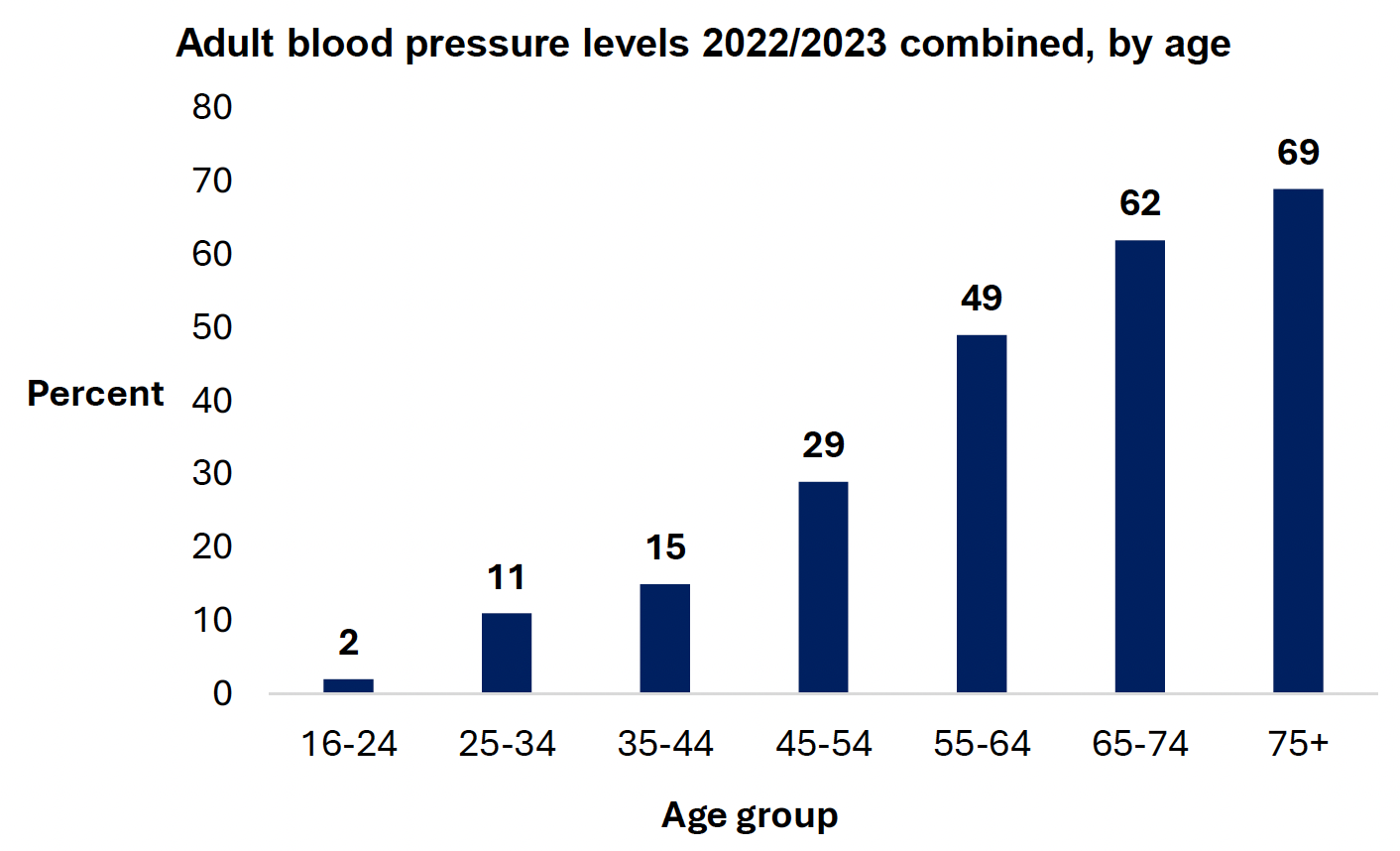
9.1 Why is hypertension important in CVD risk reduction?
Hypertension is responsible for more than half of all strokes and heart attacks and is also a key risk factor for heart failure, kidney disease and vascular dementia.23 It remains the leading cause of CVD globally.[25], [26] In England, hypertension accounts for 12% of visits to primary care, and the diseases caused by high blood pressure, coronary heart disease, stroke, vascular dementia and kidney disease were estimated in 2014 to cost NHS England over £2.1 billion per year.[27] Hypertension is the leading cause of atrial fibrillation (AF), and responsible for up to 39% of all AF cases.[28] Hypertension is present in greater than 70% of individuals with AF.
Early diagnosis and effective treatment of high blood pressure has a significant impact on population health, reducing health disparities and social and economic burden while also alleviating pressures on the health care system. For example, a 10mmHg reduction in blood pressure results in:[29]
- 17% reduction in coronary heart disease
- 27% reduction in stroke
- 28% reduction in heart failure
- 13% reduction in all-cause mortality
There may be many reasons for not achieving blood pressure targets, including poor adherence, lifestyle factors or failure to intensify treatment. However, individuals who fail to reach blood pressure targets have a 50% increased risk of cardiovascular events or kidney disease compared to those who do achieve their target blood pressure.[30] There is also evidence that delaying onset and progression of hypertension may reduce the risk of stroke in later life.[31] It is therefore important that individuals are diagnosed with hypertension early and are supported to achieve their blood pressure targets.
9.2 How should we measure blood pressure?
Accurate blood pressure measurement is important. Blood Pressure UK has useful information on how an individual can undertake home blood pressure monitoring. Accurate blood pressure measurement is particularly important in individuals with obesity or in the presence of atrial fibrillation.
To diagnose hypertension, follow NICE guidelines for optimal blood pressure measurement (NG 136):23
If blood pressure measured in the clinic is 140/90mmHg or higher:
- take a second measurement during the consultation
- if the second measurement is substantially different from the first, take a third measurement
- record the lower of the last 2 measurements as the clinic blood pressure
If clinic blood pressure is between 140/90mmHg and 180/120mmHg, offer ABPM or, if available, ConnectMe to confirm the diagnosis of hypertension. If neither are available, offer HBPM.
While waiting for confirmation of a diagnosis of hypertension, carry out investigations for target organ damage:
- albumin:creatinine ratio and dipstick for haematuria
- bloods for HbA1c, electrolytes, creatinine, estimated glomerular filtration rate, total cholesterol and HDL cholesterol
- fundoscopy to check for hypertensive retinopathy
- 12 lead ECG
Formally assess cardiovascular risk using ASSIGN (v2.0): Cardiovascular risk score calculator.
A diagnosis of hypertension can be confirmed if clinic blood pressure is 140/90mmHg or higher and ABPM daytime average or HBPM average is 135/85mmHg or higher.
9.2.1 Urgent Management - Identifying who to refer for same-day specialist review (based on NICE 136)23
Refer people for specialist assessment, carried out on the same day, if they have a clinic blood pressure of 180/120mmHg and higher with:
- signs of retinal haemorrhage or papilloedema (optic disc swelling)
or
- life-threatening symptoms such as new onset confusion, chest pain, signs of heart failure or acute kidney injury
Refer people for specialist assessment, carried out on the same day, if they have suspected phaeochromocytoma (for example, labile or postural hypotension, headache, palpitations, pallor, abdominal pain or visible sweating).
If a person has severe hypertension (clinic blood pressure of 180/120mmHg or higher), but no symptoms or signs indicating same-day referral, carry out investigations for target organ damage as soon as possible; that is damage to organs such as the heart, brain, kidneys and eyes. Examples are left ventricular hypertrophy, chronic kidney disease, hypertensive retinopathy or increased urine albumin:creatinine ratio.[32]
If target organ damage is identified, consider starting antihypertensive drug treatment immediately, without waiting for the results of ABPM or HBPM.
If no target organ damage is identified, confirm diagnosis by:
- repeating clinic blood pressure measurement within seven days, or
- considering monitoring using ABPM (or HBPM if ABPM is not suitable or not tolerated), ensuring a clinical review within seven days
9.2.2 Frequency of monitoring
Provide an annual review of care for adults with hypertension once adequately treated. This is to monitor blood pressure, provide support, and discuss their lifestyle, symptoms and medication. Also address any other cardiovascular risk factors such as obesity, diabetes and hyperlipidaemia.
If hypertension is not diagnosed, measure the person's clinic blood pressure at least every five years subsequently, and consider measuring it more frequently if the person's clinic blood pressure is close to 140/90mmHg.
9.3 Lifestyle interventions
Offer lifestyle advice to people with suspected or diagnosed hypertension and continue to offer it periodically.
Recommend
- regular exercise
- reduced alcohol intake
- a healthy diet rich in fruits, vegetables, whole grains and low-fat dairy
- restricted salt intake
- trying to lose weight if overweight or obese
- avoiding recreational drugs
See section on healthier lifestyle.
9.3.1 Salt
Excessive intake of sodium is directly linked to high blood pressure and it has been shown that the higher the daily salt intake, the higher the systolic blood pressure. A reduction of dietary sodium/salt intake can lead to a reduction in blood pressure and a reduction in cardiovascular morbidity and mortality.18
Individuals should be encouraged to keep their dietary sodium intake low, either by avoiding adding salt to their meals or substituting sodium salt with potassium salt, as this can reduce blood pressure.
Salt substitutes containing potassium chloride should not be used by older people, people with diabetes, pregnant women, people with kidney disease and people taking some antihypertensive drugs, such as ACE inhibitors and angiotensin II receptor blockers. Salt reduction should instead be encouraged in these groups.23
9.4 Principles of prescribing
Lifestyle advice should be discussed at all blood pressure or medication reviews.
Table 6: Definition of hypertension
Stage
Stage 1 hypertension
Blood pressure results
Clinic blood pressure ranging from 140/90mmHg to 159/99mmHg and subsequent ABPM daytime average or HBPM average blood pressure ranging from 135/85mmHg to 149/94mmHg
Stage
Stage 2 hypertension
Blood pressure results
Clinic blood pressure of 160/100mmHg or higher but less than 180/120mmHg and subsequent ABPM daytime average or HBPM average blood pressure of 150/95mmHg or higher
Stage
Stage 3 or severe hypertension
Blood pressure results
Clinic systolic blood pressure of 180mmHg or higher or clinic diastolic blood pressure of 120mmHg or higher
Adults under 80 with stage 1 hypertension
Discuss starting antihypertensive drug treatment, with adults aged under 80 with stage 1 hypertension who have 1 or more of the following:
- target organ damage
- established cardiovascular disease (history of IHD, TIA or stroke, PVD, aortic aneurysm or heart failure)
- renal disease
- diabetes
- an estimated 10‑year risk of cardiovascular disease of 10% or more
Use clinical judgement for people with frailty or multimorbidity.
Adults under 60 with stage 1 hypertension
Consider antihypertensive drug treatment for adults aged under 60 with stage 1 hypertension and an estimated 10-year risk below 10%. 10-year cardiovascular risk may underestimate the lifetime probability of developing cardiovascular disease in younger individuals.
Adults with stage 2 hypertension
Offer antihypertensive drug treatment in addition to lifestyle advice to adults of any age. Use clinical judgement for people with frailty or multimorbidity.
Adults under 40 with stage 1 or stage 2 hypertension
- In those aged <40 – consider secondary causes of hypertension (present in up to 10%). Check for hypokalaemia and arrange 24-hour urinary metadrenalines to exclude phaeochromocytoma. Arrange specialist referral where screening tests are abnormal, or if BP is hard to control
- In those aged <30 – consider specialist evaluation of secondary causes and assessment of the long-term benefits and risk of treatment
9.4.1 Blood pressure targets when treating hypertension
| Clinic blood pressure target | Person under 80 with: | Source |
|---|---|---|
| Below 140/90 | Hypertension (with or without type 2 diabetes) | NICE guideline on hypertension in adults |
| Below 140/90 | Type 1 diabetes plus albumin to creatinine ratio <70mg/mmol | NICE guideline on type 1 diabetes in adults |
| Below 140/90 | Chronic kidney disease plus albumin to creatinine ratio <70mg/mmol | NICE guideline on chronic kidney disease |
| Below 130/80 | Type 1 diabetes plus albumin to creatinine ratio of 70mg/mmol or more | NICE guideline on type 1 diabetes in adults |
| Below 130/80 | Chronic kidney disease plus albumin to creatinine ratio of 70mg/mmol or more | NICE guideline on chronic kidney disease |
9.4.2 Choice of medication
When choosing an antihypertensive medication, the individual must be at the centre of any decision. Discuss individual cardiovascular disease risk and the individual’s preferences for treatment, including no treatment, and explain the risks and benefits before starting antihypertensive drug treatment. NICE have produced a printable patient decision aid on lifestyle options and choice of medicines in hypertension.
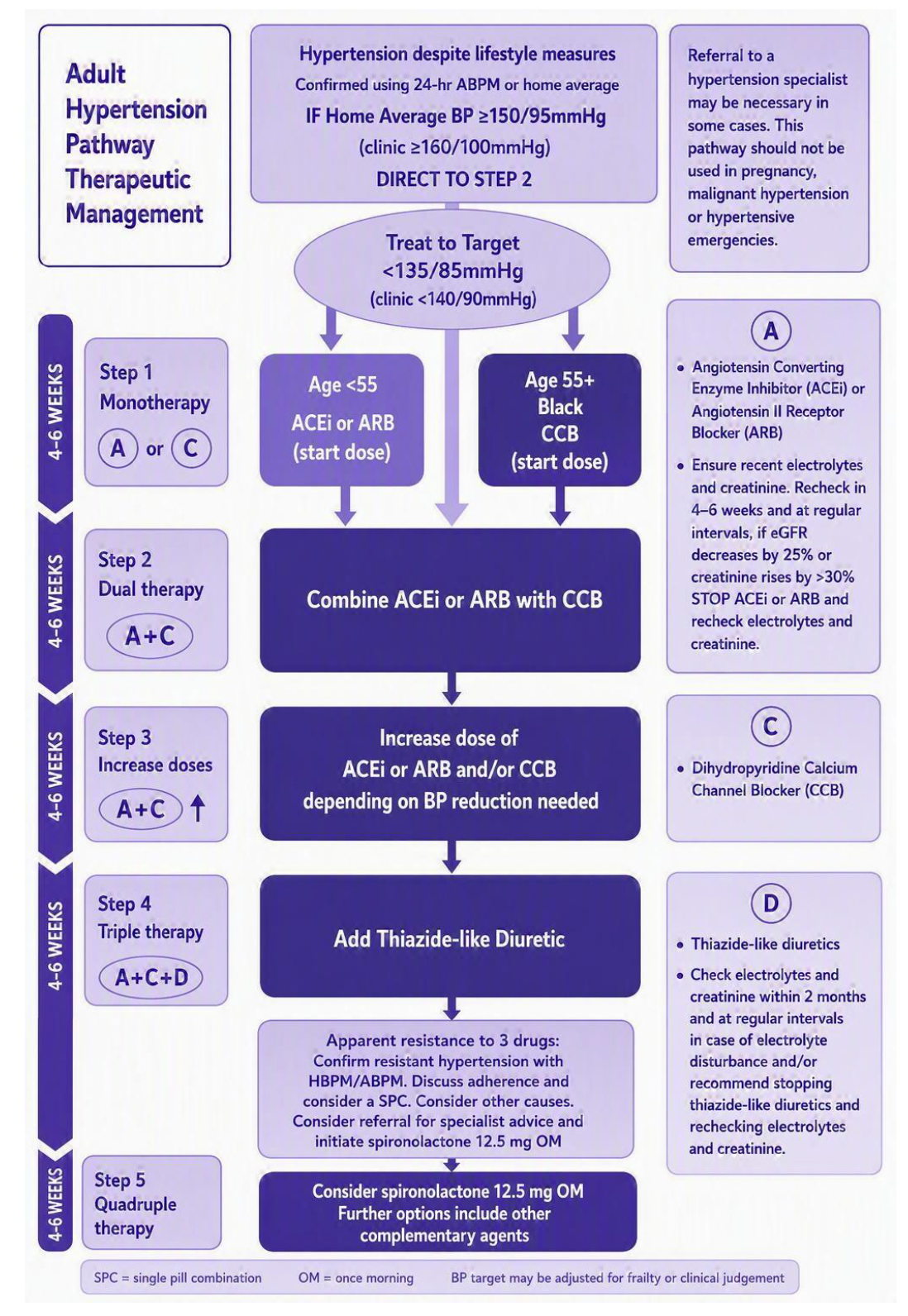
A suitable algorithm should be utilised such as the British and Irish Hypertension Society (BIHS) adult hypertension referral pathway for therapeutic management (Figure 2).[33] The individual's age, family origins and comorbidities should be taken into consideration. Specific agents within each class may vary according to local formularies and prescribing practice. Adherence should be checked at each step of the pathway.
9.5 Special patient populations
9.5.1 Pre-pregnancy advice – based on NICE 133[34]
Women with chronic hypertension planning a pregnancy should be offered a referral to a specialist in hypertensive disorders of pregnancy to discuss the risks and benefits of treatment.
Advise women who take antihypertensive treatments other than ACE inhibitors, ARBs, thiazide or thiazide-like diuretics that the limited evidence available has not shown an increased risk of congenital malformation with such treatments.
9.5.2 Angiotensin-converting enzyme (ACE) inhibitors and angiotensin II receptor blockers (ARBs) in pregnancy
- there is an increased risk of congenital abnormalities if these drugs are taken during pregnancy
- individuals should discuss alternative antihypertensive treatment with the HCP responsible for managing their condition, but note that these may be taken for other conditions such as renal disease
- in 2014, the Medicines and Healthcare products Regulatory Agency (MHRA) issued a drug safety update on ACE inhibitors and ARBs: not for use in pregnancy, which states 'use in women who are planning pregnancy should be avoided unless absolutely necessary, in which case the potential risks and benefits should be discussed'.
9.5.3 Thiazide or thiazide-like diuretics in pregnancy
- there may be an increased risk of congenital abnormalities and neonatal complications if taken during pregnancy
- individuals should discuss alternative antihypertensive treatment with the HCP responsible for managing their condition, if they are planning pregnancy
Women with hypertension during pregnancy are at increased risk of hypertension and cardiovascular disease in later life. These women should discuss with a healthcare professional steps to reduce their risk including adopting a healthier lifestyle, avoiding smoking and maintaining a healthy weight. They require postpartum follow up and review of antihypertensive medication, follow local guidelines if available. Further detail is available at NICE CKS: Hypertension in pregnancy: Postpartum follow up.
9.6 Frailty
There is a lack of evidence for intensive blood pressure targets in people with frailty. People who are frail have increased risk of adverse events and less time to gain benefits from long-term rigid BP control.
The Polypharmacy Guidance 2026 reviewed the evidence for treatment of hypertension in frailty and made the following recommendations.
| No. | Our recommendations | Strength of recommendation |
|---|---|---|
| 1 | Antihypertensive medications can reduce the risk of mortality, stroke, and heart failure in older adults. Because biological rather than chronological age can determine tolerability of, and likely benefit from medications, these individuals should not be denied treatment, or have it withdrawn simply on the basis of their chronological age. A person-centred approach should be considered. | Good Practice Point |
| 2 | Prescribers and people over 65 years of age with frailty may want to discuss the tolerability of, and benefits from, antihypertensive medication taking into consideration a person’s level of frailty, postural hypotension and independence. | Good Practice Point |
| 3 | A general treatment target of systolic blood pressure (SBP) below 140mmHg, and diastolic blood pressure (DBP) below 8mmHg is recommended for adults under 80 years with or without T2D. For those over 65 years of age with frailty, this might not be achievable. While a higher target is acceptable, if lower blood pressure is sought, a slower timeline for reductions will be required in frail old or very old patients; it is important to recognise that this might not be achievable as the risk of harm may outweigh the benefits. | Conditional recommendation |
| 4 | BP targets should be balanced with the greater risk of harms, falls and acute kidney injury. | Good Practice Point |
9.7 Indications where more detailed guidance is provided elsewhere
- Pregnancy (Hypertension in pregnancy: diagnosis and management. NICE guideline NG133 2019)
- Chronic kidney disease (Chronic kidney disease: assessment and management. NG 203)
- Special or challenging cases:
- Investigation and management of young-onset hypertension: British and Irish Hypertension Society position statement.
- Investigation and management of resistant hypertension: British and Irish Hypertension Society position statement.
| No. | Recommendation | Strength |
|---|---|---|
| 1 | Hypertension in adults should be diagnosed and treated as per NICE 136. | Evidence-based recommendation -NICE 136 |
| 2 | Individuals should be identified who need referred for same-day specialist review as per NICE 136. | Evidence-based recommendation -NICE 136 |
| 3 | People with hypertension should be advised to reduce their salt intake as much as possible to lower blood pressure. | Strong recommendation Evidence-based recommendation (SIGN 149) |
| 4 | When choosing an antihypertensive medication, the individual should be at the centre of any decision. Discuss individual cardiovascular disease risk and the individual’s preferences for treatment, including no treatment, and explain the risks and benefits before starting antihypertensive drug treatment. | Strong recommendation Evidence-based recommendation (SIGN 149) |
| 5 | A suitable algorithm such as NICE or the BIHS adult hypertension referral pathway for therapeutic management should be utilised when choosing an antihypertensive medication considering the individual's age, family origins and comorbidities. | Good Practice Point from CVD guideline development group |
| 6 | Clinical judgement should be used when prescribing in individuals with frailty or multimorbidity. | Evidence-based recommendation (NICE 136) |
Contact
Email: EPandT@gov.scot