
Climate change duties: statutory guidance for public bodies
Statutory guidance to support public bodies in implementing their climate change duties under the Climate Change (Scotland) Act 2009.
7. Implementing the third duty: acting in the most sustainable way
The third of the climate change duties set out in section 44 of the Climate Change (Scotland) Act 2009 requires public bodies, in exercising their functions, to act in the way that they consider to be most sustainable.
The National Performance Framework (NPF) provides the overarching structure for the work of central and local government and the wider public sector. Its National Outcomes align with the United Nations Sustainable Development Goals (UN SDGs). Under subsection 1(9) of the Community Empowerment (Scotland) Act 2015, public authorities must have regard to the National Outcomes.
To help demonstrate compliance with the third duty, public bodies should:
- align their work to the NPF and delivery of the National Outcomes and, as best practice, to the just transition principles
- embed sustainability within all strategies, policies, plans and projects
- integrate a sustainable development impact assessment, or equivalent, into decision making, including financial decisions
- undertake procurement in line with relevant legislation and the Sustainable Procurement Duty
- monitor and evaluate policy implementation and outcomes against the five principles of the UK Shared Framework for Sustainable Development, or equivalent.
Key outcomes for public bodies will be that:
- potential policies and decisions are, before they are finalised, assessed for fairness, ecological impact, economic sustainability, evidence quality and stakeholder participation
- activities remain within planetary boundaries, and focus on the fair distribution of both benefits and burdens
- governance ensures participation, accountability and transparency
- procurement maximises social and environmental, as well as economic, benefits, and minimises harms
- they contribute, through their functions, to the National Outcomes and achievement of the UN SDGs.
7.1 Introduction to the third duty
This duty focuses on acting in the most sustainable way and is central to achieving an integrated, long-term approach to Scotland’s future.
There is no statutory definition of ‘sustainable’ in the 2009 Act, and terms such as ‘sustainable’, ‘sustainability’ and ‘sustainable development’ are often used in different ways. This chapter outlines the Scottish Government’s interpretation of what it means to act in a sustainable way before providing implementation guidance.
The third duty is about mainstreaming acting sustainably into the core functions of public bodies. Sustainability should not be an add-on but an integral part of all organisational activity.
This chapter provides guidance for public bodies beginning their sustainability journey, offering reference material, practical steps, and methods for aligning policies and decisions to sustainability principles.
Definitions of ‘sustainable’ typically have two aspects:
- the ability for the activity to be continued at the same level, for a long period of time
- the activity is carried out in a way that minimises damage to the environment.
Definitions of ‘sustainable’ also often encompass activities and thinking related to resource use and resource efficiency, and the wider impacts these might have, both on the natural environment and on human societies, health and wellbeing. ‘Fairness’ and equity are also attributes frequently embedded within definitions of sustainability.
Public bodies could therefore approach this duty – within their own specific context – by considering how they can exercise their functions in a way that can be maintained in the long term; that minimises damage to the environment; that considers wider impacts on society and on individuals; and that is fair.
The third duty is worded in a subjective way: bodies must act in a way that they consider to be most sustainable. It is therefore important, for bodies to demonstrate compliance with this duty, that they record and can explain how they how they have considered the options available to them, and have arrived at their decision.
7.2 Sustainable development: background and context
The third duty is to act in the way that the body considers is most sustainable. While acting sustainably and sustainable development are not synonymous, the concept of sustainable development may still be useful. Bodies may wish to consider the information in this section about sustainable development to help inform their thinking and approach.
The UK Shared Framework, outlined below, may be useful to bodies at the start of their sustainability journey to help clarify and frame their thinking. Other bodies are likely to have developed their own approach; and there will be other factors that bodies are likely to need to consider, depending on their nature, purpose and circumstances.
What is sustainable development?
The term ‘sustainable development’ is used in many ways. This section refers to the UN definition and the UK Shared Framework, outlining how these principles can be applied.
"'Sustainable development’ is how we must live today if we want a better tomorrow, by meeting present needs without compromising the chances of future generations to meet theirs." - United Nations [11]
In essence, it means meeting current needs while safeguarding future generations’ ability to meet their own needs.
Why might we want to develop sustainably?
Unsustainable development delivers short-term gains, often to a few, at the expense of the environment or wider community. For example, discharging untreated waste into rivers may reduce business costs but cause long-term ecological harm, regional economic losses and public health impacts.
Such practices drive environmental degradation, pollution, inequality and climate change, leading to poor health, poverty and resource conflict.
Sustainable development, by contrast, takes a long-term, balanced approach, integrating economic growth, social wellbeing and environmental protection.[12] In a sustainable society, everyone has access to education, healthcare and fair work, and natural resource use stays within environmental limits.
Bringing about sustainable development – the challenges
Achieving sustainable development requires a fundamental shift in how society functions. The dominant consumption-based model is unsustainable, and there are few large-scale examples of societies that are both ecologically and socially sustainable.
There is no single solution: instead, sustainable development must be applied contextually, adapting principles to specific situations and challenges. Progress depends on transformative change, learning from experience, and sharing what works.
There is no single checklist, but rather a range of approaches informed by evidence, context, and the UK Shared Framework’s two essential conditions:
1. living within environmental limits
2. ensuring a strong, healthy and just society.
The two essential principles or conditions of sustainable development are set out in the UK Shared Framework for Sustainable Development, outlined in the sections below. Further resources can be found on the SSN website.
7.2.1 The UK Shared Framework for Sustainable Development
The UK Shared Framework (see figure 5) identifies two essential conditions for sustainable development – living within environmental limits and ensuring a strong, healthy and just society – supported by three enabling conditions:
- a sustainable economy that stays within environmental limits and distributes benefits fairly
- sound science underpinning evidence-based policy
- good governance founded on participation and accountability.
Together these form the five principles of sustainable development. The Framework focusses on the original problems that the notion of sustainable development was created to address: social-ecological wellbeing.
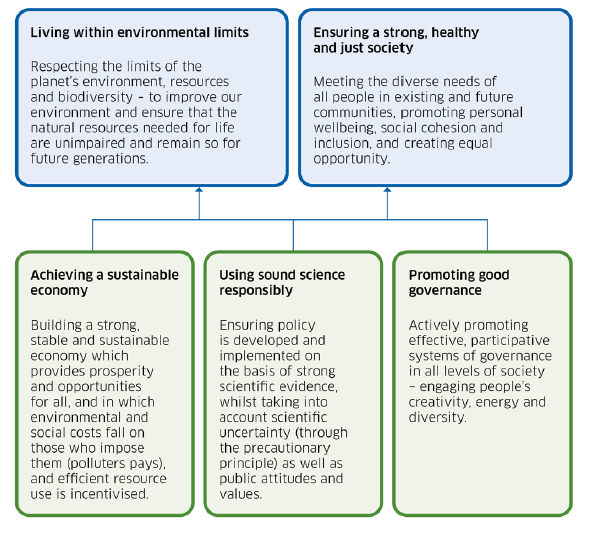
Living within environmental limits
Respecting the limits of the planet's environment, resources and biodiversity - to improve our environment and ensure that the natural resources needed for life are unimpaired and remain so for future generations.
Ensuring a strong, healthy and just society
Meeting the diverse needs of all people in existing and future communities, promoting personal wellbeing, social cohesion and inclusion, and creating equal opportunity.
Achieving a sustainable economy
Building a strong, stable and sustainable economy which provides prosperity and opportunities for all, and in which environmental and social costs fall on those who impose them (polluters pays), and efficient resource use is incentivised.
Using sound science responibly
Ensuring policy is developed and implemented on the basis of strong scientific evidence, whilst taking into account scientific uncertainty (through the precautionary principle) as well as public attitudes and values.
Promotion good governance
Actively promoting effective, participative systems of governance in all levels of society - engaging people's creativity, energy and diversity.
7.2.1.1 Implementing the five principles
As noted above, the duty to act in the most sustainable way is not synonymous with sustainable development. Compliance with the third duty has a subjective element, as bodies are asked to act in the way that they consider to be most sustainable. The information contained in this section is intended to help inform bodies’ thinking, however they are free to approach this duty in different ways and should ensure that their thinking reflects their specific circumstances and context.
While there is no fixed checklist in relation to sustainable development, good starting points may include:
- applying the five principles of the UK Shared Framework
- using impact assessments, such as the Scottish Parliament’s Sustainable Development Impact Assessment (SDIA) or Health Impact Assessment (HIA) to inform decisions (both are freely available online with supporting guidance).
Working for sustainability and sustainable development requires thoughtful, evidence-based action. The following attitudes, methods and activities support this approach.
Attitude
Key mindsets for sustainable problem-solving are:
- curiosity – ask what is happening and why; understanding a problem is the first step toward solving it
- criticality – challenge assumptions and outdated practices; what worked in the past may no longer be appropriate
- compassion – understand others’ contexts and work collaboratively; empowering people with knowledge fosters lasting change.
Method
1. Acquire expertise: build in-house knowledge and seek external support where needed.
2. Understand the problem: identify the underlying issues each of the five principles addresses.
3. Assess your organisation’s role: determine whether your organisation contributes to or is affected by the problem, directly or through supply chains.
4. Identify desired outcomes: envision what success looks like, for example, eliminating harmful chemicals or ensuring safe alternatives.
5. Plan and act: identify actions, information needs, and decision-makers; determine who can support implementation.
Supporting activities
- Facilitate dialogue: engage colleagues and stakeholders, diverse perspectives strengthen problem-solving.
- Build coalitions: develop trust-based relationships inside and outside your organisation to enable shared action.
- Develop and test initiatives: pilot and refine solutions collaboratively, learning from successes and failures.
Table 2 below shows how each supporting activity can help to understand and ameliorate the problem situation.
Table 2: Activities to support sustainable development thinking
Conversations:
Build expertise:
Can help you develop your expertise.
Understand the problem & Assess the causes and effects of the problem:
Can help you to unpack the problem situation.
Indentify the desired outcome:
Can help you to envision what a desirable future might look like.
Consider how to work towards the desired outcome:
Can feed knowledge and ideas into your thinking about how to address the problem
Coalitions:
Build expertise:
Allows you to tap into the expertise of others and work together on the problem
Understand the problem & Assess the causes and effects of the problem:
Bring different views to the table.
Indentify the desired outcome:
Can help you to envision what a desirable future might look like.
Consider how to work towards the desired outcome:
Can feed knowledge and ideas into your thinking about how to address the problem
Testing solutions, reflecting and refining:
Build expertise:
Support the development of your know-how.
Understand the problem & Assess the causes and effects of the problem:
What doesn’t work tells you more about the problem.
What works well tells you where to put more emphasis.
Indentify the desired outcome:
-
Consider how to work towards the desired outcome:
-
The following sections provide more information on environmental limits, a just society, a sustainable economy, sound science and good governance. Each section outlines the key problem of unsustainable development that the relevant sustainable development principle seeks to address. This is followed in each case by some comments on organisation-specific implementation.
7.2.1.2 Environmental limits and planetary boundaries
Environmental limits
An environmental limit is the threshold of harm an Earth system can tolerate before it changes in ways that endanger humanity. For example, global warming beyond 1.5°C above pre-industrial levels is an environmental limit beyond which climate risks rise sharply.
Figure 6 below contrasts sustainable and unsustainable economies. In an unsustainable economy (red arrows), environmental limits are breached and the safe space for humanity shrinks. In a sustainable economy (green arrows), activity remains largely within limits, safeguarding ecological stability and human wellbeing.
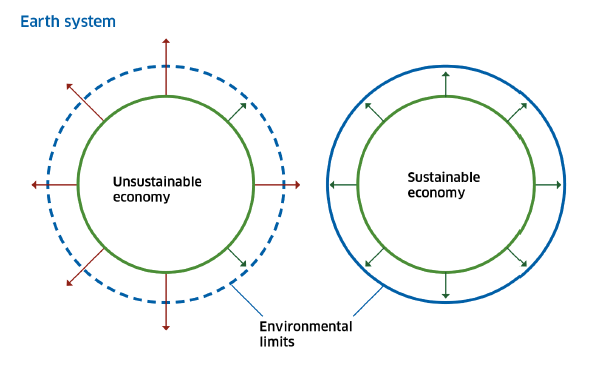
This model has been refined by Earth system scientists, and we now have a much clearer idea of the environmental limits, or ‘planetary boundaries’ which are critical to the survival of human societies.
Planetary boundaries
There are nine key Earth systems and processes essential to human survival (see figure 7). Breaching any planetary boundary risks triggering major shifts, such as changes to monsoon patterns, with potentially disastrous consequences.
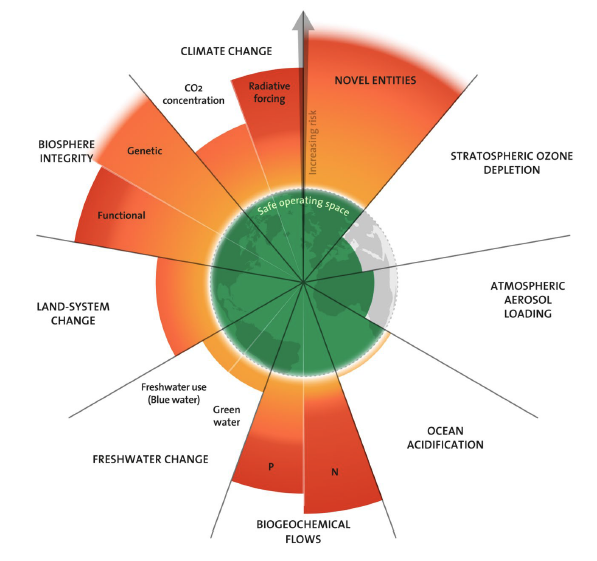
Image credit: Azote for Stockholm Resilience Centre, Stockholm University. Based on Sakschewski and Caesar et al. 2025, Richardson et al. 2023, Steffen et al. 2015, and Rockström et al. 2009.
The planetary boundaries model depicts a ‘safe operating space’ – the green inner circle – which shows the extent to which human activities can probably safely disrupt Earth systems. Beyond the safe operating space is the zone of increasing risk, which becomes higher further away from the centre of the diagram. Those planetary systems which are represented by only a green wedge, such as the ozone layer, are thought to be functioning well enough not to present a risk to human societies. However, those wedges which are orange- or red-ended show systems that have been severely disrupted, and whose altered functioning is a risk to us. It is important to note that Earth systems are interlinked, and the disruption of one of them is likely to affect others.
Further information: Planetary boundaries - Stockholm Resilience Centre
Working to minimise impacts on key planetary systems
This section outlines how public bodies can apply sustainability principles to minimise impacts on planetary boundaries.
1. Acquire expertise:
Since the first planetary boundaries model (2009), understanding of global and local ecological disruption has advanced significantly. Key sources include the Stockholm Resilience Centre and the Good Life for All within Planetary Boundaries project. Expertise can also be drawn from colleagues, other public bodies, academia and consultants.
2. Understand the problem:
At its core:
- human societies depend on Earth systems but are damaging them
- these changes risk societal collapse.[16]
Understanding this relationship helps organisations assess their specific context and risks.
3. Assess your organisation’s role:
The A Good Life for All within Planetary Boundaries project shows that in the UK:
- CO ₂ emissions are ~8× higher than the planetary boundary
- phosphorus use is ~6× higher
- nitrogen use is just over 8× higher
- blue water use is less than half the threshold
- land use change and biomass consumption are near the upper limit
- ecological and material footprints exceed safe limits by ~2.5× and 3.5× respectively.
Consider:
- which impacts affect those you serve or regulate?
- which occur within your area of responsibility?
- where can you or partners exert influence?
- which public bodies could you collaborate with to bring impacts within safe levels?
4. Identify what needs to be done:
Define desired outcomes. For example, an eightfold reduction in nitrogen fertiliser use or ending imports of industrially fixed nitrogen. Identify the steps and partners needed to achieve this.
5. Make a plan:
Set out how your organisation will contribute, what actions are within your remit, what requires collaboration, and how progress will be monitored. For instance, if managing public land, consult the Scottish Government’s Principles for Sustainable Land Use and review site practices such as fertiliser use.
6. Reflect and adjust:
Monitor implementation, evaluate what works, and adjust as needed. Shared reflection with collaborators can strengthen learning and impact.
7.2.2 Social equity
As social beings, humans are predisposed to dislike unfairness, a trait that underpins cooperation and collective wellbeing. Research from the Equality Trust shows that unequal societies experience:
- higher rates of violent crime and imprisonment [17]
- lower trust and social cohesion
- poorer health and educational outcomes [18]
- higher obesity rates.
Evidence suggests that wellbeing depends more on equality than on average income.[19] More equal societies perform better across health and social indicators, even when incomes are lower.
To avoid creating conditions that threaten societal stability, activity must remain within planetary boundaries while ensuring fair distribution of benefits and burdens. Achieving this requires a sustainable economy and participatory, evidence-based governance.
Working to maximise social equity
Use or adapt the problem-solving method outlined above to address social equity. Begin by understanding the problem, then develop, test, and refine interventions.
Key considerations include:
1. Understanding fairness through capabilities
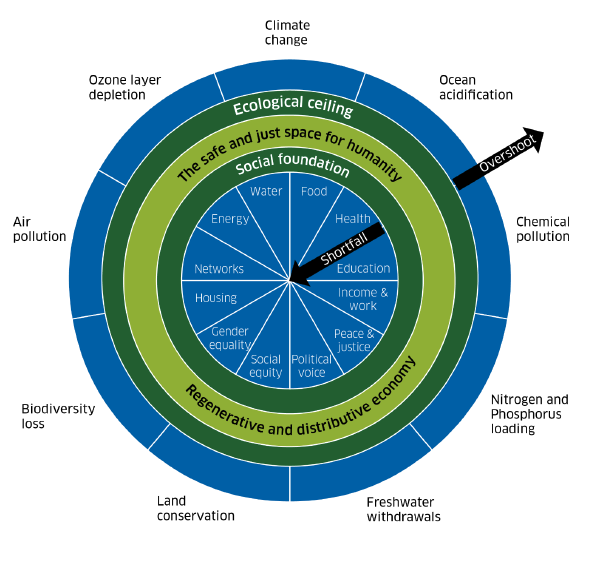
A fair society enables people to meet their fundamental needs (see figure 8). For instance, to ensure adequate nutrition, public bodies might act to:
- improve access to nourishing food
- support food education and skills
- provide tools and facilities for food preparation.
2. Using the capability approach
The Capability Approach[20] developed by Amartya Sen and Martha Nussbaum focuses on what people are able to do and be. It has been applied to:
- evaluate public health interventions[21]
- understand multidimensional poverty[22]
- inform housing and social policy.[23]
3. Addressing structural inequity
Systems often privilege some groups while disadvantaging others, for example, prioritising investment in roads over public transport limits mobility for those without cars and may increase pollution. Structural inequity can become locked in, making reversal difficult.
One of the most powerful actions public bodies can take is to assess proposed policies and decisions before finalisation, for fairness, ecological impact, economic sustainability, evidence base, and inclusiveness. This can be achieved using appropriate impact assessment tools (see Annex B).
7.2.2.1 Wellbeing and a sustainable economy
What is wellbeing?
Wellbeing is often measured by subjective or hedonic wellbeing: self-reported happiness or life satisfaction. While useful, this approach has limits:
- emotions naturally fluctuate
- cultural norms influence self-reporting
- it provides limited policy insight.
An objective or eudaemonic approach, based on people’s ability to meet their fundamental needs, is generally more useful for policy and sustainability.
What are fundamental human needs?
Human activity is driven by the need to meet basic requirements. These can be grouped as:
- biological needs: clean air, food, water, shelter, warmth
- social needs: belonging, participation, love
- self-actualisation needs: personal growth and fulfilment
A well-functioning society enables all members to meet these needs. For example, ensuring clean air requires effective pollution control.
At a broader level, fulfilling needs depends on:
- a healthy ecosphere (section 7.2.1.2)
- a fair and cohesive society (section 7.2.2).
A wellbeing economy is one that meets human needs equitably and sustainably, within planetary boundaries.
Kate Raworth’s Doughnut Model of Social and Planetary Boundaries[24] (figure 8) illustrates this balance. The green ‘doughnut’ ring represents the safe and just space for humanity, bounded above by the ecological ceiling (planetary limits) and below by the social foundation (basic human needs).
The model aligns with the UK Shared Framework for Sustainable Development, emphasising that wellbeing relies on ecological integrity and social equity. Transitioning to a wellbeing economy is essential to meet human needs while protecting planetary systems.
What is a wellbeing economy?
A wellbeing economy is an economic system that operates within environmental limits and prioritises the collective wellbeing of current and future generations.
It empowers communities to share more equitably in wealth creation, circulation and retention, while protecting and investing in the natural environment. It supports fair and meaningful work, values responsible and purpose-driven businesses, and recognises that reducing inequality and promoting social justice strengthens economic resilience.
A wellbeing economy enables the transformation needed for societies to thrive within planetary boundaries, improving physical and mental health, tackling inequality, and supporting green jobs and innovation.
While traditional economic indicators such as GDP, GVA, productivity and employment rates remain useful, they fail to capture unpaid work, the distribution of wealth, or the distinction between economic activity that benefits or harms people and the environment. To address this, the Scottish Government’s Wellbeing Economy Monitor tracks a broader range of indicators, including health, equality, fair work and environmental outcomes, to assess progress toward a fairer, greener, and more prosperous economy.
Working towards a wellbeing economy
Approaches to building a wellbeing economy vary but share key goals: protecting and restoring natural assets, cutting greenhouse gas emissions, and advancing a circular economy, while also improving health, tackling inequality, and fostering green jobs and businesses.
The Scottish Government’s vision is to help people live healthier, happier lives with higher living standards, while supporting business success and building a resilient economy that promotes wellbeing for all. Guided by the Wellbeing Economy Expert Advisory Group and participation in the Wellbeing Economy Governments (WEGo) network, key features of this approach include:
- open, participatory policy making – involving those affected, empowering citizens and communities
- clear purpose and vision – aligning economic activity with collective wellbeing
- defined outcomes and metrics – measuring progress for people, place and planet
- evidence-based, whole systems thinking – understanding drivers of wellbeing and their interconnections
- preventative focus – targeting upstream interventions to build long-term resilience
- embedding inclusion and fairness – ensuring everyone can participate and benefit
- continuous learning – monitoring, evaluating and innovating as evidence evolves.
The Wellbeing Economy Toolkit supports local authorities and public bodies to apply these principles, viewing the economy as a system and developing local wellbeing strategies aligned with Scotland’s National Outcomes.
7.2.2.2 Sound science and good governance
Sound science ensures decisions are grounded in reliable evidence, interpreting ‘science’ broadly as knowledge that includes lived experience. Good governance builds on this foundation through decision making that is participatory, accountable and transparent. Together, they underpin sustainable development.
This aligns with community empowerment, a Scottish Government priority that enables communities to shape services and decisions affecting them.
Sound science and good governance for sustainable development
Decision-making processes should include:
- collecting and reviewing evidence, including research, expert and public opinion, and lived experience
- encouraging inclusive dialogue and deliberation across diverse perspectives
- assessing potential and unintended impacts.
Implementation should involve:
- piloting actions before full roll-out, adapting based on feedback
- monitoring and evaluating outcomes, engaging with affected communities
- adjusting strategies as new evidence emerges.
Good governance should ensure decisions are pro-social and pro-ecological, supporting sustainable development by reducing harm to ecosystems, upholding equity, and basing actions on sound evidence.
Using impact assessment tools (section 3.4 and Annex B) can help evaluate how decisions affect ecosystems, people and economies.
Resources:
- PB Scotland – guidance on participatory budgeting
- Scottish Government – Asset Transfer Guidance – for transferring assets to community ownership or management.
7.3 Mainstreaming sustainability
Under the Climate Change (Scotland) Act 2009, relevant public bodies must carry out their functions in the way that they consider to be most sustainable.
The Community Empowerment (Scotland) Act 2015 further requires alignment with the National Outcomes, which mirror the UN SDGs, by relevant public authorities and others defined in subsection 1(2).
Mainstreaming sustainability means integrating its principles into all aspects of decision making, not treating it as an add-on. It’s not ‘business as usual’ with more recycling or electric vehicles, but a shift in how organisations operate, plan and measure success.
As ‘acting in the most sustainable way’ is complex and context-dependent, a checklist approach is rarely sufficient. It requires systems thinking, expert input, and collaboration across disciplines to make holistic, balanced decisions that support ecological and social wellbeing.
7.3.1 Contributing to the NPF National Outcomes
The National Performance Framework (NPF) provides a shared vision for improving lives across Scotland. It brings together central and local government and the wider public sector to build a more successful country, one that values health, equality, environmental integrity and prosperity equally.
As outlined in section 2.1, the national outcomes are aligned with the UN SDGs, illustrated in figure 9 below.
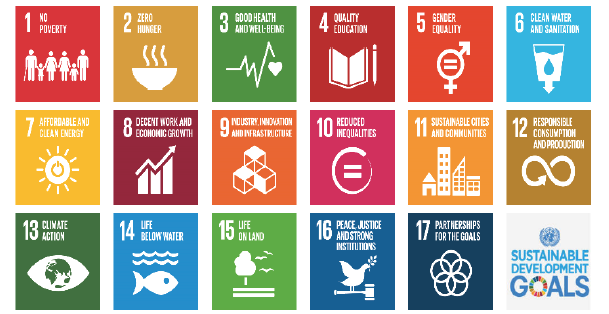
The UN Sustainable Development Goals
1 - No poverty
2 - Zero hunger
3 - Good health and well-being
4 - Quality education
5 - Gender equality
6 - Clean water and sanitation
7 - Affordable and clean energy
8 - Decent work and economic growth
9 - Industry, innovation and infrastructure
10 -Reduced inequalities
11 - Sustainable cities and communities
12 - Responsible production and consumption
13 - Climate action
14 - Life below water
15 - Life on land
16 - Peace, justice and strong institutions
17 - Partnerships for the Goals.
7.3.2 Using the National Performance Framework
Public bodies should align their work with the national outcomes and the associated SDGs, as illustrated in figure 10.
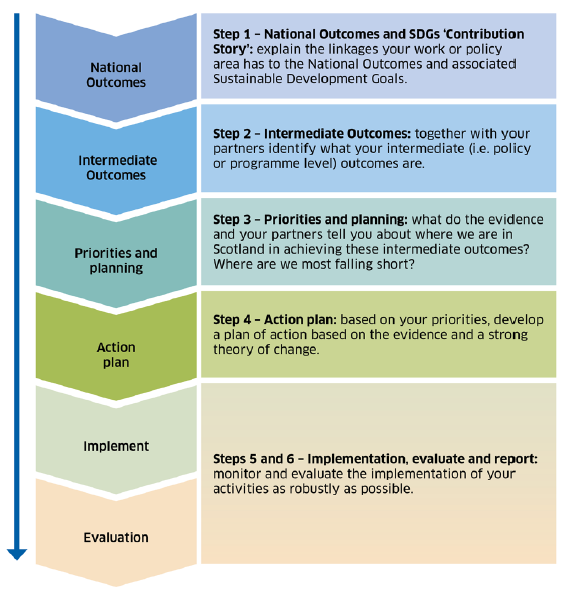
National Outcomes
Step 1 - National Outcomes and SDG's 'Contribution Story': explain the linkages your or policy area has to the National Outcomes and associated Sustainable Development Goals.
Intermediate Outcomes
Step 2 - Intermediate Outcomes: together with your partners indentify what your intermediate (i.e policy or programme level) outcomes are.
Priorities and planning
Step 3 - Priorities and planning: what do the evidence and your partners tell you about where we are in Scotland in achieving these intermediate outcomes? Where are we most falling short?
Action plan
Step 4 - Action plan: based on your priorities, develop a plan of action based on the evidence and a strong theory of change.
Implement and Evaluation
Step 5 and 6 - Implementation, evaluation and report: monitor and evaluate the implementation of activities as robustly as possible.
7.3.3 Sustainability thinking
Sustainability thinking rests on four interconnected components:
- knowledge – understanding how ecological and social systems function and interact
- worldview (ontology) – recognising that humans are one species among many, entirely dependent on others for survival and wellbeing
- thinking (cognition) – developing ways of thinking that explore root causes, take a long-term view, and address issues holistically and systemically
- practice – applying disciplinary expertise (e.g. planning, public health) to develop solutions that support sustainable development, often through collaboration.
Knowledge
Sustainability and sustainable development are complex, ‘wicked problems’, multifaceted, changing, and without simple solutions. Because they relate to all aspects of human life, it requires a transdisciplinary approach that considers ecological, social and economic factors together.
Professionals can no longer make decisions from a single perspective – for instance, focusing only on health and safety or cost, without considering broader impacts.
For example, using personal protective equipment to protect workers from harmful chemicals may provide individuals with protection from direct exposure but:
- will toxic substances still end up in the environment?
- how will they affect ecological functioning?
- where will they end up – in water sources, in the air or in soils?
- how would this affect us in the long term?
Embedding sustainability thinking in everyday work requires expert guidance. Fortunately, significant expertise exists across the Scottish public sector, civil society, academia, and consultancy.
Worldview
A holistic understanding of the world – and of how one’s work fits within it – is vital. It helps identify levers for supporting sustainability and sustainable development and clarifies which actions require collaboration. Building this perspective depends on both knowledge and the ability to think beyond one’s immediate role or discipline.
Thinking
Many people are trained to think in linear or mechanistic ways. Supporting staff to reflect on the broader consequences of decisions, socially, ecologically, and across time and space, enables more integrated, coherent solutions. Integrated solutions focus on win-win-win outcomes that resolve root causes rather than managing trade-offs.
Practice
Internalising sustainability knowledge, worldview, and thinking empowers individuals and teams to act with purpose. When staff are supported and trusted to embed sustainability in their work, collective agency can drive meaningful organisational change.
7.3.4 Impact assessment for sustainability
Sustainability challenges are complex and interconnected. Impact assessments provide structured opportunities to think collectively, deliberate, and evaluate decisions from multiple perspectives, helping avoid unintended harms and supporting better policy design.
Resources:
- Public Health Scotland’s Health Impact Assessment (HIA)
- Scottish Parliament’s Sustainable Development Impact Assessment (SDIA)
- Equality Evidence Finder
- UK Co-benefits Atlas
- impact assessments are outlined in Annex B
- an illustrative example (EQIA and FSDA) is provided in section 3.4.
HIA and SDIA approaches emphasise participation and ideally involve sustainable development or public health experts as facilitators.
The UK Co-benefits Atlas models 11 co-benefits to reducing emissions across local authority regions in the UK, including improvements to air quality, noise reduction, and reductions to excess heat, cold and dampness. The model predicts co-benefit distribution over time (i.e. when the benefits will be achieved), and to whom or what (e.g. property type and tenure, population age and income) the benefits will accrue.
This data aims to assist more effective decision making by furthering the understanding of the connections between a range of environmental, economic and social priorities. The data include a financial estimate of the value of the co-benefits by region and per capita, including a comparison to the average UK and average Scottish value, which can be used to aid in business case development.
7.3.5 An integrated approach to the three duties
The climate system and biosphere are mutually dependent, forming the foundation of Earth’s stability. Each ecological system, whether a small woodland or a planetary nutrient cycle, is interconnected with larger and smaller systems.[27]
When addressing one problem, it is essential to avoid creating harm elsewhere. For example:
- wind energy is vital for decarbonising electricity, but poorly located windfarms on deep peat can release significant greenhouse gases, sometimes outweighing lifetime savings[28]
- ‘green colonialism’ describes how resource extraction for low-carbon technologies in wealthy nations can harm communities elsewhere, particularly those in low income countries.[29]
Applying holistic social-ecological thinking, rather than focusing solely on emissions data, helps minimise unintended ecological and social harms.
7.3.6 Multiple duties and compliance
Public bodies often have multiple statutory duties that may seem to conflict. However, the 2009 Act requires them to act in ways that support both climate mitigation and adaptation, and are considered to be the most sustainable. Other statutory functions, such as those relating to sustainable economic growth, should therefore be interpreted through this lens, ensuring all duties align to support sustainability goals.
Community wealth building (CWB)
In line with the 2024-25 Programme for Government commitment, the Community Wealth Building (Scotland) Bill was introduced on 20 March 2025. It seeks to ensure consistent implementation of the CWB model of economic development across Scotland and address economic and wealth inequality by supporting the generation, circulation, and retention of more wealth in local and regional economies.
Best Value
The current duty of Best Value is:
- to make arrangements to secure continuous improvement in performance whilst maintaining an appropriate balance between quality and cost; and in making those arrangements and securing that balance
- to have regard to economy, efficiency, effectiveness (i.e. value for money and feasibility), the equal opportunities requirements, and to contribute to the achievement of sustainable development.
Best Value characteristics have key themes which can support the development of an effective organisational context from which public services can deliver key outcomes and ultimately achieve best value:
- vision and leadership
- governance and accountability
- use of resources
- partnership and collaborative working
- working with communities.
In addition, there are two cross-cutting themes which should be reflected in all of the activities by which a body achieves it outcomes:
- sustainability
- fairness and equality.
Best Value principles align closely with all three of the climate change duties and the approach outlined in this guidance. Quality and cost considerations should include climate impacts, contribution to climate-related outcomes and co-benefits. Aligning to these principles will enable bodies to integrate sustainability into their operations.
Resources:
- Best Value guidance and resources from Audit Scotland
- Scottish Public Finance Manual
- Best value in public services: Guidance for Accountable Officers
- Best Value guidance for local government
- The Improvement Service’s Public Services Improvement Framework
- European Foundation for Quality Management.
Sustainable procurement duty
Public procurement in Scotland aims to use collective spending power to deliver sustainable and inclusive economic growth. The Public Procurement Strategy for Scotland 2023-2028, sets out that this spending power can be used to make Scotland a better place to live, work and do business. How goods, works and services are procured should promote inclusive economic growth, create fair opportunities for all, and accelerate the just transition to a net zero economy.
Legislation governs how Scottish public bodies buy goods, services and works. The sustainable procurement duty in the Procurement Reform (Scotland) Act 2014 requires that before a contracting authority buys anything, it must think about:
- how it can improve the economic, social and environmental wellbeing of the area in which it operates, with a particular focus on reducing inequality
- how its procurement processes can facilitate the involvement of SMEs, third sector bodies and supported business
- how public procurement can be used to promote innovation.
Procurement should align with national and local priorities and involve relevant stakeholders from the outset, budget holders, commissioners, policy leads and external partners.
Guidance and tools supporting sustainable procurement include:
- statutory guidance on the sustainable procurement duty
- Sustainable Procurement Tools
- The Procurement Journey
- Scotland Excel’s Net Zero Strategy 2023-2028 is used to support Scotland Excel members in the delivery of their individual and collective net zero goals
- Procuring for Adaptation: incorporating adaptation into investment decisions written for the healthcare sector but likely to be useful to others.
Health and social care: sustainable commissioning
Social care represents a critical component of Scotland’s national budget and a cornerstone of community resilience, one that is likely to face increasing pressures from the impacts of climate change. The sector is both a frontline responder to climate-related risks, such as heatwaves and extreme weather events affecting vulnerable populations, and itself highly vulnerable to such disruptions. Recognising this dual challenge, guidance for the care sector in relation to climate adaptation is being developed through the Adaptation Scotland programme, supporting integration authorities and care providers to embed climate resilience into planning and delivery.
The Care Reform (Scotland) Act 2025 will strengthen the rights of people living in care homes, support unpaid carers and social workers while improving experiences for the many people who access social care across Scotland. The new Act places a duty on Scottish Ministers to produce statutory guidance on ethical commissioning, supporting consistency and focussing on those important issues that will affect how care is planned, designed, sourced, delivered and monitored.
In developing the guidance, Ministers will consult with all local authorities, health boards, integration authorities and integration joint monitoring committees as well as others who have an interest in and or are responsible for the commissioning and delivery of these services, as well as supported people. This guidance will highlight the importance of climate principles in commissioning decisions, aligning with Scotland’s net zero and adaptation goals.
When procurement is the route to delivering health and social care services, the sustainable procurement duty and best value requirements apply. The statutory guidance for procurement of health and social care is under review. The updated guidance will provide sector specific information to compliment sustainable procurement guidance and tools as well as support the delivery of the ethical commissioning and procurement principles.
Collaboration across the sector is central to this transition. Organisations such as Scottish Care, CCPS, IRISS and other stakeholders are contributing through research, co-design, and lived-experience workshops to ensure the new guidance supports independent providers and reflects the realities of service delivery. In parallel, updates to public procurement and self-directed support frameworks are reinforcing these linkages, embedding climate adaptation duties and ethical, sustainable commissioning at the heart of Scotland’s evolving social care system.
Sustainable land use
The Scottish Land Use Strategy sets a long-term vision:
“A Scotland where we fully recognise, understand and value the importance of our land resources, and where our plans and decisions about land use will deliver improved and enduring benefits, enhancing the wellbeing of our nation.”
Land ownership and land management are central to achieving national outcomes. Addressing the climate and nature emergencies requires fundamental changes in how land is used. Land can help meet net zero targets, adapt to climate change and restore nature.
Public bodies with landholdings should engage with or join Regional Land Use Partnerships (RLUPs), which bring together local and national actors to optimise land use in a fair and inclusive way.
The Land Rights and Responsibilities Statement adopts a human rights-based approach, outlining six principles for fair and transparent decision-making and promoting collaboration between decision-makers and affected communities.
Further guidance on community engagement in land decisions is available from the Scottish Land Commission.
Bodies with landholdings may find the Natural Capital Tool provided by NatureScot a useful resource. This decision support tool has been designed to facilitate a natural capital approach to land management, ensuring that the full range of benefits provided by nature are taken into account throughout the decision making process. The tool includes mapping of ecosystem services and capacity (including flood mitigation and carbon sequestration), habitat networks, landscape-scale opportunity mapping and scenario planning capabilities.
Good Food Nation
The Scottish Government have set out a vision for Scotland to be a “Good Food Nation, where people from every walk of life take pride and pleasure in, and benefit from, the food they produce, buy, cook, serve and eat each day”. The Good Food Nation (Scotland) Act 2022 (‘the 2022 Act’) provides the legislative framework that enables us to take steps towards realising our vision. The Act imposes a statutory duty on Scottish Ministers to publish a national Good Food Nation Plan.
Section 10 of the Act also requires relevant authorities (defined in the Act as “local authorities”, “territorial health boards” and “specified public authorities”) to develop and publish their own Good Food Nation Plans. These plans must set out the relevant authority’s main food related outcomes, the policies it will pursue to achieve them, and the indicators or measures it will use to assess progress. Reports on progress against the Plans’ Outcomes are required every two years, and every fifth year Plans must be reviewed and if necessary, revised. Guidance for relevant authorities is available online.
In developing their Plans, relevant authorities must have regard to the food related issues specified in the Act, including:
- social and economic wellbeing
- the environment
- climate change
- wildlife and the natural environment
- health and physical and mental wellbeing
- economic development
- animal welfare
- education
- child poverty.
Relevant authorities must also have regard to a set of guiding food system principles, such as recognising the role of all parts of the food system and supply chain; the importance of sustainable food systems in supporting climate and nature goals; the contribution of good quality, nutritious and culturally appropriate food to health; the importance of the food business sector; and the human right to adequate food.
The Scottish Government’s guidance reinforces these expectations, advising authorities to take an inclusive, evidence-based approach, consult on draft plans, and publish a statement explaining how all legislative requirements have been met.
As all the Good Food Nation Plans must address climate, environment, public health, social wellbeing and economic sustainability, they align closely with public bodies’ wider statutory duties, including climate change mitigation and adaptation, biodiversity responsibilities and duties to advance wellbeing and reduce inequalities.
Integrating Good Food Nation considerations within sustainability planning therefore supports coherent, joined up delivery across multiple duties. The 2002 Act also provides a structured mechanism for relevant authorities to demonstrate how food-related policies contribute to climate resilient communities, environmental protection, healthier populations and fairer local economies.
Education: Sustainable Learning Settings
The Learning for Sustainability Action Plan 2023–2030 – Target 2030: A movement for people, planet and prosperity aims for every 3-18 educational setting to become a Sustainable Learning Setting by 2030.
National public bodies and local authorities should embed this commitment into improvement plans, strategic plans and corporate plans.
A Sustainable Learning Setting integrates sustainability into the curriculum, culture, community, and campus, ensuring that:
- young people can learn about the world, its people, issues and action, including relating to nature, climate change and rights
- the educational estate (including buildings and grounds) are sustainable
- action to drive local and global sustainability improvements is delivered in collaboration with people, groups and organisations
- caring attitudes and behaviours are embedded and reflected across the learning community, including both the pupils and staff.
Contact
Email: climate.change@gov.scot