
Cardiovascular Disease Directed Enhanced Service: views and experiences of General Practices
Presents the results of an online survey and qualitative interviews conducted with General Practices across Scotland. These explored the views and experiences of practices in implementing and providing the first year of the CVD DES programme, to contribute to its ongoing evaluation.
7. Clinical assessment and outcomes
This chapter looks at the approach and tools practices were asked to use to assess patients’ cardiovascular risk and then goes on to look at practices’ observations about the types of health issues that were identified through the CVD DES. To note, however, this is based on practices’ own reflections and does not present any analysis of clinical outputs or outcomes from the CVD DES. The chapter concludes with practices’ thoughts on the core elements of the DES, both in terms of the target groups and the focus on CVD.
Assessment tools (survey findings)
The 2025 to 2026 Circular set out what was to be included in the CVD Risk Factors bundle check and that an online toolkit was available via the NHS Scotland Right Decision Service to guide clinicians on pathways. It also noted that practices should use the results of the checks to create an ASSIGN[13] score for each patient. Patients with an ASSIGN score and wider results within the normal range should be offered lifestyle advice to support onward health.
The Circular notes that practices should treat patients with abnormal results/ASSIGN v2.0 scores over the 10% threshold or ASSIGN 1.5 scores over the 20% threshold, as required as part of the follow-up appointment. Six months after the follow-up appointment, for patients with an original high ASSIGN score or abnormal results only, practices should repeat the bundle of tests. A code list allowed the key interventions to be coded in a standardised way for payment, monitoring and evaluation purposes.
Right Decision Service CVD pathways
In addition to the ASSIGN v2.0 risk assessment tool, the Right Decision Service CVD prevention and risk factors toolkit lays out CVD pathways for blood pressure, lipids, glycaemia, obesity and smoking.
Survey question: Have you made use of the Right Decision Service CVD Pathways?
Of 162 practices that responded to the survey, use of the Right Decision Service CVD pathways was more common (58%; n=94) than non-use (42%; n=68). Although the pathways were used by most responding practices, the number of practices reporting non-use indicates variation in the extent to which the pathways had been adopted to support CVD DES delivery.
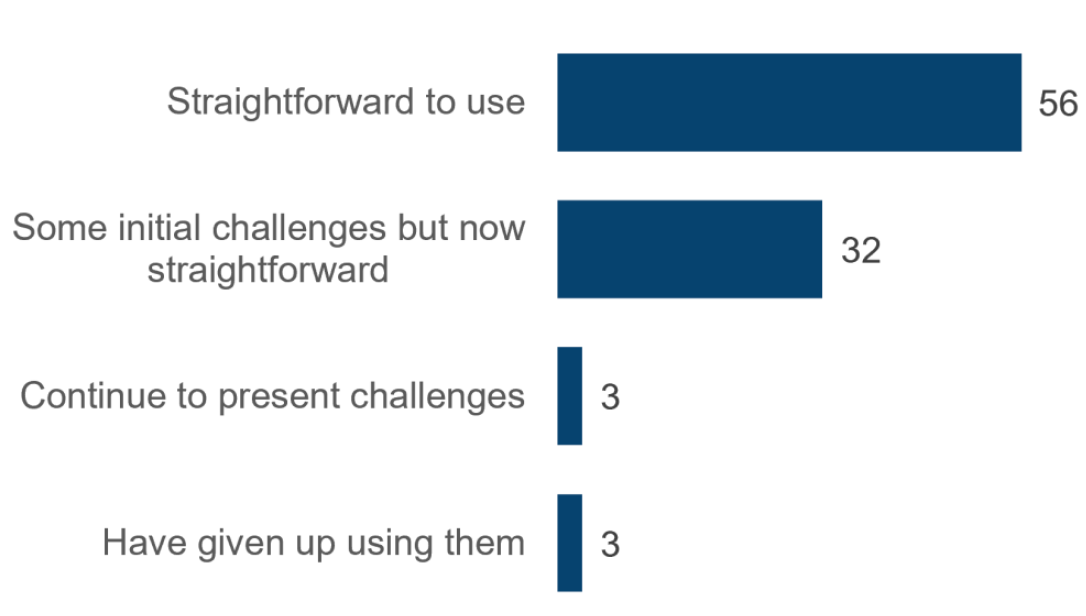
If Yes, what has been your experience of using these?
Among the 94 practices that reported using the Right Decision Service CVD pathways, most (n=56) reported that the pathways were straightforward to use and a further 32 reported facing some initial challenges but now finding them straightforward. A minority (n=6) reported discontinuation or ongoing challenges, suggesting that usability was generally high and that early challenges did not persist for most responding practices.
If no, what was the main reason for this?
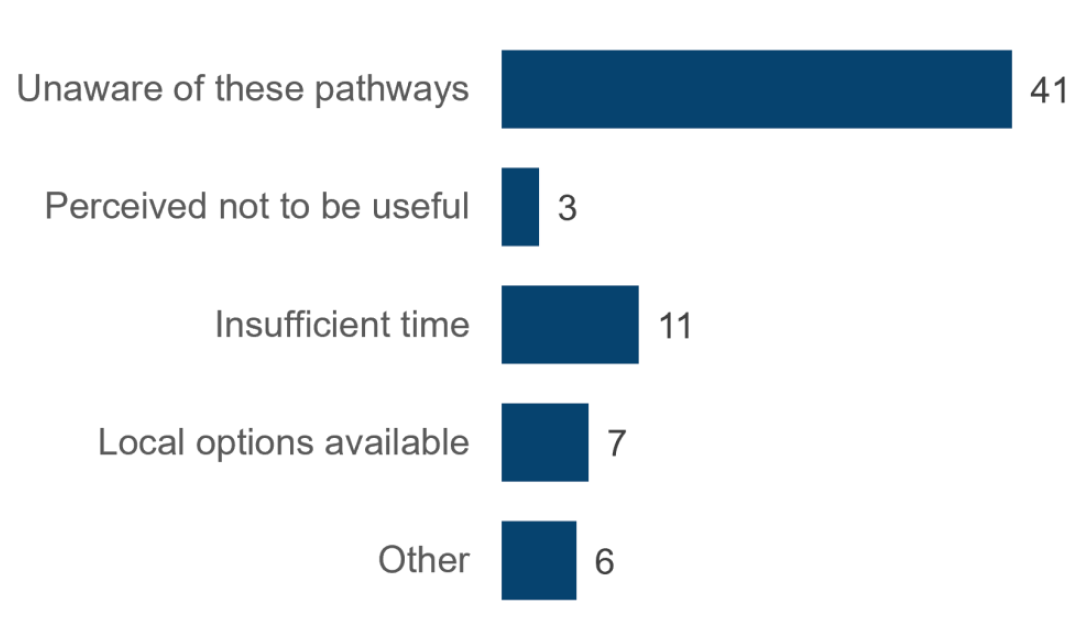
Among the 68 practices that reported not using the Right Decision Service CVD pathways, the most commonly reported reason was being unaware of the pathways (n=41). Other reasons were reported less frequently, including insufficient time (n=11), the availability of local alternatives (n=7) and other unspecified reasons (n=6). Three practices reported that they did not perceive the pathways to be useful. This suggests that lack of awareness was the primary barrier to use, with practical and perception-based barriers playing a more limited role.
ASSIGN score
Survey question: Have you made use of the ASSIGN score?
Of 162 practices that responded to the survey, the ASSIGN score was used by most responding practices (97%; n=157), with very few reporting non-use (3%; n=5). This suggests that the use of the score was highly established across practices at the time of the survey.
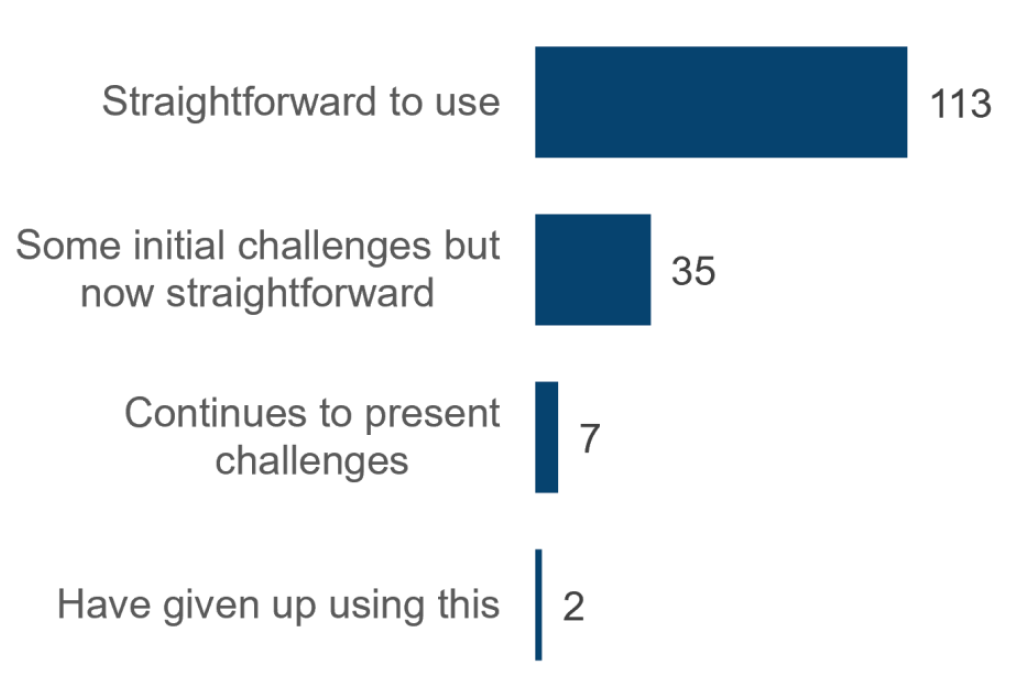
If Yes, what has been your experience of using this?
Among the 157 practices that reported using the ASSIGN score, experiences were generally positive. Most practices (n=113) described it as straightforward to use, while 35 reported some initial challenges but that it is now straightforward. A small number (n=7) reported that it continues to present challenges or that they had given up using it (n=2). These findings suggest that the ASSIGN score was generally well received by responding practices, with relatively few reporting ongoing difficulties following implementation.
If no, what was the main reason for this?
Among the five practices that reported not using the ASSIGN score, four selected ‘Other’ reasons for not using it, without further specifying what these reasons were. One practice indicated that a local alternative was available. None of the practices selected lack of awareness, lack of time, or perceptions that the tool was not useful as reasons for non-use.
Observations about the role of ASSIGN and other pathways (interviews and survey findings)
Interviewees, and particularly the GP or Other Health Professional interviewees, sometimes commented on how appropriate or useful they saw the tools as being in terms of CVD prevention. It should be noted, however, that these views represent the experiences and perceptions of a small number of interviewees and were not independently assessed through this research. The research was not designed to evaluate the validity or performance of ASSIGN v2.0, but to capture General Practice experiences of implementing the CVD DES.
Nevertheless, the GP or Other Health Professional interviewees who commented were most likely to question the role of the ASSIGN tool and score, and in particular to suggest that the use of ASSIGN v2.0 has the potential to undermine the longer-term impact of the CVD DES specifically, but also preventative work more widely.
“So ASSIGN 2 comes in…the numbers that start coming out of it are outrageously low… people that previously would have had a risk score of 13% and we would have been inviting them in for a statin chat, their risk score is now coming out at 5%. And apparently this is because the risk of heart disease has fallen over the last 20 years and this recalibration reflects that. But this is a slightly circular argument because one of the reasons the risk has fallen over the last 20 years is because we’ve been prescribing statins to everyone.
I'm not exaggerating to say we're not doing primary prevention anymore since ASSIGN 2 came in. We’ve stopped. We’re not prescribing statins to people…and this includes all the people in the CVD DES.” GP, medium-sized practice in an urban area with relatively low levels of people living in deprived areas
Other concerns about the role of ASSIGN, and ASSIGN v2.0 in particular, included that it does not place enough emphasis on family history and may underestimate risk for some patients from ethnic minorities. The associated concern, in relation to patients from ethnic minorities in particular, but also more widely, was that patients going through the CVD DES checks may be being given false reassurance, when they would benefit from conversations about weight or lifestyle, or potentially the prescription of a statin.
Interviewees also raised questions about the role of the diabetes/pre-diabetes assessment, including questioning the value of calculating a risk score that is not then put to any other purpose, including potentially not addressing people with low scores but who are still potentially pre-diabetic.
A connected point was that there might be potential for the current scoring approach to underestimate the impact that the CVD DES could have, especially in relation to younger patients.
“…a lot of people were still having low ASSIGN scores because they’re younger, but have a new diagnosis of hypertension or pre-diabetes or high cholesterol and are on treatment. And I guess in terms of the outcomes, that’s maybe slightly missed… ASSIGN scores might be an underestimate of the diagnosis and kind of treatments that are being started…” GP, large practice in a largely urban area with a relatively high proportion of people living in deprived areas
There were also suggestions that, given the CVD prevention focus, it seems strange that none of the tools and scoring approaches take alcohol consumption into account.
Other issues raised by interviewees in relation to the clinical focus and requirements associated with the CVD DES included that:
- being required to redo relatively recent blood tests (for example tests done only a few weeks before the beginning of April cut off) is not only resource intensive but also offers little, if any, clinical benefit
- there is no scientific rigour in requiring a lipid repeat test when a patient is on statins[14]
- repeating the bundle of tests at six months (for patients with an original high ASSIGN score or abnormal results) does not appear to have any particular clinical rationale[15]
“Cardiovascular risk scores need at least probably about three years to change in any meaningful way. Rechecking glucose and blood pressure sooner doesn’t really make a massive difference. It’s just too soon, far too soon. I mean, the way that the current guidance is written suggests you should recheck their cholesterol in six months … I don’t know what you’re hoping to see there.” GP, medium-sized practice in a small town with a relatively low proportion of people living in deprived areas
A small number of survey respondents also raised similar concerns about clinical aspects of the programme, particularly the use of risk assessment tools and eligibility criteria. Some practices questioned whether the tools and criteria always reflected clinical judgement or individual patient risk and felt that they did not provide sufficient flexibility in certain circumstances. Concerns included the performance of the ASSIGN score, the clinical justification for repeated testing, the exclusion of some patients despite perceived clinical need, and the evidence base underpinning particular programme requirements. Practices also noted that some prescriptive elements of the DES, such as repeat testing and coding requirements, could create additional work and did not always align with routine clinical practice.
These responses suggest that, while raised by a minority of practices, some aspects of the programme design and delivery were perceived as being at odds with clinical judgement and established practice, particularly where requirements were viewed as insufficiently flexible or clinically justified.
Observations about the clinical outcomes (interviews and survey findings)
Interviewees were asked about their sense of how the CVD DES is progressing so far, based on their experiences within their own practice. As noted above, the focus was very much on the reflections of those involved rather than any attempt to collect either output or outcome related data. A separate publication from Scottish Government presents quantitative data from GP systems.
Interviewees were most likely to reflect that while the types of health conditions being identified were broadly in line with their expectations going into the CVD DES, they had sometimes been surprised by either the rate at which conditions were being diagnosed, or the profile of those affected. The three most-frequent observations were around relatively high rates of:
- diabetes and pre-diabetes, including among patients who were asymptomatic
- high blood pressure, including occasional readings that were dangerously high
- high cholesterol
There were also references to the age-profile, and to more of those at the younger end of the age range having issues than expected, particularly in relation to blood pressure and high cholesterol.
“I think we were all quite shocked at how many people were on that slippery slope, even the younger ones…There were people that you would never have gone, ‘their cholesterols a little bit borderline’… so it did flag probably more patients that needed support than we were expecting.” Practice manager, medium-sized practice in a small town with a relatively low proportion of people living in deprived areas
The findings from the survey were very much in line with those of the interviews here; a substantial number of practices reported that the programme enabled the identification of previously undiagnosed cases of conditions such as diabetes, hypertension and elevated cardiovascular risk. For example, one practice noted that their practice had ‘found numerous new diabetic patients, and new hypertensives’. Another reported having ‘picked up new diagnoses and very high CVD risk patients’, while a third commented that ‘In the practice it appears that there was about a 10% of patients who were picked up with increased CVD risk without the patient being aware. This may well have a profound impact on their health going forwards’.
In addition to identifying health conditions related to CVD, a number of interviewees referred to unrelated health conditions having been diagnosed as a result of a patient coming in for a CVD check. This was sometimes because something had emerged as a result of the CVD DES-related tests, for example a low iron level leading to an urgent referral to the hospital and a bowel cancer diagnosis, but also because some patients had gone on to raise other health-related concerns during a CVD DES-related conversation.
“I did find a few people came in because they hadn’t engaged for a long time, but they had a health concern and this was their way in, they probably wouldn’t have come otherwise. One example was a lady who was 40…heavy smoker. And halfway through the consultation, she started to tell me what her concerns were about, ‘I’ve had this bit of a cough’…This lady has stage 4 lung cancer. So that would never have been picked up. And now she is still with us and it’s been treated. If she’d left that another few months, that would have been a very different outcome. So it’s a way in for people… this was a lady who didn’t engage, one of the backgrounds that you wanted to get… [but who didn’t] want to bother the GP.”
Other Health Professional, medium-sized practice in an urban area with a relatively high proportion of people living in deprived areas
In terms of breaking down other potential barriers, particularly among those less likely to be in regular contact with their practice, there was also reference to patients reporting that they had been in contact but had understood there to be no appointments available. There was an associated suggestion that some patients, and particularly some of those living in more deprived areas, may be less well versed in what warrants an urgent appointment, and may be less aware of how to navigate the system successfully.
“…when I asked them, ‘why did you not come sooner?’ they would say to us, ‘oh, we tried to call, but we got told there were no appointments left’. And I tried to stress to them, no, there’s always appointments for this… if they explained it a bit further… whereas I think we’ve got a different demographic subset of patients where they know how to get access better… so they would maybe say some buzzwords to make it out to be an emergency, but in reality…there’s nothing urgent there.” Other Health Professional, large medical practice in an urban area with a relatively high proportion of people living in deprived areas
Again, those responding to the survey raised similar issues with some practices indicating that they had seen patients who may not otherwise have engaged with services, with one practice noting that they ‘saw patients that we would not have normally seen’. These responses suggest that many practices perceived the programme as supporting the identification of previously unrecognised risk factors and conditions, including among patients who may have been less likely to engage with healthcare services.
Reflections on the clinical focus and other parameters of the CVD DES (interview findings)
Interviewees, and particularly GP and Other Health Professional interviewees, also raised issues relating to the clinical inclusion or exclusion criteria for the CVD DES, and also the more general parameters, including the focus on deprivation and ‘missingness’.
Exclusion based on date of most recent contact
There was a suggestion that the exclusion criteria should be reviewed, with a view to considering whether some patients may be being ruled out when they would very much benefit from going through the CVD DES. An example given was because someone had a high blood pressure reading on record from a number of years ago but had not otherwise been through the range of screening included in the CVD DES.[16]
Age range
Overall, interviewees tended to a view that the age range for the CVD DES (i.e. 35 to 60 years old) was appropriate, both because of the broader focus on prevention and the specific focus on those living in the most deprived areas.
“…I think health span in more deprived populations is not the same as the average... If you [were to] take the age higher, you’re potentially missing 5 or 10 years of somebody having pre-diabetes or diabetes and potentially missing these people when we really want to be controlling their diabetes really well.” GP, medium-sized practice in an urban area with a relatively high proportion of people living in deprived areas
There were also occasional suggestions that some flexibility to include the under 35s could bring value.
“I guess in areas of high deprivation like this, we would maybe be looking at just reducing the age group a little bit. There’s a lot of people in this area who still smoke. There’s a lot of people who use drugs… and we get quite a lot of young, and by young I mean under 35, hypertension diagnosis that might be picked up for some other reason…” Other Health Professional, medium-sized practice in an urban area with a relatively high proportion of people living in deprived areas
There was also a suggestion that the 60-year upper limit could be raised, especially given that people may still be working through their 60s and 70s.
An alternative perspective, which tended to be linked to practices operating in areas which had fewer of their patients living in areas of deprivation, was that the 35 years old may be too low, and that increasing it by around 10 years would reduce the proportion of those going through the CVD DES who do not need any form of ongoing intervention.
Focus on socio-economic deprivation
Another issue raised occasionally was the focus on those living in the most socio-economically deprived areas. As in relation to the age-range, views did tend to correlate with the socio-economic profile of the area in which the practice was based.
Most frequently, interviewees were supportive of the focus on those living in SIMD 1 and 2 areas overall, and then in terms of prioritising which of their own patients they would invite for CVD DES checks. It was generally seen as a reasonable factor to take into account when distributing limited resources, particularly given the health challenges associated with living in an area of deprivation. Very occasionally, it was suggested that, when combined with weighting that also takes prevalence of CVD into account, the additional weighting based on deprivation introduces an element of non-evidence based ‘double counting’.
“…we understand that more deprived areas have a higher prevalence of cardiovascular disease. But if you weight it by cardiovascular disease only, you’re going to capture that higher prevalence. So, weighting it by cardiovascular disease and then strongly weighting it again by deprivation seems an overtly political and not evidence-based move which is disadvantaging our patients with cardiovascular disease.” GP, medium-sized practice in an urban area with a relatively low proportion of people living in deprived areas
However, most interviewees were supportive of prioritising patients living in areas of higher deprivation and considered this an appropriate way of targeting limited resources towards populations at greater risk of poor outcomes.
Summary findings
From survey:
- use of the Right Decision Service CVD pathways was more common than non-use among responding practices and most responding practices reported the Right Decision Service CVD pathways as straightforward to use, or as having had some initial challenges but now being straightforward
- the most commonly reported reason for not using the Right Decision Service CVD pathways was lack of awareness among responding practices
- the vast majority of responding practices reported using the ASSIGN score, with most reporting that it was straightforward to use, or that having faced some initial challenges they now found it straightforward
From interviews:
- some GP and other health professional interviewees raised concerns around low-risk scores given by ASSIGN v2.0 which, it was argued may undermine progress in treatment of CVD by reducing prescription of statins
- the clinical value of repeating the bundle of tests at six months (for patients with an original high ASSIGN score or abnormal results) was also questioned
- some interviewees suggested that current exclusion criteria should be reviewed so that more patients can benefit
- many new diagnoses of hypertension, high cholesterol and pre-diabetes/diabetes were reported, as well as a smaller number of serious but unrelated health conditions having been diagnosed as a result of a patient coming in for a CVD check
Contact
Email: socialresearch@gov.scot