
Cardiovascular Disease Directed Enhanced Service: views and experiences of General Practices
Presents the results of an online survey and qualitative interviews conducted with General Practices across Scotland. These explored the views and experiences of practices in implementing and providing the first year of the CVD DES programme, to contribute to its ongoing evaluation.
8. Delivery, workload and resources
This chapter draws on both the survey and interview findings. It looks at some of the practical issues associated with delivery of the CVD DES, including the use of the ESCRO tool and other software-related issues, the overall approach to delivering the CVD DES, and the experiences of practices in coding the outcomes of a consultation. It then goes on to consider workload and resourcing issues.
Use of ESCRO including coding of outcomes (survey and interview findings)
As noted in Chapter 4, ESCRO is the sole integrated solution for the current requirements for Enhanced Services reporting within NHS Scotland. ESCRO modules include Alcohol Brief Intervention, Depression, Diabetes, Drug Misuse and Near Patient Testing. In terms of the CVD DES, ESCRO has a role in identifying the potentially eligible population (covered in Chapter 4).
It also functions as a coding and reporting tool through its Submission Verification Tool V4 and once completed the coding triggers automated payment for the Item of Service fee part of the DES.
Survey question: Have you made use of the ESCRO tool?
Of 162 practices that responded to the survey, the ESCRO tool was used by most responding practices (93%; n=151). These findings suggest that the ESCRO tool had been widely adopted among responding practices by the time of the survey.
If Yes, what has been your experience of using this?
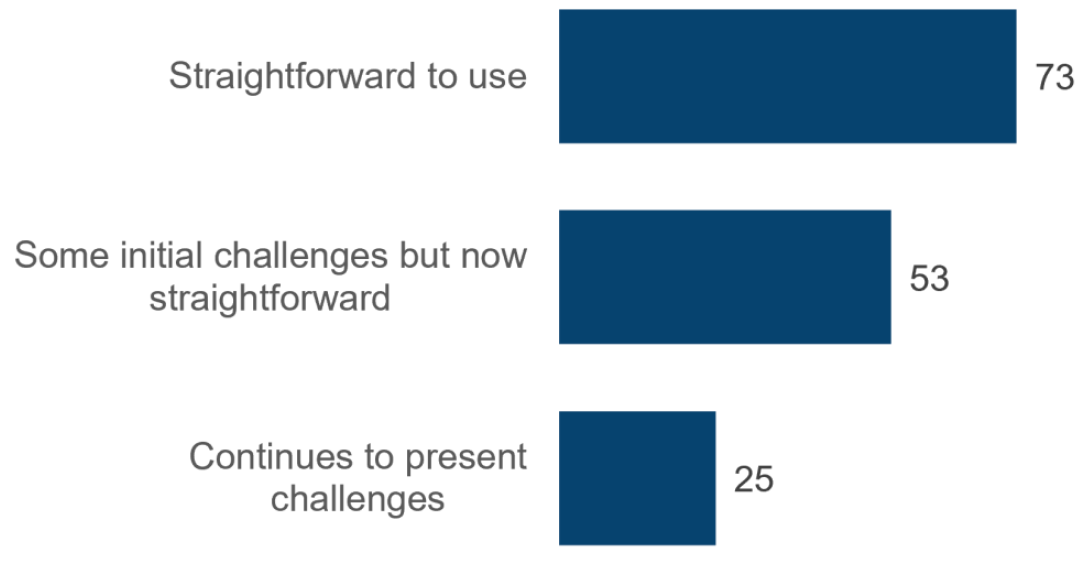
Among the 151 practices that reported using the ESCRO tool, just under half (48%; n=73) described it as straightforward to use, while over a third (35%; n=53) reported having some initial challenges but now finding it straightforward. A smaller number of practices reported that the tool continues to present challenges (17%; n=25), and none of the practices reported having stopped using it. These findings suggest that experiences of using the ESCRO tool were generally positive, although a notable minority of practices continued to experience difficulties.
If no, what was the main reason for this?
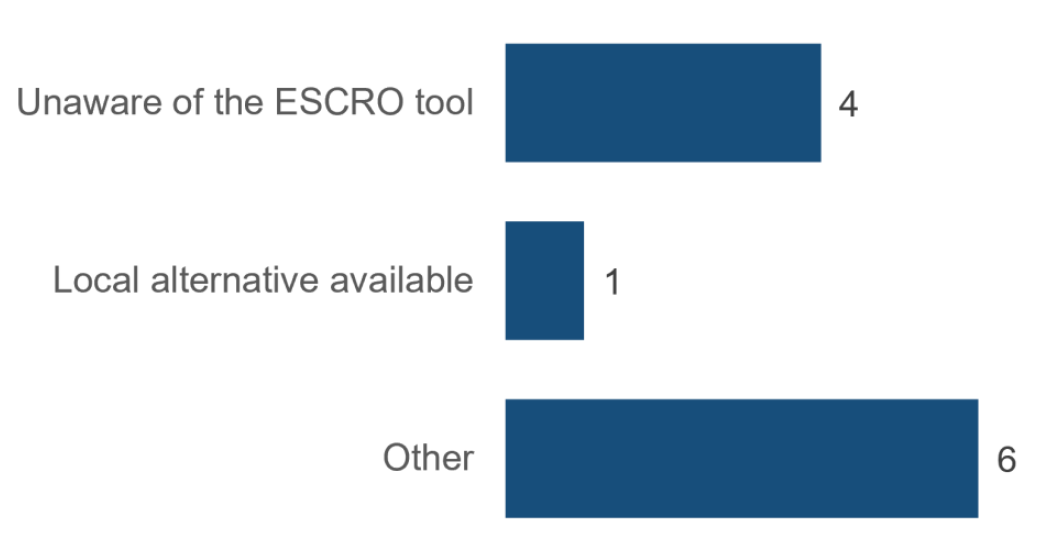
Among 11 practices that reported not using the ESCRO tool, the most commonly (n=6) reported reason was ‘Other’, although no further details were provided in these responses. This was followed by lack of awareness of the tool (n=4). One practice indicated that a local alternative was available. None of the practices selected ‘Lack of time’ or ‘Not perceived to be useful’ as reasons for non-use.
In their free-text responses, some survey respondents referenced the administrative and IT burden associated with delivering and implementing the programme. In particular, the ESCRO tool was repeatedly identified as a source of inefficiency, with practices citing issues relating to usability, accuracy, and duplication of work, including the need for manual validation of patient eligibility.
“ESCRO tool after 2 months stopped sending monthly claims.”
“Difficulties with ESCRO tool caused unnecessary additional admin workload.”
These challenges were compounded by additional difficulties. Practices frequently described the CVD DES as disproportionately resource-intensive, highlighting the complexity of coding, reporting requirements, and lack of integration between systems. These resulted in additional workload and inefficiencies.
“This enhanced service is in a completely different place to all other reporting.”
“The whole process is extremely time consuming as the key scoring systems are not integrated with the DES template.”
“The coding and use of ESCRO was extremely challenging. We felt it was unnecessary to have so many boxes to tick to achieve IT needs. Clinically we are effective at this work but the need to ensure every box of multiple was checked in just the right way was far more time consuming than it needed to be.”
Survey question: How straightforward or complicated do you find it to code the outcomes of a consultation?
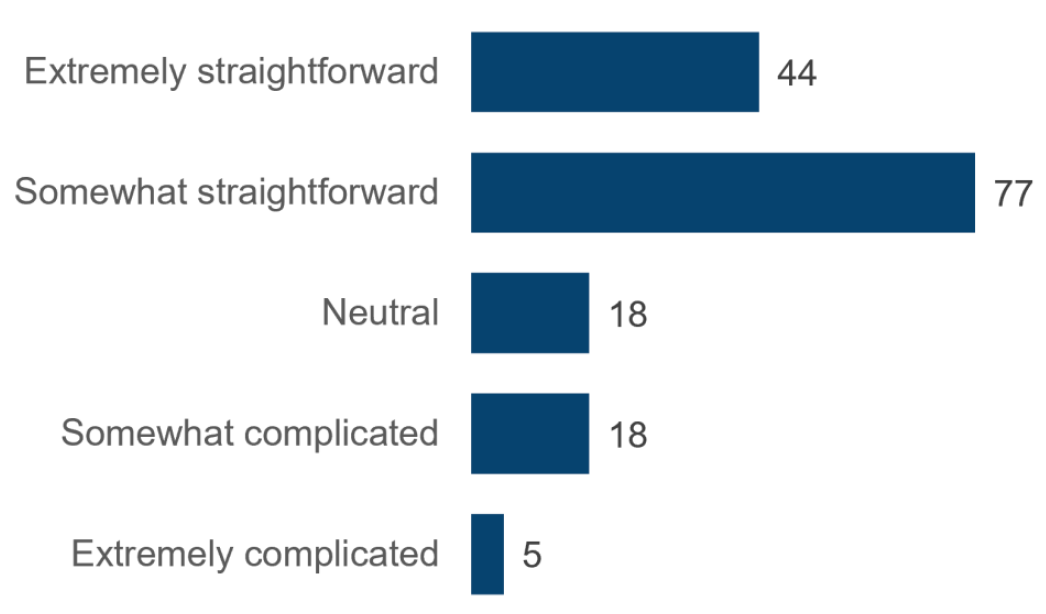
Of 162 practices that responded to the survey, most reported that they found it straightforward to code the outcomes of a consultation (75%), with 77 describing it as somewhat straightforward and a further 44 as extremely straightforward. Smaller numbers reported somewhat complicated (11%; n=18) or neutral experiences (11%; n=18). Very few reported that it was extremely complicated (3%; n=5). This suggests that, overall, coding consultation outcomes was generally manageable for most responding practices, although some variability in experience remains.
Interviewees raised a similar range of issues, with some reporting that ESCRO, had been easy to use but others that it is ‘clunky’ and not user friendly, particularly in terms of the reporting component. There were also references to:
- difficulties and delays in getting problems resolved, but also to not being sure whether this may have been connected to their health board or to the ESCRO provider
- an updated version of ESCRO being less user friendly than the original version; this was associated with no longer highlighting which elements still need to be completed in order to submit a claim
Other challenges associated with coding the outcome of consultations, but also more widely, related to the compatibility of different software – with references to ESCRO, EMIS, Vision[17] and Accurx. General challenges were associated with the various systems not necessarily ‘speaking to each other’ easily, with additional complications associated with different versions of assessment tools and their accompanying software. Some interviewees also reported that their practice had recently been part of, or would soon be part of, the roll out of new Vision software. There was some optimism that once fully up and running within their practice, Vision may address some of the current non-compatibility issues.
Delivery approach (survey findings)
Survey question: Have you used any consultation methods that differ from your standard approach to conduct CVD checks?
In response to the question ‘Have you used any consultation methods that differ from your standard approach to conduct CVD checks?’, 57% of responding practices (n=92) reported no change to their usual approach. A further 42% (n=68) of practices described adaptations to their standard approach, and 1% (n=2) of practices reported staffing or capacity constraints that had limited their ability to deliver the DES.
Among practices reporting no change, responses ranged from brief negative answers (e.g. ‘No’, ‘None’, ‘N/A’) to more detailed statements indicating that CVD checks had been delivered through routine consultation processes (e.g. ‘no, saw patients in the usual way’, ‘nothing other than standard’, ‘normal appointment’).
Among the 68 practices reporting adaptations to their standard approach, a range of alternative consultation and delivery methods were described through free-text responses, and these have been analysed thematically.
Extended access
The most prominent theme was the provision of appointments outside usual practice hours, representing a key adaptation to standard delivery methods. This finding suggests that improving accessibility and accommodating patients’ availability were important considerations in programme delivery.
Proactive/opportunistic engagement
A further, albeit less prominent, theme was the use of more proactive and opportunistic approaches to patient engagement. Practices described identifying patients opportunistically during routine care (e.g. ‘we catch patients when they attend for other appointments’, ‘opportunistic’), as well as using targeted communication approaches, including ‘proactive texting of targeted lists… then receptionist phoned any defaulters’ and personalised invitations. These responses suggest that some practices adapted their engagement strategies to maximise opportunities to identify and contact eligible patients.
Additional capacity
Another key theme related to the creation of additional clinic capacity or dedicated CVD services. Practices described adapting delivery within existing practice hours through initiatives such as dedicated ‘CVD clinics’, ‘drop-in clinic[s] within the practice’ and ‘extra clinics arranged to accommodate demand’. These responses suggest that some practices sought to create additional capacity and provide more structured opportunities for patients to access CVD checks as part of CVD DES delivery.
Alternative workforce models and consultation formats
A further theme related to the use of alternative workforce models and consultation formats. Practices described utilising healthcare assistants and nurse-led appointments to support delivery of CVD checks, as well as combined approaches involving an initial healthcare assistant appointment followed by review from a nurse or GP. Practices also described alternative delivery formats or outreach approaches, such as group consultations, asynchronous consultations, or community-based activity (e.g. ‘organising a community event outwith the practice’). These responses suggest that some practices adapted delivery by making use of a broader multidisciplinary team and varied consultation pathways.
Constraints hindering delivery
Finally, two practices reported constraints that hindered delivery, citing staffing and capacity limitations (e.g. ‘Not been doing this LES [Local Enhanced Service][18] due to staffing’, ‘No resources (time or staff) to do any of above’).
Overall, these findings suggest that while most practices did not fundamentally change their consultation approach, some implemented adaptations, most commonly by extending appointment availability and increasing clinic capacity, alongside efforts to improve proactive and flexible patient engagement.
Workload and resourcing (survey and interview findings)
Both the survey and interviews asked questions focused on the impact of the CVD DES on the wider workings of their practice, including in relation to managing the workload and the potential impact on other workstreams. The interviews went on to address the level of per place funding in place for the CVD DES.
Survey question: Has the implementation and delivery of this programme had any impact on your practice workload?
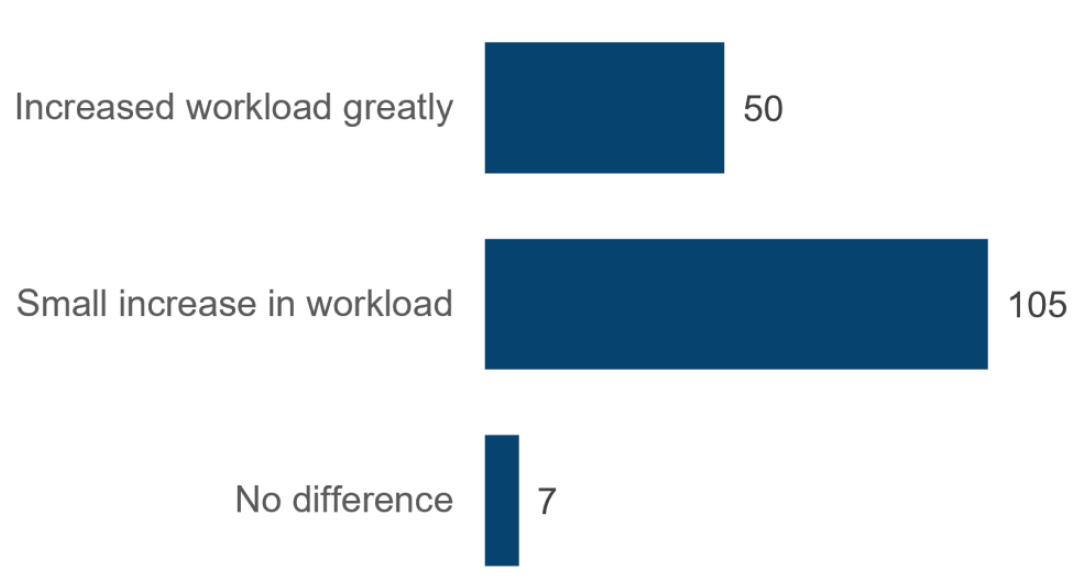
Of 162 practices that responded to the survey, the majority reported that programme delivery had increased workload, most commonly (65%; n=105) as a small increase, although just under a third (31%; n=50) reported that workload had greatly increased. Very few practices (4%; n=7) reported no difference, and none reported a reduction. This indicates that increased workload was a consistent feature of programme implementation, although the extent of this increase varied across practices.
In free-text responses, workforce and funding-related constraints emerged as a key theme for survey respondents, with practices expressing concerns about the pressure the programme had placed on already stretched teams. Limited capacity was frequently cited, while some practices expressed broader concerns regarding the impact of the CVD DES on routine service delivery. Some practices reported that the additional workload contributed to delays elsewhere in the system, such as ‘backlogs in phlebotomy services’.
“We did not have the nursing capacity to engage as we have been short staffed since August 2025.”
“We have essentially given up in part because we have minimal nursing staff capacity who would be best placed to do this work time and cost efficiently.”
The relationship between funding and workload was also a key concern. The capped model of delivery was viewed as problematic by some practices, limiting the extent to which practices could fully implement the programme while still requiring substantial upfront investment in terms of time and effort.
“Has been a huge workload increase for the payment to be capped.”
“Fundamentally the money being offered doesn’t cover what is required.”
“It is a pity it was capped and I feel more patients would benefit for this - but without financial support it would not be sustainable.”
In line with the results to the survey question, interviewees tended to point to the CVD DES having inevitably created some additional workload, but reported that overall, it had been manageable. In terms of the particular challenges associated with managing the additional work, interviewees commented on both administrative time and clinical time pressures.
Administrative tasks had generally had most impact on the admin staff/team, although it was also noted that, depending on the approach being taken within the practice, the additional load on clinical staff could also be significant. Specific issues highlighted included that, especially in the first year, the set up phase was resource heavy – particularly in getting to grips with ESCRO and with how the data on eligible patients could, or could not, be matched to other patient record information. For most practices, the process of engaging with and inviting patients to participate was also resource heavy, especially when it included phone-based invitations; for some practices the impact was on admin staff, but in other practices clinical staff had been making the calls.
Practices had delivered the CVD DES using their existing staff teams, managing the demands (both during the engagement phase and for appointments and tests) by staging invitations over a number of months. It was also noted that the opportunistic approach, whilst still clearly requiring both admin and clinical time, had potential to minimise the amount of additional time required, both at the engagement stage but also in terms of adding on tests and checks to existing visits to the practice.
While there had been some use of overtime, this tended to be associated with out of hours work (e.g. extended appointment hours or evening/weekend clinics) rather than day-to-day administration and clinical tasks which had generally been managed through just ‘finding the time’, and by sharing the additional workload. However, in a small number of cases, the main resource implications had fallen on one or two members of staff; as highlighted earlier, this tended to be associated with a member of the clinical team taking the lead on the delivery of the CVD DES, with support from other practice staff.
Interviewees were also asked if they had needed to redirect resources away from other areas of work in order to deliver the programme. There was a general consensus that, while it must have done to some extent, there were no obvious areas of work that had not been delivered to make way for the CVD DES. It was noted, however, that the programme had inevitably taken some appointments (for GPs, nurses etc.) out of the system. There were also very occasional references to some tasks being delayed – for example relating to entering new patient records – or being increasingly robust about not carrying out reviews in the practice that could be delivered by the health board’s Community Treat and Care Team.[19]
Moving forward and noting that all the interviewees’ practices have gone on to take part in year 2 of the CVD DES, there were some expectations, and a small amount of emerging experience, that there may be some time savings to be had. These included both because different approaches had been tried and a preferred way forward established, but also that some of the software related challenges may be resolved.
Funding levels (interview findings)
Practices were eligible for payments for participating in the CVD DES as follows:
- a flat payment of £250 to cover initial planning time and a flat fee of £100.30 per practice to conduct patient searches
- an item of service fee of £95 (paid on a monthly basis) via use of the ESCRO tool, for each patient who: receives the full CVD bundle of checks subsequently carried out and completes the clinical review appointment.
Interviewees were asked how well the package of resources available, including the per patient payment, matched with their experience of delivering the CVD DES. Practices were most likely to report that funding levels had been adequate, although there were also references to them being a bare minimum, and to the CVD DES not being a viable option if levels were to be reduced in any way. It was also noted that it is difficult to monitor actual delivery costs for a programme such as this, especially when there are many stages and potentially many different members of staff involved. Specific observations about the current funding arrangements included that:
- they may be reasonable for a nurse-led service but if a significant amount of GP time is used/required, practices are more likely to be running the programme at a loss
- additional resources would be needed if an interpreter were to be required for patients who don’t speak English
- the 6-month re-check of tests (when required) is not funded[20]
- practices only get paid if the full CVD bundle of checks has been carried out and the clinical review appointment has been carried out
Connected to this last point was an observation that, if there were no emerging issues from the bundle of checks, some patients may have been disinclined to go on and have any further contact or discussions about healthy lifestyles. This could result in non-completion of the required elements to trigger the per place payment, despite all the checks having been carried out.
In terms of issues the Scottish Government may wish to consider going forward, suggestions included that:
- it might be reasonable to try and reflect input time on the part of the practice – for example the number of patients reached out to as opposed to the number of patients who eventually participate in the programme
- if engaging with the ‘missing’ remains a clear priority, funding may need to reflect the resource implications of involving some of the harder to reach groups – for example with additional funding to cover home visits for those unable to attend their practice
Summary findings
From survey:
- the majority of responding practices reported using the ESCRO tool and most reported it was straightforward to use, or that after facing some initial challenges it was now straightforward
- however, in further comments on the ESCRO tool, some practices referenced the administrative and IT burden associated with delivering and implementing the programme, finding use of the ESCRO tool challenging and time-consuming
- the most commonly reported reason for not using the ESCRO tool was ‘Other’, followed by lack of awareness among responding practices
- although most practices reported that coding consultation outcomes was straightforward, some noted that the ESCRO tool had presented particular difficulties in terms of the reporting component
- the majority of responding practices reported that programme implementation and delivery led to an increase in workload, most commonly a small increase, although around a third reported that their workload had increased greatly
From interviews:
- interviewees also reported that the CVD DES had created additional workload, noting challenges for both administrative and clinical time. Depending on the approach being taken within the practice, the admin workload could have a significant impact on clinical staff
- both the set up phase (particularly getting to grips with ESCRO) and inviting patients to participate were reported as resource heavy, especially when the latter included phone-based invitations
- practices had delivered the CVD DES using their existing staff team, generally by staging appointments over a number of months, with use of overtime tending to be associated with out of hours work such as extended appointment hours or evening/weekend clinics
- although interviewees were not generally able to identify specific services or workstreams that had been curtailed as a result of the CVD DES, some reflected that delivering the programme required staff time and appointment capacity which might otherwise have been available for routine activity
- in terms of resource per patient, practices were most likely to report that funding levels had been adequate, although there were also references to this being the bare minimum required and the programme not being viable were funding to be reduced
Contact
Email: socialresearch@gov.scot