
R100 Interim Evaluation
This report details findings of the R100 Programme Interim Evaluation, informed by the best practice set out in the Digital Appraisal Manual for Scotland (DAMS): https://www.gov.scot/publications/digital-appraisal-manual-for-scotland-guidance/
3 Benefits
3.1 Overview
3.1.1 Prior to developing the research programme, this chapter sets out the results of a high-level review of the wider literature on the benefits of improved broadband connectivity.
3.1.2 To help inform the review and gain insights on the topic of digital exclusion, in addition to consulting relevant literature, a number of one-to-one telephone consultations were undertaken with relevant organisations. The list of organisations consulted is included in Appendix A .
3.1.3 The review is split into sections covering benefits associated with each of the following:
- Employment, education, and training
- Improved access to public services and public sector efficiency
- Schools and pupils
- Online shopping and banking
- Enhanced levels of wellbeing
- Local businesses
- Support for rural communities
- Reduced carbon emissions
3.1.1 The findings from the review were used to help inform the development of a set of logic maps setting out the range of potential ‘outcomes’ and ‘impacts’ which may result from the delivery of the R100 programme, and which will be explored within the research. These are set out in detail in Chapter 4.
3.1.2 A key point in assessing likely benefits is that the large majority of ‘in-scope’ R100 households do have access to 'standard broadband’ (ADSL), rather than no broadband at all. This means that many of the benefits of R100 will be incremental rather than binary in nature. This is discussed further in Chapter 4.
3.2 Employment, education, and training
3.2.1 A key employment benefit of improved broadband connectivity identified within the wider literature is the ability to work from home for jobs in some sectors (permanently, or as part of a flexible working arrangement), rather than travel into work.
3.2.2 For example, in a residents’ survey undertaken as part of the 2023 impact evaluation of the BDUK Voucher Scheme, it was found that 57% of working age respondents were using the internet to work from home. Of these, 91% said their upgrade was important in enabling them to do so, with a large proportion (70% in total) stating that it was very important.[25]
3.2.3 Being able to work from home can be a particular benefit in Scotland’s rural and island communities where the barriers to accessing employment opportunities are often higher due to long travel distances, high travel costs, and a lack of transport connectivity. Having the ability to work from home also ensures continuity of employment during emergencies, such as the COVID-19 pandemic.
3.2.4 Beyond working from home, a range of related and sometimes consequential employment related benefits arising from improved connectivity can be identified in the literature. These include:
- Improved access to job advertisements and applications - the majority of job advertisements and application processes are now online and without a home broadband connection, accessing such opportunities is more challenging.
- New entrants into the labour market as previously economically inactive people join the labour force. For example, the most recent evaluation of the UK’s Superfast Broadband Programme found that the number of unemployed claimants fell by 9.8 for every 10,000 premises upgraded.[26]
- Better matching of labour to jobs as employees in some sectors are no longer limited to jobs within a commutable distance from their home, particularly benefitting people in rural areas.
- Improved employee productivity as a result of the reallocation of commuting time to productive activities; fewer work distractions; and reduced absenteeism. For example, the most recent evaluation of the UK’s Superfast Broadband Programme found that the turnover per worker amongst (non-relocating) firms in the areas benefitting rose by 0.17%.[27]
- An increase in the number of hours worked and / or higher wages as a result of the above, for example:
- the most recent evaluation of the UK’s Superfast Broadband Programme found that hourly earnings of employees working for firms located in the areas affected increased by between 0.6% and 0.8% in response to the upgrade.[28]
- the evaluation of the BDUK Voucher Schemes published in August 2023 found that 54% of residents surveyed who found a new job or improved their career prospects reported an increased salary. It was estimated that this led to net additional earnings of £9.5m per annum. [29]
- People electing to set up a new business as a result of enhanced connectivity.
3.2.5 Through supporting flexible and remote working, enhanced connectivity can also help particular groups in society to either enter the labour market or work more hours, including parents, women, carers, and those with disabilities. For example, for Scotland’s disabled population, many of whom face mobility or health-related barriers, remote working can remove the need for long commutes or inaccessible workplaces. Similarly, carers, who are disproportionately women, can better balance paid work and care when reliable broadband is available at home. Connectivity can also provide a means for continued engagement in the labour market for older workers seeking phased retirement.
3.2.6 In this way, enhanced connectivity can help increase labour market participation, reduce the gender gap in employment (which is typically higher in rural communities[30]), and improve overall productivity. For example, in its response to the call for evidence on the benefits of improving connectivity in very hard to reach premises, Openreach stated that nationwide-full fibre could result in “nearly 1,000,000 more people [entering] … the workforce by 2025”, including “over 300,000 working-age carers, nearly 250,000 older workers, and 400,000 parents of dependent children” with a resultant increase in GVA of just over 1.3%.[31]
3.2.7 Access to connectivity is now also an essential pre-requisite in order to access education and training opportunities. This includes formal online courses as well as online information, research, and videos. As with working from home, the availability of online education services can provide particular benefits for (i) those in Scotland’s rural and island communities where the barriers to accessing more traditional face-to-face options are often higher and (ii) groups in society who require a greater degree of flexibility around learning options and / or do not have access to private transport which would enable them to access traditional face-to-face options. Improved connectivity is therefore a critical enabler for educational equity.
3.2.8 In the residents’ survey undertaken to help inform the 2023 impact evaluation of the BDUK Voucher Schemes, two thirds (62%) of those surveyed were making greater use of the internet for educational purposes as a result of being able to use the internet more easily and more effectively. There was also some evidence that certain groups in society were more likely to be studying for an adult qualification for the first time, including those in lower skills occupations, those from households with children, and those working part time.
3.2.9 Online education options can therefore help to improve equality of access between rural and urban locations (and between those with access to private transport and those without) and increase participation. It can also be argued that easier access to employment and education can contribute to reduced out-migration, particularly amongst younger cohorts, and help to support the overall viability of the area. This is discussed further in Section 3.8.
3.3 Improved access to public services and public sector efficiency
3.3.1 Improved digital connectivity can also enable individuals to access services, including NHS services[32], government services and social security entitlements[33], helping to increase participation and reduce costs for providers. In Scotland, there has been a growing move to online service provision in recent years and this change is set to continue with the Scottish Digital Strategy, published in 2021, setting out an action to ‘transform key public services’ so that ‘it is easier to deal online with all levels of government’.[34] Those without digital connectivity will clearly be excluded from these opportunities.
3.3.2 In the health field, in part spurred by COVID-19, the use of telephone appointments and telemedicine, whereby patients and healthcare professionals connect remotely rather than in a healthcare setting is growing. For example, the Scottish Government’s ‘Attend Anywhere’ video consultation service provides a purpose-built platform to enable patients and healthcare professionals to connect remotely and is used by all 14 health boards in Scotland.[35] Various benefits of such approaches are identified within the literature, including:
- Travel time and cost savings for patients – such savings can be particularly beneficial for those living in rural and island communities who would otherwise face costly and time-consuming journeys to mainland hospitals
- Improved access for hard-to-reach groups – including disabled people, older adults and those with long-term health conditions many of whom may find travel challenging. Such groups stand to gain significantly but also risk exclusion if affordability or digital literacy barriers remain unaddressed
- Individuals seeking medical help sooner – which in turn can lead to the earlier detection and treatment of medical conditions
- Faster and more direct access to specialists – which can again be particularly beneficial for those living in remote settings who may otherwise be reliant on specialists visiting their home or local clinic.
3.3.3 There is also evidence that telemedicine can lead to improvements in general health amongst the population. For example, a recent European Commission research report found that increasing the adoption of telemedicine by 5% could lead to a 1.7% increase in citizens’ Quality Adjusted Life Years[36] and a 3.6% fall in mortality.[37] Such improvements can also feed through to employment productivity benefits through fewer sick days and / or less time spent undertaking medical appointments.
3.3.4 The adoption of telemedicine and e-services also leads to significant savings for service providers through reduced employee travel times and improved efficiency as well as, in the case of the NHS, savings associated with, for example, the earlier detection and treatment of illnesses; reduced need for hospital admissions / earlier discharges; and enhanced monitoring post treatment.[38]
3.4 Benefits for schools and pupils
3.4.1 Enhanced connectivity can also provide benefits at the school level, helping to deliver efficiencies for education providers and enhancing the quality of education. Examples in the literature of the benefits provided by improved connectivity in the education sector include:
- ensuring multiple pupils and teachers can access the internet at the same time – this was identified as a key constraint for one primary school involved in the GigaHub programme[39]
- improving access to educational content and teaching resources
- enabling the use of different teaching resources including innovative educational tools, such as remote field trips and virtual school exchanges, which can improve the quality of education and enhance pupil engagement
- enabling small rural and island schools to coordinate classes together through teleconferencing, reducing the negative impacts associated with staff shortages
- efficiencies in terms of management activities / greater use of cloud storage - evidence from the evaluations of the GigaHubs programme found that schools benefiting from the programme use digital connectivity more often in a range of admin tasks (finance, pupil data management etc).[40]
- Reducing workloads - for example, 60% of school staff who responded to the 2022 School Benefits survey undertaken to inform the interim evaluation of the GigaHubs programme said workloads had reduced or were expected to reduce as a result of the technological changes adopted.[41]
- improving pupil attainment – for example, in the survey above, 95% of the school staff responding stated that the technology enabled by the broadband upgrade had already or was expected to affect pupil attainment.[42]
3.4.2 Providing enhanced broadband connectivity at home can also facilitate learning and development amongst children. In a residents’ survey undertaken to help inform the 2023 impact evaluation of the BDUK Voucher Schemes, 64% of households with children were using the internet for their children’s education, with 88% stating that the upgrade was important in enabling them to do so.[43]
3.4.3 Having a reliable and fast internet connection at home is also an essential pre-requisite for remote learning and an often-essential requirement for homework. The ability to undertake remote learning was particularly important during the COVID-19 pandemic and was a particular challenge in some rural locations due to limited connectivity, with the National Association of Local Councils reporting that some students were required to attend school by exception, due to poor connectivity at home.[44] The pandemic accelerated and increased the use of online resources in schools. Where connectivity remains poor, pupils risk falling behind urban peers, exacerbating attainment gaps that already exist between rural and urban areas.
3.4.4 Providing improved connectivity in rural locations (whether at school and/or at home) should also lead to rural children having increased digital competency now and, in the future, which helps reduce the digital divide in the long-term. This is increasingly important given the importance of digital skills in the job market. For example, recent research indicates that 75% of all job advertisements in Scotland which are classified as ‘low skilled’ now require baseline digital skills.[45]
3.5 Online shopping and banking
3.5.1 In addition to public services, internet access also opens-up opportunities to access online and mobile shopping and banking services. For example, in the residents’ survey undertaken to help inform the 2023 impact evaluation of the BDUK Voucher Schemes, more than 40% of households surveyed said that the upgrade in connectivity had made it easier for them to use online banking and online shopping.[46]
3.5.2 Undertaking shopping and banking online saves significant travel time which can be spent doing other, more productive activities. Online shopping also provides consumers with choice and savings through greater competition. It could be argued that the benefits of online are perhaps more substantial in remote locations where choice is limited (and therefore prices are higher), and travel times are longer.
3.5.3 While access to online shopping and banking services brings benefits, however, there are also potential negative impacts, with increased use of online services contributing to a decline in the number of local shops, the closure of bank and building society branches, and the removal of ATMs. For example, in Scotland, the number of bank and building society branches fell by 34% between 2012 and 2021, while the number of ATMs fell by 16% between 2018 and 2022.[47]
3.5.4 The closure of such services can be particularly challenging in rural and island communities where local shops and bank branches can play a vital role in community cohesion. In addition, if digital services replace local provision, such as banking or council services, without inclusive alternatives there can be a disproportionate impact on certain groups in society including older people, low confidence users and those on lower incomes, who may experience feelings of increased isolation.
3.6 Enhanced levels of wellbeing
3.6.1 There is much discussion in the literature on the ability of improved digital connectivity to improve levels of both individual and community wellbeing. Various mechanisms or drivers for this are identified, including:
- reduced social exclusion and isolation as a result of being more able to keep in touch with family and friends and there being more opportunities for social interaction through video / online calls, messaging, and social media platforms such as Facebook and Instagram[48]
- improved feelings of connectedness through access to online news media
- access to a wide range of entertainment opportunities and streaming services
- access to higher quality jobs, education, health and government services
- reduced feeling of injustice / missing out as compared to people located elsewhere in the country
- greater potential for communities to organise online leading to improved community resilience[49]
- improved physical well-being through access to digital health devices which record and track activity
- increased independence of people with disabilities through access to online services which help to reduce dependence on others
3.6.2 In a residents’ survey undertaken to help inform the 2023 impact evaluation of the BDUK Voucher Schemes[50], it was found that:
- 53% of residents reported that their broadband upgrade had increased their life satisfaction, with results even higher for working aged people (56%) and households with children (57%)
- 7% of respondents said they felt less lonely after the upgrade, with this being significantly higher for some at risk and vulnerable groups, including one-person households (18%), low-income households (16%) and people who were economically inactive (20%)
3.6.3 While improved digital connectivity has the potential to improve wellbeing and mental health in various ways, it should be noted that there is also the potential for negative impacts. For example, the movement to online connections can lead to a decrease in opportunities for face-to-face interactions. As discussed above, this can be particularly challenging for those who are unfamiliar with or do not or cannot use online resources who can feel further excluded from society.
3.6.4 There is also a broader debate as to the overall benefits or disbenefits of social media on mental health and wellbeing. In Ofcom’s 2024 Adults' Media Use and Attitudes survey, while 39% of adult users agreed that social media apps are generally good for their mental health, a considerable proportion (21%) disagreed with this statement. Similarly, while 37% agreed that use of social media platforms made them feel better about themselves, 21% disagreed with this statement. The above results differed amongst different groups in society, with young people (16-25) generally identifying more positive impacts than older people (>65).[51]
3.6.5 It is also worth noting that capturing wellbeing benefits can be particularly challenging, in part because they cannot be directly quantified or monetised as is the case with economic benefits. For example, the evaluation of the UK’s Superfast Broadband Programme[52] examined the wellbeing impacts of the programme in a number of ways as set out below, with each producing varying results and the evaluation ultimately concluding that further research in this area was required:
- Wellbeing valuation which linked the broadband programme to well-being data in national surveys – which found that there was a wellbeing uplift equivalent to £222 per year per premise compared to premises without broadband access[53]
- A postal survey of upgraded and non-upgraded households and in-depth interviews – which found that there was no statistically significant difference in personal wellbeing between those living in upgraded and non-upgraded households
- A review of personal wellbeing reported in longitudinal social surveys – which indicated there was no significant effect on the population living in upgraded areas
- House price analysis – based on a revealed preference method to identify the value house buyers placed on broadband connectivity which found that the programme led to an increase in house prices of between 0.56% and 1.16%
3.7 Benefits for local Businesses
3.7.1 Improved connectivity has the potential to provide a range of economic benefits for local businesses. The mechanisms for this identified in the literature include:
- Homeworking – from a business perspective, this can lead to the following benefits:
- Better matching of labour to jobs as employers are not limited to employees who are geographically contiguous to them – also leading to UK level productivity improvements
- Improved employee productivity as a result of the reallocation of commuting time to productive activities; fewer work distractions, and less absenteeism
- Improved recruitment and retention as a result of the above
- Reduced overhead costs, including office space where this is no longer required or can be reduced and reduced travel times / expense where connectivity enables lead to reduced business travel
- More efficient day-to-day management – through the use of online administrative systems and services, such as online banking / faster payments and cloud-based computing. For example, in the farming industry, improved digital connectivity can facilitate precision farming whereby technology is used to manage crops or livestock, helping to improve efficiency, increase yields and profits, and lessen environmental impacts - in their submission to the June 2021 call for evidence on the benefits of broadband in very hard to reach premises, the Agricultural Productivity Task Force noted that dairy farmers save approximately 20% on labour through the use of robotic milking systems and some farmers reported increases in milk yields of 2-12%.[54]
- An increase in the quantity and quality of training for employees due to the availability and lower cost of online courses.[55]
- More efficient promotion via online webpage and / or social media
- Product or service improvement or innovation – whereby improved connectivity facilitates the delivery of improved or new goods and / or services.
- For example, specifically relating to the tourism industry, there is now an expectation from the majority of tourists that there will be a fast and reliable internet connection at their accommodation, with visitors often choosing providers on this basis. Where an accommodation provider benefits from an enhancement in connectivity, there may therefore be an increase in demand for services and / or an improved customer experience. The former may be particularly the case where the improvement is significant e.g. from limited to no access to Superfast or Gigabit broadband. In research with the beneficiaries of the Local Full Fibre Network (LFFN) programme undertaken with hotel proprietors in Blackpool in Summer 2021,[56] improved customer experience was identified as a key benefit, with all those surveyed noting that they had received very positive feedback from customers since the improvement in connectivity.
- Access to new markets – improved connectivity can open-up access to new markets via online sales including through business websites and e-commerce sites such as eBay and Amazon. Access to such sites can be a particular driver for the establishment of home-based companies and sole traders working from home.
- Greater resilience – through access to an additional mechanism by which to deliver business activities and an additional means of communication. This is particularly important during periods of e.g. weather, travel or other disruptions and was vital for many businesses’ continued survival during the COVID-19 pandemic.
3.7.2 While connectivity enhancements can provide a range of benefits for businesses, it is also important to recognise that microbusinesses and sole traders, which make up a large share of Scotland’s rural enterprises, may lack capacity to navigate complex application processes or invest in new technology. In delivering enhancements, it is therefore important to ensure there are equitable opportunities for small-scale operators as well as larger firms.
3.8 Support for Rural Communities
3.8.1 Access to digital connectivity can also play a significant role in the continued sustainability of rural communities.
3.8.2 There can sometimes be a ‘circle of decline’ (see Figure 3‑1) in rural locations whereby limited employment and education opportunities leads to the outmigration of particularly younger cohorts. This leads to a lack of critical mass for services / infrastructure and lower rates of business creation which further reduces employment and education opportunities. Enhancing digital connectivity can help to break this cycle as improved connectivity can make activities, including the delivery of education, services, and business activities viable in less central locations.
3.8.3 Form an economic perspective, where the business benefits identified above lead to an increase in sales either directly as a result of opening new channels to market or indirectly as a result of productivity gains, there can be a resultant increase in turnover and a potential increase in demand for workers which creates jobs in the local economy. For example, it is estimated that firms in the area benefitting from the Superfast Broadband Programme saw turnover grow by almost 1% between 2012 and 2018 while local employment increased by 0.6%, leading to the creation of 17,600 local jobs by the end of 2018.[57]
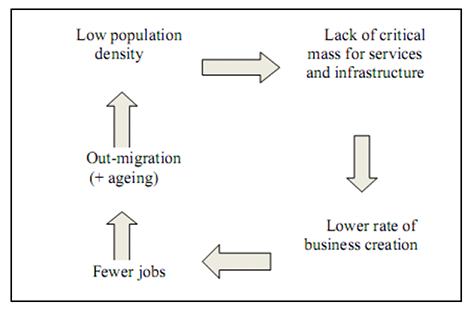
3.8.4 It is also the case that enhanced connectivity can lead to both people and firms relocating to the areas benefitting from the enhancements which in turn helps to diversify and develop the rural economy. Evidence from the evaluation of the Superfast Broadband Programme indicates that:
- the enhancements in connectivity stimulated in-migration, with the number of patients registered with GP surgeries in the areas affected increasing by between 3-6% on average and suggestions that the number of pupils in affected schools had increased[59].
- the programme led to an increase in house prices (of between £1,900 and £4,900)[60]
- a share of the local economic impacts identified were a result of businesses relocating to the area, with the number of businesses in the areas affected growing by 0.5%, suggesting that the programme may have encouraged the ‘dis-agglomeration’ of economic activity to rural areas[61]
3.8.5 Similarly, while not a rural area, research with the beneficiaries of Local Full Fibre Network funding undertaken in Blackpool in summer 2021 identified various investments in the area which were reliant on the connectivity provided. This included the establishment of the Winter Gardens Conference Centre and the Digital Nomad Hotel, which offers long term stays to professionals seeking to work remotely in a new location. The research identified “a diversification of the local economy and a reduction in the ‘brain drain’ to cities … as local residents can find skilled, professional jobs in their local area” as a potential long-term consequence of investment in digital infrastructure.[62]
3.8.6 While increased in-migration is likely to have positive impacts, particularly in terms of rural sustainability, there may also be negative impacts if there is no commensurate expansion in public service provision. For example, the evaluation of the Superfast Broadband Programme noted that increased in-migration to the areas affected by the improvements had appeared to place pressure on some public services such as access to GP care and that this may have partly off-set positive well-being scores amongst the population.[63]
3.8.7 It is noted that local improvements in business productivity as a result of enhanced efficiency can also be translated into an increase in overall economic output. However, where an increase in turnover is a result of firms moving from other locations, there will be a consequent loss of economic activity in these locations (displacement) and therefore such benefits would not translate into national level benefits.
3.9 Reduced Carbon Emissions
3.9.1 There is much discussion in the literature on the potential for enhanced digital connectivity to lead to reduced carbon emissions. In terms of broadband, the main mechanism identified for this is a reduction in travel as a result of home working and / or increased use of online services. For example, while the exact mechanisms involved are highly complex, a recent study conducted by the Carbon Trust found that home working led to reduced emissions on average in all six countries examined, with the carbon saving associated with avoided commuting and avoided office emissions outweighing any additional domestic energy consumption.[64]
3.9.2 Similarly, the 2023 evaluation of UK Gigabit Voucher Scheme found that the reduction in travel amongst households affected had reduced by over 500,000 miles per week, mainly as a result of working from home, resulting in substantial carbon savings.[65] After accounting for increased domestic energy usage and avoided energy consumption in the workplace, BDUK estimated that the Gigabit Voucher Scheme had led to a net reduction of 7,600 tonnes of CO2e over a three-year period.[66]
3.9.3 While improved digital connectivity has the potential to reduce emissions at the local level, it should be borne in mind that when the whole life cost of technology use is considered, the overall net impact is less clear. For example, the mining and extraction of raw materials for IT equipment emits significant greenhouse gases and contributes to increased e-waste.[67] In addition, cloud services and data processing are an increasing source of emissions.[68]
3.10 Quantification of Value for Money
3.10.1 The above sections referred to the quantification of some benefits in the context of the BDUK schemes and the rollout of the Superfast Broadband Programme. Three sample evaluations have been looked at in more detail from this perspective.
BDUK Vouchers Evaluation: Impacts and Value for Money Assessment (2023)
- Scheme outline: ‘Standard’ and ‘Project’ vouchers were used to connect premises in small areas in all parts of the UK, often benefitting individual premises, streets or neighbourhoods rather than contiguous areas covered by local area procurements (analogous to R100 voucher scheme). Ran from 2018 to 2021.
- Scheme spend: £125m to 2021
- Research Approach: 25,000 residential surveys sent, 5,000 received – before and after ratings of life satisfaction between 1-10 where the change is multiplied by £13,000 per annum (WELLBY)[69]; Use of ONS Business Structure Database (via ONS Secure Research Service) to analyse business characteristics in the study area and control area
3.10.2 In terms of quantification:
- Productivity gains: £37.5m (employment growth versus control groups – additional jobs found to be in higher productivity roles (wage premium) so factored up)
- Wellbeing benefits: £114-£195m (subjective wellbeing approach)
- Environmental £2m
- Total benefits of £153m to £235m giving BCRs of 1.22 to 1.88
BDUK Rural Gigabit Connectivity Hubs Evaluation, 2023
- Scheme outline: The Hub product invests in connecting remote public buildings, such as schools, GP surgeries and libraries, to gigabit-capable broadband. Connected 1,100 hubs
- Scheme spend: £28m to 2021
- Approach:
- Surveys sent to 508 English schools – 112 complete responses
3.10.3 In terms of quantification:
- Looking only at the changes in spending on educational technologies in school Hubs, there is evidence that benefits are on track to be greater than costs in monetary terms in that there is evidence of payback. The Hub schools are spending more on educational ICT than is the case in comparable schools and that this switching of resources, if maintained for five years, will be similar to the cost of the connection. This measure focuses only on one school activity and so would understate overall effects, not including other effects that the study finds but cannot be valued.
Evaluation of the Superfast Broadband Programme (Phase 3), 2023
- Scheme outline: The scheme aimed to provide superfast broadband coverage (or faster networks) in areas where availability remained below the 95 percent coverage target and extend superfast coverage beyond 95 percent where possible (analogous to R100 main contract). Covers period 2016-20 and 289k premises upgraded (269k being residential)
- Scheme spend: £273m
- Research Approach: econometric analysis that compared areas benefitting from the programme to other postcodes that were eligible for subsidies - Business Structure Database (BSD) via Office for National Statistics (ONS) Secure Research Service (SRS); house prices used as a proxy for social benefits; significant supply side analysis
3.10.4 In areas benefitting from Phase 3, the following benefits were estimated:
- Employment impacts (+0.88%)
- Turnover (+1.6%)
- Number of firms (dis-agglomeration) (+0.5%)
- Turnover per worker (+0.42%)
- Wages (+0.7%)
- Unemployment (unemployment claims fell by 9.8 per 10,000 premises affected)
- House prices (+£1,900 to +£4,900)
3.10.5 UK level benefits were estimated at:
- Productivity - £7.2m (2016/17 to 2021/22)
- Reduction in long term unemployment - £5.5m
- Social benefits (house prices) - £370m-£947m (assuming house price premium is a reasonable approximation of the average welfare gain associated with the programme)
- Short term BCR (2016-22) 1.76 to 4.57
3.10.6 In both cases where comprehensive quantification was undertaken, the social benefits are by far the dominant factor. The techniques to quantify these wellbeing benefits are much less well developed than the techniques to undertake economic impact evaluation and the caveats around this are recorded in both the above reports. Indeed, in both cases, had only the economic impacts been quantified, BCRs of less than one would have been achieved, and a very low value indeed would have emerged from the Superfast Broadband evaluation work.
3.11 Digital Exclusion
3.11.1 Digital Exclusion can be broadly defined as being unable to use the internet and benefit from digital technology. There are a range of factors which contribute to someone being digitally excluded. These can broadly be divided into the following categories:
- connectivity and coverage – a suitable connection being unavailable in the location where someone lives
- affordable access – an inability to afford the purchase costs for a device and / or the ongoing cost of the connection. The cost of assistive technology likely to present additional barriers to those with disabilities
- skills / confidence – a lack of digital skills / confidence to use the internet and / or use the internet safely.
- motivation – an inability to see the benefits of internet use / lack of desire to use the internet
3.11.2 Both skills / confidence and motivation can be impacted by a fear of things going wrong and / or concern around online harms and risks (such as scams).
3.11.3 While there is no comprehensive data source on digital exclusion, there are a number of datasets which provide an insight into which segments of the population are more likely to be digitally excluded. These include Ofcom’s data on adults’ media use and attitudes[70] and Lloyds Bank Digital Index.[71] Key points from each of these is set out below.
Ofcom’s 2024 Adults’ Media Use and Attitudes:
3.11.4 Ofcom’s 2024 Adults’ Media Use and Attitudes Report is published annually and is based on data from Ofcom’s Adults’ Media Literacy Tracker surveys. Key points from the 2024 report include:
- across the UK as whole 6% of respondents did not have the internet at home, with a higher proportion in this category in Scotland (8%)
- there are a range of reasons for not having the internet. While 1% said it was because they did not have broadband where they live and a further 1% said it was because broadband was too slow where they live, the reasons which achieved the highest responses related to motivation, skills / confidence and affordability, with:
- 69% stating that they did not need to go online or were not interested
- 17% stating that using the internet is too complicated
- 16% stating that someone else can go online for them if necessary
- 9% concerned about internet security / fraud / privacy
- 9% stating that getting connected is too complicated
- 9% stating that broadband set up costs are too high
- 8% stating that the monthly fixed price of broadband is too high
- those who did not have the internet at home were more likely to be over 65 and in the lowest social grades.[72]
Lloyds bank Digital Index
3.11.5 The Lloyds Bank Digital Index is published annually and is based upon the behavioural and transactional data of 1 million consumers. Key points from the ‘2023 UK consumer digital index’ include:
- 2.1 million people in the UK (4%) are offline[73]
- compared to the online users, those who do not use the internet are more likely to be older (with an average age of 59 compared to 43 for online users); retired (34% versus 7%), have a health condition (49% versus 23%), and have no formal qualifications (24% versus 7%)
- whilst the majority of those offline are over 50 (85%), there are still around 310,000 people (15%) under the age of 50 in this category – not all of the digitally excluded are therefore in the older age bracket
- 65% of the population have high or very high digital skills, with the proportion in this category increasing. However, 6.8 million people (13%) have ‘ultra-Low digital skills’ – despite skills increasing, there is therefore still a considerable segment of the population who do not have the required skills to use the internet effectively.
- Amongst those with ultra-low digital skills, two thirds are over the age 70 and almost three in five (59%) earn £20,000 per year or less. There is also a higher proportion of females compared to males in the ultra-low category (14% versus 12%)
3.11.6 It is evident that there are a range of factors which may contribute to someone not having the internet at home. While R100 aims to overcome issues associated with connectivity and coverage and may result in cost savings with respect to the connection for some, it does not tackle barriers associated with the affordability of the device and / or a lack of skills, confidence, and / or motivation. It is therefore likely that these factors will contribute to some people not taking up the connection provided via R100.
3.12 Conclusions
3.12.1 This chapter has reviewed the relevant literature on digital connectivity and identified a diverse range of potential benefits which cover multiple policy areas, including economic, health, education, environment, community, and other social goals.
3.12.2 The provision of such services in rural areas acts to mitigate the barriers to access such as long travel distances and can help improve equality of access between rural and urban locations. There is, however, the potential for some negative impacts, particularly where, for example, some groups in society get ‘left behind’ by digital improvement. The literature review has also demonstrated some of the challenges in measuring the potential social benefits of the improvements.
Contact
Email: sean.murchie@gov.scot