
Publication - Research and analysis
Scottish Economic Bulletin: October 2026
Provides a summary of latest key economic statistics, forecasts and analysis on the Scottish economy.
Economic Outlook
Energy and fuel prices are forecast to push inflation up to 4% at the turn of the year.
- There remains notable uncertainty in the economic outlook. In the near-term, developments in the Middle East and the implications for energy and fuel prices continue to be the key cost challenge for business and household activity. The prolonged disruption to global energy markets has maintained upward pressure on oil and gas prices, increasing downside risks to economic growth and raising the likelihood of higher and more persistent inflationary pressures.
- At a global level, the OECD forecast global GDP growth of 2.9% in 2026 (revised up from 2.8%) and 3.0% in 2027 (revised down from 3.1%). G20 headline inflation is projected to rise to 4.1% in 2026 before falling to 3.6% in 2027, with growth proving more resilient than expected despite higher energy prices. However, downside risks at a global level remain significant, particularly from further disruptions to Middle East energy exports, weather-related supply shocks and rising long-term bond yields.[27]
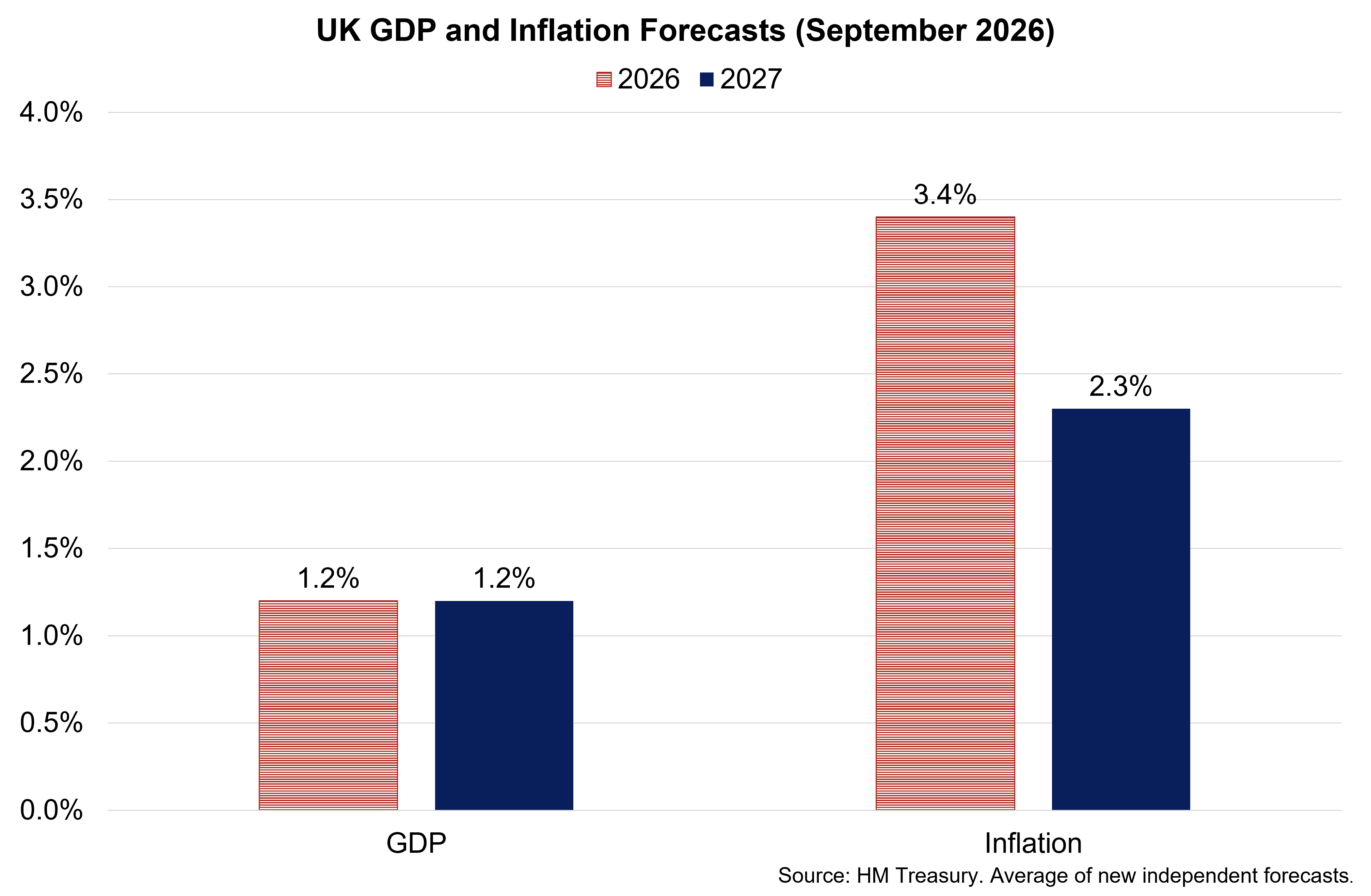
- At a UK level, the latest HMT average of independent forecasts from the first half of September shows UK GDP growth of 1.2% in both 2026 and 2027, revised up from the July projections of 1.0% growth in each year.[28] The OBR will publish updated economic and fiscal forecasts alongside the UK budget on 28th October.
- At a Scotland level, the FAI Economic Commentary for Q3 2026 forecasts similar GDP growth in Scotland of 1.1% in 2026 and 2027, rising to 1.2% in 2028, having revised up forecasts slightly from June.[29] The Scottish Fiscal Commission will published updated economic and fiscal forecasts alongside the Scottish budget on 3rd December.
- UK inflation is forecast to rise in the second half of this year and into the start of 2027. The Bank of England's latest assessment in September revised upwards its near-term inflation outlook, reflecting the recent increases in oil and gas prices since July. Inflation is now expected to rise to around 3.75% in Q4 2026, up from the 3.2% peak projected in their July central forecast, before increasing further to slightly above 4% in Q1 2027.[30]
- More broadly, the HMT average of independent forecasts from the first half of September shows inflation rising to 3.4% in Q4 2026 before easing back to 2.3% in Q4 2027.
- Overall risks to the inflation outlook have increased in recent months and remain tilted to the upside. GDP growth remained resilient in July, however the persistence in inflationary pressures, particularly in fuel and energy prices, continue to be reflected in business concerns and consumer sentiment, and remains a key risk to the growth outlook in the second half of the year.
Contact
Email: economic.statistics@gov.scot