
Publication - Research and analysis
Scottish Economic Bulletin: October 2026
Provides a summary of latest key economic statistics, forecasts and analysis on the Scottish economy.
Labour Market
Unemployment has risen to 5.1% and median earnings annual growth has softened.
Employment, Unemployment, and Inactivity
- The Labour Force Survey (LFS) recorded Scotland’s unemployment rate at 5.1% in the three months to July (UK: 4.9%) which had risen 0.6 percentage points (p.p.) over the quarter and 1.7 p.p. over the year.
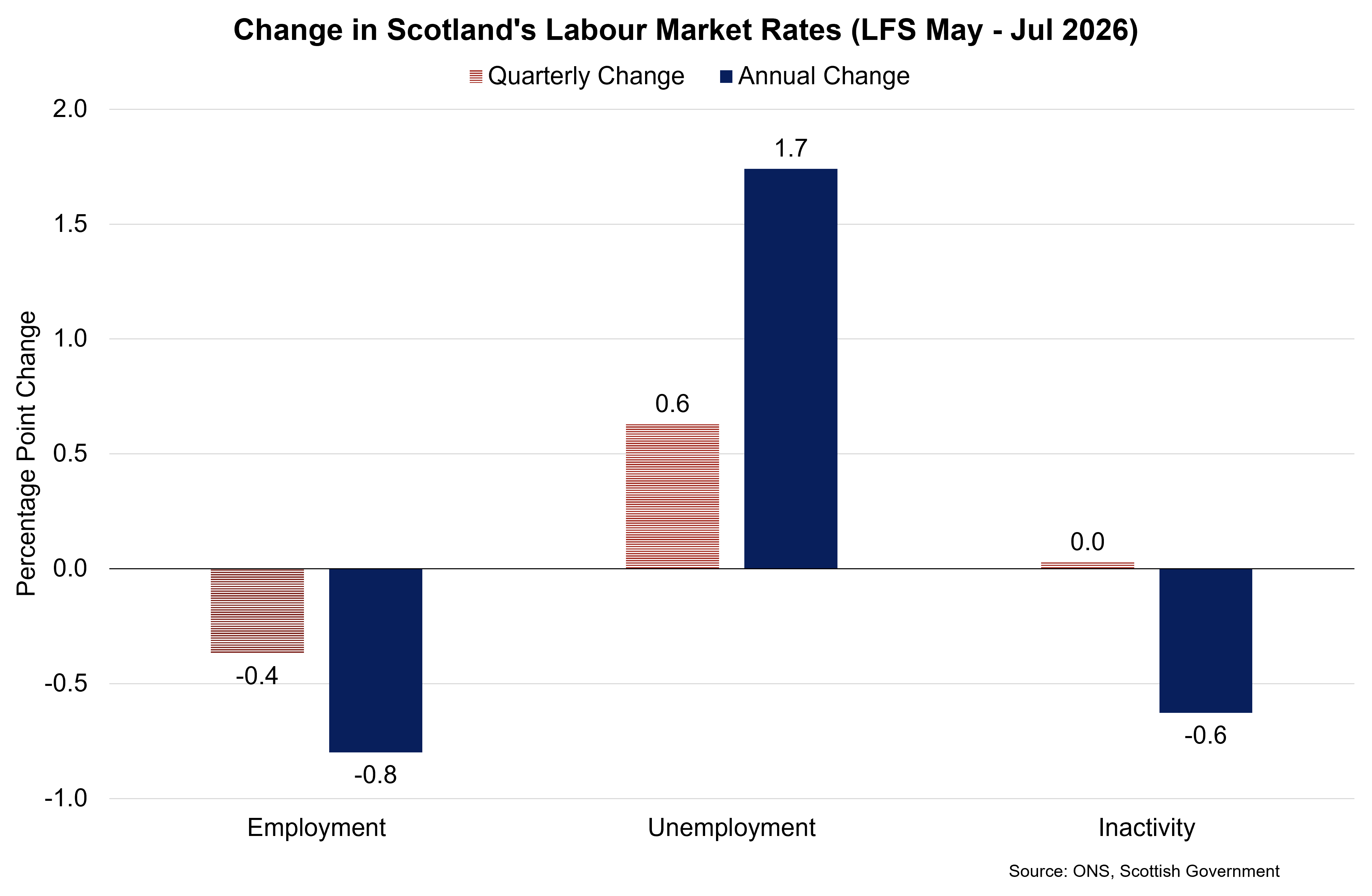
- Alongside this, the employment rate fell 0.4 p.p over the quarter to 73.7% and is 0.8 p.p lower compared to last year, while the inactivity rate remained unchanged over the quarter at 22.2% and is 0.6 p.p lower on an annual basis.[21]
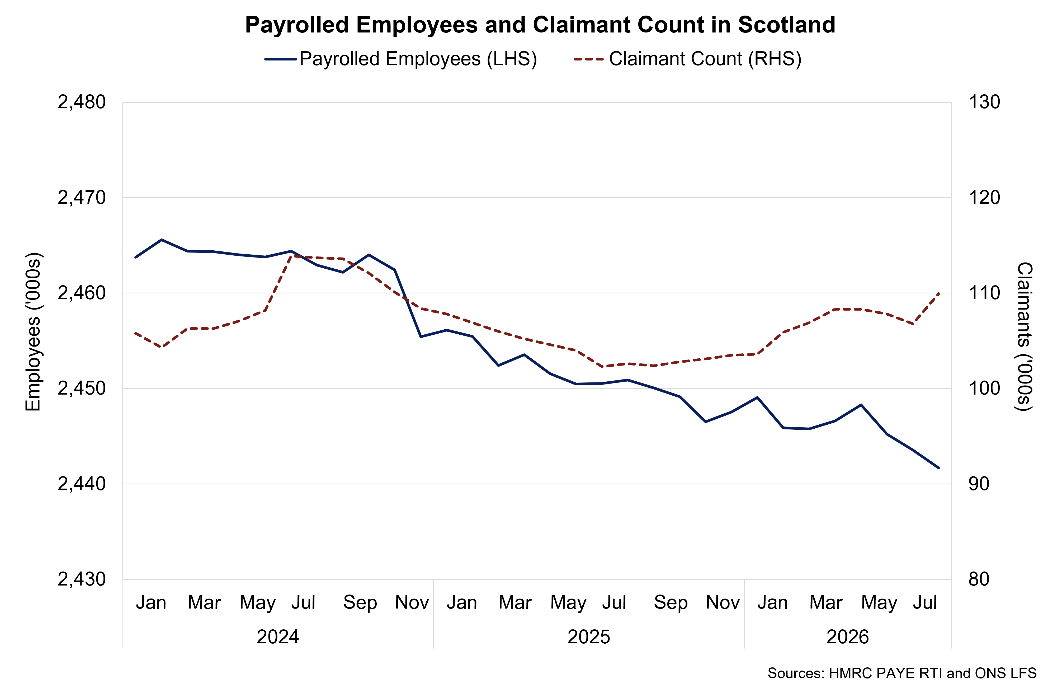
- The fall in employment over the past year is also reflected in Pay As You Earn (PAYE) Real Time Information data, which shows that the number of payrolled employees stood at 2.44 million in August. The number of payrolled employees fell slightly over the month (down 2,000), and is 0.4% lower than a year earlier (down 9,000) to its lowest level since the start of 2023.[22]
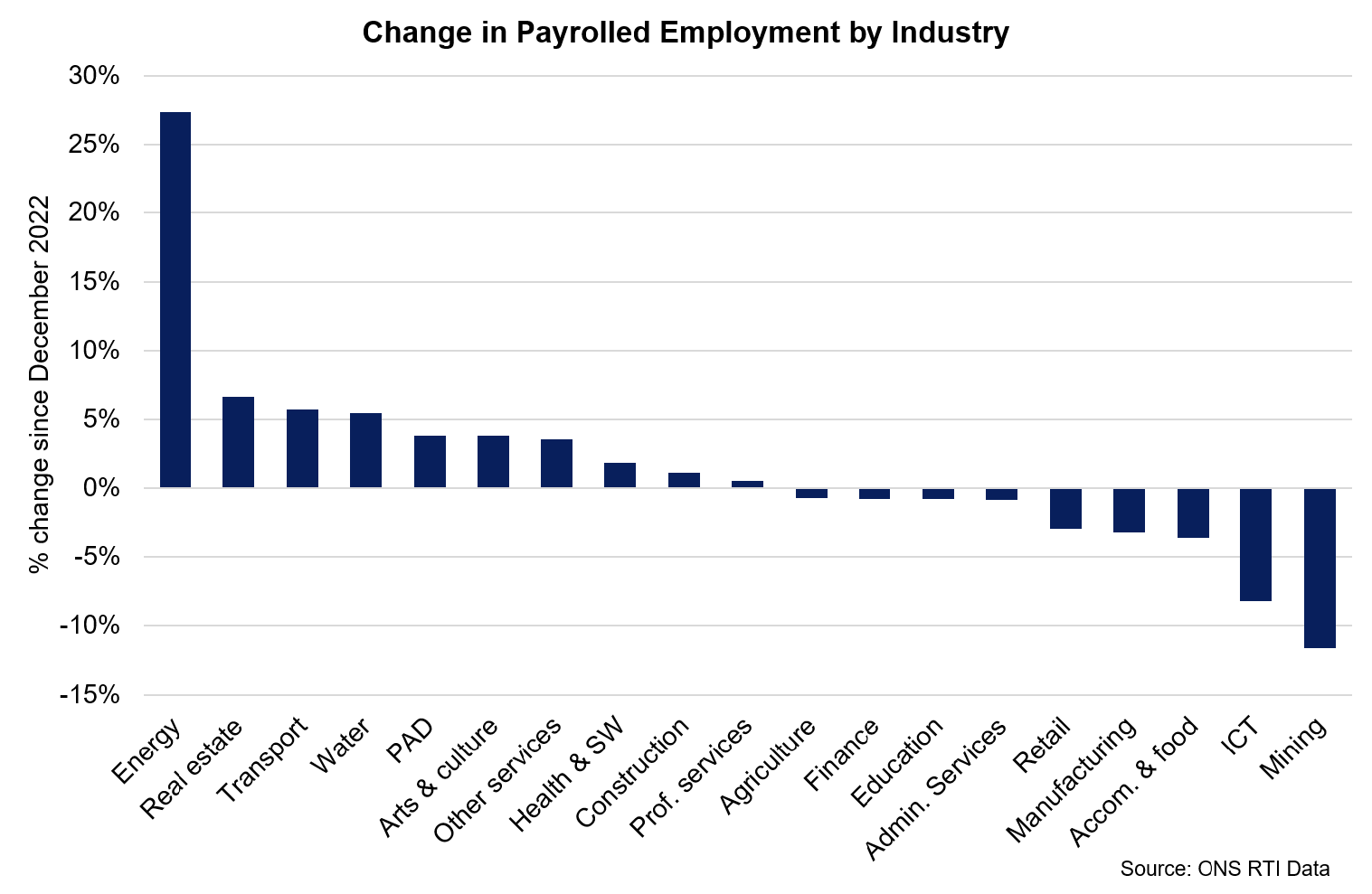
- Since the start of 2023 the number of payrolled employees in Energy Production and Supply has increased 27%, while the numbers in Mining and Quarrying and Information and Communication (ICT) have fallen by 12% and 8% respectively.
- Furthermore, the rise in unemployment is reflected in Scotland’s claimant count unemployment rate, which stood at 3.8% in August (UK: 4.4%). Over the month, the number of people claiming unemployment-related benefits increased by 2.6% (2,800 people) and rose by 7.1% annually (7,300 people) to 110,000, the highest level since November 2024.[23]
Recruitment Activity
- Labour market softening is also evident in recruitment activity, with ONS Textkernel data showing that the number of online vacancies in August was 7.1% below the level recorded a year earlier.[24]
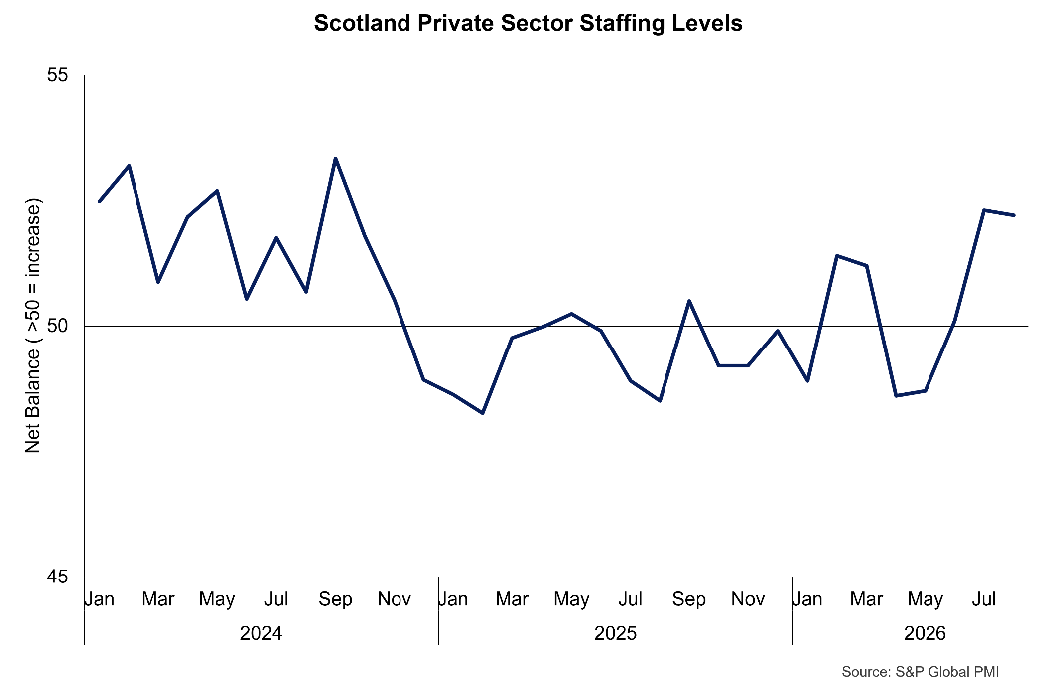
- However, the latest PMI business survey for Scotland indicates that private sector staffing increased in August for a third consecutive month, with the employment index at 52.2 (50 = stable employment levels). This follows a period of falling staffing levels over the past 18 months.[25]
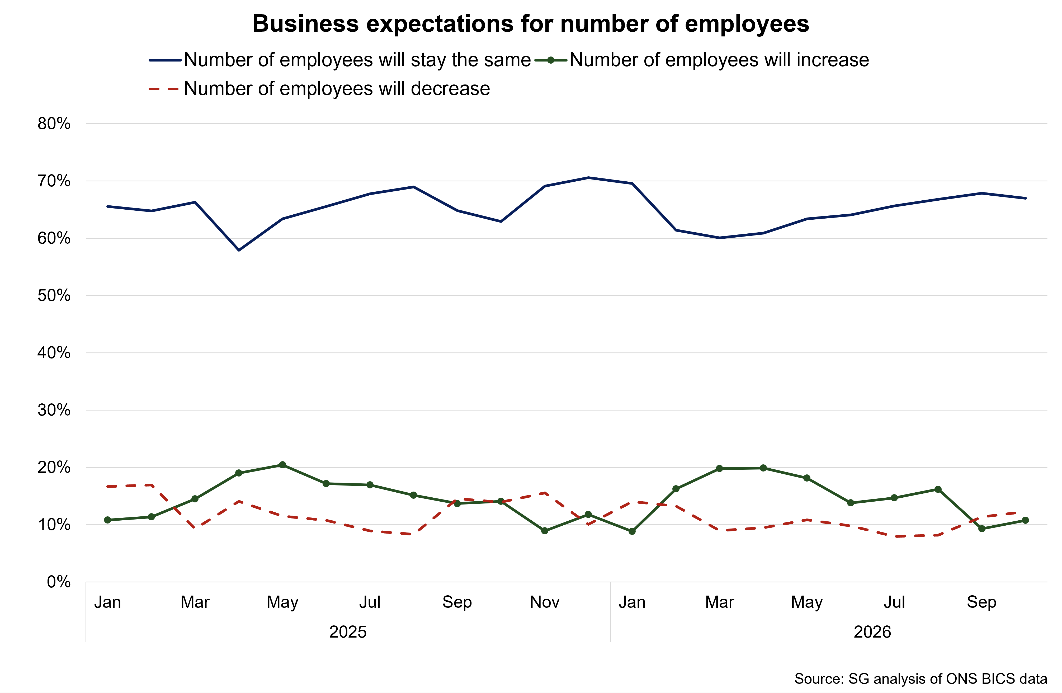
- Looking a month ahead, BICS data points to a broadly stable labour market, with 67% of businesses expecting employee numbers to remain unchanged in October and slight increases in both the shares of businesses expecting the number of employees to increase (10.8%) and decrease (12.3%). In the context of the loosening labour market over the past year, businesses remain cautious in their recruitment activity.
Earnings
- Against a backdrop of softer labour market conditions and lower inflation, earnings growth eased through late 2025 before stabilising during the first half of 2026. However, latest data indicates further moderation in the pace of pay growth across July and August.[26]
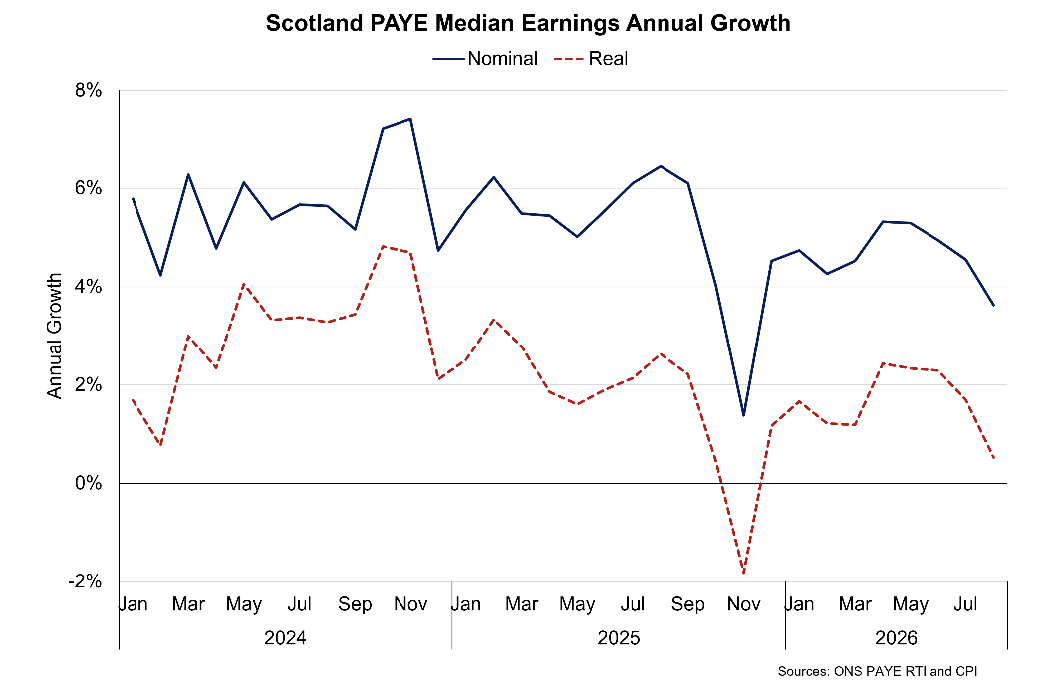
- Nominal median monthly PAYE pay in Scotland (£2,686) grew by 3.6% on an annual basis in August, down from 4.5% in July. In real terms, earnings growth eased to 0.5%, notably below the average annual rate since the start of the year (1.7%).
Contact
Email: economic.statistics@gov.scot