
Publication - Research and analysis
Scottish Economic Bulletin: October 2026
Provides a summary of latest key economic statistics, forecasts and analysis on the Scottish economy.
Business Conditions
Business activity indicators strengthened during the third quarter, however energy price concerns and uncertainty continue to weigh on business optimism.
Business Activity
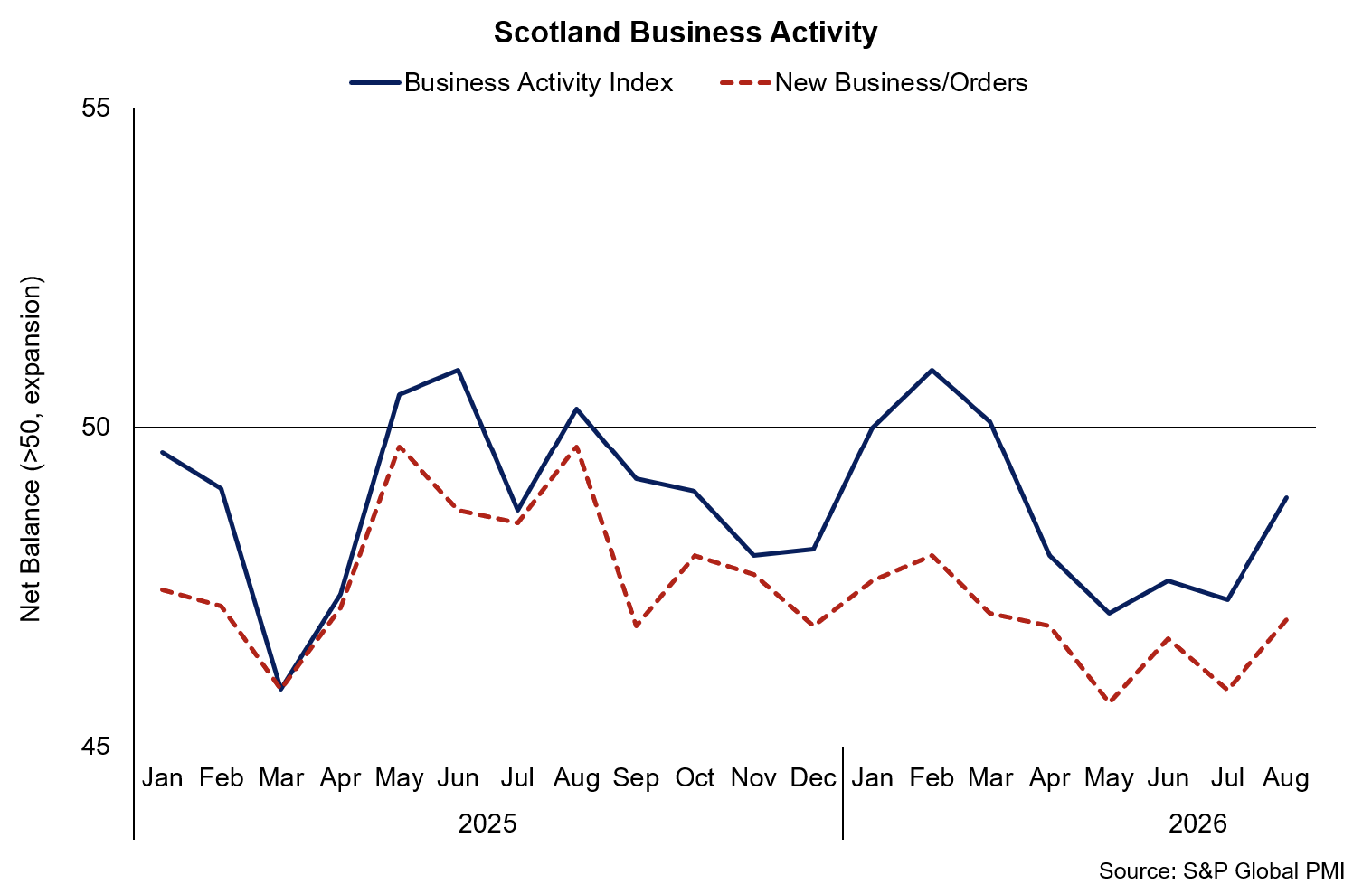
- The monthly PMI business survey indicates that business activity in Scotland continued to fall in August for a fifth consecutive month with the index at 48.9 (a reading below 50 indicates contracting business activity). The survey indicates that falling new business orders and weak demand partly underly the current weakness in activity.
- However, despite remaining below 50, the index has risen to its highest level since March indicating that the rate of contraction has moderated from recent months and is reflective of further positive growth in staffing levels and an increase in business optimism. Input cost inflation has also moderated from earlier in the summer.[13]
- Latest Business Insights and Conditions Survey (BICS) data for August similarly continues to indicate challenging demand conditions. The share of businesses reporting an increase in demand over the month rose to 14.5% (up from 13.4%) while the share reporting a fall in demand rose to 15.2% (up from 13.8%). Almost half of businesses (49.1%) reported that demand stayed the same.
- This varied by sector in August, with businesses in the accommodation and food sector more likely to report an increase in demand than a decrease (25.8%) while 12.6% of manufacturing businesses reported an increase in demand compared to 28.7% that reported a decrease.[14]
Business Concerns
- The latest BICS data from September further shows that falling demand of goods and services remains the most reported main business concern for the coming month (16.3%) with a rising share of businesses reporting this over the second and third quarters.
- The share of businesses reporting energy prices as a main concern fell over the month (12.1%, down from 14.6%) and is lower than in May. However concern has risen again since August and likely reflects the pick-up in wholesale energy prices over this period and ongoing uncertainty in the Middle East. When asked specifically about how concerned they are about energy prices, concern remains broad based across industries, but is most notable in Transport and Storage, Construction, Manufacturing and Accommodation and Food Services.

- Business concerns regarding inflation of goods and services more broadly also increased in September (9.3%), likely reflecting the increasing risk that the ongoing escalation in energy prices will increasingly feed through to wider prices directly and indirectly in the coming months.
Business Costs
- Businesses are continuing to navigate a challenging cost and pricing environment in which indicators of cost pressures have remain elevated, albeit moderated during the summer months. However, latest data indicate pressures may have strengthened again driven by the persistence of higher fuel and energy prices.
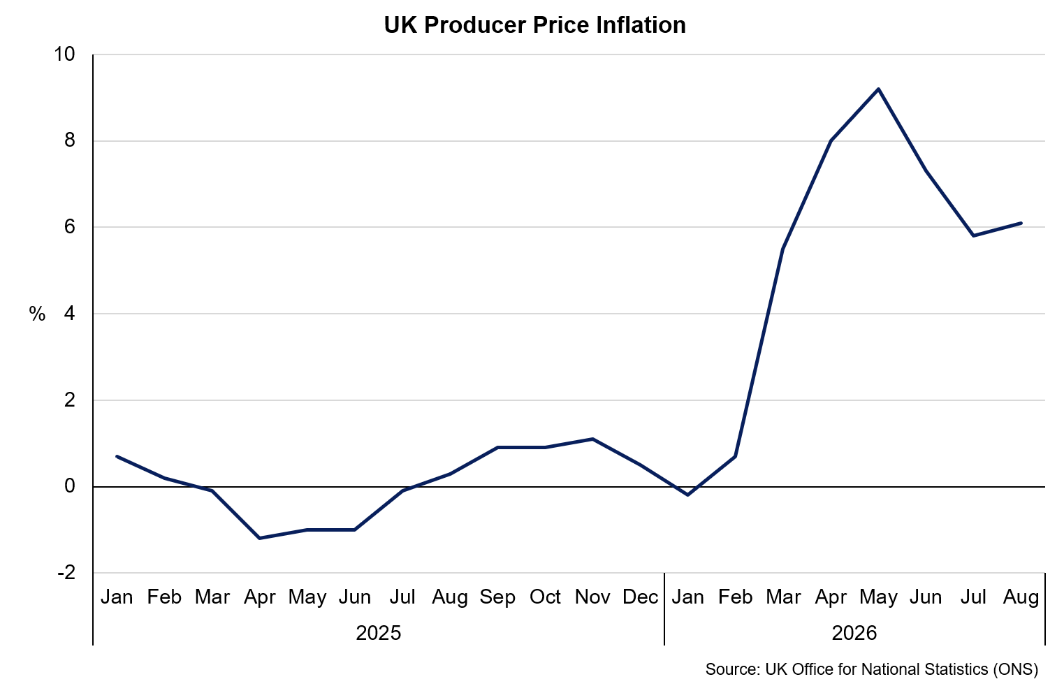
- UK producer input prices rose by 6.1% annually in August, up from 5.8% in July, however has moderated from 7.3% in June. The increase in crude oil prices over the past year (26.7%) remains the main driver of the annual input price inflation rate, with the pick-up in August reflecting a rise in produced material, which includes refined petroleum products (+2.1%).[15]
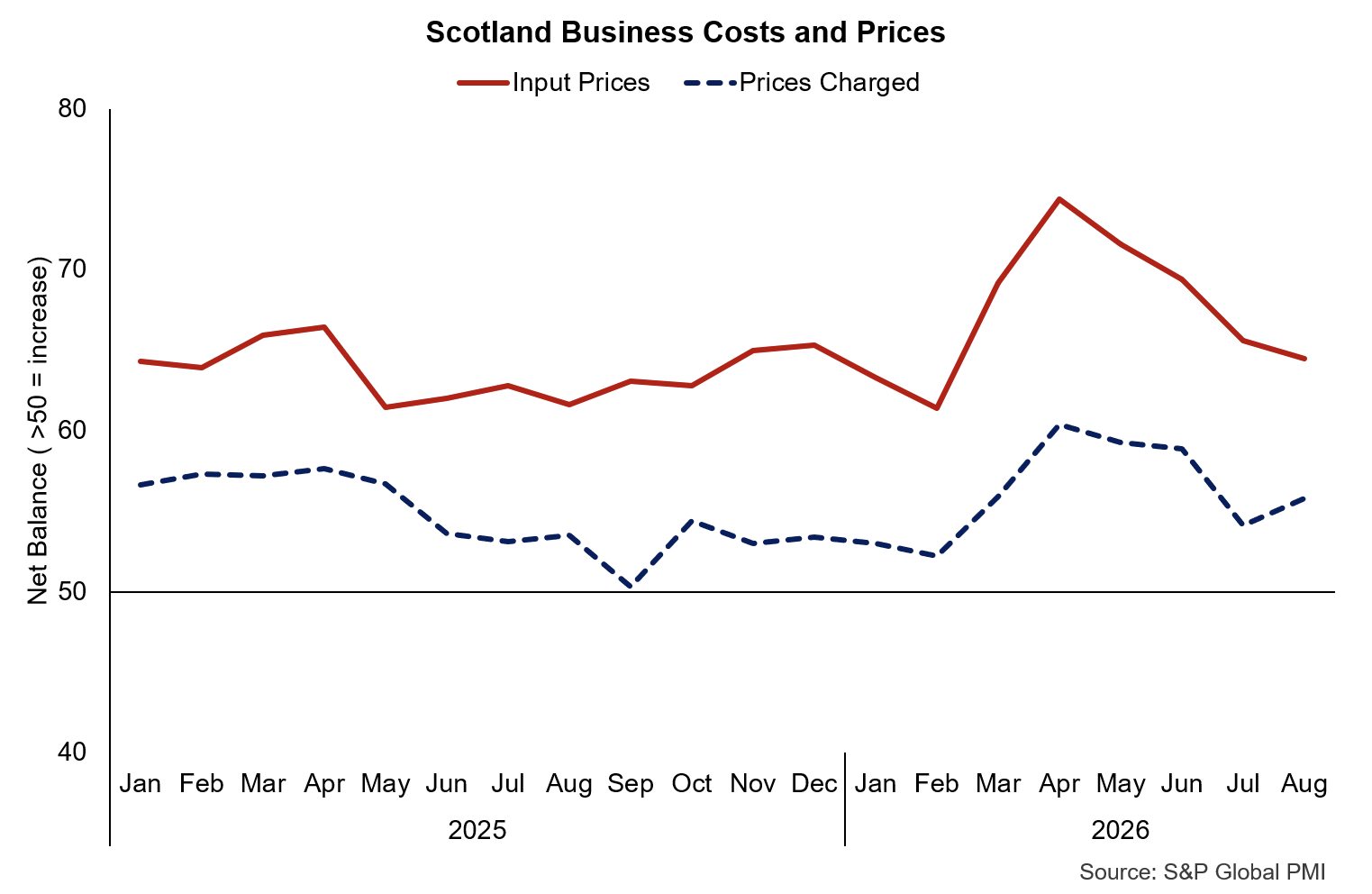
- The PMI business survey for Scotland also indicated that business input cost inflation remained elevated, however eased at the start of the third quarter and into August with the input cost indicator falling to its lowest level since February. In contrast, output price inflation picked-up in August as businesses increased the rate at which they passed through higher input costs.[16]
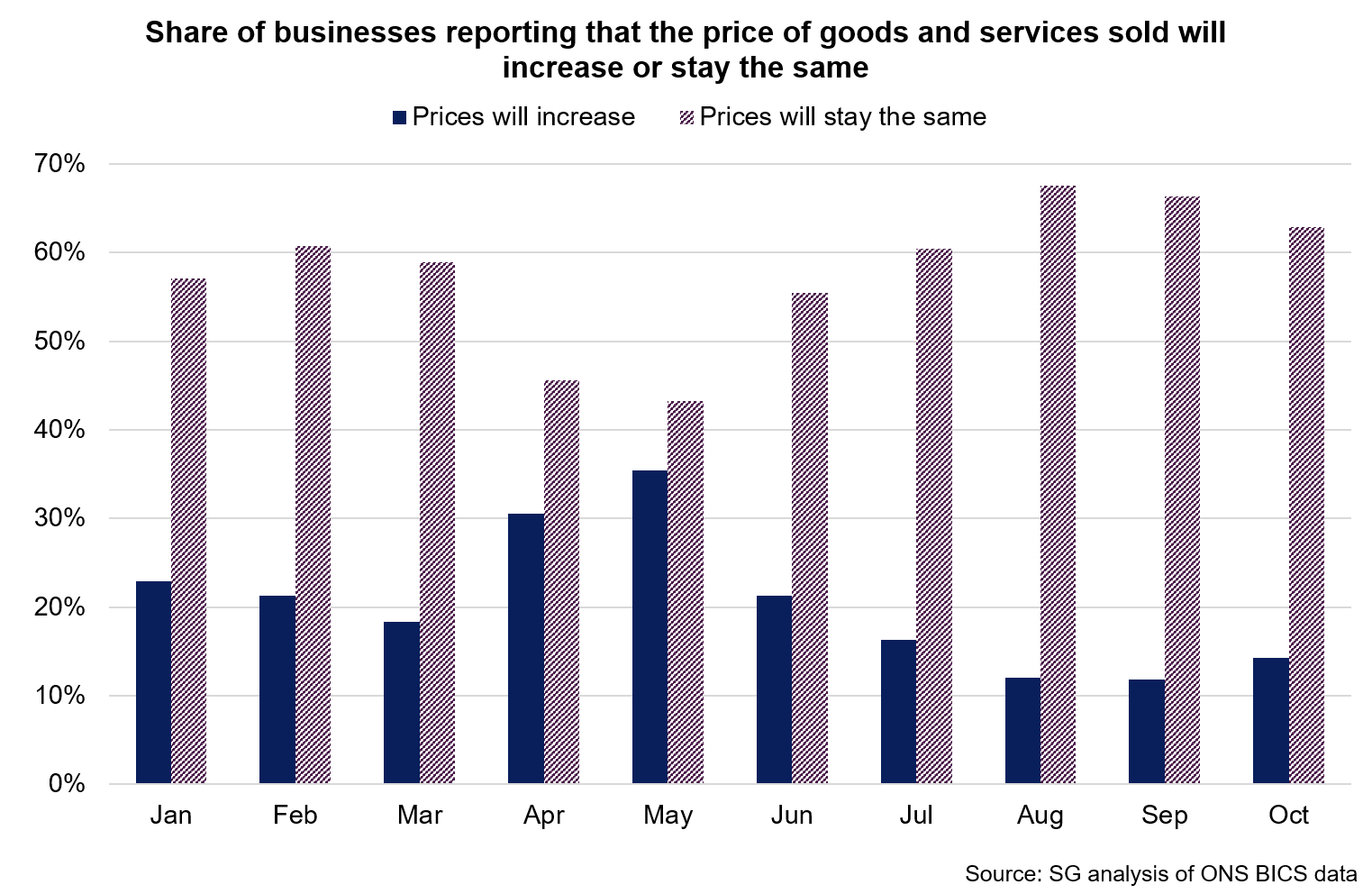
- Furthermore, BICS data from September shows that the share of firms reporting that they expect to raise prices on goods and services sold, increased (14.3%, up from 11.8% in August) while there was a fall in the share expecting prices to remain unchanged (62.9%, down from 66.4%).
- For businesses expecting to increase prices, labour costs remain the main driver with 30.5% reporting it as a factor, albeit this has fallen from its recent peak in April (45.3%). However, the sharpest increase in September as a factor for price rises was energy prices, with the share of reporting businesses rising from 27.1% to 30.5%, the highest share since June.

Business Optimism
- Uncertainty in the economic outlook remains elevated, reflecting the ongoing uncertainty and inflationary risks from the conflict in the Middle East. While latest indicators of business activity strengthened in the third quarter, forward looking sentiment and optimism have been mixed in recent months and continue to reflect that uncertainty.
- The PMI business survey for Scotland business optimism indicator strengthened for a fourth consecutive month in August to its highest level since February, indicating an increasing net balance of businesses expect business activity growth over the next 12-months. This is reflective of recent improvements in new business and cost pressure indicators.[17]
- The Scottish Business Monitor for Q3, also reported that businesses on balance expect positive sales growth in the next 6-months, however the indicator fell from 10% to 3% indicating an increased level of caution by businesses.[18]
- Latest BICS data also shows that there has been a further decrease in the share of businesses expecting performance to improve (26.7%, down from 30.5% in June), while there was an increase in the share of businesses reporting not sure (19.5%, up from 16.1%).
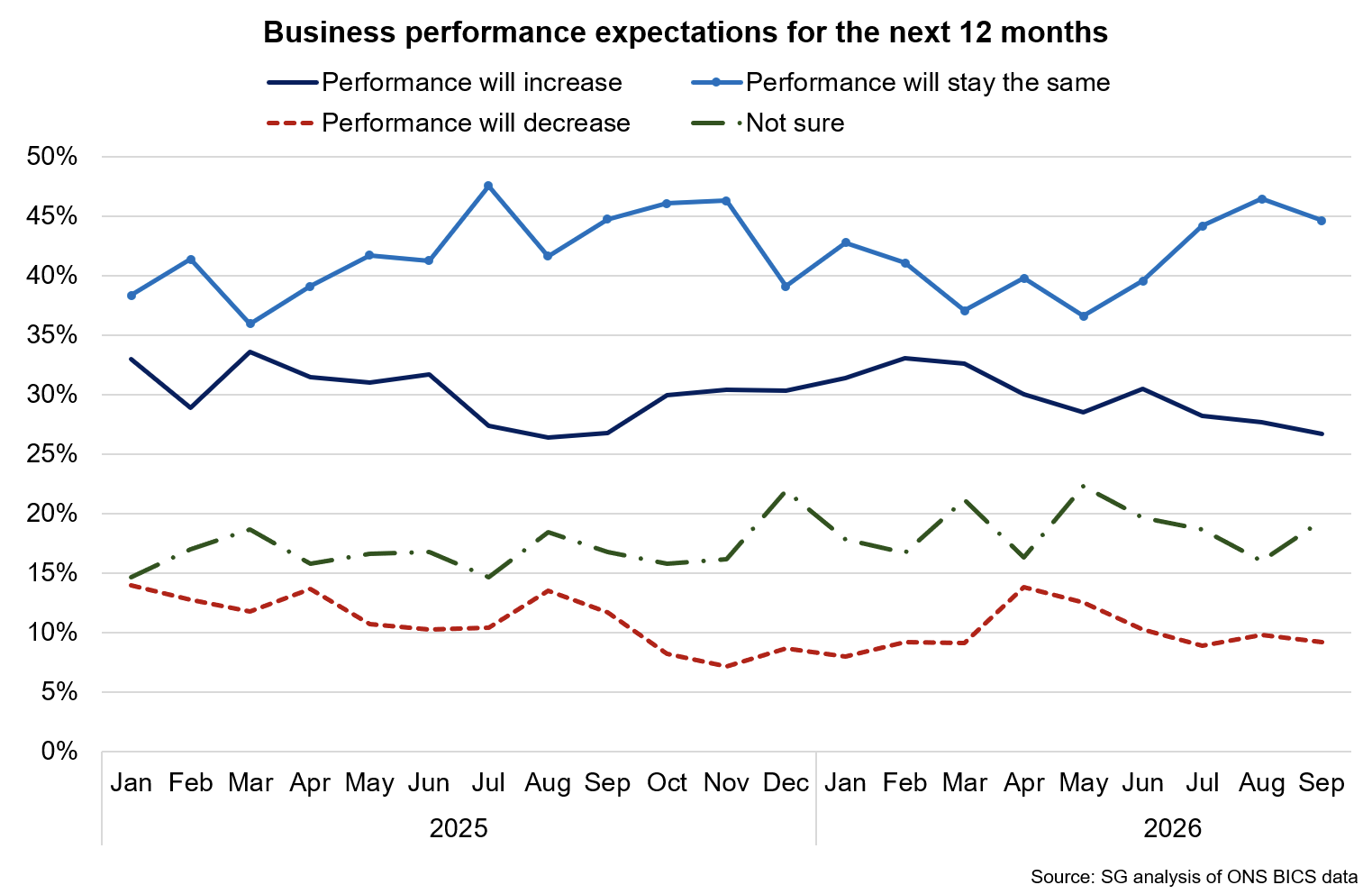
- The Scottish Business Sentiment Index (BSI) provides a real-time measure of business confidence in Scotland by analysing sentiment in news articles related to corporate and industrial developments. Latest data indicates that the BSI fell in August and September to -0.39 having improved over Q2, and has fallen back below the average for 2025 (-0.24).[19],[20]

Contact
Email: economic.statistics@gov.scot