
Publication - Research and analysis
Scotland's wellbeing economy: July 2025
This report describes how the Scottish Government is taking a broader view of what it means to be a successful economy, society and country. It describes our approach to wellbeing and references various practical examples of where this approach has been delivered in Scotland and internationally.
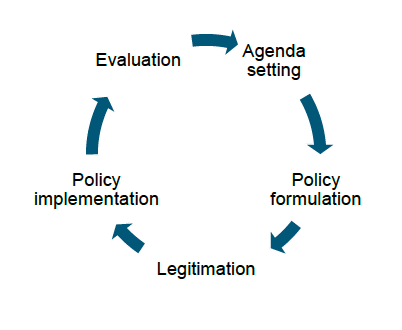
Annex A: Applying wellbeing economy principles into the policy cycle
This Annex provides an example of how different elements of the 4P’s framework could be integrated through a policy cycle to drive progress towards a fair, green, growing wellbeing economy.
Evaluation
- People-powered: engage individuals and communities in the evaluation process to inform understanding of impact in lives.
- Pre-distribution / Prevention: evaluate success based on wellbeing outcomes including in economic prosperity, environmental sustainability and inequality. Also quantify the impact on preventing negative environmental/social outcomes, or further reactive spending, and that resources and opportunities are distributed equally.
- Purpose: regularly review policy and delivery to maintain focus on achieving outcomes and adapt to changing circumstances and evidence.
Agenda setting
- Purpose: set out clearly the intended outcomes and how they contribute to the NPF, aligned with NSET’s vision for a Wellbeing Economy focusing on equality, sustainability and prosperity for current and future generations.
- People-powered: engage with individuals and communities to reflect people’s needs and improve outcomes agenda.
Policy implementation
- Purpose: agree what ‘success’ will look like and identify suitable measures to monitor delivery, including relevant wellbeing indicators and impacts on different groups of people.
- Prevention: utilise proactive measures when implementing policies to avoid the need for further policy intervention in the long-run which can also lead to increased policy resilience.
- People-powered: work with delivery partners and empower communities to have ownership of policies and shape delivery to local economic needs.
Legitimation
- People-powered: meaningful engagement and consultation to build broad public support through ongoing communication with different stakeholders and individuals impacted by the policy.
- Purpose: complete all relevant policy impact assessments, long-term fiscal forecasts, and liaise with other parts of SG to ensure policy coherence.
Policy implementation
- Purpose: agree what ‘success’ will look like and identify suitable measures to monitor delivery, including relevant wellbeing indicators and impacts on different groups of people.
- Prevention: utilise proactive measures when implementing policies to avoid the need for further policy intervention in the long-run which can also lead to increased policy resilience.
- People-powered: work with delivery partners and empower communities to have ownership of policies and shape delivery to local economic needs.
Policy formulation
- Prevention: identify your policy’s connection to root causes of inequality, poverty and climate change and seek to build in actions that will prevent long-term negative outcomes.
- Pre-distribution: explicitly consider how your policy can enable resources and opportunities to be more fairly distributed, particularly for disadvantaged and under-represented groups prior to the need for further government intervention (e.g. transfers and taxes).
- Purpose: working across different government departments to break silos and develop policies that improve wellbeing outcomes.
Contact
Email: james.miller@gov.scot