
Building regulations - new domestic buildings: identification and assessment of energy standard improvements
Technical analysis to consider the implications of modelling method, dwelling specification and heating technology up key regulated metrics and costs to both the developer and occupier, to represent the emerging building stock in Scotland.
Part of
7. Technical and CAPEX Modelling Results
7.1 Delivered Energy Rate
7.1.1 Air Source Heat Pump
7.1.2 Direct Electric
7.1.3 District Heat Network
7.2 Regulated Fuel Cost
7.3 Space Heat Demand
7.3.1 Air Source Heat Pump
7.3.2 Direct Electric
7.3.3 District Heating Network
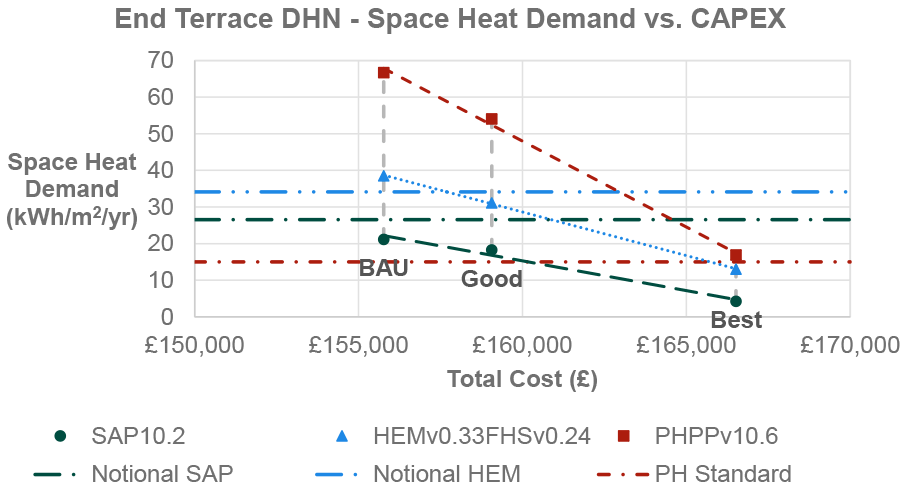
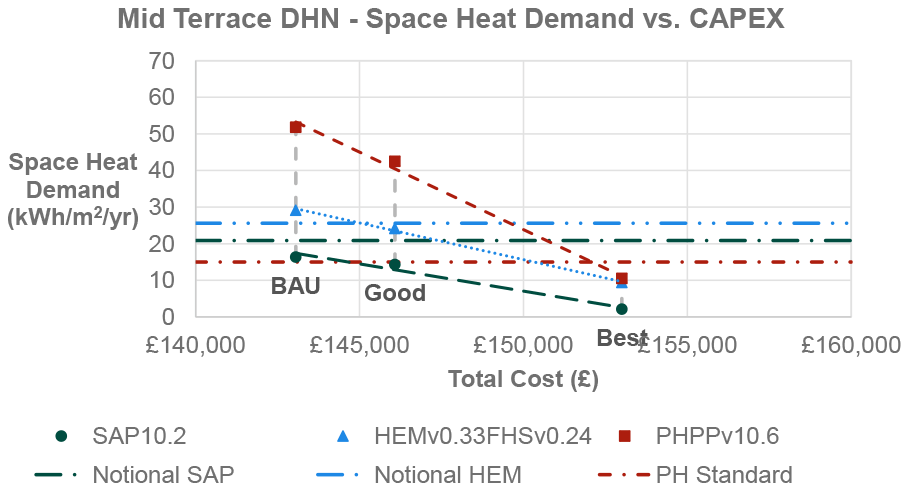
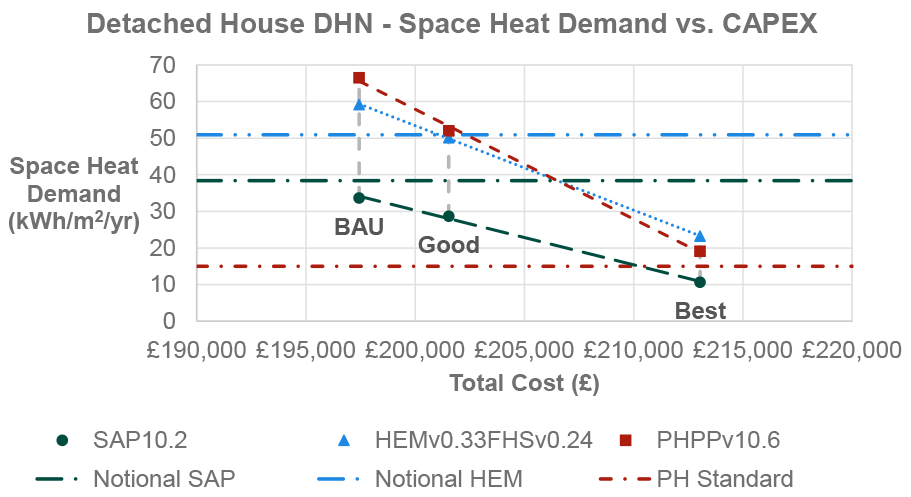
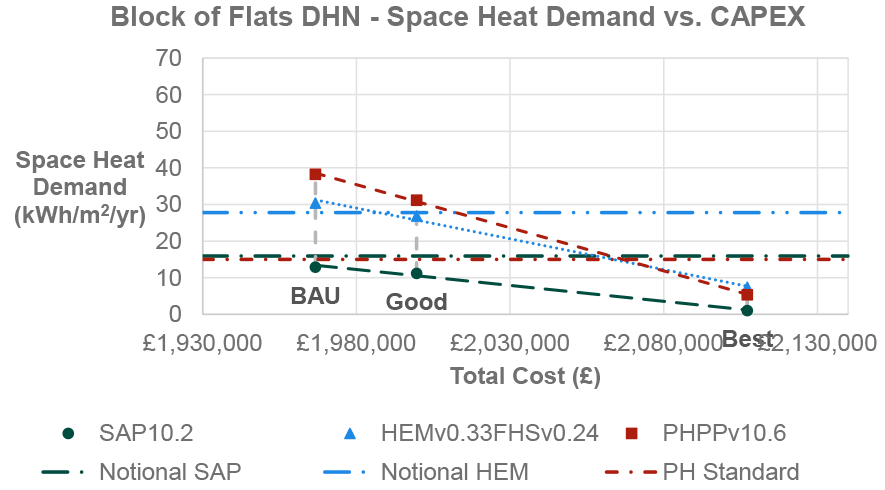
Tabular representation of the data presented in this section can be found in Appendix D.
7.4 Discussion
7.4.1 Delivered Energy Rate vs CAPEX
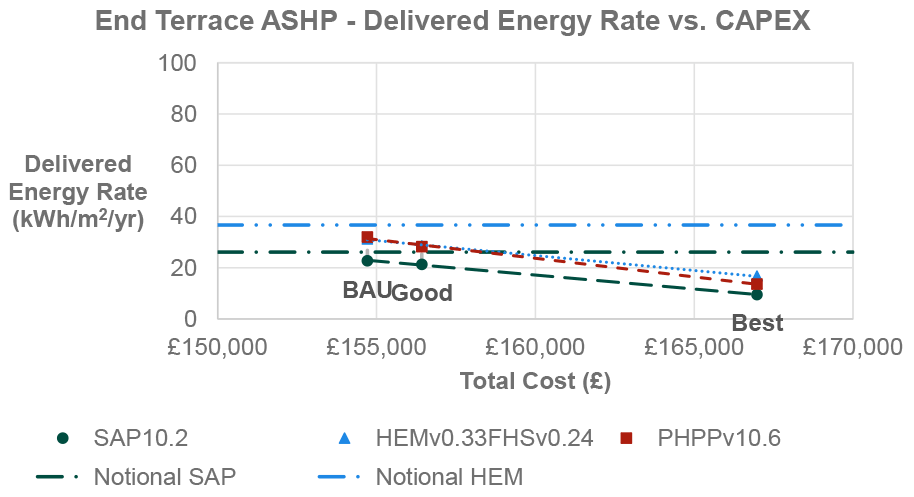
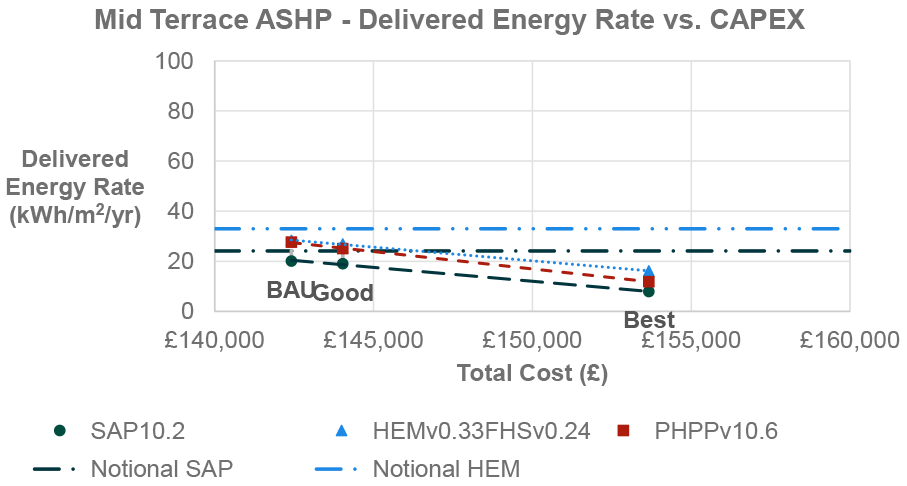
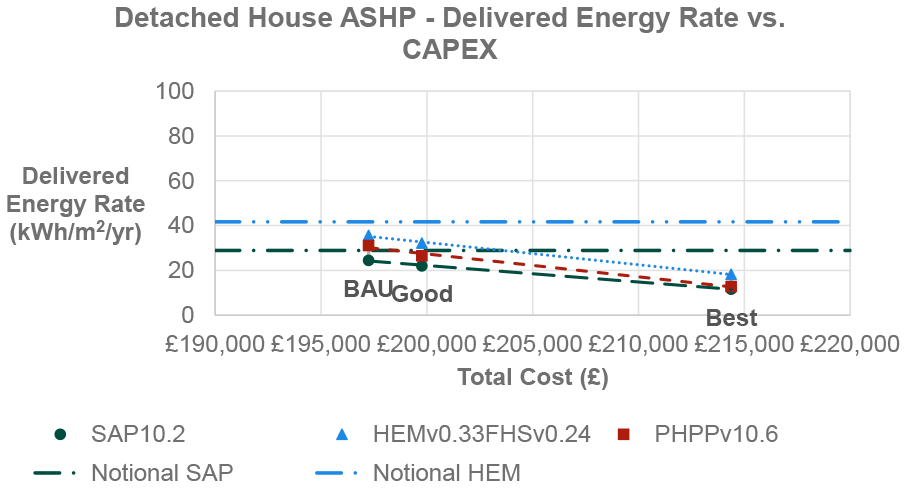
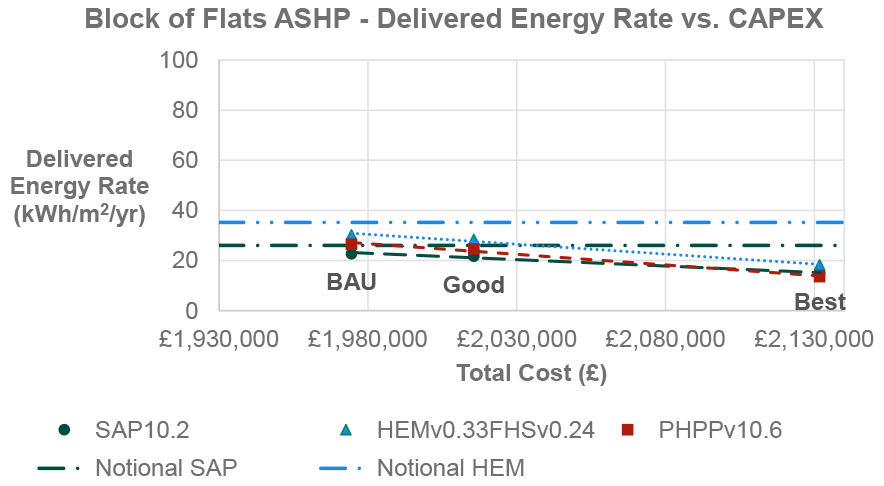
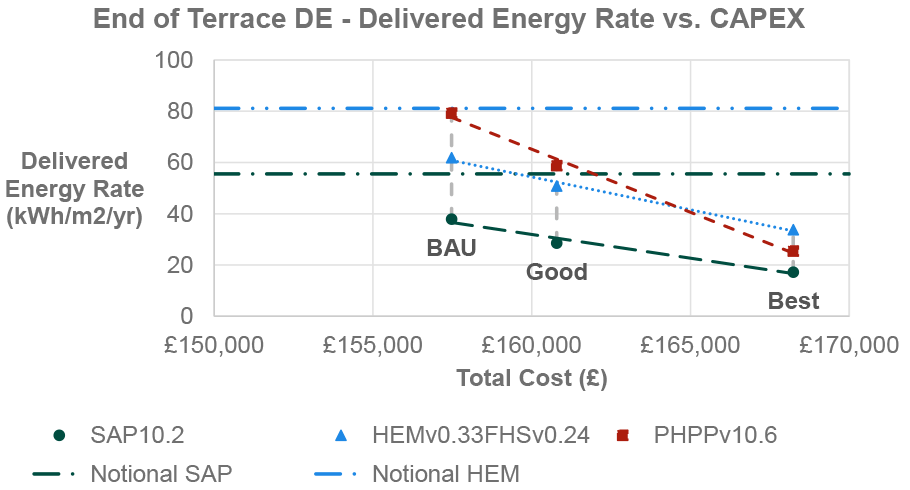
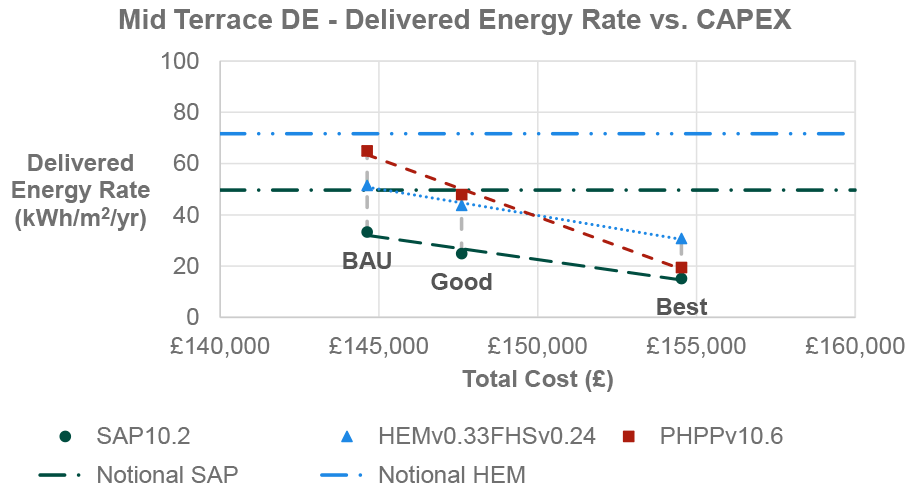
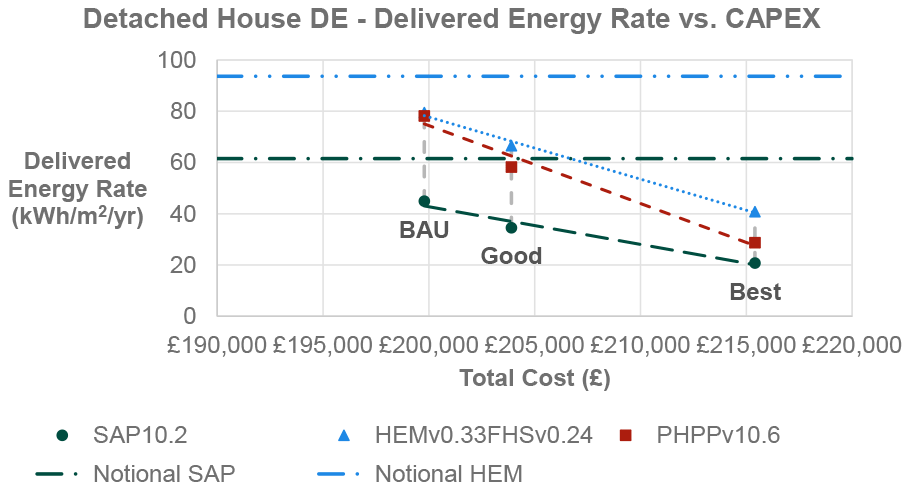
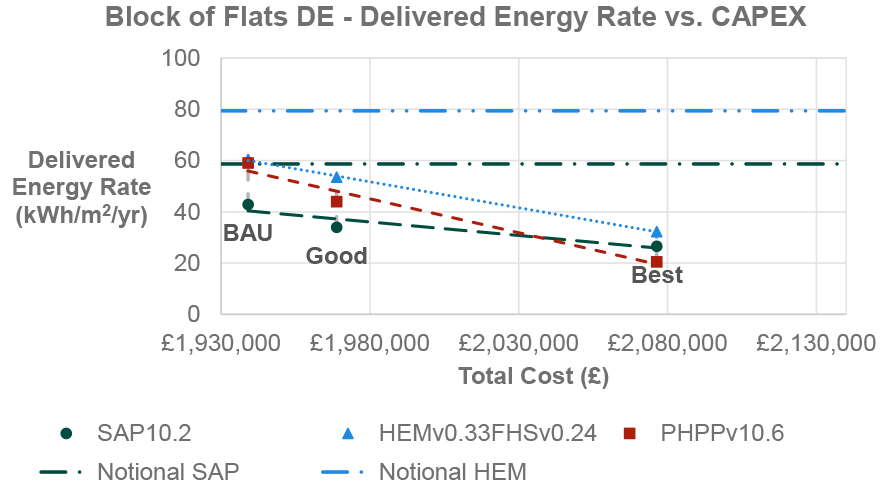
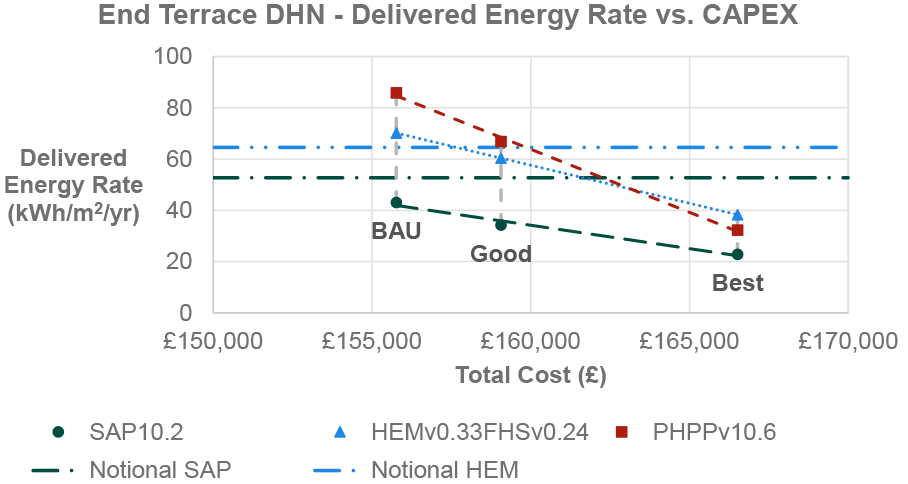
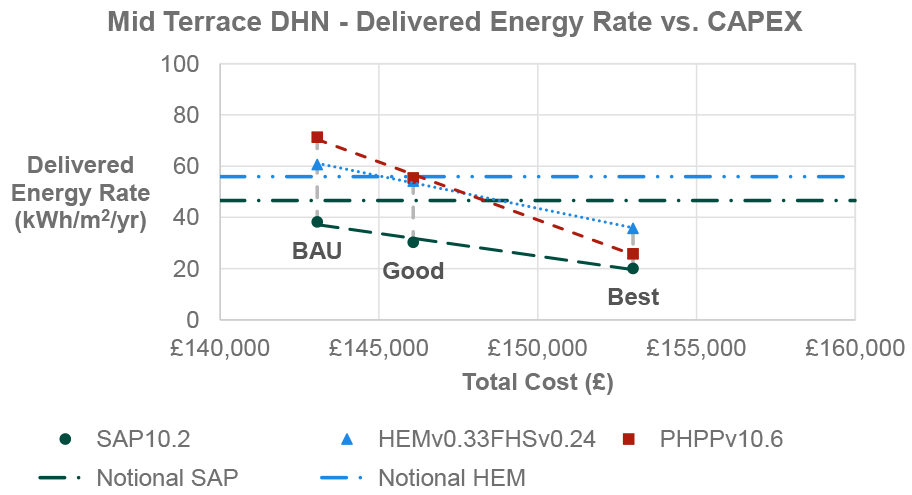
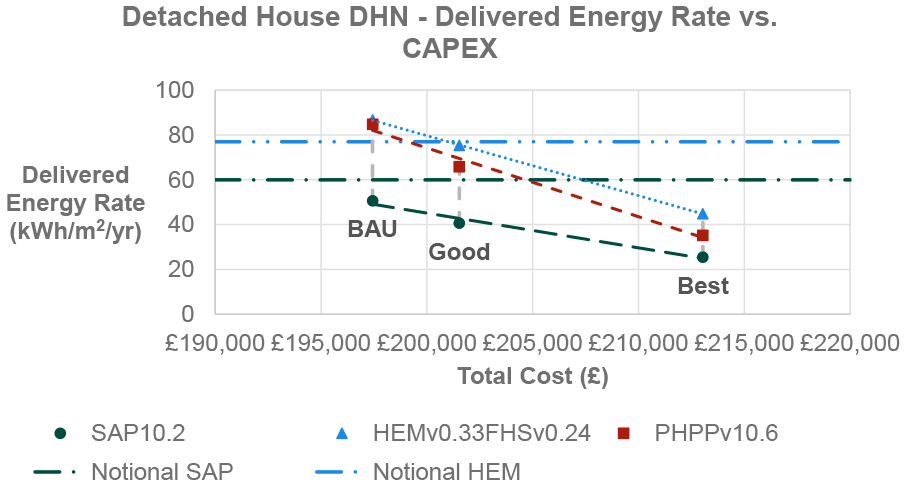
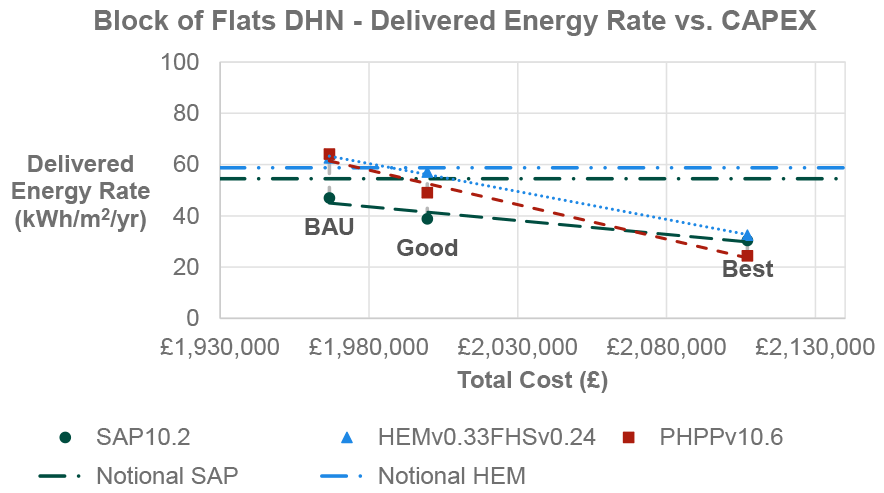
SAP is shown to consistently calculate a lower DDER compared to the HEM and PHPP. This trend is also true for the notional TDER, where the SAP calculated TDER was lower than the HEM for all archetypes. The disparity in both DDER and TDER is noted to a much greater degree when comparing the DE and DHN, indicating differences in the predicted demands between SAP and HEM are more apparent when heating system efficiency is lower, as is the case of the DE and DHN.
The HEM calculated the highest DDER & TDER. Results from HEM and PHPP calculations are very similar across all specifications when representing the performance of the detached house and block of flats, and for all archetypes with the ASHP. This may be down to the differences in the methodologies cancelling out. For example, the internal heat gains from HEM were higher than those applied in PHPP; however, PHPP predicted lower hot water consumption resulting in similar levels of delivered energy. There was a notable difference in Solar Gain for the end terrace and mid terrace archetypes between HEM and PHPP. This appeared to be driven by the difference in shading calculations which was more sensitive for north facing glazing, which the end terrace and mid terrace archetypes had a higher proportion of. This resulted in the PHPP calculated DDER for the DE and DHN in end terrace and mid terrace being higher than the HEM, opposing the trend seen for the other archetypes.
For the BAU, SAP demonstrates an improvement on the TDER for all archetypes; this was expected as it was the basis in which the BAU specification was selected (see Section 4). In the HEM modelling, the BAU DDER did not always improve on the TDER as the DHN failed to improve on the relevant target. This could be expected as the HEM TDER was not subjected to the same correction factors as SAP (i.e. those detailed in the Domestic Technical Handbook Table 6.1, footnote 6)[1], making the HEM TDER more onerous. Due to the significant difference between the calculated SAP DDER relative to the HEM and PHPP, it was only where the Best Practice specification was applied that either the HEM or PHPP DDER illustrate an improvement on the SAP TDER across all archetypes. As such, if continuity or improvement on the current (i.e. SAP) TDER is required for the Section 6.1 update, then only the Best Practice specification would achieve this with the HEM. Should it be acceptable for TDER to reduce due to the change in modelling methodology, the Good Practice would offer a viable option for improving standards.
The improvement margin of the DDER on the TDER for each specification was found to correspond between SAP and HEM. This illustrates that the incremental specification improvements have a similar impact in SAP and HEM. The improvement margin of PHPP cannot be discussed as a target was not calculated, in keeping with the absolute target method of PHPP.
The ASHP was shown to consistently result in the lowest DDER across all archetypes modelled. It is important to note that the ASHP SCOP is an improvement on the current notional ASHP SCOP assumption of 2.5. Both the DE and DHN resulted in a higher DDER than the ASHP but performed similarly to each other across all archetypes. All ASHP and DE specifications across all archetypes illustrate an improvement compared to the TDER.
For the DHN BAU option, the HEM result did not demonstrate an improvement on the TDER for any of the archetypes (i.e. the BAU fails the notional target of the HEM), and only a slim margin of improvement was observed for the Good Practice specification. This was an outlier compared to all other heating technologies, which achieved a comfortable pass against the respective TDER. Only the Best Practice results were found to significantly improve on the notional results. As such, achieving compliance with a DHN connection was found to more challenging in the HEM. The methodology for DDER, which is essentially a proxy for regulated energy consumption observed at the dwelling meters may be a contributing factor to this. Despite the heat fraction from the DHN technology option being composed of 90% from ASHP, the source efficiency is not accounted for where this is generated outside of the boundary. From the meter to point of use, the efficiency of the DHN is approximately 100%. This may cause challenges at for compliance, where only improvements that reduce demand would achieve a tangible benefit in the calculations. This differs to the ASHP, where system efficiency can provide more flexibility for compliance. When considering the CAPEX effectiveness, by not accounting for the DHN efficiency, there may be some benefits lost if the DDER calculation does not account for central plant efficiency.
When comparing DDER with CAPEX, DE and DHN offer similar cost effectiveness across the HEM, SAP and PHPP. The additional investment required to deliver a 1kWh/m2/yr improvement to the DDER using DE or DHN is significantly lower than required for a dwelling using ASHP technology. Where the ASHP is able to achieve a lower DDER overall compared to the DE and DHN then the additional investment required to achieve the same absolute level of performance across all scenarios diminishes.
The CAPEX uplift to achieve a 1kWh/m2/yr reduction in DDER is significantly lower when based on PHPP results, with the resulting performance from PHPP based on use of external dimensions. SAP and HEM broadly illustrate the same cost effectiveness when using DE or DHN, with HEM illustrating a better rate of cost effectiveness for the ASHP.
7.4.2 Regulated Fuel Costs vs CAPEX
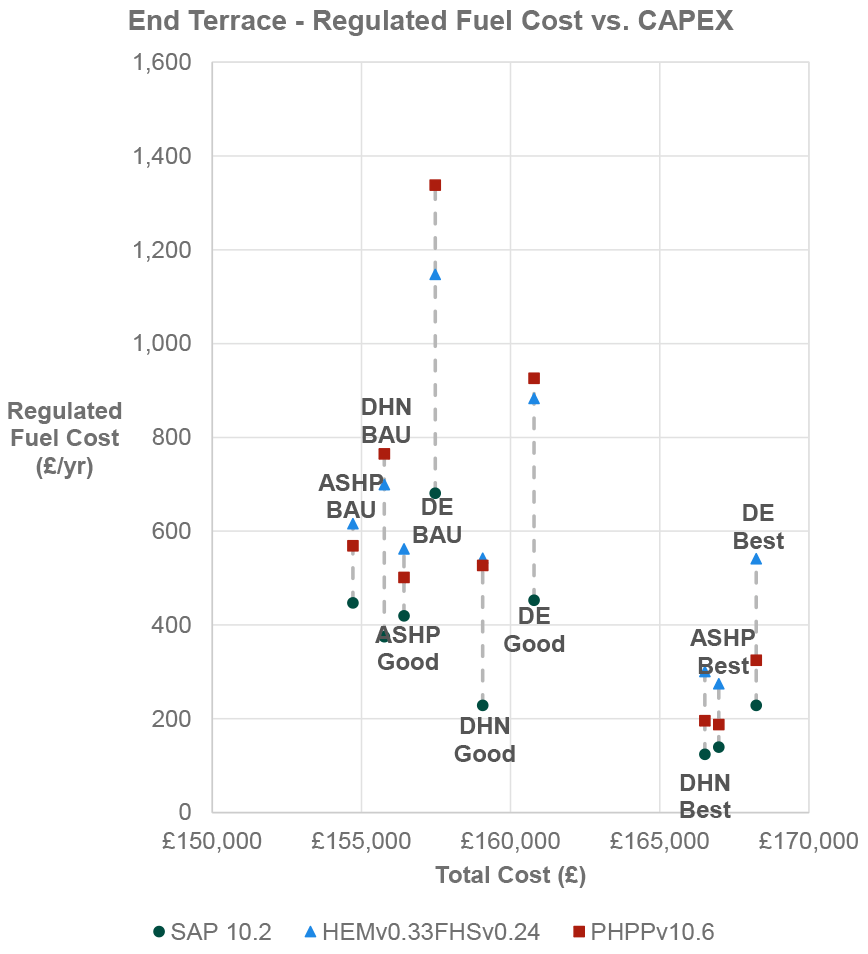
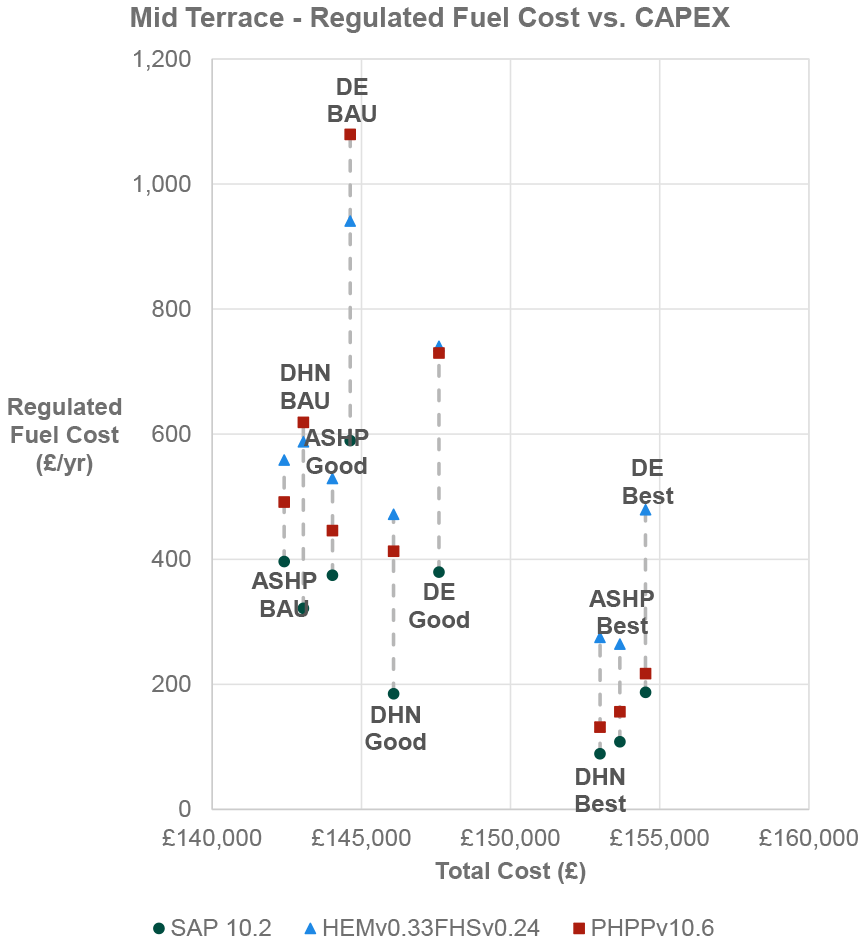
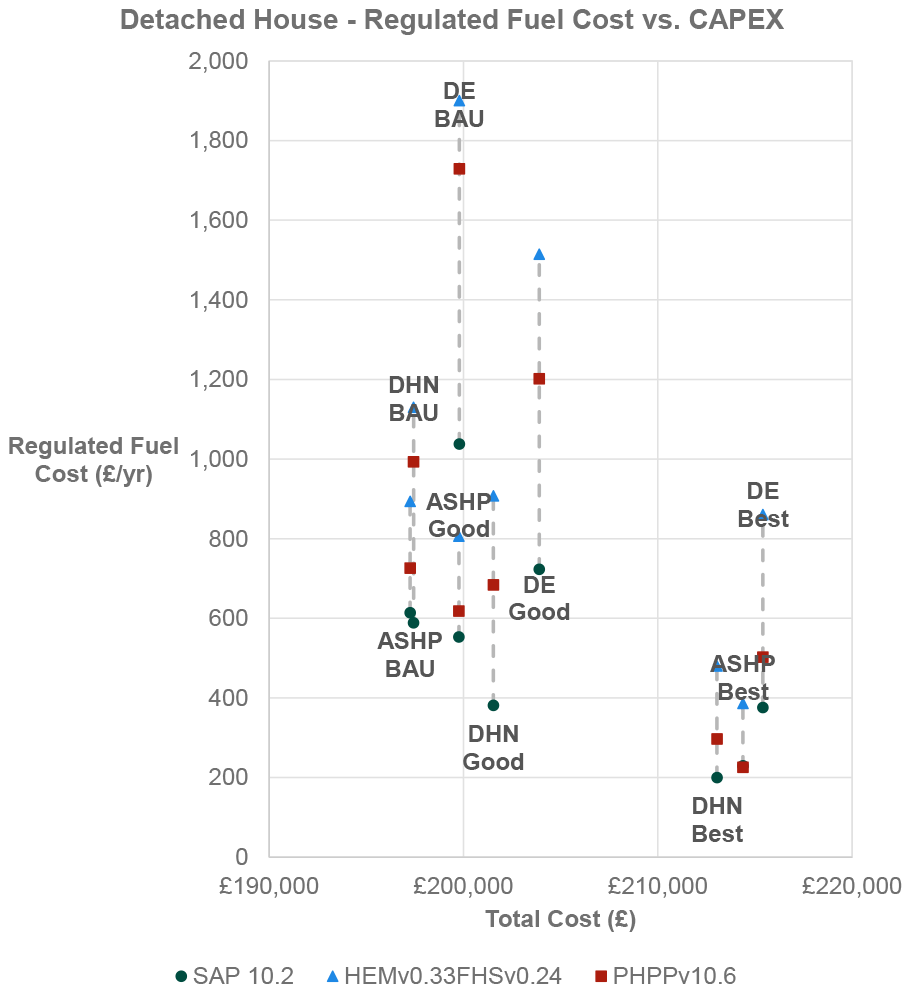
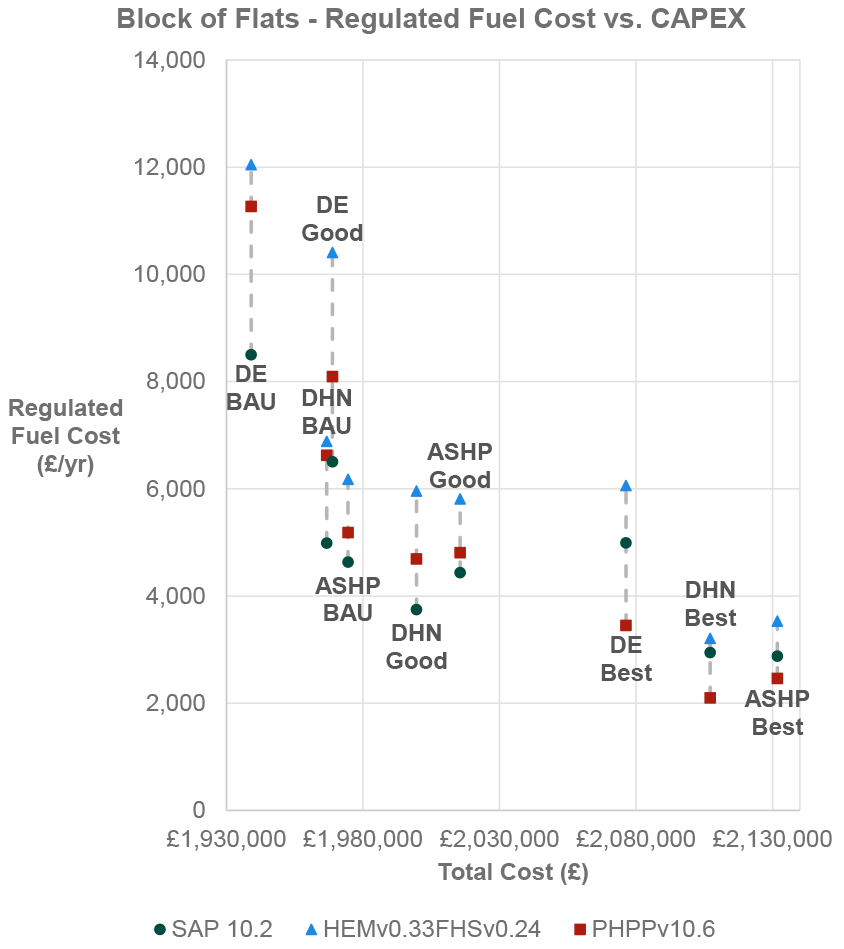
Of the heating technologies tested, the DHN was generally found to have the lowest regulated fuel cost, except for the BAU ASHP in the Block of Flats. For both the ASHP and DHN, the Best Practice specification was found to have the lowest regulated fuel cost, of all combinations tested.
The DE had the highest regulated fuel cost for both BAU and Good Practice. Only where DE was applied in combination with the Best Practice specification was the regulated fuel cost similar to that of the ASHP or DHN combinations; however, the CAPEX was larger, indicating lower cost effectiveness for the DE option to reduce regulated fuel cost.
Regulated fuel cost accounts for the efficiency of the heating system; whilst the DE has a 100% space heating efficiency, this is significantly lower than the ASHP efficiency of >250% and only marginally improves on the DHN. The DHN has a near 100% efficiency for space heating, and a higher efficiency for DHW than the DE (i.e. reduced storage losses of the instantaneous HIU). The modelled fuel cost rate for regulated heat from the DHN is significantly lower than that that of electricity resulting in a Regulated Fuel Cost (£/yr) lower than the DE across all archetypes and methodologies.
This indicates that for new dwellings, the most cost-effective solutions for meeting the New Build Heat Standard would be either a ASHP or DHN connection. This relationship was observed for all modelling methodologies. It should be noted that the cost rate for the heat delivered from the heat network is highly sensitive to the network that the dwelling is connected to. Tariffs will vary based on several operational and circumstantial factors. Despite the announcement of new regulations for heat networks as well as the recent consultation on zoning and technical quality assurance for heat networks, there will still be some variability of the heat price. Furthermore, the additional standing charge associated with the heat network connection will form a key difference in annual costs when compared to electrically heated homes (ASHP/DE).
SAP resulted in a significantly lower Regulated Fuel Cost for the BAU and Good Practice when compared to the equivalent HEM and PHPP results. SAP generally calculated the lowest regulated fuel cost for the Best Practice options also, except for the Block of Flats where PHPP appears to predict greater benefit from MVHR in flats. The margin of difference between the modelling packages was greatest for the DE options (i.e. it is exacerbated by the lower system efficiency and high fuel cost rate). As such, if there is uncertainty about the modelling accuracy then this uncertainty could be reduced when a high efficiency heating system (i.e. ASHP) is employed.
Whilst the DHN demonstrates a good cost effectiveness to reduce regulated fuel cost, this relies on tariffs for both the heat imported from the network and electricity export associated with the PV, as discussed in Sections 6.5 and 7.4.5. As such, there is greater uncertainty of the real world regulated fuel costs for this heating technology.
For the BAU, the ASHP has the lowest CAPEX for the houses where the cost uplift of heat generation plant is not greater than saving of omitting the PV array and WWHRs. This was not observed for the block of flats where the ASHP BAU specification had the highest CAPEX. This may be due to the limit of heat pump size available on the market (>3kW)[2] which meant that cost reductions were not observed for dwellings with smaller demand, such as flats. In addition, the cost uplift of the PV array for the DHN and DE BAU was reduced due to the relatively lower panel area per dwelling for the four-storey block. A similar relationship is observed when considering the CAPEX of the Good Practice specification. Further illustrating the limitations of individual heat pumps for small dwellings with demands significantly lower 3kW.
Whilst for the houses, the ASHP was found to have the lowest associated CAPEX, the DE has the lowest CAPEX for the Block of Flats. The ASHP has the largest spatial requirement due to number of emitters and internal DHW storage. The DE would be expected to save space on emitter sizing but still requires DHW storage. The DHN requires fewer emitters[3] and omits internal DHW storage in place of a comparatively smaller HIU. The monetary value associated with space saving has not been captured in this modelling.
7.4.3 Space Heat Demand vs CAPEX
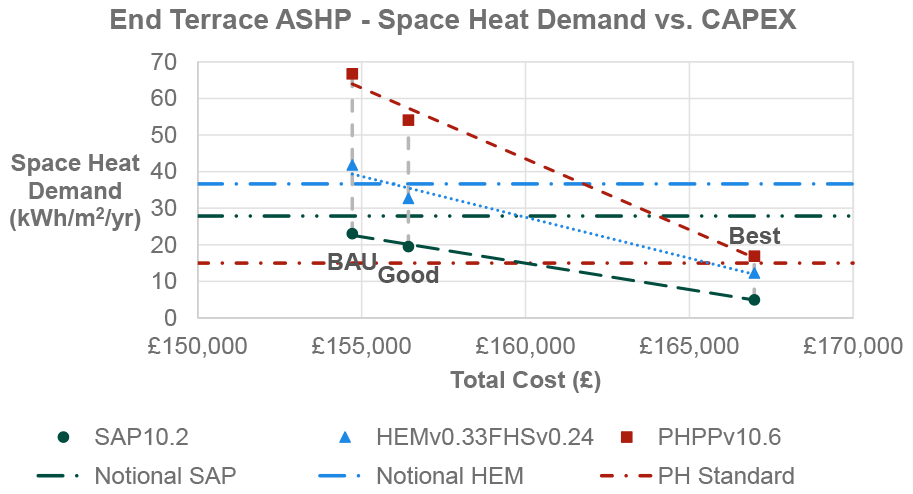
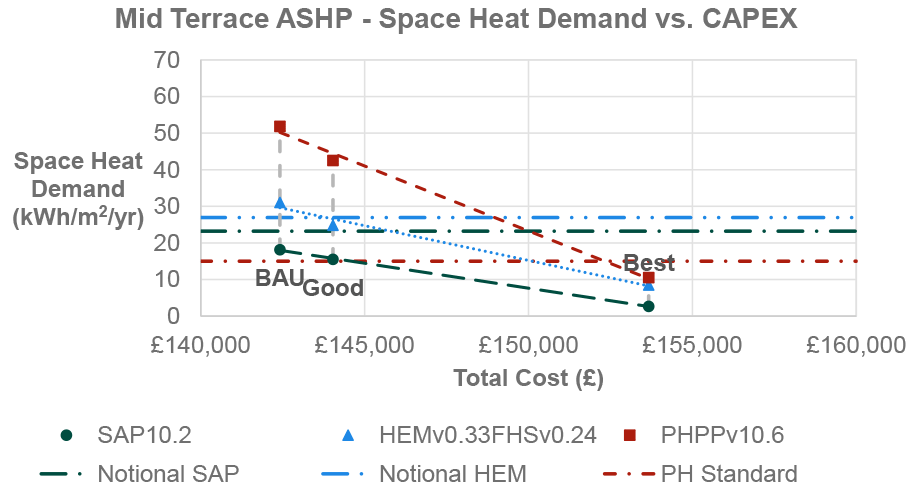
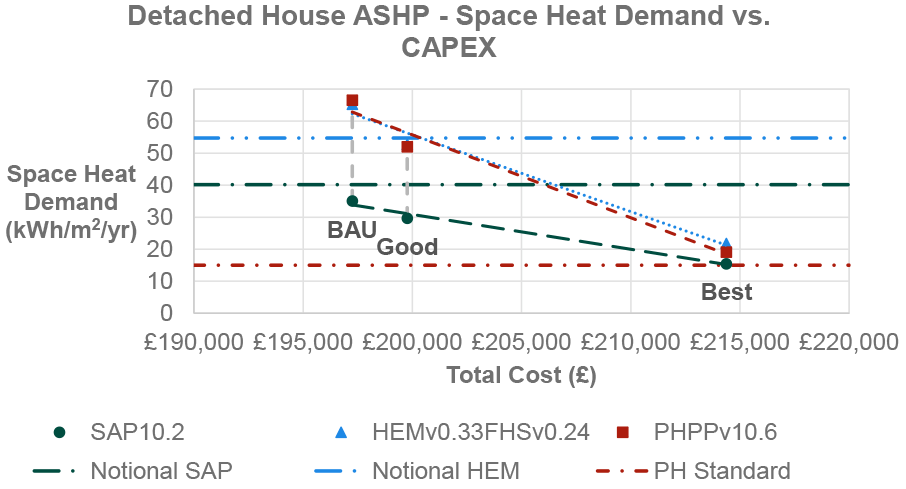
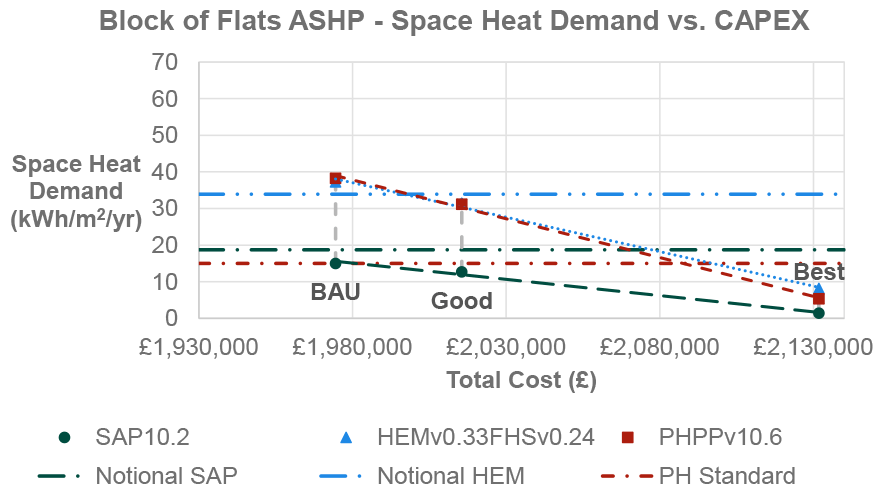
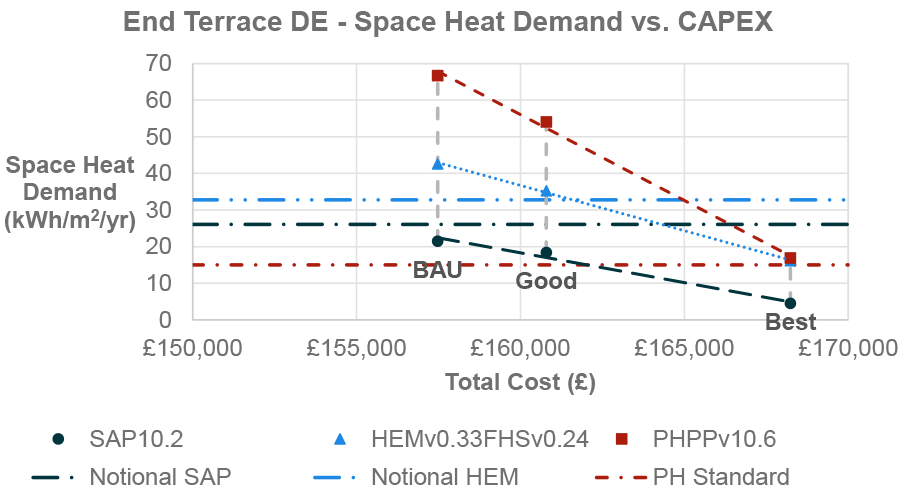
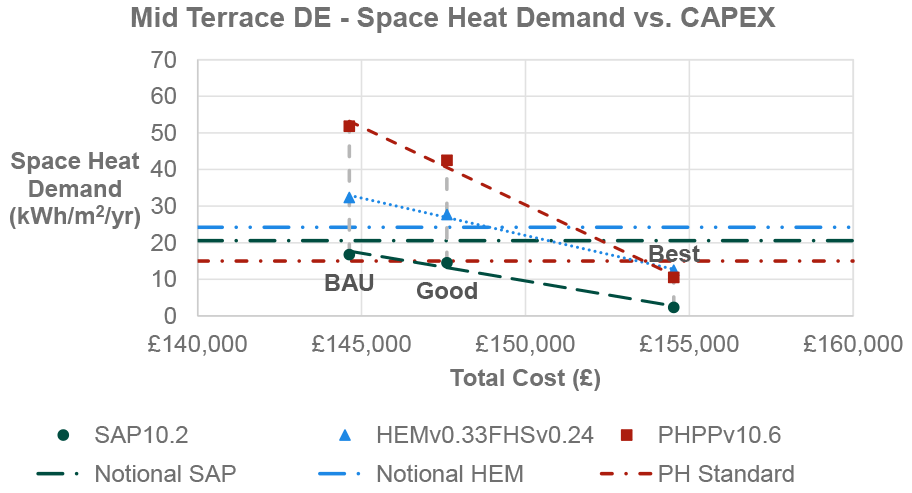
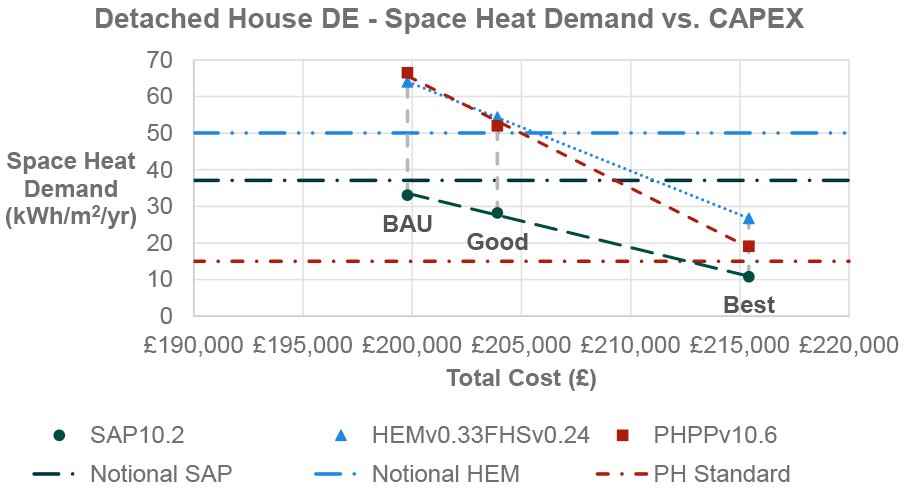
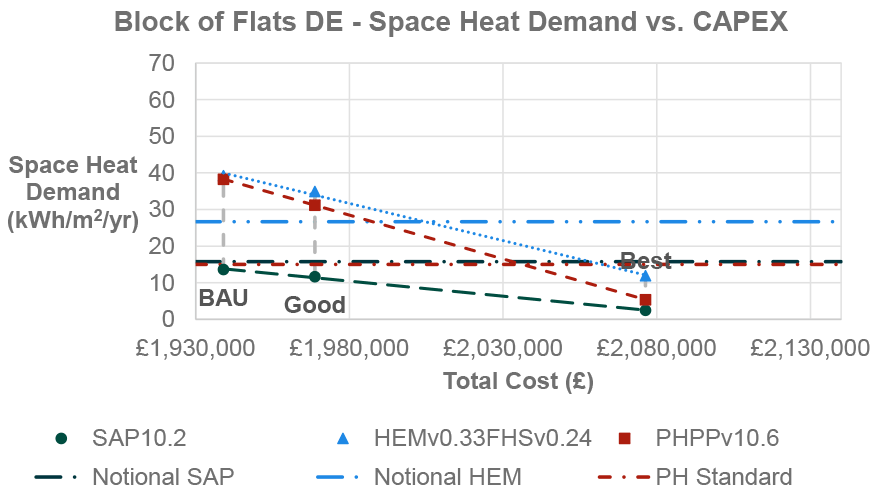
The SH demand calculated by SAP was consistently lower than both the HEM and PHPP. The HEM results are typically lower than the result from PHPP. For the Detached House and Block of Flats, the PHPP and HEM were similar. This is expected to be down to the more detailed infiltration and ventilation loss calculations in HEM more greatly impacting dwellings with more exposed sides or greater height from the ground, increasing the resulting SH demand in HEM. Furthermore, it was found that the solar shading calculations in the HEM eliminated more solar gains than in PHPP due to their more granular nature (i.e. hourly solar angles rather than monthly averages). This appears to have more impact on north facing glazing or glazing with large overhangs. Overall, the relationship between HEM and PHPP space heating demands appears to be sensitive to several factors, which include the timing of gains, heating hours and heating responsiveness. As such, the relationship between HEM and PHPP SH demands appears irregular depending on which archetype is being considered. Overall, the HEM and PHPP
The current notional specification predicted SH demand was found to be lower in SAP than in HEM for all heating technologies and archetypes. The SAP and HEM notional dwellings are higher than the PH standard for Space Heat Demand of 15 kWh/m2/yr for all archetypes and heating systems. For the Block of Flats, the SAP notional result falls close to the PH standard; however, this is not supported by the PHPP modelling reducing its validity.
Improvement on the notional SH demand was achieved for all specifications in SAP. The SH demand of all HEM results representing the BAU are greater than the respective notional. This indicates that the HEM predicts the balance of fabric measures in the BAU to be less effective than predicted by SAP, meaning that a SH demand standard may be more onerous under the HEM (i.e. require more CAPEX uplift).
The HEM results for the ASHP and DHN heating technologies demonstrated an improvement on the notional SH demand for Good and Best Practice specifications. Only the DE Best Practice was able to illustrate an improvement against the HEM notional.
When comparing the PHPP results to the Passivhaus standard SH target of 15 kWh/m2/yr, it is illustrated that this can be met for the mid terrace and block of flats[4] archetypes when adopting the Best Practice specification. These archetypes have more compact form factors compared to the end terrace and detached archetypes[5]. Dwellings with a larger form factor have a higher proportion of heat loss envelope to treated floor area, a greater improvement to heat loss performance than presented in the Best Practice would be required to achieve the PH standard.
One route that could further improve the Best Practice specification applied would be the use of a PH certified MVHR. The certified components for use in Passivhaus buildings undergo extensive testing procedures to ensure reliable performance. The Best Practice specification applied includes an uncertified MVHR, which in PHPP receives a heat recovery efficiency penalty of 12%, resulting in a higher associated ventilation heat loss and a higher SH demand. PH certified units are available at a cost premium which has not been captured in this modelling.
PHPP was not sensitive to the heating technology due to its assumption that all heating technologies would follow the same continuous heating programme. This appeared to result in greater reductions in SH demand from the Good and Best Practice measures being introduced relative to SAP and HEM. Both SAP and HEM indicated some sensitivity to the heating technology choice, where between a 2-15% difference in SH demand was observed between different heating technologies when modelling the same specification option.
The CAPEX effectiveness (i.e. the investment needed to achieve a1kWh/m2/yr reduction in SH demand) was generally better for the Good to Best practice improvement than it was for the BAU to Good Practice improvement when either DE or DHN was present (i.e. with a lower efficiency heating system). With the ASHP technology, CAPEX effectiveness reduced with improvement to SH demand (i.e. the Best practice improvement was the least cost effective).
For the block of flats across all models demonstrated that the SH demand improvement from Good to Best Practice is illustrated to be more cost effective than from BAU to Good Practice. Demonstrating that air tightness and MVHR offered the more cost-effective means to reduce SH demand.
The cost effectiveness of improvement measures to reduce SH demand was found to vary between archetypes. This may demonstrate the challenge of an absolute SH target for compliance purposes as certain dwelling types will require different levels of investment to achieve the standard.
7.4.4 Summary of model differences
SAP was found to produce the lowest result for all the metrics assessed. The most notable was the SH demand where SAP consistently predicted 40-60% lower demand than the next closest model. This appears to be predominantly driven by the internal gains assumptions as well as some modelling simplifications, such as the weather data used and simplified shading calculations. As the space heating demand was the most dominant energy consumption type for most dwellings modelled this relationship has also been observed for the SAP delivered energy rates.
PHPP often predicted the highest ASHP efficiency, which is likely due to the calculations assuming continuous heating operation and is known to improve ASHP SCOPs. Further differences were also noted for DHW demand; however, noting that occupancy and hot water usage behaviour assumptions in PHPP are informed by data obtained from the country of origin (Germany), its validity for representing the new build housing stock for Scotland may need to be considered.
The HEM represents a significant effort from the Department for Energy Security and Net Zero to develop a modelling methodology that is more accurate and robust for modelling UK homes. It has been demonstrated here that the HEM can have significantly different results for space heating demand, delivered energy and regulated fuel costs to SAP and different sensitivity levels to PHPP. This study cannot identify if the HEM is more valid; however, will likely be a suitable method to assess new build homes in future. Therefore, the results from this modelling should be considered carefully as the relationships between specification and the key modelling metrics may demonstrate different trends to those previously observed with SAP. Using the HEM as a basis for national impact assessments could result in different conclusions to those derived from SAP modelling. Furthermore, the HEM is under continuing development and may undergo further changes between now and final implementation as a compliance engine for Scotland. As such, SG may need to assess how any future changes may impact the validity of findings in this report. This may be possible to assess using impact assessments released by DESNZ as updated to the HEM are completed.
The deviation between the results from the various modelling methodologies is at its lowest when representing the Best Practice specification, indicating that uncertainty ranges for compliance modelling may be reduced for lower demand dwellings (i.e. those with low demand and/or highly efficient systems).
7.4.5 Consideration of metrics
Although not presented in this paper, the HEM modelling has presented a question of which metrics would be most effective for achieving the aims of Section 6. Many of the HEM modelling inputs required study have the purpose of modelling the time of use as well as more accurately modelling the dwelling energy system. Some of the opportunities associated with this functionality have been outlined in Appendix E. Metrics such as delivered energy may not capture the impacts of technologies that aim to reduce the environmental impact of new build dwellings. In context of the UK’s National Grid, there is likely to significant opportunity for energy flexibility technologies to offer a wider benefit in the conservation of fuel, reduction of emissions and mitigation of environmental impact. More locally to Scotland, the high proportion of renewable energy generation may also prove to be key consideration for domestic energy consumption[6]. If not considered for the emissions or primary energy consumption, it is becoming increasing likely that time of use will impact the regulated fuel costs. With the aims of Section 6.0.2 of the domestic technical handbook being to conserve fuel and power and support the transition to a net zero society by 2045 and requirement of the new build heat standard to source heat from electricity or heat networks, recognising the time of use of electricity may be required in future.
Many of the scenarios considered in this study apply PV, which achieve a reduction in DDER by displacing electricity import and regulated fuel cost by both displacing electricity import and generating export payments. Export is accounted for, however at a modest rate. The ability to access an export tariff will be dependent on several factors outside the control of Scottish Building Regulations. For example, market dependencies will impact the availability of export tariffs and local infrastructure constraints could impact the ability export power at all. Specifically for the flats, the wiring arrangements may impact individual flats accessing the benefits of reduced import and export payments. All these dependencies could significantly impact the regulated fuel cost. Similarly, the tariff associated with regulated heat from the DHN will be defined by the heat network operator. Whilst the regulated fuel cost is based on what has been determined to be a reasonable rate for DHN supplied heat, a higher or lower rate may be offered, impacting the total cost to the consumer. As such, the use of regulated fuel costs as a compliance metric may be limited due to the uncertainty of the tariffs applied.
The technical and CAPEX modelling has identified that the most cost-effective solutions for meeting the New Build Heat Standard would be either a ASHP or DHN connection, a relationship observed for all modelling methodologies. DDER was found to support this, meaning that it is expected that the use of DDER as the primary metric for compliance against New Build Domestic Standards is expected to promote either the use of ASHP or DHN connections over DE solutions. One limitation of the DDER is that the efficiency of the DHN connection is not considered. As such, when comparing the routes to compliance with either an ASHP or DHN connection, the nature of the DHN connection cannot be factored into the decision process. This may result in ASHPs being installed as these can achieve an improvement on the notional dwelling system and reduce the overall cost associated with achieving the TDER (i.e. fabric could be relaxed in response to specifying a high efficiency heat pump). To ensure that DHN connections are encouraged to achieve good operating efficiency, the Delivered Energy Rate could be expanded to include DHN energy centre and distribution efficiency. The simplest way this could be achieved without significant disruption to the current approach for the DHN notional dwelling would be to apply the following logic:
- Account for the delivered energy rate of the network (i.e. each unit of heat delivered to the dwelling is multiplied by the DHN Delivered Energy Efficiency)
- Maintain the approach that notional equals actual dwelling
- Apply a minimum delivered rate for heat delivered by a DHN connection.
The above approach would enable existing networks to comply with new build standards; however, new and communal networks served by efficiency or waste heat sources would be able to achieve a benefit on the notional dwelling and relax wider specification values.
SH demand is a simple metric to include for the assessment of new build dwellings. It is expected to promote demand reduction; however, may have some unintended consequences. For example, poorly designed heating systems, such as those with large amounts of primary pipework or high loss hot water storage will have lower space heating demand. Furthermore, increasing the g-value will assist in further reducing SH demand but this will also increase overheating risk. To mitigate this, gains for any target SH demand could be based on the system losses and g-value assumption could be made equivalent to the actual dwelling value to eliminate potential for this to be used as a mechanism for reducing SH demand. It is noted that measures which reduce hot water system efficiency or increase cooling demand should be inhibited, in part, by the requirement to improve on the TDER. Given the recent focus on a Passivhaus equivalent for Scottish Building Regulations, the introduction of a SH demand metric, set by a notional performance specification, may demonstrate more alignment with the Passivhaus approach.
Contact
Email: buildingstandards@gov.scot