
Cash-First Programme: interim evaluation - updated
Interim findings from a process and impact evaluation of the Scottish Government's Cash-First Programme. The Programme supports new local partnership work to deliver Cash-First interventions across eight delivery partner areas.
5. What impact has been achieved and for whom?
Highlights
Over the first year of the Programme, there have been 4,809 interactions with people. This includes repeat users who may have had multiple payments, or people sharing a household. Through these interactions, the Programme has distributed £195,530 in Cash-First payments in Year 1.
Early impacts amongst stakeholders
Cash-First approaches have facilitated new relationships across organisations, helping to expand reach of the programme, and building learning and experience across the wider support ecosystem. Delivery Partners and stakeholders are optimistic about the sustainability of relationships developed.
The Learning Partner established a peer support network that created an open, safe environment to review and improve approaches. It also strengthened collaboration across partnerships.
Early impacts amongst beneficiaries
Despite the limited time since Cash-First services were introduced, there is early evidence that positive impacts for beneficiaries go beyond access to food. This is recognised by service beneficiaries, who are aware that the support extends to much more than the payment for food they initially received.
The wrap-around support provided has been positively recognised by beneficiaries, and further work in this space is likely to ensure long lasting positive impacts for people. For example, advice and support on income maximisation and budgeting has helped some individuals increase their household income. Service beneficiaries have been able to develop new skills, for example cookery and budgeting skills, which they recognise will help them in the longer term.
There is some early evidence that the Programme is impacting on wellbeing through increased confidence, reduced stress, and by addressing isolation.
Early impacts on overall outcomes and sustainability of the programme
To date, there is limited evidence on whether Cash-First approaches have reduced food bank use. Qualitative evidence suggests that some beneficiaries have used food banks less. There is currently no quantitative evidence within Year 1 of this evaluation of the extent of the reduction in usage.
Sustaining outcomes is a key challenge that requires continued investment in collaborations, training and development of staff, and lived experience engagement.
Introduction
This chapter discusses early impacts arising over the first year of the Cash-First Programme. It gives an overview of early impacts across:
- Delivery Partners, local partners and wider stakeholders;
- Individuals receiving Cash-First support; and
- Overarching programme outcomes and sustainability.
The premise of the Cash-First plan is one of prevention and response. It is anticipated that impacts on prevention will take a long time to be evident, and as such, at this stage success focuses more on early system changes. This report also covers early impacts on the response element of the programme.
Assessing the impact of the Programme is based on a theory of change, sometimes called a ‘logic model’. The logic model sets out the theoretical impact of the Programme inputs and identifies key outcomes to be achieved. The Programme Logic Model in Appendix 7) sets out short-, medium- and long-term outcomes. This evaluation covers the short-term outcome period to December 2024, which is focused on project set up, early activity, early stakeholder and partner engagement and Delivery Partner learning.
Data collected to assess impact of the programme include quarterly updates provided by Delivery Partners, in-depth interviews with Delivery Partners, stakeholders, and service beneficiaries, and survey data collected from beneficiaries. It should be noted that delays to some projects’ start up meant the data available for the interim report is limited, particularly for the first two quarters of activity. Therefore, it is not possible to determine a baseline of food bank use, referrals, and referral pathways from the outset of the Programme. However, we anticipate that more robust data will be available for the final report which will enable a comparison of Year 1 and Year 2 and help to quantify outputs and impacts.
Cash-First payments distributed
The quarterly data returns submitted by Delivery Partners indicate that in the first year, the Programme has distributed £195,530 in payments and supported 4,809 interactions with people. Therefore, it does not reflect unique beneficiaries, but shows the potential scale of such a Programme in its first year of implementation. Through these interactions, the Programme has distributed £195,530 in Cash-First payments in Year 1. This data covers April to December 2024, when Delivery Partners were first asked to complete quarterly data returns on behalf of the Evaluator.
As previously highlighted, all Delivery Partners have been moving at different paces and been at different stages in the first year of activity, and this is reflected in the consistency, quality and completeness of the data available for the evaluation. This continues to evolve. The total figure of cash disbursed represents all activity reported in quarterly data returns in that period of time (April 2024 to December 2024).
All four Delivery Partners that were operational in April 2024 reported on cash distributed between April 2024 to December 2024. Others have reported for the months in this time period in which they have been operational or, in the case of Edinburgh, distributing cash as part of one test of change within wider Cash-First activity. Glasgow Delivery Partner are not distributing cash or directly supporting service beneficiaries, and as such these figures do not reflect any of the activity in Glasgow.
Cash disbursed by quarter over the reporting period is reported as follows:
- Quarter 1: £26,966; 847 Cash-First interactions
- Quarter 2: £35,639; 712 Cash-First interactions
- Quarter 3: £132,925; 3,250 Cash-First interactions
Delivery Partners, partners and stakeholders
This section sets out the impacts contributing to the “systems and processes” and “learning and best practice” outcomes within the logic model, in particular focusing on the extent to which collaborative working has improved for partnerships through Cash-First and the role of the Learning Partner in supporting this journey.
Collaborative Working
Cash-First Delivery Partners have typically been formed through pre-existing relationships between organisations and individuals. Cash-First projects have been seen as an opportunity to share learning and expertise and consolidate these relationships.
The short-term aims of the Cash-First Programme to December 2024 for Delivery Partners, as set out in the Programme Logic Model, include:
- Local partners identified and engaged.
- Local referral/service access processes developed.
The research demonstrates that these outcomes have been achieved and continue to develop. Delivery Partners have reported that, across the Programme, 79 referral partners have been engaged, with 16 new referral pathways established across these partners; and 156 new services and organisations have been engaged.
One positive impact of this is that Cash-First activity to engage services and stakeholders has strengthened many existing partnerships, and all Delivery Partners have reported this as a positive impact, for example:
We strengthened the membership of the Fair Food for All Partnership, and it’s still evolving. We have the foundations of a strong group and are looking at subgroups, which means we can widen out opportunities to more operational staff and trusted partners. – Delivery Partner
Long-term prospects for relationships between partners
Cash-First approaches have facilitated new relationships across organisations, helping to extend the reach of Delivery Partners into target service beneficiaries, and building learning and experience across the wider support ecosystem. Those organisational relationships established since the start of the Programme continue to develop and improve, and this is highlighted by Delivery Partners:
It’s definitely improved; I think it will improve more by next year. Improved with delivery partners and core partners. – Delivery Partner
Wider staff training and development has also taken place, which will strengthen knowledge and support longer-term relationships. Delivery Partners have reported facilitating 69 training and information sessions, for 236 organisations, who have received training related to Cash-First approaches. The majority of these organisations are based in two Delivery Partner areas though many will have wider, or national, roles and remits. In addition, 32 networking events have been delivered or facilitated. Delivery Partners recognise the need to establish good foundations for relationships moving forward and these activities support this.
The role of the Learning Partner in informing partnership working
The Learning Partner played a key role early in the Programme in establishing a Delivery Partner peer network. As activity has progressed, Delivery Partners have become open to engaging with the Learning Partner to review and improve their approaches, and how partnerships are working. This has allowed them to address common challenges in a non-judgemental and neutral environment and created a willingness to share information and learning across the network. This has strengthened the links between partners and also unlocked wider stakeholder learning through for example, sharing materials and Cash-First resources that have been developed.
Despite initial lack of clarity and uncertainty about the role of the Learning Partner, they are now considered a helpful resource and good support to Delivery Partners. Delivery Partners welcome the neutral voice and supportive space the Learning Partner creates. Facilitated peer sessions, action learning sets, and in-person events are viewed positively and as a valuable source of learning. These sessions ensure Delivery Partners feel supported and less isolated and provide a platform to address common challenges.
It's been very good. I was initially cynical, but it’s been very helpful to have peer conversations. We’re picking up on similar things and have different experiences we’re happy to share with the other Delivery Partners and can ensure we’re all aiming at the same thing. It’s been helpful to have them supporting us. – Delivery Partner
No reasons for the initial cynicism were provided but may reflect the lack of clarity and understanding noted by some Delivery Partners about the Learning Partner role. In the early stages there was a perception of imbalance in value of the peer learning sessions, as Delivery Partners were at different stages.
Because we hit the ground running and the model was working, we were getting asked a lot more than we got out. – Delivery Partner
As more local projects were established, and relationships between Delivery Partners developed, this perception shifted, because more partners could input to discussions and share experiences and learning. Engaging with and attending Learning Partner activities and events can, however, present resourcing challenges for Delivery Partners, which is something they have to balance when prioritising actions.
The opportunities for Delivery Partners to share their own experiences and solutions have positively impacted the design of projects across the Programme as a whole as Partners learn from each other’s experience.
The Learning Partner has reported greater time investment in bespoke support than initially anticipated, due to the diversity of the Delivery Partners and approaches. However, they also report that this has given them a more detailed understanding of Delivery Partner needs, which has meant activities and events have been better tailored.
Cash-First Beneficiaries
Accessing support
It is important that Cash-First approaches and wrap-around support services are accessible to the people who need them.
Noting that survey respondents largely represent only two Delivery Partners, the majority (70%) of Cash-First participants responding to the survey found the application process either quite easy or very easy to complete; only two respondents found it very or quite difficult. This is a positive finding and indicates that application processes are seen to be accessible; though there is limited evidence about how widespread this perception is across all Delivery Partners. Respondents with a long-term physical or mental health condition also found it straightforward with 70% of this cohort stating that they found the application process quite or very easy to complete. Respondents valued that the application process (for some) was face to face, and many survey respondents (44% of all respondents) were helped by frontline staff and wider support workers to complete the application process. They found it useful to be able to clarify any questions they were uncertain about.
Of the two respondents who did not find the application process easy, one reported significant issues as follows:
I found [the application process] quite intrusive as [I] needed proof off (sic) bank statements and balance and I was embarrassed. – Service Beneficiary
There is no evidence of how widespread this may be or if others experienced similar issues.
People who need to access Cash-First are generally in immediate or imminent need and so the money should be available quickly. Of the 54 respondents who provided a timescale, 31% received support within 48 hours with a further 39% receiving support within a week. Whilst this was not reported as an issue, it might indicate a need for a quicker process, especially where people have no, or very little, food.
Access to wrap-around support
A fundamental component of Cash-First delivery is to ensure that wrap-around support is provided to those in need of further support, through referrals to other services, with Cash-First acting as an entry point. Based on quarterly data received from Delivery Partners up to Quarter 3, 786 referrals to further wrap-around support services were made. This figure does not reflect to 786 individuals, as some beneficiaries may have received more than one referral for additional support.
Based on data collated by Delivery Partners, of the 786 reported referrals for wrap-around support to the end of Quarter 3, almost three-quarters of those who had been referred (73%) had been referred on to welfare rights/money advice services. This is a very positive step in building strong support networks to tackle the causes of food insecurity. The second most common service referrals have been to fuel poverty support (11%), followed by housing support services (3%).
The survey of respondents also explored the extent to which beneficiaries have been referred to other wrap-around services. Of the 73 respondents, 42% stated that they had been referred to other supports or services by the organisations that provided Cash-First support. For some, there may be a time lag, and this is still to happen. 15% of those who had not been referred reported that they would have found this useful. A further 42% stated they had not been referred but did not need this. With fewer than half of all survey respondents stating they had been referred on for additional support, it is possible that some individuals are not aware of the range of wider support that is available, and so the impacts may be diminished.
Positively, all respondents who had been referred on said that the referral had resulted in them engaging with other services and receiving wrap-around support. Survey respondents reported that the services that they were most commonly referred to were financial advice services (45% of those referred), referral to other funds (42%), a benefits entitlement assessment (42%), and cooking skills/recipe lists (29%). This is most likely a reflection of specific activity within the Delivery Partners most represented in survey responses, as noted in Chapter 2, and it is possible that a more representative survey sample may provide different insights.
Further data on referrals for wrap-around support is needed in Year 2 to enable the Evaluator to give a fuller overview and assessment of this element of the Programme.
The qualitative interviews with beneficiaries noted the value of wider financial and money advice services. Some beneficiaries reported they had not previously been aware of these services, and as a result of engaging with them, they have managed to increase their income. They stated that both income maximisation and budgeting advice services had been central to improving their circumstances. They recognised that Cash-First support is much more than the payment for food they initially received.
At 94%, a majority of survey respondents who had received additional support provided examples of how it had helped them. The main benefits this additional support had delivered were that:
- They received help with energy costs (42% of those receiving additional support);
- Household income had increased (29% of those receiving additional support; however, note that two-thirds (67%) of all survey respondents stated Cash-First had improved their household income);
- They had taken part in training/skills development (26% of those receiving additional support); and
- Their mental health had improved (23% of those receiving additional support).
Helping people to access support to maximise individual and household income is a key component of Cash-First, which is why there are close working relationships with CABx and other money advice services, as noted in Chapter 4.
The most commonly reported benefit in the survey was help with energy costs. This demonstrates the intrinsic link between food and fuel poverty, where lower income households often have to choose whether to “heat or eat”. While this was the most commonly reported benefit overall, the most commonly reported benefit by respondents who had not previously used a food bank (27%), and male respondents (60%) was increased household income.
Other advantages cited for wrap-around support include reimbursement of travel costs for interviews and meetings, and the provision of a bus pass to help beneficiaries access services, attend interviews, go to the supermarket and generally address isolation. The additional income freed up by Cash-First interventions, including income maximisation, had also helped them to buy clothing and other essential items.
However, some challenges to accessing wrap-around support were also identified in both interviews and in the survey responses. These challenges are mostly associated with the requirement to fill in additional paperwork after applying for Cash-First. When asked how to improve the application process, there was some frustration shared about additional forms, and one respondent stated it would be better if they only had to fill in:
One form every six months – Service Beneficiary
This was further reflected in service beneficiary interviews. Some service beneficiaries said they found the wrap-around support landscape confusing, particularly with respect to income maximisation. Limitations on financial support associated with the benefits system also created frustration.
In areas where support was coordinated by a specific frontline worker, service beneficiaries were able to build a relationship with the worker and this positively impacted their access both to Cash-First and to wrap-around support.
It was very easy – the welfare officer spoke to me and filled out forms for me.
It was really easy; I got help from CAB. - Service Beneficiaries
Whilst Cash-First approaches are highly valued, there is a sense amongst some beneficiaries that it is a short-term measure. Beneficiaries report that Cash-First has helped address the immediate crisis but they need more sustained assistance. This is illustrated by the following comment from a beneficiary:
It was an amazing help when I needed it, but I feel as if I’m really struggling again already. – Service Beneficiary
It demonstrates the importance of wrap-around support to make a significant and sustained change rather than simply providing a short-term solution and emphasises the need for this to be consistently implemented.
Tackling Food Insecurity
A key objective of the Cash-First Programme is to reduce the need for food banks. As a pilot Programme comprising a series of tests of change, these Cash-First approaches are not aiming to reduce food bank use at a national level. The tests of change, however, should indicate where interventions and approaches have been successful in reducing the need for food banks locally and provide learning for future activity.
Assessing impact on food bank usage is complex, and we have drawn on a range of sources of data for the evaluation.
We anticipate that quarterly quantitative data supplied by Delivery Partners will indicate more robust numbers of food bank users and repeat users recorded (where it is possible to do so) in Year 2 of activity. We expect that the final evaluation report will draw upon this data to give a clearer picture of food bank use at a Programme level. The data will not be comprehensive but will be more fully complete than that available in the early stages of the Programme. This is already evident from the data supplied for Year 1 Quarter 3.
Data available for the interim evaluation on food bank use suggests that there are still high levels of food insecurity amongst service beneficiaries, though Cash-First has contributed to a short-term reduction in food bank usage for some. Given the stage of the Programme, it is not yet possible to identify longer term impacts.
Respondents to the survey were asked what has helped ensure that there was sufficient food on the table. Almost one fifth (19%) stated that they had become better at budgeting through the Cash-First support. They said that they are using techniques such as buying ingredients in bulk and batch cooking. This has helped them be more food secure and have strategies to maintain this. This was also reflected in interview feedback. For example, one beneficiary reported:
Even if I don’t keep getting the vouchers I will keep eating healthily and can be more active with my bus pass. The budgeting scheme I have started will help too – Service Beneficiary
Survey responses and service beneficiary interviews also suggest that some progress may have been made against reducing the need for food banks. While there was no consistent decline in food bank use amongst service beneficiaries interviewed, and the majority of interviewees said they had run out of food and used a food bank since receiving the Cash-First payment, some noted this this was less frequently than previously. This is also borne out by survey responses, which indicated that 42% of beneficiaries would have visited a food bank without Cash-First intervention.
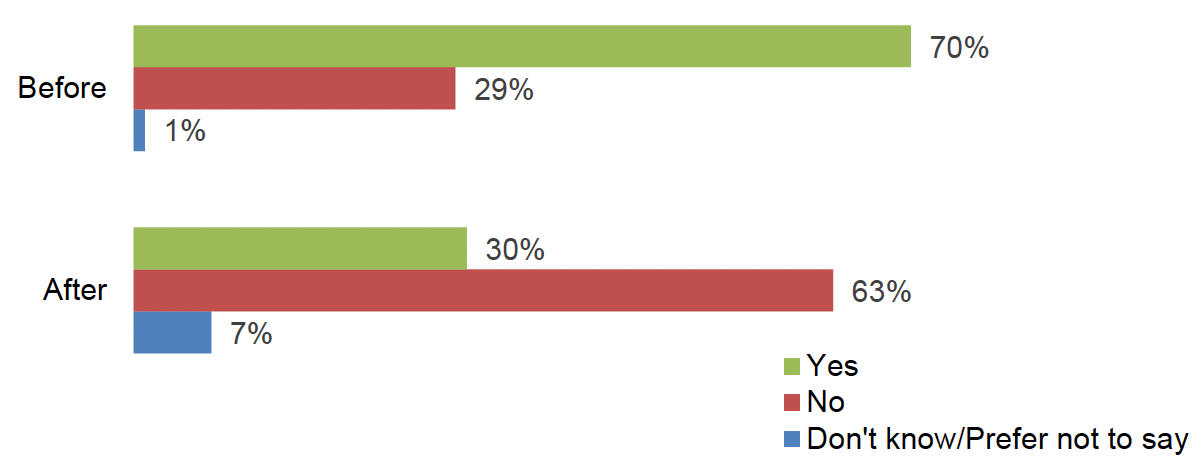
Figure 5.2 shows that 70% of respondents had visited a food bank at least once prior to engaging with Cash-First. This dropped to 30% after engaging. While this demonstrates a reduced need for food banks, it should be noted these responses may be because they had recently received support from Cash-First and therefore may not have needed immediate support from a food bank. It is anticipated that the final evaluation will provide more evidence on the impacts on food bank usage and poverty, particularly for repeat users.
Of the cohort that had accessed a food bank prior to receiving Cash-First support, 51% stated that they had not accessed a food bank since receiving Cash-First, while 41% stated that they had. A further 8% did not know or preferred not to say. This shows that around half of respondents who had previously used food banks benefited from receiving Cash-First support by not being as reliant on food bank usage as they had previously been.
Using the Scottish Government’s definition of food insecurity, survey respondents and interviewees were asked whether they were worried that they or their family would run out of food since accessing support, or whether they had eaten less, because of a lack of money or other resources. Over half of survey respondents (59%) stated they had been worried about running out of food even after receiving Cash-First support and 41% reported that they/their family had eaten less. In interviews, one service beneficiary explained:
Every few months there comes to a point when I’ve got no food in the house at all. – Service Beneficiary
This indicates that Cash-First approaches are not necessarily resolving the issues individuals are facing with regards to food insecurity. The evaluation will explore further in Year 2 whether food security and feelings of confidence at having enough to eat are positively impacted by longer term support.
Wellbeing
This section outlines early wellbeing impacts for Cash-First recipients.
In the qualitative research with service beneficiaries, flexibility and dignity were perceived to be the main benefits that could be expected from this approach. They said that being able to go to shops and choose their own food is a more dignified experience than visiting a food bank or receiving a food parcel. The following service beneficiary comments demonstrate the importance of choice:
I could buy the food I choose. I have allergies and sometimes the food at the food bank isn’t good quality, and you can’t say “don’t give me X”.
It’s better to get cash than a food parcel. You can buy what you want with that.
– Service Beneficiaries
This is also reflected in interview feedback where service beneficiaries recognised the improved quality of food they could access with Cash-First, for example:
I went and filled up my fridge and freezer straight away. You can fill your cupboards from a food bank but it’s all tins and packages. You can’t fill your fridge. – Service beneficiary
People who had not used Cash-First services expressed concerns that cash payments would not deliver the same value for money as food parcels or food pantries. Supermarkets are more expensive than food pantries, and it was believed that a cash payment is unlikely to provide the same amount of food as was included in a parcel from a food bank. However, they also recognised that cash payments could reduce stigma and provide more flexibility to individuals.
Delivery Partners have also observed the importance of giving people choice with one consultee summing it up as follows:
The benefit is not the money – it’s about the message you send when you give someone money: we trust you as a person to know what to do. – Delivery Partner
Some service beneficiaries agreed to take part in longitudinal research that asked them to score themselves on wellbeing indicators such as mental wellbeing, financial security and awareness of local support service provision across two different sessions, to compare scores and log any notable changes. These sessions took place approximately 6 to 8 weeks apart. The time was slightly extended due to Christmas falling between the two sessions. Generally, there was little change in scores across the sessions, although it should be noted that all respondents did acknowledge at least a small increase in feelings of being valued and respected.
This minimal level of change is perhaps reflective of the difficulty in isolating the impact of Cash-First services within individuals’ wider economic challenges. The rising cost of living was regularly being cited as a reason that participants felt little different. As beneficiaries noted in interviews:
Money is affecting me constantly but it’s nice to know support is there.
[My] situation hasn’t changed at all and it’s getting harder. It feels like it’s just bill after bill right now.
- Service Beneficiaries
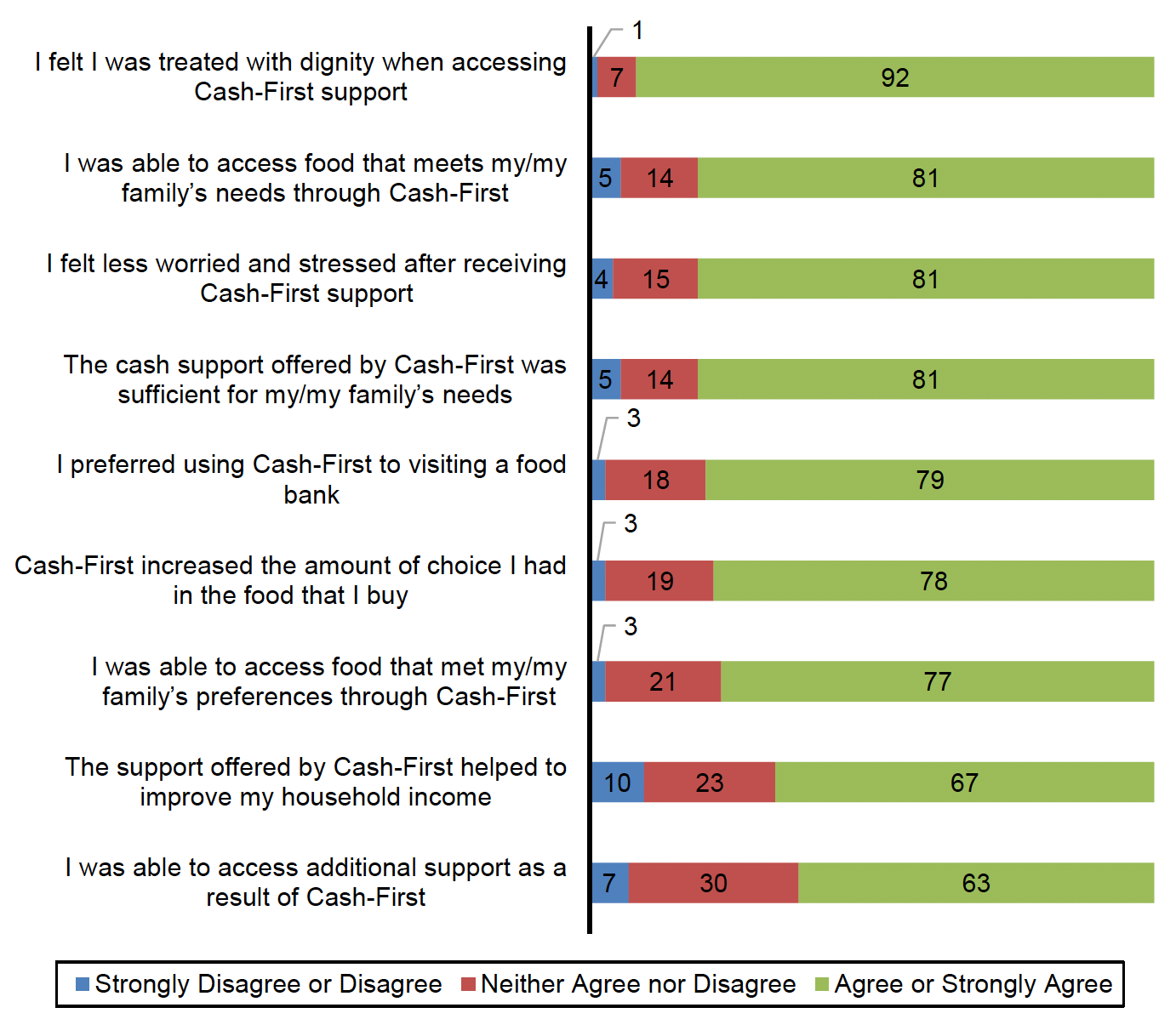
Figure 5.3 shows the extent to which survey respondents agreed with questions about anticipated outcomes of the Programme. A majority of respondents either agreed or strongly agreed with each of these statements, suggesting that most had received positive impacts from Cash-First.
Almost all survey respondents (91%) either agreed or strongly agreed that they were treated with dignity throughout their engagement. Given the overall objective of Cash-First, 79% said that they prefer the Cash-First approach to visiting a food bank. The reasons provided relate to the fact that food banks do not offer the same level of choice, which is linked to a sense of dignity and empowerment. This choice was important to people from all target groups but was considered by beneficiary respondents as particularly important for people with religious, cultural or dietary requirements.
The evidence clearly shows that Cash-First helped respondents access food that meets their needs (81% agree or strongly agree), that they felt less worried and stressed after receiving support (81%) and that the cash received was sufficient for the respondent’s needs (81%).
Figure 5.3: “To what extent do you agree with the following statements?” n=73 (please note that these are percentage values. Percentage signs have been removed for readability and accessibility purposes)
In interviews, beneficiaries reported a range of additional benefits including meeting new people, improving social networks and learning new skills, illustrated by the following comments:
New friends, new skills, I can do more
I felt isolated when I came here but I can get out and about so am not so isolated now.
Learning to cook and healthier eating, budgeting skills.
– Service Beneficiaries
These benefits are likely to positively impact on wellbeing and extend beyond the period of engagement. Isolation can be a challenge for people living in poverty and can be detrimental for physical and mental wellbeing. In addition, respondents reported increased confidence which is a very positive outcome.
Beneficiaries in interviews and the survey reported that through Cash-First they had been referred to local services. However, a significant minority of respondents (42%) stated they did not feel they needed additional support, suggesting further work is needed to support individuals to recognise and address the wider causes of food insecurity.
The qualitative research from service beneficiary interviews indicates that people who need Cash-First report an increase in confidence overall but also, that they tend to feel more confident and comfortable to talk about their own circumstances and challenges. They report that the support has helped them to talk openly about their needs in a safe space. In exploring this in more detail, the research shows that where people are involved in shaping Cash-First services in their area through formal mechanisms, they feel safe and comfortable in talking and listening to peers and sharing their experience. As one participant of a people with lived experience group commented:
I still don’t feel confident talking about my problems to everyone but feel much more comfortable in the [lived experience] forum. – Service Beneficiary
Objectives and sustainability
The Cash-First Programme is a time-limited Programme with finite and defined funding. Direct impacts achieved to date may therefore be limited, and impacts are expected to be achieved over a longer term. As noted in Chapter 1, Cash-First will not end the need for food banks alone, but it is expected to be a contributing factor to achieving this goal.
A key aim of the Cash-First Programme is to facilitate the development of local partnerships and relationships and build knowledge and skills. For Year 1, the assessment has principally focused on how the activities that have been developed are meeting the needs of the specific communities they serve, the impacts on individuals’ food security, and the sustainability of Cash-First activities and outcomes. Much of the Year 1 assessment draws on individual perceptions obtained in interviews and the survey, and it is anticipated that Year 2 will have a greater quantitative data input from both Delivery Partners’ quarterly data returns and from beneficiaries via completed surveys.
Tailoring of activities
The following section details the extent to which activities delivered through Cash-First are deemed to have met the needs of beneficiaries in local areas. The research has shown that a cash intervention is welcomed by service beneficiaries, and the additional wrap-around support is critical to sustaining the impacts of this. The ability to access a range of services tailored to individual needs is valued by service beneficiaries, and most recognise this is a key component of the support they need and receive.
Delivery Partners and stakeholders report that Cash-First approaches have the potential to meet the objective of reducing the need for food banks. Delivery Partners and service beneficiaries (those who accessed it) see the wrap-around support as crucial for supporting individuals holistically and to lead to sustained improvements in their circumstances. There is some evidence from the survey to suggest that this opportunity has not been consistently offered across all beneficiaries, with 15% of respondents stating they had not been referred for additional support but would have benefited from this. To achieve a real and sustained impact, this must happen consistently at Programme level. Year 2 of the evaluation will provide more evidence of how wrap-around support has been accessed and implemented across the Programme, including where approaches differ or have greater impact.
There is a positive perception amongst survey respondents that Cash-First has led to an improvement in their household income, although the data has not quantified this or indicated whether this increase has been sustained. Income maximisation is a key objective of Cash-First services and facilitating this should mean fewer people within target groups will face food insecurity and crisis and need to visit a food bank. As one Delivery Partner explained:
The Cash-First payment will only go so far. What we want to do is provide a method to maximise income for those whose income is below tolerable, particularly when all other welfare avenues have been explored. – Delivery Partner
Survey respondents were asked what the impact would have been if Cash-First did not exist. The most common responses were that participants would have visited a food bank (42% of respondents) which further indicates that the intervention has diverted people away from a food bank. A third (33%) said that if Cash-First had not existed, they would not have had enough to eat. In interviews, service beneficiaries spoke in more detail about this, for example:
I already borrowed off friends and wouldn’t ask them again; it would be a bit cheeky. I have no parents; my grandmother is old - there is nobody else I could ask for help.
[I would have had] no food, I would have been hungry, no money. I have no family I can ask for help.
[I would have been] taken to court or at least would have racked up even more debt on the bills.
- Service Beneficiaries
This demonstrates that Cash-First has the potential to impact a wide range of circumstances and minimise further crises. A quarter (25%) of survey respondents stated that in the absence of Cash-First they would have looked for financial help from another source, such as friends and family, using overdrafts or payday loans. These types of loans can be high cost and can add to the issues the person is facing. They do not tackle the fundamental issues that have resulted in the need for cash in a crisis and food insecurity. Suggesting that Cash-First approaches are diverting people away from these courses of action is positive.
Interviews with service beneficiaries highlighted the value they place on Cash-First support and its potential for longer-term impacts and behaviour changes – a key objective of the Programme. As service beneficiaries commented:
Before I was down and worried all the time and stressing. Even when funding runs out, they gave me tools I needed to carry it on. Talking to other people in the cooking classes, we’re all a lot more positive.
[I’m] more independent and work my finances better - but couldn’t do that without Money Advice.
- Service Beneficiaries
Sustainability of actions
Although it is not possible at this stage to say with any degree of certainty how and if Cash-First actions can be sustained beyond the lifetime of the Programme, there are early indications from Delivery Partners and stakeholders that there will be a continued need for these interventions beyond the duration of the Programme.
Evidence suggests that in order to achieve sustainable improvements, there is a requirement for continued investment in:
- Relationships/collaboration
- Training and development
- Lived experience engagement
Taking each of these in turn:
Relationships/collaboration
As has been reported, it is very important to build strong and effective relationships and networks. These require nurturing, and even when established, need to be managed and developed, which in turn requires staff and time resource. As the Programme continues, more tests of change will be implemented, and service beneficiary numbers are expected to increase. This may limit Delivery Partners’ capacity to manage partner and stakeholder relationships.
Learning and development
Maintaining and developing staff skills is important to ensure they are equipped with appropriate knowledge and information and have the confidence to implement Cash-First actions. This extends beyond core Delivery Partners and includes wider stakeholders. A positive step towards this has already been taken, by sharing Cash-First resources produced by Delivery Partners. This has established good practice for the future.
Support from the Learning Partner is valued for the expertise they bring to key topics, and the opportunities created for learning and relationship building, as has been reported. Ensuring that the learning from the topics addressed is captured and applied to current and future activity will help ensure activity can be sustained. Having clear ways to record and implement learning at a project and Programme level will assist this.
Lived experience engagement
Establishing and strengthening existing engagement with people with lived experience to inform service design and delivery will also ensure a person-centred, needs-led approach is taken. This will provide insight and understanding that means projects will be better able to meet the needs of their communities and adapt interventions as these needs evolve. A robust mechanism and approach to engaging people with lived experience is a core component of sustaining appropriate activity.
Sustainability of outcomes
One of the main aims of the Cash-First Programme is that the outcomes are sustained beyond the duration of the Programme. It is still early to assess any sustainability in this respect. However, there is a general view amongst stakeholders that the wrap-around support will ensure that the benefits and outcomes for beneficiaries will be sustained, and they will progress towards or permanently move out of food insecurity.
There were some concerns expressed by stakeholders about the sustainability of outcomes of a short-term Programme, and the detrimental effect this potentially has on individuals when the support, and more particularly the funds, are no longer available.
Delivery Partners and stakeholders recognise that Cash-First presents an opportunity to better understand the challenges, geography and specific needs of the population with regard to food insecurity. If this opportunity is fully realised, it should allow for services to be sustained and tailored, with appropriate funding support, to address these challenges and help ensure positive outcomes are sustained.
Unintended consequences
At this stage of the research, there is no evidence to suggest that there have been any unintended consequences arising from the design and delivery of Cash-First approaches. The Evaluator will continue to track this throughout the remainder of the evaluation period.
Contact
Email: socialresearch@gov.scot