
Procurement activity: annual report 2023 to 2024
A summary of the procurement activities Scottish public bodies reported for the 2023 to 2024 financial year.
2. Overview of procurement activity
The following sections will examine the procurement activity of the Scottish public sector in more detail. These sections are based on the four outcomes outlined in the Public Procurement Strategy for Scotland 2023 to 2028 (PPSfS), outlined below.
In April 2023, the Scottish Government published the PPSfS. The PPSfS sets out the vision and ambition for public procurement in Scotland in respect to wider policy objectives. It was developed by a cross sectoral working group and is owned by the Public Procurement Group (PPG). The PPG is made up of the heads of Procurement Centres of Expertise and senior Scottish Government procurement officials, who work together to set the strategic direction and priorities for public procurement in Scotland.[10]
The vision statement of the PPSfS is:
“Putting public procurement at the heart of a sustainable economy to maximise value for the people of Scotland.”
The objective of the PPSfS is to deliver public procurement that is:
1. Good for business and their employees
2. Good for places and communites
3. Good for society
4. Open and connected
2.1 Summary of procurement activity
In their 2023 to 2024 annual procurement reports, 124 public bodies (99%, n=125) reported on the total value of their regulated contracts (Scottish Government, 2026).[11] Across these 124 public bodies, 5,819 regulated contracts were reported as awarded during the financial year, worth a total value of £11.5 billion. The procurement activity of different public bodies reflected a diversity of goods, services and works.
- Local government: waste management services, health and social care provision, construction and refurbishment, roadworks, utilities, cyber security, children’s services, sports and leisure provision.
- Central government and other significant bodies: catering and hospitality services, user research, IT systems, cyber security, legal services, financial management systems, facilities management, postal services.
- Universities and colleges: insurance services, legal services, utilities, maintenance and repair services, occupational health, travel, IT services and software, CCTV and security services, catering.
- Health: medical supplies and equipment, patient transport services, training and education programmes, legal services, maintenance and repair services.
- Registered social landlords: design, architecture and building works, landscaping, insurance and legal services, utilities management, cleaning, maintenance and repair services (Scottish Government, 2026).
In the same financial year, the total value of public procurement spend[12] reported to the Hub was £17.5 billion, of which £9.5 billion (54.2%) was with suppliers with a Scottish registered invoice address. Examples of public procurement spend reported to the Hub with suppliers outwith Scotland (based on Standard Industrial Classification (SIC))[13] included:
- computer programming, consultancy and related activities (£631 million reported);
- manufacture of basic pharmaceutical products and pharmaceutical preparations (£572 million reported); and
- civil engineering (£445 million reported).
During the reporting period, all contracts regulated under the 2014 Act were required to be advertised on the PCS website. For those procurements with a value of less than £50,000 for goods and services and less than £2 million for works, there is no requirement to use PCS but many still do. During the 2023 to 2024 financial year, there were 5,663 registrations on PCS. This included individual buyer and supplier user registrations, and organisation registrations.
According to PCS’s usage report for 2023 to 2024, 12,904 new public sector contract opportunities were advertised during the financial year. Of those new opportunities, 89.9% (11,605 total) were low value contracts,[14] and 76.8% (9,906 total) were Quick Quotes (a simplified process for procuring lower value contracts). A total of 17,310 suppliers were awarded contracts through PCS in 2023 to 2024. Of these, 71.5% (12,371 total) were Scottish-based,[15] 78.2% (13,540 total) were Small and Medium-sized Enterprises (SMEs),[16] and 60.7% (10,502 total) were Scottish SMEs.[17]
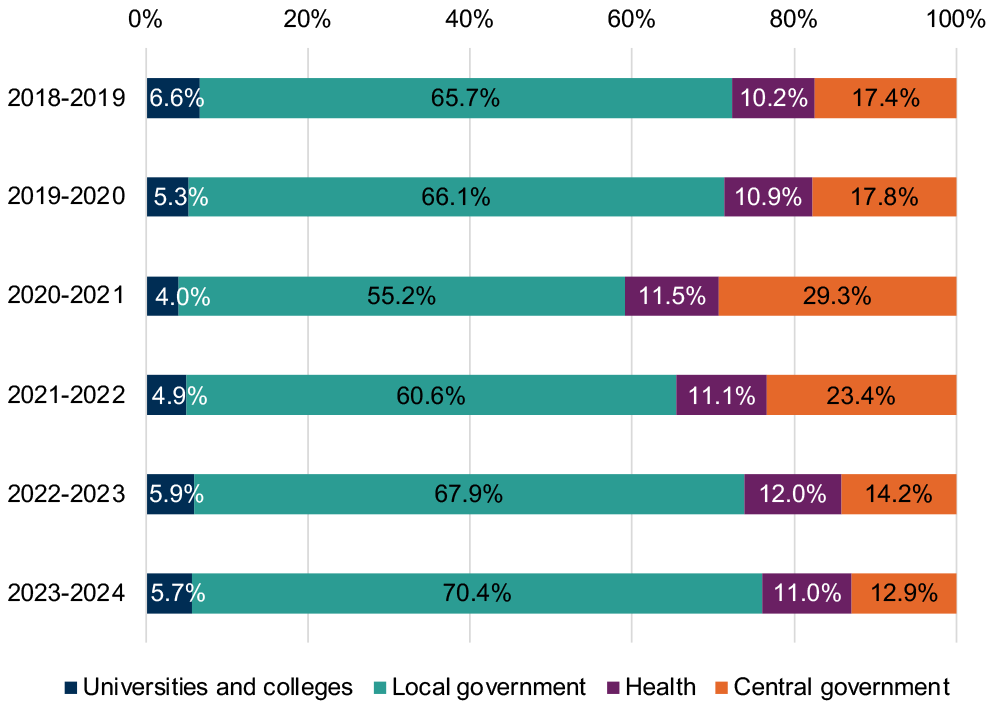
Figure 3 shows the breakdown of procurement spend reported to the Hub with suppliers registered in Scotland by sector from the 2018 to 2019 financial year until the 2023 to 2024 financial year.[18]
Source: Scottish Procurement Information Hub (“the Hub”)
The distribution of public procurement spend in Scotland is similar to the 2022 to 2023 financial year; however, overall procurement spend was greater during the 2023 to 2024 financial year. The total of public procurement spend reported to the Hub was £16.6 billion in the 2022 to 2023 financial year, compared with to £17.5 billion reported in the 2023 to 2024 financial year.
Several public bodies outlined the challenges they faced over the course of the 2023 to 2024 financial year in their annual procurement reports. Examples of challenges highlighted in the annual procurement reports included: recovery from the COVID-19 pandemic, the impact of Brexit, the effects of inflation and raised interest rates, global conflicts and cyber-attacks (Scottish Government, 2026).
In their annual procurement report, the Scottish Parliamentary Corporate Body described how they are building resilience in their supply chains to respond to these challenges.
"Work has continued on improving our supply chain resilience to disruptive events, such as pandemics, geopolitical tensions, natural disasters and cyber attacks. We undertake a cyber assurance assessment in line with [Scottish Government] guidance, adapting to their new assessment tool to help us understand the levels of cyber risk present in specific contractual or other arrangements with suppliers. This helps us determine our risk profile, and ensures that appropriate cyber assurance procedures are in place throughout our supply chains. We are currently reviewing our conditions of contract to introduce more robust clauses on sustainability and supply chain resilience."
Scottish Parliamentary Corporate Body, Annual Procurement Report 2023/24
2.2 Impact on the economy
Using the latest Scottish Government Input-Output model of the economy, it is estimated that £17.5 billion of procurement spending in 2023 to 2024 supported around £14.7 billion of activity, around 120,000 full-time equivalent jobs and contributed around £7.8 billion to Scottish GDP within the wider domestic economy when taking into account supply chain and re-spending of wage effects. This represents around 4.4% of the Scottish economy.[19]
2.3 Good for businesses and their employees
The Public Procurement Strategy for Scotland 2023 to 2028 defines ‘good for businesses and their employees’ as maximising the impact of procurement to boost a green, inclusive and wellbeing economy, promoting and enabling innovation in procurement.
2.3.1 Small and Medium-sized Enterprises (SMEs)
SMEs are businesses with fewer than 250 employees.[20] According to data reported to the Hub, public bodies spent a total of £15.9 billion with suppliers whose business size was known in the 2023 to 2024 financial year. Of that, £7.6 billion was spent with SMEs. This amounts to 47.6% of all reported procurement spend where business size was known.
Further, the majority of public procurement spend with Scottish-based suppliers[21] reported to the Hub was spent with SMEs during the 2023 to 2024 financial year. Of the £8.2 billion of reported procurement spend in Scotland where suppliers’ business size and location was known, £5.1 billion was spent with SMEs. This means that for every pound of public procurement spend reported in Scotland where suppliers’ business size was known, approximately 62 pence went to a SME.
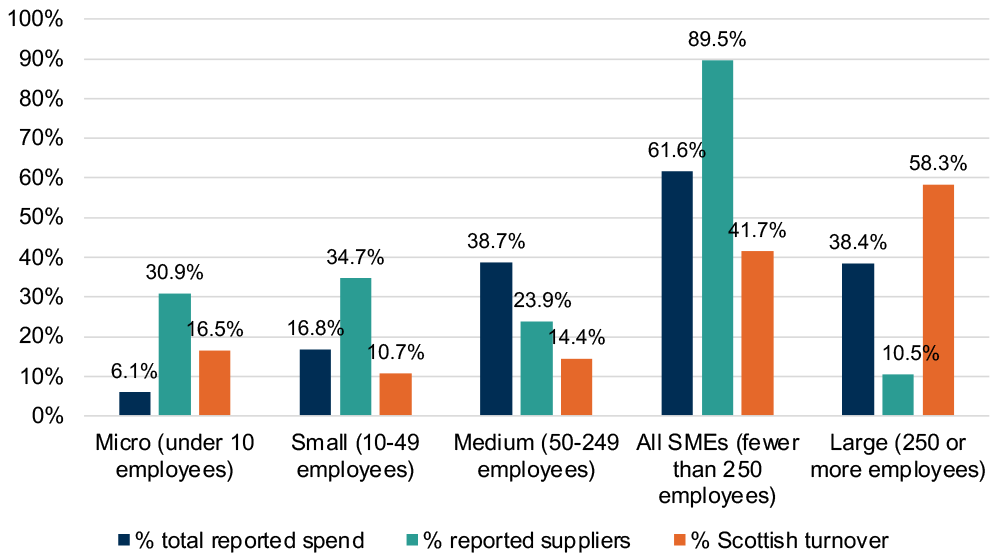
Figure 4 provides a full breakdown of the percentages of total reported procurement spend in Scotland that went to suppliers of different sizes. The largest share of public procurement spend with SMEs in Scotland reported to the Hub where suppliers’ business size was known went to medium enterprises (£3.2 billion, or 38.7% of £8.2 billion total), followed by small suppliers (£1.4 billion, or 16.8% of total). Micro businesses made up the smallest proportion of public procurement spend in Scotland (6.1%), but represented 30.9% of unique suppliers in Scotland reported to the Hub. Overall, SMEs represented the majority of reported public procurement spend within Scotland (61.6%), despite representing only 41.7% of Scottish turnover (as provided in the Businesses in Scotland data for 2024).[22]
Source: Scottish Procurement Information Hub (“the Hub”). Businesses in Scotland dataset 2024
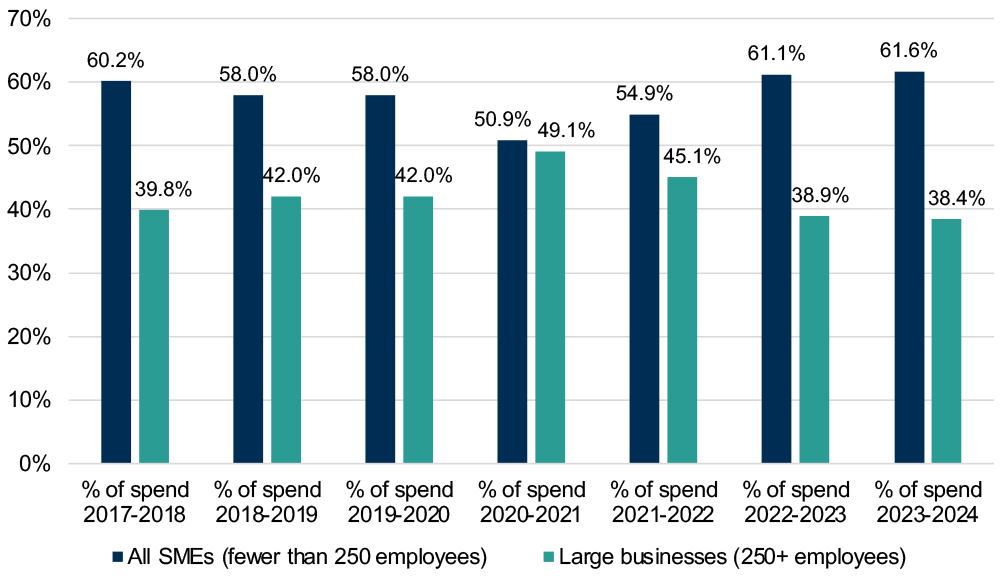
As Figure 5 below shows, the percentage of public procurement spend reported to the Hub that went to SMEs was similar to the percentage reported in the 2022 to 2023 financial year (61.1% in 2022 to 2023, versus 61.6% in 2023 to 2024). This is similar to the percentages reported in the years prior to the COVID-19 pandemic.
Source: Scottish Procurement Information Hub (“the Hub”)
Sub-contracting allows SMEs to be involved in public contracts further down the supply chain. Fifty-three public bodies (42%, n=125) provided information about the value of contracts sub-contracted to SMEs in the 2023 to 2024 financial year. The total reported value of these sub-contracts was £195.8 million (Scottish Government, 2026).
2.3.2 Third sector organisations
The Scottish Government defines the third sector as organisations (other than bodies established under an enactment) that exist wholly or mainly to provide benefits for society or the environment.[23] For the purposes of this report, the third sector includes charities, social enterprises and voluntary groups.
To gather accurate information on procurement activity in Scotland with third sector organisations in the 2023 to 2024 financial year, the list of suppliers receiving payment from a public body under a public contract (as noted in the Hub data) was linked with data on all of the known social enterprises in Scotland (gathered as part of the Social Enterprise Census). This was combined with the Hub’s data on the registered charity status of individual suppliers to establish, as much as possible, where payment for supplying a public sector contract went to third sector suppliers specifically.
However, it is worth noting that the Hub does not verify whether a supplier receiving payment for supplying a public sector contract is a voluntary group. Additionally, the steady rise in the number of social enterprises identified since 2015 in the Social Enterprise Census suggests that there are likely new organisations which have been formed since the most recent census in 2021, or which were not included for other reasons. As such, the figures presented are an estimate.
The total public procurement in Scotland reported with third sector organisations reported to the Hub in financial year 2023 to 2024 was estimated to be £1.2 billion.[24] This accounted for an estimated 13.1% of all reported Scottish public procurement spend in Scotland.
2.3.3 Supported businesses
Supported businesses are defined as organisations whose main aim is to integrate disabled[25] or disadvantaged people, both socially and professionally, and whose workforce comprises at least 30% disabled or disadvantaged people.[26]
A total of 114 public bodies (91%, n=125) detailed in their annual procurement reports how they had facilitated involvement of supported businesses in procurement activities (Scottish Government, 2026). Examples included:
- joining frameworks and professional forums to identify future procurement opportunities with supported businesses;
- use of the Scottish Government’s dynamic purchasing system (DPS) for supported businesses; and
- creation of sourcing strategies that mandate consideration of supported businesses in all regulated procurement, such as setting goals for annual spending with supported businesses or promoting awareness of supported businesses internally (Scottish Government, 2026).
Further, 122 public bodies (98%, n=125) reported on the number of regulated contracts awarded to supported businesses, and the total value of procurement spend with supported businesses during the 2023 to 2024 financial year. Nineteen regulated contracts were awarded to supported businesses by 16 public bodies in total.[27] The total spend reported with supported businesses (through both regulated and unregulated contracts), was £22.1 million (Scottish Government, 2026).
Scottish Borders Council outlined several ways in which they encourage the involvement of supported businesses in their procurement processes.
The development of every procurement strategy considers the involvement of a supported business or social enterprise as a delivery option and, as appropriate, we utilise the Scottish Government Supported Business DPS or our local providers to consider innovative ways of ensuring supported business and social enterprises have the opportunity to work with us. The Council also works closely with Scottish Borders Social Enterprise Chamber (SBSEC) to encourage supported business and other third sector organisations to access Council contract opportunities. This active role allows us to keep members updated with contract and community benefit opportunities. The Council will continue to look for opportunities for supported businesses, investigating all procurement avenues to identify appropriate providers and matching them with our contract opportunities. Community benefit clauses also provide an opportunity to direct our third party contractors/ suppliers to consider supported businesses in their supply chain.”
Scottish Borders Council Annual Procurement Report 2023-24
2.3.4 Spend in Scotland by supplier business sector
The SIC was used to provide a breakdown of the business sectors of Scottish public procurement spend in the 2023 to 2024 financial year.[28]
The primary business sector of Scottish-registered suppliers was known for £9.5 billion of public procurement spend reported to the Hub.[29] The business sector which received the most reported public procurement spend in Scotland was the construction sector (£2.4 billion, 25.8% of total procurement spend in Scotland). This was followed by procurement spend in the human health and social work activities sector (£2.3 billion, 24.6% of total procurement spend in Scotland), and administrative and support services activities (£1.1 billion, 12.2% of total procurement spend in Scotland).
Table 2 provides a breakdown of the total public procurement spend with suppliers registered in Scotland in each SIC business sector category.
| Business sector | Value of spend | % of spend |
|---|---|---|
| Accommodation and food service activities | £131,561,631 | 1.4% |
| Administrative and support service activities | £1,157,880,831 | 12.2% |
| Agriculture, forestry and fishing | £64,078,587 | 0.7% |
| Arts, entertainment and recreation | £124,897,200 | 1.3% |
| Construction | £2,449,398,495 | 25.8% |
| Education | £127,310,929 | 1.3% |
| Electricity, gas, steam and air conditioning supply | £81,494,387 | 0.9% |
| Financial and insurance activities | £194,964,867 | 2.1% |
| Human health and social work activities | £2,329,096,689 | 24.6% |
| Information and communication | £139,441,929 | 1.5% |
| Manufacturing | £158,824,650 | 1.7% |
| Mining and quarrying | £86,851,466 | 0.9% |
| Other service activities | £25,810,983 | 0.3% |
| Professional, scientific and technical activities | £767,207,563 | 8.1% |
| Public administration and defence; compulsory social security | £49,151,369 | 0.5% |
| Real estate activities | £75,194,230 | 0.8% |
| Transportation and storage | £509,075,620 | 5.4% |
| Water supply; sewerage, waste management and remediation activities | £318,052,703 | 3.4% |
| Wholesale and retail trade; repair of motor vehicles and motorcycles | £695,150,001 | 7.3% |
| Total | £9,485,444,129 | 100.0% |
Source: Scottish Procurement Information Hub (“the Hub”)
2.3.5 Fair Work First
Procurement exercises provide an opportunity for public bodies to promote high quality and fair work practices among suppliers towards their employees and the wider labour force.[30]
The Fair Work First criteria are:
- payment of at least the real Living Wage;
- provide appropriate channels for effective workers’ voice, such as trade union recognition;
- investment in workforce development;
- no inappropriate use of zero hours contracts;
- address workplace inequalities, including pay and employment gaps for disabled people, racialised minorities, women and workers aged over 50;
- offer flexible and family friendly working practices for all workers from day one of employment;
- oppose the use of fire and rehire practices.
Statutory guidance requires public bodies to consider how to address fair work practices in public contracts.
In the 2023 to 2024 financial year, 115 public bodies (92%, n=125) provided evidence in their annual procurement reports of carrying out their regulated procurement activity in accordance with Fair Work First principles (Scottish Government, 2026). Further, 111 public bodies (89%, n=125) provided information on the number of regulated contracts awarded during the financial year whose procurement processes had included a scored Fair Work First criterion, accounting for a combined total of 3,116 regulated contracts (Scottish Government, 2026).
Glasgow City Council’s annual procurement report for the 2023 to 2024 financial year outlined how they are integrating Fair Work First into their commercial processes.
The council became an accredited real Living Wage employer during FY 23/24… The council has a significant commercial spend, and a strong influencing position to encourage our supply base to pay the real Living Wage. Due to this, all relevant regulated and non-regulated contracts have a minimum 5% weighting applied against Fair Work First criteria.”
Glasgow City Council Annual Procurement Report FY23/24
Public bodies further provided information in their annual procurement reports on the number of contracts awarded to suppliers committed to paying the real Living Wage.[31] In the 2023 to 2024 financial year, 95 public bodies (76%, n=125) reported awarding contracts to a combined total of 3,391 suppliers who were committed to paying at least the real Living Wage (Scottish Government, 2026).
2.3.6 Prompt payment
The Scottish Government recognises that prompt payment of invoices is “critical to the sustainability and resilience of our supply chains in delivering goods, services and works to, or on behalf, of the people of Scotland.”[32] An invoice is considered paid on time when the contracting body pays within a specified period not exceeding 30 days from the receipt of a valid invoice as defined by the sub-contract requirements.[33]
During the 2023 to 2024 financial year, 107 public bodies (86%, n=125) provided data on the percentage of their invoices that were paid on time. Public bodies’ average prompt payment rate was 89% (n=108) during the 2023 to 2024 financial year (Scottish Government, 2026).
In their annual procurement reports, public bodies also detailed information on prompt payments made to contractors and sub-contractors in their supply chains. In total, 105 public bodies (84%, n=125) provided information on the number of regulated contracts that contained a term requiring the prompt payment of invoices in public contract supply chains. This accounted for a combined total of 3,965 regulated contracts (Scottish Government, 2026).
2.4 Good for places and communities
The Public Procurement Strategy for Scotland 2023 to 2028 defines ‘good for places and communities’ as “maximising the impact of procurement with strong community engagement and development to deliver social and economic outcomes as a means to drive wellbeing by creating quality employment and skills.”
2.4.1 Spend in Scotland by supplier location
In the 2023 to 2024 financial year, suppliers in each of Scotland’s local authority areas were represented in the procurement data public bodies reported to the Hub.
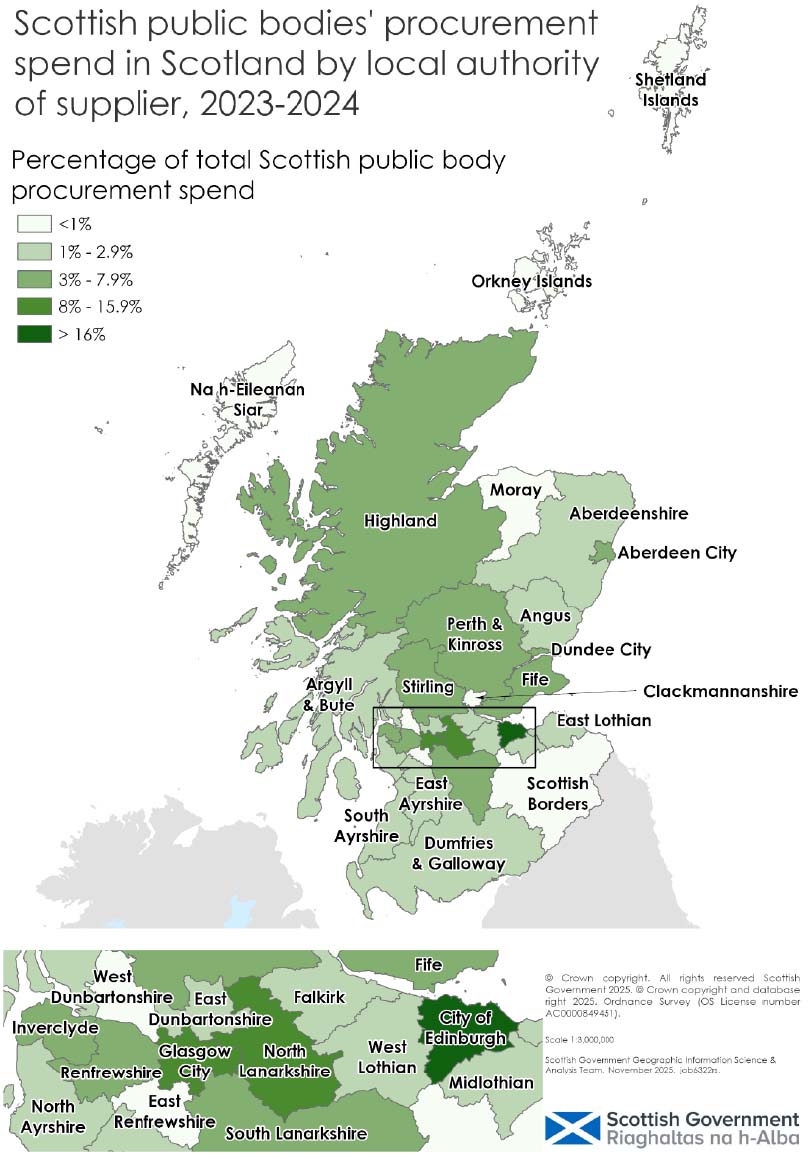
Figure 6 is a map of Scotland’s 32 local authority areas. It shows the percentages of the £9.5 billion total public procurement spend in Scotland reported to the Hub, broken down by the local authority area of suppliers’ registered addresses. Suppliers registered in the City of Edinburgh received the most reported public procurement spend (£1.6 billion, 17.1% of total), followed by Glasgow City (£1.3 billion, 13.8% of total) and North Lanarkshire (£940 million, 9.9% of total).
Source: Scottish Procurement Information Hub (“the Hub”)
Figure 7 shows the distribution of procurement spend in Scotland (from data reported to the Hub), with percentage of total registered businesses and percentage of total Scottish turnover (from the Businesses in Scotland dataset) broken down by local authority. Generally, the local authorities that had the most public procurement spend also had the most registered businesses and Scottish turnover. Some exceptions include Aberdeen City, which had 4.4% (£417 million) of reported procurement spend in Scotland but 12.4% (£42 billion) of total Scottish turnover, and North Lanarkshire, which had 9.9% (£940 million) of reported procurement spend in Scotland but 5.1% (£17 billion) of total Scottish turnover.
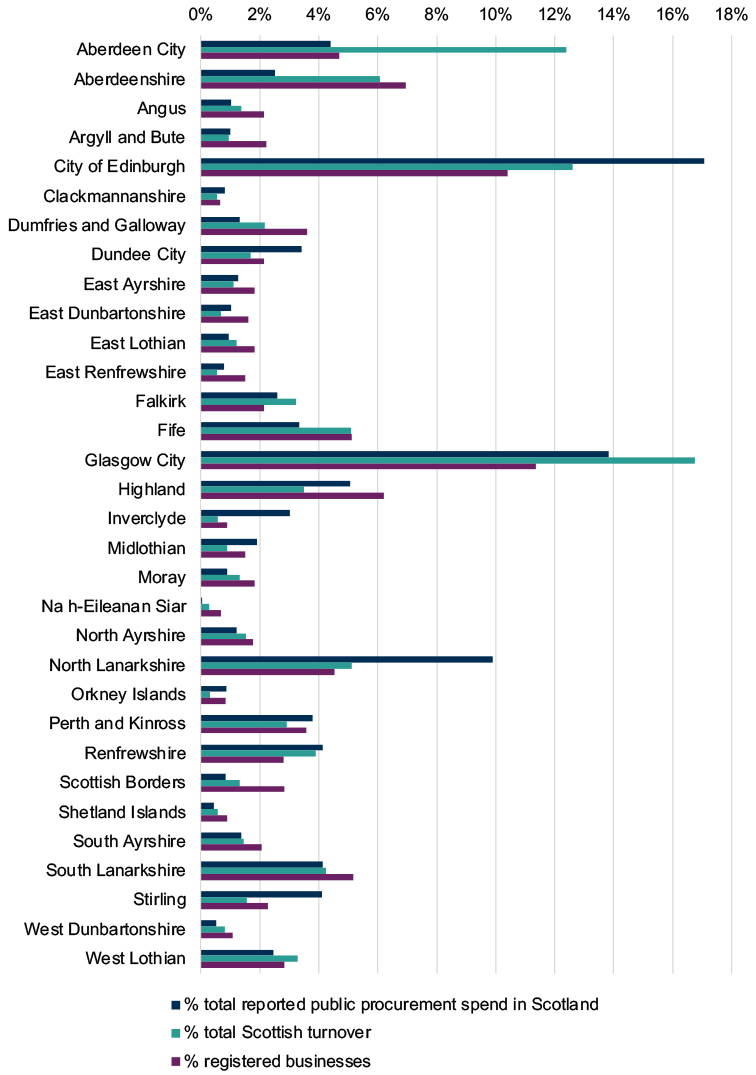
Source: The Scottish Procurement Information Hub (“the Hub”) (for reported public procurement spend), Businesses in Scotland dataset 2024 (for Scottish turnover and registered business figures)
The total procurement spend in Scotland reported to the Hub where both suppliers’ business size and location was known was £8.2 billion. Figure 8 shows a breakdown of reported procurement spend in Scotland with SMEs versus large businesses by the local authority of suppliers’ registered addresses. Na h-Eileanan Siar and the Shetland Islands, the two local authority areas with the least procurement spend reported to the Hub (£4.1 million and £42.7 million respectively) had the highest proportions of reported procurement spend with SMEs (99.9% and 99.0% respectively).
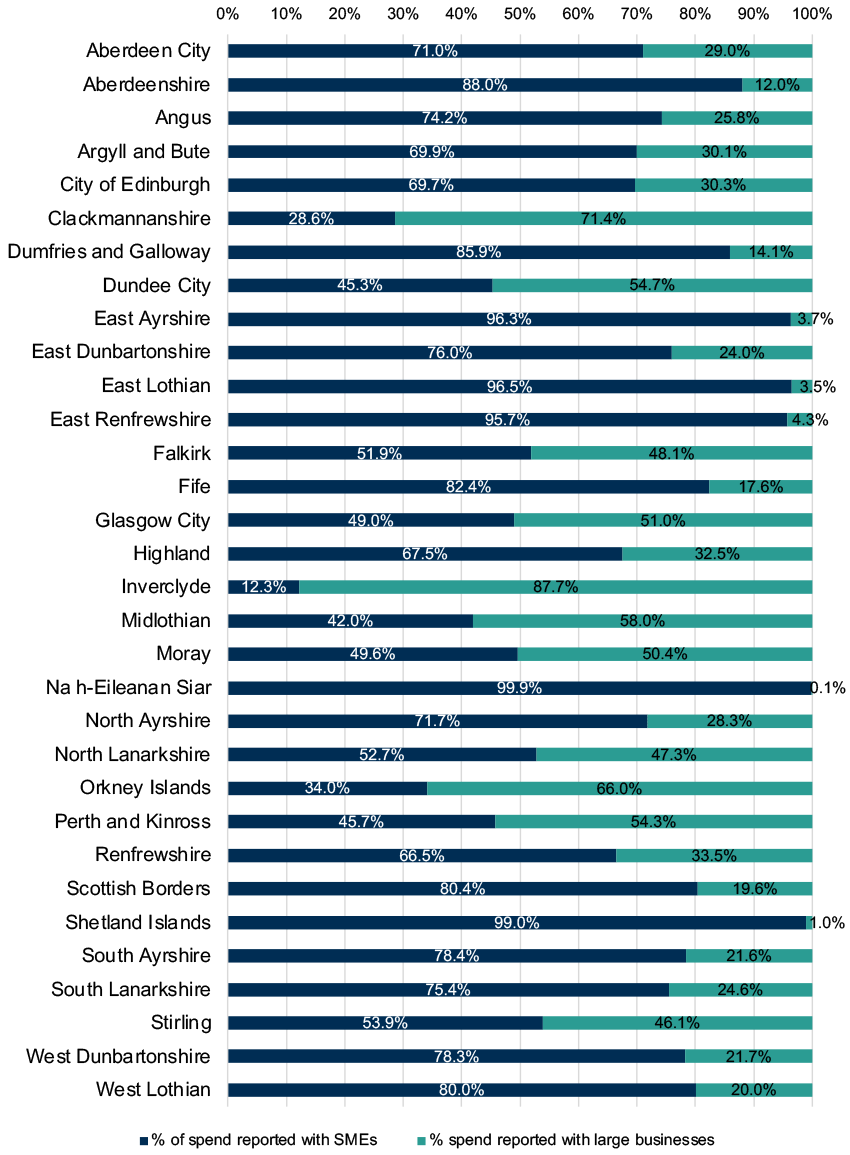
Source: Scottish Procurement Information Hub (“the Hub”)
2.4.2 Spend in Scotland by SIMD quintile
The Scottish Index of Multiple Deprivation (SIMD) classification enables assessment of the extent to which suppliers from diverse socio-economic areas are engaged in public contracts. For the 2023 to 2024 financial year, payment data on suppliers reported to the Hub was matched with SIMD data by postcode to identify public procurement spend by levels of deprivation in suppliers’ local areas. However, it is worth noting that not every supplier’s post code could be linked between these two datasets.
The total public procurement spend in Scotland reported to the Hub that could be matched to SIMD data for local area deprivation was £9.4 billion.[34] Of that matched procurement spend, an estimated 36.9% (£3.5 billion) was awarded to suppliers in the 40% most deprived areas of the country. Suppliers in the 60% most deprived areas received an estimated £5.2 billion (or 55.8%) of reported public procurement spend in Scotland.
Figure 9 compares public procurement spend in Scotland reported to the Hub by SIMD with the total number of businesses and Scottish turnover according to the Businesses in Scotland dataset.[35]
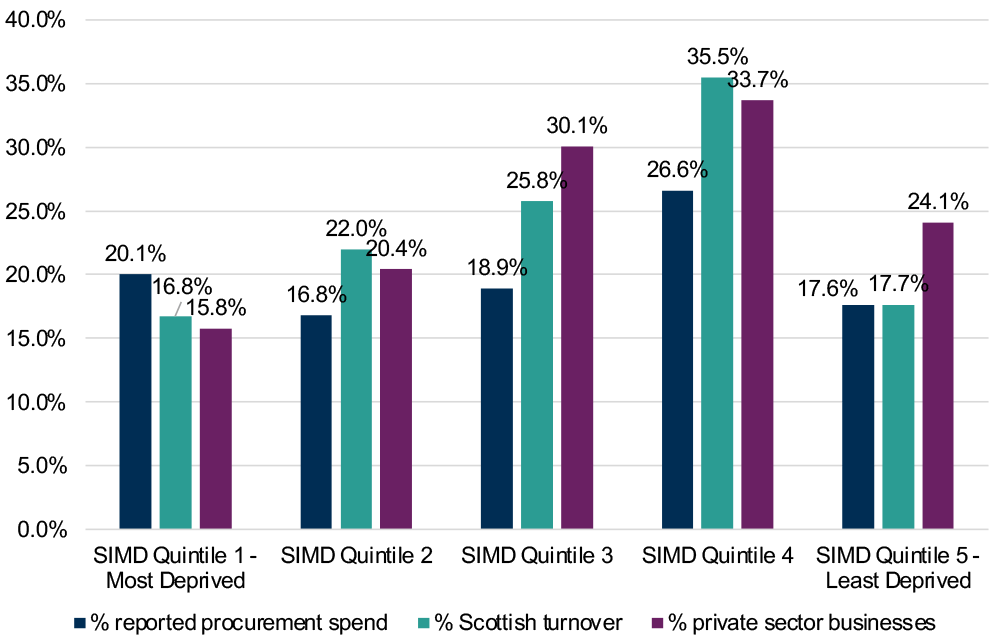
Sources: Scottish Procurement Information Hub, Businesses in Scotland data for 2024, Scottish Indices of Multiple Deprivation (SIMD)
2.4.3 Spend in Scotland by urban/rural classification
The Scottish Government’s urban/rural classification is useful in building an understanding of the extent to which public procurement spend is helping to drive economic growth in different types of communities. This data is an estimate generated by comparing the urban/rural classification data to suppliers’ registered addresses in the data reported to the Hub.
The total public procurement spend in Scotland reported to the Hub that could be matched to urban/rural classification data was £9.4 billion. Figure 10 shows that an estimated 84.2% (or £7.9 billion) of procurement spend reported to the Hub was with suppliers in either large urban or other urban areas, where urban/rural classification was known. Rural areas (including accessible rural, remote rural and very remote rural areas) accounted for 9.7% (or £914 million) of this reported procurement spend.
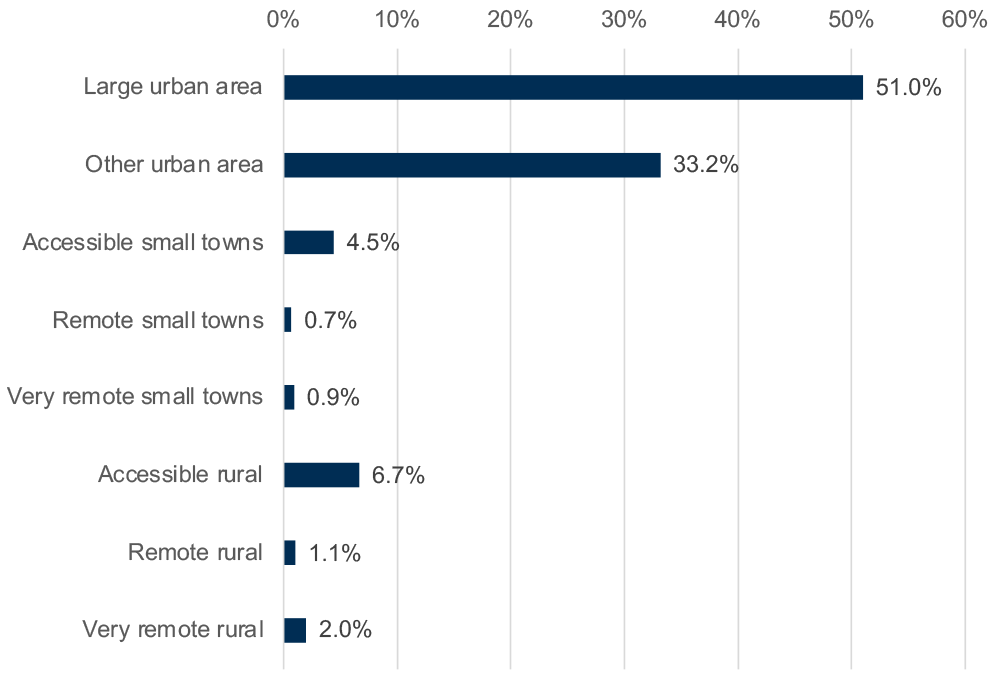
Source: Scottish Procurement Information Hub (“the Hub”)
2.4.4 Proximity of spend in Scotland
The local authority area of suppliers’ registered address could be matched to £9.5 billion of the procurement spend in Scotland reported to the Hub. Of that, 38.0% (or £3.6 billion) with suppliers whose addresses were in the same local authority area as the buying public body, where supplier location was known. The remaining 62.0% (or £5.9 billion) was spent with suppliers who, according to their registered addresses, were not located in the same local authority area as the contracting public body.
2.4.5 Community benefits
Scottish public bodies use community benefit requirements within their procurement exercises to deliver a wide range of economic, social and environmental benefits to communities across Scotland.[36] Under the 2014 Act, public bodies must consider whether to include community benefit requirements in all contracts with an estimated value of £4 million or more.
A total of 120 public bodies’ annual procurement reports (96%, n=125) provided data on the number of regulated contracts awarded with a value of over £4 million in total and the number of regulated contracts awarded with a value of over £4 million that contained community benefit requirements. Of the combined total of 380 regulated contracts valued over £4 million, public bodies reported that 321 (84%) contained community benefit requirements (Scottish Government, 2026). In addition, 118 public bodies (95%, n=125) reported that they had awarded a combined total of 1,630 regulated contracts valued at less than £4 million that contained community benefit requirements in the 2023 to 2024 financial year (Scottish Government, 2026).
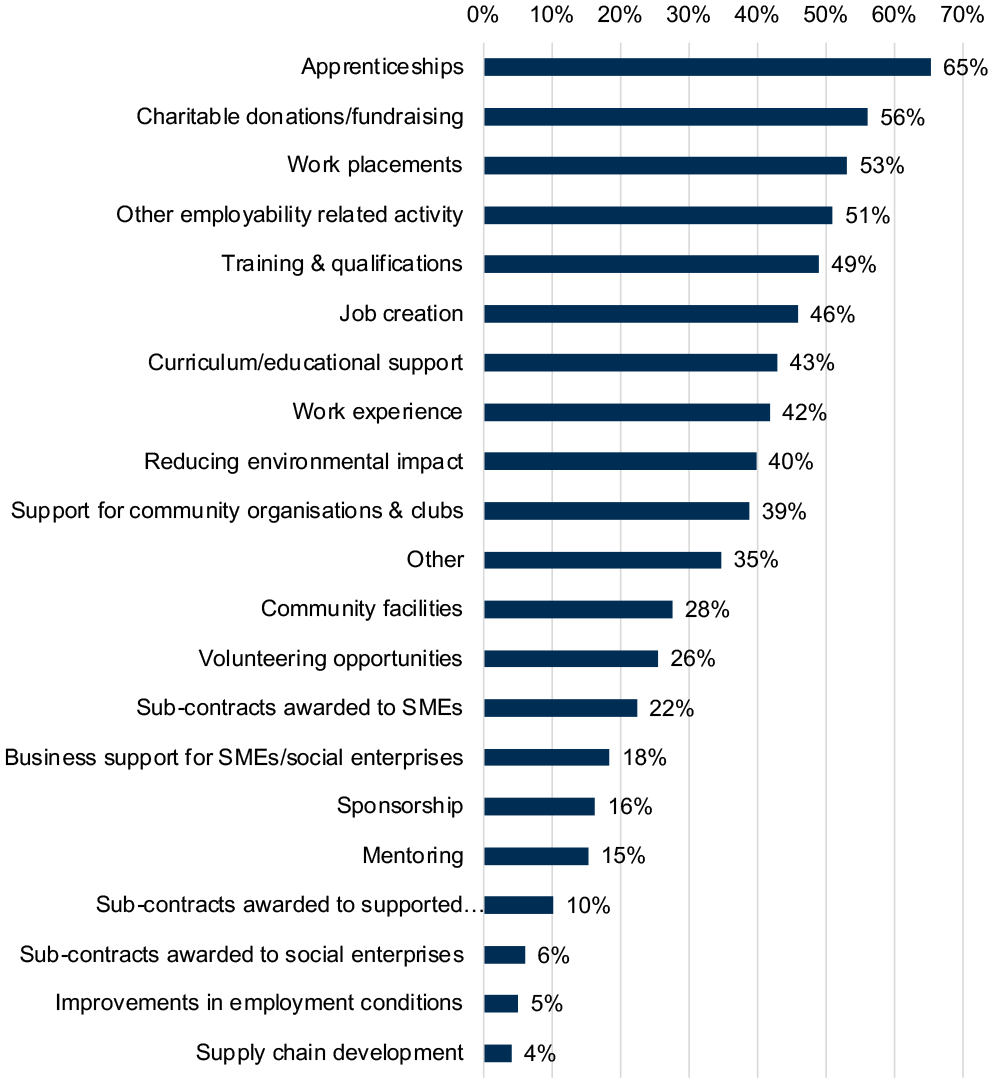
Public bodies also outlined the types of community benefits they had delivered as part of their procurement activity during the 2023 to 2024 financial year. In their annual procurement reports, a total of 98 public bodies (78%, n=125) outlined the specific types of community benefits that had been delivered through their procurement activity in 2023 to 2024 (Scottish Government, 2026). Figure 11 shows that the most commonly reported community benefit was apprenticeships (64 in total, or 65%, n=98), followed by charitable donations or fundraising (55 in total, or 56%, n=98), and work placements (52 in total, 53%, n=98) (Scottish Government, 2026).
Source: Analysis of Public Body Procurement Reports and Strategies (2023 to 2024)
Argyll and Bute Council’s annual procurement report for 2023 to 2024 outlined how fostering local networks and ‘anchor’ organisations is helping them promote community wealth building objectives.
The Council continues this engagement, liaison and dialogue at various stages of the procurement process where appropriate. This is fundamental to support transparency as well as community wealth building and inclusive local and regional growth, we continue to work closely with Economic Development and our other local ‘anchor’ organisations to harness our spending power in terms of buying from local businesses within the supply chain, maximising employment opportunities and reviewing the use of land and property assets to benefit our local economy.”
Argyll and Bute Council Annual Procurement Report 2023/24
2.5 Good for society
The Public Procurement Strategy for Scotland 2023 to 2028 defines ‘good for society’ as ensuring that public sector procurement is “efficient, effective and forward thinking through continuous improvement to help achieve a fairer and more equal society.”
2.5.1 Equal treatment and non-discrimination
Public bodies are required to carry out their regulated procurement activities in line with general duties of equal treatment and non-discrimination. Within public procurement, equal treatment and non-discrimination refers to the requirement to ensure that all economic operators are treated fairly and that no suppliers receive unfair advantages or disadvantages.[37] This helps encourage competition, allowing a wide variety of potential suppliers to bid for Scottish public sector contracts, and therefore deliver value for public money.
The 2014 Act does not require public bodies to report on how they have carried out their regulated procurement activity in line with equal treatment and non-discrimination duties. However, 123 public bodies (98%, n=125) provided this information in their annual procurement reports for the 2023 to 2024 financial year (Scottish Government, 2026).
Examples of this evidence included:
- advertising all regulated contracts on electronic procurement platforms and e-tendering systems such as Public Contracts Scotland (PCS) and Find a Tender;
- ensuring all procurement staff are adequately trained to deliver high quality procurement;
- setting and adhering to clear evaluation criteria for bids on public sector contracts;
- using clear and precise language in all procurement documentation;
- developing and publishing guidance and advice for potential suppliers (Scottish Government, 2026).
2.5.2 Climate change
The Sustainable Procurement Duty[38] requires public bodies to consider, among other things, how they can improve the economic, social and environmental wellbeing of their area. Public bodies also use their annual procurement reports to detail how their regulated procurements are used to address climate issues. Scottish Procurement Policy Note SPPN 3/2022 strengthened this commitment and encouraged more alignment in reporting standards and signposting between annual procurement reports and Public Bodies’ Climate Change Duties (PBCCD) Annual Reports.
The Sustainable Procurement Tools website, which is designed to help public sector organisations identify and address how they can optimise the economic, social and environmental outcomes of their procurement activity, was expanded in the reporting period. In December 2023, new best practice sustainability tests were made available on the Sustainable Procurement Tools website, covering uniforms and textiles, and furniture. Additionally, in response to user feedback, several other enhancements were applied to the Prioritisation Tool which is part of the Sustainable Procurement Tools.
The Climate Literacy eLearning that is hosted on the tools site was promoted by the Scottish Government and its partner networks across Scotland, with 1,292 people having completed training by 31 March 2024.
One hundred and seven public bodies (86%, n=125) who provided an annual procurement report in financial year 2023 to 2024 provided evidence of addressing environmental wellbeing and climate change through their public procurement activities (Scottish Government, 2026). Many made general commitments to reducing carbon emissions or making wider environmental changes over time. Other public bodies provided more specific examples of how they considered climate and environmental outcomes in their procurement activity, including:
- aligning annual procurement report climate reporting to compliance with Public Bodies Climate Change Duties;
- use of environmental considerations in tenders including requiring more stringent environmental standards, certification, or accreditation from relevant contractors and/or including climate focused questions;
- aligning corporate economic development and environmental initiatives, including as part of a Community Wealth Building agenda;
- training for procurement and commissioning staff, including using the training available through the Sustainable Procurement Tools;
- using the Scottish Public Procurement Prioritisation Tool and Sustainability Test to focus climate requirements on relevant areas;
- collaborating with centres of expertise on how best to include climate and environmental requirements in frameworks and call off contracts; and
- using supply chain monitoring to manage scope 3 emission hot spots,[39] either through external tools or in partnership with centres of expertise (Scottish Government, 2026).
2.6 Open and connected
The Public Procurement Strategy for Scotland 2023 to 2028 defines ‘open and connected’ as ensuring that “procurement in Scotland is open, transparent and connected at local, national and international levels.”
2.6.1 Openness and transparency
The Scottish Government is committed to being open and transparent regarding how public money is spent on procurement.[40] The 2014 Act’s general duty of transparency relates to the requirement to ensure open, clear and accurate communication with potential suppliers throughout the procurement process.
A total of 120 public bodies (96%, n=125) detailed how their procurement activities had been carried out in accordance with duty of transparency in their 2023 to 2024 annual procurement reports (Scottish Government, 2026).
Public bodies with regulated procurement spend of less than £5 million during the financial year are not required by the 2014 Act to produce an annual procurement report, but can produce one if they wish to do so. In 2023 to 2024, 31 of the 125 annual procurement reports (25%) analysed for this report were produced by public bodies that had less than £5 million of regulated procurement spend during the 2023 to 2024 financial year (Scottish Government, 2026).
2.6.2 International influence of Scottish public procurement
This section covers the engagement representatives of the Scottish Government undertook with the international public procurement community to support the development of leading professional practice in the profession.
Examples of international influence in the reporting period are as follows.
In April 2023, the Scottish Government delivered a presentation on the professionalisation of procurement, alongside representatives from George Washington University Law School, and the OECD, who cited Scotland’s work in their report titled Professionalising the public procurement workforce.
In March 2024, the Scottish Government presented to National Association of State Procurement Officials (NASPO) at their International Summit in Nashville, Tennessee, USA.[41] The presentation shared the Scottish Government’s approach to maximising, measuring and continuously improving the impact of procurement. It shared how, in Scotland, this is used to build diverse, resilient, fair and green supply chains, and how the approaches drive capability, consistency and efficiency. As a consequence of this engagement NASPO announced a new collaboration agreement with the UK, Scotland, Wales and Northern Ireland commercial and procurement functions.
CivTech sits in the Scottish Government’s Digital Directorate. Its mission is to drive daring and innovation in the public sector by collaboratively solving challenges to make people’s lives better – and in doing so create generations of sustainable, high growth potential businesses. CivTech invites companies and individuals to submit applications to a series of open challenges from across the public sector. These challenges are advertised in rounds, with funding and support offered to help bring those applicants’ ideas through to implementation. The open challenges for CivTech round 9 went live in July 2023, with £7.8 million in contract opportunities offered. In total, 13 companies made it to the final stage, responding to a range of environmental, healthcare, economic and cyber-crime challenges facing the public sector.
The Scottish Government continued to share the Procurement People of Tomorrow (PPoT) programme with other governments during 2023 to 2024, including with Finland and Wales. PPoT is a Scotland-wide partnership programme, involving both the public and private sector, that aims to create our ‘future’ procurement and commercial talent.
Scottish procurement also made an impact beyond its borders. The Scottish Government had a requirement to place a contract with external service providers for the provision of Climate Just Communities (three Lots – Malawi, Rwanda and Zambia). The programme focused on countries hardest hit by the climate crisis by providing support of up to £24 million in Scottish Government funding. It enabled aid agencies to work closely with communities to manage the material and social effects of climate change, by funding projects such as building more climate-resilient housing or repairing village flood defences. The contract commenced on 1 August 2023 for a period of two years with an option to extend for a third year. The purpose of this service is to deliver on-the-ground work in Malawi, Rwanda and Zambia to achieve climate justice outcomes.
2.6.3 Improving procurement capability and professional development
There were many initiatives and programmes to improve public procurement capability and professionalism over the course of the 2023 to 2024 reporting year.
The Scottish Government continued to engage both nationally and internationally on the professionalisation of procurement during the 2023 to 2024 financial year, working collaboratively in the reporting period with other public bodies across Scotland to build both the professional capability and capacity of the procurement community. This was achieved through open training programmes and talent initiatives, such as connecting sectoral graduate schemes through the PPoT programme.[42]
For individuals and organisations across Scotland, the National Procurement Development Framework allows those working in procurement to assess their skills against expected standards in their role. The tool also facilitates access to continuous professional development to grow those skills for people and organisations. The second generation of the tool was implemented in the 2023 to 2024 financial year, having been procured by the Scottish Government in March 2023.
The Sustainable Procurement Tools were designed to help public sector organisations identify, prioritise and address how they can optimise the economic, social and environmental outcomes of their procurement activity. They include a range of freely available tools, guidance, case studies and eLearning and were updated during the year to include a range of model sustainability tests, new case studies from across the public sector and additional eLearning. In the 2023 to 2024 financial year, the Sustainable Procurement Tools eLearning modules had the following completion rates:[43]
- Introduction to Sustainable Procurement eLearning completions: 37 organisations, 193 individual users;
- Climate Literacy eLearning completions: 42 organisations, 281 individual users;
- Circular Procurement and Supply, 32 organisations, 149 individual users.
To improve understanding of how to apply economic, social and environmental requirements through public procurement, between January and March 2024, the Scottish Government provided training sessions to 287 people from across the public sector on sustainable procurement. This was in addition to widely promoting the progressive legislative and policy framework, guidance and tools and providing targeted on-shoulder support to help embed sustainable procurement practice.
2.6.4 Innovation
In July 2023, the Scottish Government published SPPN 3/2023, which provides details of innovation-related developments including updates to Public Contracts Scotland (PCS), the launch of Scotland Innovates and associated guidance to support public bodies to consider, and act upon opportunities to promote innovation.
Scotland Innovates, the national supplier-led innovation service designed to connect businesses and innovators with the Scottish public sector was launched in July 2022, during the previous reporting period. In the 2023 to 2024 financial year received submissions in diverse areas such as the prevention of neonatal deafness, prevention of stroke through advanced cardiology diagnostic tests, Data Subject Access Request (DSAR) efficiency improvement and guidance for the circular economy for lighting.
Diabetes is a clinical priority for the Scottish Government, which has invested over £19 million since 2021 to support the increased provision of diabetes technologies, including Closed Loop Systems (CLS) (Scottish Government, 2023f). During the 2023 to 2024 financial year, a value case was approved to create a national CLS onboarding team, working closely with Health Boards, to assist with challenges experienced in rolling devices out to individuals with type 1 diabetes. This technology will become more widely available thanks to an additional £350,000 of Scottish Government funding to accelerate the distribution of CLSs. This investment saw a dedicated team created by the National Centre for Sustainable Delivery at NHS Golden Jubilee to support NHS health boards to roll out the technology faster and more efficiently across Scotland before moving to the current business as usual process. The creation of this team to support the national rollout of diabetes CLSs was one of the first innovations to be approved through the Accelerated National Innovation Adoption (ANIA) Pathway.[44]
In total, 108 annual procurement reports (86%, n=125) provided information on promoting innovation in their procurement practices. Discussions of innovation included references to technological, digital or infrastructure developments. Examples included increased use of e-procurement systems, such as digital trackers, integration of AI for time management, and building to Passivhaus and Royal Institute of British Architects 2030 Sustainable Outcomes standards (Scottish Government, 2026).
Contact
Email: scottishprocurement@gov.scot