International strategy: annual report 2024 to 2025
Annual report on delivery of Scotland’s International Strategy, highlighting progress made during the 2024 to 2025 reporting year.
Climate change, biodiversity and renewable energy
Scotland’s International Strategy sets out actions and aims for climate change, biodiversity and renewable energy in areas including:
- climate change
- blue economy
- hydrogen
- offshore wind
Tackling climate change, protecting biodiversity, and advancing renewable energy are central to our international efforts. This work includes supporting a Just Transition to net zero greenhouse gas emissions, promoting Scotland’s leadership in energy transition, particularly in hydrogen and wind power, and fostering international collaboration through renewable energy initiatives and knowledge sharing with our development partners.
Renewable energy deployment and the green transition represent a major economic opportunity for Scotland, with significant overlapping interest in renewables through our activity on trade and investment. As noted in the previous chapter, we published the GIS in September 2024 which sets out the economic sectors and industries which we consider have the greatest strengths and potential opportunities to help Scotland realise the economic benefits of the global transition to net zero.
In 2024-25 we made significant progress towards the establishment of Scotland’s two Green Freeports (Inverness and Cromarty Firth and Forth), with business cases nearing final approval.
In May 2024, Sumitomo Electric UK Power Cables Ltd (SEUK), a subsidiary of Japanese company Sumitomo Electric Industries Ltd (SEI), broke ground on its new £350 million subsea cable manufacturing plant at Port of Nigg, part of the Inverness and Cromarty Firth Freeport: a significant milestone for Scotland’s offshore wind supply chain. SEUK are establishing major operations in Nigg, to supply high voltage cables to the offshore wind farms and interconnectors which are essential for the transfer of green electricity into the UK. One of the largest-ever inward investments to the Highlands and Islands region, the project includes plant and equipment investment and construction of a new purpose-built factory, stimulating significant economic activity across industry supply chains at regional, Scotland and UK levels. This includes creating around 330 jobs in Scotland over the next ten years, 265 of them in the Highlands and Islands, including 156 on site.
Other significant investments in 2024-25 include £300 million announced by Haventus at Ardersier and £50 million by Forth Ports at Leith.
We published our Renewables Exports Action Plan, detailing how Scotland is supporting the growth of renewable energy exports by strengthening data, supply chains, international market engagement and promoting Scotland’s renewables supply chain globally. It builds on the 2023 Framework by funding and coordinating targeted activities across agencies and industry. We have supported over 80 companies through grants, trade missions and export strategy programmes; developed 29 market insight reports and launched a new export self-assessment tool for businesses.
Key highlights from this section include:
- Scotland led global advocacy on loss and damage finance at COP29 and hosted its second Loss and Damage Conference in Edinburgh
- The Climate Justice Fund supported community-led programmes in Malawi, Zambia and Rwanda, including housing, disability inclusion and food security
- Scotland and Ireland deepened collaboration on offshore wind, with joint events to strengthen government and industry ties, trade missions and cross-border investment
Climate change
The UN climate conference COP29, took place in Baku, Azerbaijan from 11 to 22 November 2024. The Cabinet Secretary for Net Zero and Energy used the platform afforded to Scotland as the first Global North government to commit funding to address loss and damage to call for greater action on climate justice and finance. In Scotland’s capacity as President of the Regions4 Development Network and the Under2 Coalition European Co-chair, the Cabinet Secretary called for the strengthening of devolved, state and regional governments’ international climate influence and action.
The Cabinet Secretary attended meetings showcasing Scotland’s net zero journey and pathway to resilience. COP29 also served as an opportunity to learn from others and strengthen international relations. We have previously published a full report on COP29 outcomes, achievements and costs.16
The Cabinet Secretary’s meetings focused on the Newly Climate Quantified Goal (NCQG) on finance, which was negotiated at COP29. She heard from Global South organisations and discussed barriers to accessing loss and damage payments and land ownership issues. These discussions informed her meetings with others, including the United Nations Framework Convention on Climate Change (UNFCCC), where she called for a subgoal on loss and damage within the NCQG. She hosted events focused on Scotland’s loss and damage programmes, emphasising the need for funds to be grants not loans, to be mobilised urgently and to have a specific focus on communities.
To promote Scotland’s roles as President of Regions4 and co-chair of the Under2 Coalition, the Cabinet Secretary hosted an event with governments financing domestic climate action and chaired a meeting with Regions4 Vice Presidents to hear their visions for the network. She also participated in a panel at the Under2 Coalition’s General Assembly on how to raise climate finance and in a US event on states’, regions’ and devolved governments’ ambitions.
The Cabinet Secretary used her meetings and engagements to emphasise Scotland’s progress on renewables, reducing emissions, building resilience and protecting biodiversity. She met with partners to discuss the just transition from fossil fuels, emphasising the importance of building a skilled and experienced workforce. In addition, she spoke at an event focused on the need for financing to accelerate mitigation, emphasising the success of Scotland’s Peatland and Woodland Carbon Code.
The Cabinet Secretary strengthened international relationships through meetings with the governments of Barbados, Azerbaijan and Malawi, discussing closer partnerships on renewable energy and disaster relief.
The Cabinet Secretary also met with youth activists and civil society partners from the Global South to hear first-hand how they were being impacted, and used events to platform their voices.
The Cabinet Secretary also attended Climate Week NYC in September 2024, with a programme supported by SG USA in Washington, DC. Through the Net Zero Futures Policy Forum, co-hosted with New South Wales, we support policy exchange to help governments implement effective climate strategies. Our international engagement at COP and Climate Week consistently promotes Scotland’s net zero sector and attracts innovation and investment.
Over the last year, we continued to play a vital bridging role in global climate efforts, aligning loss and damage non-state actors around priority activities that support UNFCCC processes. Our advocacy for urgent action on loss and damage remains a priority, with a focus on ensuring climate finance is gender and disability-responsive.
We hosted our second Loss and Damage Conference in Edinburgh, bringing together government, civil society and academia stakeholders to discuss priorities and inform the development of the UNFCCC Fund for responding to loss and damage. At COP29 and Climate Week NYC, we facilitated roundtable discussions on loss and damage with non-state actors, highlighting the perspectives of Global South partners. Through our leadership in the Under2 Coalition and Regions4, we continued to build capacity and raise climate finance, while offering our platform to Global South partners.
Our commitment to climate justice is reflected in our support for community led loss and damage programmes. Across our Climate Justice Fund, we back community-driven approaches and share case studies that highlight their impact. At COP29 and Climate Week NYC, we used our platform to spotlight these approaches through co-hosted events and round table participation with Global South partners.
We also worked to strengthen the global evidence base on climate justice, loss and damage. Insights from our second Loss and Damage Conference were published to inform global policy and practice and we collaborated with partners advocating for a community access window in the UNFCCC Fund and programmes.
International Strategy Case Study 4
Climate Justice Fund
Climate Just Communities (CJC) is one the Climate Justice Fund’s flagship programmes, operating in Malawi, Rwanda and Zambia. It takes a community led approach, targeting the most vulnerable.
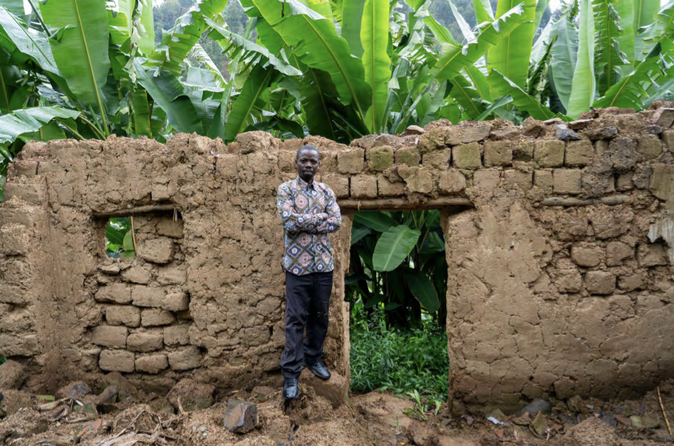
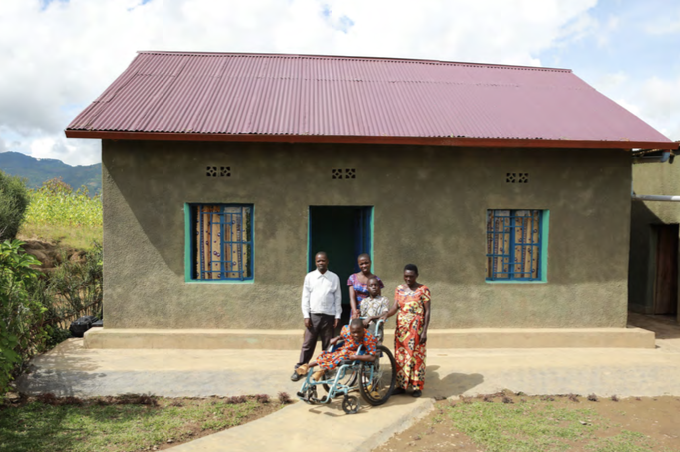
In 2023, Solomon and Colette lost their home during devastating floods and landslides in Rwanda. Made of earth, and perched on a steep hillside, their home of 17 years collapsed in the night after heavy rain. Colette recalled, “I was breastfeeding my daughter. I had to rush out of the house to save my children.”
The family lost everything, including their daughter Esther’s wheelchair.
Thanks to CJC, Solomon and Colette were supported to rebuild their lives. A new house was built in a safer location, made of concrete and with a tin roof. The house is adapted for Esther’s needs too and includes a water tank and furniture – amenities they never previously owned.
Solomon said: “I am confident that my new house is strong. I don’t think I will experience a landslide which will affect my house again. My daughter has a life now too,” he added, “she can go and watch football which she enjoys so much. She is happy.”
Colette continued: “The water tank has saved me so much time going down the steep slope to the river. I can’t emphasise enough the convenience of just drawing water from the tank. I cherish not having to carry water on my head thanks to the CJC programme. See my hair now, it has grown!”
“Quite often, all we would eat was cassava leaves, but now we have a backyard garden with different types of vegetables.”
Co-designed with local communities, CJC has supported families like Solomon’s with land terracing and damaged housing – the issues the communities identified as most important to them.
Solomon concluded: “Climate change is real… But the funding from the Scottish Government came at the right time when we, as a family, needed support. If disaster strikes in the future, we can support each other now.”
Blue economy
Each year, Scotland engages in a suite of negotiations with other Coastal States to agree fishing opportunities for the following year. Scottish Government officials play a key role in these talks, forming part of the UK delegation, and seeking to protect Scottish interests by securing sustainable catching opportunities.
In 2024, negotiations concluded with agreement on 2025 fishing opportunities worth over £600 million to Scotland. This successful outcome was driven by close consideration of the best available scientific evidence, socio-economic factors, and the specific dynamics of fisheries. Officials engaged with a wide spectrum of stakeholders in the lead-up to and throughout the negotiations, including both industry and environmental groups.
As well as agreeing catch limits for shared fish stocks (stocks that are present in the waters of more than one Coastal State), Parties also seek to agree longer term management measures. These include relative shares of the overall catch limit, long term management strategies, and technical measures. Additionally, Parties agree exchanges of opportunities, which allow Scottish vessels to fish in Norwegian and Faroese waters, and vice versa.
The international negotiations calendar involves meetings throughout the year with partners including the EU, Norway and the Faroe Islands. These meetings are a valuable opportunity to exchange information and updates about domestic fisheries policy, share best practice, and coordinate joint operational and scientific work. Joint work is often undertaken through multilateral working groups, and Scotland engages actively in these groups, drawing on in-house expertise and well-established international relationships.
From agreeing North Sea and West of Scotland quotas with the EU, to exchanging opportunities with Norway and the Faroe Islands, and negotiating shares for highly migratory stocks across the North East Atlantic, Scotland’s engagement in international fisheries enables us to promote environmentally and economically sustainable policies, in Scottish waters and beyond.
Offshore wind
Scotland is recognised as a global leader for offshore wind excellence with a current pipeline of over 40GW of offshore wind projects.
We are now in year two of our commitment to invest up to £500 million over five years, which is expected to leverage additional private investment of £1.5 billion in the infrastructure and manufacturing facilities critical to growing the sector.
Working with Scottish, UK and international investors, and industry and public sector delivery partners, our ambition is to unlock this once in a generation opportunity, identifying and delivering the best projects, taking a commercial-first approach and aligning our strategic investment with international supply chain and investor opportunities.
In total, over the last 18 months, we have invested almost £150 million of public sector funding in a range of supply chain and ports projects, leveraging up to £670 million in private investment into projects with the potential to support around 5,000 jobs.
In addition to the Scottish National Investment Bank’s £50 million commercial investment to support development at Ardersier Port, investments include:
- £20 million commercial investment in XLCC’s subsea cable manufacturing facility at Hunterston
- £3.2 million of grant funding for the Port of Montrose to support a £7.2 million project to acquire and develop land, offering opportunities for expansion while freeing up space at the port to accommodate high-value operations
- up to £10 million grant funding for the Port of Nigg as part of a £31.5 million development of the Port’s Inner East Quay to increase capacity and capabilities
- £5 million grant funding for Scapa Deep Water Quay to further the development of a new, cutting-edge hub for offshore wind at Scapa Flow, helping create economic opportunities for the Orkney Islands
- £6.7 million investment in Subsea Micropiles, with £2.5 million co-investment from global investor Marubeni, to accelerate the development of cutting-edge foundation technology, supporting up to 100 jobs
- £24.5 million grant funding for Sumitomo’s £350 million subsea cable manufacturing plant at the Port of Nigg, supporting hundreds of jobs and strengthening Scotland’s offshore wind supply chain
- up to £24 million grant funding for Kishorn Port to expand the dry dock and reclaim land, with the potential to support up to 1,500 jobs, and strengthening Kishorn’s role as a strategic renewables hub with international reach
- £1.175 million grant funding for Lerwick Port Authority for preparatory work to further the development of an Ultra Deep Water Quay at Dales Voe, helping to unlock economic opportunities in the in Shetland
These projects demonstrate not only how the public and private sectors in Scotland are working together at pace to deliver high-quality green jobs and drive growth, but how our strategy and approach is successfully catalysing international investment into Scotland, building the capability and capacity of our offshore wind sector and maximising the economic impact this investment brings.
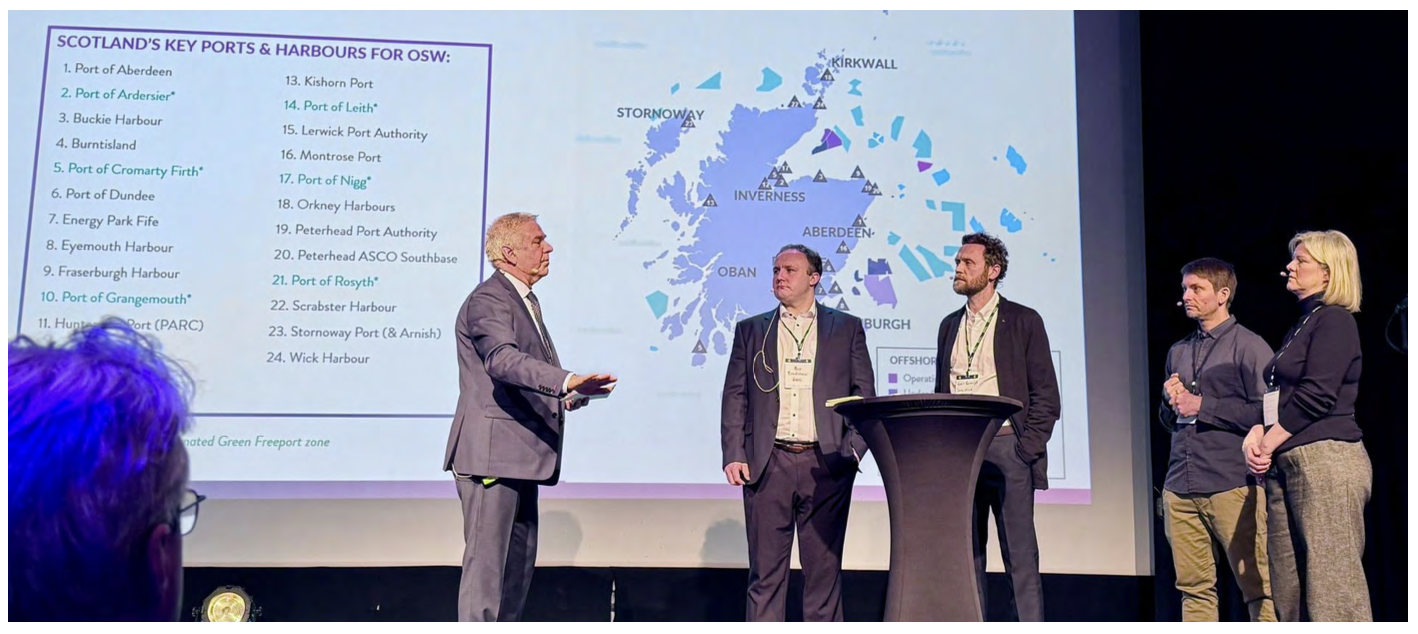
In March 2025, we successfully delivered a Global Offshore Wind Investment Forum which brought together over 100 delegates, including global investors, developers, project sponsors, ports, plus key public sector participants. The event showcased Scotland’s significant offshore wind investment potential, profiled specific investment opportunities and provided a springboard for future targeted investor engagement to support delivery of our offshore wind ambitions.
We have engaged extensively with key international stakeholders in a number of countries including Japan, USA, France, Denmark, Norway and Ireland to promote Scotland as an inward investment destination for offshore wind and highlight our approach to delivering the supply chain and infrastructure needed to build the sector, maximise trade opportunities and drive forward knowledge-sharing and collaboration.
We are also building strong international strategic partnerships including with Ireland, Norway and Denmark to help us deliver our offshore wind ambitions with a focus on knowledge sharing and collaboration in key areas such as skills, innovation and marine research data sharing, which is an area where Scotland excels in. This included delivery of the first Ireland-Scotland joint industry event held in Ireland in June 2024 with the second event due to be held in October 2025 in Scotland: and deepening relationships with industry and government in Denmark and Norway.
Our world leading Scottish Marine Energy Research Programme (ScotMER) is operating at the forefront of research into the potential impacts of offshore wind and marine energy. We held the 7th ScotMER Symposium in February 2025 which attracted interest from 32 countries, with almost 1,500 registered participants spanning across 6 continents.
International Network Case Study 4 – Scotland House London
Promoting Scotland’s Renewables Industries in London
In 2024, Scotland House London launched a collaborative work programme between Scottish Government and SDI to identify and deliver joint opportunities to market and promote Scotland’s energy transition across diplomatic, industry and investment stakeholder groups.
Recognising the importance of London as a market for investment and home to a high concentration of corporate headquarters, Scotland House London developed a programme of activity to facilitate high value, strategic engagement aimed at increasing private sector capital investment into Scotland’s renewables sector.
A key highlight was the delivery of the Offshore Wind Investor event, hosted at Scotland House London in November 2024 and led by the Deputy First Minister. The event brought together 14 of the most prominent Global Offshore Wind Investors, providing an invaluable opportunity for Team Scotland, including SDI and the Scottish National Investment Bank, to showcase Scotland’s significant offshore wind investment potential and our commitment to creating the optimal conditions for large scale investment. This event served as a ‘stepping-stone’ event, facilitating connections with global corporations and gathering investor sentiment and feedback that directly informed the planning of the Global Offshore Wind Investment Summit (GOSWIF) held in Edinburgh in Spring 2025.
In addition, Team Scotland continued to promote Scotland’s hydrogen economy. At the Invest in Green Hydrogen Global Summit 2024 in London, which gathers over 800 senior industry leaders from across the globe, the Cabinet Secretary for Constitution, External Affairs and Culture delivered the keynote address, presenting Scotland’s hydrogen credentials. Scotland House London facilitated a series of bilateral engagements with high level investors between the Cabinet Secretary, Hydrogen Scotland and key investors to set out Scotland’s distinct hydrogen offer.
At a government to government level, through strong relationships at post and with the German Embassy, Scotland House London secured engagement with Germany’s Federal Director General for Economic Stabilisation, Energy Security, Gas and Hydrogen Infrastructure. This engagement allowed the Cabinet Secretary to reaffirm Scotland’s ambition to establish pipeline-based hydrogen trade with Germany in the short to medium term and to position Scotland as a hub for future European clean energy partnerships.
International Network Case Study 5 – Ireland
Scotland and Ireland: Advancing Offshore Wind together
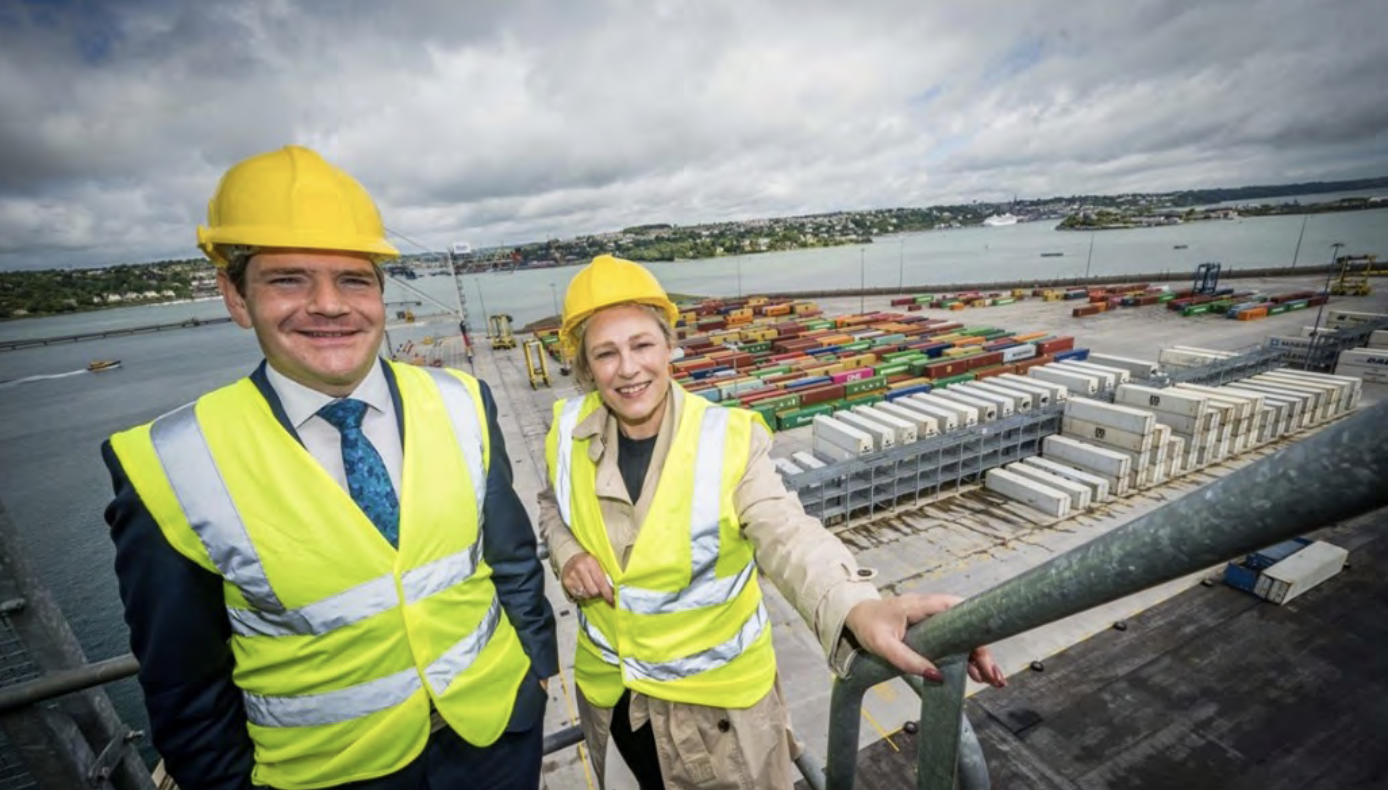
Ireland and Scotland have much to gain as partners in renewable energy, particularly offshore wind. Capitalising on our proximity, abundant wind resources and strong industry ties, we are well placed to work together, delivering a thriving offshore wind sector that puts our countries at the heart of the region’s energy transition.
The importance of this collaboration was reflected in the Powering Prosperity – Ireland’s Offshore Wind Industrial Strategy event, in Dublin and Cork in June 2024. This saw Irish and Scottish Ministers, officials, industries and experts come together to discuss practical approaches on sharing best practice and joint efforts to grow supply chains and port infrastructure; foster research and innovation; share data to respond to evidence gaps; address skills gaps; and share insights on planning and consenting.
Both sides continue to engage regularly on these issues, with the second iteration of the event taking place in Scotland this autumn, as part of a wider commitment for an annual joint event for intergovernmental dialogue and industry engagement.
We are also seeing increasing industry activity which demonstrates how investment, expertise and capability from Ireland and Scotland are jointly advancing the offshore wind sector. Irish developers are progressing projects in Scottish waters, and vice versa. The Scottish National Investment Bank announced investment in Subsea Micropiles, an Irish company expanding its operations in Scotland. Bank of Ireland also announced that it is providing £98 million in finance to Inch Cape, a proposed offshore wind farm off the east coast of Scotland.
The growing number of offshore wind trade missions from Scotland to Ireland, arranged by SDI, reflect strong Irish interest in Scotland’s supply chain and its potential application in Ireland. These missions have enabled 33 Scottish organisations to pitch directly to developers based in Ireland. Additionally, the new Enterprise Ireland office in Glasgow is working to support Irish companies in scaling up and diversifying within the Scottish offshore wind market.
Hydrogen
Scotland is working closely with partners in Norway, Denmark and Germany to develop offshore wind–to–hydrogen production and shared transport infrastructure. Memoranda of Understanding have been signed with Germany and Denmark to explore joint supply chains and export routes, while partnerships with the Port of Rotterdam are advancing studies into large-scale hydrogen imports from Scotland. These collaborations demonstrate Scotland’s commitment to strengthening Europe’s collective hydrogen security.
Scotland aims to deliver 5 GW of renewable hydrogen by 2030 and 25 GW by 2045, backed by our world-class offshore wind resources. Through events such as COP26, the World Hydrogen Summit in Rotterdam and ongoing bilateral engagement with Germany and the Netherlands, Scotland has established itself as a credible international partner. These efforts are building the long-term relationships required to unlock future hydrogen trade opportunities with Europe and beyond.
We published an Export Plan aimed at realising Scotland’s hydrogen potential as a leading global exporter of renewable hydrogen. It outlines the strategic steps required to unlock Scotland’s hydrogen export potential, providing a long-term economic vision and a clear framework for identifying the key enablers that will drive success in the hydrogen economy over the coming decades.
Scottish businesses are already showcasing their expertise through government-backed trade missions and exhibitions, including to Germany, the Netherlands, Japan and the Middle East. This active promotion not only generates direct export opportunities but raises Scotland’s visibility as a source of innovation across the hydrogen value chain.
The Scottish Government, enterprise agencies and SDI are marketing a pipeline of investable hydrogen projects, from large-scale production hubs in the North East and Orkney to port-based hydrogen export facilities. Engagement with production hubs such as the Aberdeen Hub and international partners including the Port of Rotterdam has already resulted in significant project commitments. Scotland’s integrated energy transition strategy, stable policy environment, and deep supply chain make it an attractive destination for long-term investment.
International Network Case Study 6 – Scotland House Brussels
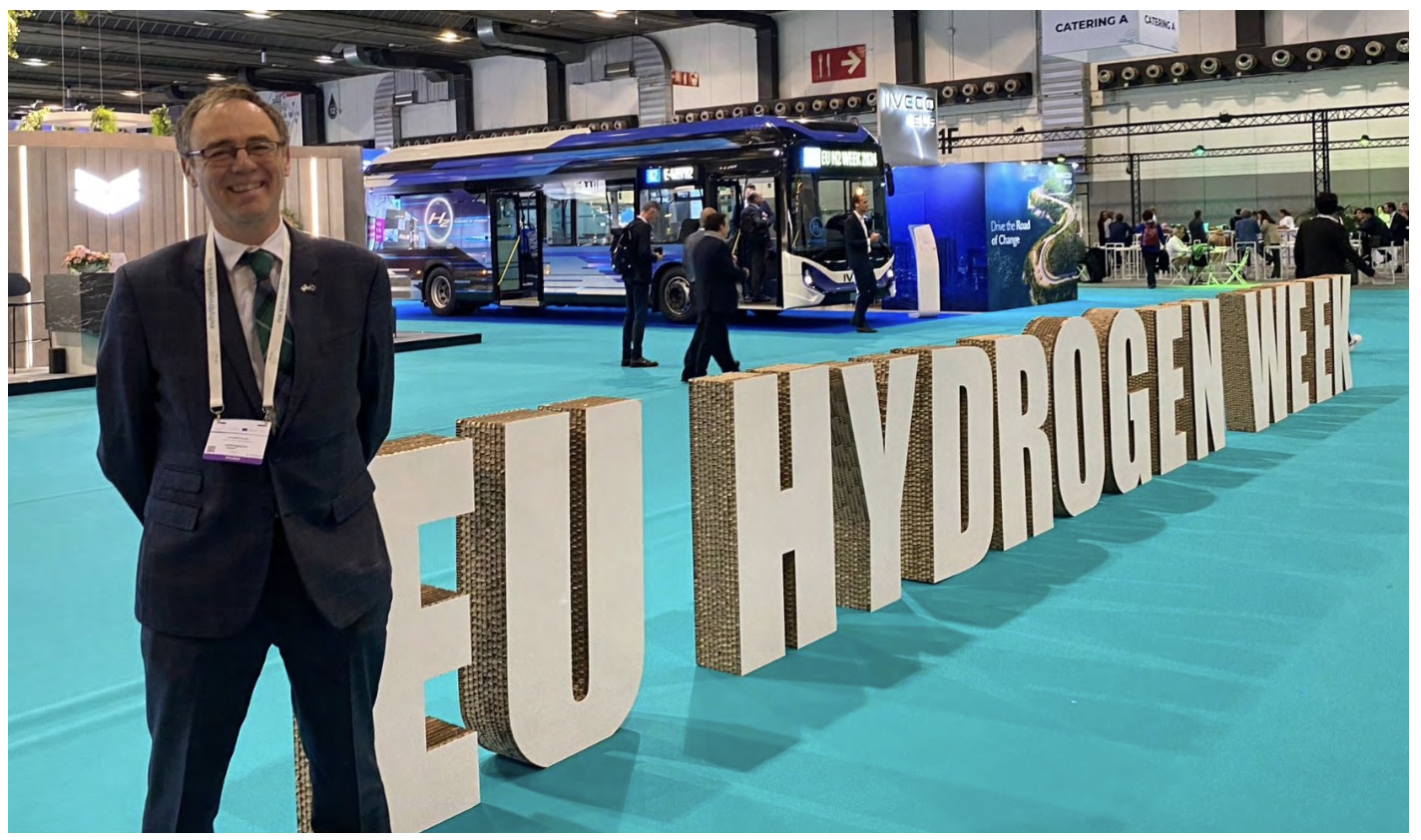
EUHydrogen WeekIn November 2024, during EU Hydrogen Week, the Scottish Government and Scotland Europa teams collaborated to coordinate a visit to Brussels by the Minister for Climate Action.
The Minister delivered a keynote address at the Hydrogen Week High-Level Policy Conference, the world’s largest trade fair for hydrogen technologies. Speaking to an international audience of hydrogen industry representatives, he outlined Scotland’s extensive renewable energy capabilities and ambitions. The visit brought together colleagues from Scotland House Brussels, SDI, Scottish Enterprise and Aberdeen City Council to promote the significant contribution Scotland can offer to Europe’s energy transition.
During the conference, the Minister also engaged in discussions with international partners on the development of hydrogen supply chains across neighbouring nations and regions. These conversations reinforced Scotland’s commitment to cross-border collaboration in building a sustainable energy future.
While in Brussels, the Minister discussed cooperation on renewable energy between the Scottish Government and European Parliament, meeting with Members of the European Parliament’s Committee on Industry, Research and Energy Nicolás González Casares and Thomas Pellerin-Carlin.
The Minister concluded his visit by hosting our annual Scotland House St Andrew’s Day concert. Partnering with the arts charity Live Music Now Scotland, and featuring traditional music performance by young Scottish artists, the event showcased Scottish culture and hospitality to a packed room of friends and partners in Brussels.
The success of the Minister’s engagements, the hydrogen exhibition and hosting the St Andrew’s Day concert were made possible through collaboration between the Scotland House teams and a range of public, private and third sector partners – exemplifying the ‘Team Scotland’ approach that underpins our international work.