
Dementia post-diagnostic support evaluation: final report
Independent evaluation undertaken to understand the impacts of Post Diagnostic Support (PDS) for people across Scotland who have been diagnosed with dementia. Scottish Government commissioned IFF Research to undertake this evaluation to inform future developments.
Infographic Summary
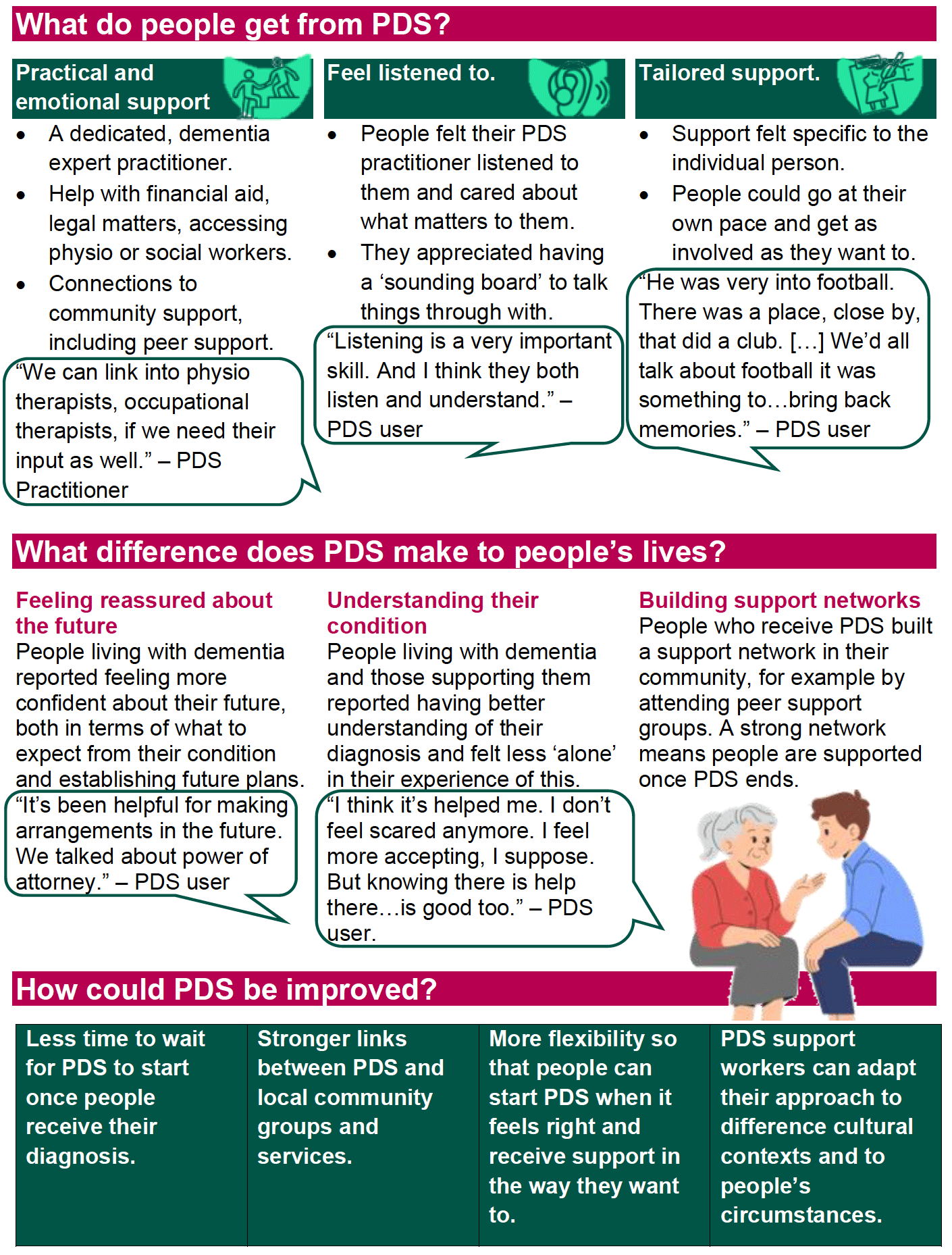
Infographic text below:
What do people get from PDS?
Practical and emotional support
- A dedicated, dementia expert practitioner.
- Help with financial aid, legal matters, accessing physio or social workers.
- Connections to community support, including peer support.
“We can link into physio therapists, occupational therapists, if we need their input as well.” – PDS Practitioner
Feel listened to.
- People felt their PDS practitioner listened to them and cared about what matters to them.
- They appreciated having a ‘sounding board’ to talk things through with.
“Listening is a very important skill. And I think they both listen and understand.” – PDS user
Tailored support.
- Support felt specific to the individual person.
- People could go at their own pace and get as involved as they want to.
“He was very into football. There was a place, close by, that did a club. […] We’d all talk about football it was something to…bring back memories.” – PDS user
What difference does PDS make to people’s lives?
Feeling reassured about the future
People living with dementia reported feeling more confident about their future, both in terms of what to expect from their condition and establishing future plans.
“It’s been helpful for making arrangements in the future. We talked about power of attorney.” – PDS user
Understanding their condition
People living with dementia and those supporting them reported having better understanding of their diagnosis and felt less ‘alone’ in their experience of this.
“I think it’s helped me. I don’t feel scared anymore. I feel more accepting, I suppose. But knowing there is help there…is good too.” – PDS user.
Building support networks
People who receive PDS built a support network in their community, for example by attending peer support groups. A strong network means people are supported once PDS ends.
How could PDS be improved?
Less time to wait for PDS to start once people receive their diagnosis.
Stronger links between PDS and local community groups and services.
More flexibility so that people can start PDS when it feels right and receive support in the way they want to.
PDS support workers can adapt their approach to difference cultural contexts and to people’s circumstances.
Contact
Email: dementiapolicy@gov.scot