
Veterans Mental Health and Wellbeing Pathway: national framework
A national framework setting out plans for a Veterans Mental Health and Wellbeing Pathway.
4. Vision and Purpose
The aspiration of the Scottish Government’s Mental Health and Wellbeing Strategy, is ‘of a Scotland, free from stigma and inequality, where everyone fulfils their right to achieve the best mental health and wellbeing possible .[5]’
Closely aligned to this, the vision for the Veterans Mental Health and Wellbeing Pathway is straightforward. It is to create an environment where every veteran in Scotland can access timely, appropriate mental health and wellbeing support. This commitment is grounded in the core values of veterans-informed care, community, and camaraderie.
The approach outlined in this Framework is intended to address and reduce the barriers - identified by veterans themselves - that can stand in the way of seeking help.
By mitigating these obstacles, we can foster greater trust and encourage earlier engagement with mental health and wellbeing support. Ultimately, this will improve outcomes and quality of life.
The Scottish Government recognises the need to provide high-quality mental health and wellbeing services, which in turn deliver support and treatment to veterans in Scotland. This approach is reinforced by a variety of Scottish Government policies, but it is particularly affiliated to the Health and Social Care Service Renewal Framework (SRF).
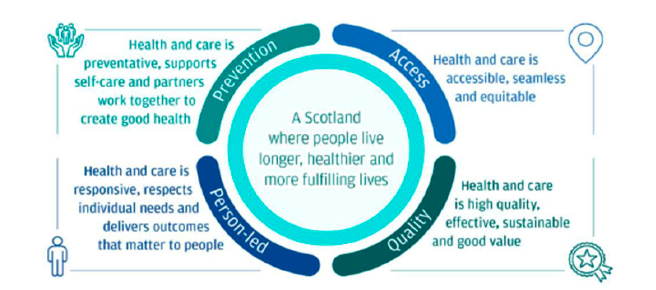
Figure 1 above shows the Scottish Government’s wider vision for improving population health – including mental health – and preventing and reducing inequalities.
The Health and Social Care SRF sets out five key principles:
- Prevention Principle: Prevention across the continuum of care.
- People Principle: Care designed around people, rather than the ‘system’ or ‘services’.
- Community Principle: More care in the community rather than a hospital-focused model.
- Population Principle: Population planning, rather than along boundaries.
- Digital Principle: Reflecting societal expectations and system needs with digital support being accessible where appropriate.
There is a close synergy between the SRF’s principles as outlined above, and the new model of service delivery that we will move towards via the Veterans Mental Health and Wellbeing Pathway.
Below, we have laid out how we will support each principle in the SRF with clear objectives to achieve meaningful outcomes for our veterans. This, in turn, will allow us to make progress towards the vision contained within this Framework.
Prevention Principle
Our commitment: To shift the focus from crisis intervention to proactive prevention for our veterans.
Our objectives:
- Provide clear, user-friendly routes to support early intervention. These should be tailored to veterans, promoting resilience and reducing crisis episodes.
- Develop support at key transition points, such as leaving service or accessing benefits.
People Principle
Our commitment: To deliver care for our veterans that reflects their unique individual needs and experiences.
Our objectives:
- Provide veteran-informed training for providers to ensure culturally competent, person-centred support.
- Create flexible pathways that adapt to each veteran’s unique individual needs, rather than rigid service structures.
Community Principle
Our commitment: To strengthen local delivery and peer support.
Our objectives:
- Expand community-based and peer networks to provide accessible, localised care for our veterans.
- Build partnerships with both local third sector and statutory organisations to deliver integrated support close to home.
Population Principle
Our commitment: To plan services based on population needs, not administrative boundaries.
Our objectives:
- Use data to identify regional needs and allocate resources effectively.
- Develop cross-sector collaboration to ensure consistency of care across Scotland.
Digital Principle
Our commitment: To harness technology to improve access and choice for our veterans.
Our objectives:
- Implement secure, user-friendly digital platforms to support self-help and signposting.
- Provide digital literacy support for veterans to ensure equitable access to online services.
This Framework recognises the unique experiences of veterans, and the impact that service life can have on mental health and wellbeing. It aims to develop an approach that optimises person-centered, locally-delivered support from those that understand military context.
By encouraging veterans to seek the help appropriate to their needs, it will inform service provision and, ultimately, support a successful and sustained transition into civilian life. Each veteran should feel empowered to live the life they choose, regardless of when they left service.
Contact
Email: AtRiskPopulationsMH@gov.scot