
Scottish Climate Survey 2024 to 2025: main findings
Main findings from Scottish Climate Survey.

Mitigation behaviours
This chapter presents the findings on attitudes towards climate change mitigation. It explores public perceptions of which actions aimed at reducing individual contributions to climate change are the most effective, and how often, if at all, respondents consider the environmental impact of their day-to-day activities.
Key findings:
- recycling was most commonly mentioned as among the four most effective actions for mitigating climate change, with over six in ten respondents (62%) selecting this
- next most mentioned were home energy efficiency measures (51%), minimising food waste (49%) and reducing use of electricity at home (48%)
- two thirds of respondents (66%) reported they think about the environmental impact of their daily actions at least sometimes, while a third (32%) said they rarely or never think about this
Most effective actions for mitigating climate change
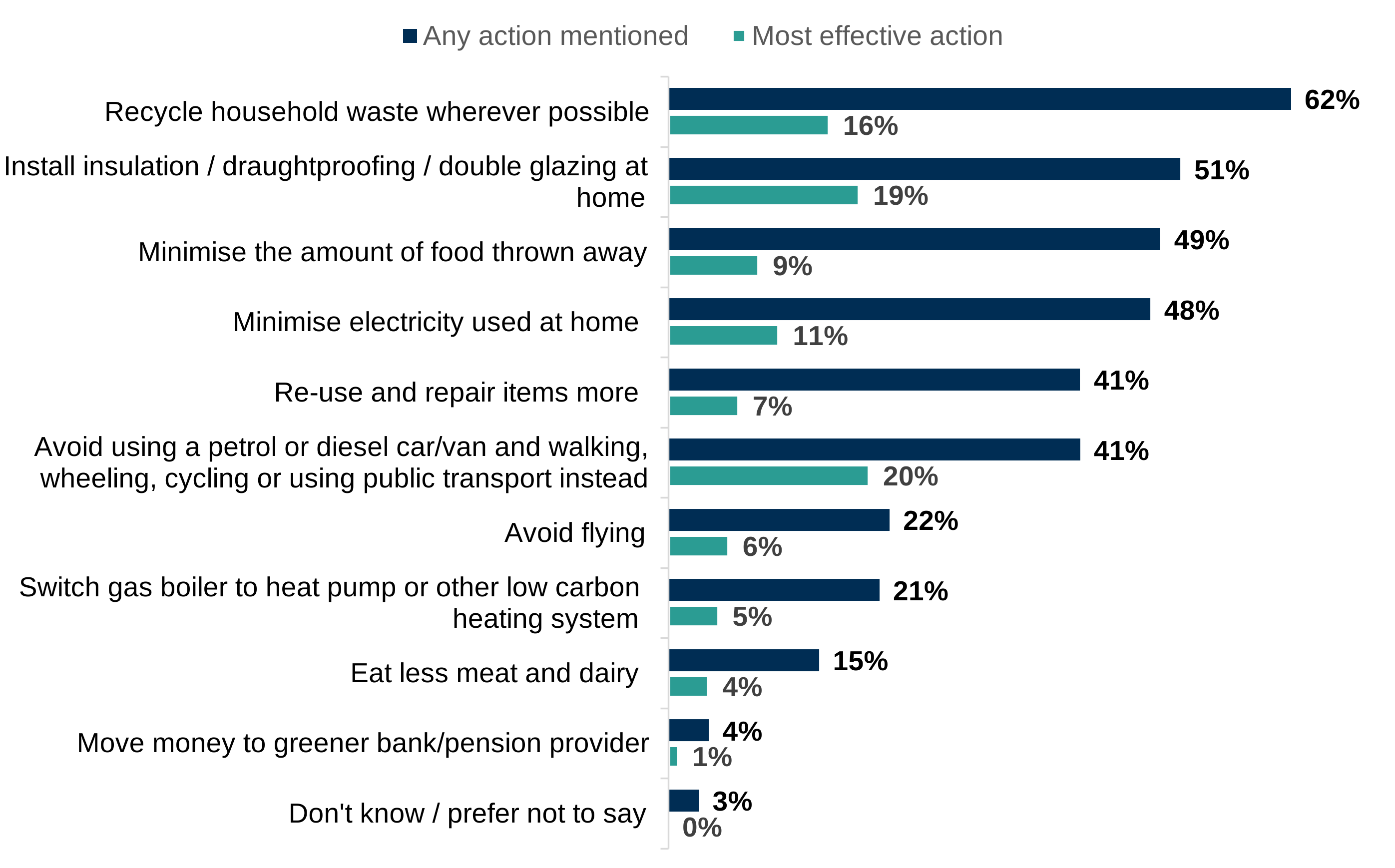
Respondents were asked to select the top four actions they believed to be most effective at reducing individual contribution to climate change from a longlist of actions. As shown in Figure 5.1, recycling was most commonly mentioned as one of the four most effective actions, cited by two-thirds (62%) of respondents. This was followed by home energy efficiency measures, with 51% selecting the installation of insulation, draughtproofing, or double glazing at home as one of the four most effective actions. Minimising food waste and reducing electricity use at home were each selected by 49% and 48% of respondents respectively.
Figure 5.1: Perceived effectiveness of climate change mitigation actions
Q. Which of the following do you think are the most effective actions someone living in Scotland could take to reduce their contribution to climate change?
 Base: All respondents - Any action mentioned (3,917); Most effective action (3,595)
Around four in ten respondents thought that re-using and repairing items more, or avoiding using a petrol or diesel car or van and walking, wheeling, cycling or using public transport instead, were among the four most effective actions (41% and 41% respectively). Fewer respondents thought that avoiding flying (22%), switching a gas boiler to a low carbon heating system (21%), eating less meat and dairy (15%) or moving money to a greener bank or pension provider (4%) were among the most effective actions.
Although the majority of respondents (62%) felt recycling to be effective in combating climate change, those aged 70 and over (79%) were more likely to perceive this action as one of the four most effective than other age groups. Older people were also more likely than average to consider avoiding food waste and minimising the use of electricity as among the four most effective actions.
While eating less meat and dairy was among the actions least likely to be perceived as one of the most effective, graduates, young people aged 16-34 and those who knew at least a fair amount about climate change were all more likely than average to say this action was one of the four most effective (23%, 23% and 20% respectively). Graduates (45%), young people aged 16-34 (47%) and respondents living in urban (42%) and least deprived areas (46%) were also more likely than average to consider avoiding the use of petrol or diesel cars and using active travel options instead to be among the four most effective actions for mitigating climate change.
Switching to a low carbon heating system was more commonly perceived as effective among people living in remote rural (28%) and less deprived areas (SIMD 4 and 5) (24%), those on higher incomes (27%), graduates (26%), men (24%) and respondents who knew at least a fair amount about climate change (23%). The same groups were also more likely than average to perceive avoiding flying as one of the four most effective mitigation actions.
Respondents were also asked to rank the four actions they selected in the order of their perceived effectiveness. The following actions were most frequently ranked by respondents as the most effective action: active travel rather than using a petrol or diesel car or van (20%), installing insulation, draughtproofing or double glazing at home (19%), and recycling (16%). Recycling was also cited most frequently as both the second and third most effective action, which underlines that a majority of respondents perceive it as a highly effective climate change mitigation action.
Consideration of the environmental impact of day-to-day activities
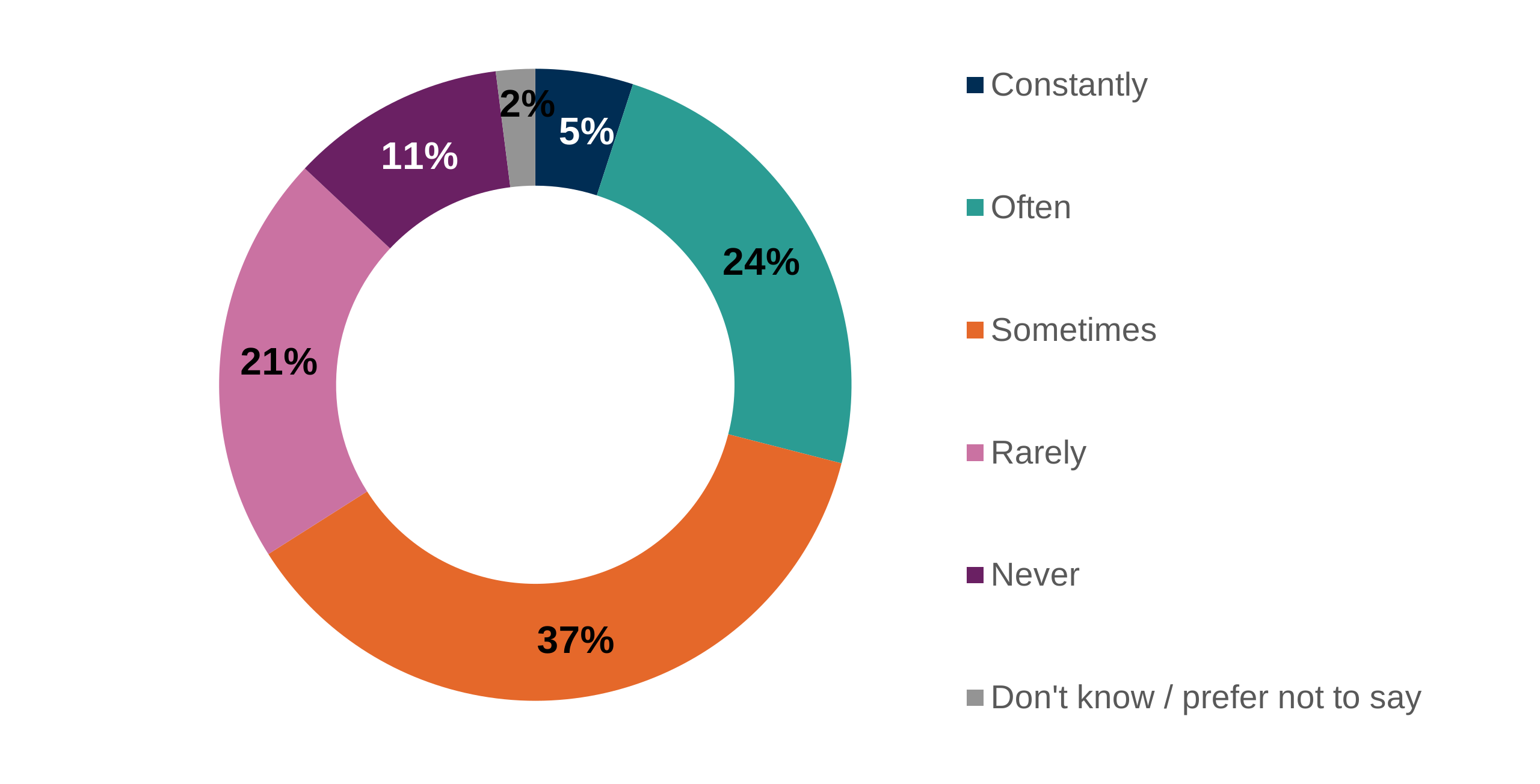
To measure reflective motivation, respondents were asked how often, if at all, on a typical day they think about the environmental impact of their daily activities (Figure 5.2). Over a third of respondents (37%) said they did so sometimes, with a further 29% saying they thought about this constantly or often. Around one in 10 (11%) said they never thought about the environmental impact of their daily activities.
Figure 5.2: Frequency of thinking about the environmental impact of day-to-day activities
Q. On a typical day, how often, if at all, do you think about the environmental impact of your daily activities?
 Base: All respondents online (2,953)
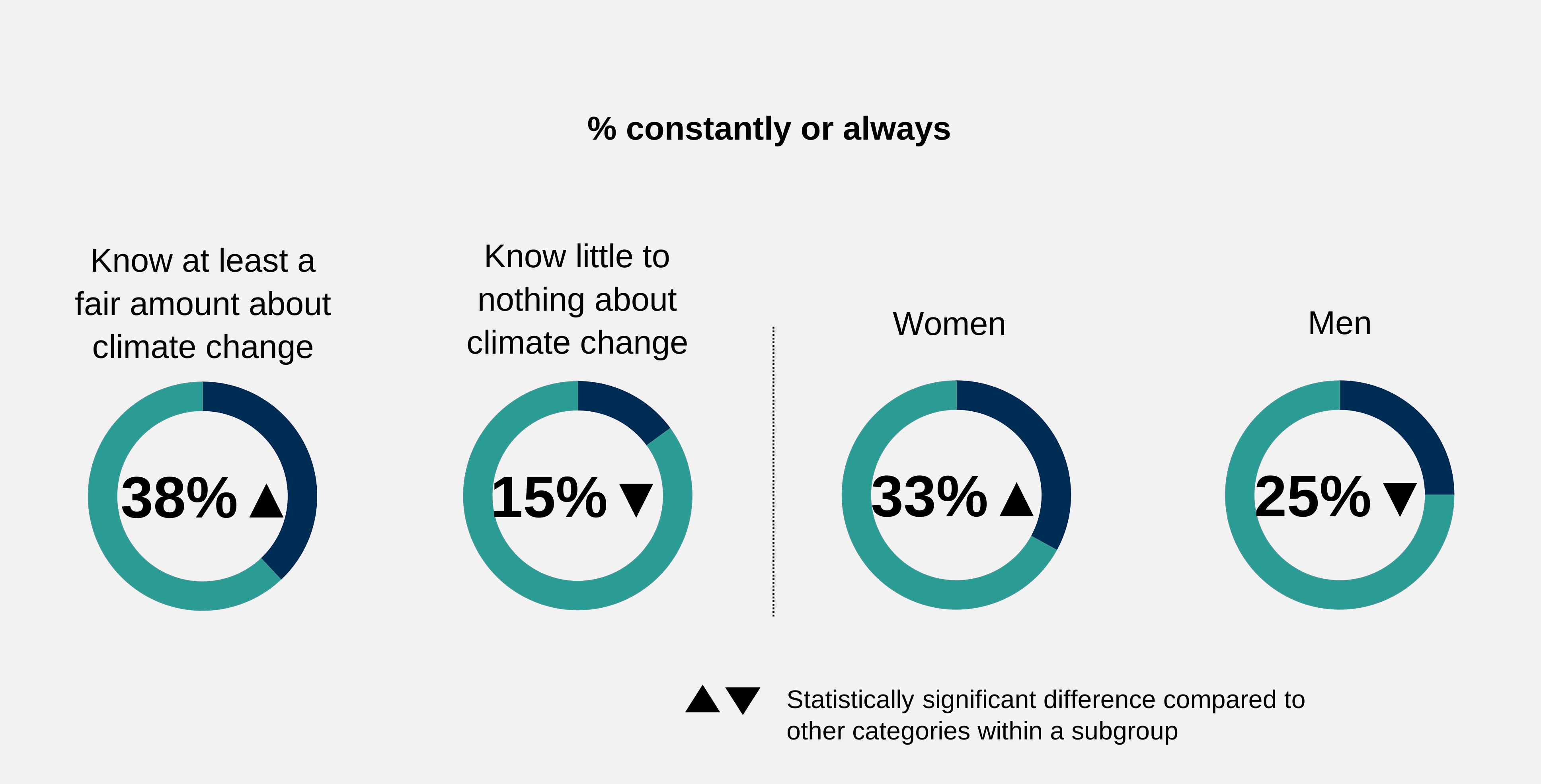
Respondents who knew at least a fair amount about climate change were much more likely to say they think about the environmental impact of their daily activities constantly or often compared to those who reported lower levels of knowledge on the topic. Women were more likely than men to say they think about the environmental impact of their daily activities either constantly or often (Figure 5.3).
Figure 5.3: Subgroup differences on the frequency of thinking about the environmental impact of day-to-day activities
Q. On a typical day, how often, if at all, do you think about the environmental impact of your daily activities?
 Base: All respondents online (2,953)
Graduates (39%), young people aged 16-34 (34%) and respondents living in the least deprived areas (SIMD 5) (34%) were also more likely to say they thought about this topic constantly or often.
Contact
Email: emily.creamer@gov.scot