
Peatland ACTION five year partnership plan 2025 – 2030
This plan is the first in a series of rolling five-year plans designed to deliver Scotland’s long-term vision for peatland restoration. It aims to help the partnership focus on the right priorities, at the right time as we progress toward our proposed 2040 restoration target.
Theme 1: Further– Expand peatland restoration in Scotland
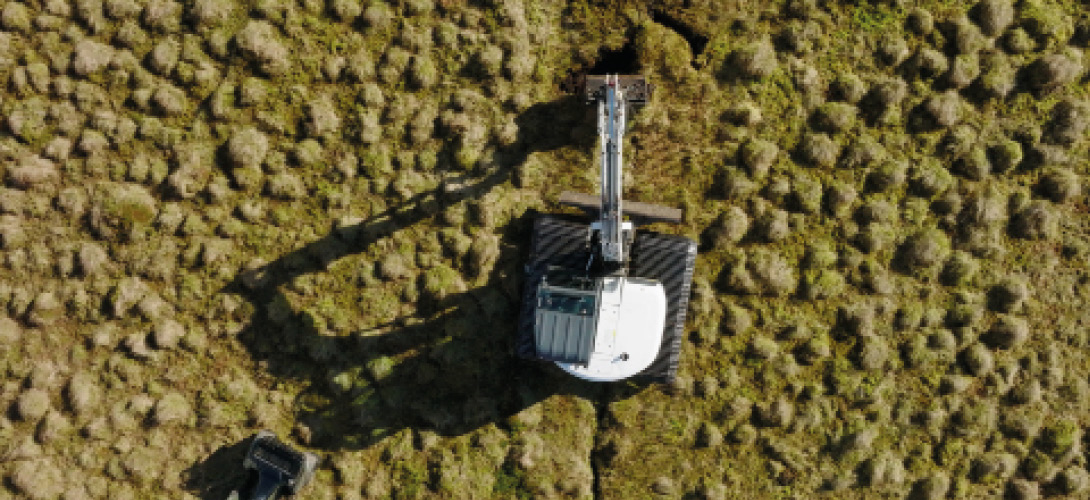
Peatland restoration in Scotland is supported by public funding through Peatland ACTION; the IUCN Peatland Code, a carbon market mechanism aiming to deliver climate, biodiversity, and community benefits at scale; and land owners and managers with their own resources or other funding sources.
The peatland restoration sector is maturing, expanding from capacity levels of 5,000 hectares restored in a year in 2020/21 to 14,860 hectares in 2024/25,[7] and now has the capacity to grow year on year. To date, 90,000 hectares[8] of degraded Scottish peatlands have been put on the path to recovery, including the highest level ever in a single year in 2024/25, an increase of 42% on the 10,360 hectares restored during 2023/24.
The draft CCP sets out that the Scottish Government wants to increase peatland restoration by 10% each year to 2030[9] and maintain levels after that leading to the restoration of more than 400,000 hectares by 2040. Within this, we will look to increase the proportion of the most highly degraded and emitting peat that is restored. This new target reflects an increase in ambition, and acknowledges the work still needed to grow this relatively young industry.
There will be variations in annual increases across partners and potentially across years too. We are already in Year 1 of this plan and current indications are that the 12,000 hectare Programme for Government[10] commitment will be exceeded.
Our actions within Theme 1 are set out below.
1.1 We will deliver a programme of restoration projects across Peatland ACTION via five direct delivery partners: NatureScot, FLS, CNPA, LLTNPA, and Scottish Water.
This collaborative approach enables us to strategically prioritise peatland restoration on sites that have high value nationally, including areas of significant natural heritage, river catchments that provide multiple benefits, and our forestry estate. By aligning delivery with other initiatives, we can maximise ecological, climate and community benefits.
1.2 We will continue to invite projects on all types of peatland, and in particular:
- projects within our National Parks
- projects within Scotland’s drinking water catchments
- projects within our National Nature Reserves
- restoration on crofting and common grazing land
- responsible private investment and other sources of finance to support restoration projects
- larger projects to increase scale, efficiency and value for money
1.3 Working with the sector, we will develop approaches to ensure we are focusing public funds on delivering for climate, nature and people. For example:
- increasing the proportion of highly degraded and emitting peatlands that are restored
- supporting projects on public land
- connecting peatland restoration with wider nature and climate projects
- aligning projects with the Scottish Biodiversity Strategy[11] by restoring nature at a landscape scale, particularly in priority catchments
- exploring a broader range of finance and funding mechanisms
- building on crofting projects by testing new funding and delivery models for common grazing land
- maximising local benefits through inclusive economic opportunities
- working with rural communities and land-based sectors to build skills, remove barriers, and support jobs
- strengthening evidence of climate, nature, and social benefits for a just transition
1.4 To establish a complete picture of restoration efforts in Scotland, we will work with the sector to capture contributions to peatland restoration outside what is currently recorded by Peatland ACTION.
Case Study: Landscape scale restoration
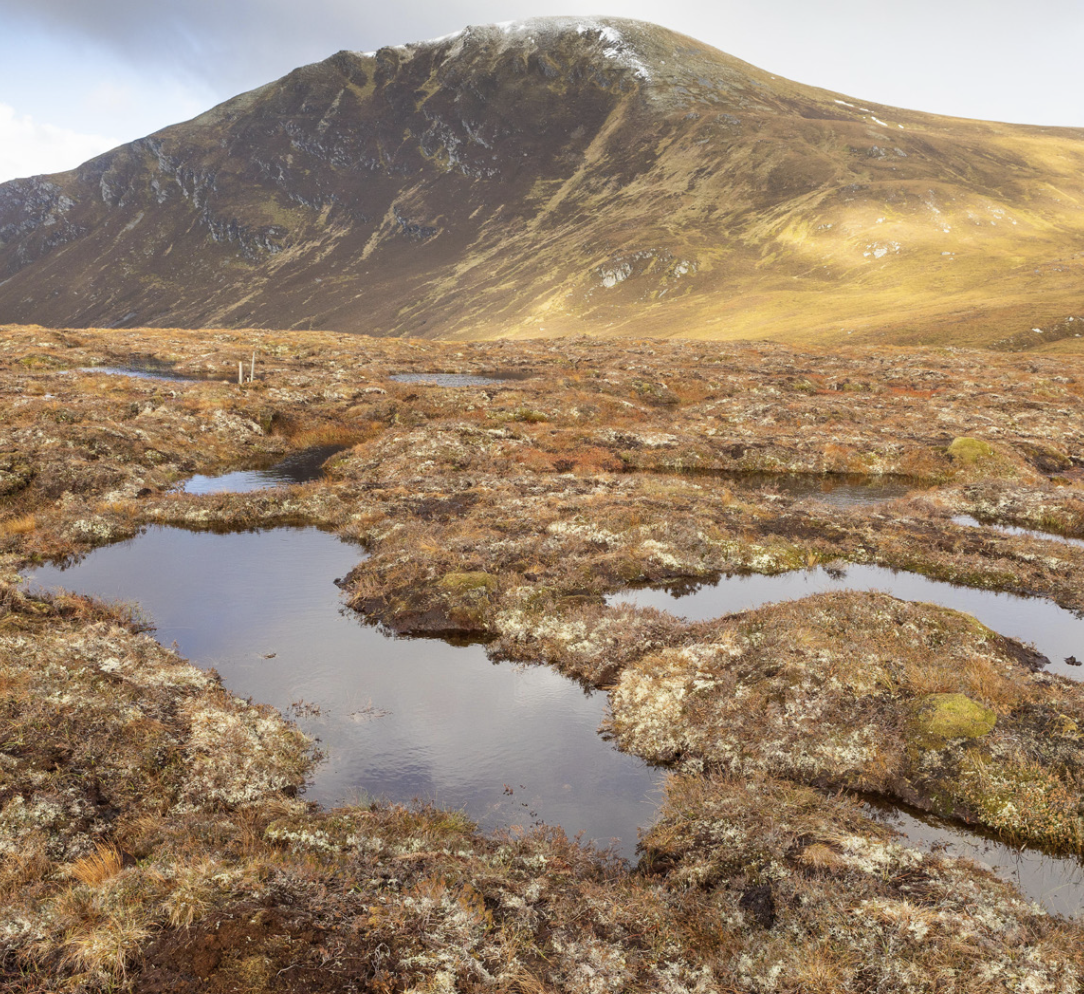
Peatland restoration at Ben Wyvis National Nature Reserve demonstrates the power of landscape-scale restoration through a multi-stream funding approach across the River Peffery catchment. Nearly 340 hectares of peatland have been restored in two phases, contributing to improved water regulation, reduced flood risk, and enhanced biodiversity. The project is part of a wider effort involving Forestry and Land Scotland’s forest-to-bog work and a Nature Restoration Fund initiative to re-meander the River Peffery. These coordinated actions benefit both people and wildlife, including rare species like dwarf birch. Restoration efforts are bringing potential benefits to not only the biodiversity of the whole catchment, but also increasing its capacity as a carbon store, reducing flood risks, and improving the water quality of the river and its tributaries.
For the full story, please visit Peatland ACTION case study: What’s the connection between peat and landscape-scale restoration? | NatureScot
Contact
Email: peatlanddelivery@gov.scot