
Peatland ACTION five year partnership plan 2025 – 2030
This plan is the first in a series of rolling five-year plans designed to deliver Scotland’s long-term vision for peatland restoration. It aims to help the partnership focus on the right priorities, at the right time as we progress toward our proposed 2040 restoration target.
Theme 2: Fairer – Support a just transition through restoration
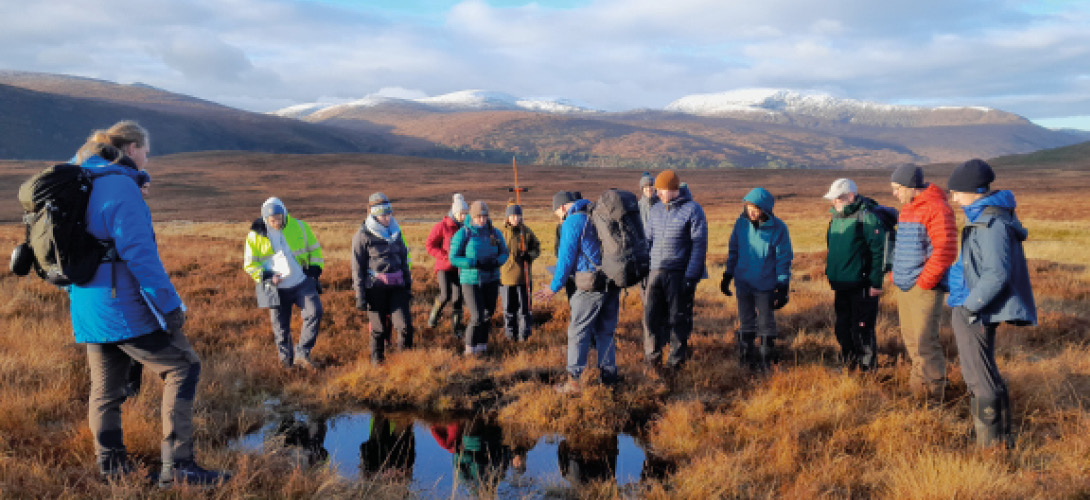
Much of Scotland’s 2 million hectares of peatland are degraded (around 70%).[12] Degraded peat releases rather than stores carbon and offers fewer benefits for climate, for nature and for people. The policies in the draft CCP aim to expand restoration efforts, delivering immediate benefits through green jobs and rural economic development, supported by public and private investment. Healthy peatlands are vital for Scotland’s climate and nature goals and also offer key natural benefits: they store carbon, support biodiversity and nature, reduce the risk of flooding and wildfires and improve water quality.
The peatland restoration sector is still growing, but offers a wide range of career opportunities. To realise its full potential, increased training and capacity-building are essential - creating pathways for economic development through highly skilled jobs that strengthen rural communities, and seasonal opportunities for existing rural workers. These include businesses offering consultancy and services in surveying, project design and management, technical expertise in ecology and hydrology, civil engineering, research and monitoring, policy and advocacy, and in public and private finance. Through Peatland ACTION and the agricultural support framework, land-owners, land-managers and farmers are being supported to restore and steward peatlands, helping build resilience across rural Scotland and contributing to a just transition to net zero.
We want to ensure that restoration of our peatlands brings benefits for people, nature and the economy.
Case Study: Innovation and peatland restoration
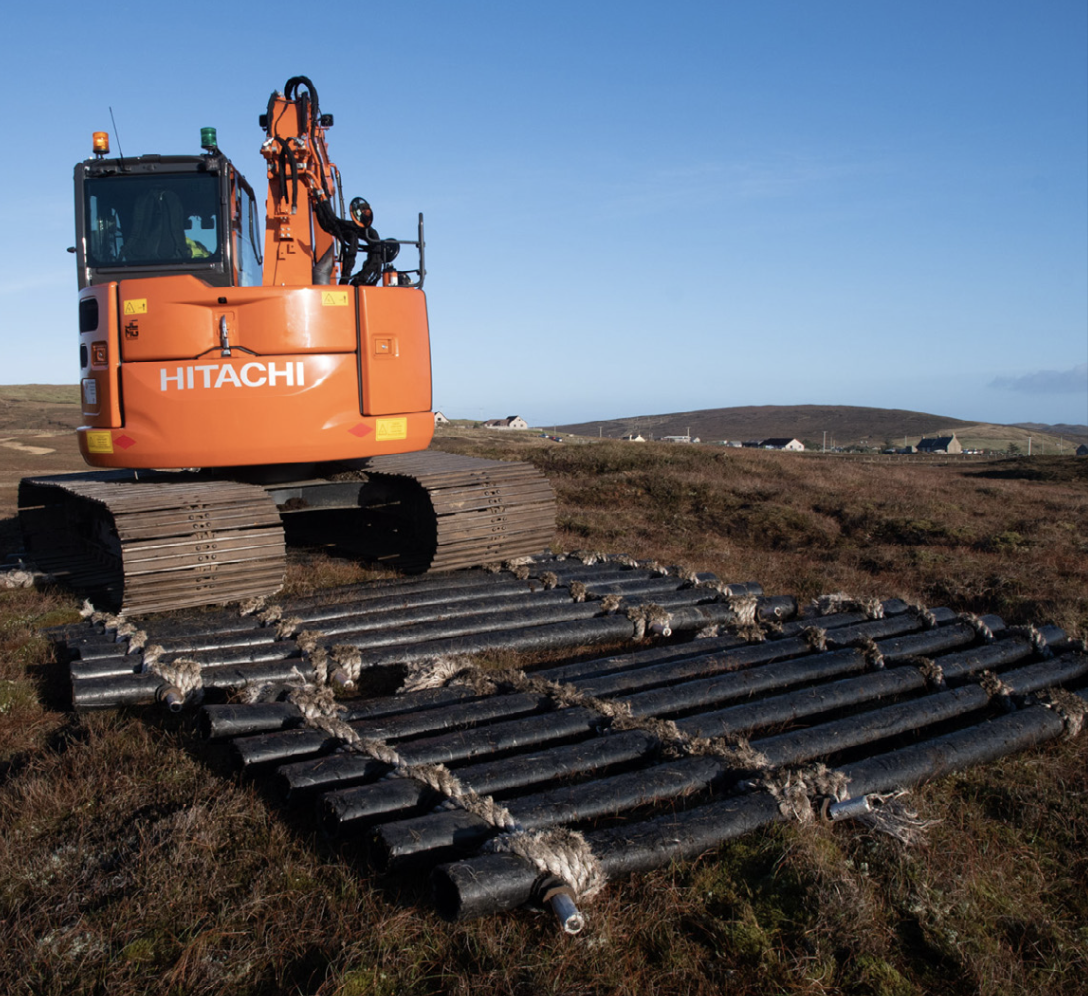
Peatland restoration on a Shetland crofter’s land at Taits Park and Lochend has put 122 hectares of damaged peatland on the road to recovery through innovative techniques and local collaboration. Despite challenging conditions, contractors used recycled aquaculture materials to create custom bog mats, enabling safe access and minimal site damage. Over 100,000 metres of erosion gullies were reprofiled, and 12 hectares of bare peat were revegetated using locally sourced mulch and sphagnum clump planting. The project sparked the creation of a new peatland restoration business, inspired other local landowners to apply for funding, and supported environmental research through a pilot study on virtual cattle fencing.
Demonstration events and community engagement have further strengthened local awareness and support for peatland restoration among the community.
For the full story, please visit Peatland ACTION case study: What’s the connection between peat and innovation? | NatureScot
Rural skills and economic development
We are committed to creating fair and inclusive economic opportunities through peatland restoration. We will continue to work closely with rural communities and businesses to understand and remove barriers to getting involved and develop initiatives that support long-term jobs, help local businesses grow, and make training and resources accessible to everyone.
We will also team up with other land-based sectors to support development of transferable skills to build a strong, adaptable workforce.
Multiple benefits
We will strengthen our understanding of the multiple benefits of peatland restoration for climate, nature and people.
This evidence base will be used to encourage more land-owners, land-managers and farmers to participate in peatland restoration, promote nature-based solutions for climate adaptation and mitigation, and support a just transition. Evidence will also ensure stakeholders have the knowledge and confidence to engage with restoration and contribute to Scotland’s climate and nature goals.
Case Study: Future-proofing your farm business
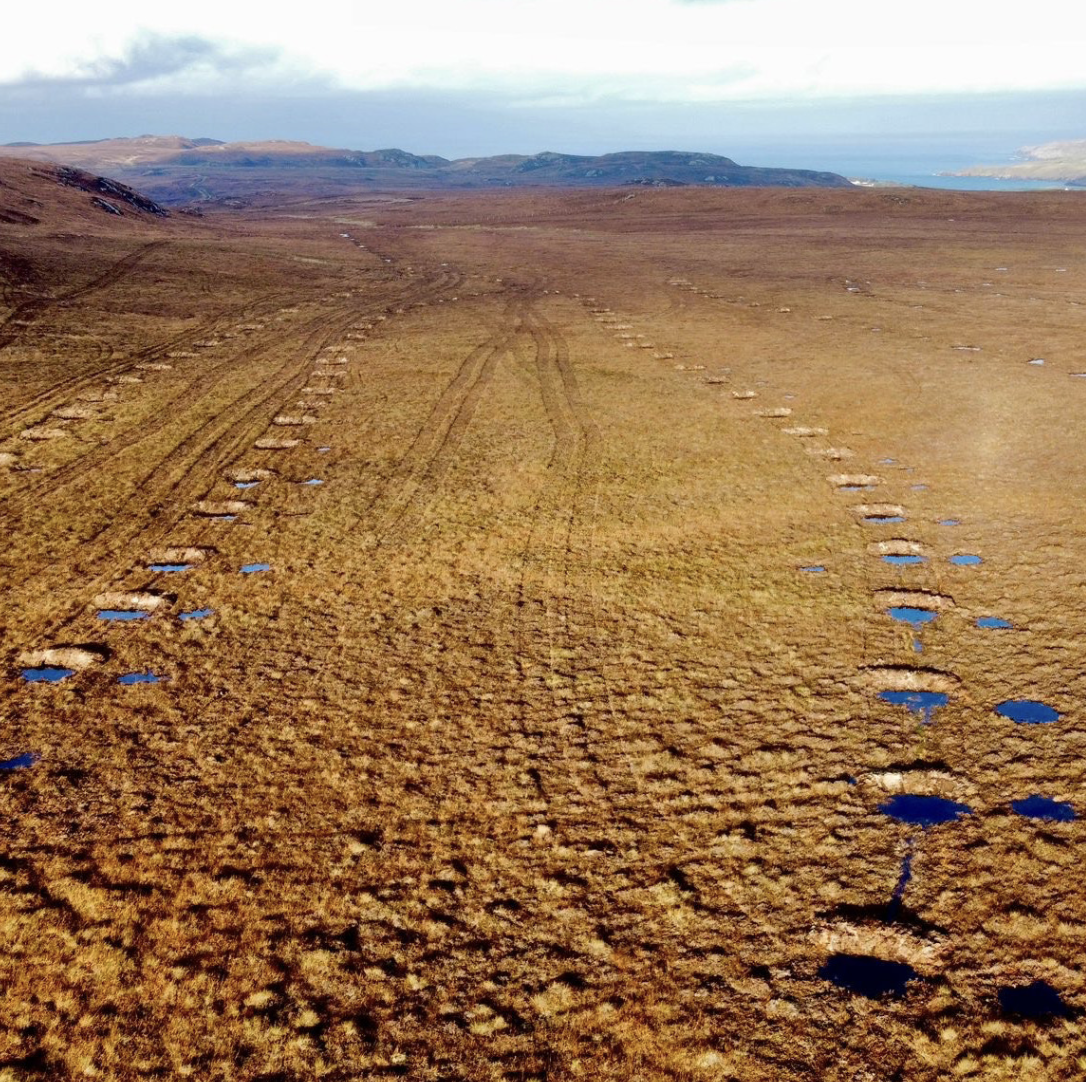
Peatland restoration on a sheep farm in Sutherland showcases how restoring degraded peatlands can help future-proof farm businesses. With support from Peatland ACTION and the Flow Country Green Finance Initiative, the project has restored over 600 hectares of peatland improving land accessibility and reducing black loss, the unexplained disappearance of sheep on hill farms. The project blends public and private finance and serves as a pilot for scalable restoration models. Restoration techniques included damming drains, reprofiling gullies, and creating bunds, all while protecting archaeological features and sensitive wildlife.
The work has delivered environmental, economic, and community benefits: supporting biodiversity, reducing flood risk, and providing local employment.
For the full story, please visit Peatland ACTION case study: What’s the connection between peatland restoration and future-proofing your farm business? | NatureScot
Economic value
Peatlands are able to store carbon emissions whilst also delivering wider co-benefits to society. Restoring peatlands improves habitats, enhances biodiversity, reduces flooding and wildfires, improves water quality, and protects iconic Scottish heritage whilst providing recreation and health benefits. Restoration activity can also stimulate local economies and support resilience of supply chains and infrastructure to climate change.
Broad estimates suggest that the economic value of restored peatlands could be deemed to range from £130 to £415 per hectare per year when considering a broad range of ecosystem services, and £90 to £210 per hectare per year for climate benefits alone.[12]
The latest estimates for peatland restoration workforce projections are that the sector supports between 380 full time equivalent jobs (10,000 hectares a year) and 750 full time equivalent jobs (20,000 hectares a year).[14]
Crofting, tenant farmers and common grazings
We are committed to ensuring crofters, tenant farmers and common grazings benefit from the multiple benefits of peatland restoration, and have been working with crofters and other stakeholders to support restoration projects.
We will explore alternative funding streams and delivery models to encourage peatland restoration on common grazings and tenanted land. We will aim to reduce financial and logistical barriers for these sectors, making restoration projects more accessible and sustainable.
Case Study: Wider benefits of peatland restoration for businesses
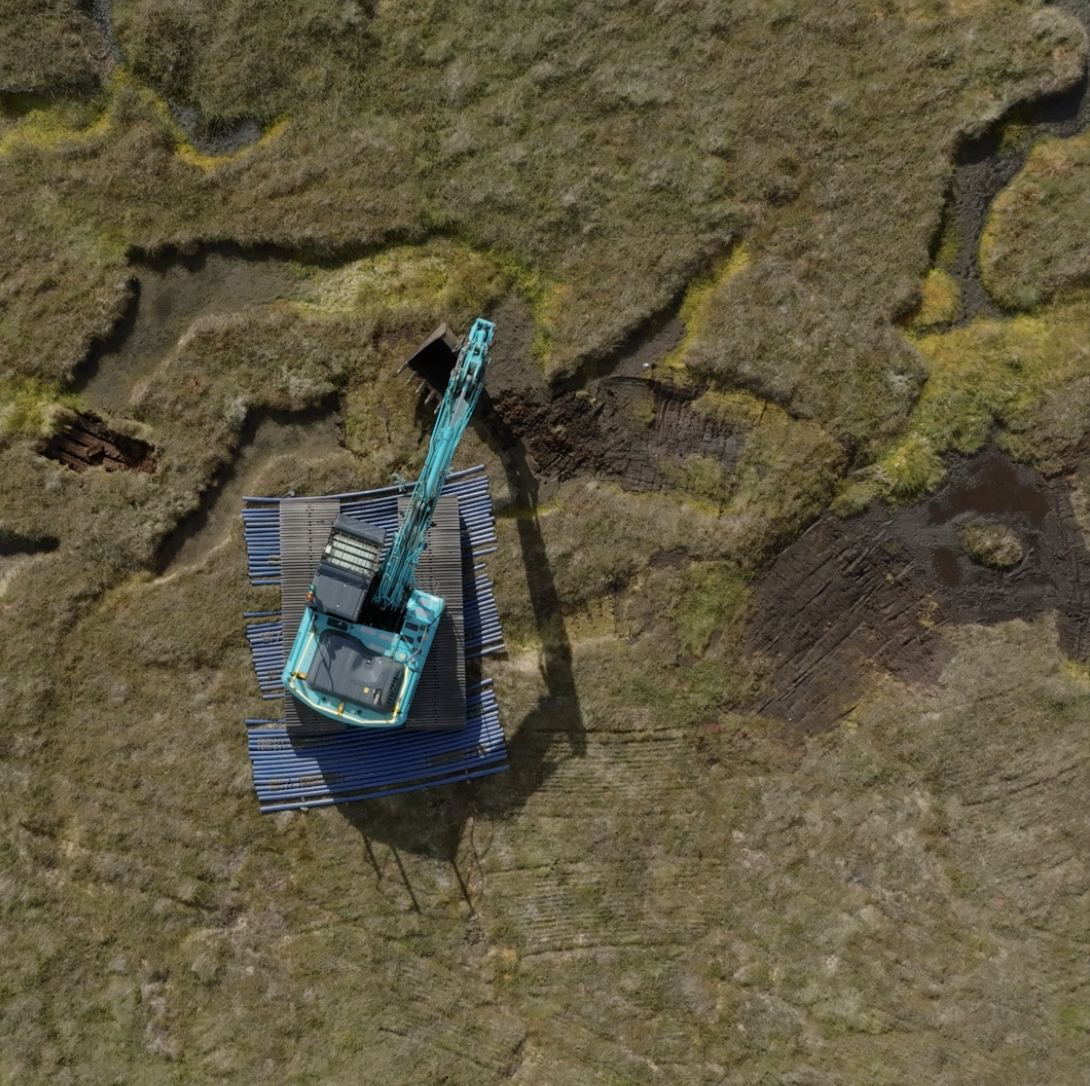
Restoration at Murrister Croft on Shetland is demonstrating how healthy peatland can deliver environmental and economic benefits for rural and island communities. Supported by Peatland ACTION, the project is restoring around 40 hectares of degraded peatland using gully blocking and reprofiling techniques. Improved grazing conditions are expected to enhance fleece cleanliness, boosting both yield and quality of Shetland wool for the local yarn maker. For local contractors, the restoration project is creating opportunities to expand their business and provide rewarding, skilled employment within the community. Beyond community benefit, restoration is also supporting biodiversity, showcasing the wide-ranging value of the collaborative peatland restoration taking place on Shetland.
For the full story, please visit Peatland ACTION case study – Shetland | NatureScot
Our actions within Theme 2 are set out below. We will:
Rural skills and economic development
2.1 Expand and secure workforce capacity to design and deliver peatland restoration projects by implementing a strategic skills plan that provides targeted training, mentoring, internships, and accreditation schemes; supports initiatives such as the Peatland Training Fund and CNPA New Entrant Scheme; and builds a skilled, resilient workforce through competency frameworks and effective training tools.
2.2 We will continue to take steps to inspire and engage the next generation of restoration professionals, recognising the long-term workforce needs of the sector to help us realise our draft CCP ambitions. This includes promoting career pathways, highlighting transferable skills, and working with partners to create opportunities for young people and early-career professionals to get involved in peatland restoration.
2.3 We will work to embed peatland restoration into mainstream land use training programmes, such as those focused on agriculture, forestry, and renewable energy. By collaborating with training providers and industry bodies, we aim to raise awareness of peatland restoration as a vital land management practice and promote it as a viable career pathway within the wider rural economy.
Multiple benefits
2.4 Work closely with Scottish Government’s Environment, Natural Resources and Agriculture Strategic Research Programme (SRP) to strengthen our understanding of the multiple benefits of peatland restoration; and to develop a collaborative communications initiative with academic, environmental, agricultural and public sector partners to increase uptake, promote nature-based solutions and support our just transition efforts.
2.5 Showcase topic-specific Peatland ACTION case studies and tailored messaging for land managers, local authorities, communities, and businesses.
2.6 Promote findings through public reports, workshops, and targeted outreach, including highlighting existing training initiatives.
Crofting, tenant farmers and common grazings
2.7 We will continue to pilot a direct delivery model for restoration on tenanted land, in particular common grazings. As part of this, we will:- ensure value for money assessments reflect the realities of delivering remote and island projects
- continue supporting skills development in rural areas to strengthen local capacity and resilience
- review the effectiveness of direct delivery in addressing financial and logistical challenges for projects on tenanted land, in particular common grazings
Contact
Email: peatlanddelivery@gov.scot