
Bringing Hope, Building Futures: Tackling child poverty delivery plan 2026-2031
The third tackling child poverty delivery plan due under the Child Poverty (Scotland) Act 2017. Outlining action for the period 2026 to 2031.
Introduction
This Delivery Plan marks a decisive step in our shared mission to eradicate child poverty and improve the lives of children and families across Scotland.
The Child Poverty (Scotland) Act 2017 (‘the 2017 Act’) sets in statute ambitious targets to significantly reduce rates of child poverty in Scotland so that by 2030:
- Fewer than 10% of children in Scotland live in relative poverty
- Fewer than 5% of children in Scotland live in absolute poverty
- Fewer than 5% of children in Scotland live in combined low income and material deprivation
- Fewer than 5% of children in Scotland live in persistent poverty
Scotland remains the only part of the UK to have such targets, reflecting our determination to break the cycle of poverty and create a fairer future for every child.
Since 2017, the Scottish Government has taken a wide range of action to drive progress towards the targets. Through our two previous Tackling Child Poverty Delivery Plans: Every Child, Every Chance, and Best Start, Bright Futures, we have: delivered new devolved employment support and benefits, including the Scottish Child Payment; provided more affordable homes; expanded free bus travel for young people and Free School Meal provision; and provided 1,140 hours of funded Early Learning and Childcare for eligible families.
These actions have made a significant difference, with rates of relative child poverty in 2023-24 falling to the lowest level in almost a decade. Compared to the UK as a whole, rates of both relative and absolute poverty were nine percentage points lower in 2023-24.
This progress has been supported by a wider, whole of government effort to reform public services and build a stronger wellbeing economy, and it demonstrates the scale and seriousness of Scotland’s ambition. It has been achieved despite a challenging backdrop: years of austerity from successive UK Governments and the impact of harmful policies like the benefit cap and the bedroom tax; as well as external shocks including Brexit, the COVID pandemic, Russia’s illegal full-scale invasion of Ukraine, and the ongoing cost of living crisis. Together, these pressures have placed significant strain on households and the Scottish budget, working against our collective efforts to eradicate child poverty.
The latest statistics showing Scotland’s progress towards the 2030 targets will be published on 26 March 2026.
An enduring framework to drive progress
The 2017 Act received unanimous support from parties across the Scottish Parliament, demonstrating that this is a truly cross-party mission.
With the Scottish elections due to take place in May 2026, this plan is designed to give the next administration a strong foundation to build on, while allowing them to set their own policy priorities and decide how best to speed up progress. It sets out the actions we will take in 2026-27, with further action to be outlined within annual progress reports on child poverty by an incoming Scottish Government.
Since 2017, we have built a strong evidence base about what works to tackle child poverty. We have also listened widely – speaking with parents, young people, organisations and experts – to help shape the themes, areas of intervention, and the actions committed in this plan. We have engaged with more than 90 parents with lived experience of poverty and over 180 young people, supported by key partners including the Poverty Alliance, Changing Realities, Young Scot, Child Poverty Action Group, and Aberlour. We have also received advice from Scotland’s Poverty and Inequality Commission, which has helped guide our approach.
We heard clearly that the three drivers of poverty reduction we identified in 2018 still resonate with people today:
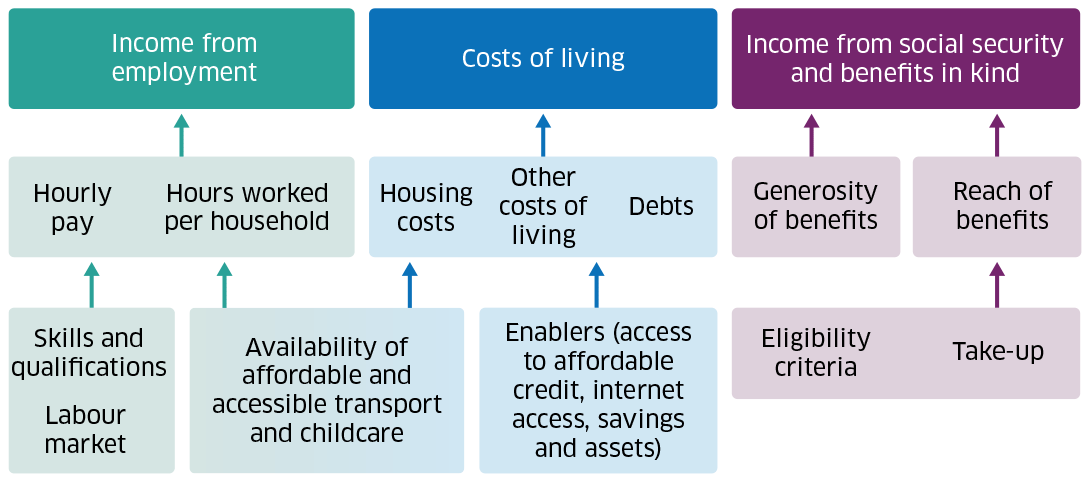
Informed by the views of those who shared their experiences with us, this plan focuses on four key themes and 15 interconnected areas where further action is needed. These are set out below:
Figure 2: Themes and areas of intervention
Increasing earned incomes
- Providing aligned skills and employment support for parents and young people
- Expanding the availability of flexible and affordable childcare for families
- Ensuring public transport is available, affordable and accessible and connects parents and young people to work
- Driving positive change in labour market and workplace conditions
Reducing costs of living
- Delivering more social and affordable homes for families
- Ending child homelessness
- Making homes cheaper to heat
- Tackling public sector debt
Maximising incomes from social security and benefits in kind
- Strengthening support through social security
- Maximising take-up of Scottish and UK Government benefits
- Making money and debt advice more accessible for families
Supporting children and families to thrive
- Delivering Whole Family Support
- Supporting young families: investing in early child development
- Ensuring children and young people can reach their full potential
- Making best use of data to support children and families and improve public services
Enabling Whole Family Support is at the heart of our approach. This means creating the conditions for partners to deliver person-centred services that interact seamlessly so that families across Scotland can get the right support, at the right time, in the right place, for as long as they need it. In collaboration with local partners, we are reshaping our system to make this our default way of working.
Alongside this plan we have published an updated Cumulative Impact Assessment, which estimates that Scottish Government policies will keep 100,000 children out of relative poverty in 2026-27, and projects rates of both relative and absolute poverty to 2030. The modelling now includes the potential impacts of wider changes in areas like childcare, and we will continue to strengthen this analysis to guide future action.
No single action on its own will deliver the systemic shift needed to eradicate child poverty. We need all these actions working together, involving all of Scotland, to make a real, lasting difference for families and break the cycle of poverty.
Building on the action we have taken to date
Across all 15 areas where further action is needed, this plan sets out how we will drive further progress in the year ahead. Some of the actions we will take are highlighted below.
To help families increase their earned incomes we will:
1. Invest £11 million to support parents to access the skills and education they need to enter, sustain and progress in work. This includes investment of £9 million in the college sector to provide new opportunities, with support with childcare and transport, and £2 million for a new Training Access Fund.
2. Deliver a national breakfast club offer for primary school aged children by August 2027, backed by over £100 million across three years. This is estimated to support over 125,000 children each year, providing additional flexibility to help parents access work and saving money on childcare costs.
3. Invest up to £19 million to develop a new Transport to Employment offer for low-income parents. This will support parents with transport costs to access training and employability support whilst also increasing the availability of transport options for parents accessing work.
4. Deliver a new £10 million Flexible Workforce Development Fund to incentivise employers to support employment and progression opportunities. Focused on families at risk of poverty, this will help more parents access the skills they need while promoting workplace practices that reduce barriers for parents.
To reduce the cost of living for families we will:
5. Invest a record £4.1 billion over the next four years as part of a wider investment of up to £4.9 billion in affordable homes. This is estimated to support delivery of 36,000 affordable homes and provide up to 24,000 children with a place to call home.
6. Invest a further £9 million in mitigating the impact of the freeze in Local Housing Allowance rates. This will support up to an estimated 18,000 families to meet their housing costs and will help to prevent homelessness.
7. Invest a further £1 million in our Islands Cost Crisis Emergency Fund, supporting vulnerable island households. Working in partnership with island local authorities this will deliver targeted initiatives tailored to local needs, including in support of fuel payments and energy costs.
8. Allocate over £2 million to the Council Tax Debt project across Scotland. This will provide support for up to 15,000 people experiencing council tax and water charges debt and will continue to develop and share good practice across local authorities to drive lasting change.
To maximise family incomes from social security and benefits in kind we will:
9. Develop the systems and legislation needed to increase the value of our Scottish Child Payment to £40 per week for all children under the age of 1. Commencing in 2027-28 this will help an estimated 12,000 children, further strengthening support available in the critical first year of life.
10. Deliver a national, multi-channel Parental Employability and Financial Support campaign to help families access available support. This will include relevant devolved and reserved benefits, including Universal Credit, to help families get the support they are entitled to.
11. Invest over £27 million in welfare, income maximisation and debt advice services over the next two years through multi-year grants. This will provide stability and certainty for the sector, improving staff retention and therefore service quality, which we expect will support at least 80,000 households each year.
To support children and families to thrive we will:
12. Expand the Family Nurse Partnership Programme to an additional 500 first time mothers. This will enable more young parents to access intensive support from early pregnancy until their child reaches two – helping build the confidence and skills they need to access the right support for their baby and give them the best start in life.
13. Expand the MCR Pathways schoolbased mentoring programme for care experienced and disadvantaged young people. Backed by an additional £1 million this will enable up to 5,500 young people in schools across Scotland to benefit from this support.
14. Establish a £20 million Whole Family Support Third Sector Delivery Fund. This will enable third sector organisations to provide more support that wraps around families in their communities, making connections to public services and helping to break the cycle of poverty.
15. Invest £2 million in developing and implementing a ‘Once for Scotland’ Data Exchange programme to raise capacity and technical expertise across the public sector in Scotland. This will help to unlock the use of data to ensure that services and support reach families who need it most.
A continued focus on those at greatest risk of poverty
This plan maintains our focus on the families and groups at greatest risk of poverty.
We know that around 90% of all children in poverty live in the six priority family types identified in our first delivery plan:
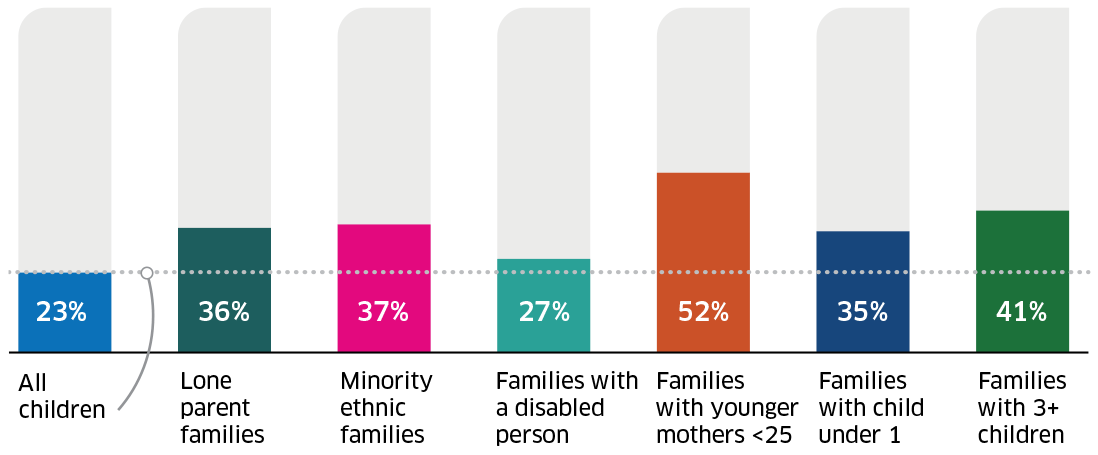
As well as focusing on the barriers faced by the six priority family types, this plan considers other factors that affect families’ lives so we can better support those at most risk of poverty:
- Gender. Child poverty is women’s poverty. Across the family types at greatest risk of poverty, many are households led by women. This means we can only deliver meaningful progress on child poverty by tackling the inequalities women face.
- Other marginalised groups. There are many factors that shape how individuals and families experience poverty – including homelessness, rural or island living, experience of the care system, being a victim or survivor of domestic abuse, or being kinship carers. Understanding how these factors interact with gender, disability and ethnicity is essential to designing policies that respond effectively to lived experience of poverty.
- The depth of poverty. Around two thirds of children in poverty live in families considered to be in deep poverty – with incomes further below an acceptable standard of living. This plan brings together actions that go beyond income and living-cost support to ensure that families receive the wider help and services they need.
- Families who are at risk of falling into poverty. Families move in and out of poverty over time, with many living just above the poverty line. By taking a preventative approach, offering support early to those who may be at risk, we can help families feel more secure and better able to handle future pressures.
Our actions take an intersectional approach that considers how different factors overlap to shape someone’s experience of poverty. This enables us to address systemic barriers more effectively and design policies that respond to the complex, deep-rooted inequalities families face. Working closely with stakeholders and families, we will ensure that our actions genuinely improve people’s lives.
Contact
Email: TCPU@gov.scot