
Bracken presence and management practices on Scottish grassland farms - 2025
Survey of bracken distribution, and how it is managed, in Scottish agricultural grassland.
Results
Information was provided for 373 of the 1,339 holdings which were contacted during this voluntary postal survey. These 373 holdings collectively represented 97,300 ha of Scottish grassland.
It should be noted that the information presented in this report represents the data from the sample collected and does not attempt to estimate bracken coverage and management strategies for the whole of Scotland.
Bracken incidence and area
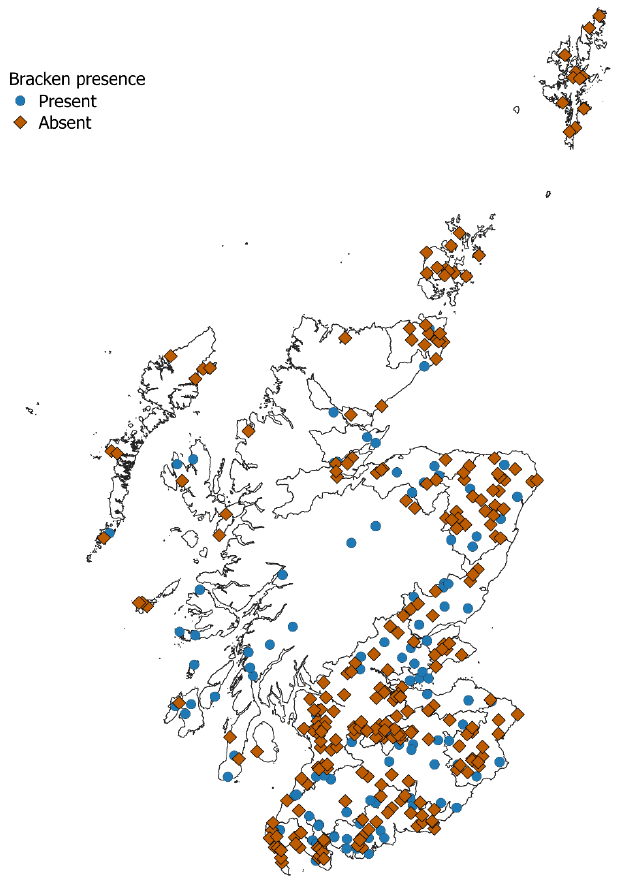
Bracken was reported to be present on 111 of the 373 holdings sampled (30%) with the remainder reporting no bracken on their land (Figure 1).
Figure 1: Geographical distribution of holdings that provided data
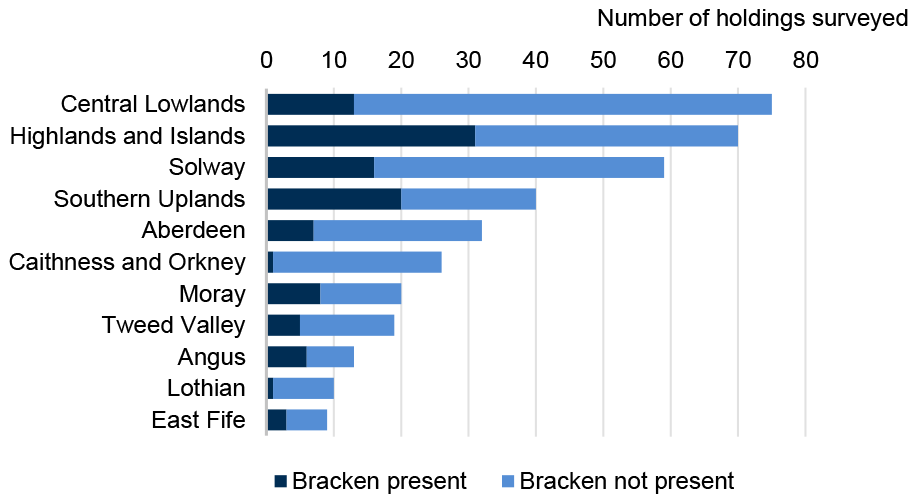
The number of returns in each land use region are presented in Figure 2 (a land use region map can be found in the data methodology section, page 17, Figure 12). The highest incidence of holdings reporting bracken presence within a land region was the Southern Uplands (50% of holdings surveyed reporting bracken) followed by Angus, Highlands and Islands, Moray, East Fife, Solway, Tweed Valley and Aberdeen (46, 44, 40, 33, 27, 26 and 25% respectively). In the remaining land regions (Central Lowlands, Lothian and Caithness & Orkney) less than 20% of those holdings sampled reported that there was bracken on their land (Figure 2).
Figure 2: Regional distribution of holdings with and without bracken in 2025
Land managers were asked to estimate the approximate bracken coverage on their holding. Please note these are not exact areas and were often presented as an approximate percentage of total land area and June Agricultural Census data were used to estimate bracken cover.
The total area of bracken reported in the survey was approximately 3,500 ha. This represents 6% of the total grassland area for those with bracken on their holdings (55,562 ha) and 4% of the total grassland area sampled (97,299 ha) (see supporting document Table 1 for details).
Those land managers who reported bracken on their holdings were asked further questions regarding land type, stand characteristics and change in bracken area over the past 5 years. Bracken by land type was categorised into six classifications: rotational grassland (grass less than 5 years old), permanent grassland (grass over 5 years old), rough grazing (unimproved grassland), woodland and other (where it did not fit any of these categories and included areas alongside tracks and rivers). Where there was no response to this question the land type was categorized as unknown. Analysis of bracken distribution by land type found that 79% of bracken recorded was on rough grazing. The distribution of bracken by land type is presented in Figure 3.
Figure 3: Percentage of bracken by land type area 2025
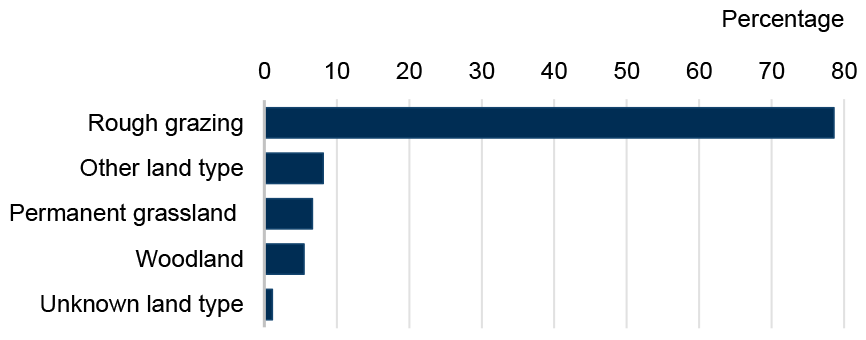
Figure 3 footnote: Rotational grassland is excluded from this figure as it represents less than 0.1% of bracken area
Land managers were asked to describe bracken coverage on their holding as either dense stands (continuous closed canopy with thick cover and very little open ground), a mosaic distribution (where bracken is interspersed with other vegetation) or a mixture of both (bracken is a mix of mosaic and dense stands interspersed).
Of the 111 holdings with bracken, the majority of land managers reported that the bracken on their land was a mix of dense stands and mosaic distribution (58%), 17% reported dense stands only and 23% recorded mosaic distributions only (Figure 4). Where mixed stands were recorded, land managers were asked to approximate the proportion of dense stands to mosaic distribution, however too few land managers returned information to allow meaningful conclusions to be made.
Figure 4: Bracken by stand type (percentage of total respondents) 2025
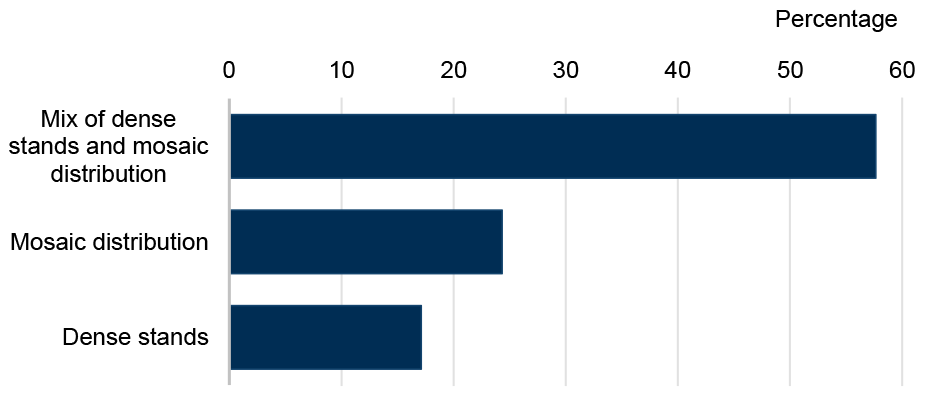
Figure 4 footnote: Where bracken distribution was not recorded, it has been excluded from the figure as it represents less than 1% of responses.
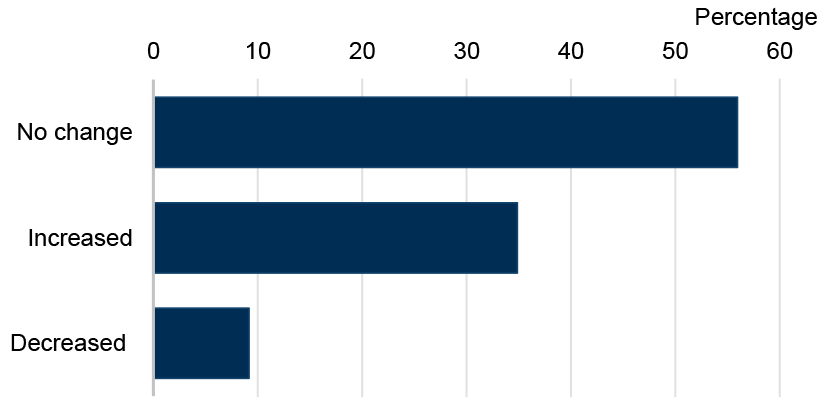
All land managers who had bracken on their holdings were asked if the area of bracken had increased, decreased or remained approximately the same over the last five years. Of the 109 land managers who responded to the question (98% of the sample), 56% reported no change in the bracken present on the holding, 35% reported that it had increased and 9% reported that it had decreased (Figure 5).
Figure 5: Percentage reported trends in total bracken area over last 5 years
Historical bracken management
Land managers with bracken on their holdings were asked further questions about their past, present and future bracken management actions and intentions (Figure 6).
As bracken management practices may not be undertaken every year, land managers were asked if they had treated bracken in the last five years. Of the 111 respondents, 64% had not treated the bracken on their land in this time period, 35% had and 1% did not respond.
Land managers were also asked if they had ever used Asulox as part of their bracken management strategy in the past. The majority (73%) had never used Asulox, 25% had used it in the past and 2% did not respond to the question.
The 28 land managers who had used Asulox for bracken management in the past were asked about their most recent year of use, only 16 of those growers responded to the question. Of these 16, two (13%) last used Asulox in the 1990s, three (19%) in 2000-2009, six (38%) in 2010-2019 and five (31%) in the 2020s. One land manager noted that they had wanted to use Asulox but couldn’t as their holding was too remote for spray operators to provide the service.
In relation to bracken management (by any method) in 2025, 85 (77%) did not manage bracken on their land and 26 (23%) had implemented at least one bracken management practice.
Figure 6: Summary of bracken management responses 2025
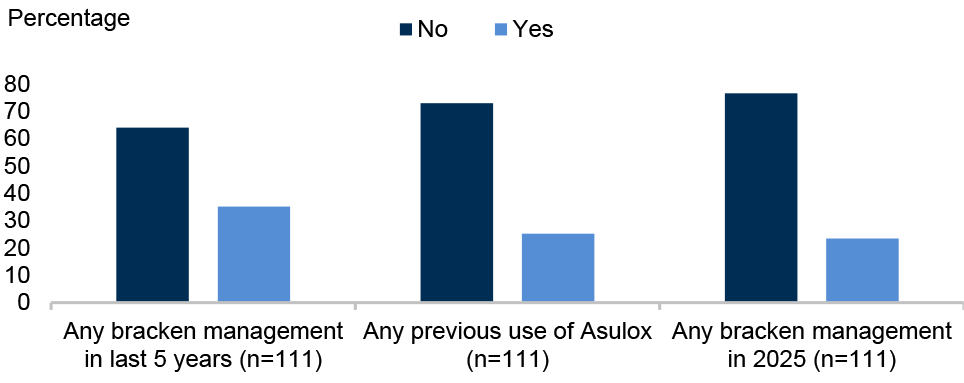
Figure 6 footnote: responses were not provided by 1% of respondents when asked if bracken was treated in the last 5 years nor by 2% on previous Asulox use
Bracken management in 2025
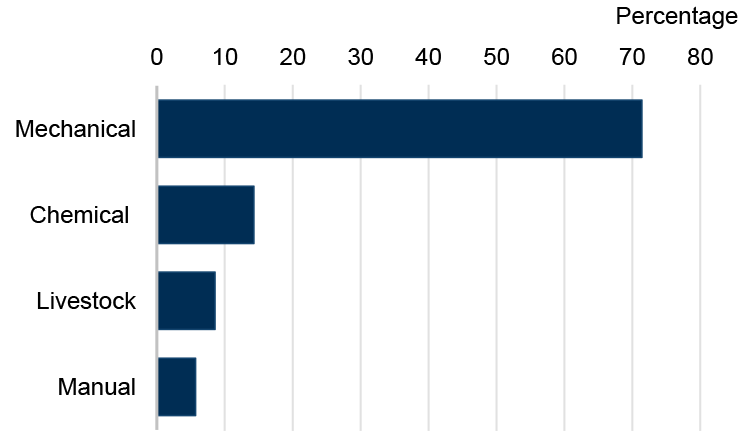
Twenty-six land managers, 23% of those with bracken on their holdings, used at least one bracken management practice in 2025. These management practices were further categorised as mechanical, manual, chemical or use of livestock (Figure 7). Some land managers used more than one management method on their holding (e.g. mechanical & chemical management or mechanical & livestock management). In total, the 26 respondents collectively employed 35 bracken management practices on 322 ha of bracken. The area treated was 9% of the total bracken area reported overall.
Mechanical treatment was the most common management option, with 25 (71%) of the 35 treatments recorded being mechanical (used on 290 ha, 90% of the total area treated). The mechanical management focused on variations of cutting (flailing/cutting/topping) and rolling (bashing/crushing/rolling/bruising) bracken using a range of standard and modified ATV/quad and tractor mounted equipment.
Chemical treatment was encountered in 4 (13%) of the 35 management options employed (used on 30 ha, 9% of the total area treated). In all cases the herbicide used was glyphosate, with all respondents applying by weed wiper and one also applying to some areas not accessible by ATV via knapsack sprayer. On three occasions (9%) livestock were used for bracken management (cattle in all cases, on less than 1 ha) and twice (6%) manual methods were employed (human trampling and scythe/thistlestick use, on 1 ha).
Figure 7: 2025 bracken management practices employed (percentage of total responses)
Where treatment timing was provided, most bracken management (88%) was conducted in June, July and August (15, 52 and 21% respectively) with the remainder in April and September.
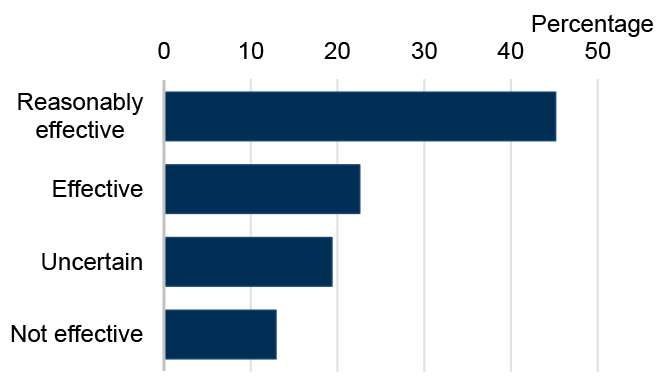
Land managers were asked to comment on the effectiveness of the bracken management practices used in 2025. The 31 responses provided have been collated into the following categories; effective, reasonably effective, not effective and uncertain (Figure 8).
The effective category included comments such as; “flail cutting reduces height and density and after four or five years of treatment bracken is either gone or so reduced in size and density other species grow and dwarf the bracken”, “areas cut back with topper are very effective”, “weed wipers are effective” “heavy chain harrow very effective” etc.
Reasonably effective included comments such as; “keeps bracken in check”, “okay, need to do some areas for 3 to 4 years to almost remove bracken, but it does return”, “looks good but comes back each year”, “effects are patchy”, “temporarily effective results”, “reasonable, bracken is less dominant”.
Not effective included responses such as; “weed-wiper does minimal good”, “vigour reduced slightly”, “ineffective”.
Uncertain included comments such as “too soon to tell” and “not known” with these respondents primarily indicating that efficacy of 2025 actions couldn’t be assessed before 2026.
Not all respondents included comments on effectiveness and the data in Figure 8 only refer to those management practices where comments were recorded. Overall, 68% of the respondents reported the management practices to be reasonably effective (45%) or effective (23%). With the remainder reporting that treatments were not effective or they were uncertain of their effectiveness.
Figure 8: Reported effectiveness of bracken treatments 2025 (percentage of total responses)
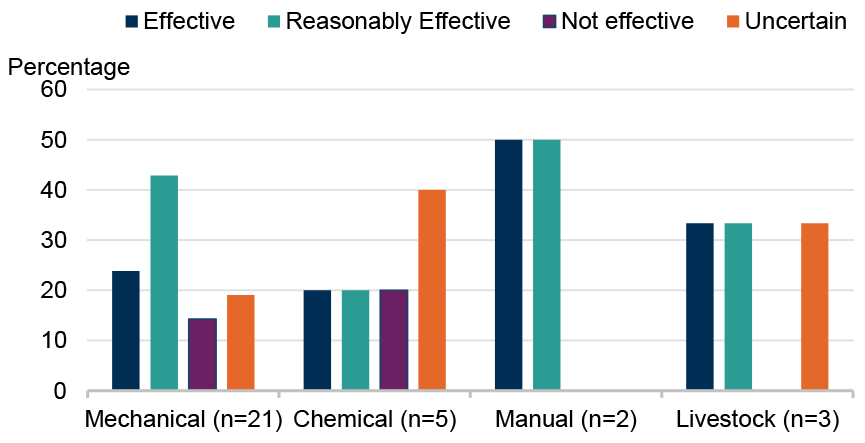
Further analysis compared the effectiveness of bracken treatments based on treatment type (Figure 9). For mechanical and chemical management practices 67 and 40% reported either effective or reasonably effective control respectively. Manual and livestock control were rated as 100 and 67% effective or reasonably effective respectively, but these were based on very small sample numbers.
Figure 9: Reported effectiveness of bracken treatments by treatment method in 2025 (percentage of total responses)
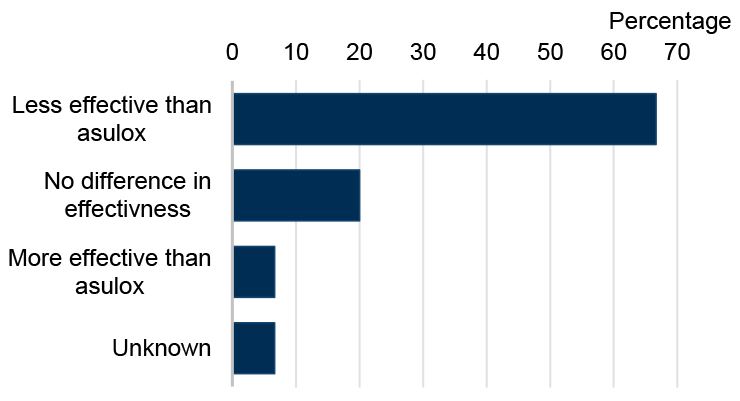
Those land managers who had both treated bracken in 2025 and had previously used Asulox were asked to compare efficacy of their current practices with Asulox. Of those who responded (15 out of the 26 who fell into both categories) the majority (10 land managers, 67%) categorised their current practices as less effective than their previous experience of Asulox with comments such as. “Asulox gave a successful long-term result, it was more cost effective”, “worked well, no comparison”, “Asulox was very effective”. Similar efficacy as Asulox was reported by 3 land managers (20%) with comments such as “much the same”, “Used Asulox in 2010 to 2012 with mixed results, Asulox covers more area but is more expensive” “Asulox had a 100% success rate on a smaller areas, in 2025 will need a further treatment but will take less labour with each subsequent treatment”) and one respondent (7%) reported that “mechanical better than use of Asulox”. The final respondent said they weren’t sure. Comparative efficacy responses are illustrated in Figure 10.
Figure 10: Reported effectiveness of bracken treatments in 2025 compared to Asulox (percentage of responses)
Land managers were asked to provide costs for the bracken management practices used in 2025. Not all respondents were able to provide a cost (73% provided information), with the remainder leaving the question blank or noting that it was too difficult to calculate. The total cost reported was £32,836 (range from £100 to £12,000). The average cost per land manager was £1,728 and the average cost per hectare was £102. Please note that the information was not provided consistently, particularly when contractors were not used, with landowners using different methods to calculate labour and associated costs.
All land managers were asked if any bracken management costs had been funded by a grant or a scheme, out of the 26 respondents, 25 provided a response, with 100% stating that no grant or scheme funding had been received for bracken management.
Future treatment intentions
Where bracken was present on a holding, land managers were asked if they were considering treating bracken in the future (even if they didn’t in 2025). Out of 111 respondents who reported their holding had bracken 60 (54%) stated they would treat bracken in the future, 39 (35%) did not intend to, two (2%) were unsure and 10 (9%) did not respond.
Land managers who had responded yes or maybe to future treatment (62) were asked what treatment method they would consider using, based on their experience and knowledge to date. These data are collated below (please note that some respondents indicated more than one type of intended management practice, so the total number of methods proposed (71) is greater than the number of respondents).
Of the 71 responses, 30 landowners (42%) said they intended to use mechanical bracken management practices, 13 (18%) planned to use glyphosate and five (7%) livestock. The full breakdown of these responses is illustrated in Figure 11. Please note that seven (10%) said that they would prefer to use Asulox (or another herbicide with authorisation for aerial application) were this to be available in future.
Figure 11: Future intended bracken management practices by method (percentage of total responses)
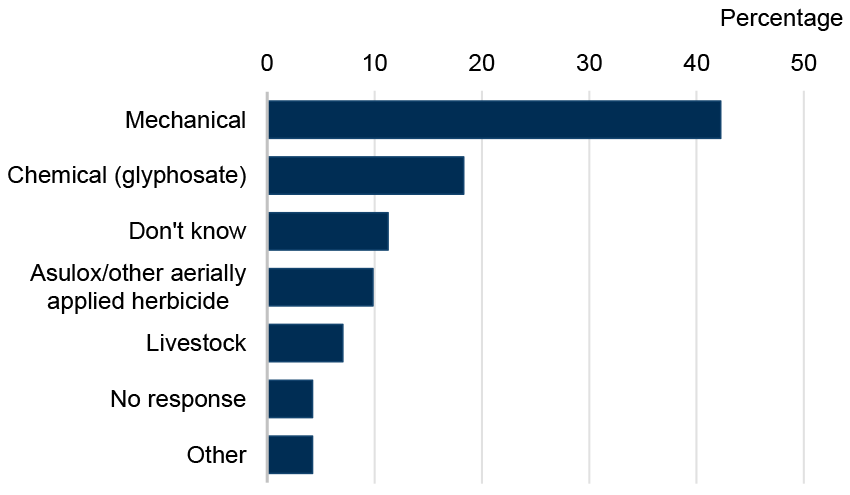
Figure 11 footnote: the other category included one each of mulching, root exposure and burning. Please note that some respondents indicated more than one type of intended management practice so the total number of methods proposed is greater than the number of respondents
Additional comments
A free text box was provided to capture any additional comments that land managers wished to share, 21 responses were received. These primarily provided additional information to support responses to earlier questions and were used to supplement these answers. Where further information was provided that didn’t directly support earlier questions, these mostly focused on the fact that many areas with bracken are inaccessible to management methods other than aerial spraying (7 comments) or were directly raising their concerns related to Asulox no longer being authorised for use (3 comments). One land manager noted that bracken helps with the management of deferred grazing and is a benefit in holistic farming, and they only limit bracken coverage and density as bracken stands are ineligible for Scottish Government basic farming payments.
Contact
Email: Jackie.hughes@sasa.gov.scot