
Agricultural tenancy data collection for Scotland: methodology report
This report explains the research methods used to develop and test improved agricultural tenancy questions, including reviews, interviews, workshops and surveys that informed the final recommendations.
Part of
Appendix B: Survey results for Set A
This section presents selected survey results for Set A: JAC (Targeted refinements), focusing on the questions that captured user feedback. The table below indicates which findings are included.
| Section | Reported | Description |
|---|---|---|
| Section 1: Question testing | Not included | In this section, respondents were asked to complete the Set A tenancy questions as accurately as possible. |
| Section 2: User experience | Yes | This section captured respondents’ feedback on Set A, including general impressions, comprehension, and perceived accuracy. |
| Section 3: Alternative approaches | Yes | Respondents were presented with Set B and Set C and asked to provide indirect feedback to enable high-level comparison, including which set they considered easiest to complete and most user-friendly. |
| Section 4: Demographics | Included in main report | Optional demographic questions collected information about respondents and their agricultural holdings. This data was used solely to monitor the diversity of responses. |
This survey received ten responses. Note that due to the small sample size, results are presented as raw counts rather than percentages. As referenced in the main report, these findings were not used in isolation but triangulated with evidence from other research activities to validate and test emerging insights. For a consolidated summary of conclusions, please refer to the accompanying Findings Report.
Set A: Results for Section 2: User experience
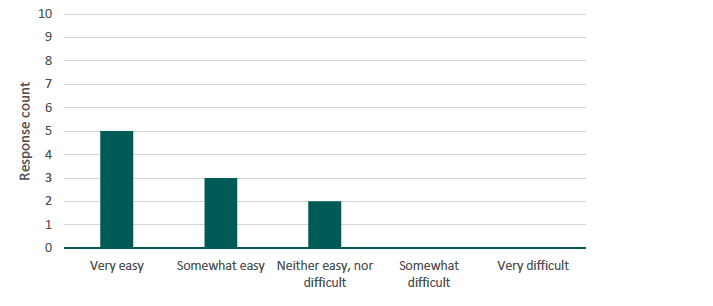
Question 1: Overall, how easy or difficult was it to answer the form displayed in the previous section?
Most respondents (8/10) found it easy to fill in the form displayed in the Set A questions. More specifically, out of the 10 respondents, 5 found it “Very easy,” 3 “Somewhat easy,” and 2 “Neither easy, nor difficult.”
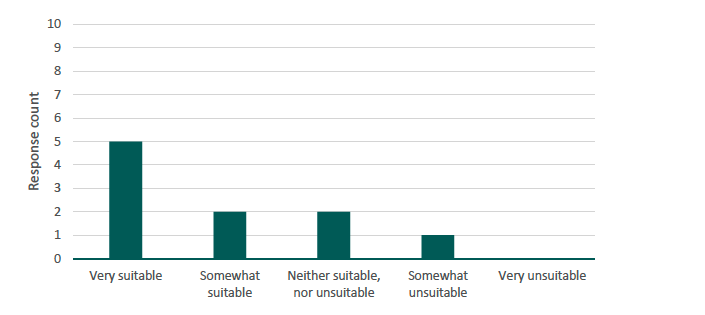
Question 2: How suitable did you find the length of the form?
The majority of respondents (7/10) found the length of Set A questions suitable. More specifically, out of the 10 respondents, 5 found it “Very suitable,” 2 “Somewhat suitable,” 2 “neither suitable, nor unsuitable,” while 1 found it “Somewhat unsuitable.”
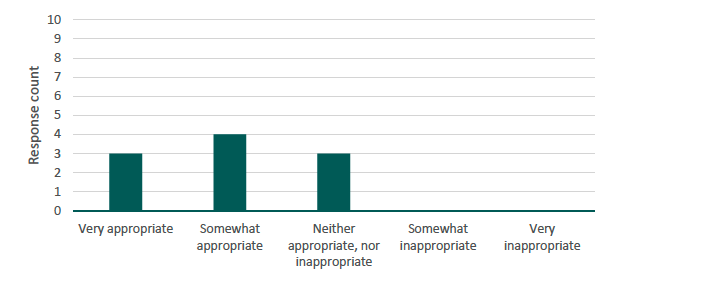
Question 3: How appropriate did you find the level of detail in the form?
The majority of respondents (7/10) found Set A’s level of detail appropriate. More specifically, out of the 10 respondents, 3 found it “Very appropriate,” 4 “Somewhat appropriate,” and 3 “neither appropriate, nor inappropriate.”
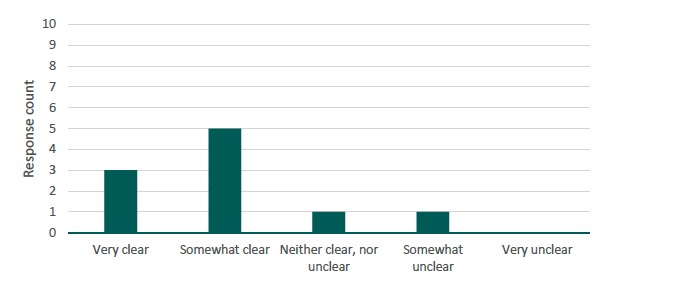
Question 4: How clear were the instructions for completing the form?
The majority of respondents (8/10) found the instructions for completing Set A questions clear. More specifically, out of the 10 respondents, 3 found it “Very clear,” 5 “Somewhat clear,” 1 “neither clear, nor unclear,” while 1 found it “Somewhat unclear.”
Question 5: Approximately, how many minutes did it take you to complete the form?
The median for form completion was 4.5 minutes, and the average completion time was 5 minutes. Responses ranged from 1 to 15 minutes.
Question 6: If these questions were included in the June Agricultural Census, how likely would you be to complete them each year?
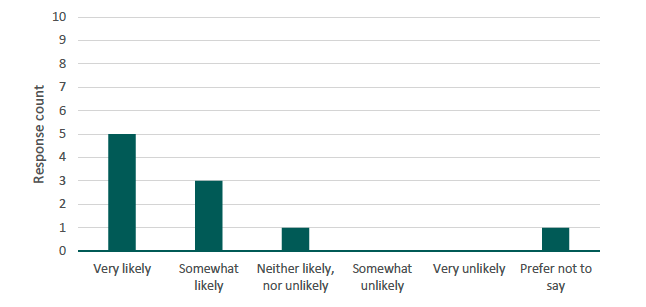
The majority of respondents (8/10) indicated that if questions were included in the June Agricultural Census as shown in Set A, they would be likely to complete them each year. More specifically, out of the 10 respondents, 5 found it “Very likely,” 3 “Somewhat likely,” and 1 “neither likely, nor unlikely,” while 1 chose “Prefer not to answer” as an option.
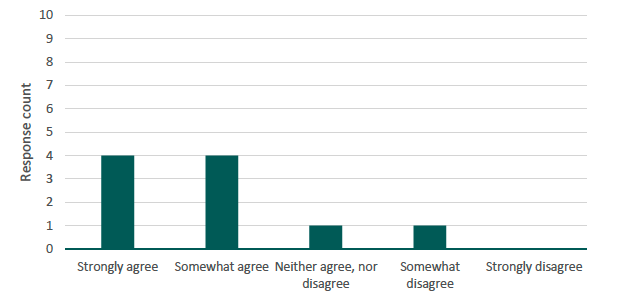
Question 7: To what extent do you agree with the following statement? “The wording of questions was easy to understand.”
The majority of respondents (8/10) found the wording of the questions easy to understand. More specifically, out of the 10 respondents, 4 reported that they “Strongly agree,” 4 that they “Somewhat agree,” 1 that they “neither agree, nor disagree,” while 1 that they “Somewhat disagree.”
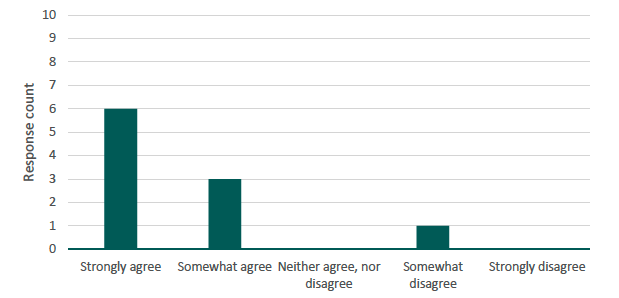
Question 8: To what extent do you agree with the following statement? “I was confident about what information to enter in each question.”
The majority of respondents (9/10) reported confidence about the information they should enter in each question. More specifically, out of the 10 respondents, 6 reported that they “Strongly agree,” 3 that they “Somewhat agree,” while 1 that they “Somewhat disagree.”
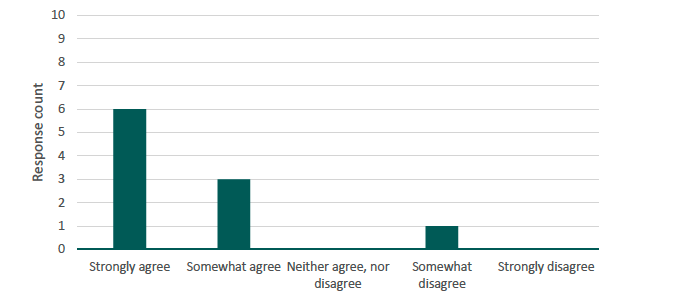
Question 9: To what extent do you agree with the following statement? “I felt confident about the information I provided in each question.”
The majority of respondents (9/10) reported confidence about the information they provided in each question. More specifically, out of the 10 respondents, 6 reported that they “Strongly agree,” 3 that they “Somewhat agree,” while 1 that they “Somewhat disagree.”
Question 10: To what extent do you agree with the following statement? “I understood the definitions of tenancy types and other technical terms used in the form.”
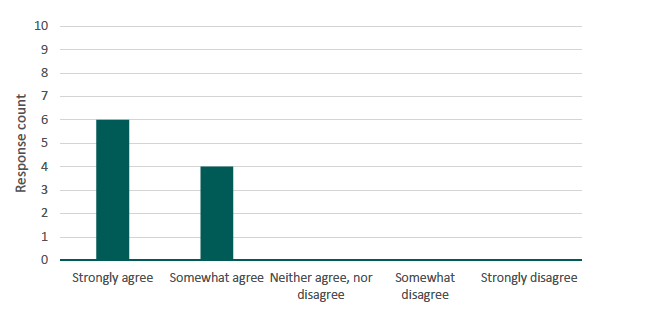
All respondents (10/10) reported confidence in understanding the definitions of tenancy types and other technical terms used in the form. More specifically, out of the 10 respondents, 6 reported that they “Strongly agree” and 4 that they “Somewhat agree.”
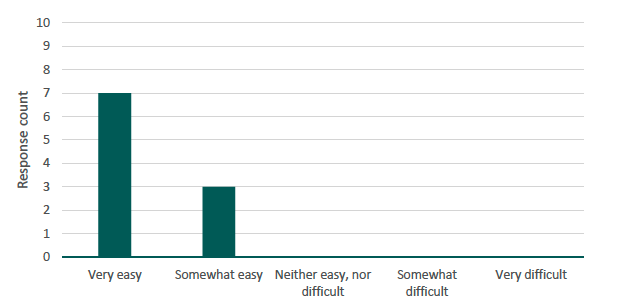
Question 11: How easy or difficult was it to identify the tenancy type(s) you hold?
All respondents (10/10) found it easy to identify the tenancy type(s) they hold. More specifically, out of the 10 respondents, 7 found it “Very easy” and 3 “Somewhat easy.”
Question 12: Were there any terms or categories that felt unclear?
No respondents (0/10) found any terms or categories unclear.
Set A: Results for Section 3: Alternative approaches
Set A respondents were presented with Set C first, and then Set B, and were asked to hypothetically compare with Set A.
Performance versus Set C: JAC (Branching logic)
Set A respondents were presented with the rationale for Set C, along with the following text and the accompanying guidance (Appendix E):
“This approach is designed to support respondents who are unsure about some or all their tenancy type(s). Respondents would first be asked to report any tenancy type(s) they know (for example, a 1991 Act Tenancy). For any tenancy type(s) they are uncertain about, they would then be guided through a series of follow-up questions to help identify the missing tenancy type(s).
The diagram below shows the logic behind this approach. Please note that the actual survey would follow the standard question format; the diagram is provided only to illustrate the flow of questions. The survey would end once all known and unknown tenancy type(s) have been reported.”
They were then asked to compare this approach with Set A, while also answering some questions regarding its usability.
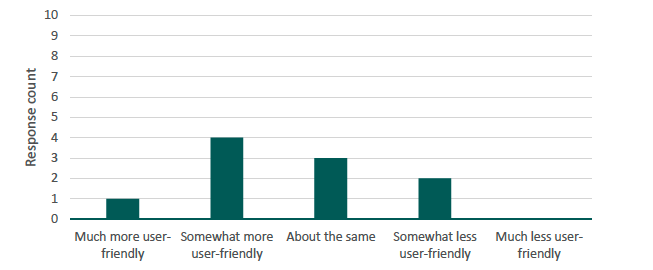
Question 13: Compared to the form you filled in Part 1, does this approach sound more or less user-friendly?
Half of the respondents (5/10) found the Set C format more user-friendly than Set A. More specifically, out of the 10 respondents, 1 reported that they find it “Much more user-friendly,” 4 that they find it “Somewhat more user-friendly,” 3 that they find it “About the same,” while 2 found it “Somewhat less user-friendly.”
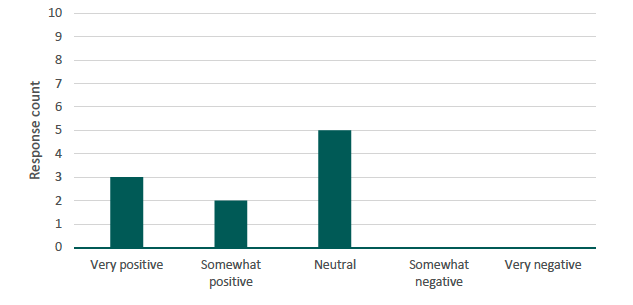
Question 14: What do you think of this approach?
Half of the respondents (5/10) had a positive view towards the Set C format. More specifically, out of the 10 respondents, 3 reported that they are “Very positive,” 2 that they are “Somewhat positive,” and 5 that they find it “Neutral.”
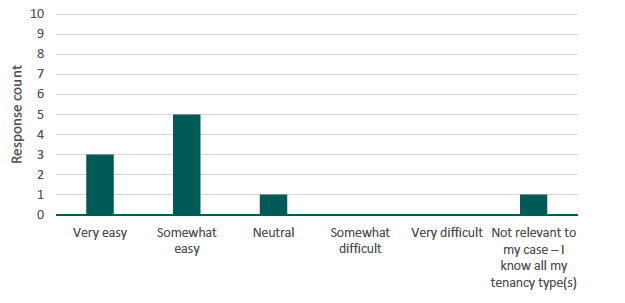
Question 15: How easy would it be for you to identify any tenancy type(s) you are unsure about using this approach?
The majority of respondents (8/10) reported that it would be easy to identify any tenancy types they are unsure about using the Set C format. More specifically, out of the 10 respondents, 3 reported that it would be “Very easy,” 5 that it would be “Somewhat easy,” and 1 “Neutral,” while only 1 reported “Not relevant to my case – I know all my tenancy type(s).”
Performance versus Set B: SAF (Alternative vehicle)
Set A respondents were presented with the rationale for Set B, along with the following text:
“This approach would collect tenancy information using the Single Application Form, rather than reintroducing the questions into the June Agricultural Census. Embedding the questions in this form may make it easier for respondents to provide accurate information because:
- Respondents are more likely to have the relevant tenancy information readily available.
- Respondents can seek professional support if they are unsure about the details of their tenancy agreement(s).
In addition, this approach may improve the quality of tenancy data and capture information at a more detailed level, helping policymakers to provide more accurate and targeted support to farmers.”
They were then asked to compare this approach with Set A, while also answering some questions regarding its usability.
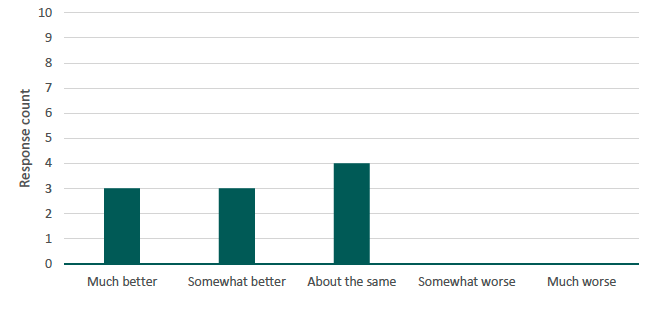
Question 16: Overall, how do you feel about this approach compared to the form you filled in Part 1?
The majority of respondents (6/10) found that incorporating tenancy questions in the SAF form is a better format than Set A. More specifically, out of the 10 respondents, 3 reported that they find it “Much better,” 3 that they find it “Somewhat better,” and 4 that they find it “About the same.”
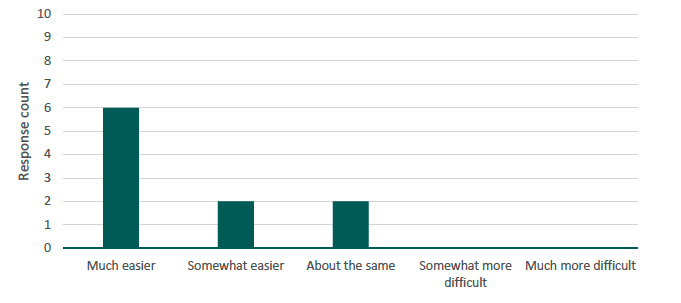
Question 17: Would embedding agricultural tenancy questions in the Single Application Form make it easier for you to provide accurate information?
The majority of respondents (8/10) found embedding tenancy questions in the SAF form as a way to make it easier for them to report information. More specifically, out of the 10 respondents, 6 reported that it would make it “Much easier,” 2 that it would make it “Somewhat easier,” and 2 that it would be “About the same.”
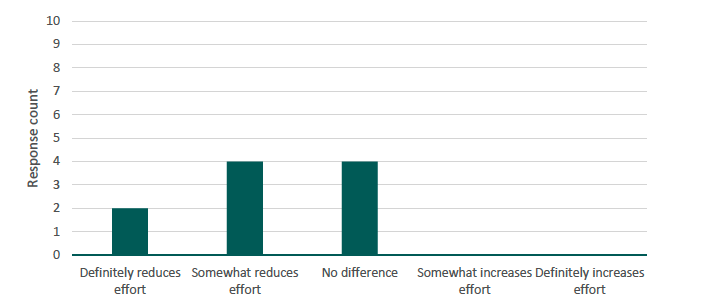
Question 18: Would asking agricultural tenancy questions in the Single Application Form reduce the effort needed to answer these questions, compared to the other approaches?
The majority of respondents (6/10) felt that incorporating tenancy questions within the SAF form would reduce the effort required to answer, compared with the other formats. More specifically, out of the 10 respondents, 2 reported that it “Definitely reduces effort,” 4 that it “Somewhat reduces effort,” and 4 that it makes “No difference.”
Contact
Email: agric.stats@gov.scot