
Architecture and Design Scotland review: background report
A background report setting out the findings and recommendations for reform of the public body, Architecture and Design Scotland, following a review process by Scottish Government.
Introduction and Context
Purpose
1.0 Architecture & Design Scotland (A&DS) was established as a non-departmental public body (NDPB) in 2005 and is a national champion for good architecture and design. A&DS works to help deliver Scottish Ministers' policies and objectives for the built and natural environment. This report summarises the process and conclusions of a review of the public body as the key vehicle for the delivery of architecture ad place policy.
1.1 The review of A&DS was the principal component of a review of architecture policy delivery in Scotland with the aim to identify how activity and resources can be best deployed to deliver improved outcomes within the current context.
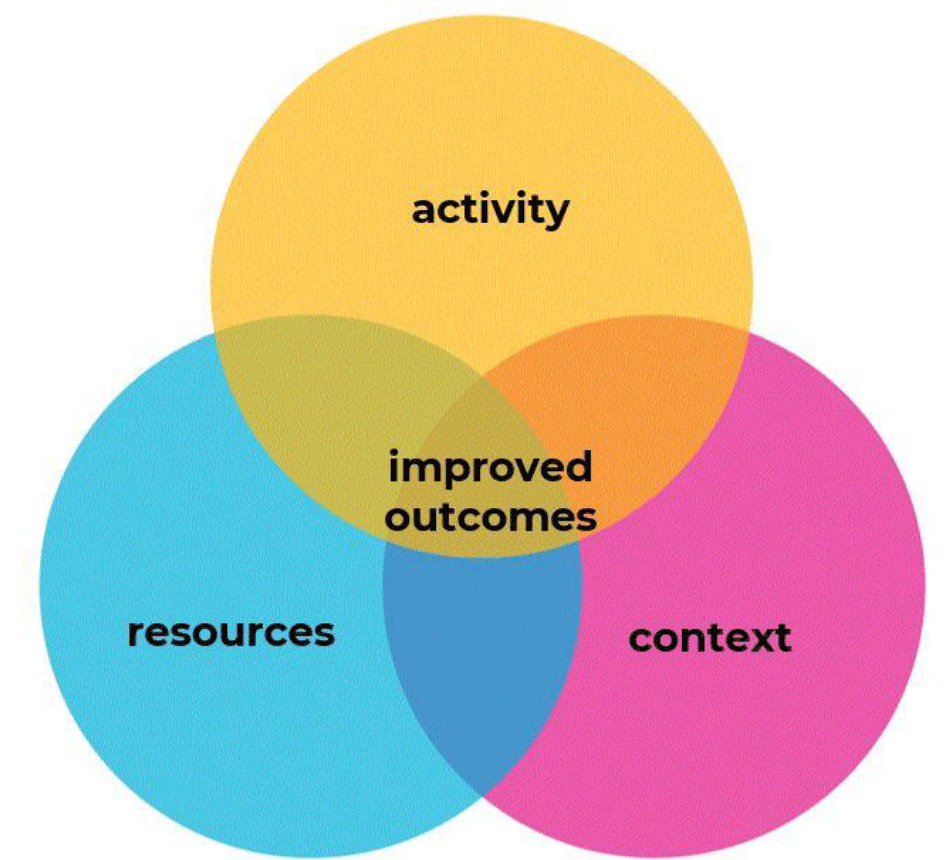
Text for graphic below:
improved outcomes
- activity
- resources
- Context
1.2 The specific review of A&DS (the Review) was based on the statement that:
“We expect all public bodies to demonstrate that they remain fit for purpose against the present and future needs of Scotland’s people, places and communities”
1.3 The decision to undertake a review of A&DS was based on the following considerations:
- Financial: A&DS faces significant financial challenges, and the Review intended to inform options for the viability and financial sustainability of the organisation.
- Timing: The most recent previous review of the performance and functions of A&DS was undertaken in 2009.
- Delivery: A&DS currently works across a wide range of government objectives and the Review seeks to help identify areas of relevance, skill, overlap and duplication.
- Policy context: The policy landscape around architecture and design has progressed significantly since the previous Review was undertaken alongside change in the activities and composition of A&DS.
- Technology: The increasing use of digital technology and data in architecture and design provides opportunity for impactful policy delivery.
1.4 The Review sought to deliver an assessment of:
- whether the NDPB is the best way to deliver services.
- A&DS’ fitness for purpose to deliver the service and what improvements can be made
- what scope there is for greater collaboration with other public sector organisations to build a more effective delivery services for the people of Scotland
- options to support the long-term financial sustainability of the organisation
- the specific future focus of A&DS in order to achieve greatest impact for public resources deployed to support Scottish architecture and design
1.5 The most recent Review of the NDPB was undertaken in 2009. That Review made recommendations that led to change within the organisation, including reclassification from an Advisory NDPB to an Executive NDPB.
1.6 A&DS operates as a Company Limited by Guarantee where Scottish Ministers are sole members of the Company. The constitution of A&DS is set out in the Articles of Association and Memorandum of Association.
A&DS Background
Status and Role
1.7 The role of A&DS is set out in the Creating Places policy statement on architecture and place (2013) to support and promote Scottish Ministers' policies and objectives for the built and natural environment. Specifically:
- supporting the creation and renewal of sustainable buildings and places
- improving skills and increasing understanding
- providing advice
- effective communications and advocacy
- promoting excellence in the delivery of public buildings and spaces
- researching and building evidence
Governance and Staff
1.8 The A&DS Framework Document sets out the broad framework within which the NDPB operates and defines key roles and responsibilities which underpin the relationship between the NDPB and the Scottish Government.
1.9 A&DS Chair is accountable to the Scottish Ministers via the Constitution, External Affairs and Culture portfolio. The Chair is supported by a Board of 9. Board members are remunerated. A&DS CEO leads a team of 20 staff. A&DS is sponsored by SG Planning, Architecture and Regeneration Directorate, (PARD).
Financial Considerations
1.10 A&DS is funded solely by Scottish Government. Core Grant-in-Aid funding is administered by PARD. Additional funding support is provided by SG Health Infrastructure & Sustainability Division and School Funding, Infrastructure & Organisation Unit.
1.11 Pressures on public finances set out a challenging funding position for A&DS. Given the unlikely prospect of significant increases in Scottish Government grant-in aid support in the near future, options to support A&DS budget sustainability are limited to structural reform and exploration of alternative funding models. A&DS is subject to the current Scottish Government policy on non-compulsory redundancies. There is little scope to reduce the staff costs and size of the organisation outwith natural staff turnover or transfer of staff within the wider public sector.
Review Methodology
Functional Assessment
1.12 As part of the Public Service Reform programme, a Rapid Functional Assessment (RFA) tool was developed to review whether existing public bodies are fit for purpose and enabled to deliver outcomes and services effectively. The Review of A&DS involved early piloting of this draft RFA process.
1.13 The RFA process was a collaborative and transparent process between A&DS and the SG Review team. The RFA methodology was shared in full with A&DS. Due to the pilot nature of the work and resourcing constraints, the RFA process took place over a longer timeframe than initially envisaged and the Final RFA report was shared with A&DS in May 2024.
Stakeholder engagement
1.14 Following the RFA process, engagement took place with key stakeholders in Scottish architecture, design, and planning sectors as well as via desk top review of related context. Stakeholder engagement was conducted through semi-structured interviews with stakeholders invited to provide general views on the current role, effectiveness, and any other relevant aspects of A&DS.
1.15 In addition to individual meetings, a series of roundtables were convened by the Royal Incorporation of Architects in Scotland (RIAS) to support the review process. These sessions involved engaging with around 80 leading architecture practices from across Scotland, as well as representatives from RIAS.
Sector Analysis
1.16 In addition to the functional assessment and stakeholder engagement, analysis of the economic impact and potential of architecture and design was considered. This drew on research and analysis undertaken by the Scottish Government Office of the Chief Economic Advisor (OCEA).
Roles and Responsibilities
1.17 The Review was led by Scottish Government with regular input and involvement from A&DS. The involvement of an independent review team was not deemed necessary due to the collaborative nature of the work, the relatively light touch nature of the project, the imperative to link the work to Ministerial priorities and limited available resources.
Contact
Email: DirectorPAR@gov.scot