
Food (Promotion and Placement) (Scotland) Regulations 2025: implementation guidance
Guidance to support the implementation of the Food (Promotion and Placement) (Scotland) Regulations 2025.
Annex D: Diagrams of location restrictions
The below diagrams are designed to illustrate some of the key restrictions under the regulations. For clarity, we have not marked out all restrictions that will apply to the area of the store depicted. In reality, areas in store or online may be in scope of more than one of the location restrictions set out in the regulations (e.g. in-store checkout area restrictions and designated queuing area restrictions).
In store restrictions
In store checkout area
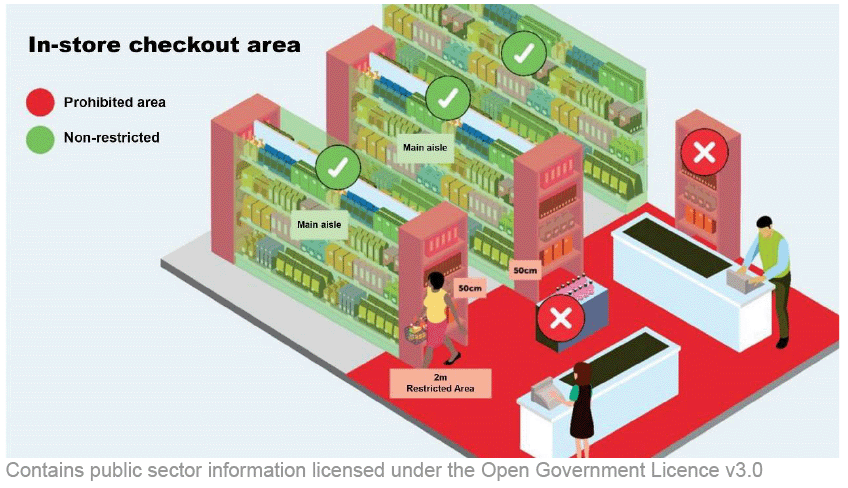
In the image above, the restricted area is within 2m of the checkout facility and specified foods cannot be placed here. This includes any point within 2m from a counter at which a cash register is used, including the area behind the counter and any point within 2m of a self-checkout terminal. It also includes other facilities intended to be used by consumers to make a purchase, which may include other till points or electronic points of sale. This does not prevent specified food being placed in an aisle, even if it is within 2m of the checkout, but specified food should not be placed at the end of an aisle or within 50cm of the end of the aisle.
Designated queuing area

In the image above, the restricted area is within 2m of a designated queuing area and specified foods cannot be placed here. There is also a 2m prohibited area around the checkouts, not shown here, where specified foods cannot be placed. This does not prevent specified food being placed in an aisle (but not at the end of an aisle) even if it is within 2m of the designated queuing area.
End of aisle and islands
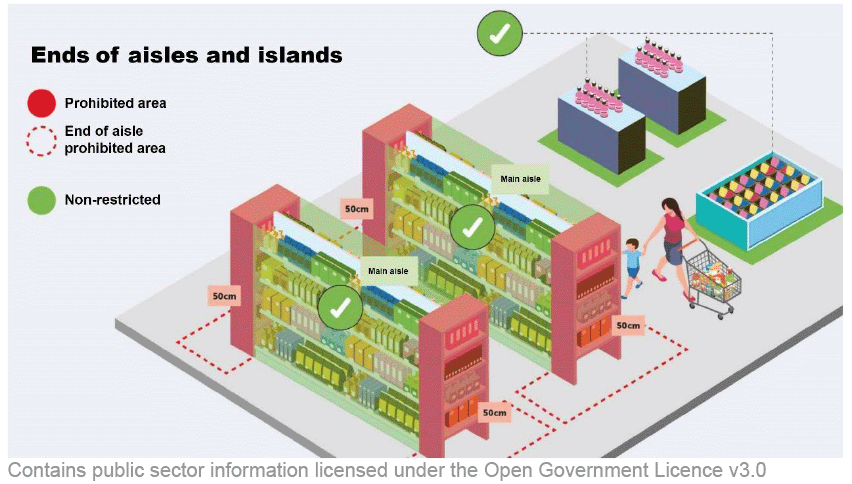
In the image above, the ends of (but not in) aisles and within 50cm of the aisle end are restricted areas and specified foods cannot be placed here. Specified food can be placed on separate island-type structures that can be dotted around the store, which are not aisles themselves, or which are not separate structures connected or adjacent to, or within 50cm of the end of an aisle.
Single door entrance
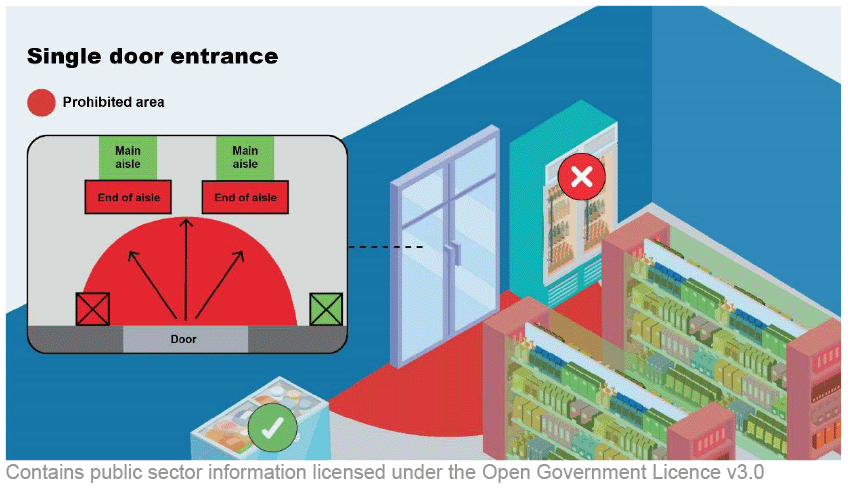
In the image above, there is a single door entrance with the prohibited distance shown from the midpoint of that entrance to the store’s main shopping area.
Single door entrance on a corner
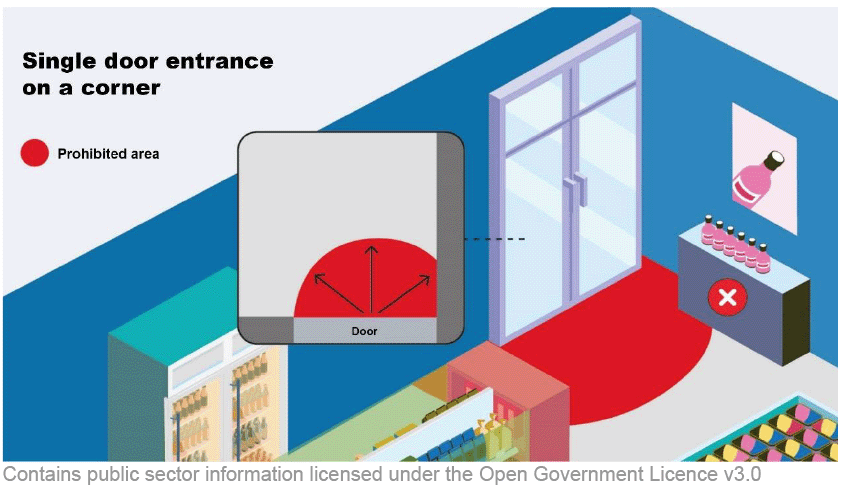
In the image above there is a single door entrance on a corner with the prohibited distance shown from the midpoint of that entrance to the store’s main shopping area, even when intersected with a wall.
Single door entrance near an aisle
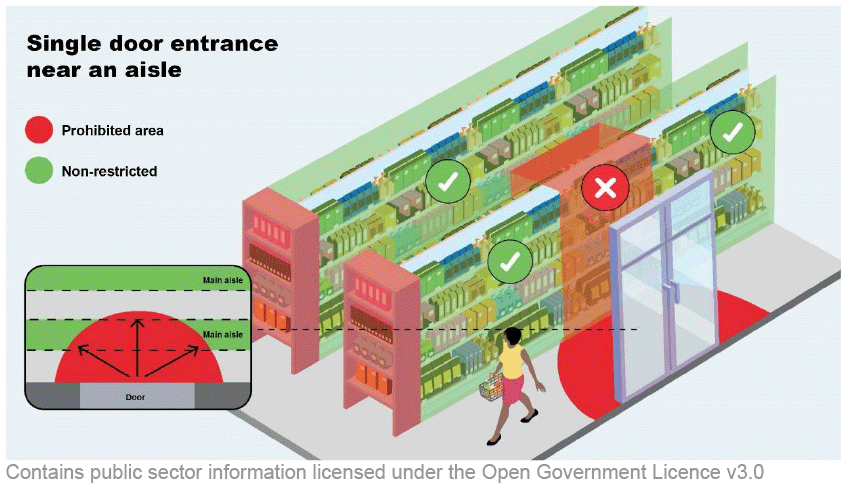
In the image above, there is a single door entrance with the prohibited distance shown from the midpoint of that entrance to the store’s main shopping area. There is a main aisle within the prohibited distance of the door. The main aisle area that is within the prohibited distance of the door shows that specified food should not be placed at any point within the prohibited distance, irrespective of whether it can be seen from the store entrance.
Stairs or escalators leading to a single door entrance

In the image above, stairs or escalators lead up to the store entrance. The prohibited distance shown is from the midpoint of the entrance to the store’s main shopping area.
Multiple door entrances
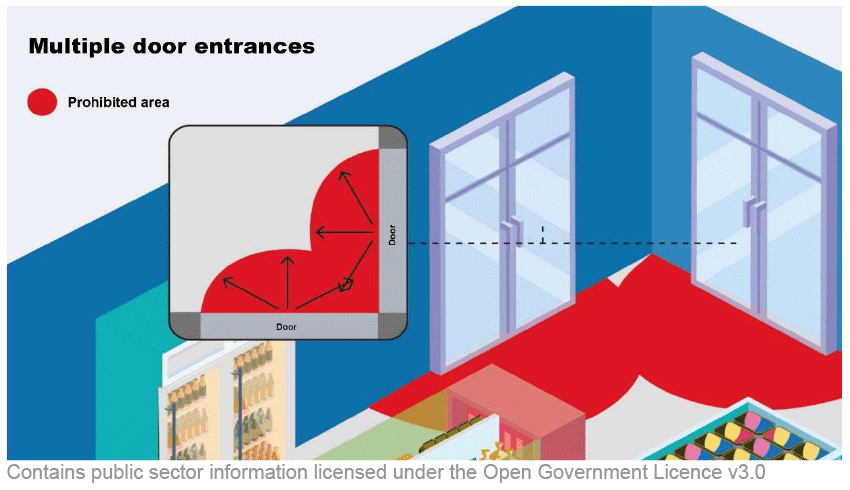
In the image above, there are multiple door entrances with the prohibited distance shown from the midpoint of each of the entrances to the store’s main shopping area.
Entrance in a covered external area inside the store

In the image above, there is an entrance to a covered external area which is connected to the store’s main shopping area, through which the public passes to enter the main shopping area (for example, the foyer, lobby or vestibule). This covered area is restricted, as is the prohibited distance shown from the midpoint of the entrance to the store’s main shopping area.
Online restrictions
Homepage
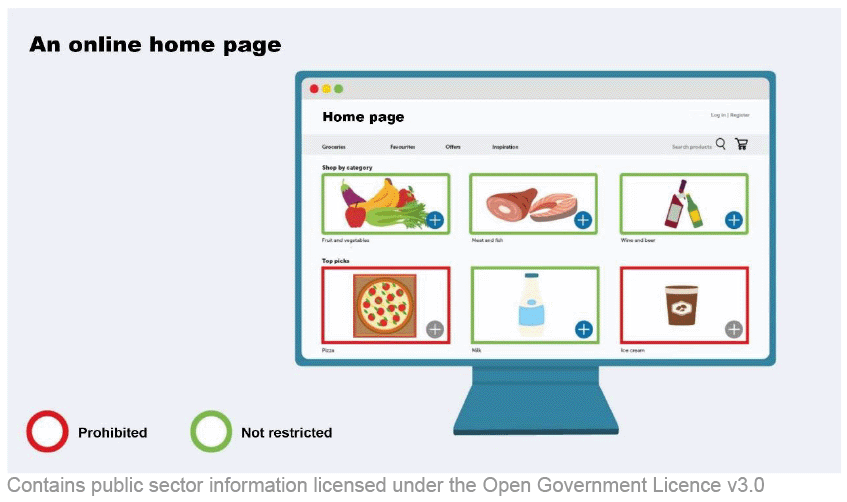
In the image above, the homepage of a website shows a list of categories (fruit and vegetables, meat and fish, and wine and beer), which are not generally restricted (subject to, for example, the meat and fish being breaded or battered). The page also shows ‘top picks’, including:
- a pizza (restricted where it meets the definition of a specified food)
- milk (not restricted)
- an ice cream tub (restricted where it meets the definition of a specified food).
Pop-ups
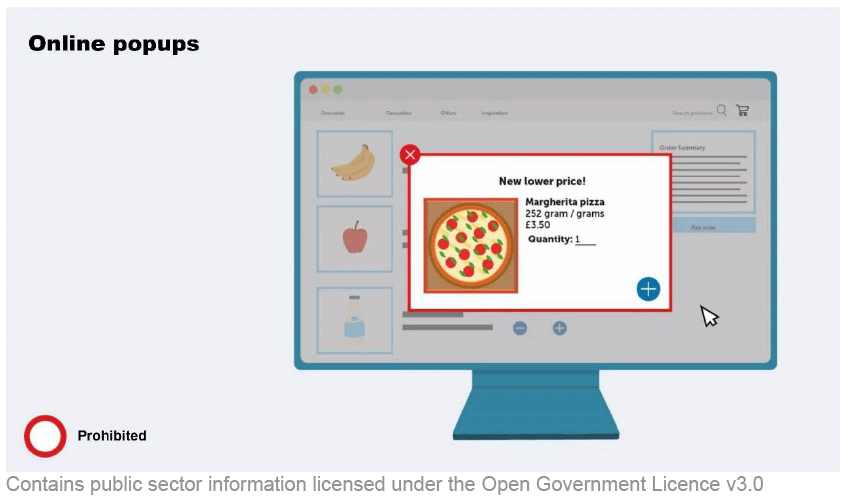
In the image above, a pop-up promotes a HFSS pizza, which is restricted.
Favourites page
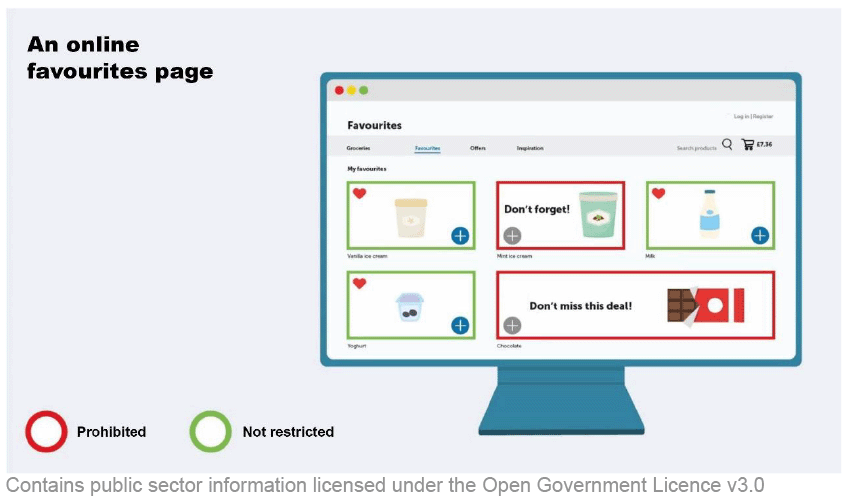
In the image above, a ‘favourites’ page shows items that have been intentionally marked as favourite products by the consumer. All the items that have been intentionally identified as favourites by the consumer are not restricted from being offered for sale on that page, including vanilla ice cream and sweetened yoghurt which meet the definition of ‘specified food’ set out in the regulations. On this page, there are also ‘don’t forget’ offers shown for HFSS mint ice cream and chocolate, which have not been favourited or previously purchased by the consumer – these are prohibited.
Online checkout
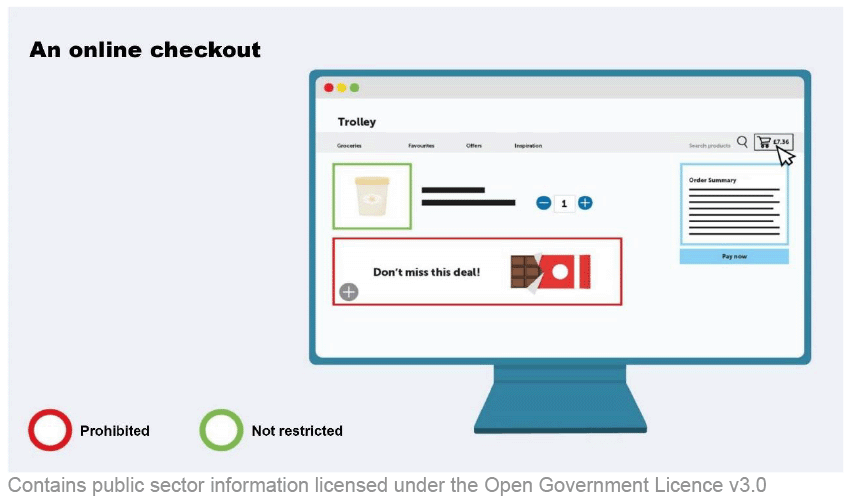
In the image above, a checkout page shows items that are in the trolley. All foods that the consumer has chosen to put in their trolley are not restricted. There is a message saying: ‘Don’t miss out on this deal’ offering a HFSS chocolate bar, which is prohibited.
Browsing
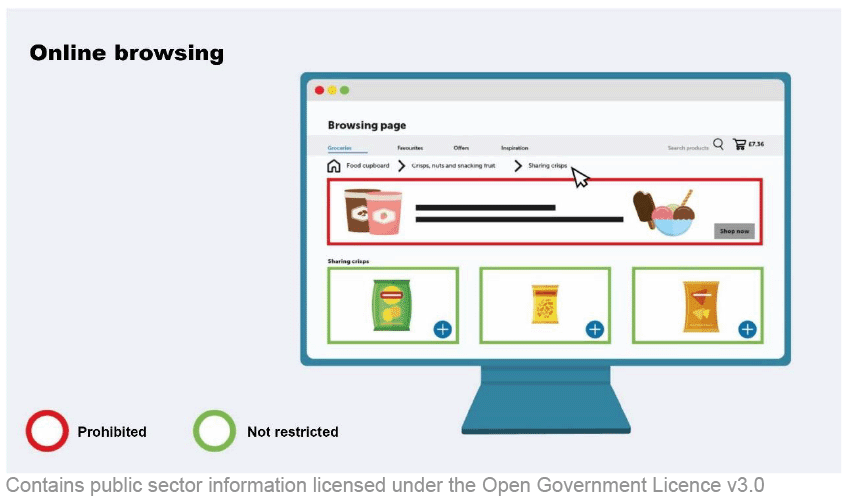
In the image above, there is a browsing page where the customer has opened the ‘crisps’ page. On this page, crisps are not prohibited even if they meet the definition of a specified food under the regulations as they fall within the same schedule category as the food that the consumer was browsing for. There is a banner for ice cream that may meet the definition of a specified food. This banner would be restricted, unless the ice cream was being offered together with crisps as part of a relevant special offer.
Searching
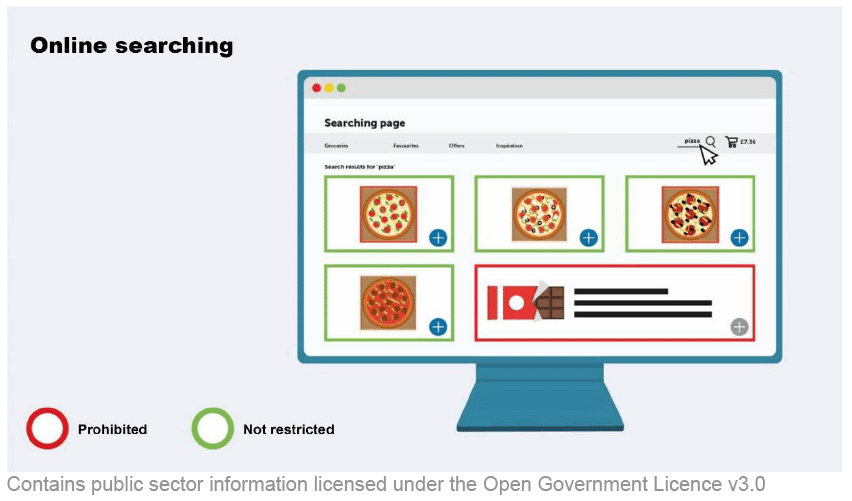
In the image above, there is a search page where the consumer has searched for ‘pizza’. All pizzas are not restricted even if they are HFSS as they fall within the same schedule category that the customer has searched for i.e. ‘pizza’. A HFSS chocolate is also shown on the page, which is restricted in these circumstances, unless the chocolate was being offered together with pizza as part of a relevant special offer.
Contact
Email: DietPolicy@gov.scot