
Agricultural wages in Scotland: guide for workers and employers - twenty ninth edition
The Agricultural Wages Order and guidance for workers and employers details the minimum hourly rates of pay and other terms and conditions for agricultural workers in Scotland.
10.Explanatory Notes
- The following notes do not relate directly to the Order but they offer advice, guidance and information which workers and employers may find helpful in a variety of circumstances.
Scope of Order
- The provisions of this Order apply to all workers in agriculture and horticulture (i.e. market gardens, gardens and nursery grounds, but not private or ornamental gardens from which none or only a small amount of the produce is sold), and also to foresters.
- The provisions of the Order apply to all workers in agriculture except those who are of ‘school age’, within the meaning of section 31 and 33 of the Education (Scotland) Act 1980. It does not, therefore, apply to persons of school age. There are separate provisions set out in national legislation and in local authority by-laws for the employment of children of school age with which all employers must comply.
- For the avoidance of doubt, the provisions of this Order apply to workers employed in fish farming where the fish farming enterprise comes within the definition of agriculture.
Void Agreements
- Section 11 of the Agricultural Wages (Scotland) Act 1949 states that any agreement between a worker and an employer which would lead to the worker not enjoying at least the minimum terms and conditions set out in the Orders would be void.
- Examples of void agreements would include the following:
- an agreement to pay less than the minimum wage in cash even if some compensatory payment in kind was made;
- an agreement to reduce holiday entitlements or the minimum payments for holidays;
- an agreement not to pay full overtime rates when overtime was worked;
- an agreement that a worker should provide their own weather protective clothing.
- Any agreement which means that a worker benefits from payments or other conditions in addition to those set down in the Order is acceptable under the 1949 Act.
Statement of Terms and Conditions of Employment
- As of 6 April 2020 all employees or workers beginning their employment or engagement on or after 16 April 2020 must be given a written statement of terms and conditions. Written statement of terms and conditions must be given to workers as well as employees. The majority of written particulars must be provided in a single document on or before the first day of work. There are exceptions for specified terms relating to pensions, collective agreements, training entitlement and certain information about disciplinary and grievance procedures which must be given no later than 2 months after the beginning of employment.
Training
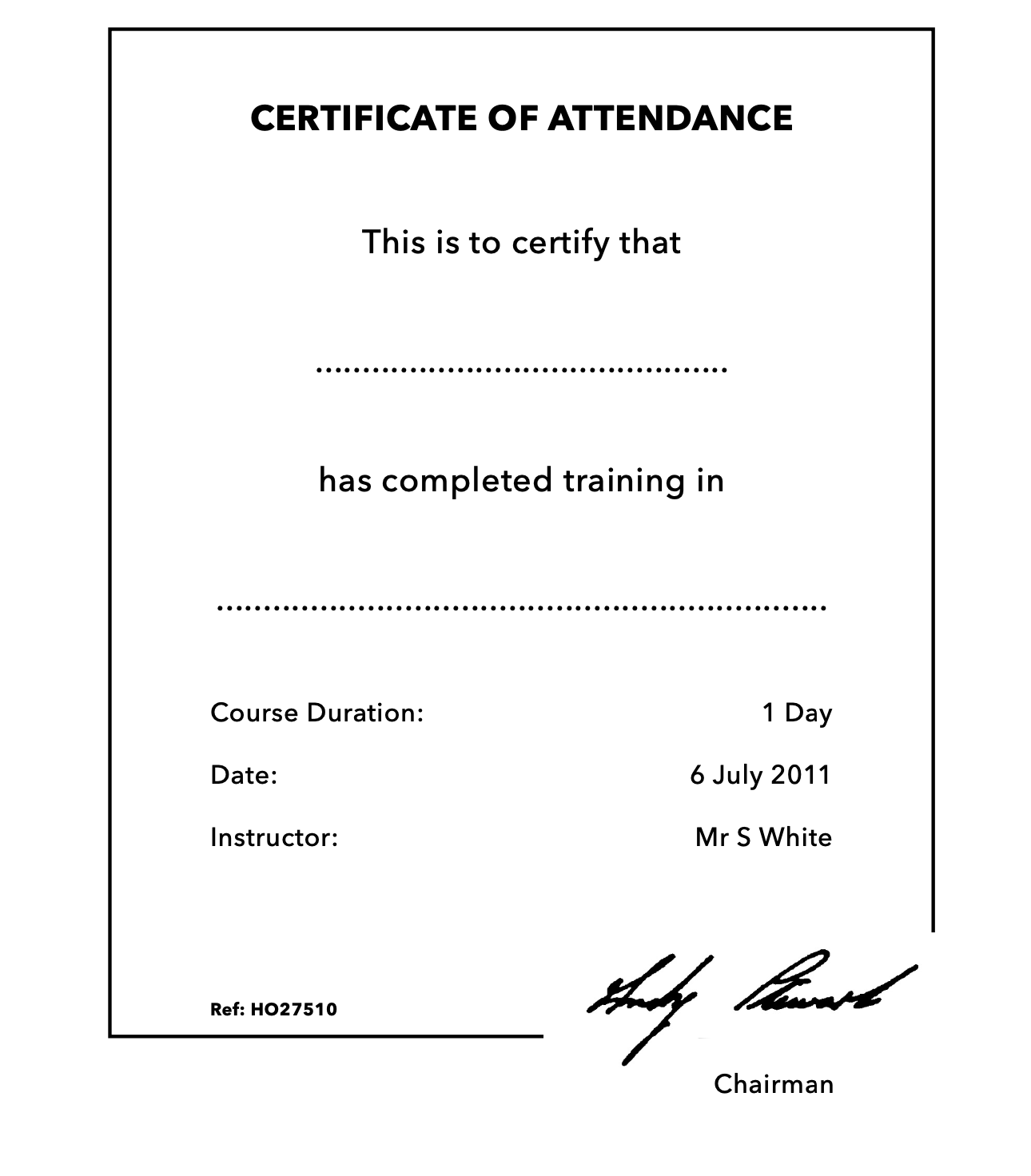
- For the purposes of training courses provided for in article 24 of the Order, Lantra NTO shall provide, at a standard charge, certificates of training at the end of a course. A specimen certificate is shown overleaf. It is recommended that the certificate(s) provided on completion of the training course be retained by the worker to provide a comprehensive record of training for future employers.
Useful Contacts
The following gives information on various publications and contact telephone numbers which employers and workers may find useful:
Statutory Sick Pay (SSP) Helpline: 0300 322 9422 Website: www.gov.uk/statutory-sick-pay
Working Tax Credit Helpline: 0345 300 3900 Website: www.gov.uk/working-tax-credit
General Employment Matters – ACAS The Advisory Conciliation and Arbitration Service (ACAS) publish information on codes of practice employment matters such as redundancy, contracts, bullying, harassment, rest breaks, Working Time Regulations and earned leave. ACAS Scotland, 151 West George Street, Glasgow G2 2JJ Helpline: 0300 123 1100 Website: www.acas.org.uk
Health and Safety Executive (HSE) Helpline: 0300 003 1647 Website: www.hse.gov.uk/scotland
Employment Tribunals For information about making a claim or going to an Employment Tribunal. Helpline: 0300 790 6234 Website: www.gov.uk/courts-tribunals/employment-tribunal
National Minimum Wage (NMW) Helpline: 0300 123 1100 Website: www.gov.uk/pay-and-work-rights
Citizens Advice Helpline: 0800 028 1456 Website: www.cas.org.uk
Human Trafficking and Anti Slavery Helpline number: 08000 121 700 Website: www.modernslaveryhelpline.org
Law Society of Scotland Helpline: 0131 266 7411 Website: www.lawscot.org.uk
Gangmasters and Labour Abuse Authority Telephone: 0800 432 0804 Website: www.gla.gov.uk
Ensuring that workers are properly paid
- The employer and the worker both share the responsibility for ensuring that all requirements of the Order are complied with in full. This guidance note seeks to help both parties to understand what they are required to do, and officials of the Scottish Government Wages Enforcement Team will always try to answer any questions.
Control Test Inspections
- Scottish Government Agricultural Wages Inspectors will also carry out random and risk based checks at employers’ places of business, both by way of routine spot checks and in response to complaints by workers about their pay and conditions. These visits will involve interviews with the employer and one or more workers, and a check of records relating to pay, holidays, hours worked, etc.
- Where the Wages Enforcement Team considers that a worker has not received their full entitlement, the employer will be advised of the problem in writing and invited to remedy the position.
- The Wages Enforcement Team has found it to be beneficial for an employer to maintain records to show that the appropriate payments due to workers have been made. For example:
- payments due for holidays taken and not taken,
- payments due for bereavement leave and parental leave,
- payments due for working on special holidays, standby, etc.
- If an acceptable solution cannot be agreed, then the matter may have to be referred to an Employment Tribunal for settlement.
- If a worker believes that they are not being paid in accordance with the Order, then they should contact the
Agricultural Wages Enforcement Team, Saughton House,
Broomhouse Drive, Edinburgh EH11 3XD,
Tel No: 07500994734/07919335259. E-mail: AWET@gov.scot
Complaint Procedures
- Complaints about the standard of service received from the Scottish Government Agricultural Wages and Rural Engagement staff, should be directed initially to the Deputy Director, Science and Advice for Scottish Agriculture, Roddinglaw Road, Edinburgh EH12 9FJ.
- If having referred the matter to the Deputy Director, Science and Advice for Scottish Agriculture you remain dissatisfied you may refer the matter to the Cabinet Secretary for Rural Affairs, Land Reform and Islands, St Andrew’s House, Regent Road, Edinburgh EH1 3DG.
- Where an employer or worker considers that there has been maladministration by Scottish Government staff in the handling of a routine inspection or complaint case, as opposed to the outcome of the case, they may refer the matter to the Scottish Public Services Ombudsman, 99 McDonald Road, Edinburgh EH7 4NS, Tel: Freephone 0800 377 7330. Complaints must, normally, be submitted in writing within 12 months of the event giving rise to the complaint. Further information regarding the Scottish Public Services Ombudsman is available at www.spso.org.uk.
Contact
Email: sawb@gov.scot