
Unpaid carers - right to breaks and timescales for support plans: consultation - easy read
A new law made in 2025 (the Care Reform (Scotland) Act 2025) will mean that carers will be given a right to get short break support if they cannot get enough breaks from caring. We want to ask you for your views on different options before the new rules are introduced.
Closed
This consultation closed 22 May 2026.
View this consultation on consult.gov.scot, including responses once published.
Changes to the law about getting breaks
Definition of sufficient breaks
A carer must have an adult carer support plan or a young carer statement to use their right to access a break. These are carer support plans that the local council must make after talking to the carer.

The plan should say if the carer is able to get enough breaks from their caring role. The council will have a duty to help a carer take a break if they are not getting enough.
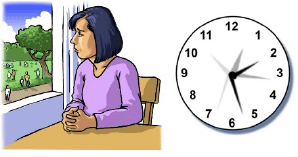
A carer’s health and wellbeing can be harmed if their caring role takes up too much of their time.

The Scottish Government have to decide what sufficient breaks means so that everyone is using the same definition. A definition is a statement explaining the meaning of something.

Our suggested definition of sufficient breaks is a break from caring that should give a carer enough rest, leisure and time to:

- avoid their caring role having a bad effect on their health and wellbeing, relationships and life balance

- help them to achieve their personal goals in these same areas.
Question 1. Is this definition clear enough to decide if a carer needs a break from caring?
Yes / No / Not sure
If you said no, how could it be clearer? Please give your answer in the box below:
Question 2. Does this definition include enough about the parts of a carer’s life that might be affected by their caring role?
Yes / No
If you said no, what else should be included? Please give your answer in the box below:
Types of breaks

The law does not list the types of support that would be a break for a carer. The rules say a break can be any support that gives a carer time away from their normal caring duties.

We know that the type of breaks available are different across Scotland. This can be confusing for unpaid carers. We want all carers to have different types of breaks available to meet their different needs.
We want to ask questions about which types of breaks should be allowed. We would also like to know if it would be helpful to list things which will not count as a break. We have made 3 lists of options.
List 1. Breaks that carers might find difficult to access

- Group based breaks These could be carers’ craft groups, choirs, exercise classes.

- Targeted breaks for young carers Breaks with other young carers like outings to the cinema or zoo._g??
- Activity-group based breaks Funding for young carers to join groups like the Scouts or Guides._g??
- One-off family breaks

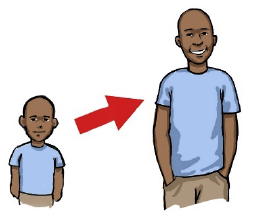
This could include when important life events happen like a serious illness or moving from child to adult services.

- Breaks for different cultures Breaks for black and minority ethnic carers which respect their culture and language. This could be breaks with other carers who speak the same language or have similar backgrounds.
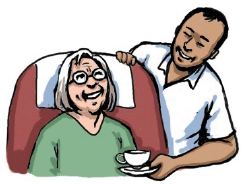
- Replacement care within the home This allows the carer and cared-for person to enjoy activities without the need for the carer to provide care.
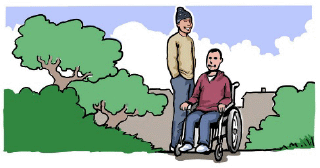
- Replacement care means having someone else provide care for your loved one while you take a break.

- Giving carers more time for themselves Support with tasks like housework and gardening.
Question 3. Should we list some types of support which count as a break from caring?
Yes / No
If not, why not? Please give your answer in the box below:
Question 4. Are there any types of breaks missing from List 1?
Please give your answer in the box below:
Are there any types of breaks listed which should not be on List 1?
Please give your answer in the box below:
List 2. Breaks that carers might find easier to access based on what support is available
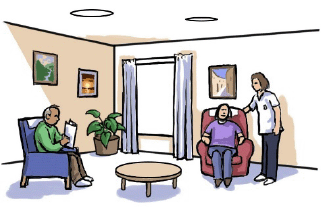
- Day care for the cared-for person This gives the carer a break while the cared-for person is away from home. This includes day services for people with learning disabilities or dementia.

- Overnight short break Stays away from home for the cared-for person. If the break is for the carer this includes replacement care for the cared-for person.

- Longer-term holiday breaks This could be a stay in a hotel, holiday park or caravan for the carer. This could be with or without the cared-for person and might include replacement care.

- Day trips and activities for the carer This could be a spa day, trip to the zoo or sporting event. It could be with or without the cared-for person.

- Grants for subscriptions or items These allow the carer to try new activities or hobbies.
Question 5. Are there any types of breaks missing from List 2?
Please give your answer in the box below:
Are there any types of breaks listed which should not be on List 2?
Please give your answer in the box below:
Question 6. Could lists with some types of breaks included cause any problems?
Yes / No
Question 7. Should there be a list of cases which are not seen as break from caring?
Yes / No
List 3. Things that should not be viewed as a break

- The carer going to work.

- The carer going to medical appointments.

- The cared for person going for education classes.
Question 8. Is there anything missing from List 3?
Please give your answer in the box below:
Is there anything that should not be on List 3?
Please give your answer in the box below:
Time allowed for making carer support plans
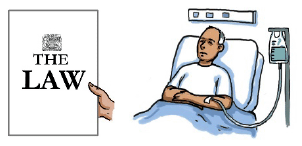
The law says that carer support plans must be made quickly for people who are caring for someone with a terminal illness. We plan to keep these rules.

The Scottish Government now has to decide how long councils can take to make support plans for all other carers. This might be either 8 or 10 weeks for a simple version of the plan.
The local council or Health and Social Care Partnership might pay someone else to make the plan. But they are still responsible for making sure the plans are made on time.
There can be a simpler version of the support plan. This should cover important areas like the carer’s personal situation, how much care they are able to give and the kind of support they need.
Question 9. Should quick support plans be offered for carers of terminally ill people only?
Yes / No
Question 10. How long should be allowed for making a simple version of the support plan for other adult carers?
8 weeks / 10 weeks
Another time. Please say how long:
Question 11. Should the time taken to make a Young Carer’s Statement be the same as for adult carers?
Yes / No
Question 12. How long should be allowed for making a simple version of a Young Carer’s Statement?
8 weeks / 10 weeks
Another time. Please say how long:
Moving from the old system to the new one

It is important that the people who already get support can move easily to the new system.

We want your views on 2 ideas to help the introduction of the right to breaks go smoothly.

Our first idea is to move carers with existing plans into the new system gradually. Councils would have 2 to 3 years to review the plans of carers who already have one.

Our second idea is to have a stand in definition of sufficient breaks when the right to break starts. This would be for those in most need.

This stand in definition is like the full definition we shared. But it aims to help carers who would have the greatest need due to their caring roles if they do not get support.
Question 13. Do you agree with a gradual method for moving carers into the new system?
Yes / No
Question 14. How long should councils have to review all carers’ plans?
2 years / 3 years
Another time. Please say how long:
Question 15. Do you agree with using a stand in definition of sufficient breaks to help those in greatest need first ?
Yes / No
If not, why not? Please give your answer in the box below:
Question 16. What would be the benefits and risks of using a stand in definition?
Please give your answer in the box below:
Question 17. When should we replace a stand in definition with a wider definition including more carers?
agree the date at the beginning
wait until the new system has been used for a while and then decide
Contact
Email: Carerspolicy@gov.scot