
Scottish Budget 2026 to 2027: High Level Carbon Assessment
Estimate of the consumption-based carbon emissions associated with planned budget expenditure.
2. High-level Carbon Assessment of 2026-27 Budget
2.1. Portfolio Expenditure and Associated Emissions
15. Total estimated emissions attributable to the 2026-27 Budget are 8.7 Mt CO2-equivalent. Table 2 shows overall spend and emissions by the individual portfolios and how these emissions arise. Emissions remain broadly proportional to spend, except for Rural Affairs, Land Reform and Islands, where emissions per unit of spend are slightly higher. Health and Social Care, Finance and Local Government and Social Justice are the largest Budget items, with the highest emissions.
16. Expenditure is shown net of income, in line with the Budget, and emissions are calculated on that basis.[2]
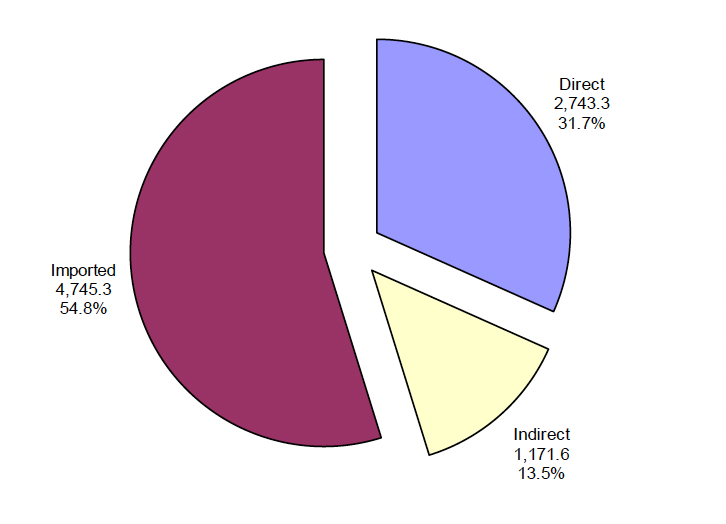
17. Direct emissions account for 32 per cent of the total; indirect emissions for a further 14 per cent. Around 55 per cent of emissions attributable to Budget expenditure are generated outside Scotland and are embedded in imported goods and services.
2.2. Emissions by Industry Source
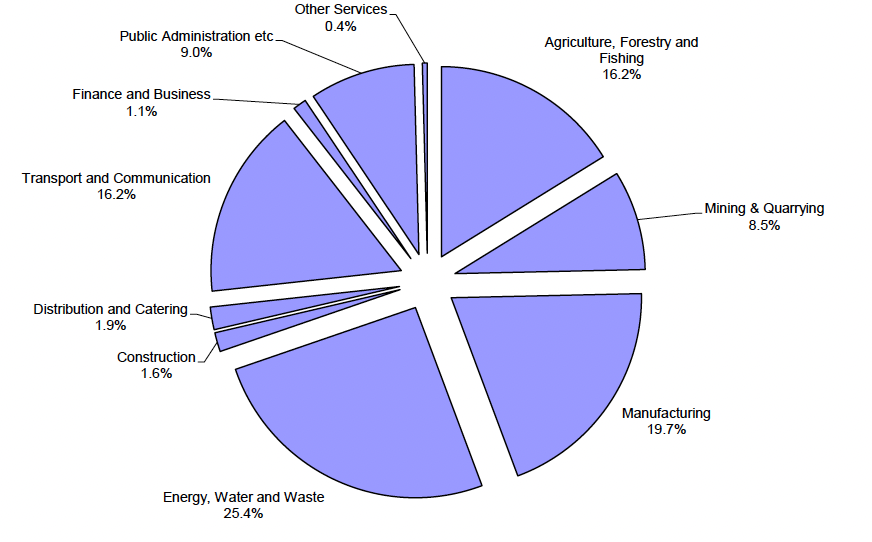
18. Total emissions broken down by industry are shown in Figure 1. Some 25 per cent of the Scottish Government’s carbon footprint is caused by the use of Energy, Water and Waste, followed by Manufacturing (20 per cent) and Transport and Communication and Agriculture, Forestry and Fishing (both 16 per cent).
2.3. Domestic and Imported Emissions
19. In addition to direct and indirect domestic emissions, the assessment takes into account the emissions generated outside of Scotland in the production of imported goods purchased as a result of Government spending (e.g. food, machinery, IT equipment).
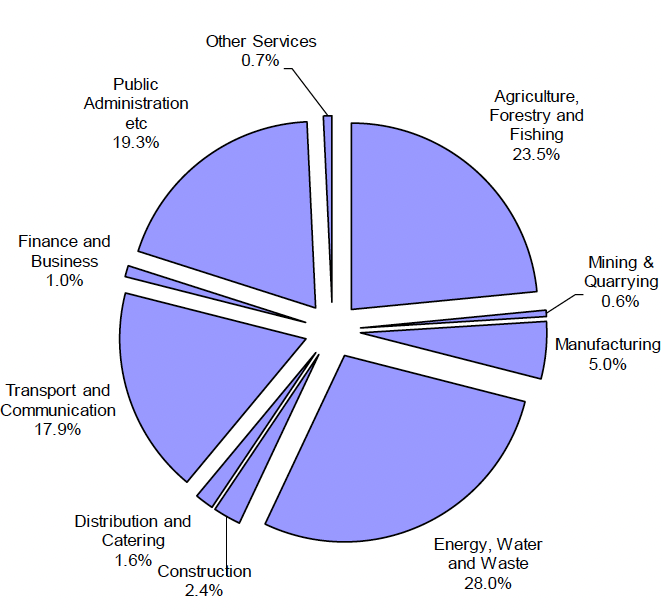
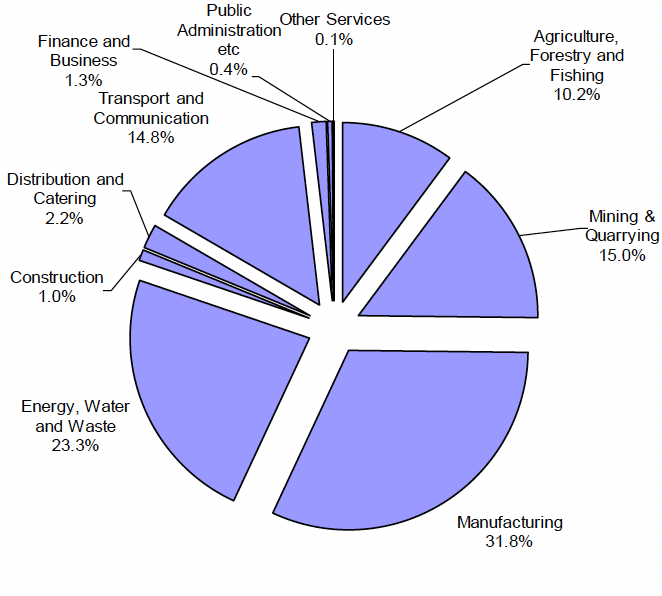
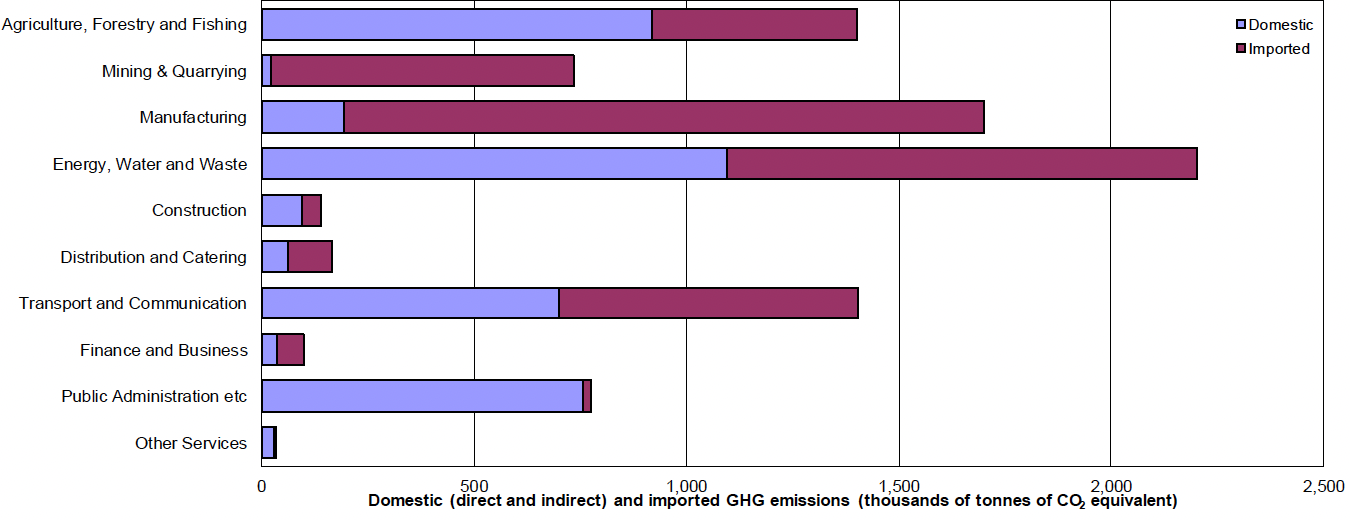
20. Figure 2c demonstrates that imported emissions make up around a half of emissions from Budget spend. There is however a difference between the sources of domestic and imported emissions. Expenditure on Energy, Water and Waste accounts for the largest share of domestic emissions (followed by Manufacturing), expenditure on Manufacturing also generates the largest share of imported emissions (followed by Energy, Water and Waste).
Figure 2: Domestic and Imported Emissions - All portfolios
Contact
Email: Edward.McHardy@gov.scot