
Scotland's Future Catching Policy: Selectivity Proposals Consultation 2026
As a result of FCP technical workshops and stakeholder engagement, and following on from our review of current technical measures, innovations, and best practises, the Scottish Government are proposing a number of changes to technical and management measures across Scottish waters.
Closed
This consultation closed 11 May 2026.
View this consultation on consult.gov.scot, including responses once published.
Annex B – Dual codend separator gear
The dual codend separator gear is a selective device designed to separate Nephrops from fish. It is an inclined panel of square mesh that directs fish upwards and into an upper codend while allowing Nephrops to fall through the square meshes and into the lower codend.
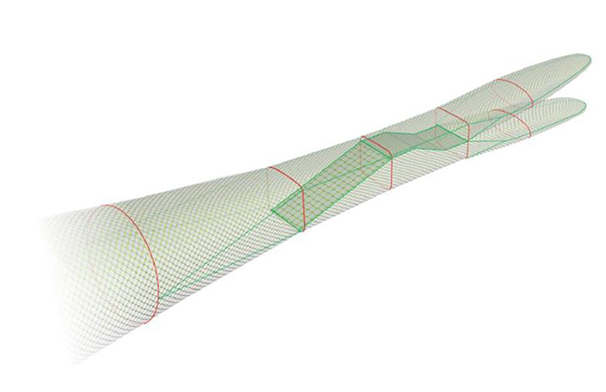
The net grid has proved to be effective at separating Nephrops from fish in several different fisheries with several different mesh sizes. In North East Scotland 400mm mesh was found to give the better results while in the Farne Deeps area 200mm was used. In some areas the bycatch of fish is not of significant value to the fishermen, in this case the Centre for Environment, Fisheries & Aquaculture Science (Cefas) version that is designed to release most of the fish can be used. When the fish bycatch is a large proportion of the value of the catch the Amity version with the second codend to retain the fish can be used. The benefit of this is that the top codend can be used as a secondary selectivity device designed to retain just the marketable fish. By using larger diamond mesh such as 110mm or 120mm mesh for this codend should help to release many of the smaller fish that would otherwise be discarded.
Other alternatives to further improve not only selectivity but also help retain fish quality and improve fish welfare would be to look to using square mesh, T90 mesh or even knotless netting in either square of diamonds orientation for the upper codend. If the vessel is in an area of many small fish or if they are low on quota they may even opt to leave the top codend open and release all the fish, while still retaining the Nephrops in the lower codend.
One of the big advantages of separating the catch into two codends is that both the Nephrops and the fish are taken onboard in much better condition than a net where the catch is mixed. Due partly to the reduced bulk of fish in the lower codend the Nephrops come onboard much livelier, with less damaged legs and claws, this should result in a better price on the market, although this may take a few weeks for the processor to appreciate the improved Nephrops quality.
The fish retained in the top codend will be in better condition because there is reduced bulk of fish as the small ones are released and the abrasion caused by them mixing with the Nephrops is much reduced. With the fish being in the top codend that will be higher of the seabed than the normal single codend therefore should be above the sand cloud created by the footrope of the trawl that will also lead help to maintain the quality of the retained catch.
Contact
Email: fcpconsultation@gov.scot