
Schools - violent, aggressive and dangerous behaviour: risk assessment guidance
This guidance provides clarity to local authorities and educational settings on appropriately using risk assessment processes to mitigate or minimise violent, aggressive, and dangerous behaviours exhibited by children and young people at school.
Appendix 2: HSE managing risks and risk assessment – five-step approach
Summary of steps in the context of risky behaviour
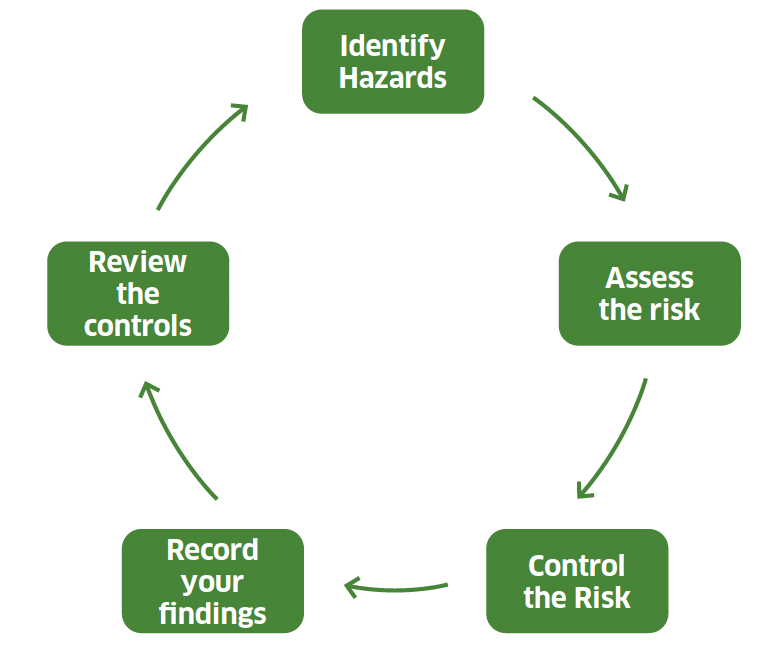
1.Identify the hazards – something that can cause harm, for example, violent or aggressive behaviour such as threatening violence, kicking, biting, or carrying weapons (this list in not exhaustive).
2.Assess the risk – where and when the behaviour is more likely to occur and who is at risk. Consider who may be more vulnerable to the risk such as new employees, those working in one-to-one situations, or employees in specialist settings.
3.Controlling the risk – this is the ‘how’ the risk will be managed. The controls should either avoid the risk occurring completely or reduce the risk as far as reasonably practicable.
4.Record your findings – this involves both the writing of the risk assessment and the implementation of mitigations.
5.Review the controls – check that the controls are working or whether they are still needed. After the review, make the necessary changes and update the risk assessment.
See HSE Managing risks and risk assessment for more detail about the five-step approach.