
Preventing human trafficking and exploitation: evidence review
This evidence review aims to explore current understanding of approaches to preventing human trafficking and exploitation in the UK. It is part of a series of four evidence reviews. This paper provides insight on the potential merits of a public health approach.
Review Findings
Defining prevention – a public health approach
There is currently no unified definition of human trafficking, exploitation or modern slavery prevention (Such et al., 2022). The 2000 Palermo Protocol, 2005 Council of Europe Trafficking Convention and the 2011 EU Trafficking Directive do not formally define prevention. A public health definition of human trafficking has been emerging in recent years, however. This is whereby prevention is addressed on three levels: primary, secondary and tertiary prevention (Such et el, 2017; Sereni and Baker 2018, WHO, 2023; Celiksoy et al., 2024; McCoig et al., 2022):
- Primary prevention (before): Preventing a problem before it happens
- Secondary prevention (early): Intervening early when a problem starts to emerge
- Tertiary prevention (treatment): Treating the problem once harm has occurred
Public health models were originally developed for tackling diseases and health concerns. However in the UK they have been applied across a range of social issues, including crime prevention and other population health risks (Kiss and Zimmerman, 2019). In Scotland examples of taking a public health approach are the Violence Prevention Framework, the Equally Safe Strategy and tackling violence including knife crime.
Human trafficking is increasingly framed as a global public health problem within the academic literature (Such et al., 2021; Sprang et al., 2022; Greenbaum, 2020) which highlights a wide range of negative health consequences at an individual and population level (WHO, 2023)[10]. Victims/surviors may experience a range of physical and psychological health implications following exploitation and it has significant economic and social consequences for communities and wider society (McCoig et al., 2022).
However, a public health approach to trafficking is at an early stage of development within international? policy and practice (McCoig et al., 2022; Sprang et al., 2022). Traditionally there has been a criminal justice response to human trafficking focused on law and policing which aims at disrupting and prosecuting perpetrators and supporting victim/survivors.
There has also been limited focus on human trafficking as a public health concern within the field of public health research (Such et al.., 2020; Kiss and Zimmerman 2019). For example, a recent scoping review of 237 reports containing research from Canada, US and the WHO European Region[11] by the World Health Organization (WHO, 2023) aimed to examine the role of health systems in preventing and responding to human trafficking. It found limited research or evaluation on prevention[12] efforts within the health sector (WHO, 2023). Only 10 of 237 reports focused primarily on prevention. Most of the health research focuses on the epidemiology of trafficking and service delivery response.
The evidence suggests that there are a number of barriers to adopting a public health approach. These relate to the availability and quality of the evidence base, in particular limited evaluation of the effectiveness of human trafficking prevention activity; an emphasis on the traditional criminal justice response, and the upfront financial costs of preventative action (Such et al., 2020). Though challenging and still at an early stage of development, efforts to articulate a public health approach to human trafficking and exploitation are underway in the UK (McCoig et al., 2022). The UK’s first systematic review of prevention interventions of adult sexual and labour exploitation (Such et al., 2022)[13] has proposed the following public health focused definition of human trafficking/modern slavery prevention:
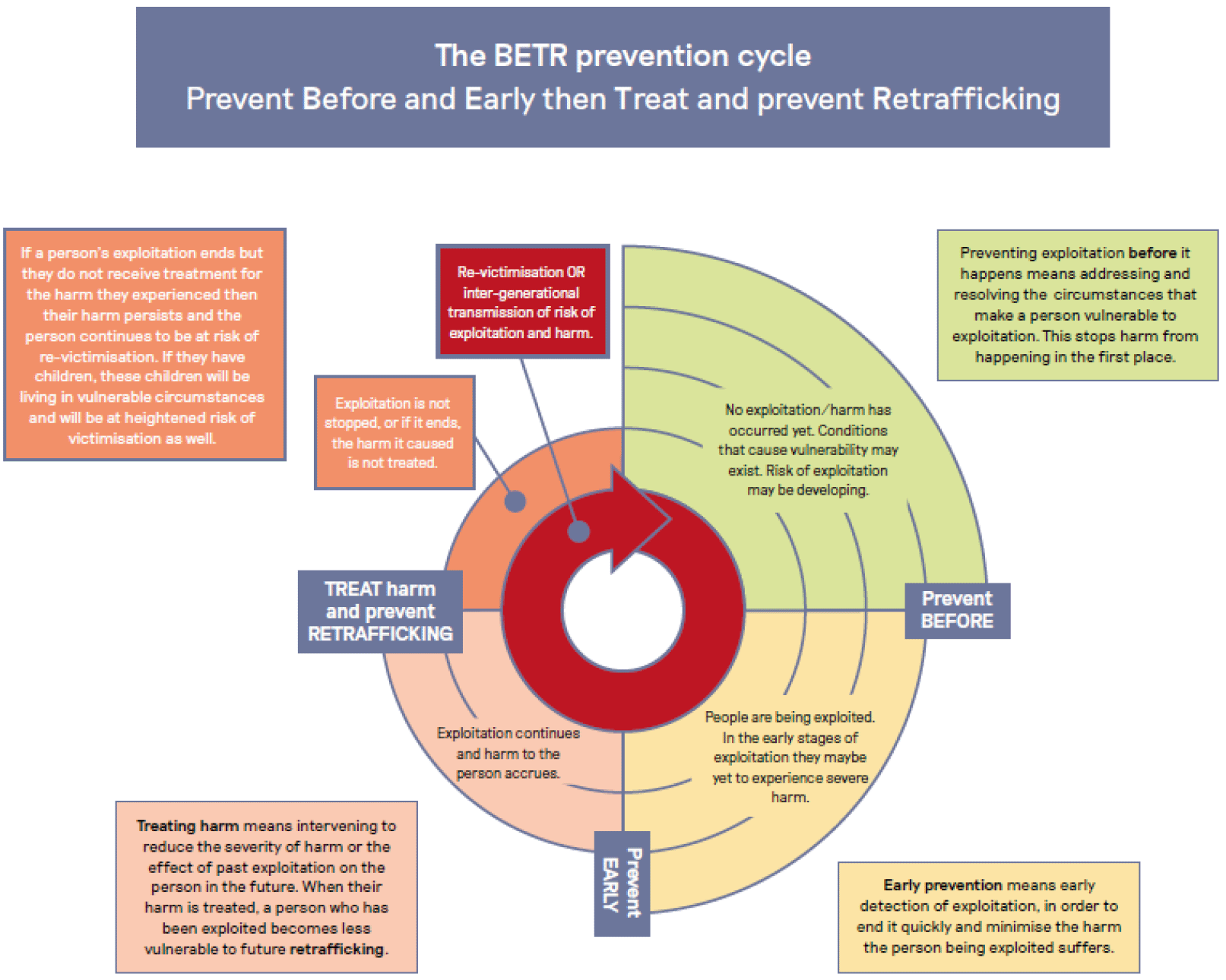
Prevention is an on-going process of avoiding and minimising exploitation and harm. This can be achieved by intervening before exploitation and harm occurs, by intervening early and by treating harms. It also includes action to prevent re-exploitation/ re-trafficking. Prevention includes enabling people to exercise choice, control over their lives and to thrive (Such et al., 2022, p. 8).
This is known as the BETR prevention framework or continuum (Before, Early, Treat, and preventing Retrafficking), as visualised in figure 3 (p15) (Such et al., 2022). This framework offers a simple way of understanding and visualising the above definition of prevention. The visual highlights the cyclical and ongoing nature of both exploitation and its associated harms, and the prevention work required to address it. The model suggests that exploitation and harm should be prevented at various stages in the cycle and interventions should be put in place across the “whole system.” Such et al. (2022) state that prevention needs to be ongoing and embedded within all actions that seek to address human trafficking, and at all levels of prevention:
- Primary prevention typically addresses the root causes and risk factors of human trafficking to prevent individuals from becoming victims in the first place. This often involves addressing factors like poverty, inequality, lack of education, and other socio-economic vulnerabilities.
- Secondary prevention intervenes early through early identification of individuals at risk or already experiencing trafficking and exploitaiton and providing them with support, resources, and education to address short term consequences and prevent further harm.
- Tertiary prevention provides long-term support after the trafficking and exploitation has occurred and prevents re-trafficking from occurring. This may involve providing targeted support to individuals who have already experienced trafficking, including essential services, rehabilitation, and ongoing assistance. The goal is to prevent re-exploitation and to aid in the recovery and reintegration of trafficked and exploited individuals into society (Such et al.., 2022).
Such et al.’s (2022) definition of prevention also includes providing individuals with the opportunity for autonomy over their lives, choices, employment and prospects for personal growth. The concept of “thriving” emphasises that prevention activities should not only reduce harm but also provide individuals with equal opportunities to lead healthy, happy, and fulfilling lives (Chon, 2023). Thriving encompasses both the recovery of individuals from exploitation and the resistance of communities to conditions that lead to exploitation in the first place. Providing people with opportunities to thrive is therefore considered a preventive measure in its own right (Such et el, 2022).
In relation to the trafficking and exploitation of children, the concept of thriving aligns with existing child safeguarding laws in Scotland[14] and the UK (Scottish Government, 2022, 2023; HM Government, 2023), which not only aim to protect children from being exploited but also advocate for taking proactive measures to ensure their well-being and promote positive life outcomes. Grant et al.’s (2023, p. 28) research with young people in Scotland who have experienced trafficking emphasises the importance of choice and agency in the long process of recovery from trafficking and exploitation, whereby “one is able and feels confident to make and voice choices; has regained a sense of control; has the ability to think about the future and make plans.”
Potential benefits of a public health approach
The literature highlights the potential benefits of a public health approach to human trafficking and exploitation (McCoig et al., 2022). Principally, it offers a collaborative, multi-agency framework for activity that is heavily prevention focused and data led. A public health approach goes beyond interventions designed to alter the behaviours and outcomes of at risk individuals. It aims to improve the health, wellbeing, safety and living conditions of whole populations by identifying and addressing the underlying causes such as poverty, economic vulnerability, gender inequalities, social exclusion and demand (Kiss and Zimmerman, 2019; Such et al.. 2022).
A public health approach draws on the socio-ecological model and social determinants of health. The socio-ecological model explains how individual, societal, community and relationship factors work together to place people at risk of experiencing or perpetrating violence. Social determinants of health are the social and economic conditions which improve or reduce “the health, well-being, and quality of life of individuals, families, and communities” (U.S. Department of Health and Human Services, 2024, pg. 16). The WHO (2023) note that social determinants of health such as poverty, substance abuse, adverse childhood experiences (ACEs), mental illness and sexual assault have been shown to be correlated with risk of human trafficking and exploitation.
Simply put, public health “looks at issues from a societal rather than an individual level. It is a way of thinking and acting collectively to address a problem that can damage health and wellbeing, rather than seeing something through a single or narrow lens” (Local Government Association, 2022, pg. 31). A public health approach to human trafficking therefore broadens the traditional criminal justice focus and emphasises the need for a multi-agency approach. Within such an approach, prevention policy and activity is underpinned by data and evidence to identify patterns and trends in how and where human trafficking occurs, who is involved, and which interventions are most effective in preventing it from occurring or recurring. Overall, adopting a public health approach means:
- Understanding the problem at a population level rather than individual level
- Looking at what is driving or causing the problem and framing it as part of a complex, multi-level and interdependent system
- Collating data and evidence of what works/what happens
- Being prevention focussed
- Protecting and promoting health and wellbeing
- Multi-agency/partnership working
- Addressing inequalities, social justice and human rights
(Such et al., 2021)
Some efforts to implement a public health perspective are underway in the UK. Such et al. (2021) have developed a practical public health framework to address Modern Slavery in the UK with the Independent Anti-Slavery Commissioner and Public Health England. The primary audience of the interactive framework is aimed at Anti-Slavery Partnerships and Networks, though it may also be used by national and local policy makers, third sector organisations and service providers. It provides practical guidance and templates to develop a public health approach to human trafficking and exploitation. The Local Government Association in England and Wales, in association with the Independent Anti-Slavery Commissioner, has adopted this framework within their Council Guide to Tackling Modern Slavery (2022) which provides targeted guidance for different council services to help them understand their specific responsibilities in relation to the prevention of human trafficking and exploitation.[15]
There are also examples whereby councils and local authorities in the UK have developed their own public health human trafficking approach and guidance such as Sandwell Council. This guidance outlines key principles, actionable steps, and suggested activities for various departments and agencies in order to deliver a whole-system response. International examples include the US National Human Trafficking Prevention Framework: A Public Health Approach to Preventing Human Trafficking (2024). Further investigation is needed to understand the operationalisation and impact of international approaches such as this.
Human trafficking prevention interventions in the UK
This section provides an overview of prevention activity in the UK, followed by a brief discussion of the following types of interventions:
- Awareness raising and education/training – prevention through identification and behaviour change
- Prosecution – prevention through the criminal justice system
- Victim identification and support – preventing retrafficking and further exploitation
- Coordination, multi-agency working and mainstreaming – prevention through working together
Such et al.’s (2022) review of adult sexual and labour exploitation identified 25 different types of prevention activity across the UK. Interventions included awareness raising and training/education, partnership interventions, advocacy, holistic support, safe places, employment and welfare support, case management and supply chain interventions. The review grouped the 25 prevention types with common underlying functions into five ‘pathways’ to prevention, meaning “key ways in which interventions are expected to work” (Table 2).
Though the majority of interventions were multi component, there was limited evidence and/or a lack of evaluations of interventions with a primary prevention focus. Most interventions that were evaluated were focused on the “Access” pathway, which centres on ensuring all people have access to the fundamental things in life. Such et al. (2022) argue that effective prevention interventions should address all of the pathways and develop “whole system” prevention strategies.
Table 2 Pathways to prevention to prevent labour and sexual exploitation (reproduced from Such et al., 2022, p11)
Access
Ensuring all people had access to the fundamental things in life e.g. basic financial resources, a secure and safe home, access to essential services, dignity and rights.
Literacy
Enabling the development of knowledge and in-depth understanding of exploitation, harms and rights among different populations, including victims, survivors, people at risk, statutory and non-statutory agencies and the public, as well as the skills to take action at personal, community or organisational levels.
Power and control
Building individual and community control, power, resilience and opportunities to thrive, particularly among people and communities at risk and those who had already been exploited.
Deterrence and disruption
Impeding, disrupting and deterring perpetration e.g. through law enforcement practices or initiatives for early detection.
Partnership
Building partnerships through coordination and the pooling of resources that enhances the preventative response, for example of local anti-slavery partnerships or networks.
Based on a review of the available evidence on the different types of prevention activity across the UK and additional lived experience research, Such et al. (2022) highlighted the following insights for prevention interventions:
- prioritising community-based and survivor-led initiatives, providing platforms for community members, including survivors, to share their experiences. This includes encouraging in-depth understanding rather than superficial knowledge of exploitation, its causes, consequences, and skills for taking action among multiple groups, considering pathways of “power and control”.
- implementing coordinated “whole system” responses, where collective efforts in prevention surpass individual actions at national and local areas.
- using a clear set of principles when designing and delivering prevention interventions, including prioritising harm avoidance and reduction, cultural competence, and establishing a clear theory of change.
In relation to trafficking and exploitation of children and young adults, Celiksoy et al. (2024) analysed UK based interventions and initiatives relevant to early identification and prevention of child modern slavery in the UK from 2015 to 2023. They describe six key areas of focus or intervention types across the 23 interventions included in the review[16]: intervention (direct support); safeguarding; education; identification; prevention; and policing. The research found most interventions covered a combination of these areas.
Awareness raising and education – prevention through identification and behaviour change
This review found that awareness raising campaigns and education/training were the most common form of human trafficking prevention intervention, and the most evaluated. Bryant and Landman (2020) found that 47 of 90 evaluations included in their analysis of the ‘Promising Practices’ database described interventions that included some form of raising awareness campaigns. The Promising Practices database, established in 2015 by the Walk Free Foundation, collates evaluations of anti-slavery and counter trafficking programs covering all forms of modern slavery globally, including human trafficking, forced labour, and forced marriage. Following an update in 2020, the database holds a total of 262 evaluations from around the world.[17]
Regarding the UK evidence base, Sereni and Baker’s (2018) review of preventative measures in the UK between 2012 and 2018 found that although most of the evidence centred on training and awareness raising interventions targeted at specific groups at a regional and national level, the majority of these were not evaluated. Such at al’s (2022) review of adult sexual and labour exploitation also found that training, education and awareness-raising interventions dominated in the UK, with 13 of 33 interventions having education/training goals and 7 of 33 including awareness campaigns.
The evidence suggests that where evaluations exist, they report that awareness raising campaigns have had mixed or limited results. This, it is argued, is because increased awareness does not necessarily translate into preventative action (Such et al., 2022; Bryant and Landman, 2020; Idris, 2017; Van Dyke, 2017). The evidence suggests that in order to be effective, campaigns have to have clear, simple and targeted messaging to particular groups and have a behaviour change focus (Bryant and Landman, 2020; Idris, 2017; Van Dyke, 2017). Such et al. (2022) argue for awareness raising that moves beyond “basic or functional literacy” or “surface level knowledge”(understanding exploitation and knowing how to spot the warning signs) to the promotion of deep or critical “literacy” or understanding (building skills that lead to action), ideally working with or led by communities and victim/survivors.
Recent desk-based and qualitative research in the UK by Carrigan et al. (2021) examining the effectiveness of interventions in changing consumer behaviour similarly found that raising awareness might be effective in shifting attitudes about the harms of human trafficking, but will not necessarily impact on consumers’ actual behaviour. As such, they argue that campaigns need to be tailored and targeted using marketing principles; identifying “pathways to action” for each audience in order to encourage them to change their behaviour; and campaigns should be supported by evaluation.
Prosecution - prevention through the criminal justice system
The criminal justice system plays a central role in preventing human trafficking. As the United Nations Office on Drugs and Crime notes, prosecution may be considered a prevention strategy in itself (UNODC, 2019). Successful prosecution of traffickers removes offenders from the community and can act as a deterrent and prevent others from offending, particularly if perpetrators are exposed to substantial and appropriate prosecution, lengthy jail sentences and loss of profit (Demeke, 2024).
Experts agree that human trafficking must be fought on several fronts, including providing more reliable data, improving prosecutions, increasing the cost and risk of trafficking to the perpetrators and enablers, strengthening partnerships with allies in private industry. Prosecutions of human trafficking must target al.l individuals involved in this criminal business. Law enforcement and prosecutors must achieve this objective by employing enhanced expertise, adopting a victim-centred approach, and with increased access to tools enhancing investigations and prosecutions.
(The Human Rights First 2017 report quoted in UNODC, 2019)
There are several legal provisions in place to disrupt trafficking in the UK. Such et al.’s (2022) review of adult sexual and labour exploitation prevention in the UK found a relative absence of criminal justice interventions and notes that evaluation of justice processes and outcomes as preventative action requires further development. Sereni and Baker (2018) found that there is a lack of data on the use and effectiveness of non-punishment provisions[18] and prevention and risk orders in the UK[19]. Their review of UK prevention interventions also found that inadequate victim support and a lack of resources can hamper prosecutions and increase the risk of re-exploitation and re-trafficking. This was noted to be due to lengthy delays to proceedings whereby some victims withdraw their willingness to engage; alongside lack of appropriate support measures in court. Overall, Sereni and Baker conclude that the low number of successful prosecutions shows that the preventative potential of the criminal justice system and legal consequences/risk for perpetrators of trafficking and exploitation remains low.
The UK House of Commons Home Affairs Committee (2023) inquiry into Human Trafficking likewise concluded that there is a “consistent under-use of relevant law enforcement” (HoC, HC 124, 2023, pg. 5). The inquiry suggested, among other recommendations, that policing and criminal justice agencies “must urgently review and then accelerate and scale up their efforts to investigate, prosecute and effectively adjudicate human trafficking and modern slavery cases.” This included ensuring that the non-punishment provisions for victims are applied when appropriate and that victim support is prioritised in the investigation and prosecution process.
Victim identification and support – preventing re-trafficking and re-exploitation
There is consensus in the literature on the importance of providing adequate support to victim/survivors of human trafficking. This refers to both secondary prevention: intervening early when trafficking and exploitation starts to reduce the harm caused and provide an immediate response; and tertiary prevention: treating the harms in the long term. In line with a public health approach, support for victim/survivors can be seen as prevention against re-exploitation and re-trafficking.
Victim/survivors are likely to need a wide range of services including medical care; food, clothing and housing assistance; counselling; immigration and legal assistance; literacy education; and, employment and training services (Idris, 2017). Safe, secure and appropriate accommodation is often identified as one of the most urgent and critical requirements of victims (Idris, 2017; Paphitis et al. 2023).
Evidence suggests that victim/survivor support should be multi-disciplinary, muti-agency, trauma informed, culturally competent, patient centred and long term to aid recovery (Idris, 2017; Such et al., 2021; WHO 2023; Modern Slavery Policy and Evidence Centre Policy Brief, 2023). Long-term support is key for recovery, and some authors suggest that services should be accessible at any time during a survivor’s life acknowledging that diverse support needs may change over the short, medium and long term (Paphitis et al. 2023; Modern Slavery & Human Rights Policy and Evidence Centre Policy Brief, 2023). Grant et al.’s (2023) qualitative research into longer term support for trafficked children in Scotland for example, found that young people and professionals described recovery as a “life long process.” Recent participatory research with child survivors in the UK on positive outcomes likewise found that they were not confined within particular timeframes (Hynes et al., 2022). Broader understandings of recovery and safety were also found in the Hynes et al. research, including predictability and security, engagement with peers and community connections, and the formation of trust with services.
A recent policy brief by the Modern Slavery & Human Rights Policy and Evidence Centre (2023) synthesising findings on what looks promising for survivor support in the UK found there was diversity in how survivors described ‘recovery’ across several research projects. However, most of the research projects described the need for both physical and psychological safety and building trust with practitioners as key. The research identified practical barriers to accessing support such as “language, geography, lack of funding, lack of capacity, long waiting lists, restrictive eligibility criteria, inconsistent provision, lack of childcare and lack of travel costs” (Modern Slavery & Human Rights Policy and Evidence Centre Policy Brief 2023, pg. 4). In particular, safety concerns with accommodation and the challenges of securing long-term housing were highlighted by victim/survivors.
The policy brief concluded that policies and interventions should adopt survivor-informed outcomes for ‘recovery’. Participatory research projects have designed outcome sets that can be used in the design and evaluation of policy interventions such as the Modern Slavery Core Outcome Set (for adults) and Creating Stable Futures (for children) frameworks discussed below. As with awareness raising, the wider evidence suggests that support interventions should be should be targeted at specific groups and address their specific concerns (Idris, 2017).
Alongside the rationale for a public health response to human trafficking, the health sector in particular has a key role to play both in identifying victims, treating and supporting their health needs and in preventing human trafficking[20] (Such et al., 2020). The wide ranging, long term negative physical and mental health, social and economic consequences of trafficking are well known, and most victim/survivors will access health care during the period they are trafficked (WHO, 2023). Despite this, the health sector has been “at the periphery of action” on human trafficking and exploitation in the UK (Such et al., 2020).
As noted, emphasis has historically been placed on criminal justice and law enforcement responses. There is a lack of high quality evidence about which interventions are effective in health settings (Paphitis et al. 2023; WHO, 2023; Kiss and Zimmerman, 2019). Wright et al.’s (2021) international review of interventions that support the mental health of survivors of modern slavery, for example, found that although mental health provision is a critical element of support for victims, evidence based support services and evaluations of the effectiveness of interventions are lacking.
Most activity within the health sector has largely been aimed at improving awareness of human trafficking and exploitation amongst health care professionals in order to identify potential victims, though recent evidence has identified both knowledge and confidence gaps (Wright et al., 2021; Such et al., 2020). In terms of victim identification within health settings, the WHO (2023) argues for the prioritisation of patient care above disclosure and using ethical interviewing guidelines rather than universal screening of all patients in order to minimise harm. Thereafter, it is recommended that validated screening tools (created for specific populations and trafficking types) can be used to improve identification, although most health systems have yet to implement these. This may be because few tools have been rigorously evaluated (Macy et al., 2023; Hainaut et al., 2022).
Macy et al.’s (2023) international scoping review of human trafficking screening and response found a lack of clear, practical, evidence-based guidance to inform identification and immediate response. Hainaut et al. (2022) likewise found few studies have evaluated screening tools for identifying victims of human trafficking in health care settings in their international scoping review, arguing further research is required in order to develop safe, effective approaches to patient screening.
Effective, research-informed training of health and other professionals, alongside practical screening and response strategies, are therefore critical to the identification and support of at-risk and trafficked people, though studies have identified a need for improvement (WHO, 2023; Macy et al., 2023; Grant et al., 2023). Within the health care sector, Such et al. (2020) argues that tailored training which extends beyond general awareness and is specific to various health professions, is required so that professionals know how to respond appropriately, in line with trauma-informed and patient centred care.
In the UK however, research has found that while there is a growing commitment to improve training amongst various government departments, agencies and key professionals, there is no central coordination or quality control and, as noted, the majority of these measures are not evaluated (Sereni and Baker 2018). Research on the long term support needs of trafficked children highlighted the need for specialist training for those working with trafficked children as a key area of concern (Grant et al., 2023).
Coordination, multi-agency working and mainstreaming – prevention through working together
Multi-agency/partnership working and coordination between the jurisdictions of the UK is important for the prevention of human trafficking. Sereni and Baker’s (2018) review of preventative measures to address human trafficking in the UK (including Scotland) between 2012 and 2018 highlights the absence of a coordinated, comprehensive, joined-up UK-wide prevention strategy. The authors suggest that prevention of trafficking is largely a policy matter developed by devolved governments and administrations, resulting in a “fragmented approach to anti-trafficking efforts” in the UK (Sereni and Baker, 2018, pg. 17).
Relatedly and with regards to child victims, evidence collected by the UK House of Commons Home Affairs Committee (2023, pg. 5) inquiry into Human Trafficking concluded there is an “overall lack of a joined-up approach” across the National Referral Mechanism (NRM)[21], child welfare and protection and criminal justice systems for identifying and supporting potential victims.
Research in Scotland on young people with experiences of trafficking has found that the competing priorities of different services, particularly between immigration and criminal justice and child protection, create challenges for multi-agency working (Grant et al., 2023; Rigby et al., 2020). Rigby et al.’s (2020) case file analysis and interviews with young people with experience of trafficking and professionals in Scotland, found that though Scottish policy is clear that a child protection response should be paramount, in practice referrals to the National Referral Mechanism take priority. As well as inconsistencies in child protection processes, the research indicated potential misunderstandings of what constitutes trafficking among some professionals, as well as confusion about data sharing shared across agencies.
The policy brief by Modern Slavery & Human Rights Policy and Evidence Centre (2023) on survivor support in the UK highlighted that consistency and coordination of services between specialised human trafficking services and wider systems such as housing, mental health services, the immigration and asylum system is central to improving support and long-term recovery.
Finally, the evidence suggests that prevention of human trafficking needs to be mainstreamed across other policy areas and interventions in education, health and adult and child protection to increase effectiveness and address the root causes of trafficking and exploitation in line with a public health approach, though this seldom happens in practice (Idris, 2017; Sereni and Baker, 2018; Such et al.. 2022)
Evaluations of human trafficking interventions
Human trafficking prevention is a relatively new field of inquiry (Balch and Hesketh, 2024). Numerous national, regional, and international programmes and policies to prevent and address human trafficking have been introduced since the early 2000s following the UN Protocol to Prevent, Suppress and Punish Trafficking in Persons (2000) (the Palermo Protocol). However, evidence to date suggests that few of these interventions have been evaluated to determine effectiveness and impact, and even fewer to scientific or robust standard (Davy 2016; Bryant and Landman 2020; Idris 2017; Sereni and Baker 2018; Van Dyke and Brachou 2021).
Though the number and quality of evaluations have increased in recent years (Walk Free, 2020), researchers and policy makers still cannot say for certain “what works” to prevent human trafficking. Bryant and Landman’s (2020, p.120) review of 90 evaluations of anti-trafficking programmes globally found that “concrete answers to the question of ‘what works’ remains elusive” and that the standard of evaluation remains generally low. In line with this research, the UK’s first systematic review of prevention of adult sexual and labour exploitation found the evidence base is limited, particularly in relation to primary prevention (Such et al., 2022; Van Dyke, 2017).
Human trafficking is a hidden crime; with unreliable, underestimated data on the number of victims and perpetrators. This makes it particularly difficult to establish baselines against which to track progress, as well as the success and impact of a given intervention. Human trafficking is also a highly complex crime, encompassing “many perpetrators, routes, sectors, victims, and forms of exploitation” and jurisdictions (Bryant and Landman, 2020, pg. 131). Despite this complexity, reviews of human trafficking evaluations have found that an inherent weakness of intervention design is the failure to state clear, realistic and measurable programme objectives alongside a clear theory of change (Walk Free, 2020).
Bryant and Landman (2020) found, for example, that 50% of the evaluations (n = 43) in the Promising Practices database did not specify which sector or form of exploitation the intervention was targeting. The most recent analysis in 2020 similarly found that over 87% of all evaluations in the database (230 out of 262) did not reference a clear theory of change. Such at el’s (2022) review of evaluations of interventions aimed to prevent adult sexual and labour exploitation in the UK likewise found that more than half (17 out of 33) offered no “theoretical insight” or underpinning.
Evidence suggests there has been an overreliance on monitoring over evaluation. Process evaluations have been favoured over impact evaluations, meaning they focus on evaluating project implementation and the achievement of activities or outputs rather than outcomes or impact (Van Dyke, 2017). The standard of evaluation has also been found to be poor quality in terms of evaluation methods used (WHO, 2023; Such et al. 2022; Bryant and Landman, 2020). Limited evaluation budgets and short term funding means there is a lack of longitudinal studies which track victims and the impact of interventions over time (Walk Free, 2020).
Where interventions have been evaluated, these are not always reported on clearly or transparently, or made publicly available. Such at el’s (2022) review found that most interventions subject to evaluation in the UK tend to be tertiary, intervening and treating after the harm is done. This means there is a marked lack of evaluations of primary prevention interventions. Relatedly, the WHO’s (2023) scoping review found that most of the evaluations of human trafficking interventions within the health sector is skewed towards response rather than prevention.
Some improvement has been evidenced in recent years regarding the measurement and evaluation of interventions aimed at primary prevention of human trafficking and exploitation, however. The most recent analysis of Walk Free’s global Promising Practices 2020 database report improvements since 2015, whereby interventions and evaluations are becoming more focused and reliable.
The percentage of evaluations rated as “reliable” in the database increased from 17% of all evaluations in the 2015 database to 27% of the 2020 update (Walk Free, 2020). Nevertheless, as noted there remained unclear theories of change and an overreliance on process evaluations over impact evaluations. There was also limited regional coverage where interventions have been implemented; the majority of evaluated programs in the 2020 update were implemented in Asia Pacific.[22]
Whilst there are clear challenges in evaluating anti trafficking interventions, the papers reviewed provide some key lessons learned for improving the design and evaluation of human trafficking and exploitation interventions:
- Interventions should articulate a clear theory of change showing the relationship between the programme objectives and the activities being implemented.
- Though difficult to conduct in this field, more impact evaluations are needed to measure the effectiveness and impact of human trafficking interventions, and “go beyond measuring success as whether or not activities or outputs have been achieved” (Walk Free, 2020). This will necessitate strengthening evaluation methodologies, adopting innovative methods, and extending project implementation periods in order to monitor the effects of interventions over time (Walk Free, 2020; Balch and Hesketh, 2024; Kiss and Zimmerman, 2019).
- More evidence is needed on the underlying causes and structures that foster human trafficking as per a public health approach.
- Monitoring and evaluation of anti-trafficking interventions should involve survivors (Bryant and Landman, 2020; Sereni and Baker 2018; Such et al., 2022).
- Evaluations should be widely shared and made publicly available, in order to draw on lessons learnt in designing new interventions.
Design principles and outcomes for human trafficking interventions
This review has identified a number of frameworks and principles for developing a preventative approach to human trafficking and exploitation and when guiding, designing and evaluating interventions. Such et al.’s (2022) review of adult sexual and labour exploitation prevention activity in the UK identified 12 principles which interventions should follow in order to “maximise the impact and minimise the risks of generating or reinforcing harm.” (Table 3)
Table 3: 12 principles to guide design and delivery of prevention interventions (reproduced from Such et al., 2022, p21)
Harm avoidance and primary prevention first
Seek to prevent exploitation from happening in the first instance.
Harm minimisation and reduction
Minimise harm by intervening early and reduce harms through effective action driven by the Human Trafficking Foundation Survivor Care Standards [currently under review][23]
Promote wellbeing
Promote wellbeing by generating opportunities for people to thrive.
Take a whole systems approach.
Develop a strategy to promote a whole system of prevention in partnership with relevant partners.
Ensure equity
Some groups and individuals have a better chance of accessing services and systems that can support their wellbeing and prevent the likelihood of encountering exploitation. Identify who is relatively disadvantaged and find ways of making sure everyone has the same chance of help and support
Attend to issues of trust
Affected communities and survivors may distrust existing services and systems. Tailor your approach to promote trust between service users and professionals and within communities.
Cultural competence/safety and gender sensitivity
Design and deliver services that meet the needs of affected people and communities in a way that is sensitive to their experiences and backgrounds.
Interventions
Develop interventions and systems that are informed by affected people and communities. Develop things ‘with’, not ‘for’ people.
Monitor and evaluate
Build in monitoring and evaluation systems and processes from the start.
Clear theory of change
Be clear about how your interventions are intended to work and how they will function within a broader system of factors that may work against the prevention of exploitation.
Risk assessed
Undertake an assessment of how interventions may risk harm as well as prevention. Identify if/how risks can be mitigated, following the basic principle of ‘do no harm’.
Committed leadership on prevention
Committed leadership on prevention. Ensure prevention activity is led consistently and collectively.
In relation to trafficking and exploitation of children and young adults, Celiksoy et al.’s (2024) review of UK based interventions and initiatives relevant to early identification and prevention of child modern slavery in the UK from 2015 to 2023, identified the following principles for early identification initiatives for children at risk of trafficking and exploitation:
- understanding indicators of exploitation;
- multiagency responses;
- “children’s rights compliant intelligence gathering” from schools, parents, partner agencies and children and young people[24]
- quality training for professionals; exploitation indicator and risk management tools;
- building trust with children;
- avoiding early labelling and stereotyping victim profiles, victim blaming language;
- preventing victim criminalisation;
- investing in families and communities engagement; and
- ensuring the critical role of professionals in education.
(Celiksoy et al., 2024)
The Modern Slavery Core Outcome Set
The UK Modern Slavery Core Outcome Set (MSCOS) is a set of seven core outcomes that are designed to be used in the design, evaluation and reporting of interventions for adult survivor recovery. It is the product of a “consensus-driven participatory research project”[25] and provides a framework for research, policy and service design, and evaluation (Paphitis et al. 2023). The outcomes are:
- Secure and suitable housing
- Safety from any trafficker or other abuser
- Long-term, consistent support
- Compassionate, trauma informed services
- Finding purpose in life and self-actualisation
- Access to medical treatment
- Access to education[26]
Research to date has used a wide variety of outcomes to assess interventions and outcomes for survivors of human trafficking. This has traditionally tended to focus on outcomes related to physical and mental health rather than other aspects of wellbeing which may be relevant to recovery, such as employment and education, housing and social and family support. Paphitis et al. (2023) argue that interventions should assess and measure all of the above core outcomes. By setting a consistent minimum outcome standard for reporting on interventions, the MSCOS attempts to allow for greater comparisons on the effectiveness of interventions and clearer understanding of which interventions work. The MSCOS suggests “multi-level or multi-layered interventions” are most appropriate when working with victim/survivors of trafficking and exploitation. However Paphitis et al. (2023) found that few interventions that support survivors address all, or even the majority of the seven core outcomes.
Creating Stable Futures: Human Trafficking, Participation and Outcomes for Children
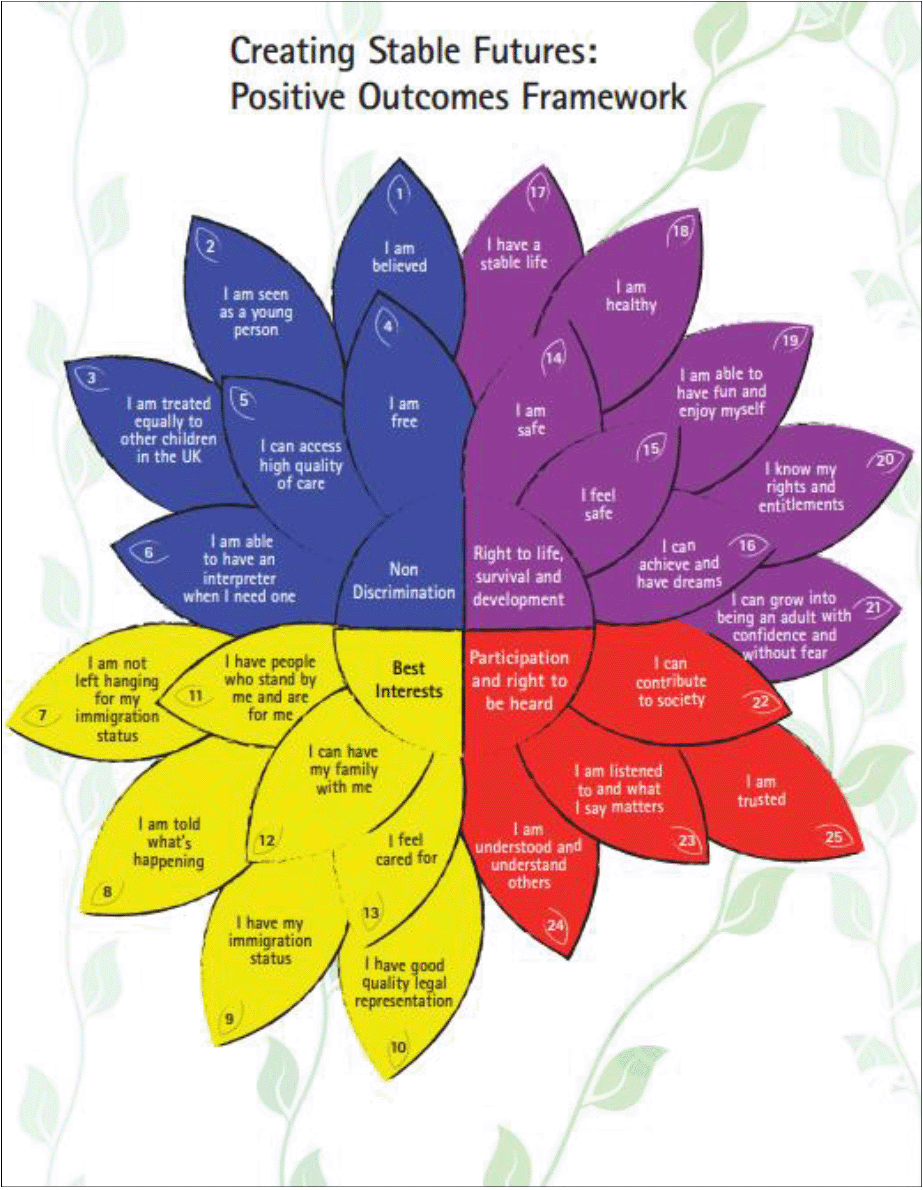
The Creating Stable Futures outcomes set is a set of 25 outcomes, developed with 31 young people with lived experience of trafficking, as being important to them for meaningful change in their lives and positive future (Heynes et al., 2022). It is the result of a participatory research project and aims to help improve protection, support and positive outcomes for child victim/survivors. The outcomes young people highlighted (figure 4) included: being safe and feeling safe, stability and peace, having trust in professionals and systems, being believed, and listened to, freedom, equality, access to quality legal advice and interpreters. They described “outcomes as interconnected, difficult to disaggregate, rarely linear and interlinked with the wider contexts and structures of their lives” (Heynes et al., 2022, pg. 3).
The set is designed to be used in individual practice when working directly with children and young people who have experienced human trafficking, e.g. in progress reviews, safety plans, and case-audit reviews; as well as at a policy level for assessing the impact of specific policy initiatives. Further work is underway to develop and operationalise the Positive Outcomes Framework across the UK and to build monitoring and evaluation structures for interventions for young victim/survivors.
Human trafficking and exploitation of children
In the UK, the number of child victims of human trafficking being identified through the NRM is increasing (HoC, HC 124, 2023). Although child trafficking and exploitation have been covered throughout this report, the evidence highlighted a number of issues specific to children and young people. Recent research has highlighted that prevention of human trafficking is “rarely child-specific” (Sereni and Baker, 2018). Sereni and Baker’s (2018) review of preventative measures in the UK between 2012 and 2018 found that prevention strategies for children are lacking, although Scotland was deemed “stronger” on this with a clearer child centred and children protection approach.
Celiksoy et al.’s (2024) research on the prevention and identification of children and young adults experiencing, or at risk of, modern slavery in the UK likewise revealed a lack of a comprehensive and overarching child exploitation strategy. Analysing UK based interventions and initiatives relevant to early identification and prevention of child modern slavery in the UK from 2015 to 2023, the research revealed poor data collection and recording of child victim/survivors at a local level, despite the key role of local authorities in identifying and referring child victims, and a lack of consistency in prevention and early identification measures (Celiksoy et al., 2024).
Celiksoy (2024) found that frontline professionals such as first responders and local authority children’s services can overlook indicators of exploitation due to a lack of understanding and knowledge and insufficient or non-existent training provision. Common misconceptions included the notion that trafficking exclusively impacts non-UK nationals, as well as the gendered responses which associate boys with criminal exploitation and girls with sexual exploitation. There was limited acknowledgement of less familiar forms of child exploitation such as domestic servitude and forced labour (Celiksoy et al., 2024).
Evidence collected by the House of Commons Home Affairs Committee (2023) inquiry into Human Trafficking found that children often experience multiple forms of exploitation, however this data is difficult to capture in official systems, such as the NRM or Local Authority data. The Committee moreover concluded that the UK Government should develop “a child-specific strategy […] to take account of children’s specific needs and vulnerabilities” (2024, pg. 12).
The Organisation for Security and Co-operation in Europe (OSCE) also supports that a child protection ‘framework of support’ and care should take priority over NRM referrals (OSCE, 2022). However, Grant et al. (2023) found ‘system trauma’ is one of the key barriers to recovery for young people following experiences of trafficking. The asylum system in particular, including being repeatedly interviewed and waiting a considerable time for a decision, has been found to interfere with nearly all other areas of young people’s lives and on their feelings of safety and hope for the future (Grant et al., 2023; Rigby et al., 2020).
Rigby et al.’s (2020) research on child trafficking in Scotland found that though Scottish policy is already clear that a child protection response should be paramount, in practice referrals to the NRM appear to take priority over a child protection referral. As well as inconsistencies in child protection processes, the research revealed potential misunderstandings of what constitutes trafficking among some professionals, as well as confusion about data sharing across agencies. This presents challenges for prevention and early identification for victim/survivors of human trafficking and exploitation.
In order to improve identification and support for children, Rigby’s (2020) research highlights the need for ongoing training and clarifying indicators of trafficking for professionals, and timely needs assessments. Additionally, effective collaboration among multiple agencies with clear expectations and the integration of responses within the child protection framework were noted. They also recommend the establishment of a central repository for comprehensive data on child trafficking in Scotland in order to collate information and to monitor prevalence and patterns relating to children exploited through trafficking.
Contact
Email: justice_analysts@gov.scot