
Health and social care - infection prevention and control strategy: vision and priority statements
This strategy sets out a ten-year vision and priority statements which aim to minimise preventable infection across health and social care in Scotland, supporting safer care, stronger systems and a person-led, rights-based approach to infection prevention and control.
Why the strategy was developed
1.1 Scotland and the global context
The World Health Organization (WHO) published its Global Strategy on Infection Prevention and Control (IPC) in September 2023.[6] Using this as the foundation, the Scottish Government collaborated with key stakeholders from across Health and Social Care settings in Scotland to develop a ten-year infection prevention and control (IPC) vision and priority statements. The vision and priority statements, supported by multi-year action plans, will form a bold new IPC Strategy for Scotland.
The WHO strategy details a systems approach for IPC, considering the needs of: people, patients, families and health and care workers. It was developed through a consultative process taking in contributions from WHO member states (including the UK as a member state), health care institutions and researchers. The strategy details eight strategic directions for member states and makes clear that all countries are expected to have the core components for IPC as part of national IPC policy and programmes.
1.2 Health and social care associated infections and their impacts
Health and social care-associated infections (HSCAI) can develop either as a direct result of health or social care interventions, or from being exposed to transmission risks arising from other people or the environment in a health or social care setting.6 People in health and social care settings can be at greater risk of infection; for example, they may be of an older age, have pre-existing conditions, have complex care needs and care related interventions such as urinary catheters.[7] Some are more at risk because of the close contact they make with multiple people who are also resident, work in or visit these settings.[8] These settings are also the highest-risk settings for infections caused by Antimicrobial Resistant (AMR) pathogens (like viruses and bacteria).[9] Preventing infections in health and social care therefore contributes to containing AMR nationally.
The impacts of these HSCAI, including those caused by AMR, range from physical harms, psychological and social harms and poorer outcomes to system pressures and financial costs.[10] These infections result in hospitalisation of patients and therein more occupied hospital beds. HSCAI-related bed-days in the NHS lead to an increase in waiting lists, which means that people are delayed in accessing services, which can impact on health outcomes.10 Surveys on HCAI carried out in Scotland indicate that the total burden of infection in care homes is not significantly different to that in hospitals.[11] These costs and impacts are an underestimate of the total burden of infections in health and social care settings. Further, there is an additional, as yet unmeasured, burden of health and social care associated infections beyond hospital and care home settings.
HSCAIs also affect people’s health outcomes and their overall quality of life. A European study showed that the combined impact of the six most common infections in hospitals and long-term care facilities was estimated at 501 healthy life years lost for every 100,000 people in the general population each year in Europe.[12] The harm caused by six HSCAIs was higher than all the other 32 infectious diseases monitored in Europe. Pneumonia and bloodstream infections caused the greatest harm, together making up more than 60% of the total burden. This is why IPC is a key strategic consideration in the delivery of all health and social care.
1.3 Epidemiology and systems thinking
As is demonstrated in Figures 1-3, there appears to be an increasing trend in health and social care related infections in Scotland. Whilst the reasons for this are complex and likely the result of a number of factors, it is clear that a system-wide approach to IPC is needed. Many of the risk factors for infection are mitigated by systems thinking, whole-system leadership and practice contributions beyond that of IPC specialists alone.[13]
The Scottish Government has invested in a range of national improvement programmes and policy development on healthcare associated infections (HCAI),[14] mainly in hospital settings, and made real inroads in reducing these infection impacts. In spite of these interventions, current infection trends in Scotland show that the situation has deteriorated in health and social care settings. Data indicates that the significant efforts made to reduce infections like those caused by MRSA (meticillin-resistant Staphylococcus aureus) bacteraemia and Clostridioides difficile Infection (CDI) have not been sustained, with levels steadily increasing over recent years.[15]
The burden of healthcare-associated (HCAI) and community-associated infections (CAI) in Scotland has risen in recent years, with many now higher than past baselines as shown in Figures 1, 2 and 3. The burden of the different infection types is shown in Figure 4. These worsening trends, across both hospital and non-hospital settings, like the CAI infection rates arising in primary care and social care settings, point to a need to consider all health and social care settings in the national IPC strategy.
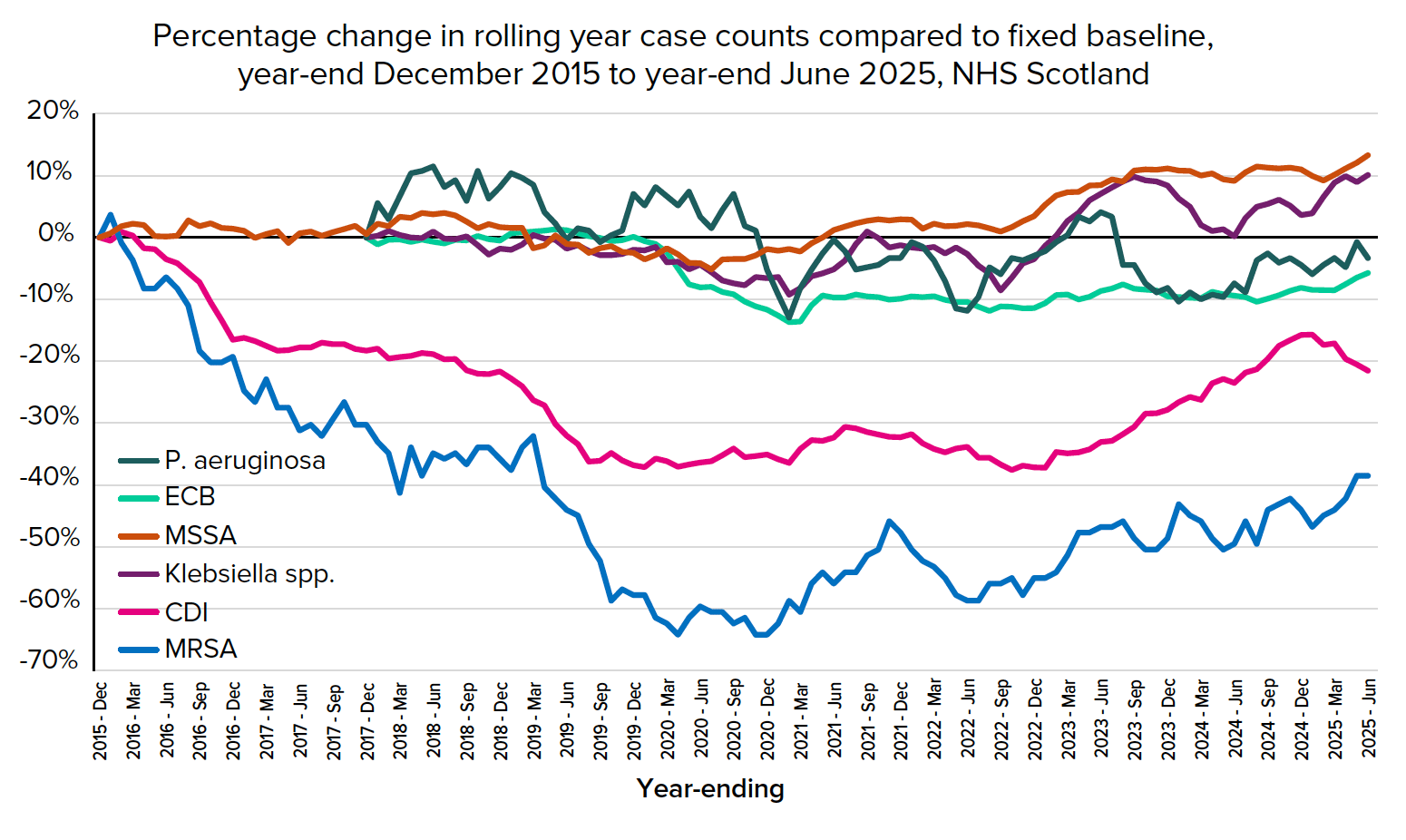
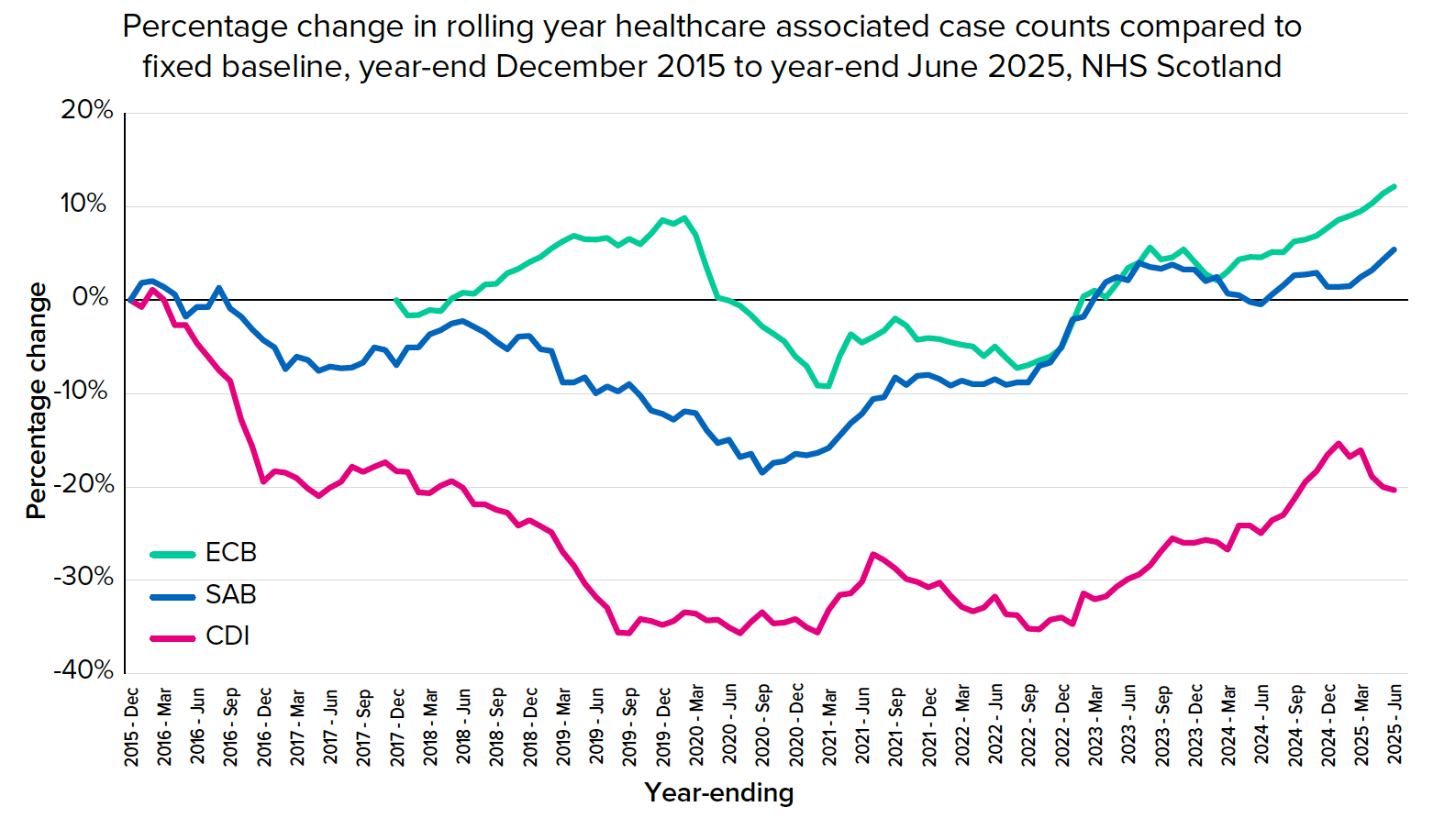
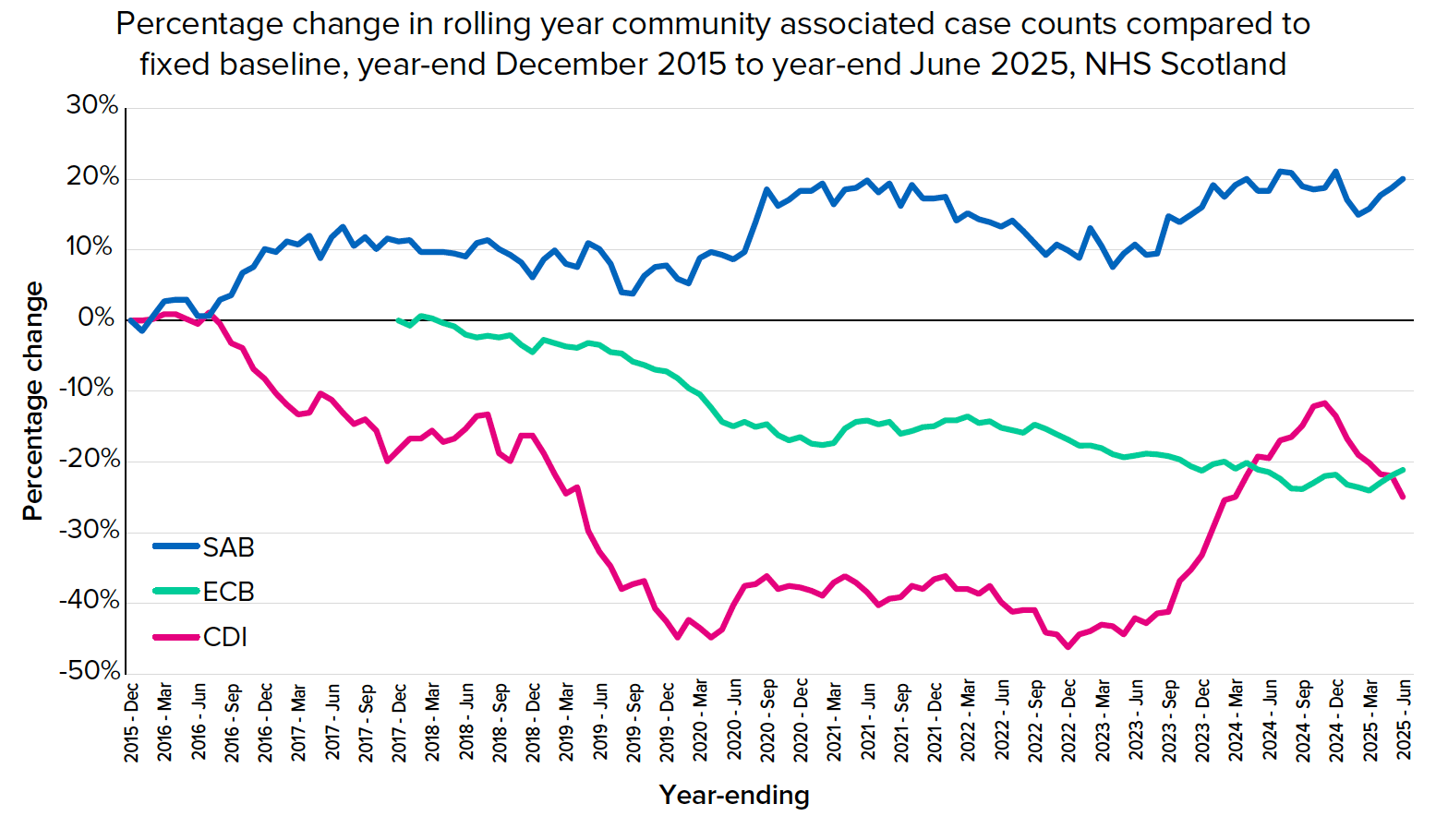
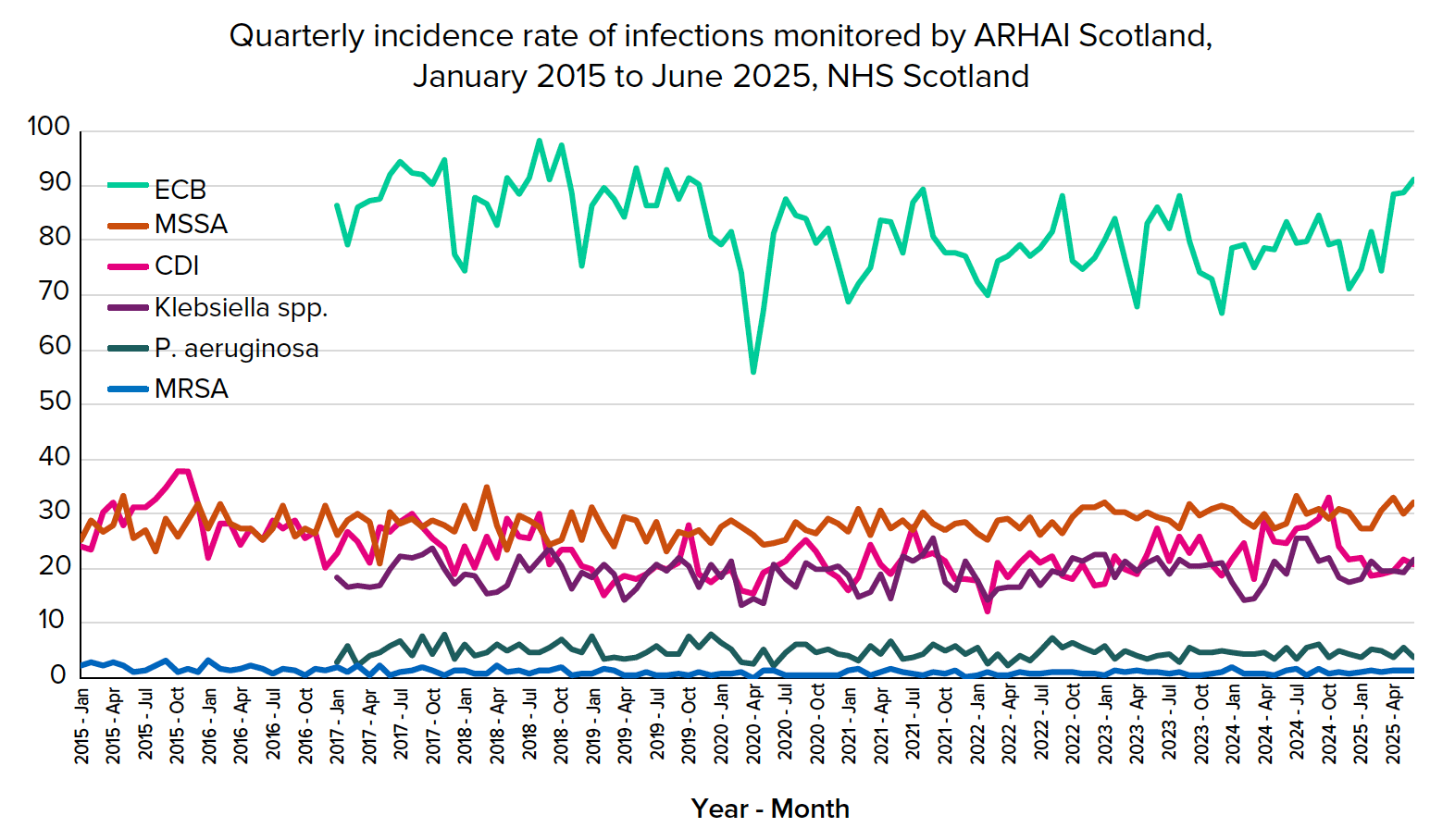
* Source for Figures 1-4: Graph produced by ARHAI Scotland. Case numbers are reported based on case numbers reported to ARHAI Scotland as part of the ARHAI Quarterly Reporting process. Denominator data were obtained from National Records Scotland (NRS) mid-year population estimates.
An integrated approach to IPC is required, inclusive of balancing harms in a context specific way and implementing national planning from the outset. Given rising infection trends and their wider effects, IPC should take a person-led, rights-based, risk-based and proportionate approach.
1.4 Learning from the COVID-19 pandemic
The COVID-19 pandemic exposed weaknesses in IPC across Scotland’s health and social care system, showing that challenges with adherence to IPC precautions can exacerbate outbreaks. It highlighted the need to support the workforce better and to embed IPC consistently across all settings. Experience during the pandemic emphasised the need for improved surveillance, workforce intelligence, whole genome sequencing, system mapping, user-focused IPC guidance, specialist training, behavioural insights, optimal built environment design of health and care settings, and evidence-based decision making. Learning from both COVID-19 and national advisory groups (e.g. SG Care Home Policy Advisory Group (CPAG)) reinforces the need to consider all sectors and communities involved in care.
IPC is required to protect life and the quality of life worth living. In social care, especially care homes, IPC must also respect residents’ autonomy, relationships, and quality of life, balancing protection with human rights and individual needs.[16] This can involve capacity assessments, advocacy and family input, ensuring the legal safeguards under Adults with Incapacity[17] principles and broader human rights legislation are part of the considerations.
1.5 In summary
There is a rise in health and social care related infections in Scotland and this requires a long-term IPC strategy. Having an active IPC national strategy and action plans in place is a proven effective approach to protect patients, people receiving social care, health and care workers, and visitors to health and social care facilities by preventing avoidable infections associated with care provision, including those caused by antimicrobial resistant and epidemic and pandemic-prone pathogens. Importantly, IPC interventions are known to be an effective and highly cost-effective approach to reducing infections and AMR in health and social care that provides a high return on investment.
Given the evidence presented for why we need this strategy, this requires national and local efforts across health and social care systems, including consideration of evidence, human rights, behavioural insights and wider systems thinking related to balancing harms in relation to IPC.
This strategy is intended to be aspirational and will be complemented by, and used in conjunction with, associated national action plans and monitoring frameworks in Scotland.
Contact
Email: HAI-AMR_Policy_Unit@gov.scot