
Having more funded early learning and childcare for 2, 3 and 4 years olds: easy read
Easy read version of the report on the evaluation of the expansion of funded early learning and childcare (ELC) in Scotland to 1140 hours.
Having more funded early learning and childcare for 2, 3 and 4 years olds
Background
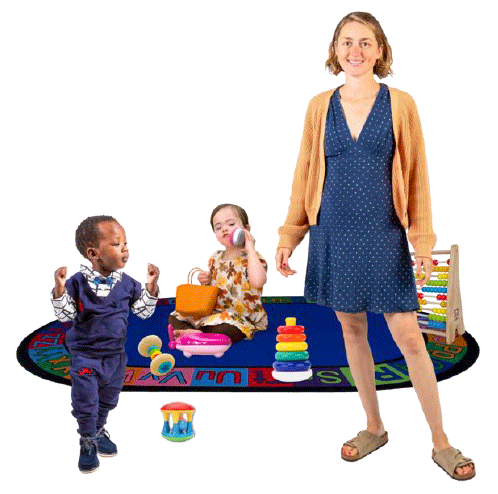
Early learning and childcare or ELC for short is education and care for children who are under school age including:
- nurseries
- family centres and playgroups
- childminders

In this document:
- the word funded means it is paid for by the Scottish Government so it is free to parents
- when we are talking about parents and carers we will say parents for short

From August 2021 the amount of funded early learning and childcare in Scotland went up from 6 hundred hours a year to 1 thousand 1 hundred and 40 hours a year for all 3 and 4 year olds and 2 years olds who:

- have been looked after by a local council
- are in kinship care – living with a relative or close family friend

- have a parent who gets certain benefits or who has been looked after by a local council

- have a guardianship order – a legal arrangement where an adult can make decisions for a child when their parents cannot care for them
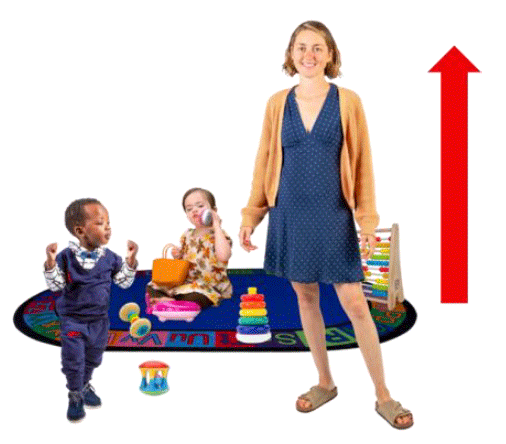
This means that families could get around 30 free hours of ELC a week if used only in school term time or 22 hours a week if used all year.

The 3 main aims for having more funded ELC are to help:
- improve children’s learning and development

- make it easier for parents to take up work, training or study
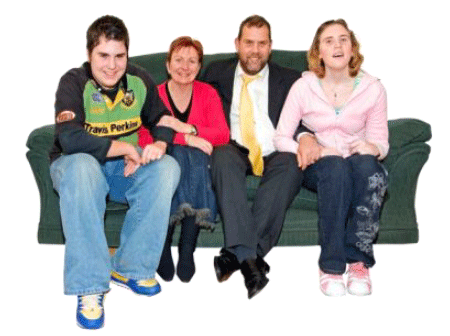
- support families to have better wellbeing – feeling comfortable, healthy and happy
The policy also wants to have ELC that is:
- high quality
- flexible
- accessible

- easy for people to afford

- used by as many people as possible
Having more early learning and childcare and evaluating how well it is working was affected by:

- the COVID-19 pandemic

- the cost of living crisis – this means the cost of everyday things we need like food, clothes and heating going up a lot
The ways that we checked if the policy is working well

This kind of checking is called an evaluation.
Early learning and childcare services were checked by looking at:
- information that we already have from different families and services
- new research
Research called the Scottish Study of ELC collected data between 2018 and 2024 from children and parents.

The study checked and compared outcomes before and after the amount of ELC was increased.

The evaluation:
- can only tell us about changes made between 2018 and 2024
- cannot tell us if changes happened because of having more ELC
- cannot tell us about the effect of ELC in general
Key findings – delivery

A funding agreement made in 2018 meant that the amount of money spent on ELC went up to 9 hundred and 90 million pounds for 2021 to 2022.

Before the amount of ELC was increased local councils:
- completed most of the planned projects to build new ELC settings and improve existing ones

- employed more people to work in ELC

Services could then give the increased amount of funded ELC to children whose parents had applied for a place by August 2021.
Key findings – capacity to provide 1140 hours

Key findings are the most important things we found out.
Capacity means the number of ELC places that were available.

Children’s daycare services capacity went up to over 1 hundred and 79 thousand places in 2024 because:
- there were more nurseries and nursery staff
- nurseries had more places

Services run by local councils find it easier to keep the staff they have compared to private services.
Some ELC staff move from private and voluntary services to public services but almost none move the opposite way.

Voluntary services are organisations that do not make a profit, like charities.

Staffing is the main challenge for all ELC services but particularly for private and voluntary services.
Most organisations providing funded ELC made changes like:

- taking on extra staff
- having longer opening hours

- offering food
Sustainable rates are the sum of money paid by local councils to private and voluntary sector providers for each hour of funded ELC they deliver.

These rates went up from 3 pounds 68 pence an hour to 6 pounds 55 pence an hour.

Private and voluntary ELC services are worried about:
- the rates paid by local councils
- higher costs to provide services
- higher income will not cover rising costs
- less demand for some services
Key findings – short-term results

Quality of funded ELC provision
Most settings providing funded ELC (89 per cent) got grades of good or better in Care Inspectorate quality evaluations in 2024.

This is a bit lower than in 2016.
There are fewer services with very good and excellent evaluations in the same time period.

Public and voluntary services are more likely to get good or better grades compared to private services.
Most parents (around 9 out of 10) are happy with the funded ELC they get.

More parents are very happy with the funded ELC they get in 2024 than in 2018.
Accessibility and flexibility of funded ELC provision

Our findings on accessibility and flexibility of funded ELC are positive and most parents are happy with the ELC offer.
Most people now know that funded ELC is available.

Parents’ understanding of what 2 year olds can get funded ELC is a bit lower.

Some parents still have transport difficulties that make it difficult for them to use ELC.

Some parents of children with additional support needs also still have:
- difficulties getting funded ELC
- difficulties getting information on available support and how to get it
- worries that staff do not have the time to meet children’s needs
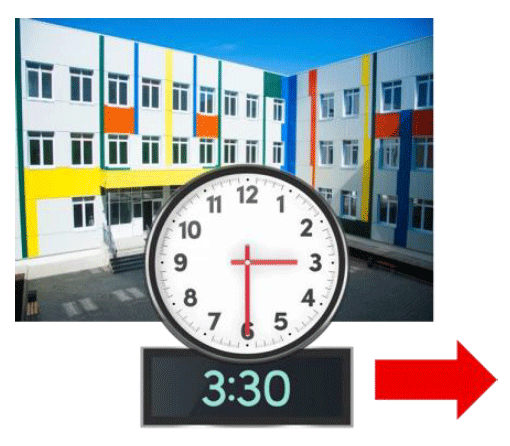
More places that provide ELC are now open outside of school hours or term time.
Most parents said their ELC hours are flexible enough to meet their family's needs.

Some parents found that services are not flexible enough to support them to use all the hours they are entitled to.
Affordability of childcare
Having more funded ELC is helping many parents.

Fewer families with a child aged 2 to 5 were having to pay for extra hours of childcare to meet their needs.
More families had no childcare costs.

But some parents of young children who pay for childcare still find it hard to afford.
Take-up of funded ELC

Nearly all parents are using the funded ELC for 3 and 4 year olds.
In 2024 a bit more than half of eligible 2 year olds were using it.
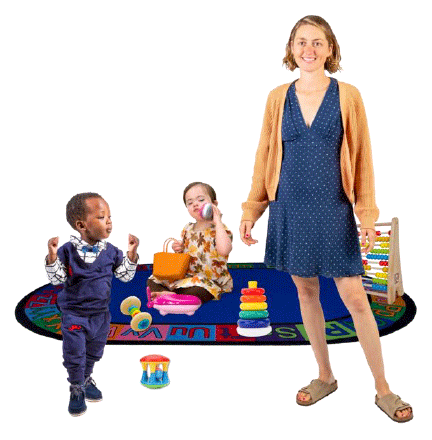
Most children using funded ELC are using the full 1140 hours but 2 year olds are less likely to use this than older children.
But accessibility and flexibility are still problems for some parents.
Key findings – outcomes for children, parents and families
Children’s development and the poverty gap in children’s outcomes

Poverty means not having enough money to pay for food, heating or housing.
So far there is no evidence to show that having more ELC has supported the development of children’s thinking skills and language skills.
There is mixed evidence on social and emotional development:

- so far there is no clear proof of positive change for 4 and 5 year old children leaving funded ELC

- funded ELC is linked to better social and emotional development for some 2 year olds
So far there is no clear proof that funded ELC has made the poverty gap in children’s outcomes smaller.

This gap is measured by where families live or how much money they have.
Parents’ employment

We found that more mothers of children getting funded ELC are in:
- work
- training
- or full-time education
Parents’ confidence and capacity and family wellbeing

We do not have much information to show there has been an improvement in parents’ wellbeing.
We do not have much evidence to show that parental confidence and capacity are better.

By capacity we mean parents feeling they have the skills and time to:
- support their child’s learning
- make their home environment better
- work on their abilities as a parent

But in surveys and interviews most parents said that the funded ELC was positive for their children, themselves and their family.

There is no evidence that family wellbeing has changed since families could get more funded ELC.
And finally …

Most of the work needed to achieve the outcomes of having more funded ELC has been done.
The main things the evaluation found were:

- flexibility and accessibility of funded ELC have got better
- more mothers with children in funded ELC have jobs

- so far there is not much evidence that having more ELC has supported children’s development

The effects of the pandemic and the cost of living crisis have made it difficult:
- for services to deliver more ELC
- for families to cope with money and their wellbeing

- to say exactly what difference having more ELC made for children and families

It is still too early to tell if all the outcomes of having more ELC have been achieved.

It will be important to decide how best to check the outcomes for children, families and childcare services over the longer term.
Contact
Email: socialresearch@gov.scot