
Chief Medical Officer's annual report 2024-2025: Realistic Medicine - Critical Connections
The Chief Medical Officer (CMO) discusses the principles which enable careful and kind care; suggests what we can do to support healthy ageing and encourage greater upstream prevention; discusses how connection to nature can enhance both our own and our planet’s well-being; and the importance of relational continuity.
Chapter 2: Healthy Ageing
This year marks the halfway point of the United Nation’s Decade of Healthy Ageing (2021–2030).
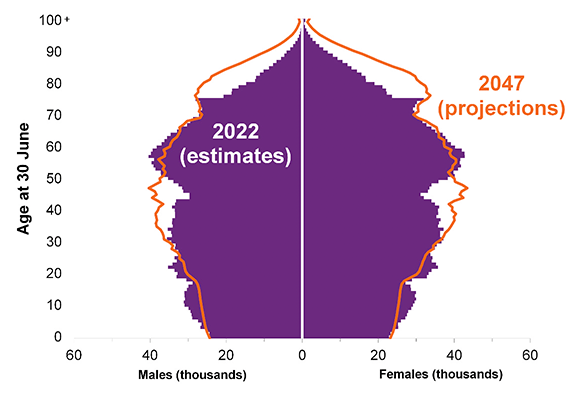
Given that the proportion of the population represented by older people is set to continue growing significantly, it is perhaps understandable that some feel daunted by the perceived challenges this presents for our health and care system and wider society.
“Old age is like everything else. To make a success of it, you’ve got to start young.” – Theodore Roosevelt
The Population Health Framework (expected to be published in June), will set out the need for a focus on health and wellbeing at all stages of life and highlights that this is particularly critical in our early years. However, I would like to focus on the significant and growing contribution older people make to our economy, society, culture and communities.
Ageism is discrimination and is a challenge which we must overcome. The World Health Organization (WHO) suggests that globally, one in two people are ageist against older people. Since anyone can become the target or perpetrator of ageism, it is important to recognise and eliminate, given the serious and wide-ranging implications for health, wellbeing and opportunities in later life. Indeed, it has been repeatedly shown that the reinforcement of ageist stereotypes on older people negatively affect their cognitive abilities, workplace performance and their own attitudes towards their own place in society.
We must tackle ageism if we are to truly create a society in which we can all flourish in later life for the benefit of everyone in Scotland.
It is worth emphasising the benefits for everyone in a society which promotes and facilitates healthy ageing. By proportion, older people contribute more in volunteering and in childcare and also provide a significant proportion of unpaid care. Overall, they are net contributors to the economy (even after considering the costs of health and care) through their spending and their unpaid contributions through volunteering. The contributions from older people to the UK economy were estimated to be worth £40 billion per annum in 2011, and by 2030 are expected to rise to £77 billion. Furthermore, in 2015, it was estimated that the unpaid contributions of older people across the European Union (EU) could be worth as much 1.4% of GDP, more than the defence spend of any EU country at that time.
“Expenditure in older populations is an investment, not a cost.” – Des O’Neill
The contribution older people make to their communities is clear and will become even more important in the years to come. “Health equals Wealth”, and this should banish any notions of ageism when it comes to considering spending and focusing healthcare resources towards promoting healthy living in later life.
The converse is also true: Wealth equals Health. In countries where more is spent on preventing ill-health, older people work more, volunteer more and spend more. Increasing the preventative health spend by just 0.1% could unlock a 9% increase in annual spending in those aged over 60 as well as additional time for potential volunteering. At a time when economies, healthcare systems and societies internationally are adjusting to a post-pandemic world, we must fully appreciate and capitalise on the contributions of our older people.
It would be wrong to consider the contribution of older people purely in terms of value to our economies. Older people are vital members of our communities, contributing significantly through their experience, wisdom and skills. The evidence is clear that meaningful intergenerational connections reduce ageist attitudes by decreasing stereotypes and increasing positive perceptions of both older people and ageing itself. In addition, younger people can benefit from building stronger and more diverse social connections.
Case Study: Intergenerational Boat Building in Ayrshire
Since 2010, a network of intergenerational boat-building projects has grown across Ayrshire, bringing together older people with young people from local schools and colleges.
The project allows younger people to develop confidence, employability skills and life skills while building intergenerational connections within their local communities. It allows older people to interact with younger people they would not normally meet, to pass on skills and feel valued as older adults.
“I retired 15 years ago as an engineer expecting to play golf for the rest of my life. Instead I have been building boats with young people. It has really added to my life – I have met some great people and friends” – Harry- Older participant.
Whilst simultaneously sharing the benefits of their experience of the past, older people also belong at the forefront of addressing our current and future challenges. Research from England suggests that those aged 70 or over are just as likely to be concerned about climate change as younger people, and that people aged 50 – 69 are as likely to have changed their behaviour as a result as those younger than 30.
Older people are more likely than any other age group to give time to their communities in the form of volunteering. Volunteering itself has been shown to enhance connection, improve mental health and increase physical activity, though a major barrier to unlocking the benefits for both older people themselves and their communities is poor health. Older people support families by providing childcare, enabling the economic contribution of younger generations, as well as serving as the source of trusted wisdom, including health advice.
Enabling everyone to age healthily to maximise these contributions therefore has effects far beyond economic benefits for our health and social care system, now and in the future.
Older people in our workplace communities
Older people make an important contribution to the workforce. A report from the Global Longevity Centre UK showed that every third dollar in G20 economies in 2015 was earned by a worker over 50. By 2035, this cohort is projected to generate nearly 40% of all earnings. This means that more younger people could benefit from the experience, coaching and mentorship of their older colleagues – particularly given that older people tend to form stronger workplace relationships. Older people also derive benefits from being a part of workplace communities. A 2017 report from the Institute of Employment Studies highlights that work is a major source of social connections and interaction, and we know that meaningfully being able to contribute to society through working provides a sense of purpose and self-esteem.
Everyone in society stands to gain when older people can bring their talents, wisdom and experience to our workforce and our communities through tackling avoidable ill health and discrimination.
Inequalities in ageing
However, ageing well is not within easy reach for everyone in Scotland.
In terms of the quality of health during years lived, evidence shows that men in our most deprived communities live 26 fewer years in good health than those in the most affluent areas. We also know that young and middle-aged adults living in the most deprived areas have rates of multimorbidity equivalent to those 10–15 years older in the most affluent areas of Scotland.
This means that for many in our least affluent communities today at the beginning of their working lives, multimorbidity will set in before they retire. For them, the clock has already started ticking.
While the roots of multimorbidity and ageing poorly can be found in working age adults (and perhaps even younger), it also highlights opportunities for us to intervene.
People who report good health are four times more likely to be still in work between the ages of 50 and 65. Workplaces which contribute to health and wellbeing can have a powerful impact ensuring we reach retirement in better health, and age well.
Encouraging the development of workplaces which contribute to health and wellbeing could be the beginning of a virtuous cycle. The biggest single contributor to economic inactivity amongst adults in Scotland is chronic poor health itself, accounting for nearly 1 in 3 economically inactive adults. Preventing chronic poor health from taking hold means that we could all stand to benefit from investing in workplaces which promote health and wellbeing.
Case Study: Northumbria Healthcare NHS Foundation Trust
Northumbria Healthcare NHS Foundation Trust offer staff 24-hour access to gym facilities and a range of fitness classes for a nominal fee of £1 per month, ensuring affordability and accessibility. Space was repurposed into modern gym facilities across all sites, acknowledging research showing physically active workers take 27% fewer sick days.
Occupational Health and Staff Psychology services are also included to address broader health needs, such as mental health. Additional partnerships with dietetics and Northumberland Mind provide workshops on managing stress and improving sleep.
Since the launch of the gym membership programme in April 2022, over 2,700 staff members (25% of the workforce) have signed up. Evaluations has shown substantial improvements in both physical and mental wellbeing among staff participants. One participant, Gail, a Clinical Research Practitioner, reported significant improvements in her physical health and overall fitness, which she attributes to the programme.
Whilst Gail’s feedback is encouraging, I am struck by what she, and others stand to gain in the future from employers adopting the approach taken by Northumbria Health.
We know that the most common diseases driving multimorbidity and ageing poorly in Scotland (cardiovascular disease, diabetes mellitus, stroke, chronic obstructive pulmonary disease and dementia) share similar root causes. Obesity, smoking, physical inactivity and alcohol excess all contribute.
We know that public health approaches use an understanding of the population to tackle disease by identifying those most at risk of ill health and intervening early. The introduction of Minimum Unit Pricing (MUP) for alcohol is one such successful public health approach. Through targeting the consumption of drinks containing the highest quantities of alcohol, often consumed by the heaviest drinkers, a reduction in the number of deaths wholly attributable to alcohol of 13.4% was seen, and a reduction in hospital admissions wholly attributable to alcohol of 4.1%. This was driven by improvements in chronic health outcomes, such as a reduction in alcoholic liver disease. Furthermore, the introduction of MUP was associated with a reduction in deaths and hospitalisations wholly attributable to alcohol amongst the four most deprived deciles in our communities.
Taking a Health in All Policies approach to addressing the shared factors driving multimorbidity and ageing poorly is likely to have benefits for people across the course of their lives.
This is why I am keen that at every opportunity, no matter our role, our specialty or care setting, we take responsibility for engaging the people we care for in this preventative approach. It is only through doing so that we can realise our longer–term goal for everyone: not just living longer, but living longer in good health.
When we think of our duty of care, we shouldn’t think only of the problems that people present with today. We should look forward to their future, understand the longer term outcomes that matter to the people we care for and begin thinking about how we can support the healthy ageing required to achieve them.
Case Study: NHS Ayrshire & Arran Community Appointment Days
The NHS Ayrshire & Arran musculoskeletal physiotherapy service are implementing Community Appointment Days, allowing people to access a range of services in one place. By working with Public Health and Health and Social Care Partnerships, they are tailoring each Community Appointment Day to the needs of each community they serve, providing timely access to assessments, health promotion, rehabilitation and voluntary sector support.
Community Appointment Days aim to reduce waiting times and improve access while promoting early self-management. They also provide an opportunity to focus on prevention, bringing services closer to people to assist with their wider health needs. A personalised approach is taken for each attendee, starting with a “What matters to you?” conversation. Smoking cessation, weight loss and dietetic advice are also available, with a view to preventing ill health and inactivity and not compounding the chronicity of the person’s initial problem.
Feedback from those who attended the first Community Appointment Day in East Ayrshire showed the event was valued by those who attended:
“Brilliant! I saw four experts in one day – this would have taken four visits to hospital!”
“Excellent! Increased understanding of condition.”
“Glad I came!”
Further Community Appointment Days are planned for North and South Ayrshire soon.
I look forward to seeing how this work develops, and the benefits of promoting a multidisciplinary, careful and kind preventative approach for those who attend.
“It is not enough for a great nation merely to have added new years to life – our objective must also be to add new life to those years.” – John F Kennedy
Dementia is not an inevitability
Dementia is now the commonest cause of death in the UK. The number of cases is rising as people are living longer. It is a common misconception that dementia is inevitable. In fact, 45 per cent of cases are potentially preventable.
The most common type of dementia is Alzheimer’s disease, which is associated with the development of abnormal proteins and structural changes within the brain. However, it is not true that everyone who has these changes gets symptoms of dementia and nor is it true that severity of these changes correlates with disease severity. The cognitive reserve hypothesis posits that lifelong experiences, including educational and occupational attainment, and leisure activities in later life can increase the reserve we have to make our brains more resilient against dementia by improving the individual’s ability to compensate for the changes within the brain.
The Lancet 2024 Commission on Dementia gives cause for optimism, by highlighting that the age-related dementia rates in high income countries are actually falling. This drop is likely the result of interventions such as smoking cessation and treatment of high blood pressure, thus driving a reduction of vascular damage – one of the key mechanisms contributing to the development of dementia. Not only should this cause us to redouble our efforts in applying a prevention-first approach to these risk factors but also prompt us to consider how we can reduce the impact of the other risk factors for which evidence is emerging. The Commission on Dementia also highlights compelling evidence that untreated visual loss and high LDL cholesterol are in themselves risk factors – which are within our gift to address through increasing the reach of the work of our optometry and primary care colleagues.
There is increasing evidence that other factors all contribute to the development of dementia – hearing loss, obesity, depression, physical inactivity and alcohol excess. Our healthcare system must address these. Other risk factors, such as having less education and social isolation will also require a coordinated response with other agencies and wider society.
Our shared vision is for a Scotland where people live longer, healthier and fulfilling lives. It is exciting therefore to see Scotland taking a multi-factor approach to improving health and wellbeing across the life course, with a focus on prevention of ill health. It will be set out in the Population Health Framework expected to be published in June.
Meaningful social connections, belonging to supportive communities, and being able to contribute and add value to society through participation in volunteering and work in our later years will help in building our resilience to developing dementia.
Combatting Loneliness
Loneliness is a major problem across our society, but in older people it is often compounded by bereavement and other losses such as loss of individual independence arising from poor health, loss of mobility and financial difficulties.
“Laughter, or a smile, is the shortest distance between two people.” – Victor Borge
As a society, we need to be bolder in promoting connection with others and give opportunities for older people to contribute to their communities through opportunities such as work, volunteering and the ability to have meaningful and satisfying social interactions.
Belonging to supportive communities and addressing the root causes of social isolation including sensory impairment, mental health challenges, housing and transport can therefore have huge benefits for our health and wellbeing. Loneliness can predict the onset of disability among older people, with a longitudinal study of non-disabled men and women showing that those who were more satisfied with their social connections constituted a lesser risk.
No story better illustrates the difference that meaningful connections can make to combatting loneliness than that of “John” and Ember.
Case Study: Ember and “John”
“John” (not his real name) was living with poor mental health in the rural Highlands and rarely left his home. He was living in isolation and had no contact with his local community.
Ember the labrador had been registered as a therapy animal (“therapet”) trained by the Canine Concern Scotland trust for several years, who with her handler Pauline, made regular visits to community spaces including the Thurso Community Cafe. The cafe offers a range of services including mental health support, income maximisation advice, and support for skills development.
“John” attended the cafe one day after learning that Ember would be visiting on social media. During his first interaction with Ember, he told Pauline that he didn’t like going out “because no one spoke to him and he felt lonely and isolated”.
Through his interactions with Ember during what became regular visits, John began to attend the community cafe weekly, gaining the confidence to communicate and connect with others. He was able to access the services on offer and get support for his mental health.
John described the impact that his connection with Ember has had “If it wasn’t for Ember I most likely would not still be here on earth – thank you.”
The powerful role that animals can have in fostering connection is clear. They support our wellbeing, connecting us to them, each other and our communities.
Where ill health does set in
While it is right to intervene to prevent poor health in older age, as healthcare professionals, we will always have a duty to provide individual care for those who do experience health problems.
An important challenge is preventing and caring for people with frailty.
Frailty is a distinctive health state related to the ageing process, in which multiple body systems lose their physiological reserves. People who experience frailty are more likely to suffer a loss of independence because of a relatively minor health problem (such as infection) compared to those who are not frail. In addition, that loss of physiological reserve leads to altered responses to illness that can result in atypical symptoms (infection without a pyrexia or delirium as a consequence of physiological and cognitive stress). That variety of clinical presentations because of frailty not only makes looking after older people clinically and intellectually challenging, but they demand more than ever an understanding of each person’s biography as well as biology. Here, establishing knowledge of the individual through continuity of care is important.
Those of us who care for older people are required to draw on knowledge pertaining to all body systems and we must take a holistic, personalised approach to their care, not focus on one episode, or one organ system.
The progression of frailty once established is rarely linear. It tends to be unpredictable. One of the challenges that we must help those that we care for (and their families) to navigate, is planning for and equipping our communities to deal with uncertainty. It is our responsibility as health and care professionals to manage risk effectively and help those we care for to navigate uncertainty, exploring what is important to them, advocating for them and supporting them to understand what lies ahead.
In doing so, we should also be mindful of how the people we care for want their care to be delivered.
Case Study: Getting it right for everyone
The Getting it right for everyone (GIRFE) approach is a personalised approach to care. It helps people get access to the help and support they need by placing them at the centre of all decision making that affects them. GIRFE pathfinders have demonstrated how using the “Virtual Meetings” tool within the “Team Around The Person” toolkit can contribute to a personalised and preventative approach to care while reducing risk.
“Maggie” is an older lady living with frailty and a chronic neurological condition from an island off the Scottish mainland. She uses a power chair and requires moving and handling equipment to support transfers between surfaces. She regularly travelled to the mainland for follow up appointments, involving a journey in excess of one and half hours each way and a total time away from home of more than 10 hours. The ferry service did not have wheelchair access to the passenger lounges, cafeteria or toilets. In addition to the risks to her health from sitting for prolonged periods of time, the stress and lack of facilities placed further strain on her mental wellbeing.
The “Virtual Meetings” tool was considered by Maggie and her care coordinator, who provided support with setting up technology to reduce her need to travel. This approach enabled Maggie to be involved in decisions about how her care was delivered, and have her preferences taken into account. It also reduced the risk of harm arising from unnecessary travel whilst simultaneously minimising adverse impact on the environment. The GIRFE approach recognises and respects Maggie’s frailty and helps to ensure she receives careful and kind care.
The benefits to our society of having an older population far outweigh the challenges and we must do what we can to support healthy ageing. We must promote and encourage greater upstream prevention of illness and support our communities to be able to help people overcome loneliness and isolation and foster wellbeing.
The ever greater diversity of people’s preferences, presentations and pathologies may make our practice more challenging in future, but by practising Realistic Medicine we can help the people we care for achieve the outcomes that matter to them, and perhaps a more satisfying vocation for ourselves.
Central to this is the delivery of careful and kind care.
By taking the time to understand what is important to those we care for now, we can help them plan and prepare and empower them to live well in older age.
To realise a healthier tomorrow for everyone, we must start today.
Contact
Email: realisticmedicine@gov.scot