
Title Conditions (Scotland) Act 2003 - Section 53: Scottish Law Commission's report - consultation analysis
The analysis report summarises the views of the respondents to the consultation on the Scottish Law Commission’s Report on Section 53 of the Title Conditions (Scotland) Act 2003.
Summary of responses to each question in the consultation paper
Recommendations to replace sections 52 and 53 of the 2003 Act
Question 1: Are you content that sections 52 and 53 of the Title Conditions (Scotland) Act 2003 could be replaced with a single provision regulating implied enforcement rights in relation to common schemes?
|
Option |
Total |
Percent |
|---|---|---|
|
Yes |
19 |
82.61% |
|
No |
1 |
4.35% |
|
Not Answered |
3 |
13.04% |
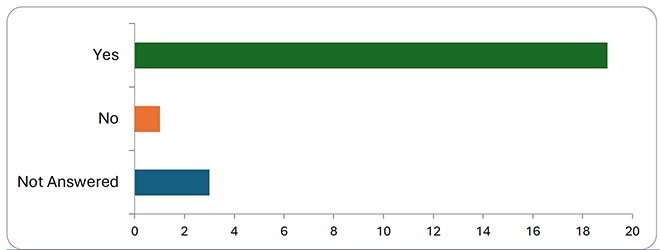
13. The majority of respondents supported the SLC’s recommendation to replace sections 52 and 53 of the 2003 Act with a single provision. The reasons most often given by those in favour was that to do so would bring much needed clarity and certainty.
14. Scottish Water, for instance, said, “Replacing these sections with a single provision has the potential to provide clearer and more comprehensive criteria for regulating implied enforcement rights in relation to common schemes.” Pinsent Masons said that “It would greatly simplify and speed up the conveyancing process if there was just one provision regulating those implied rights of enforcement.”
15. Under One Roof, a charity that provides information and support for tenement flat owners, said that “…interpreting titles are difficult for both owners of flats and housing professionals (such as factors). Any changes that allow for clear interpretation of the rules governing the enforcement of burdens related to common areas are welcome, as they will reduce one of the many barriers that exist for owners to conduct repair, maintenance, and retrofit to tenement buildings.”
16. Turcan Connell, while agreeing, cautioned that, “While consolidation into a single provision is welcome, the more important objective is that the drafting should clearly and consistently give effect to that policy aim.”
17. The sole respondent who disagreed with the SLC’s recommendation, Dumfries and Galloway Council, said,
18. One response received highlighted concerns around the maintenance of buildings to ensure they do not fall into disrepair. Although the issue is outwith the scope of this consultation, we recognise the importance of preventing building deterioration. The Building Standards Procedural Handbook and Enforcement Handbook were updated and published on 25 March 2026. These revisions aim to improve the clarity of enforcement procedures and increase public confidence in regulatory decision-making. The guidance strengthens requirements for early engagement with affected individuals and organisations, ensuring that concerns are considered before enforcement decisions are finalised. Additionally, the revised guidance makes it clear that the responsibility for maintaining all buildings, whether listed or not, rests with the building owner. The focus therefore should be on regular inspection, maintenance and repairs by the building owner to prevent a building from falling into a defective or dangerous condition.
Conclusion
There was strong support among respondents for a single provision for regulating implied enforcement rights in relation to common schemes. We acknowledge the points made by the local authority and will consider these further going forward.
Question 2: Are you content with the Scottish Law Commission’s definition of “common scheme”?
|
Option |
Total |
Percent |
|---|---|---|
|
Yes |
11 |
47.83% |
|
No |
6 |
26.09% |
|
Not Answered |
6 |
26.09% |
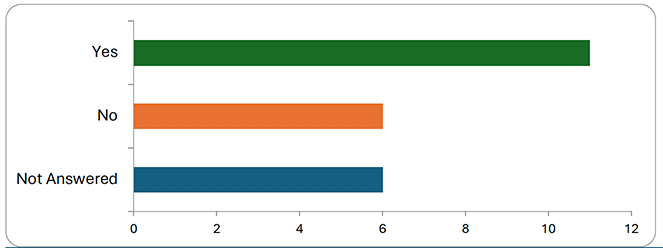
19. There were seventeen responses to this question. Eleven respondents were content with the SLC’s definition of “common scheme”. Nevertheless, a number of those went on to raise questions about the drafting of the legislative provision prepared by the SLC. For instance, the Law Society of Scotland said, “We agree that a definition of “common scheme” is useful but consider that the definition of “common scheme” used in the [SLC’s] draft Bill requires further work.”
Conclusion
A majority of respondents who answered the question supported the SLC's definition of “common scheme”, although a substantial minority raised concerns and highlighted the need for further work on the final wording in the definition
Question 3: Do you agree with the Scottish Law Commission’s five rules conferring implied enforcement rights in common schemes which pre-date feudal abolition?
|
Option |
Total |
Percent |
|---|---|---|
|
Agree |
14 |
60.87% |
|
Disagree |
3 |
13.04% |
|
Not Answered |
6 |
26.09% |
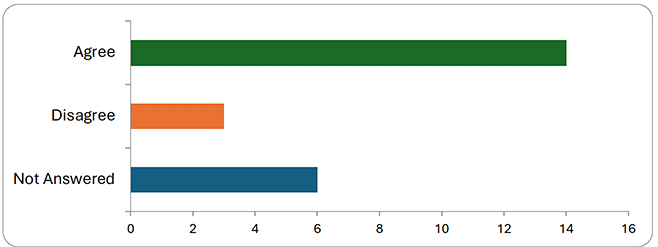
20. There were seventeen responses to this question.
21. Fourteen respondents agreed with the ‘five rules’ recommended by the SLC. For instance, MFM said that. “[h]aving a set of clear rules is preferable to the indicative examples given in the current legislation.” Some other respondents, while agreeing, were more cautious. For instance, the SPF said, “the proposed five rules are welcome in principle as it gives better clarity when determining if parties have legal grounds to object. However, care is required to ensure the rules do not operate too broadly in the context of large or phased developments, where the new provisions could unintentionally expand enforcement rights beyond what was intended.” Concerns raised included whether roads counted for the purposes of the 20 metre rule.
22. Of those who disagreed, two (Pinsent Masons and Gillespie Macandrew) said that while they were in general agreement they had some points of concern. Dumfries and Galloway Council said that, “We agree that these rules would create clarity. However, we are concerned that there may be not be enough clarity to cover the less straightforward cases.”
Conclusion
The majority agreed with the five rules conferring implied enforcement rights in common schemes. However, it is recognised that the further work will be needed to consider the less straightforward cases.
Question 4: Do you have any comments on any other of the Scottish Law Commission’s recommendations for reform?
|
Option |
Total |
Percent |
|---|---|---|
|
Yes |
7 |
30.43% |
|
No |
9 |
39.13% |
|
Not Answered |
7 |
30.43% |
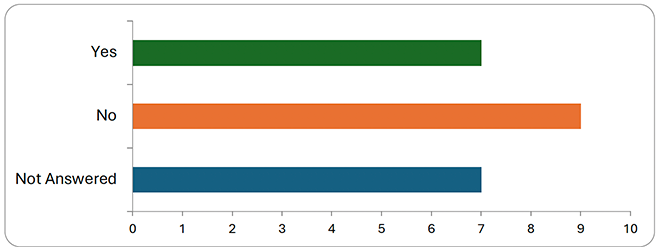
23. Seven respondents had further comments on the SLC’s recommendations, which mostly re-iterated support for the SLC’s recommendations.
Changes in case law, legislation or practice
Question 5: Are you aware of any subsequent case law or legislation which impacts on any of the recommendations contained in the Scottish Law Commission’s Report?
|
Option |
Total |
Percent |
|---|---|---|
|
Yes |
12 |
52.17% |
|
No |
6 |
26.09% |
|
Not Answered |
5 |
21.74% |
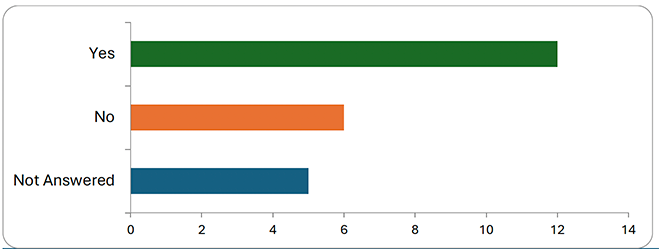
24. There were eighteen responses to this question, with twelve pointing out a number of cases decided since the SLC made its recommendations. In particular, the case of Cornish v Phillipi [2025] LTS 26 was mentioned by a number of respondents as evidence that the law in this area remains unclear.
25. In terms of subsequent legislation, separate SLC recommendations to reform the Scots law of tenement, made in 2024, was mentioned. It was said that, if taken forward, compulsory owners association will be formed which will have title to enforce the association rules (initially the title conditions affecting the flats) in addition to the owners. The concern was that this could affect implied enforcement rights for owners of flats in a tenement.
Conclusion
A number of cases were highlighted in the responses. These cases are helpful in demonstrating that this area of law is unclear and will be actively considered throughout the policy development process.
Question 6: Are you aware of change in conveyancing law practice which impacts on any of the recommendations contained in the Report?
|
Option |
Total |
Percent |
|---|---|---|
|
Yes |
3 |
13.04% |
|
No |
16 |
69.57% |
|
Not Answered |
4 |
17.39% |
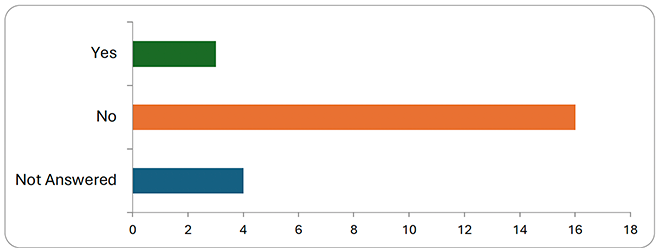
26. Three respondents said they were aware if changes to conveyancing law practice.
27. These respondents pointed to the increased use of title indemnity insurance. With Turcan Connell saying that as well as increased use and costs of title indemnity insurance, greater reliance is being put on counsel’s opinion. These views were also shared by some respondents who answered ‘No’ to this question. For example, Shepherd and Wedderburn said, “ …we think that the impact of the original sections 52 and 53 [of the 2003 Act] has resulted in greater reliance on Title Indemnity Insurance, which may be arranged as a last resort because it is not possible to be certain about the extent to which others many have enforcement rights in terms of the titles. This adds expense and worry to clients.”
Conclusion
Whilst most respondents answered “no” to changes in conveyancing practice which impacted on the recommendations many nevertheless identified the increased use of title indemnity insurance as a significant development in conveyancing practice.
Question 7: Do you have any comments on the draft Bill included in the Scottish Law Commission’s Report?
|
Option |
Total |
Percent |
|---|---|---|
|
Yes |
11 |
47.83% |
|
No |
6 |
26.09% |
|
Not Answered |
6 |
26.09% |
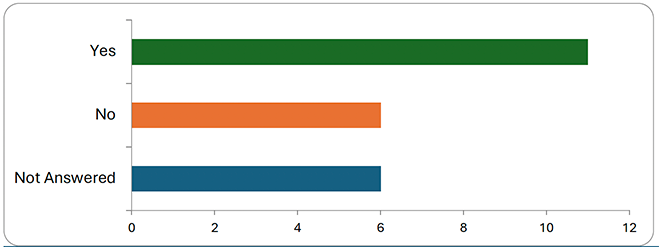
28. A number of specific comments were made on the SLC’s drafting, including pointing to comments made to other questions.
29. One comment repeated by a number of respondents was that there is inconsistency in the use of “unit”/“property” which appear to be used interchangeably.
30. Turcan Connell said that, more generally, “ […] there is a risk that the interaction between the new and existing regimes may create uncertainty as to the basis on which enforcement rights are held.”
Conclusion
A number of respondents made helpful comments on the drafting and these will be considered further.
Notice Requirement, Preservations Notices, and Multiple Notices
Question 8: Do you agree that it should be a requirement for there to be notice of the common scheme in the title of the burdened property?
|
Option |
Total |
Percent |
|---|---|---|
|
Agree |
16 |
69.57% |
|
Disagree |
2 |
8.70% |
|
Not Answered |
5 |
21.74% |
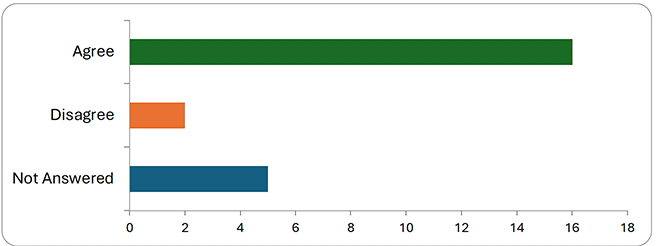
31. There were eighteen responses to this question, with sixteen respondents agreeing that it should be a requirement for there to be a notice of the common scheme in the title of the burdened property. Respondents felt this was essential to provide clarity and to avoid the creation of new implied rights. MFM said, “Retaining a notice requirement would reduce the need for examination of other titles to check whether those properties are subject to the same or similar burdens. In addition to allowing you to determine from looking at the relevant property alone whether you need to look at other titles, it will also prevent "new" enforcement rights being created.”
32. SPF were concerned, though, that, “[…] notice in the title should not be a mandatory pre-condition as titles will not necessarily be updated so it risks undermining the existence of otherwise valid common schemes.”
33. The Law Society of Scotland thought that the requirement of “swearing/affirming before a Notary Public is unnecessary for any notice of preservation which will be registered in the Land Register of Scotland as the applicant will already have a duty of care to the Keeper via section 111 of the Land Registration etc. (Scotland) Act 2012 to take reasonable care to ensure that the Keeper does not inadvertently make the Land Register inaccurate.”
34. Of those who disagreed, Dumfries and Galloway said that this would create a substantial burden on local authorities, while Gillespie Macandrew suggested a postcode or “impact test” as an alternative but gave no further detail of how this might operate.
Conclusion
There was strong backing for the requirement of a notice of the common scheme in the title of the burdened property. Although, we acknowledge the potential burden on local authorities along with the alternative suggestions made by Gillespie Macandrew which may require further investigation.
Question 9: Do you agree that 2 years is an appropriate period during which a notice preserving enforcement rights should be registered?
|
Option |
Total |
Percent |
|---|---|---|
|
Agree |
17 |
73.91% |
|
Disagree |
2 |
8.70% |
|
Not Answered |
4 |
17.39% |
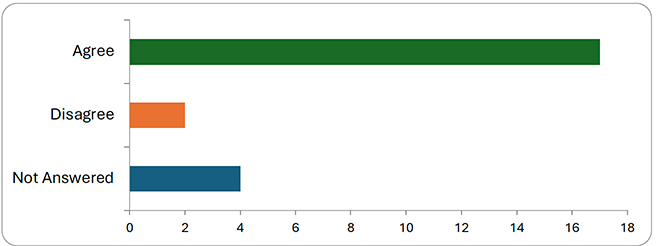
35. There were nineteen responses to this question; seventeen agreed that two years is an appropriate period. Pinsent Masons commented that two years “[…] seems an appropriate period allowing people time to investigate their title and decide if it is necessary to register a preservation notice. It accords with the time periods provided in previous legislation such as the time limit for preserving rights under the Long Leases (Scotland) Act 2012 and the Abolition of Feudal Tenure etc (Scotland) Act 2000 which did not cause concern.”
36. Professor Kenneth Reid pointed out that, “[a]ny time period is necessarily arbitrary. Previous experience with notices, such as those provided for by the Abolition of Feudal Tenure etc (Scotland) Act 2000 and the Title Conditions (Scotland) Act 2003, is (i) that very few notices are registered, and (ii) that most are registered at the last minute, however long the notice period.”
37. SPF cautioned that while it might be reasonable to impose a deadline, in practice there is unlikely to be general awareness of the requirement, particularly among non-professional owners.
38. Two respondents disagreed. Gillespie Macandrew said that five years would be more appropriate. It also commented that because the registration of an invalid notice would be open to challenge at the Lands Tribunal this would lead to further uncertainty and increased costs. Dumfries and Galloway Council, meanwhile, said that there should be no deadline for a notice as doing so would impose an “untenable financial, administrative and resource burden” on local authorities.
Conclusion
The two year period to register a notice preserving enforcement rights gained the support of the majority of respondents. We acknowledge that two respondents raised concerns around increased costs and uncertainty.
Question 10: Do you have any views on the proposal that there should be a special fee arrangement where an owner needs to raise multiple preservation notices?
|
Option |
Total |
Percent |
|---|---|---|
|
Yes |
11 |
47.83% |
|
No |
7 |
30.43% |
|
Not Answered |
5 |
21.74% |
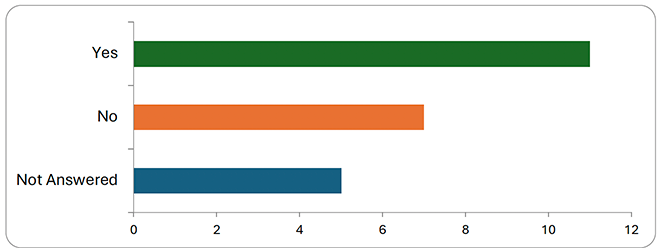
39. Most respondents agreed that there should be a special fee arrangement for registering multiple notices. Professor Kenneth Reid pointed out that failure to do so would, “ [..] present a real and unnecessary obstacle to the registration of notices in cases where a large number of properties are subject to the common scheme.”
40. Registers of Scotland said that it is “[…] open to the proposal that there should be a special fee arrangement where an owner needs to raise multiple preservation notices, but would require further time to consider it.” It was then in the process of conducting a fee review.
41. Dumfries and Galloway Council said that for local authorities there should be no fee because “[…] raising multiples of notices would place a substantial financial, administrative and resource burden on local authorities and the public purse to review its stock and register notices of common schemes over its sizeable stock.”
42. As well as a special fee arrangement, the Law Society of Scotland suggested that where an owner needs to register a notice for multiple properties it would be better to do using a single form.
Conclusion
Respondents generally agreed that there was a need to have a special fee arrangement (or in the case of local authorities no fee) where multiple preservation notices are raised.
Impact assessment
Question 11: What information or data do you have on:
(a) the economic impact of section 53 of the Title Conditions (Scotland) Act 2003, or
(b) the potential economic impact of the reform proposed by the Scottish Law Commission in its draft Bill.
43. Respondents did not hold any data but a number of solicitor firms provided detail about their practical experience of advising clients. Pinsent Masons was a typical example: “We can advise that clients have had to spend large sums on title indemnity policies to cover the risk of implied enforcement rights when we have not been able to rule out the possibility of there being related properties. Our clients have also incurred higher transactional costs as we have carried out detailed investigations (including additional searches to ascertain if there are section 53 implied rights of enforcement.”
44. One respondent commented that a potential purchaser decided not to take the risk of implied rights existing and choose not to proceed with the transaction.
45. Turcan Connell were clear in its response that the proposed reforms would, in its view, “[…] should reduce these costs and inefficiencies, leading to more straightforward analysis, reduced reliance on indemnity products and external advice and greater transactional certainty.”
46. The Law Society of Scotland said that reform might ease the work on the Scottish Land Court (formerly the Lands Tribunal of Scotland) if legal clarity can reduce the number of litigated cases.
Conclusion
The respondents who provided an answer highlighted the additional expense of taking out title indemnity policies to cover the risk of implied enforcement rights under the current legislation. It was considered that the proposed reforms would possibly reduce costs
Question 12: Are there any direct or indirect impacts on children and young people as a result of the legislative proposals set out in the Scottish Law Commission's draft Bill?
|
Option |
Total |
Percent |
|---|---|---|
|
Yes |
2 |
8.70% |
|
No |
12 |
52.17% |
|
Not Answered |
9 |
39.13% |
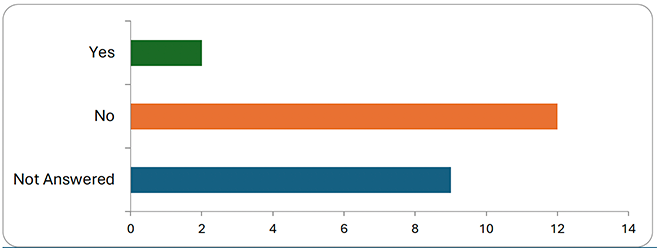
47. Two respondents commented on this question, both raising a similar point about access to open spaces for recreation. Gillespie Macandrew said, “The rights of individuals to use common space – of children to play - are engaged here. We are aware, for example, of open areas within developments (earmarked for play) receiving planning permission for development – with enforcement of real burdens protecting the status being the only potential remedy. These may be examples of the “deserving cases” which will lose rights under the proposals.”
48. The Faculty of Advocates responded that, “It is conceivable that children and young people might be affected by the enforceability (or otherwise) of certain real burdens in relation to open space, and areas designated as play or recreation areas in title deeds. This is overwhelmingly likely to be an indirect impact, as the children are unlikely to be the owners of affected properties.”
Conclusion
Generally, respondents did not see a direct or indirect impacts on children and young people as a result of the legislative proposals. Although two respondents thought there may be indirect impact in relation to play park open spaces.
Question 13: Is there any impact on specific groups of children and young people as a result of the legislative proposals set out in the Scottish Law Commission's draft Bill?
|
Option |
Total |
Percent |
|---|---|---|
|
Yes |
2 |
8.70% |
|
No |
12 |
52.17% |
|
Not Answered |
9 |
39.13% |
49. Two respondents replied to this question. Gillespie Macandrew thought there would be and referred back to its response to question twelve, while Alan Mackay thought there might be as short-term let legislation has reduced the available private housing stock denying young people the chance to get onto the 'housing ladder'.
Conclusion
Generally, respondents did not see any impact on specific groups of children and young people as a result of the legislative proposals.
Contact
Email: Sandra.jack@gov.scot