We use cookies to collect anonymous data to help us improve your site browsing experience.
Click 'Accept all cookies' to agree to all cookies that collect anonymous data. To only allow the cookies that make the site work, click 'Use essential cookies only.' Visit 'Set cookie preferences' to control specific cookies.
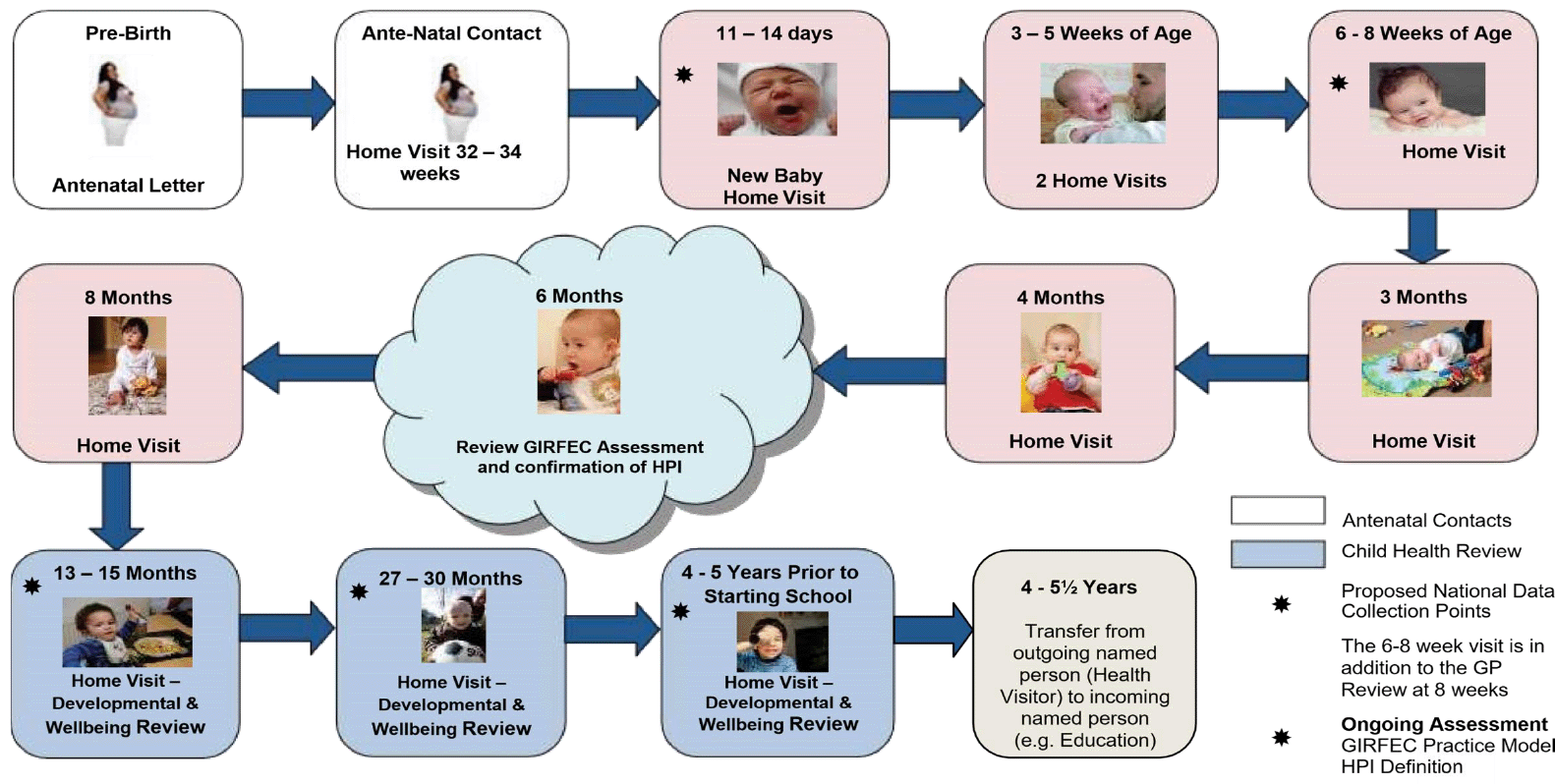
An additional HPI indicates that the child (and/or their carer) requires sustained (>3 months) additional input from professional services to help the child attain their health or development potential. Any services may be required such as additional HV support, parenting support, enhanced early learning and childcare, specialist medical input, etc.
Child’s Age
Purpose of Visit
National Assessment Tools*
National/Local Outcomes **
Pre-Birth (Suggested time: 10 minutes)
Standard service letter to pregnant women on notification of pregnancy
Introduction to Health Visiting Services/National Leaflet
Parent/carer aware of the Health Visiting Service and contact details
Pre-Birth
Contact
32 – 34 weeks (Suggested time: 45 – 60 minutes)
Face to face contact to introduce Health Visiting Service and to begin to develop and build therapeutic relationship with mother/family
Begin early assessment of maternal/family health, wellbeing and early identification of vulnerability or additional needs
Initiate additional interventions as appropriate such as Alcohol Brief Interventions
Commencement of transition of care from Midwife to Health Visitor
Introduction of Red Book
Initiate additional joint visit with the Midwife where additional need is identified
Engage and share public health information and guidance to promote positive attachment and health and wellbeing
Assessment and support for infant nutrition; making an informed feeding decision, benefits of breastfeeding, value of skin-to-skin and support decision making and access to Support Workers for Breastfeeding including in-reach into the post-natal ward
Routine enquiry about family finances/money worries and raise awareness of the advice available and offer families a direct referral to advice services
Edinburgh Postnatal Depression Scale
Getting it right for every child (GIRFEC) National Practice Model
National Risk Assessment Tool
Learning Disability
Assessment Tools
Early development of a therapeutic relationship
Identification of parent/carer and child strengths
Early identification of vulnerability/need and active request for assistance or referral is made for clients at an early stage
Uptake of services/tailored support from third sector agencies to address wider determinants
Family awareness of Health Visiting Service and support available on transition from Midwifery care
Families recognise the Health Visitor as a professional offering credible and positive information, advice, support and help to access services
Parents/carer receive appropriate public health advice to maximise child/family wellbeing
More structured continuity of care and continuous assessments
Income of pregnant women and families with young children who are at risk of, or experiencing, poverty is maximised
Clear documentation of intervention
* Throughout each visit/contact utilise Public Health Resource Toolkit (Appendix 4)
** This is current thinking. Ongoing work will determine the precise nature of measures to be captured
Child’s Age
Purpose of Visit
National Assessment Tools
National/Local Outcomes
11-14 days (Suggested time: 60 – 90 minutes)
Engage with family following birth
Assessment and initiation of Getting it right for every child (GIRFEC) and identification of child/family strengths and health/mental health and wellbeing needs and provisional HPI
Engage and share public health information and guidance to promote positive attachment and health and wellbeing
Physical developmental check of the baby
Introduce immunisation and developmental assessment schedule
Advice on sources of community support
If not previously carried out carry out routine enquiry for gender based violence and risk assessment undertaken following disclosure. Build on and strengthen therapeutic relationship between practitioner and mother/family
Agree future plan of care with parents/carers
Routine enquiry about family finances/money worries and raise awareness of the advice available and offer families a direct referral to advice services
Standard assessment/ recording proforma (Child
Health Surveillance
Programme)
National Risk Assessment Tool
Getting it right for every child (GIRFEC) National Practice Model
Learning Disability Tools
Refer to Chief Executive
Letter (CEL) 41 and
Edinburgh Postnatal Depression Scale as appropriate
World Health Organisation
(WHO) Guidelines for
Child Growth
Families experience continuity of care through timeous information sharing between services
Partnership between practitioners and parents/carers is established
Profile of significant factors
Any risk or potential risk to child or parent/carer health and wellbeing is identified/ addressed early
Identification of physical and prolonged jaundice
Consideration should be given to early visual support to babies born to parents with addictions
Parents are empowered to understand and support child’s developmental progress
Improved nutrition for child or parent/carer
Children are protected against infections through engagement/ uptake of immunisation programme
Increased breastfeeding initiation
Families recognise Health Visitor as professional offering credible and positive information, advice, support and help to access services
Parent/carers are supported to maximise wellbeing of self/baby
Continual assessment of child and development of a therapeutic relationship with family
Uptake of services/tailored support from third sector agencies to address wider determinants
Parents/carers receive appropriate public health advice to maximise child/family wellbeing
Income of families with young children who are at risk of, or experiencing, poverty is maximised
More structured continuity of care and continuous assessments
Clear documentation of any required intervention
Child’s Age
Purpose of Visit
National Assessment Tools
National/Local Outcomes
3 – 5 weeks
(All Families) (Suggested time: 30 – 45 minutes)
Continued Getting it right for every child
(GIRFEC) assessment process and identification of child/family health strengths and wellbeing needs
Build on and strengthen therapeutic relationship between practitioner and mother/father/ family
Engage and share public health information and guidance to promote positive attachment and health and wellbeing
Observe/ discuss developmental progress of infant
If previously disclosed, routine enquiry for gender based violence and risk assessment undertaken
Agree plan of ongoing care
Domestic Abuse Risk
Assessment Checklist
(DASH RIC)
Getting it right for every child (GIRFEC) National Practice Model
National Risk Assessment Tool
Continuum of parent/carer and child assessment and care providing maximum opportunity to intervene early where additional support is required.
Co-production approach to support parents/carers to maximise the wellbeing of their baby
Women and children are protected through provision of support and referral to Multi-Agency Risk Assessment Case Conferences as appropriate when abuse identified
Families recognise Health Visitor as professional offering credible and positive information, advice, support and help to access services
Parents/carers receive appropriate public health advice to maximise child/family wellbeing
Income of families with young children who are at risk of, or experiencing, poverty is maximised.
More structured continuity of care and continuous assessment
6 – 8 weeks
(All Families) (Suggested time: 45 – 60 minutes)
Continued GIRFEC assessment process and
identification of child/family health/mental health strengths and wellbeing needs and update recording of Health Plan Indicator
Discuss and enquire about depressive symptoms and complete the Edinburgh Post Natal Depression Scale (EPDS)
If not previously carried out undertake routine enquiry for gender based violence and risk assessment undertaken following disclosure
Build on and strengthen therapeutic relationship between practitioner and mother/family
Engage and share public health information and guidance to promote positive attachment and health and wellbeing
Agree plan of ongoing care
Domestic Abuse Risk
Assessment Checklist
(DASH RIC)
Edinburgh Postnatal
Depression Scale
Questionnaire
Standard assessment/ recording proforma (Child
Health Surveillance Programme) as appropriate
National Risk Assessment Tool
Getting is right for every child (GIRFEC) National Practice Model
Chief Executives Letter (CEL) 41
Continuum of parent/carer and child assessment and care providing maximum opportunity to intervene early where additional support is required.
Early identification and management of perinatal mood disorders
Early intervention to reduce risk of dental caries
Initial recording of Health Plan Indicator
Early evidence of attachment
Routine enquiry, recording of disclosure and risk assessment as appropriate
Women and children are protected through provision of support and referral to Multi-Agency Risk Assessment Case Conferences as appropriate when abuse identified.
Early referral and intervention where assessment of growth and or development indicates that child is not achieving age appropriate milestones
Families recognise Health Visitor as professional offering credible and positive information, advice, support and help to access services
Parents/carers receive appropriate public health advice to maximise child/family wellbeing
More structured continuity of care and continuous assessments
Child’s Age
Purpose of Visit
National Assessment Tools
National/Local Outcomes
3 Months
(Suggested time: 45 – 60 minutes)
Continuous assessment and identification of child/family health/mental health and wellbeing needs
Discuss and enquire about depressive symptoms and complete Edinburgh Postnatal Depression Scale
Engage and share public health information and guidance to promote positive attachment and health and wellbeing
Continue to observe child’s developmental progress
If not previously carried out undertake routine enquiry for gender based violence and risk assessment undertaken following disclosure
Advise on sources of community support
Following assessment commission additional support via Early Years Support Workers as required
Complete Getting it right for every child (GIRFEC) assessment process and update Health Plan Indicator
Introduce the subject of weaning and highlight importance of delaying introducing solids until around 6 months.
Agree plan of ongoing care
Edinburgh Postnatal
Depression Scale
Questionnaire
Domestic abuse Risk Assessment Checklist
(DASH RIC)
National Risk Assessment Tool
Getting it right for every child (GIRFEC) Practice
Model
Continuum of parent/carer and child assessment and care providing maximum opportunity to intervene early where additional support is required.
Early identification and management of perinatal mood disorders
Early intervention to reduce risk of dental caries
Women are supported and risks reduced to children through support provided where gender based violence is identified
Women and children are protected through provision of support and referral to Multi-Agency Risk Assessment Case Conferences as appropriate when abuse identified.
Prevention of unintentional injury
Evidence of timeous immunisation uptake
Weaning at appropriate age
Parents/carers receive appropriate public health advice to maximise child/family wellbeing
Families recognise Health Visitor as professional offering credible and positive information, advice, support and help to access services
More structured continuity of care and continuous assessment
4 Months
(Suggested time: 45 – 60 minutes)
As above
Agree future plan of care
As above
As above
Child’s Age
Purpose of Visit
National Assessment Tools
National/Local Outcomes
8 Months
(32 weeks) (Suggested time: 30 – 45 minutes)
Review Getting it right for every child (GIRFEC) assessment and identification of child/family health/mental health and wellbeing needs and update Health Plan Indicator if required
Engage and share public health information and guidance to promote positive attachment and health and wellbeing
Continue to observe child’s developmental progress and undertake additional interventions as required e.g. advice; referral
Signpost to local Community Services
Agree future plan of care
National Risk Assessment Tool
Getting it right for every child (GIRFEC) National Practice Model
Ages & Stages
Questionnaires: (ASQ:3)
Continued relationship building with family
Continuum of parent/carer and child assessment and care providing maximum opportunity to intervene early where additional support is required
Parents/carers receive appropriate information and support to maximise the wellbeing of their child
Achievement of age appropriate developmental milestones
Early identification of concerns
Commission of additional intervention and support as required
Early identification and management of perinatal mood disorders
Parents/carers receive appropriate public health advice to maximise child/family wellbeing
Families recognise Health Visitor as professional offering credible and positive information, advice, support and help to access services
More structured continuity of care and continuous assessment
Child’s Age
Purpose of Visit
National Assessment Tools
National/Local Outcomes
13 – 15 months (Suggested time: 45 – 60 minutes)
Review Getting it right for every child (GIRFEC) assessment and identification of child/family health/mental health and wellbeing needs and update Health Plan Indicator if required
Assessment should include: quality of parent – child relationship and mental health of the principal carer
Engage and share public health information and guidance to promote positive attachment and health and wellbeing
Undertake developmental and wellbeing review
Child Health Review – refer to guidance in Appendix 2 (Guidance on delivery and national minimum dataset)
Advise on local services for children and families
Review immunisation status and prompt attendance where required
Routine enquiry about family finances/money worries and raise awareness of the advice available and offer families a direct referral to advice services
Agree future plan of care
Standard assessment/ recording proforma (Child
Health Screening
Programme)
Ages & Stages
Questionnaires: (ASQ:3) should be used universally with continued access to validated development assessment tools and their appropriate age range as listed in
Appendix 2 and 3.
Continuum of parent/carer and child assessment and care providing maximum opportunity to intervene early where additional support is required.
Early identification of growth/ developmental concerns
Parents/carers receive appropriate support and advice to maximise the wellbeing of their child
Children’s listening and communication skills are enhanced through the introduction of early reading
Children are protected from infectious disease
Ensuring follow up when concerns are identified
Request for assistance as appropriate
Attendance at appointments
Parents/carers receive appropriate public health advice to maximise child/family wellbeing
Income of families with young children who are at risk, or experiencing, poverty is maximised
Families recognise Health Visitor as professional offering credible and positive information, advice, support and help to access services
More structured continuity of care and continuous assessments
Child’s Age
Purpose of Visit
National Assessment Tools
National/Local Outcomes
27-30 Months (Suggested time: 45 – 60 minutes)
As above
In addition to the above routine enquiry for gender based violence and risk assessment conducted
Ages & Stages
Questionnaires: (ASQ:3) should be used universally with continued access to validated development assessment tools and their appropriate age range as listed in
Standard assessment/recording proforma (Child Health Screening Programme)
Continuum of parent/carer and child assessment and care providing maximum opportunity to intervene early where additional support is required.
Parents involved and received advice and support in maximising the wellbeing of their child.
Children are protected against infectious diseases
Referral where necessary
Women are supported and risks reduced to children through support provided where gender based violence is identified
Women and children are protected through provision of support and referral to Multi-Agency Risk Assessment Case Conferences as appropriate when abuse identified.
Parents/carers receive appropriate public health advice to maximise child/family wellbeing
Income of families with young children who are at risk, or experiencing, poverty is maximised
Families recognise Health Visitor as professional offering credible and positive advice and support
More structured continuity of care and continuous assessments
4 - 5 Years (Suggested time: 30 – 45 minutes)
Undertake pre-school review
Child Health Review – refer to guidance in Appendix 3 (Guidance on delivery and national minimum dataset)
Update Getting it right for every child (GIRFEC) assessment and Health Plan Indicator
Engage and share public health information and guidance to promote positive attachment and health and wellbeing
Routine enquiry about family finances/money worries and raise awareness of the advice available and offer families a direct referral to advice services
Arrange discussion/meeting with School Nurse for children with an Health Plan Indicator of additional
Transition to School
Arrangements for transition to the incoming named person e.g. Education.
• Ages & Stages
Questionnaires: (ASQ:3) should be used universally with continued access to validated development assessment tools and their appropriate age range as listed in
Appendix 2 and 3.
Continuum of child assessment
Seamless transition to School Nursing Services
Parents/carers receive appropriate support/advice to maximise the wellbeing of their child
Income of families with young children who are at risk, or experiencing, poverty is maximised
Children benefit from effective care planning between services