
National Strategy for Economic Transformation: third annual report
Third annual progress report on the delivery of the 10 year National Strategy for Economic Transformation (NSET).
Progress Update by NSET Programme
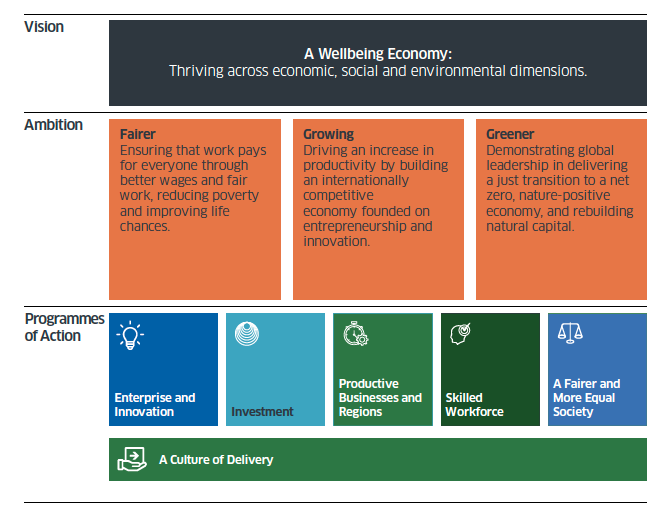
Vision
A wellbeing Economy:
- Thriving across economic, social and evironmental dimensions
Ambition
Fairier
Ensuring that work pays for everyone through better wages and fair work, reducing poverty and improving life chances.
Growing
Driving an increase in productivity by building an internationally competetive economy founded on entrepreneurship and innovation.
Greener
Demonstrating global leadership in delivering a just transition to a net zero, nature-positive economy, and rebuilding natural capital.
Programmes of Action
- Enterprise and Innovation
- Investment
- Productive Businesses and Regions
- Skilled Workforce
- A Fairer and More Equal Society
- A Culture of Discovery
As Scotland’s economy evolves so must our priorities and approach to delivery. Our strategic aim for fair, green growth remains. And from now on our annual Programme for Government outlines the actions we are taking to deliver our economic strategy’s vision. All Programme for Government actions contribute to the long-term objectives of our economic strategy. A breakdown of relevant Programme for Government commitments and the economic objective they contribute towards is available at Annex A.
Our approach will ensure we are continually seizing new opportunities and considering the wider economic context to ensure that we do not deviate from delivering our economic strategy. It also embeds our economic strategy with the First Minister’s four priorities of eradicating child poverty, growing our economy, tackling the climate emergency and delivering sustainable public services.
We must balance agility with long-term analysis of our impact and so our measurement framework and evaluation activity remain a foundation of our approach and Annual Report format.
Two programme names have been updated to better describe their content and mirror language in our Programme for Government. “Entrepreneurial People and Culture” becomes “Enterprise and Innovation”, to reflect work now being taken forward to nurture and expand innovative sectors which boost Scotland’s profile as a modern, high growth country. “New Market Opportunities” becomes “Investment”, to reflect the significant focus on driving investment into Scotland across the economy, including in key foundational sectors, such as housing and the green economy.
We are not simply changing names. We are strategically considering the best interventions for Scotland’s economy building on recent work such as the Investor Panel and Housing Investment Taskforce.. For example, the scope of Productive Businesses and Regions has been widened to include Planning as a major economic enabler – following feedback from the NSET Delivery Board.
Programme 1 Enterprise and Innovation
Our aim
Programme 1 aims to establish Scotland as a world-class entrepreneurial nation founded on a culture that encourages, promotes and celebrates entrepreneurial activity in every sector of our economy.
Our long-term intended impact
- Scotland is a rapidly growing start-up economy with a culture in which entrepreneurship is encouraged, supported and celebrated.
- Universities and industry drive innovation and economic growth in clusters where Scotland competes internationally.
Delivery Overview
Entrepreneurs and innovators respond to economic opportunities and ensure that Scotland’s economy prospers in a rapidly changing economic environment. Our economic strategy aims to create the conditions in which they can thrive and put entrepreneurial thinking at the heart of government.
We seek to make Scotland a great place to start and scale a business. The Ecosystem fund has helped over 4,000 participants to share knowledge and build networks, whilst the Pathways Fund has helped make entrepreneurship a realistic choice for previously under-represented groups. Techscaler provide support and education for tech entrepreneurs right across the country, whilst Scotland’s Enterprise Agencies provide an unrivalled, national and local delivery capability that can spot opportunities, provide support and help secure necessary investment.
Scotland’s Universities are key sources of competitive advantage, and the entrepreneurial campus programme supports staff and students to commercialise their ideas. The national innovation strategy recognises the power of the triple helix of business, academia and the public sector working to together and has focused investment on key clusters such as Critical Technologies, Robotics and Autonomous Systems, Life Sciences, Offshore Wind, Built Environment, FinTech and Space. Our new Scottish Cluster Scheme will further accelerate this work, Scotland’s National Innovation Week in September 2025 offered an opportunity to highlight progress and map out our plans, whilst the new Technology Council and Chief Entrepreneur ensure that future policy is shaped by the needs of business and an entrepreneurial spirit.
Delivered
Techscaler
- We delivered a huge boost in tech entrepreneurship, more than doubling the number of Techscaler members in 2024, with involvement of nearly 1000 companies through our Techscaler network.
- There are now over 1,740 members and 13 hubs across 7 regions.
- Funding raised by members since joining is now nearly £173 million.
- 35% of founders identify as female compared to a 20% industry average.
- 65 regional partnerships have been established.
- Over 2,300 mentoring sessions have been delivered.
Ecosystem Fund
- The Ecosystem Fund relaunched in April 2025 with a new digital platform. Three hundred and seventeen applications were received requesting over £9 million, demonstrating continued strong demand for ecosystem support. Twenty-eight projects were awarded £793,843 creating a complete entrepreneurial pipeline from school-age inspiration to international scale-up. Successful projects will involve around 4,000 participants and span Scotland from rural islands to city centres with innovative delivery including AI tools, games-specific support and accessibility improvements.
Entrepreneurial Campus Blueprint
- Co-created a programme of work with the tertiary sector which will be delivered in financial year 2025-26, and which will accelerate the implementation of the recommendations in the Entrepreneurial Campus Blueprint. Distributed microgrants to 55 nascent businesses from staff and students at Scottish universities through a £100,000 project.
Entrepreneurial Education
- Following the success of the Entrepreneurial Education Fund in 2024-25, a further round was launched for 2025-26. Supporting programmes that help build the mindset and capabilities for entrepreneurship and promote it as a valid career pathway, this year’s Fund will also be open to vocational programmes equivalent to SCQF Levels 7 and 8.
Chief Entrepreneur
- Founder and businesswoman Ana Stewart, co-author of the Pathways report, was appointed as Scottish Government’s Chief Entrepreneur in April 2025 replacing former Chief Entrepreneur Mark Logan. The Chief Entrepreneur role was established in 2022 as a commitment to delivering the National Strategy for Economic Transformation. Ana Stewart has elected not to be paid for the role. She has agreed with Ministers that funds earmarked for her remuneration will be reinvested in the Scottish start-up economy.
Pathways Review Implementation
- Further round of the Pathways Fund was launched in 2024-25 and 2025-26 to support projects that promote widening access to entrepreneurship and provide a range of services for founders and potential founders from under-represented groups at the earliest stages of their entrepreneurship journey.
- South of Scotland Enterprise was supported to operate a pre-start pilot in 2024-25, offering specialist, place-based coaching and support services to potential founders, particularly women and other under-represented communities. Further funding has been made available to allow the pilot to continue in 2025-26 following a positive independent evaluation of the programme. The development of a similar pilot for communities in the Highlands and islands is also underway.
Cluster Development Programme
- Significant progress has been made in collaboration with Scotland’s Enterprise Agencies in designing and developing a national Cluster Scheme. This initiative is establishing a consistent and strategic approach in supporting the emergence, growth, and international competitiveness of high-value clusters across Scotland, as outlined in the National Innovation Strategy.
- We provided £2 million funding over the 2025–26 financial year to accelerate the growth of key priority clusters including Critical Technologies, Robotics and Autonomous Systems, Life Sciences, Offshore Wind, Built Environment, FinTech and Space. This includes targeted investment for priority areas to pilot the Scottish Cluster Scheme framework (Blueprint for Developing Clusters), and intensification of cluster-building activities aimed at strengthening ecosystems and unlocking new business opportunities.
Scottish Technology Council
- Successfully established the Scottish Technology Council, a new advisory body providing expert insight to the Minister for Business and Employment and the wider Scottish Government. The Council plays a critical role in identifying key priorities, opportunities, and challenges facing Scotland’s technology sector. It also advises on emerging technological trends with the greatest potential to drive sustainable economic growth. The inaugural meeting of the Council took place on 17 June 2025.
AI Scotland
- The AI Scotland programme has launched which will contribute to achieving the Scottish Government’s strategic objectives for AI. The pilot adoption scheme for SME’s and businesses positions Scotland as a creator and supplier of artificial intelligence technologies, rather than solely a consumer. Funding has been allocated for the 2025-26 financial year, and key stakeholders from industry, academia, government, and the public sector have been convened to help shape the programme’s delivery model.
DeepTech Supercluster
- Agreed delivery plans for the DeepTech Supercluster with core partners in June 2025. Through this pilot, a core group of companies will have access to a specialised ecosystem of support for their journey to manufacturing at scale. A wider group of companies will embody a peer network that will strengthen the momentum of participants while also laying the foundation for future iterations of the project. Core partners include Scottish Enterprise, The National Robotarium, The National Manufacturing Institute Scotland (NMIS), and The Smart Things Accelerator Centre (STAC).
Scottish EDGE
- Provided £1.2 million funding to the Scottish EDGE Business Competition in 2025-26 which has secured a further £400,000 of private funding to be raised. This will provide support for two rounds of the main competition and continued support for the EDGE Regional Competition following the successful pilot in March 2025. The first of these rounds concluded in June 2025 with 247 applications submitted and 37 business being awarded funding across a range of categories. This included £463,000 of Scottish Government funding.
- Provided an additional £1.4 million of support to Scottish EDGE in financial year 2024-25 to support two rounds of the EDGE Business Competition and the Regional EDGE Pilot.
Scotland’s National Innovation Week and National Innovation Summit
- Scotland’s National Innovation Week took place from 22 to 26 September 2025, featuring over 80 events and attracting attendees from across the country. The highlight of the week was the National Innovation Summit, held on 25 September, which brought together leaders from Scotland’s innovation ecosystem. The Innovation Summit served as a platform to drive forward our shared ambitions and make Scotland one of the most innovative small nations in the world.
Enterprise Agencies
- In financial year 2024-25, our enterprise agencies supported the creation or safeguarding of an estimated 16,100 jobs and helped companies unlock an estimated £1.37 billion planned capital investment.
- South of Scotland Enterprise (SOSE) helped organisations to unlock over £31 million of capital investment and £28 million in Net Zero opportunities. Its support helped clients increase their turnover by £148 million and create or safeguard nearly 400 jobs. It funded around 550 organisations and engaged 3,000 people in entrepreneurship. It attracted ambitious investment to the region, including: Center Parcs’ plans for a £350 million resort in the Borders potentially creating 1,200 jobs; and Green Cat Hydrogen’s plans for a green hydrogen project at Chapelcross Energy Transition Zone potentially generating 150 jobs during construction and 50 high-skilled jobs during operation. The region was designated as Scotland’s Natural Capital Innovation Zone.
- Highlands and Islands Enterprise (HIE) supported over 1500 organisations and was involved in securing more than £81 million in external investment to the Highlands and Islands. This included around £24 million in green investment and £28 million external investment in community group projects and social enterprises. HIE helped to deliver a record 15 inward investment projects with combined total value of £6 million in areas including Shetland, Caithness, Argyll, Lochaber, Wester Ross and the Outer Hebrides. These projects are expected to support 270 jobs in life sciences, technology and advanced engineering, energy, space and food and drink. Scottish Enterprise (SE) supported businesses to raise over £360 million in growth funding and supported projects expected to achieve over £440 million of planned innovation investment. Significant infrastructure projects included the Dundee Life Sciences Innovation Hub, forecast to support over 800 new life sciences jobs by 2053 and deliver over £190 million of benefit to the local economy. With support from Scottish and UK Governments and BP, construction started on the flagship ETZ EnergyWorks facility in Aberdeen, providing a mix of industrial and collaboration space alongside advanced manufacturing and entrepreneurial support for firms ready to develop and scale in green energy technologies. SE’s help for businesses wanting to scale internationally is also expected to result in over £2.46 billion of planned international export sales over the next three years.
Case Study - Supporting women and under-represented groups in entrepreneurship
Delivery of the Pathways recommendations is key to supporting the most under-represented groups accessing entrepreneurial support. A key recommendation is to establish accessible pre-start support pathways for new entrepreneurs, with a particular focus on increasing participation among women and across under-represented or under-supported groups.
The Scottish Government partnered with South of Scotland Enterprise (SOSE) to pilot a regional programme aimed at testing delivery models and assessing demand for pre-start business support. Phase 1 of the pilot ran from October 2024 to March 2025.
The pilot was delivered through a network of place-based enterprise coaches in local communities who provided tailored, person-centred enterprise support and coaching. This included guidance from idea development through to foundational business skills, as well as facilitating access to shared equipment and workspaces across the region.
During the pilot, 269 clients received support. In addition, small grants totalling £391,000 were awarded to eligible participants to help cover business setup costs.
SOSE collaborated with regional and national partners, including Women’s Enterprise Scotland, local authorities, and colleges, to reach potential participants and deliver targeted support.
Monitoring data revealed that 37.3% of participants were women. Among all participants:
- 9.5% reported mental health challenges
- 8% identified as neurodivergent
- 5% reported a disability
- 4.5% were primary carers
- 3% had care experience.
An independent evaluation of the pilot highlighted its positive impact. At the start, 55% of participants identified as a ‘business person’ and by the end, this figure had risen to 86%.
The pilot exceeded its targets across all areas, demonstrating both a gap in the market and a strong demand for accessible pre-start business support. Its design and delivery aligned well with SOSE’s regional priorities and its approach to supporting an inclusive business agenda.
Further funding has been made available to allow the pilot to continue in 2025-26 following a positive independent evaluation of the programme. The development of a similar pilot for communities in the Highlands and islands is also underway.
|
Analysis of Long-Term Metrics |
Latest |
Previous data point |
|---|---|---|
|
Early-stage entrepreneurial activity[6] |
9.1% (2023) |
8.8% (2022) |
|
3-year survival rates of newly born businesses[7] |
56 % (2020) |
57.4% (2019) |
|
Number of high growth registered businesses[8] |
2,685 (2021-24) |
1,895 (2020-23) |
Despite a challenging global business environment, the latest data shows an increase in early-stage entrepreneurial activity (defined as the proportion of the working age population that is actively trying to start a business, or that own/manage a business which is less than 3.5 years old) and the number of high growth businesses.
The number of high growth registered businesses increased by 790 between 2020-2023 and 2021-2024. The three-year business survival rate has decreased slightly over the latest two data points, down to 56 per cent of those started in 2020 from 57.4 per cent of those started in 2019.
Programme 2 Investment
Our aim
Programme 2 aims to strengthen Scotland’s position in new markets and industries, including securing green economy supply chain investment to generate new and well-paid jobs from a just transition to net zero.
Our long-term intended impact
- To build a long-term sustainable investment programme which will make Scotland more attractive for investment, increasing the levels of capital investment required to grow the economy and deliver a just transition.
- Increase Scottish export forecast sales.
Delivery Overview
Over the last year, there has been good progress across key aspects of our investment work and growing Scotland’s exports. For the 10th year in succession Scotland continued to be the UK’s top location for inward investment outside London with investment by companies such as Guala Closures, ZeroAvia, Halon and Launch Pad Build Inc. Our commitment to provide up to £500 million in commercial and grant support for the offshore wind industry is also delivering results with over £150 million investment so far in port infrastructure and supply chain companies. This is complemented by the development of a wide range of renewable and low carbon hydrogen projects right across Scotland. We have also begun to deliver on the recommendations of the Investor Panel that was established as a direct result of our economic strategy. In particular, a coordinated investment programme focused on net zero, housing and economic infrastructure and the development of pipeline of investment opportunities, supported by targeted investor engagement, is underway.
On the export front, companies continue to benefit from dedicated export support through Scottish Development International; the International Trade Partnerships programme led by the Scottish Chambers of Commerce and specific support through our Sector Export Plans for renewables, technology and life sciences. This year also saw the publication of Scotland’s first hydrogen sector export plan, outlining the targeted actions needed to secure Scotland as a key producer and exporter of renewable hydrogen by 2030. Our Six Point Export Plan announced in the Programme for Government will develop and expand our export support.
In 2024-25 our public investment has unlocked further private investment. The Scottish National Investment Bank (SNIB) raised £324 million, significantly above its target of £181 million. Our enterprise agencies helped companies unlock an estimated £1.37 billion planned capital investment and our offshore wind investment has leveraged up to £670 million in private investment.
Delivered
Attracting Investment
- We are delivering a co-ordinated programme to attract investment in the priority areas of net zero, especially offshore wind; housing; and infrastructure, responding to the recommendations from the Investor Panel and aligning government and public bodies behind this approach. Activity includes developing a pipeline of investment opportunities; increasing investor engagement and diversifying our approach to financing and funding capital projects.
- Worked with public and private partners to continue development of a national project pipeline of investment opportunities which provides greater clarity on expected investment risk and return and can be tailored to the needs of target investors such as infrastructure investors, institutional investors and sovereign wealth funds. This work is informing more focused engagement with key investors especially by the First Minister and Deputy First Minister.
- Scotland secured its second-highest annual total of foreign direct investment (FDI) projects in 2024, with 135 projects, retaining its position as the UK’s top FDI location outside London for the tenth year running. This reflects the success of this Strategy in attracting high-value investment in key growth industries, such as the £9.2 million investment in Subsea Micropiles to boost low-carbon manufacturing and the offshore wind supply chain, and LA-based robotics startup Launchpad Build’s new global R&D hub in Edinburgh, backed by a £2 million Scottish Enterprise grant. These projects highlight Scotland’s strategic approach to securing inward investment that builds capacity, drives innovation, and supports sustainable, inclusive growth.
Exports
- Scotland’s export ambition is being actively delivered through targeted support, focused on building capacity, growing international sales, forging partnerships, and opening new markets for our key and high-growth sectors. The International Growth Support programme, delivered by Scottish Enterprise, has supported over 140 companies in the period June 2024 to July 2025, enabling firms across Scotland to internationalise with speed and confidence.
- Through our Sector Export Plans (SEPs) for Life Science, Technology, Renewables and Hydrogen, we have enhanced Scotland’s global presence and focused resources where export potential is strongest. Through these SEPs, 23 companies were directly supported to accelerate their international growth. The SEPs are backed by evidence, are industry-led, and together they ensure that we respond to evolving global demand and sectoral priorities.
- Wider activities supported included a Wind Energy Trade Mission to Cork which gave 19 companies deep insights into the Irish market whilst 20 MedTech companies were given regulatory support to help prepare them to enter the US market. Development of the Scottish Enterprise Export Assessment Tool was also supported through these SEPs. This is a quick online tool that helps Scottish businesses evaluate their export readiness and get tailored support to grow internationally.
- Support for Scottish Chambers of Commerce has enabled 140 companies to participate in 12 trade missions and we have delivered a wide-ranging Trade and Investment (T&I) Ministerial Engagement programme to showcase Scotland’s strengths and strengthen Scotland’s trade and investment in markets such as Singapore/Malaysia, USA, UAE, China, and Japan.
- We have appointed three additional Trade and Investment Envoys to promote Scotland’s trade and investment strengths in our priority markets and sectors - Space, Japan and International Education.
- The International Trade Partnership (ITP) programme of trade missions, managed through the Chambers of Commerce, has successfully delivered 13 missions involving 140 Scottish SMEs.
- With the recent announcement in the Programme for Government of a new Six Point Export Plan, this will provide additional investment over 2025-26 to expand and intensify our efforts on export growth to meet export opportunities and challenges.
Scottish National Investment Bank
- In 2024-25, the Scottish National Investment Bank invested £175 million, making it the second highest annual investment since its launch.
- This supported the delivery of its three missions—Net Zero, Place, and Innovation—through strategic investments in offshore wind (£26.7 million), housing (742 mid-market rent homes), and innovation-led businesses.
- The Bank also achieved FCA authorisation, enabling it to manage third-party capital and co-invest more flexibly and the Bank’s portfolio grew to over £787 million in committed investments, with £1.4 billion of private capital crowded in.
- Additionally, Audit Scotland affirmed the Bank’s growing role in Scotland’s investment landscape, noting sound oversight and operational independence.
- Moreover, the Bank advanced its equality strategy, launched a Women Investors Network, and continued to embed Fair Work and EDI principles across its portfolio.
Natural Capital Market Framework
- The Natural Capital Market Framework was published in November 2024 and outlines the steps the Scottish public sector will take to attract greater responsible private investment into high-integrity natural capital markets. Work to develop the Nature Investment Prospectus, for nature-based solutions is now underway. The Prospectus will map opportunities and guide investment in biodiversity towards the aims of the Scottish Biodiversity Strategy, connecting investors with relevant nature restoration projects on the ground.
Offshore Wind
- We are providing catalytic funding and working with industry, the UK Government and funding bodies to create an environment that better supports market certainty, investor confidence, and offshore wind deployment in Scottish waters.
- Scotland held its first Global Offshore Wind Investment Forum in March 2025 in Edinburgh. This brought together over 100 delegates including global investors, developers, project sponsors, ports and key public sector participants. It showcased Scotland’s significant offshore wind investment potential, including profiling specific opportunities, and demonstrating action by the Scottish Government, partners and relevant UK institutions, to facilitate investment opportunities, providing a springboard for targeted future engagement. We are building on relationships established and developed at the forum: we are delivering a programme of targeted engagement over the course of 2025/26 with several global capital investors, including institutional investors and pension funds, to promote and attract enhanced investment into Scotland.
- In the 18 months to June 2025, we made a total of eight major commercial investments or grant awards totalling almost £150 million in Scotland’s offshore wind infrastructure and supply chain. This is directly leveraging up to £670 million in private investment and is projected to support thousands of jobs. These include:
- £20 million commercial investment in XLCC’s subsea cable manufacturing facility at Hunterston.
- £3.2 million of grant funding for the Port of Montrose to support a £7.2 million project to acquire and develop land, offering opportunities for expansion while freeing up space at the port to accommodate high-value operations.
- Up to £10 million grant funding for the Port of Nigg as part of a £31.5 million development of the Port’s Inner East Quay to increase capacity and capabilities.
- £5 million grant funding for Scapa Deep Water Quay to further the development of a new, cutting-edge hub for offshore wind at Scapa Flow, helping create economic opportunities for the Orkney Islands.
- £6.7 million investment in Subsea Micropiles, with £2.5 million co-investment from global investor Marubeni, to accelerate the development of cutting-edge foundation technology, supporting up to 100 jobs.
- £24.5 million grant funding for Sumitomo’s £350 million subsea cable manufacturing plant at the Port of Nigg, creating hundreds of green jobs and strengthening Scotland’s offshore wind supply chain.
- Up to £24 million grant funding for Kishorn Port to expand the dry dock and reclaim land, with the potential to support up to 1,500 jobs, and strengthening Kishorn’s role as a strategic renewables hub with international reach.
Hydrogen
- There are over 80 renewable and low-carbon hydrogen projects at varying stages of development currently in Scotland. Many are at early development stages and the Scottish Government is continuing to support projects with £3.4 million awarded to 11 projects in 2024-25. All 31 Hydrogen Innovation Scheme projects which received grants worth a total of £7 million will conclude in 2025, driving advances in renewable hydrogen production, storage and distribution.
- We have supported Scottish businesses through the UK Government’s Hydrogen Allocation Round 2 (HAR2) process. Applicants from Scotland fared well at HAR 2 with eight projects shortlisted representing a combined total of over 225MW of hydrogen production capacity.
Scottish Industrial Energy Transformation Fund (SIETF)
- We continue to deliver the SIETF with £5 million committed in its final year (2025-26), to incentivise investment that supports industry to reduce emissions and improve energy efficiency, making them more sustainable and competitive. In 2024-25 the Scottish Government invested over £7 million which leveraged £13 million from industry to progress projects at manufacturing sites across Scotland’s industrial sectors.
Acorn Carbon Capture and Storage
- We supported the National Gas SCO2T Connect project with a £2 million grant from the Carbon Capture, Utilisation and Storage (CCUS) Emerging Energy Technology Fund to explore the technical feasibility and viability of repurposing an existing natural gas pipeline for the transportation of CO2 from the central belt to the Acorn Project. This funding will accelerate this project which is a critical element in the deployment of the Acorn project and Scottish Cluster.
Case Study – Helping women export by addressing the gender export gap in Scotland
Consideration of equalities is a core part of the Scottish Government’s work in delivering Scotland’s Vision for Trade. This includes increasing the benefits of trade for women, and benefits for the economy through increased participation of women in trade. We know from previous published studies that there is a global gender export gap whereby businesses led by women are less likely to export than those led by men.
Informed by the inputs from a workshop, which brought together women-led businesses, their representatives, academia and International Organisations, the Scottish Government commissioned a research project on the gender export gap. This aimed to better understand what difference greater participation of women in exporting could make towards wider trade and economic targets, and how the Scottish Government could encourage and support that. This is part of our wider work to better understand and address the distributional effects of trade. This includes the differential impacts on men and women, but also on different regions, groups and economic sectors across Scotland.
The research found that if women-led SMEs exported at the same rate as male-led exporters it could increase total turnover by between £2.1 billion and £6.3 billion over one year and between £3.4 billion and £10.3 billion over two years.
The Gender Export Gap report also provides a series of recommendations for the Scottish Government including raising awareness of exporting opportunities, including more women in trade missions, increasing the exposure of women’s networks and collating gender-segregated data for exporting.
A working group with delivery partners and stakeholders is now taking forward those recommendations.
|
Analysis of Long-Term Metrics |
Latest |
Previous data point |
|---|---|---|
|
Level of capital investment (GFCF)[9] |
£39 billion (2024) |
£36.9 billion (2023) |
|
Exports (as a share of GDP)[10] |
20.5% (2024) |
21% (2023) |
|
Number of planned inward investment jobs |
7,256 (2024-25) |
9,166 (2023-24) |
Capital investment in the Scottish economy rose from £36.9 bn in 2023 to £39 bn in 2024.The value of annual goods and services exported overseas increased by 2.3% in 2024 compared to the previous year, while overall exports as a share of GDP decreased slightly compared to 2023 and remained at around the pre-pandemic level of 20%.
Figures from Scottish Development International (SDI) show that 7,256 jobs were created or secured in Scotland as a result of the inward investment projects supported by SDI and the enterprise agencies in 2024/25.
Scotland secured 135 foreign direct investment (FDI) projects in 2024, according to the latest EY Attractiveness Survey, and has maintained its position as the top UK FDI location outside London, marking a decade in the position.[11]
Programme 3 Productive Businesses and Regions
Our aim
Programme 3 aims to make Scotland’s businesses, industries, regions, communities and public services more productive and innovative.
Our long-term intended impact
- Strengthening regional economies, through targeted investment in infrastructure and innovation to create new jobs and stimulate growth.
- Increasing skills, capacity and efficiency in planning and consenting to help make Scotland a more attractive place to invest.
- Respond to the housing emergency by working with partners to maximise opportunities to build houses in the right places.
- An improved regulatory environment that better aligns with business competitiveness.
- Enhanced critical digital infrastructure across Scotland where there is market failure to ensure individuals, businesses and communities can reap the benefits of better connectivity.
- Scotland is the perfect stage for events. Through our programme approach and government support, we will successfully deliver major events, learning and improving each time. We want to support a world-class portfolio of major events that contribute significant economic, social, and cultural benefits to Scotland
Delivery Overview
Closing the productivity gap remains a critical economic challenge and Scottish Enterprise has adopted a new national mission of driving capital investment to deliver a step change in productivity rates.
Our economic strategy aims to deliver regional economic growth by empowering Regional Economic Partnerships to identify and realise regional growth opportunities. Highlands and Islands Enterprise and South of Scotland Enterprise work with businesses and communities to attract the investment and support the projects that are right for their respective areas and communities. Scotland’s two new Green Freeports and Investment Zones in Glasgow City and North-East Scotland will unlock significant new investment in key infrastructure and industries and adds to a comprehensive national programme of investment through the City and Region deals.
Our work to improve planning continues, building on significant reforms to the system in recent years. We have introduced powers for councils to bring forward Masterplan Consent Areas and supported three early adopters, facilitating the delivery of economic investment and associated housing. We have established a National Planning Hub to provide ‘surge capacity’ to planning authorities and continue work to streamline processes and improve performance. Through collaboration, we have also made good progress towards unlocking stalled housing sites for development by taking direct action to overcome barriers to delivery.
The New Deal for Business has concluded and from May 2025 delivery has focused on a programme of action on regulatory improvement, including:
- Developing an action and implementation plan which assesses where regulatory barriers exist in key growth sectors, starting with housing, public infrastructure, and green industries, designed to make it easier to do business.
- Subjecting future Scottish government regulation to scrutiny to ensure that its purpose, content and timing have regard to potential opportunities and impacts on business and investment.
- Working to improve policy development and how we work better with business.
- Steps to reestablish the Scottish Regulators Forum, to support regulatory improvement work.
- Close engagement with the UK Government’s regulatory reform agenda, to ensure recognition of the impact on Scotland.
Together, these actions represent a coordinated national effort to unlock economic potential, drive productivity, and create the conditions for sustainable, inclusive growth across Scotland.
Delivered
Regional Economic Development
- We finalised our contributions to the Falkirk & Grangemouth (£50 million) and Argyll & Bute (£25 million) growth deals, alongside commitments from UK Government, as part of a £1.9 billion commitment to promote shared visions for regional economies, leverage additional investment, create new jobs and accelerate inclusive economic growth.
- We’ve attracted further investment to Scotland through our Green Freeports, with Forth Ports investing £50 million in Leith and Mitsui acquiring Port of Nigg and committing to further investment at the site.
- We supported the Glasgow City Region and North East of Scotland Regional Economic Partnerships (REPs) as they laid the foundations for the establishment of their Investment Zones. Each Investment Zone will unlock a funding package of up to £160 million from UK Government over ten years to invest in a range of interventions in the Advanced Manufacturing, Green Energy and Digital and Tech sectors. We will also provide a package of Non-Domestic Rates Retention at the sites [not included in the £160 million] which the REP can use to further invest in the Zone and associated economic infrastructure.
- We introduced the Community Wealth Building (Scotland) Bill in March 2025, to address economic and wealth inequality through consistent implementation of the Community Wealth Building (CWB) model of economic development across Scotland.
Just Transition Plans
- We are committed to developing Just Transition Plans for specific sectors, regions and sites, guided by our Just Transition Planning Framework. These Plans are intended to act as a guide for people and organisations across Scotland, addressing key issues like how we ensure a fair distribution of the transition’s costs and benefits, address inequalities, and seize new economic opportunities.
- In February 2025, we announced the creation of a £25 million Just Transition Fund for Grangemouth, bringing the total amount that we have committed to, or invested in, Grangemouth and the wider Falkirk area to £87 million. A final version of our Grangemouth Just Transition Plan was published in June 2025.
- We have undertaken a new bidding round of the Just Transition Fund for the North East and Moray, worth up to £8.5 million for 2025-26. To date, this fund has allocated £75 million, which has created and safeguarded 230 jobs, opened up over 750 training places and attracted over £34 million of additional investment.
Planning
- To address lack of resources and capacity in the planning system in September 2024 we launched Scotland’s first Planning Hub, which initially focused on hydrogen planning applications. The programme has expanded into other services as part of a National Planning Hub to support wider developments including housing and onshore wind. We have completed the first phase of support focusing on surge capacity and expertise; brokerage; professional capacity building; efficient and practice and targeted planning authority/stakeholder engagement.
- To support investment and the delivery of more quality and affordable new homes the Planning and Housing Emergency Delivery Plan was launched in November 2024. Ministers were provided with progress reports on stalled housing sites in March and July 2025. Actions on strategic issues that will benefit multiple sites as well as brokerage on individual sites are being taken forward.
- Masterplan Consent Areas (MCAs) regulations came into force in December 2024 providing an upfront consenting mechanism for development proposals to support investment in their areas by offering certainty to developers by removing the need to apply for planning and other consents. Masterplan Consent Area Guidance was published in January 2025 to help planning authorities prepare MCA schemes. Funding of up to £280,000 was committed in July 2025 together with bespoke support for early adopters of the MCA roll out within Glasgow, East Renfrewshire and Highland Councils.
- We are investing in new talent to address the declining numbers of planners in Scotland. From August 2025, 17 new graduates have begun a package of work-based learning to become qualified planners and career ready within two years.
- Complementing our Future Planners Scheme we issued grant funding to the Royal Town Planning Institute in May 2025 to provide funding for up to thirty bursaries. This funding is targeted at students from under-represented backgrounds who may otherwise not be in a financial position to complete their studies without help with course fees and living expenses.
- To address the risk of having an out-of-date policy framework we are removing all outdated planning guidance. We contacted stakeholders for views in July 2025 and in August revoked all defunct Planning Advice Notes.
- To help boost planning capacity and reduce barriers to development delivery we are undertaking rapid audits of planning teams in the key agencies to streamline processes, reduce complexity, cost and timescales. A lead reviewer was appointed in July 2025 and a programme of engagement and evidence gathering was concluded in August.
- To help remove barriers to development we began consulting on changes to Permitted Development Rights for housing developments in August 2025 to enable certain developments to proceed without planning permission.
- From June 2024 to March 2025, we delivered investment of £17.5 million continuing support for existing Regeneration Capital Grant Fund and Vacant and Derelict Land Investment Programme projects. In July 2025 we committed investment of £21.5 million for 2025-26 for 26 pipeline regeneration projects. Projects are creating new business and enterprise opportunities, creating and maintaining jobs, and bringing back into productive use vacant and derelict land and buildings helping to stimulate local economies.
- We have recently published reform proposals to make the compulsory purchase system simpler, more streamlined and fairer for public consultation. This was informed by advice from stakeholders and the expert advisory group, chaired by Roseanna Cunningham. Reform will help the delivery of much-needed infrastructure, development and regeneration projects in the public interest.
New Deal for Business and Regulatory Improvement
- The New Deal for Business programme concluded with publication of the New Deal for Business Group Final Progress Report on 28 April 2025. Designed to kickstart systemic change, work continues to embed the improved approaches, tools and principles of engagement to ensure policymaking across portfolios considers the impact of activity on business, investment and economic growth. Key achievements of the Group between June 2024 and programme closure in April 2025 are:
- Close working with business to ensure their views were heard and considered by Ministers on key strategic matters, such as the Programme for Government and the Scottish Budget in December 2024. This approach was welcomed by stakeholders.
- The Regulatory Review Group (RRG) provided independent, expert advice to Ministers and officials on implementation across a range of policies, including Just Transition Plans, The Housing Bill, Single Use Cups, Energy Performance Certificates, Deposit Return Scheme and Non-Surgical Cosmetic Regulations. Membership of the RRG was strengthened by introducing the British Standards Institute and the United Kingdom Accreditation Service as observers to support advice on using industry standards.
- Promotion of the Business Engagement Principles and revised Business and Regulatory Impact Assessments, co-designed with the New Deal for Business Group, alongside a pilot to aid the quality and quantity of assessments.
- Promotion of a Best Practice Policy Cycle, created in partnership with business, as part of the refreshed curriculum for policymakers.
- Establishment of the Cabinet Sub-Committee for Investment and Economy to support cross portfolio consideration of opportunities and obstacles to investment and growth.
- Publication of a business-focused Wellbeing Economy description that sets out practical steps for businesses to recognise the importance of employees, suppliers, communities, society, and the environment in addition to customers and investors.
CivTech & Business Support Partnership
- The Business Support Partnership has developed a Master Customer Record, a digital tool that will aggregate public and private data sets, with the capability to undertake sectoral, cluster and regional comparisons.
- Linked work on a Data Spine is being undertaken through a CivTech challenge. BobbAI (the successful CivTech company) has collaborated with the Business Support Partnership, colleges, universities and others to create a minimum viable product that entered a pre-commercialisation phase from August 2025. The AI-powered business growth platform will provide real-time business intelligence and advice for early-stage companies – services that have traditionally been provided on an analogue, in-person basis.
Digitial Infrastructure and Connectivity
- The Reaching 100% (R100) programme has connected over 82,500 premises to date through the R100 contracts (including over 19,000 premises beyond the reach of the initial contract scope). With over 5,000 connections through the R100 Scottish Broadband Voucher Scheme and 16 new subsea fibre cables laid, delivering mainly gigabit capable connections (more than 30 times faster than the original superfast commitment). In financial year 2024-25, the R100 contracts delivered approximately 27,000 connections, the highest annual total, and surpassing our Programme for Government target of 20,000.
- Following agreement that the Scottish Government would lead on local and regional procurements for the UK Government’s Project Gigabit, we successfully awarded the first Project Gigabit contract in Scotland to GoFibre in January 2025, which upon completion is expected to connect 11,000 premises in the Borders and East Lothian area. We successfully awarded a second Scottish Project Gigabit contract in July 2025, also to GoFibre, covering approx. 63,000 premises in the northeast of Scotland.
Major Events
- In July and August 2024, the Scottish Government supported the successful delivery of a series of internationally recognised golf tournaments, including the Genesis Scottish Open, The Open, the Senior Open, the Women’s Scottish Open, and the AIG Women’s Open. The 2024 Genesis Scottish Open attracted over 76,000 visitors and had a global broadcast reach of 650 million households. The overall net economic impact at the Scottish level was £19.2 million, supporting 234 jobs. At an East Lothian level this was calculated at £7.8 million and 97 jobs.
- The 152nd Open, held at Royal Troon from 14-21 July 2024, generated an estimated £87.3 million in total economic impact for Scotland.
- In October 2024 a renewed agreement was confirmed between the Scottish Government/VisitScotland and The R&A, which guarantees that 14 R&A major championships will be staged in Scotland across its lifetime, including 5 stagings of The Open.
- In July 2025, we successfully hosted both the men’s and women’s Scottish Golf Opens. The 2025 Genesis Scottish Open drew a record crowd of 88,375 people.
- We also hosted the Tall Ships Festival in Aberdeen in July 2025 which saw more than 400,000 visits over four days.
- In July 2025, the Orkney Island Games were delivered in partnership with local stakeholders and supported by Scottish Government funding, with a focus on delivering a wide range of benefits to island communities.
Visit Scotland
- VisitScotland is active in 17 global markets. Brand and campaigns activity continues to attract significant returns. In 2024 £18 was generated for the Scottish economy for every £1 of VisitScotland’s marketing investment.
- In 2025 VisitScotland invested in a new free-to-access Business Support Hub for 16,000+ sector businesses; helping businesses with the latest consumer, market and sector insight. The programme includes digital advice, webinars & workshops, networking & peer-to-peer learning, and marketing opportunities.
- VisitScotland has been a leading partner in securing and promoting new air routes, consolidating Scotland’s global reach with key markets in Europe, North America and Asia. In 2025 there are 100,000 additional seats from the US to Scotland and 10,000 extra seats from Canada compared to 2024.
- We have invested a further £2 million in 2025-26 for international connectivity and to drive regional spread through new domestic market activity.
- We secured £4 million for the Rural Tourism Infrastructure Fund (RTIF), attracting match-funding and wider investment to drive the quality of the visitor experience and for communities across Scotland impacted by increased visitor numbers.
Case Study - Sharing employment and regeneration benefits amongst Scotland’s people
The Scottish Government is committed to investing £1.9 billion over 20 years in the City and Regional Growth Deal programme.
Our aim is to ensure that the employment and regeneration benefits are shared widely amongst Scotland’s people, and that those furthest from work are able to benefit from the other opportunities the investments bring.
We work with regional partners to identify and address the needs of each region, including offering guidance and support. All funding recipients are required to explore opportunities to allow the benefits of growth to be shared by all and advance overall equality of opportunity.
In Glasgow, the Govan-Partick bridge opened in September 2024. During the construction phase, it created 143 direct jobs plus associated apprenticeships and training places. The bridge provides an accessible route to walk, cycle or wheel between Govan and Patrick. It will significantly increase the jobs available to residents of Govan by walking (23% within a 20-minute walk) or cycling (87% within a 10-minute cycle).
In Edinburgh & South-East Scotland, the Integrated Regional Employability and Skills Programme has so far delivered 336,000 skills improvements, and around 8,000 jobs outcomes since 2019 through individually tailored and integrated support. This includes skills gateways encouraging more women into male-dominated industries and the Intensive Family Support Service, which supports families by maximising household income, increasing family wellbeing and relationships, and increasing employment levels.
University of Highlands and Island’s Outer Hebrides Campus Redevelopment opened in May 2025, bringing investment in new training facilities in Stornoway and a mobile Future Energy Lab providing enhanced access to learning in some of Scotland’s most peripheral communities along the length of the islands.
We are continuing to show our commitment to the delivery of the Deals programme across Scotland in 2025-26, with Deals now in delivery in all areas.
|
Analysis of Long-Term metrics |
Latest data |
Previous data point |
|---|---|---|
|
Productivity (GVA per hour worked)[12] |
£42.50 (2023) |
£40.50 (2022) |
|
Business R&D spend (£ million)[13] |
£2.7 billion (2022) |
Not Available |
|
Proportion of businesses innovative active[14] |
32.4% (2020-22) |
39.0% (2018-20) |
|
Digital skills in businesses (% businesses with fully equipped staff)[15] |
21.0% (2021) |
26.0% (2017) |
Private sector business activity grew for a second consecutive month in June 2025 following a six month period of contraction. And while demand conditions remain challenging, business optimism improved for a third consecutive month, rising to its highest level since October 2024.[16]
Productivity (GVA per hour worked) increased from £40.50 in 2022 to £42.50 in 2023.
There has been a decrease in the proportion of businesses that were innovation active in Scotland: 32.4% of businesses were innovation-active over the 2020-22 period, down from 39.0% in 2018-20. Innovation rates also decreased for all regions within the UK, and for the UK as a whole the proportion of businesses that were innovation-active decreased from 44.9% in 2018-20 to 36.3% over 2020-22. The reduction in innovation active businesses was driven by a decrease in business process innovation, which fell by 7.1 percentage points between 2018-20 and 2020-22.
Scotland’s Business R&D spend (BERD) was estimated at £2.7 billion in 2022. Currently the BERD spend data for Scotland, on a new methodology, are available only for 2022. Work is underway with the Office for National Statistics towards providing a comparable time series for BERD spend in Scotland.
The proportion of businesses reporting staff are fully equipped to meet the business’s digital technology needs has fallen between 2017 and 2021. However, over the same period, the proportion reporting staff to be well equipped but with some skills gaps has increased from 48% to 56%, and the proportion reporting considerable skills gaps has fallen from 19% to 15%.
Programme 4 Skilled Workforce
Our aim
To ensure that people have the skills they need at every stage of life to have rewarding careers and meet the demands of an ever-changing economy and society and that employers invest in the skilled employees they need to grow their businesses.
Our long-term intended impact
- A tertiary education sector that is responsive to Scotland’s social and economic requirements, meeting skills needs and delivering world leading education, research and innovation.
- A growing workforce through support of inward migration.
Delivery Overview
A skilled workforce will have higher productivity, a key indicator for a growing economy. Aligning the skills system with the needs of the economy is critical to delivering future economic growth. We are undertaking a series of short and long-term actions to meet changing economic opportunities and the needs of our businesses.
Long-term plans are being delivered via the Scottish Government’s Post-School Education and Skills Reform Programme. The programme will drive agility and efficiency, making it simpler for learners to engage with, and making the best use of the substantial investment that we make for the benefit of Scotland’s people and economy. Ongoing employer engagement is crucial to the success of the programme.
Major deliverables include a new national skills planning process, simplification of the funding body landscape, improved careers support and apprenticeships.
Short-term action is also being taken to ensure that our economy has the right skills now. For example, pilot work with the Glasgow City Region on engineering skills, retraining workers at Grangemouth and working with the college sector on an Offshore Wind Skills programme.
Delivered
Skills Planning
- Acting on recommendations 3 and 4 in the Withers Review and Purpose and Principles, we have created and resourced a dedicated skills planning policy unit in the Lifelong Learning and Skills Directorate in the Scottish Government. Memorandum of Understanding have been signed with Skills Development Scotland and Scottish Funding Council to bring their skills and expertise into the extended reform project team.
- We have reached consensus with SFC and SDS so that through continued collaboration, we can meet our shared objectives by introducing new or improved processes, without the need to transfer skills planning resources into the Scottish Government. This positions us to implement changes to skills planning more swiftly, enabling us to move towards a system in which post-school provision is better aligned with Scotland’s strategic skills needs and priorities.
Funding Reform
- In February 2025, the Tertiary Education and Training (Funding and Governance) (Scotland) Bill was introduced to the Scottish Parliament, and this will confer responsibility for national training programmes, apprenticeships and work-based learning on the SFC.
- Subject to legislative processes, funding will be consolidated by March 2027. This allows all provision funding to be consolidated at the SFC. The Bill is a key step in simplifying the tertiary education funding body landscape.
Improving Careers Support
- The 2025-2026 Programme for Government sets out a commitment for “reviewing and improving school-age and adult careers support, including better information on career choices, job prospects and earnings”. A first draft of the proposed outcomes for improving careers support was completed in June 2025 and will be finalised over the coming year.
- It was confirmed in June 2025 that James Russell and Elma Murray will serve as interim co-chairs for the Career Services Collaborative for a six-month transition period prior to the confirmation of a permanent chairing arrangement.
Apprenticeships
- Work has taken place to build the evidence base to improve the apprenticeship models for Foundation, Modern and Graduate Apprenticeships. We aim to work with stakeholders and learners to build on the strengths and make improvements over the next few years.
- Our aims for apprenticeship reform are threefold: to reduce complexity; increase transparency and to maximise the value of investment to learners and the economy. We are also cognisant of minimising disruption to the current delivery models within the apprenticeship family whilst improvements are made.
Post School Qualifications
- In 2024-25 the Scottish Government has taken forward work on the audit of post-school qualifications in line with the report by James Withers on the Scottish Skills Delivery Landscape.
- The project is helping to build a comprehensive understanding of the post-school qualifications landscape and identify any duplication and any need to rationalise existing post-school qualifications in line with our commitment in the P&P Initial Priorities.
Scotland’s Migration Service
- Service launched in March 2024 and expanded in November 2024 to provide more support for users. The expanded service includes:
- The addition of new information pages for migrants and the expansion of eligibility criteria to access free one-to-one advice appointments with qualified advisers.
- The creation of a new dedicated digital platform for employers and investors, delivery of webinars, further practical information, resources (how-to guides, feature articles etc), and continued delivery of free one-to-one advice appointments with qualified advisers.
- The first set of service performance quarterly data was published on gov.scot detailing number of views of content on the service’s digital platforms, webinar attendees, and appointment attendees.
Scotland’s Population Strategy
- The Addressing Depopulation Fund launched in July 2024, fulfilling a commitment in the Addressing Depopulation Action Plan. It funded six local authorities (Highland, Western Isles, Argyll and Bute, Inverclyde, East Ayrshire and Dumfries and Galloway) to take forward pathfinder projects, driven by local priorities, which aimed to support population attraction and/or retention in areas affected by population decline. Projects focused on a variety of local priorities including housing, skills, childcare, strategic development and regeneration.
- Additional projects include the continuation of Community Settlement Officers in the Western Isles, Argyll and Bute and Highland, in partnership with host local authorities.
Glasgow City Region Engineering Skills
- Up to £2 million has been committed in the Programme for Government 2025-26 to develop engineering skills in Glasgow City Region. A programme of interventions is being developed by the Clyde Maritime Cluster, in partnership with Skills Development Scotland.
College Sector Offshore Wind Skills Programme
- We are providing targeted funding of up to £3 million to the college sector in 2025-26 to deliver an Offshore Wind Skills Programme, helping to create region-specific training hubs for offshore wind skills.
- The agreement with the Energy Skills Partnership aims to support delivery of additional courses, to build capacity and capability among college staff and to provide targeted capital investment for offshore wind skills in regions of strategic importance to the offshore wind industry.
National Digital Academy
- As part of the National e-Learning Offer, e-Sgoil delivers a range of live, recorded, and supported resources for teachers and young people to support the delivery of teaching and learning in schools.
- This includes Senior Phase study support and access to a selected range of live, online teaching and learning for certificated courses.
- These courses are taught via live, online lessons by either e-Sgoil’s General Teaching Council for Scotland registered teachers, further education lecturers or other approved educators.
- This offer broadens the curricular choice and pathways for young people in schools at a national level.
- Officials are continuing to engage with e-Sgoil to explore options for expansion of the courses available to deliver on the National Digital Academy commitment.
Case Study – Skills support for Grangemouth workers
In September 2024 Petroineos announced their intention to transition the Grangemouth refinery to an import terminal, putting approximately 450 staff at risk of redundancy.
To mitigate the effect of this concentrated job loss on the local area, and to retain highly skilled workers within the local and Scottish economy, the Scottish Government and the UK Government’s Office for Clean Energy Jobs implemented a skills intervention. Designed to support transition of impacted workforce through the job market and into in-demand industries, the scheme has been delivered by Forth Valley College in consultation with Skills Development Scotland and Unite the Union.
Redundant workers who opted for the support first filled out a training needs analysis to assess their existing skill set, and future career aspirations and needs, against industry workforce demands. Workers also undertook 1 to 1 consultations with the College to discuss career options, informing the selection of bespoke training to support their transition into their identified industry.
Uptake of the support has been very high; as at 6 August 2025, 305 workers were looking for support following the cessation of refining in April 2025. Within this, 95 workers have fully completed their training, and 171 are either in training or registered to start shortly.
Examples of courses undertaken included the Engineering Construction Industry Training Board’s (ECITB) wind turbine course, designed to transition former oil and gas workers into renewables. While the scheme is still ongoing, workers are already successfully progressing into good quality jobs, including in low-carbon industries.
The scheme supports the Scottish Government’s wider strategic vision for Grangemouth, outlined in the Grangemouth Just Transition Plan, supporting a fair and prosperous transition for the existing and future workforce, the wider community, as well as industry.
|
Analysis of Long-Term metrics |
Latest data |
Previous data point |
|---|---|---|
|
Skill shortage vacancy rate[17] |
7% (2024) |
10% (2022) |
|
Percentage of young people (16-19) participating in education, training or employment[18] |
92.7% (2024) |
92.6% (2023) |
|
Percentage of adults (16-64) with low/no qualifications (SCQF Level 4 qualifications or below)[19] |
9.6% (2024) |
9.3% (2023) |
|
Proportion of establishments reporting at least one employee whose skills are under-utilised[20] |
37% (2022) |
33% (2020) |
|
Percentage of people in employment aged 16-64 (excluding full-time students) receiving job related training[21] |
25.6% (2024) |
26.6% (2023) |
Scotland’s labour market is resilient, despite economic challenges, although there are signs of softening. Unemployment remains low, with an unemployment rate of 3.8% in April to June 2025, and the number of payrolled employees remains high at 2.45 million.[22]
There are other positives, and the latest figures show that the percentage of young people participating in either education, training or employment has increased to 92.7% in 2024.
A skill-shortage vacancy is a vacancy that is hard to fill due to a lack of skills, qualifications or experience among applicants. The proportion of establishments with at least one skill shortage vacancy has fallen to 7 per cent from 10 percent in the latest figures.
Programme 5 A Fairer and More Equal Society
Our aim
Programme 5 aims to reorient Scotland’s economy towards fair work, delivering higher rates of employment and wage growth, significantly reducing structural poverty, and improving health, cultural and social outcomes for disadvantaged communities. There is a close link between actions set out in Programme 5 and actions to support parents to increase their earned income in Best Start Bright Futures, and further detail on these shared commitments is set out in the Tackling Child Poverty Delivery Plan Progress Report 2024-25.
Our long-term intended impact
- Fair Work First Principles applied to all public sector funding in line with the Fair Work First Guidance.
- A growing workforce through the reduction in inactivity and removal of barriers to and in employment.
Delivery Overview
Scotland’s devolved employability services aim to put both people and place at the heart of getting people into work and supporting those in work to progress. Scotland’s flagship approach, No One Left Behind, is delivered through Local Government and wider partners as part of Local Employability Partnerships.
While employment law remains reserved, the Scottish Government utilises the levers it does have to promote and encourage the implementation of Fair Work to increase household incomes and address inequalities in the labour market so that workplaces are more inclusive and employers can benefit from recruiting and retaining a more diverse workforce. This includes action to increase the number of workers receiving at least the real Living Wage and the number of accredited Living Hours employers in Scotland; our Fair Work First approach to public sector funding; and the launch of an online resource that provides a central source of advice and guidance for employers in embedding fair and flexible working practices. In addition, we continue to work with the UK Government as its Employment Rights Bill progresses, which will put on a statutory footing some of the progress we have already made in Scotland.
Delivered
Fair Work
- A progress update on delivery of the Fair Work Action Plan was published in September 2025.
- We have surpassed the milestone of 100 real Living Hours employers in Scotland, providing workers with predictable, dependable and liveable working contracts.
- In 2024-25 over 7,600 workers were uplifted to payment of at least the real Living Wage because of Living Wage accreditation. The number of accredited Living Wage employers has continued to increase to over 3,900 in 2025, from over 3,500 as reported last year, with Scotland proportionally having around five times as many accredited employers as in the rest of the UK.
- In April 2025 the Scottish Government launched a new Fair Work resource hub for employers, describing the business benefits of adopting fair work practices and signposting to further guidance on practical actions they can take. The hub was developed with partners including CIPD, Prosper, ACAS, STUC, Business Gateway, enterprise agencies, Skills Development Scotland and the Fair Work Convention secretariat.
- The inaugural Fair Work Festival took place from 9 to 13 June 2025, with 18 events hosted by a range of partners to raise awareness of Fair Work in Scotland and encourage employers to make positive changes within their organisations.
Employability
- In September 2024, we published our three-year employability Strategic Plan, which establishes our joint priorities with Local Government for devolved employability services up to 2027. Under each priority, we have set out the action we will take to deliver progress and continue to improve Scotland’s employability services.
- We have delivered on our 2024 Programme for Government commitment to continue investment in Parental Employability Support, making over £40 million available in 2025-26.
- We have continued to invest in capacity at the Local Employability partnership level through the Employability Child Poverty co-ordinators. These roles support the alignment and integration of employability services with other support parents are likely to require to move towards and into employment. We are in the process of developing an evaluation to understand impact and determine future action.
- We have delivered our 2024 Programme for Government commitment to implemented Specialist Employability Support through devolved provision, supported by an uplift of £5 million in 2025-26. As a result, every Local Authority area has an enhanced offer of support for disabled people and people with long term health conditions in place from July 2025. This will see more disabled people move into meaningful employment through our services, contributing to our ambitions to reduce economic inactivity rates and half the disability employment gap.
Inactivity
- In March 2025, the Deputy First Minister chaired a roundtable with leaders in the private, public and third sectors to find opportunities to collaborate in reducing economic inactivity in Scotland.
- Fulfilling our commitment in Programme for Government 2024, we have increased access to our health and work services to support people in work who are managing a health condition or who are disabled. Healthy Working Lives, an online self-help resource managed by Public Health Scotland, was redeveloped to improve navigation and accessibility.
- Working Health Services Scotland expanded its opening hours from January 2025. Uptake for appointments at these expanded times sits at 80-90%. This has been enabled through a redesign of the service to maximise capacity amongst staff based across NHS boards. We are in the process of building terms for evaluation of both services.
- In August 2025, three pilot projects were launched to enable people with diverse needs to enter, stay in or progress in the workplace. They will be used to expand flexible working in sectors such as manufacturing and help diversify the public sector workforce.
- In June 2025 Scottish Government and COSLA co-published the Population Health Framework, a refreshed 10-year cross-government and cross-sectoral approach to population health, focused on prevention. The Framework sets out the development of a health and work action plan to improve support for people with ill health in work, and those with ill health who wish to return to work, especially those with mental health and musculoskeletal conditions.
- We continue to work with the UK government as part of the Keep Britian Working review to tackle health based economic inactivity and promoting healthy and inclusive workplaces. This will focus on expanding the outreach of Working Health Services Scotland.
Case Study - Supporting people towards and into work across Scotland
Through our devolved employability services, we are working jointly with Local Government to implement support for people to progress towards and into work across the whole of Scotland. In the last 12 months, we have published The No One Left Behind Strategic Plan 2024-27, which outlines our shared priorities with Local Government to improve our employability services and deliver better outcomes for those facing structural barriers to participating in the labour market.
We have allocated £90 million for employability services in 2025-26, which includes an additional £11 million for Local Employability Partnerships compared to 2024-25. This has allowed a continued focus on parental employability support, and the introduction of Specialist Employability Support to ensure each local authority area has an enhanced service offer in place for disabled people.
Although we recognise there is more to do in our Strategic Plan, we have seen positive progress in the statistics to date:
- 86,427 people have started to receive No One Left Behind support between April 2019 and March 2025.
- There have been over 26,000 job starts, and over 37,000 alternative positive outcomes achieved.
- Disabled people, people with long term health conditions, parents and minority ethnic participants have all increased as a proportion of starts since April 2022.
- 32% of participants accessing No One Left Behind have reported a disability in 2024-25 compared to 18% in 2022-23.
- 46% of participants reported at least one Long Term Health Condition in 2024-25 compared to 29% in 2022-23.
- People from minority ethnic backgrounds accessing support has increased, with 16% receiving support in 2024-25, compared to 8% in 2022-23.
- 31% of total participants were parents, of those 56% were lone parents, 23% were parents with three or more children and 24% were disabled.
The proportion of parents has increased, reaching a high of 37% in 2024-25 compared with 28% in 2022-23.
We have welcomed the commitment from all involved to continue driving improvements to support better outcomes for the people and communities across Scotland.
|
Analysis of Long-Term metrics |
Latest data |
Previous data point |
|---|---|---|
|
Percentage of employees aged 18 or over earning the real living wage or more[23] |
88.6% (2024) |
89.8% (2023) |
|
Employment rate (16-64)[24] |
75.1% (Apr-Jun 2025) |
73.2% (Apr-Jun 2024) |
|
Median gender pay gap for full-time employees (hourly)[25] |
2.2% (2024) |
1.4% (2023) |
|
Employee voice (employee reported collective bargaining)[26] |
37.4% (2024) |
41.8% (2023) |
|
Proportion of employees (16+) in contractually secure employment[27] |
95.4% (2024) |
94.2% (2023) |
|
Economic Inactivity (16-64) rate |
21.9% (Apr - Jun 2025) |
23.3% (Apr - Jun 2025) |
There has been strong nominal wage growth over the past year, however, household finances continue to face significant cost of living pressures.
The Scottish Government continues to encourage employers to adopt Fair Work practices and pay the Real Living Wage. In 2024, an estimated 88.6% of employees in Scotland aged 18 and over were paid at least the Real Living Wage. In 2024, the median Gender Pay Gap for full time employees increased to 2.2%, below the UK gap (7.0%). The gap widened over the year due to the median hourly earnings (excluding overtime) for men increasing at a faster rate than for women.
The estimated employment rate for 16 to 64 year olds in Scotland was 75.1% in April to June.
The estimated employment rate for 16 to 24 year olds has been consistently lower than the employment rate for any other age group since April 2006 to March 2007. This is due to higher numbers of people aged 16 to 24 being in education.[28]
The estimated employment rate for disabled people has been consistently lower than the rate for non-disabled people. From January to December 2024, the employment rate for disabled people was estimated at 51.4%, compared to 83.0% for non-disabled people over the same period. The estimated disability employment rate gap has typically decreased from 37.4 percentage points in January to December 2016 to 31.5 percentage points in January to December 2024.[29]
The estimated economic inactivity rate for people aged 16 to 64 year olds in Scotland was 21.9% in April to June 2025.[30]
Programme 6 A Culture of Delivery
Our aim
Programme 6 aims both to ensure successful delivery of all other NSET programmes and change the delivery culture to support the economy across the public sector. We will work to create a culture of accountability and delivery, with objectives clearly allocated and accepted across the public, private and third sector.
Delivery Overview
Three and a half years into our strategy we have made significant progress establishing a ‘Culture of Delivery’. We have an accountability framework, revised governance (including additional Ministerial oversight of the strategy), delivery plans, a measurement framework and regular performance reporting. We have also fully implemented 6 and partially implemented 2 of the Audit Scotland’s 8 recommendations. From September 2024, we pivoted our delivery approach to streamline our economic strategy’s actions within the annual Programme for Government.
This progress is reflected in the fact that 11 of our 14 original actions are now complete. The remaining actions related to regulation, support for businesses and workers and a common data set for delivery partners continue to be progressed under our ‘Productive Businesses and Regions’ programme.