
Building standards: operating framework for verifiers - April 2026
Defines operational standards to be met by local authority verifiers and how to meet them. This framework is effective from 1 April 2026.
1. Introduction
The Building (Scotland) Act 2003 (the Act) and associated legislation set out the role of verifiers in the Scottish building standards system. Their primary function is to protect the public interest by providing an independent check of applications for building warrant to construct or demolish buildings, to provide services, fittings or equipment in buildings, or to convert buildings. This includes checking during the design phase before granting a building warrant and checking during the construction phase before accepting a completion certificate.
Verifiers are appointed by Scottish Ministers under section 7(1)(a) of the Act. Regulation 30 of the Building (Procedure) (Scotland) Regulations 2004 requires that, before making an appointment of a verifier, the considerations to which Scottish Ministers shall have regard to shall include Qualifications; Competence; Accountability to the public; and Impartiality.
In addition to their appointed role as verifiers, local authorities have powers under the Building (Scotland) Act 2003 for enforcement action in cases where works fail to meet the building regulations; and ensuring the danger arising from dangerous and defective buildings is reduced or removed.
Further guidance is available in the: Building Standards Enforcement Handbook
Verifiers are expected to operate under the Building Standards Performance Framework for Verifiers which is based on the following core perspectives and cross-cutting themes and supported by a range of key performance outcomes:
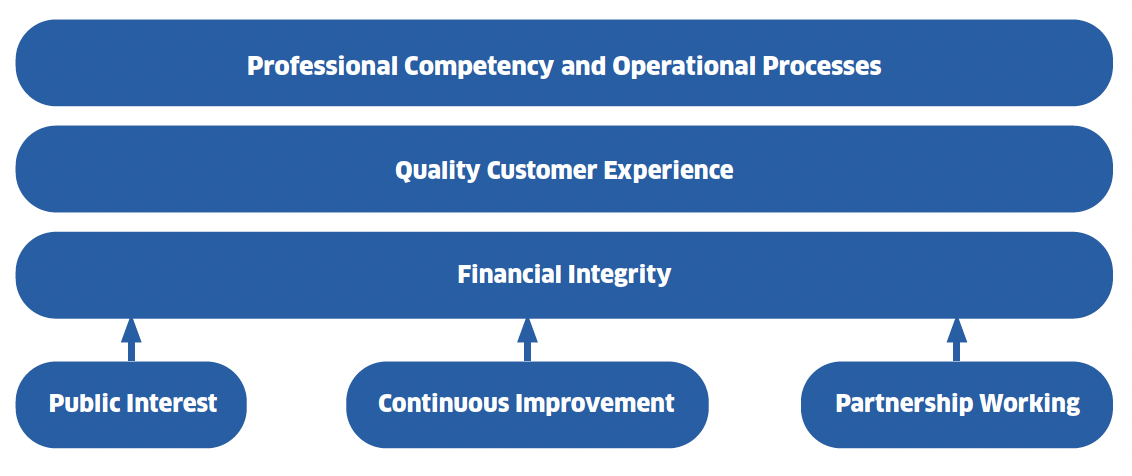
Professional Competency and Operational Processes
Quality Customer Experience
Financial Integrity
- Public Interest
- Continuous Improvement
- Partnership Working
Contact
Email: buildingstandards@gov.scot