
Awaab's Law: guidance for tenants in Scotland
From 6 October 2026, landlords must investigate reports of damp or mould and begin any necessary repairs within set timescales. This guidance aims to help tenants understand their rights and responsibilities.
Step 1: Spotting damp or mould in your home
Damp and mould can have a significant impact on your health and wellbeing and can damage your home and personal belongings. This may include breathing difficulties, skin irritation or rashes, and increased stress or anxiety.
The longer damp and mould is left untreated, the greater the risk becomes. That is why it is important that you contact your landlord as soon as you spot an issue. Your landlord cannot evict you for reporting repair issues.
Remember, whilst not within the scope of Awaab’s Law timescales, you should still report other repairs to your landlord. This will be outlined in your tenancy agreement.
The signs and causes of damp
Damp in a property is a result of excess moisture. This can cause a fungus known collectively as mould, to grow. Mould often looks like black, green, or brown patches on walls, ceilings, or around windows. Awaab’s Law applies to all types of damp and mould.
There are different types of damp which have different causes.
Rising damp
Rising damp is typically the result of a structural issue and is normally your landlord’s responsibility to resolve. It only affects the ground floor of your home and will not normally rise higher than around 1.2 meters above ground level.
If your home if affected by rising damp, you may notice:
- Rot on your skirting boards.
- Damp carpets.
- Flaking or bubbling on plaster, paintwork or wallpaper near the ground
- Crumbling bricks or stonework on the outside of the building, near the ground.
A general example has been provided below. This is purely for illustrative purposes. Not all cases of rising damp will resemble the image below, nor do all of the same signs need to be present. Furthermore, not all signs need to be visible. For example, dampness often causes a ‘musty’ smell.
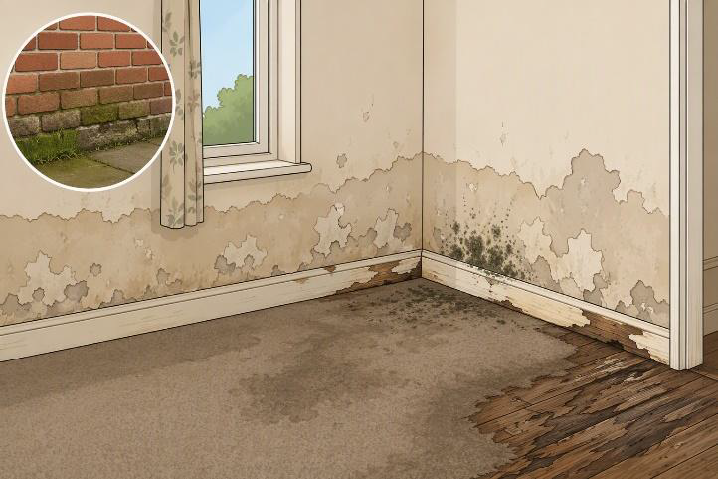
This image has been generated using AI tools and is a representation of generic, potential indicators of rising damp/mould in a domestic setting.
Penetrating damp
Penetrating damp is moisture which enters a property from outside because of a defect in part of its structure. Like rising damp, it is usually your landlord’s responsibility to fix. Penetrating damp can be caused by defects in the roof, walls, gutters and more. It can therefore be more difficult to identify.
If your home if affected by penetrating damp, you may notice:
- Discoloured patches on your walls or ceilings.
- Loose or bubbling wallpaper, flaking paintwork, or soft plaster.
- Plants growing from the gutters
- Rot near your roof space
- Mould on your walls or carpets.
A general example has been provided below. This is purely for illustrative purposes. Not all cases of rising damp will resemble the image below, nor do all of the same signs need to be present. Furthermore, not all signs need to be visible. For example, dampness often causes a ‘musty’ smell.
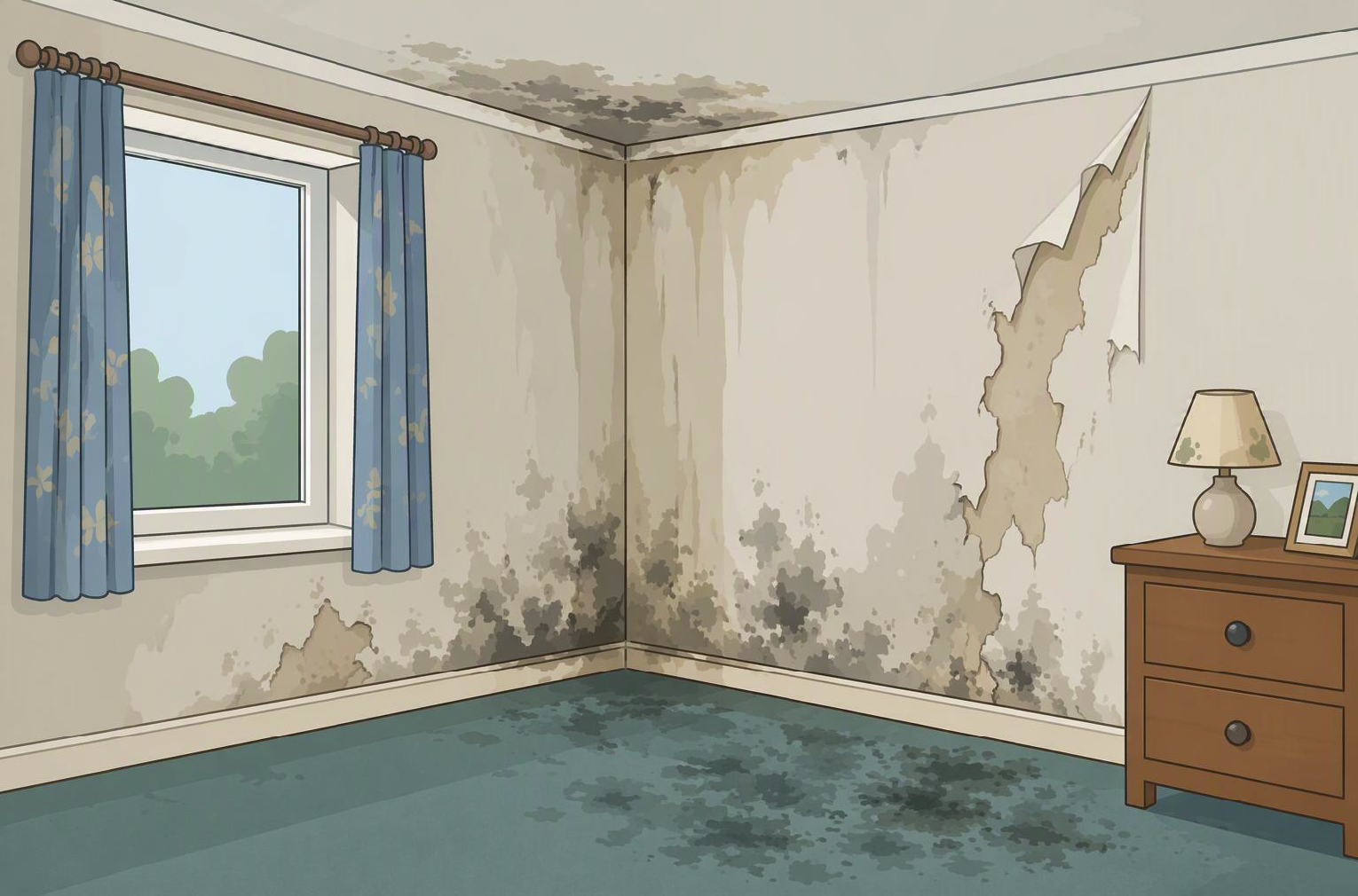
This image has been generated using AI tools and is a representation of generic, potential indicators of penetrating damp/mould in a domestic setting. Condensation
Condensation is caused by warm moist air coming into contact with a colder surface. The colder surface causes the amount of moisture the air can hold to be reduced, and as a result the moisture "condenses" out onto the wall. This process forms pure water which allows mould to grow. This can be caused by a combination of factors, like poor heating or ventilation. Whilst some condensation can be normal, it should not be excessive, persistent, or widespread.
There are steps you can take to help reduce condensation in your home; however, your landlord should not blame you for everyday tasks like cooking, bathing, washing and drying.
If your home if affected by penetrating damp, you may notice:
- Water droplets on the windows, walls or ceilings
- Damp / wet walls or carpets
- Mould growth
A general example has been provided below. This is purely for illustrative purposes. Not all cases of condensation will resemble the image below, nor do all the same signs need to be present. Furthermore, not all signs need to be visible. For example, dampness often causes a ‘musty’ smell.
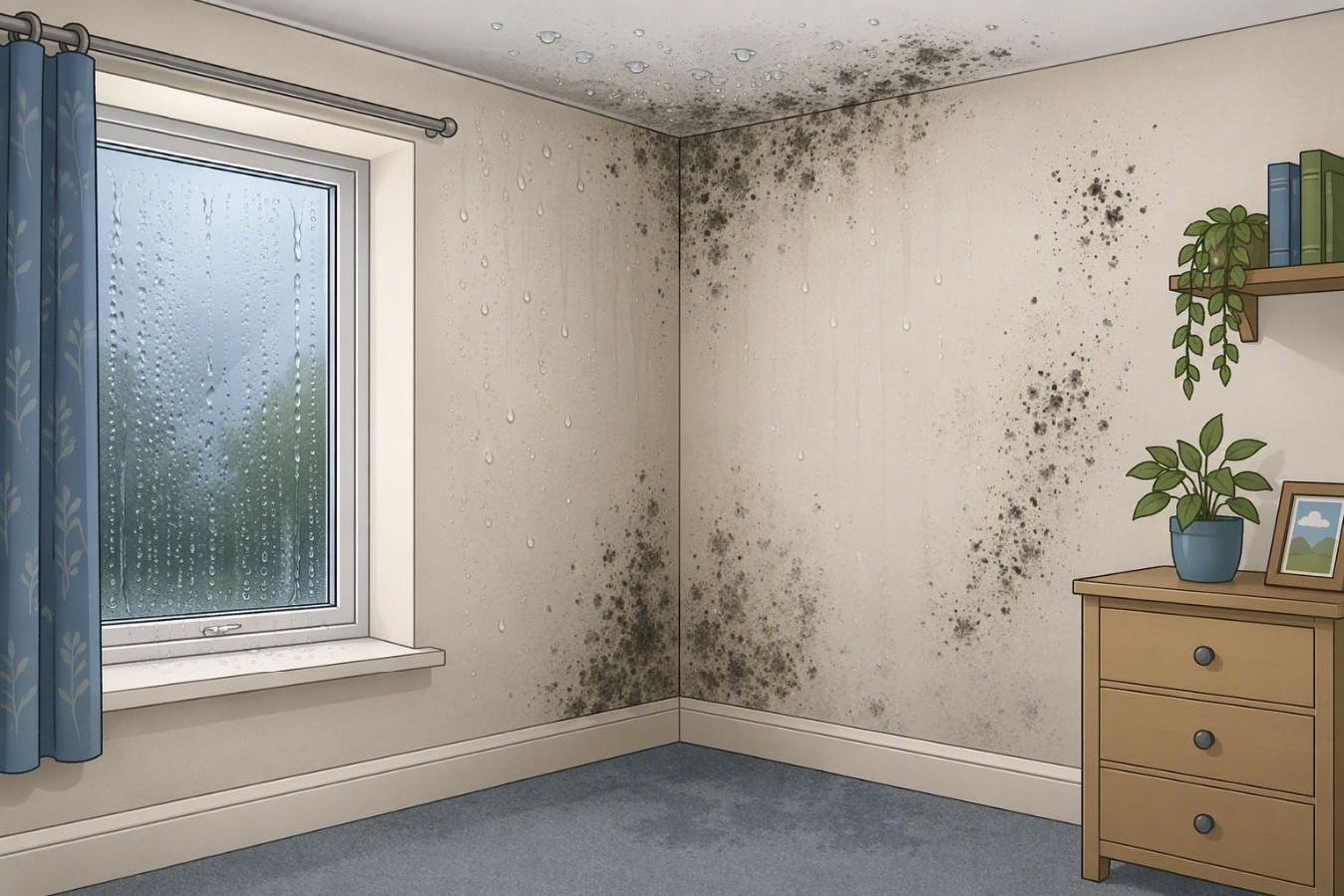
This image has been generated using AI tools and is a representation of generic, potential indicators of condensation/mould in a domestic setting.
Traumatic damp
Traumatic damp is caused by sudden and severe events like overflowing sinks or damaged pipes. Depending on the cause of the issue, your landlord may be responsible for fixing the issue.
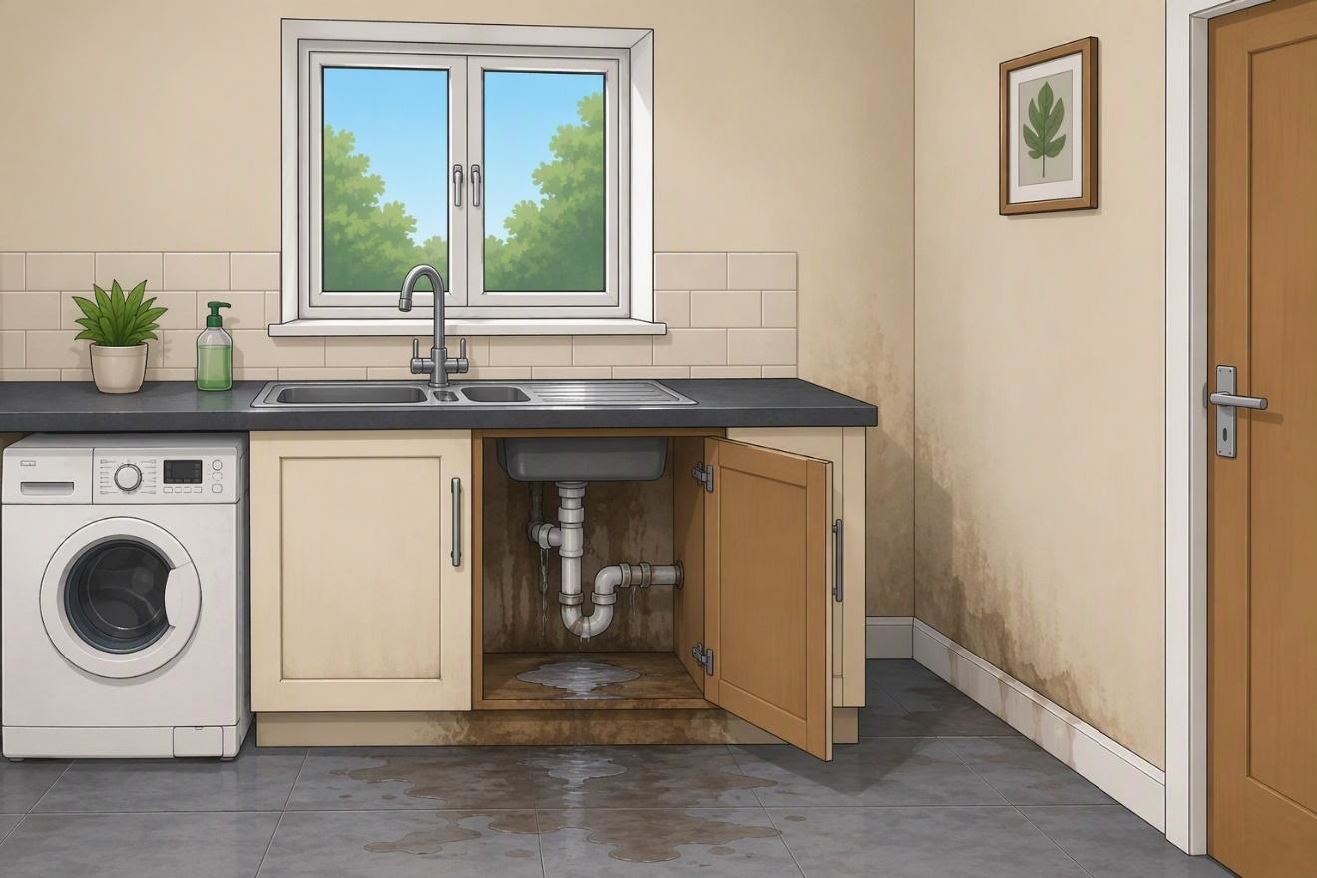
This image has been generated using AI tools and is a representation of generic damp/mould in a domestic setting that could be caused by a burst pipe or leak.