
Razor clams - commercial fishery using electric current gear: consultation analysis - island communities impact assessment
Island communities impact assessment (ICIA) for the consultation on a commercial fishery for razor clams using electric current gear in Scottish waters.
3. Data and Stakeholders
Figure 1 shows the share of value of razor clam landings into Scottish ports in 2025-26. The landings of the trial were widely distributed between ports in Scotland. In 2025-26, landings were reported from 24 ports in 6 districts. Figure 1 shows the shares of landings of razor clams into Scottish ports in 2025-26. Pittenweem had the largest share of landings, with 22 per cent of landings in 2025-26. Smaller ports may benefit further economically and socially from a limited commercial fishery.
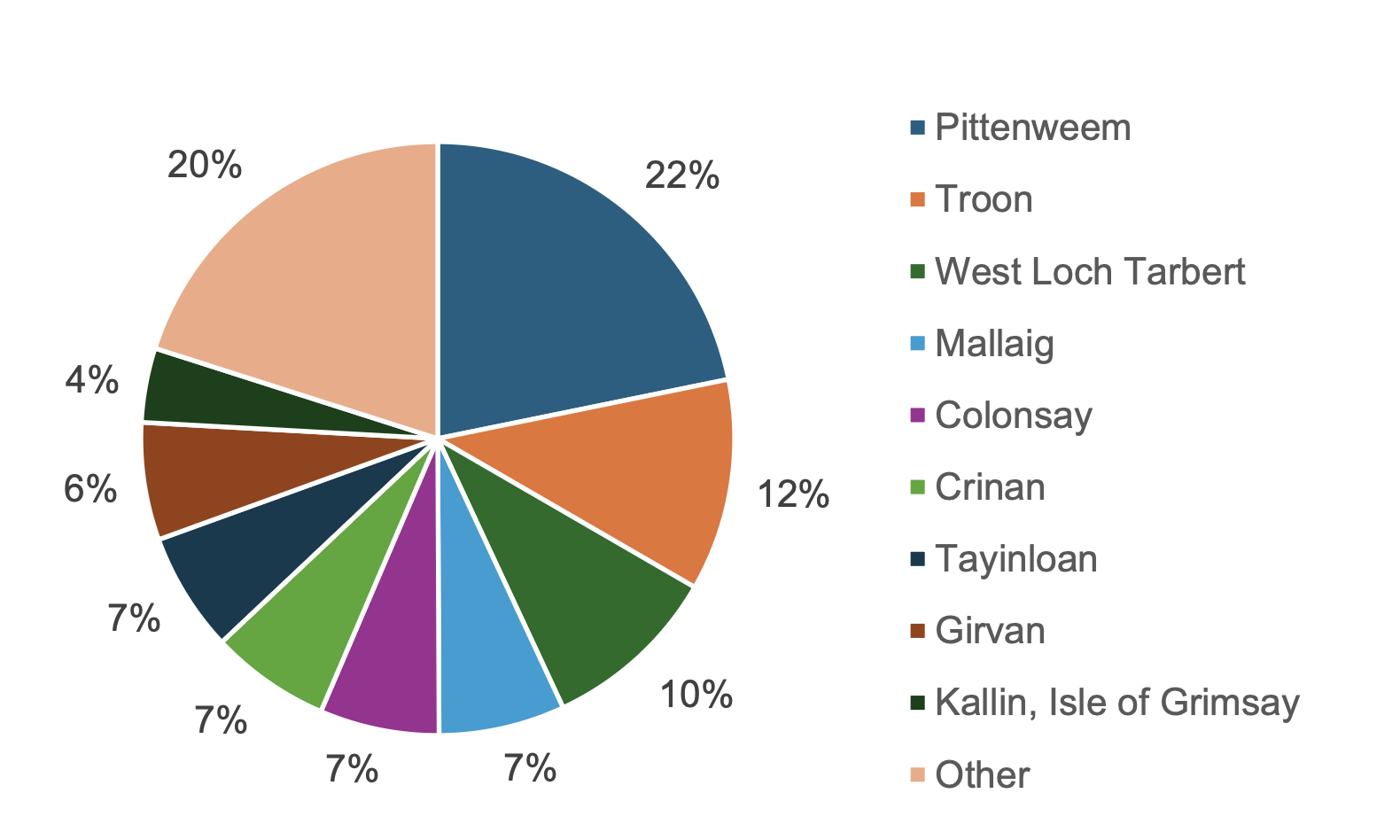
Source: Marine Directorate internal data.
3.1 Key Stakeholders
Key stakeholders were identified as the Scottish Razor Clam Association, trial participants, Scottish inshore fleet, vessels without a sectoral affiliation, fishing associations (including island based fishing associations), environmental groups and regional inshore fisheries groups (RIFG).
3.2 Consultation - Previous Engagements
There has been previous engagement with: Scottish Razor Clam Association, trial participants, fishing associations (including island based fishing associations), environmental groups and RIFGs.
3.3 Commercial Fishery for Razor Clams Consultation
A consultation was held between the 20 March 2026 and 12 June 2026. To inform our impact assessments and raise awareness of the consultation, a number of sessions were held virtually during the consultation period between trial participants, fishing representative bodies, environmental NGOs, and regional inshore fisheries groups (RIFGs).
Stakeholders were asked to consider the potential impact of the options presented in the consultation, with reference to their answers contributing to our impact assessments.
The consultation sought views on a commercial fishery asking questions on spatial management, technical measures, a new scientific trial, conventional alternatives such as dredging, remote electronic monitoring. 54 responses were received from a wide range of interests including the above, but additionally receiving responses from private individuals, recreational fishing clubs, harbour trusts and businesses related to fishing.